Category: Uncategorized

  • 8 Tools to Track ChatGPT Mentions in Search

    8 Tools to Track ChatGPT Mentions in Search

    Quick Summary: Tracking ChatGPT mentions helps brands see when they appear in AI answers and identify competitor dominance. Tools like SnowSEO, AthenaHQ, Peec AI, and OtterlyAI offer different levels of mention, citation, and sentiment tracking tailored for SEO teams, marketers, and agencies. Choosing the right tool depends on whether you need broad AI visibility, deep citation analysis, or GEO-focused insights.

    If your brand shows up in AI answers, you need more than guesswork. You need a clear way to track ChatGPT Mentions, citations, and competitor share. Most rank trackers were built for Google, so ChatGPT Mentions often sit in scattered reports with weak attribution. This guide compares the best AI Mentions Tools and Search Mentions Tracker options for ChatGPT Mentions, based on coverage, reporting, competitor monitoring, and fit for solo marketers, SMBs, agencies, and enterprise teams.

    Quick Comparison

    Tool Best for ChatGPT coverage Citation tracking Team fit
    SnowSEO SEO teams and SMBs that want ChatGPT mention tracking plus broader SEO workflows AI visibility monitoring and mention tracking across ChatGPT Yes, with visibility, citations, sentiment, and competitor context Small to mid-sized teams, agencies, and content-led businesses
    AthenaHQ Teams that want deep citation analysis and multi-platform AI visibility Yes, with mention and citation tracking Strong source and citation analysis AEO/GEO managers, PR teams, and enterprise-minded marketers
    Peec AI Marketing teams that want ChatGPT-first visibility and sentiment insights Dedicated ChatGPT visibility tracker Yes, with source and claim tracing Agencies, in-house marketers, and client reporting teams
    OtterlyAI Teams that want monitoring plus GEO-oriented optimization guidance Yes, with brand mention and citation tracking Yes, including domains and URLs SEO teams, agencies, and content strategists

    What to know about ChatGPT mentions tracking

    ChatGPT mentions tracking shows when your brand appears in AI answers, which sources help those answers form, and how often competitors show up instead of you. It gives SEO teams a clearer view of visibility outside the usual search results.

    That matters now because users often get brand ideas from AI before they click a website. If ChatGPT cites your competitors more often, you can miss demand early.

    Treat this like a new layer of search visibility, not a replacement for SEO.

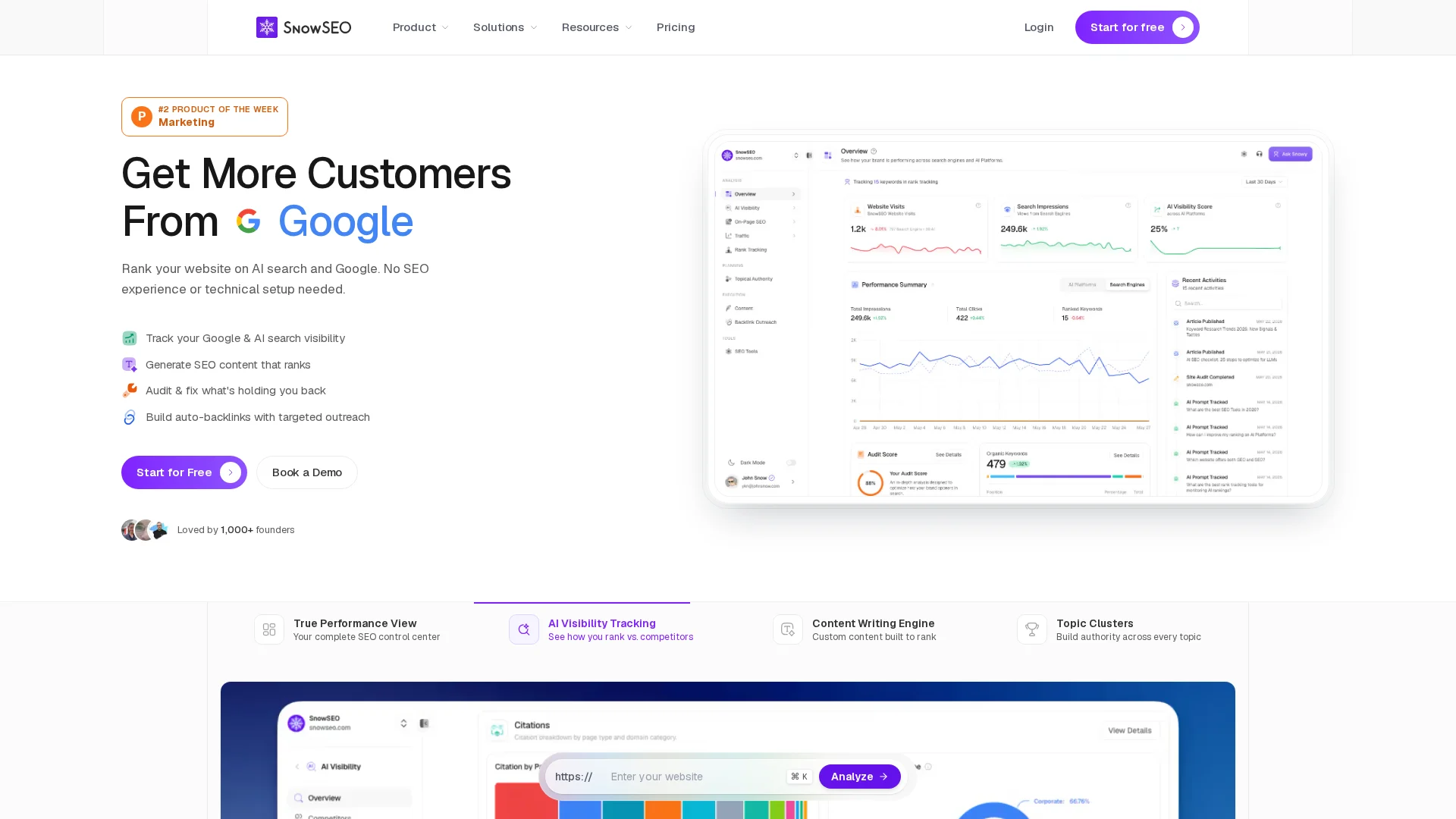
    1. SnowSEO

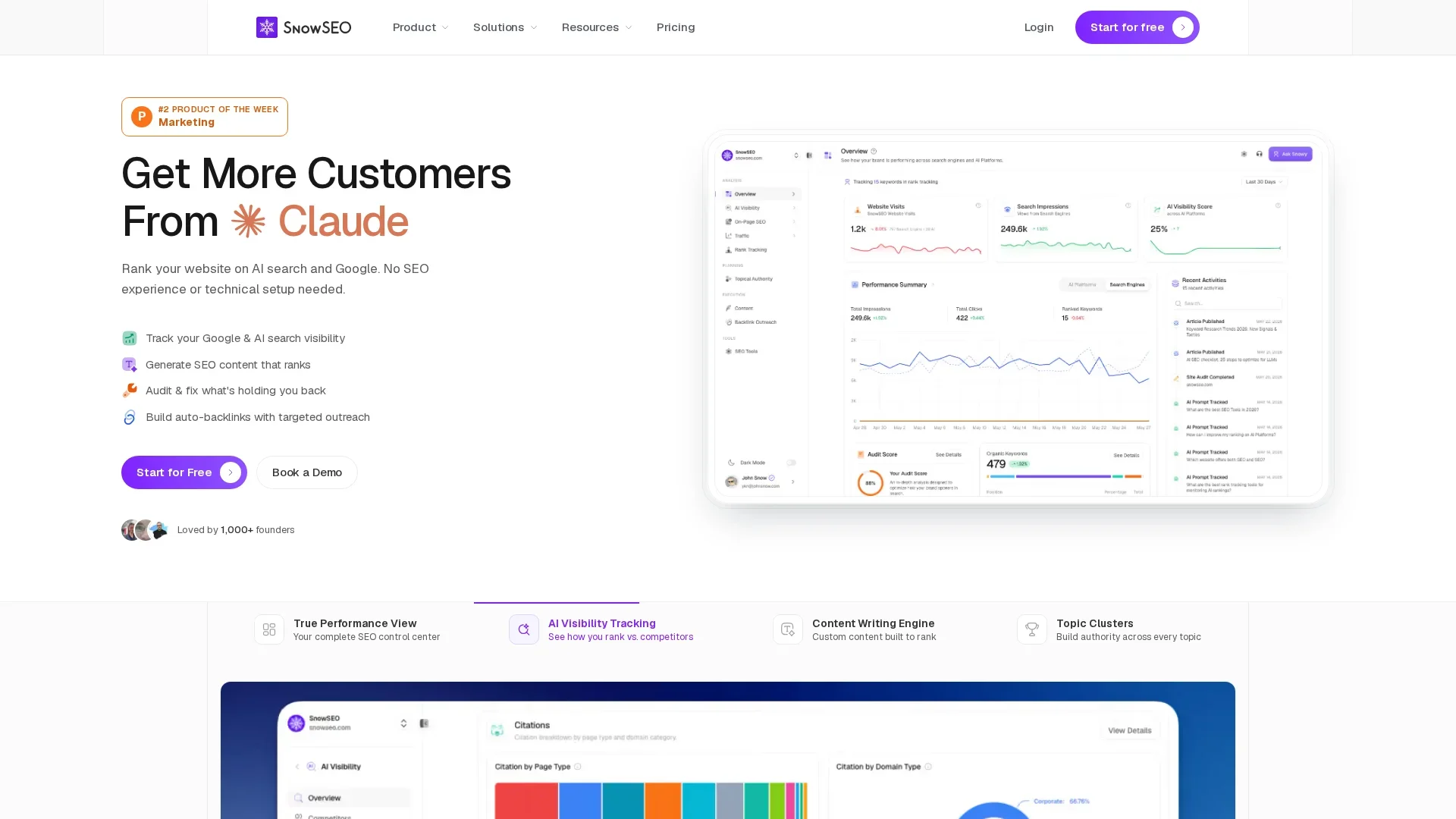
    SnowSEO puts SEO and AI visibility in one workflow. If you want ChatGPT mention tracking without adding another tool, this is the cleanest fit, especially since ChatGPT Search can show source links and teams now need to watch both mentions and citations across AI answers.
    SnowSEO
    Highlights

    • Tracks ChatGPT mentions, citations, sentiment, and competitors across major AI platforms
    • Combines rank tracking, keyword research, content, and publishing
    • Matches the shift toward dedicated ChatGPT citation tracking

    Specs

    • Best for: SEO teams and SMBs
    • ChatGPT coverage: Mention tracking and AI visibility monitoring
    • Citation tracking: Yes

    Pros

    • Unified workflow
    • Strong execution fit

    Cons

    • Less specialized than niche tools

    It ranks first because it covers ChatGPT mentions well and helps teams act on the data fast.

    Last updated: July 26, 2026

    Also Read: Best SEO Tools: 25 Picks to Improve Rankings in 2026

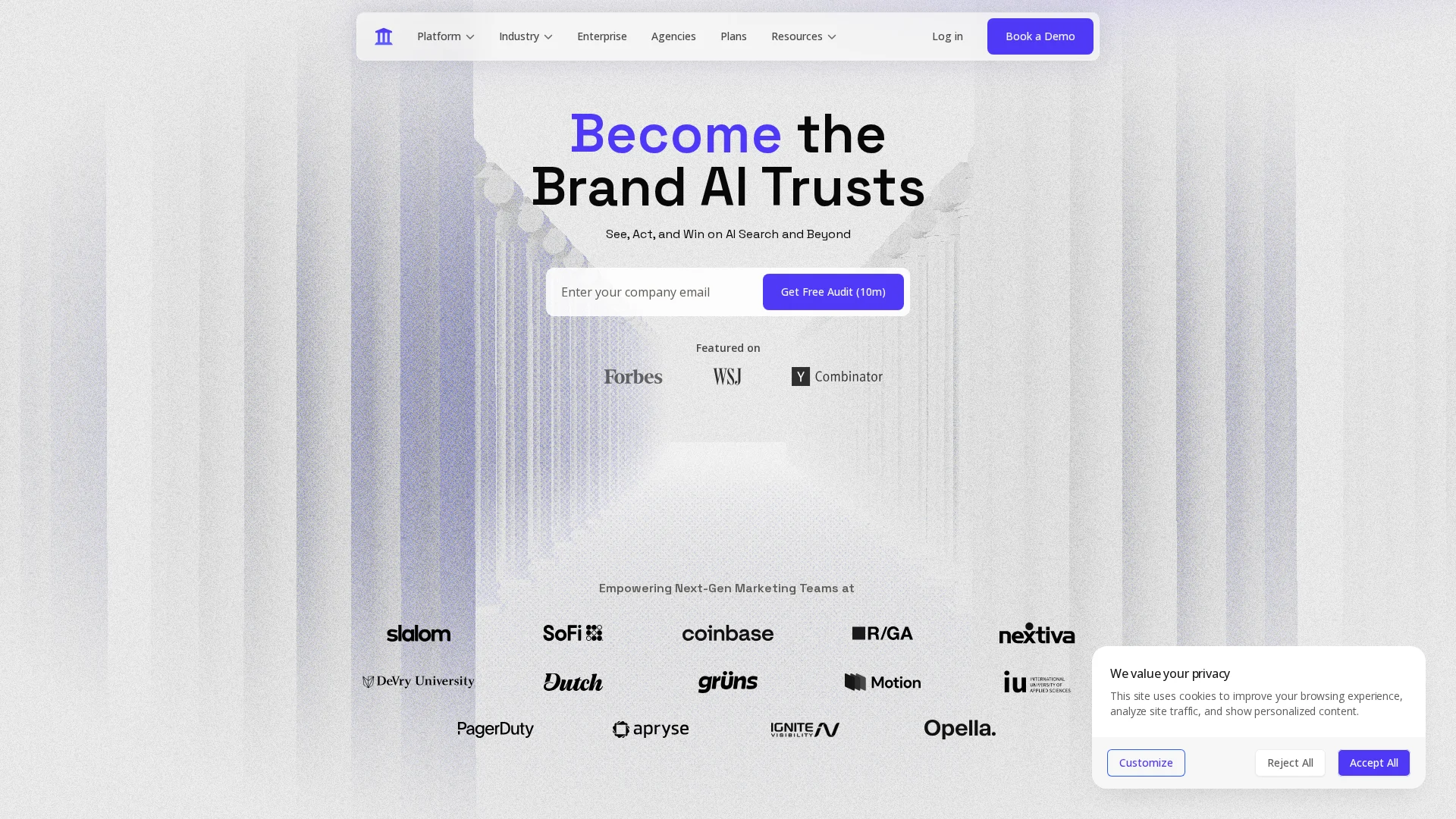
    2. AthenaHQ

    AthenaHQ fits teams that need deep AI search analytics, not just basic ChatGPT mentions. Its docs and product pages show strong citation tracking, competitor monitoring, and response-level review across multiple AI platforms, including brand monitoring and response inspection.
    AthenaHQ
    Highlights

    • Tracks brand mentions and citations across 8+ AI platforms
    • Includes competitor monitoring and source analysis

    Specs

    • Best for: Teams that want deep citation analysis and multi-platform AI visibility
    • ChatGPT coverage: Yes, with mention and citation tracking

    Pros

    • Strong diagnostic depth

    Cons

    • More complex than lightweight trackers

    It ranks here for its citation-first view of brand visibility in ChatGPT.

    Last updated: July 26, 2026

    Also Read: 10 New Keyword Research Techniques to Try Now

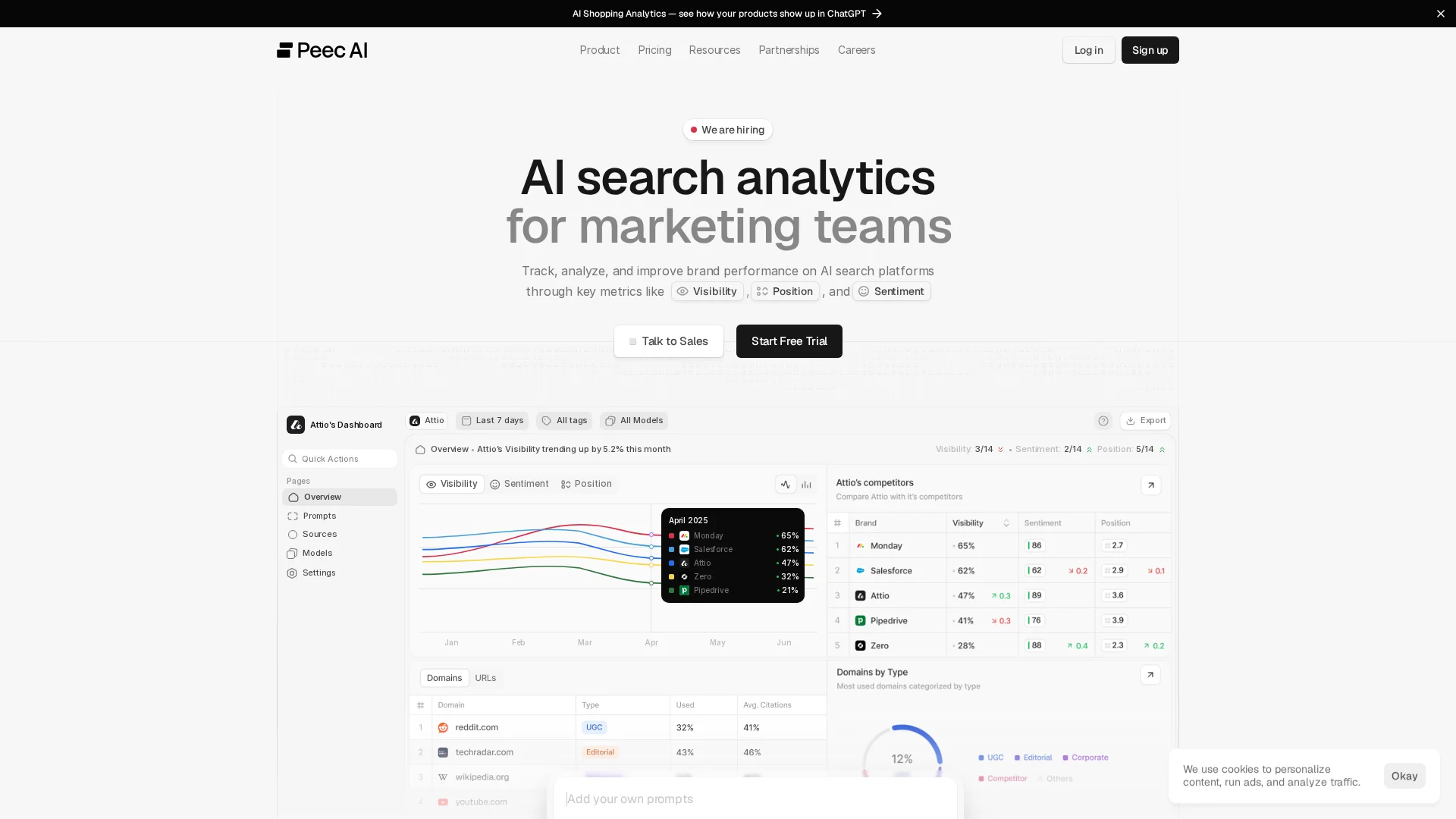
    3. Peec AI

    Peec AI is built for marketing teams that want clear AI search analytics, especially inside ChatGPT. It tracks brand visibility, sentiment, and source-level claim tracing across ChatGPT and other AI platforms, as shown on its ChatGPT visibility tracker and brand perception product page.
    Peec AI
    Highlights

    • Dedicated ChatGPT visibility tracker
    • Sentiment, benchmarking, and source tracing
      Specs
    • Best for: Marketing teams wanting ChatGPT-first visibility and perception insights
    • Team fit: Agencies, in-house marketers, client reporting teams
      Pros
    • Strong match for ChatGPT mentions tracking
      Cons
    • Narrower than broad SEO suites
      It ranks here because it fits ChatGPT mention tracking better than most tools.

    Last updated: July 26, 2026

    Also Read: SEO Tools Comparison: Ahrefs, Semrush, and SnowSEO Feature Set

    4. OtterlyAI

    OtterlyAI is built for GEO-focused AI search monitoring, prompt research, and citation tracking. It tracks ChatGPT mentions plus other engines, while its feature set also covers content audits and optimization guidance.
    OtterlyAI
    Highlights

    • Tracks ChatGPT, Gemini, Perplexity, Copilot, and more
    • Includes prompt research, content audits, and GEO tips
      Specs
    • Best for: SEO teams, agencies, and content strategists
    • Citation tracking: Yes, with domains and URLs via prompt monitoring
      Pros
    • Strong research plus optimization mix
      Cons
    • More GEO-led than pure rank tracking
      It ranks here because it helps teams turn ChatGPT mention data into action.

    Last updated: July 26, 2026

    Honourable Mentions

    These tools still help with AI visibility, but they miss the top four for tracking ChatGPT mentions specifically.

    1. Search Atlas – Strong all-in-one platform for teams that want ChatGPT visibility inside broader SEO and marketing automation.
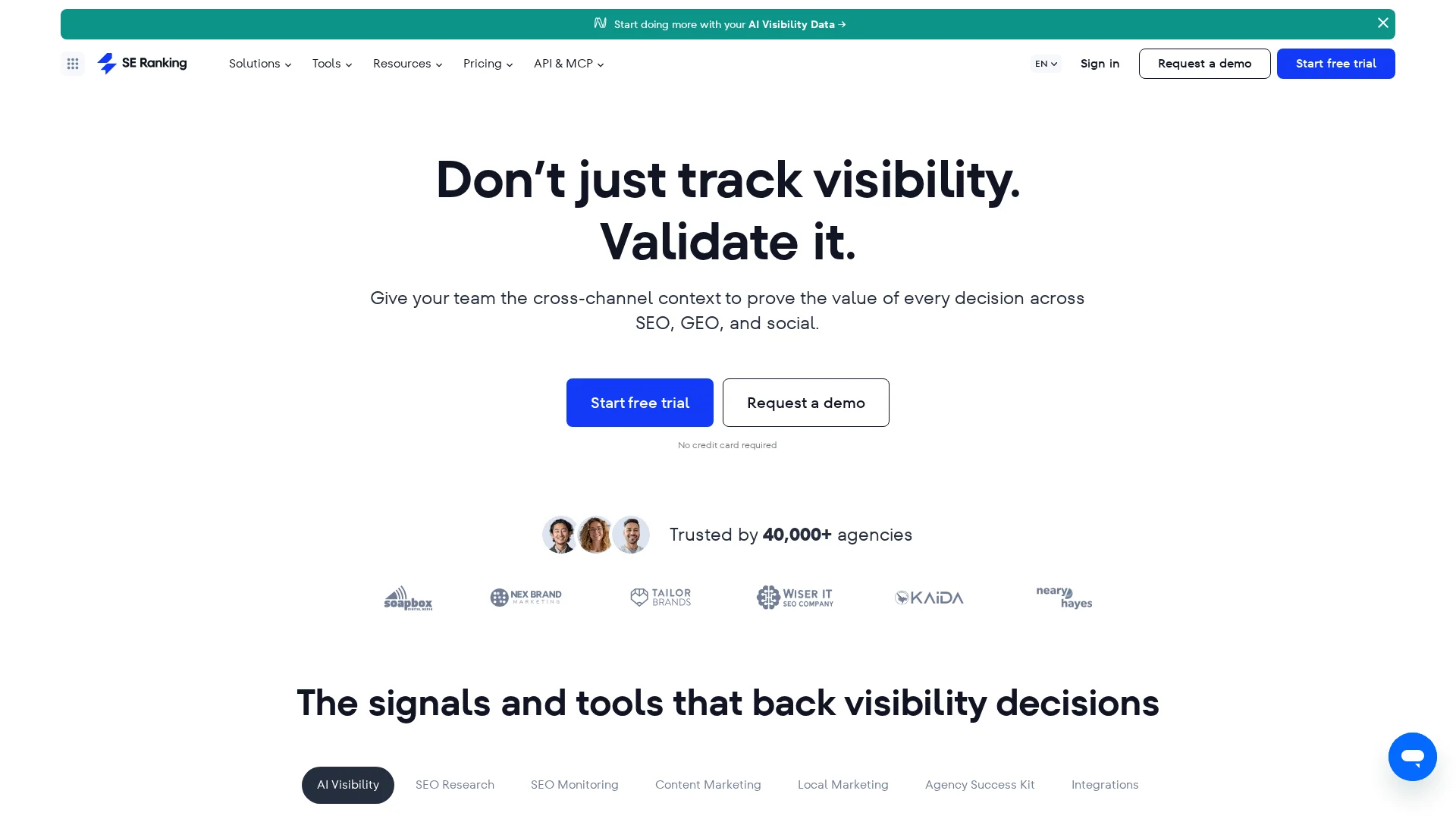
    2. SE Ranking – Good fit for agencies that want AI visibility added to an established SEO stack.
    3. LLM Pulse – Useful for teams prioritizing a narrower AI mention monitoring workflow.
    4. Promptwatch – Specialized option for prompt-level monitoring and AI visibility analysis.

    How to choose the right ChatGPT mentions tracker

    Use these criteria to pick fast:

    • Pick a dedicated tracker if your main KPI is brand visibility in AI answers.
    • Pick SnowSEO if you want ChatGPT tracking plus SEO tools in one place. It fits teams that also need audits, keywords, content, and reporting.
    • Check citation analysis if you need to see why ChatGPT mentions you or a rival.
    • Look for competitor benchmarking if you build client reports or need clear stakeholder updates.
    • Require prompt-level tracking. Broad brand snapshots miss real gaps.
    • Make sure it covers ChatGPT, Gemini, Perplexity, and AI Mode.
    Homepage
    Homepage

    Want one place to track AI visibility and act on it? Try SnowSEO to audit mentions, track rankings, spot gaps, and grow ChatGPT search presence faster.

    Frequently Asked Questions

    Q1: What are the top tools to track ChatGPT brand mentions across multiple AI platforms?

    SnowSEO, AthenaHQ, Peec AI, Otterly AI, Profound, and LLM Pulse are strong options. Pick based on coverage, alert speed, citation tracking, and team workflow.

    Q2: How does Dageno AI improve monitoring and attribution of ChatGPT brand mentions?

    Dageno AI is not in this comparison set. Focus on tools that track mention frequency, source pages, prompt coverage, and citation overlap so you can tie visibility back to SEO work.

    Q3: What metrics should I track to measure ChatGPT brand visibility and citations effectively?

    Track mention count, citation rate, prompt coverage, sentiment, share of voice, source quality, competitor overlap, and changes after publishing or page updates.

  • AI Content Marketing Playbook for Topic Clusters and SEO

    AI Content Marketing Playbook for Topic Clusters and SEO

    Quick Summary: This guide emphasizes that AI-generated content alone won’t rank well without a strong content strategy, topic clusters, and smart internal linking. It stresses aligning content with buyer intent, building authoritative topic hubs, and continuously measuring and refining performance. Effective AI content marketing combines speed with relevance and clear site structure to improve rankings and generate leads.

    A B2B software brand can publish AI-written posts every week and still miss rankings if pages do not connect or match buyer intent. That is the real gap this guide fixes. You need Content Strategy, Topic Cluster Formation, and smart SEI Optimization working together. This playbook shows how strong Content Strategy turns AI output into linked SEO assets, better leads, and a measurable Content Strategy system.

    1. Define the business goal behind your content strategy

    Start with the result you need. Content should drive a business outcome, not just fill a calendar.

    Set the right content KPIs

    Match KPIs to the goal. If you want pipeline, track qualified leads, demo requests, and influenced revenue, not just clicks. Content Marketing Institute notes that leadership cares more about ROI and business outcomes than vanity metrics in 2026 The New Rules of Content ROI.

    Pick 1 primary KPI and 2 support metrics for each cluster.

    Map content to buyer intent

    Intent tells you what content to create next. Awareness pages answer basic questions. Consideration pages compare options. Decision pages remove risk. HubSpot says intent-based marketing uses buyer signals to focus on people more likely to buy intent-based marketing.

    • Ask what the reader wants
    • Match format to that need
    • Link pages by journey stage

    Also Read: Best SEO Tools: 25 Picks to Improve Rankings in 2026

    2. Build topic clusters that create topical authority

    Pick one pillar topic your brand can truly own. Google says helpful content should show a clear site focus and enough depth to satisfy readers, not just chase traffic Google Search Central. Good pillar topics usually have:

    • broad search intent
    • clear business value
    • at least several strong subtopics

    Use AI to turn that pillar into a topic map. Start with one core query, then ask AI to group related questions by intent, funnel stage, and format. HubSpot’s 2026 guide notes keyword clustering helps build topic authority by grouping terms around one subject HubSpot’s keyword clustering guide.

    Flowchart of pillar page, related articles, and internal links
    Flowchart of pillar page, related articles, and internal links

    Design links like a hub, not a pile of blog posts.

    1. Link the pillar to every core cluster page.
    2. Link each cluster page back to the pillar.
    3. Add side links only when two cluster pages truly help each other.

    Keep anchor text clear and natural. Forced exact matches weaken the structure.

    Also Read: AI Content Generation News: New Tools Shaping SEO in 2026

    3. Create AI-assisted content that is useful, unique, and searchable

    Start with the query, not the draft. Build an outline that matches intent: what the reader wants, what stage they are in, and what proof they need next. Google says helpful content should satisfy people first, not just chase rankings (people-first content guidance).

    • Map each section to one question
    • Put the clearest answer first
    • Cut anything that does not help the task
    Content strategist refining AI outline beside analytics dashboard
    Content strategist refining AI outline beside analytics dashboard

    AI gives speed. You still need proof. Add product screenshots, test results, expert quotes, examples, and first-hand notes. Google also says AI content is fine if it adds original value, but scaled low-value pages can trigger spam concerns (AI-generated content guidance).

    If the page could fit any brand, it is too generic.

    Make the page easy for both search engines and answer engines to parse:

    1. Use clear headings and direct answers
    2. Add internal links to cluster pages
    3. Match titles, summaries, and visible content
    4. Include schema only when it reflects the page

    Also Read: 10 Best Tools for Competitor SEO Analysis in 2024

    4. Measure, refine, and scale what is working

    Use performance data to choose your next update

    Check rankings, clicks, conversions, and assisted leads before you touch a post. Google says core updates reward helpful, people-first content, not quick fixes, so update pages with real demand and weak business results, not just traffic drops Google’s core update guidance. Prioritize:

    • High impressions, low CTR
    • Good traffic, weak conversion
    • Strong links, stale facts

    If a page already performs well, avoid random rewrites.

    Turn one post into a repeatable system

    When one cluster page wins, copy the process, not just the format. Build a simple loop:

    1. Pick the query pattern
    2. Reuse the outline logic
    3. Refresh internal links
    4. Track leads by page type

    Google also warns against scaled content made mainly to manipulate rankings Google’s March 2024 spam policy update. Scale quality controls, not page volume.

    Homepage
    Homepage

    Build smarter topic clusters, stronger internal links, and measurable SEO wins with SnowSEO. Run audits, plan content, track rankings, and turn AI content into leads.

    Frequently Asked Questions

    Q1: How can AI content marketing strategies improve website ranking and lead generation in 2023?

    AI speeds up research, content briefs, and updates. That helps you publish around clear search intent, cover supporting topics, and improve internal links. Better relevance lifts rankings. Better journeys from article to offer lift leads.

    Q2: What are the key steps to build effective topic clusters using AI for SEO and content authority?

    Start with one core topic, map search intent, group related keywords, and assign one page per subtopic. Use AI to find gaps, draft outlines, and suggest links. Then review for accuracy, overlap, and business fit.

    Q3: How does AI-powered internal linking enhance topical authority and search rankings?

    AI spots pages that should connect based on topic, intent, and page depth. That spreads authority, helps crawlers, and guides readers to the next step. Stronger link paths usually improve coverage, rankings, and conversions.

    Conclusion

    AI content marketing works when clusters, internal links, and clear intent work together. Google still rewards helpful, people-first content in AI search, not shortcuts, per Google’s guidance and its AI optimization guide.

  • AI Content Generation News: New Tools Shaping SEO in 2026

    AI Content Generation News: New Tools Shaping SEO in 2026

    Quick Summary: Google’s 2026 AI search guidance emphasizes content quality over automation, requiring AI-generated pages to meet standards and add real value. New Search Console controls let site owners manage AI features and track their impact on traffic. The focus is on avoiding manipulative AI use, with success depending on strong editing, originality, and clear topical authority.

    AI content generation news got real on May 15, 2026, when Google released fresh guidance for generative AI in Search, then sharper on June 3 with new Search Console controls and reporting. That changed AI content generation news from guesswork into process. For SEO teams, weak scaled pages now carry clearer risk. We track Google updates closely, so this AI content generation news story shows what changed, what still matters, and what to fix now.

    Google’s 2026 AI-search guidance puts content quality back at the center

    Google’s message is simple: AI content is fine if it helps users. Its updated Search guidance says pages made with generative AI must still meet Search Essentials and spam rules. Thin, scaled pages with little value can still trigger scaled content abuse concerns, while strong pages should focus on accuracy, quality, and relevance according to Google’s AI content guidance. Google also added a new optimization resource that tells site owners to publish unique, non-commodity content and keep solid SEO basics in place, as noted in Google’s Search Central update.

    Why this matters now is practical, not theoretical. SEO teams finally have a clearer line: do not ask whether AI wrote it. Ask whether the page adds something real. That changes briefs, QA, and reporting.

    • Keep first-hand proof, examples, and expert input
    • Cut duplicate pages before they scale
    • Review metadata, images, and structured data too

    AI speeds production. It does not lower Google’s quality bar.

    1. Audit AI-assisted pages for originality.
    2. Tighten human review before publishing.
    3. Track which pages earn clicks, not just output volume.

    Also Read: 10 New Keyword Research Techniques to Try Now

    Search Console’s new generative AI control gives teams a real visibility lever

    Google now gives some site owners a direct switch in Search Console to include, exclude, or inherit access to generative AI features. That covers AI Overviews, AI Mode, and generative AI features in Discover, according to Google’s Search Console help. If you opt out, you lose impressions and traffic from those surfaces, but Google says this setting does not affect rankings in regular Search.

    • Include if AI Search sends useful visits
    • Exclude if risk, licensing, or brand rules matter more
    • Inherit if you manage settings at parent-property level
    Flowchart of AI control settings in Search Console
    Flowchart of AI control settings in Search Console

    The new reporting matters just as much as the toggle. Google’s 2026 rollout adds a generative AI performance report with impressions by page, country, device, and date, as shown in Google’s Search Central announcement.

    1. Check which pages get AI impressions
    2. Compare countries and devices
    3. Watch trends before and after any setting change

    Tip: treat this like a visibility test, not a moral stance.

    Before changing anything, SEO teams should:

    • map affected properties and inheritance
    • benchmark current AI impressions
    • align legal, brand, and revenue teams first

    Also Read: 10 Must-Have Tools to Streamline Your SEO in 2025

    why AI content generation is being treated differently in 2026

    Google is not treating AI-written text as the problem. It is treating manipulative use at scale as the problem. That older rule still drives the 2026 shift. Back in 2023, Google said AI content was acceptable if it helped people, but using automation mainly to game rankings broke policy, according to Google’s AI content guidance.

    Search strategist reviewing AI draft notes
    Search strategist reviewing AI draft notes

    In 2026, that line matters more because Google now states its spam rules also cover attempts to manipulate generative AI responses in Search, not just blue-link rankings, as shown in Google’s spam policies.

    The big change is not “AI is banned.” The big change is that low-value AI workflows now create risk across both classic search and AI search surfaces.

    Homepage
    Homepage

    Turn 2026 AI content changes into action with SnowSEO. Run audits, plan keywords, create stronger content, and track search plus AI visibility in one place.

    Frequently Asked Questions

    Q1: How will AI content generation tools influence SEO strategies in 2026?

    Teams will move from volume to control. AI speeds drafts, refreshes, and gap coverage, but SEO wins come from strong editing, source checks, entity depth, and tighter Search Console feedback loops.

    Q2: What are the best AI content tools for SEO and how do they impact ranking today?

    The best tools help with briefs, clustering, and workflow control. Ranking still depends on useful pages, trust signals, and clean structure. SnowSEO stands out when you need content, audits, and tracking in one place.

    Q3: How can brands build topical authority using AI-powered content in 2026?

    Start with one clear topic cluster. Use AI to map subtopics, fill weak pages, and keep terms consistent. Then add expert edits, internal links, and regular updates so the site earns trust over time.

    Conclusion

    AI content wins in 2026 when teams pair strong SEO basics with real quality control. Google now offers generative AI guidance and Search Console AI reporting and controls, so the smart move is simple: publish useful pages, measure visibility, and stay in control.

  • SEO Tools Comparison: Ahrefs, Semrush, and SnowSEO Feature Set

    SEO Tools Comparison: Ahrefs, Semrush, and SnowSEO Feature Set

    Quick Summary: SnowSEO offers the most automation across SEO tasks, from research to publishing and AI visibility tracking. Ahrefs excels in backlink and keyword data for manual analysis, while Semrush provides a broad marketing suite. Teams should choose based on whether they prioritize automation, data depth, or marketing features, with SnowSEO being ideal for reducing manual work and streamlining workflows.

    This SEO tools comparison gets to the real choice fast. If you want end-to-end automation, SnowSEO leads. If you need deep link and keyword data, Ahrefs wins. If you want a wider marketing suite, Semrush fits best. This SEO tools comparison helps teams pick between data, coverage, or execution. We review these platforms from an operator view, so this SEO tools comparison stays practical.

    SEO Workflow Automation at a Glance

    Ahrefs Semrush SnowSEO
    Automation scope Strong on analysis; lighter on end-to-end workflow automation Broad platform automation with strong optimization workflows End-to-end workflow automation across SEO and AI search
    Content publishing Content helper and optimization tools; no native full CMS autopublishing focus Content creation and optimization tools; workflow is still toolkit-based AI article creation plus direct CMS publishing and internal linking
    AI visibility tracking Brand Radar, prompts, and AI-search monitoring AI visibility, prompt research, sentiment, and search coverage AI visibility score, prompt tracking, citations, sentiment, and competitors
    Keyword and competitor research Deep keyword, content gap, and backlink research Very broad keyword and competitive datasets Keyword research, clusters, gaps, and competitor discovery
    Reporting and integrations Robust reports, API, and enterprise connectivity Strong branded reports, APIs, and enterprise options Connected dashboards, GSC/GA4, CMS integrations, API, and reporting
    Best for Teams prioritizing research depth and link intelligence Teams wanting one large marketing suite Teams that want the most automated execution stack

    Meet the Contenders

    Ahrefs

    Ahrefs is built for teams that care most about backlink data, competitor research, and search demand. In this comparison, it stands out as the research-heavy option with growing AI-search tracking, but less focus on full workflow automation.
    Ahrefs

    Semrush

    Semrush is a wide marketing suite for teams that want SEO, content, local, and reporting in one place. Here, it represents the broad-platform option with strong workflows and large datasets.
    Semrush

    SnowSEO

    SnowSEO is a unified SEO and GEO platform built for teams that want research, content, publishing, tracking, and AI visibility in one flow. In this comparison, its angle is simple: reduce manual work across the whole stack.
    SnowSEO

    Which Platform Automates the SEO Workflow Best?

    SnowSEO goes furthest on research-to-publish automation. It keeps keyword research, content briefs, AI drafting, on-page checks, and publishing work in one flow. Ahrefs and Semrush are strong for research, but teams still patch in other tools to write, approve, and ship. Google says Search is fully automated from crawling to serving results in its how search works guide, so your stack should remove handoffs too.

    Flowchart of SEO workflow steps with dashboards
    Flowchart of SEO workflow steps with dashboards

    After publication, the best platform is the one that helps you react fast. Semrush and Ahrefs give solid rank and backlink views. SnowSEO adds tighter workflow follow-up by pairing tracking with content refresh and AI visibility checks. Google Search Console data can be queried for clicks, impressions, CTR, and position through the Search Analytics documentation, which makes monitoring a core automation need, not a side task.

    Best fit: choose SnowSEO if you want fewer manual steps across the full loop.

    Also Read: 10 New Keyword Research Techniques to Try Now

    How They Compare on Data Depth, AI Visibility, and Control

    Ahrefs and Semrush still win on raw SEO datasets. They give deeper keyword, link, and SERP history, which helps analysts validate hard calls. SnowSEO matters more if your bottleneck is action, not lookup speed.

    • Ahrefs/Semrush: stronger for manual research depth
    • SnowSEO: stronger for turning research into content, tracking, and execution steps
    • Control tradeoff: deeper data often means more setup and more handoffs
    Focus Best fit Main tradeoff
    Deep manual analysis Ahrefs or Semrush Slower execution
    Faster workflow control SnowSEO Less analyst-style digging

    AI visibility changes the stack. Google rolled out AI Overviews on top of normal results, first in the U.S. and later far wider, according to Reuters and Google’s product update. That means teams now need two layers:

    1. rank in classic search
    2. show up in AI answers

    If your tool cannot track AI visibility beside rankings, you are missing part of the SERP.

    Also Read: 10 Must-Have Tools to Streamline Your SEO in 2025

    Which Should You Choose for Your Team?

    Best fit by team type

    Pick Ahrefs if your team cares most about backlink research and clean SEO data. Pick Semrush if you need a wider marketing stack and stronger cross-channel reporting. Pick SnowSEO if your team wants one workflow for audits, content, publishing support, rank tracking, and AI visibility. That matters more now because Google says crawl demand depends on site size, freshness, and quality in its crawl budget guide.

    SEO team leads reviewing dashboards in meeting room
    SEO team leads reviewing dashboards in meeting room

    Final pick

    For most busy teams, SnowSEO is the best fit if reducing manual work is the goal. If you mainly need link data, choose Ahrefs. If you want broad marketing features first, choose Semrush.

    Start with the tool that removes the most repeat tasks, not the one with the longest feature list.

    Homepage
    Homepage

    Cut manual SEO work and track AI visibility in one place with SnowSEO. Try it to audit, plan, write, publish, and monitor faster.

    Frequently Asked Questions

    Q1: What SEO platforms support automation of the entire SEO workflow for AI and traditional search engine ranking improvements?

    SnowSEO fits best if you want one system for audits, keyword research, AI content, tracking, and AI visibility. SE Ranking and Search Atlas automate parts well, but usually need more manual handoffs.

    Q2: Which platform saves the most time for small teams?

    Teams with limited staff usually save more time with platforms that combine research, writing, tracking, and reporting. SnowSEO reduces tool switching more than split-stack setups, so fewer tasks fall through.

    Q3: Do I still need separate AI visibility tools?

    Not always. If your platform tracks both search rankings and AI platform mentions, you can avoid extra tools. Separate tools help only when you need deeper AI prompt monitoring or brand mention analysis.

    Conclusion

    Pick the platform that removes the most manual work. Semrush leads on AI visibility breadth, while topic-level AI tracking now matters more and integrated SEO plus AI workflows outperform split setups.

  • 7 Agency Rank Tracking Features That Save Reporting Time

    7 Agency Rank Tracking Features That Save Reporting Time

    Quick Summary: Agency reporting is slow because of manual tasks like building reports and formatting data. Features like automated scheduled reports, white-label templates, multi-client dashboards, and client portals can significantly cut this time. The best tools automate data collection, branding, and sharing, helping teams manage more keywords and locations efficiently. SnowSEO offers these features to streamline agency SEO reporting workflows.

    Agency reporting slows down when rank data still sits in spreadsheets, screenshots, and weekly slide decks. Teams may track daily, but they still waste hours turning movement into client-ready updates across many accounts, locations, and stakeholders. This list ranks the Rank Tracking Features that cut the most labor. We chose these Rank Tracking Features by one test: Reporting Time Saving. The best Agency SEO Tools use Rank Tracking Features that automate collection, speed delivery, reduce screenshot work, shorten analysis, and need little cleanup.

    Quick Comparison

    Feature Best for Reporting time saved Agency value Coverage
    Automated scheduled reports Agencies that send recurring client updates High Eliminates repetitive report assembly Weekly, monthly, and custom schedules
    White-label reporting Client-facing agencies and consultants High Speeds up branded deliverables Reports, dashboards, and portals
    Multi-client dashboards Agencies managing several clients High Centralizes performance review Portfolio and project-level views
    Client portal or guest access Agencies with hands-on clients Medium to high Reduces repetitive client questions Read-only or limited-access views

    What to know about rank tracking features

    Agencies do not save time from prettier charts. They save time from features that remove repeat work. That can mean pulling data faster, cutting report formatting, or giving clients a clear reason for ranking changes.

    That matters more in 2026 because teams manage more keywords, more locations, and more client updates with the same headcount. The best rank tracking features keep reports accurate, branded, and easy to share without adding manual cleanup.

    Judge each feature by one thing: how many reporting steps it removes.

    1. Automated scheduled reports

    This is the biggest time-saver in rank tracking. Automated SEO reporting cuts the repeat work of building the same update every week or month, while tools pull core metrics like clicks, impressions, CTR, and position from Search Console performance reports.

    Agency strategist scheduling recurring SEO reports on multiple screens
    Agency strategist scheduling recurring SEO reports on multiple screens

    Highlights

    • Cuts screenshot and copy-paste work
    • Keeps every client on a fixed cadence
    • Lowers the risk of missed updates

    Specs

    • Best for: Agencies sending recurring client updates
    • Reporting time saved: High
    • Coverage: Weekly, monthly, custom schedules

    Pros

    • Scales across many accounts

    Cons

    • Needs setup first

    It ranks first because Google supports report exports and sharing, but scheduling replaces the repeated human task.

    Last updated: July 21, 2026

    Also Read: 10 New Keyword Research Techniques to Try Now

    2. White-label reporting

    White-label reporting makes rank updates look like they came from your agency, not a third-party tool. It cuts the extra slide work because branded dashboards, logos, and custom domains are built in, as shown by SE Ranking’s white-label setup and Mangools’ branded report options.

    Highlights

    • Adds agency branding without extra design work
    • Creates a polished client experience
    • Helps reports double as retention assets

    Specs

    • Best for: Client-facing agencies and consultants
    • Reporting time saved: High
    • Agency value: Speeds up branded deliverables
    • Coverage: Reports, dashboards, and portals

    Pros

    • Improves perceived professionalism
    • Avoids duplicate formatting in external tools
    • Works well for multi-client deliverables

    Cons

    • May be tied to higher-tier plans
    • Setup can take time upfront

    It ranks high because it turns raw rank data into client-ready output fast.

    Last updated: July 21, 2026

    Also Read: Best SEO Tools: 25 Picks to Improve Rankings in 2026

    3. Multi-client dashboards

    Track all client rankings from one place. Multi-client SEO dashboards cut reporting time because your team reviews trends, visibility, and account health in one workspace, not ten tabs. Google Search Console supports multiple properties, and its Performance report shows clicks, impressions, CTR, and position for faster checks.
    Account manager reviewing client ranking dashboards on dual monitors
    Highlights

    • Combines client, portfolio, and project views
    • Speeds up cross-account comparisons
    • Cuts login switching and repeat analysis

    Specs

    • Best for: Agencies managing several clients
    • Reporting time saved: High

    Pros

    • Faster monthly prep
    • Easier trend spotting

    Cons

    • Can get cluttered without clear naming
    • Larger teams may need training

    It ranks here because less context switching means faster reporting prep.

    Last updated: July 21, 2026

    Also Read: 10 Best Tools for Competitor SEO Analysis in 2024

    4. Client portal or guest access

    Client portals cut status emails fast. Clients can check ranks, clicks, and average position on their own, and Google notes those metrics in Search Console performance reporting. That means fewer export requests and less ad hoc explaining in your client reporting automation flow.

    Highlights

    • Reduces request-driven reporting
    • Gives clients on-demand visibility
    • Lets agencies control what data is shared

    Specs

    • Best for: Agencies with hands-on clients
    • Reporting time saved: Medium to high
    • Agency value: Reduces repetitive client questions
    • Coverage: Read-only or limited-access views

    Pros

    • Cuts routine reporting requests
    • Improves transparency
    • Useful for account management workflows

    Cons

    • Clients still need onboarding
    • Access control must be managed carefully, since shared views only allow limited actions in Search Console report sharing

    It ranks high because it cuts communication overhead, not just report-building time.

    Last updated: July 21, 2026

    More Time-Saving Features Worth Noting

    A few features missed the main list but still cut busywork fast. These matter most when your agency reports by location, reacts to sudden drops, or pipes data into other systems.

    • 5. Local and grid rank tracking – Essential for agencies that report by city, zone, or store location.
    • 6. Alerting and change notifications – Catch ranking drops before they become reporting surprises.
    • 7. Scheduled exports and API access – Best for teams that want rank data pushed into their own workflows.

    How to choose the right rank tracking feature

    Pick based on your biggest reporting bottleneck, not the longest feature list.

    • Choose scheduled reports first if your team rebuilds the same monthly deck. This saves the most time fastest.
    • Pick white-label reporting if clients want polished deliverables without extra screenshot cleanup. SnowSEO stands out here for agencies that want one cleaner workflow.
    • Use multi-client dashboards if account switching slows reviews and portfolio updates.
    • Add client portals or guest access if status-check emails eat your day.
    • Choose local or grid tracking for location-based clients.
    • Add alerts and API exports last once your core reporting flow already works.
    Homepage
    Homepage

    Cut reporting time and keep rankings, audits, and content work in one place with SnowSEO. Start there if your team needs faster, cleaner client reporting.

    Frequently Asked Questions

    Q1: What are the most impactful features in agency rank tracking tools that save reporting time?

    Scheduled reports, white-label templates, keyword tagging, location-level tracking, and client-ready dashboards save the most time. They cut copy-paste work, speed QA, and help account managers pull the right view fast.

    Q2: How does white-label reporting accelerate SEO reporting workflows for agencies?

    White-label reporting removes design rework on every client update. You set one branded template, auto-fill ranking data, and send cleaner reports faster. It also reduces mistakes when multiple team members handle reporting.

    Q3: What local SEO features are essential in agency rank tracking tools for multi-location clients?

    Look for zip code or city tracking, map pack visibility, device splits, location tags, and grouped reporting by branch. These features help you spot weak locations fast and show each client site’s local search impact clearly.

  • In-Depth Comparison: SnowSEO and AthenaHQ for Enterprise SEO

    In-Depth Comparison: SnowSEO and AthenaHQ for Enterprise SEO

    Quick Summary: AthenaHQ is best if your main focus is tracking brand mentions across AI platforms and measuring visibility, especially for large enterprises. SnowSEO offers a broader SEO workflow, combining monitoring with audits, content creation, and ranking, making it ideal for teams that want to act on data within one system. Choose AthenaHQ for AI mention insights and SnowSEO for comprehensive SEO management.

    Enterprise teams now need more than rank tracking. They need a fast system to catch brand mentions across ChatGPT, Perplexity, Claude, Gemini, and AI Overviews, then tie that data to action. This review tackles that gap. It compares SnowSEO and AthenaHQ on visibility, attribution, reporting, and response speed. I focus on real buying questions teams ask when weighing AI SEO Platforms, SEO Automation Tools, and practical Enterprise SEO Strategies for large sites and brands.

    How AthenaHQ and SnowSEO Handle AI Brand Mention Monitoring

    AthenaHQ leans into a cross-model tracking view. It is built to see whether your brand appears, how it is framed, and which sources support that mention across tools like ChatGPT and Claude. That matters because AI visibility is fragmented by platform, and only a small set of brands stay visible everywhere, according to Semrush’s 2026 AI Visibility Index coverage. For teams running Enterprise SEO Strategies, AthenaHQ fits best when brand mention share is the main KPI.

    SnowSEO takes a wider workflow approach. It can support AI visibility checks, but it also ties them to audits, keyword work, content production, and competitor tracking. That makes it more useful when your team wants action after the mention data, not just monitoring.

    If your workflow starts with “Where are we mentioned?”, AthenaHQ feels tighter. If it starts with “How do we improve visibility next?”, SnowSEO fits better.

    Also Read: Comfy UI vs SnowSEO Dashboard: An Honest Comparison for SEOs

    Which Platform Fits Enterprise SEO Strategies Better?

    AthenaHQ fits best when your main need is AI visibility oversight. If leadership asks, “Where is our brand showing up in AI answers, and how do we respond fast?” AthenaHQ is the cleaner pick. That matters more now because Google says AI search still runs on core ranking systems, while brands also need to watch how they are mentioned across the web in AI-driven experiences according to Google.

    SnowSEO fits best when your team needs an operational system, not just monitoring. If you want audits, keyword research, content support, rank tracking, and competitive workflows in one place, SnowSEO is the stronger fit. Adobe notes that enterprise teams now need more than rankings alone, including citation visibility, governance, and measurable action across AI and search surfaces in this 2026 overview.

    Pick AthenaHQ for focused AI mention tracking. Pick SnowSEO if enterprise SEO work must move from insight to execution inside one stack.

    Pros and Cons of AthenaHQ vs SnowSEO

    What stands out

    • AthenaHQ stands out for AI visibility depth. Its site highlights tracking across 8+ LLMs, brand mentions, sentiment, and board-ready reporting AthenaHQ’s platform overview.
    • SnowSEO stands out for breadth. It combines classic SEO, GEO, content creation, and wider CMS publishing in one workflow, based on SnowSEO’s Athena comparison.

    Where each platform falls short

    • AthenaHQ can feel pricey and usage-based, so costs may rise with heavier tracking.
    • SnowSEO is the better all-in-one pick, but teams that want very deep enterprise AI reporting may still prefer AthenaHQ’s narrower focus.

    Also Read: Best SEO Tools: 25 Picks to Improve Rankings in 2026

    Which One Should You Choose?

    Choose AthenaHQ if your main goal is AI mention monitoring. It is a better fit when you need to track share of voice, citations, and brand visibility across AI answers. AthenaHQ’s own 2026 report says new GEO metrics now matter, like mentions per prompt and daily citations in AI search State of AI Search 2026.

    Choose SnowSEO if you need a broader SEO execution stack. SnowSEO fits teams that want audits, keyword research, content generation, rank tracking, and AI visibility work in one place. That matters because many GEO tools still split monitoring from action, as noted in this 2026 GEO tools comparison.

    Pick AthenaHQ for reporting-first AI visibility. Pick SnowSEO for doing the work too.

    Homepage
    Homepage

    Need broader SEO automation plus AI visibility tracking? Try SnowSEO to audit, create, track, and act faster across search and AI platforms.

    Frequently Asked Questions

    Q1: How does AthenaHQ monitor AI platforms like ChatGPT and Perplexity for brand mentions?

    AthenaHQ tracks prompts, checks brand mention presence, and shows how AI engines describe your brand, rivals, and topics over time.

    Q2: What are the key differences between SnowSEO and AthenaHQ for enterprise SEO?

    SnowSEO covers broader SEO work, while AthenaHQ stays more focused on AI mention monitoring, reporting, and visibility tracking.

    Q3: Is AthenaHQ’s pricing suitable for mid-sized agencies or only large enterprises?

    AthenaHQ tends to fit larger teams better, while smaller agencies may want broader value and workflow coverage before committing.

    Conclusion

    AthenaHQ fits teams that need tight AI mention tracking and governance. SnowSEO fits broader SEO automation. Since AI visibility varies by platform and brand maturity, cross-platform measurement matters, and integrated reporting is now a real gap.

  • Surfer SEO Partners with SnowSEO for Enhanced On-Page Analysis

    Surfer SEO Partners with SnowSEO for Enhanced On-Page Analysis

    Quick Summary: The partnership between Surfer SEO and SnowSEO streamlines on-page SEO by integrating Surfer’s content guidance with SnowSEO’s workflow tools. This combo allows teams to quickly identify issues, create briefs, optimize content, and track results all in one system. It helps agencies and small businesses improve efficiency without adding staff, especially as SEO shifts toward AI-driven search standards.

    Surfer SEO’s 2026 updates lean hard into AI search rules, Content Editor automation, and citation signals. SnowSEO brings keyword clustering, automation, and AI-platform visibility. That makes this partnership useful for faster On Page Optimization. Teams now need On Page Optimization that fits Google and AI search, without messy tool stacks. This article looks at how stronger On Page Optimization, sharper SEO Content Strategy, and better Keyword Research Tools can work together across multi-page content workflows.

    What the partnership changes for on-page analysis

    Why the workflow matters now

    On-page analysis is no longer just a page score check. Surfer’s 2026 updates push teams to connect ranking signals with AI citation signals in one loop. Surfer says its newer workflow links AI Tracker, Content Editor, and Auto-Optimize so teams can move from finding weak pages to fixing them faster in the same flow, as shown in Surfer’s March 2026 update. That matters for agencies and content teams with lots of pages, because less tab switching means fewer missed fixes and quicker refresh cycles.

    Flowchart illustrating streamlined on-page SEO workflow
    Flowchart illustrating streamlined on-page SEO workflow

    Where SnowSEO adds value

    SnowSEO fits this shift by giving teams a second layer of action. If Surfer sharpens page-level guidance, SnowSEO can help turn that insight into broader content ops across audits, keyword planning, and AI visibility work. The practical gain is a tighter handoff: analyze in Surfer, then use SnowSEO to scale fixes across clusters and keep reporting in one place. Surfer’s own 2026 workflow update shows teams now need monitoring, quick wins, and content refreshes in one system, not scattered tools across the workflow.

    Also Read: Best SEO Tools: 25 Picks to Improve Rankings in 2026

    How Surfer and SnowSEO complement each other in practice

    Surfer handles page-level guidance well. SnowSEO helps teams cover the wider workflow. That mix works best when you want tighter on-page edits without losing keyword planning, publishing, and cross-channel tracking. For the full partnership context, link this section back to the main pillar post.

    From keyword research to page brief

    Start in SnowSEO to find topic clusters, gaps, and target pages. Then move the chosen keyword into Surfer’s Content Editor, where the 2026 wizard pulls in SERP context, templates, and brand inputs before drafting, according to Surfer’s March 2026 update.

    • SnowSEO picks the opportunity
    • Surfer shapes the page brief
    • Writers get clearer targets faster
    Content editor workspace with workflow diagram and digital tools
    Content editor workspace with workflow diagram and digital tools

    From draft to optimization

    Once the draft exists, Surfer becomes the fast editing layer. Its AI Search Guidelines and Auto-Optimize help add missing facts, entities, and structure for stronger on-page coverage, based on Surfer’s January 2026 feature update.

    Use SnowSEO for content production scale, then use Surfer for final on-page tightening.

    1. Draft in SnowSEO
    2. Refine in Surfer
    3. Review voice and claims manually

    From optimization to reporting

    After publish, SnowSEO can keep tracking rankings, AI visibility, and broader performance in one place. Surfer then helps with refresh work when a page slips or misses citation value.

    Stage Surfer role SnowSEO role
    Planning Brief guidance Keyword and cluster research
    Editing On-page recommendations Draft creation and publishing
    Tracking Refresh signals Rank and AI visibility reporting

    This setup fits agencies that want fewer handoffs between strategy, writing, and reporting.

    Why agencies and SMBs should care

    Agencies should care because faster on-page review means more output without adding headcount. That matters when many firms still feel margin pressure, and over half now see AI as a real threat to the agency model, according to SparkToro’s 2025 agency survey.

    For in-house teams and SMBs, the value is simpler: less tool hopping and quicker fixes. Small firms using AI already apply it to marketing and content, and 98% say it has not cut headcount, based on CNBC’s NFIB survey coverage.

    If this partnership reduces review time, lean teams get enterprise-like help without enterprise overhead.

    How this partnership fits the broader 2026 SEO stack

    The takeaway for optimization teams

    For 2026 teams, this partnership fits the shift from rank tracking to workflow-led search visibility. Search Engine Land says the SEO stack now blends classic SEO, AI influence, and tighter quality standards across content ops in its 2026 outlook. Ahrefs also notes AI Overviews cut clicks and push teams to cover topic depth, not just single terms in its 2026 trends report. For SnowSEO users, that makes Surfer-style on-page guidance more useful inside one operating system.

    Homepage
    Homepage

    Want faster on-page fixes after the Surfer SEO partnership news? Try SnowSEO to audit pages, build content, and track gains in one workflow.

    Frequently Asked Questions

    Q1: How does SnowSEO’s partnership with Surfer SEO enhance on-page analysis capabilities?

    It combines Surfer’s page-level content signals with SnowSEO’s wider workflow tools. Teams can spot gaps faster, tighten briefs, and move from audit to action in one setup instead of jumping between disconnected steps.

    Q2: What are the key features of SnowSEO’s integrated platform for SEO and AI content optimization?

    SnowSEO brings audits, keyword research, content generation, rank tracking, competitor checks, and AI visibility tracking into one platform. That helps teams manage both search rankings and AI answer presence without patching together several separate tools.

    Q3: How can businesses use SnowSEO to track AI platform mentions like ChatGPT and Claude?

    Teams can monitor whether their brand, products, and pages appear in AI-generated answers, then compare trends over time. That makes it easier to spot missing topics, weak authority signals, and pages that need clearer entity coverage.

    Conclusion

    Surfer and SnowSEO matter because they cut workflow friction. Surfer’s 2026 updates show tighter links between tracking and editing inside Content Editor, while SnowSEO strengthens practical on-page analysis for faster team action.

  • Comfy UI vs SnowSEO Dashboard: An Honest Comparison for SEOs

    Comfy UI vs SnowSEO Dashboard: An Honest Comparison for SEOs

    Quick Summary: Most SEO teams should pick SnowSEO Dashboard because it offers built-in rank tracking, AI mentions, and content results, making it easy to set up and use. ComfyUI is more suited for technical users who want to build custom AI workflows, not for day-to-day SEO tasks. If your focus is on search visibility and quick results, SnowSEO is the practical choice.

    Most SEO teams should pick SnowSEO Dashboard. It tracks rankings, AI mentions, and content results. ComfyUI fits a different job. It helps you build custom AI workflows. If you are choosing between AI flexibility and SEO visibility, this comparison shows where each tool fits for tracking, planning, and publishing based on real SEO use cases.

    ComfyUI vs SnowSEO Dashboard at a Glance

    ComfyUI SnowSEO Dashboard
    Primary purpose Visual AI workflow engine SEO and AI visibility dashboard
    Setup effort High Low
    SEO visibility tracking None Built in
    Automation depth Very high, but custom-built High, preconfigured for SEO
    Best for Technical AI workflow builders SEO teams and marketers

    How ComfyUI and SnowSEO Dashboard Compare

    ComfyUI

    ComfyUI is an open-source, node-based AI workflow tool for building custom image and model pipelines. It fits technical users who want deep control, not SEO teams that need ready-made search visibility data.
    ComfyUI
    Key strengths

    • Very deep automation
    • Flexible custom workflows

    SnowSEO Dashboard

    SnowSEO Dashboard is a unified platform for SEO and AI visibility tracking, content work, and brand mention monitoring. It fits marketing teams that want fast setup and built-in workflows instead of building systems from scratch.
    SnowSEO Dashboard
    Key strengths

    • Built-in SEO visibility tracking
    • High automation with low setup

    Use Case Fit for SEO Workflows

    ComfyUI is a node-based, open source workflow tool built for image and media generation, not day-to-day SEO ops, as noted by Wikipedia’s overview of ComfyUI. That matters fast.

    When a flexible AI engine is too much for SEO

    If your team needs keyword tracking, content briefs, audits, and reporting, a visual node graph is often extra work. You get freedom, but you also get setup overhead, testing time, and more room for workflow sprawl.

    • Good for custom AI experiments
    • Weak fit for repeatable SEO tasks
    • Harder for writers and account teams to adopt

    If the tool needs a power user to keep it useful, most marketing teams will not stick with it.

    Workflow comparison with node graph and dashboards
    Workflow comparison with node graph and dashboards

    Why SnowSEO matches marketing workflows

    SnowSEO fits better when the goal is search and AI visibility, not custom media pipelines. SEO teams usually need one place for:

    • audits
    • keyword research
    • content creation
    • rank tracking

    Comfy itself says it gives control over models, parameters, and outputs for visual AI work on its official site. That is powerful, but it is not the same as an SEO system built for marketers.

    Also Read: Best SEO Tools: 25 Picks to Improve Rankings in 2026

    AI Visibility, Rank Tracking, and Reporting

    Native metrics beat custom outputs here. Google says AI Overviews are a core Search feature, and they now reach users across many countries and languages, so teams need reporting built for real SERP behavior, not stitched-together logs from a workflow tool like ComfyUI according to Google Search Help. Track what matters:

    • AI Overview presence
    • brand mentions
    • source citations
    • click and rank shifts

    If the metric does not map to a search result, it is hard to trust in a client report.

    SnowSEO adds the missing layer for SEO teams. You get competitive monitoring, share-of-voice views, and reporting tied to search and AI visibility. That matters because AI Overviews can change brand discovery fast. A Medill study found AI Overviews appeared on 43% of tested queries, with much higher rates on informational searches in this research. Use a simple check:

    1. Track priority queries
    2. Watch competitor citations
    3. Report wins and losses weekly

    Which Should You Choose for Your Team?

    1. Choose SnowSEO if you need results fast
      SnowSEO fits SEO teams that want one place for audits, keyword work, content, tracking, and AI visibility. Pick it if marketers need clear workflows, fast setup, and reports without building systems first. It is the practical choice when your goal is traffic growth, not custom AI pipeline design.
    Marketing team comparing SEO dashboards on office wall screen
    Marketing team comparing SEO dashboards on office wall screen
    1. Choose ComfyUI only if workflow control is the priority
      ComfyUI makes sense for technical teams that need deep control over image and model workflows. It is a node-based tool, not an SEO platform, as shown by Wikipedia’s overview. Even Comfy’s site frames it around control over models and outputs, not search growth on its product page.

    For most SEO teams, this is an easy call: choose the platform built for SEO work.

    Homepage
    Homepage

    Pick the SEO-first option. Try SnowSEO to audit, track, and grow search plus AI visibility faster.

    Frequently Asked Questions

    Q1: What are the main differences between ComfyUI and SnowSEO Dashboard for SEO professionals?

    ComfyUI is a node-based AI workflow tool for building custom generation pipelines. SnowSEO Dashboard is built for SEO teams, with rank tracking, audits, keyword work, and AI visibility data in one place.

    Q2: How does SnowSEO’s AI-driven rank tracking compare to ComfyUI’s local node control capabilities?

    SnowSEO tracks search and AI visibility over time, so teams can spot gains and losses fast. ComfyUI gives deep local control over model flows, but it does not track rankings or SEO performance by itself.

    Q3: Which platform offers better model reach and automation: ComfyUI or SnowSEO Dashboard?

    ComfyUI offers flexible model handling for users who want to build custom workflows manually. SnowSEO offers better marketing automation because it turns SEO and AI visibility tasks into repeatable team workflows with less setup.

    Conclusion

    ComfyUI is a node-based generative AI tool, not an SEO platform. SnowSEO fits marketing teams better, while ComfyUI fits technical creators who want deep workflow control, as its official project shows.

  • 12 Best Competitive SEO Intelligence Tools for 2026

    12 Best Competitive SEO Intelligence Tools for 2026

    Quick Summary: The best 2026 SEO intelligence tools now have to track more than rankings and backlinks. They also need to show where competitors appear in AI Overviews and LLM answers, since that visibility is now stealing clicks from regular search. SnowSEO leads for AI search visibility, Semrush One is the broadest all-in-one option, and Ahrefs still wins on deep backlink and keyword analysis. For teams that want simpler reporting or broader market context, SE Ranking, Surfer SEO, and Similarweb round out the strongest picks.

    If a competitor keeps outranking you, grabbing all the clicks, or showing up in AI Overviews while your brand is missing, your stack of SEO intelligence tools is the real issue in 2026, not just your content calendar.

    Most teams still juggle separate platforms for keyword gaps, backlink checks, rank tracking, and AI visibility. That mess slows down daily reporting and hides what matters: why rivals are winning and where you can overtake them.

    This guide breaks down the best SEO intelligence tools for 2026, mixing classic competitive SEO tools with newer GEO intelligence tools and AI-focused platforms. You will see options that track competitors across Google search, AI Overviews, ChatGPT, Gemini, and Perplexity.

    To build the list, we focused on tools with real competitive research depth, current AI visibility features, and clear reporting. Every pick helps you benchmark rivals, spot content gaps, and track visibility shifts over time.

    Quick Comparison

    Tool Best for Competitive research depth AI/GEO visibility Reporting
    SnowSEO Teams prioritizing AI search visibility and modern SEO intelligence Moderate Strong Good
    Semrush One All-in-one competitive SEO and AI visibility Strong Strong Strong
    Ahrefs Deep competitor and backlink analysis Very strong Moderate Strong
    Similarweb Broader competitor benchmarking Strong Moderate Strong
    SE Ranking Balanced competitive SEO reporting Strong Strong Strong
    Surfer SEO Content teams and topical strategy Moderate Strong Moderate

    What to know about competitive SEO intelligence

    Competitive SEO intelligence shows why your rivals outrank you and where you can win. It pulls together keyword gaps, backlink profiles, rank tracking, and market share data so you see the full search battlefield, not just your own site.

    In 2026, this is bigger than classic blue links. You also need GEO insights to see how visibility shifts by country, city, and even neighborhood. On top of that, AI Overviews and LLM answers now steal clicks from normal results.

    The right tools help you track all these surfaces, spot threats early, and turn competitor data into focused content and link plays.

    1. SnowSEO

    SnowSEO puts classic SEO tracking and AI search visibility in one place. It helps you see how your brand shows up in both Google and AI answers, so you are not guessing where you win or lose attention. According to the SnowSEO overview, teams can track rankings, AI mentions, and site health in a single dashboard.

    SnowSEO
    SnowSEO

    Highlights

    • AI search visibility tracking across engines and AI platforms
    • Keyword research and rank tracking
    • Website audits and technical health checks
    • REST API support for custom reporting

    Specs

    • Best for: Teams prioritizing AI search visibility and modern SEO intelligence
    • Competitive research depth: Moderate
    • AI/GEO visibility: Strong focus on Generative Engine Optimization
    • Reporting: Good, with sharable and automated reports

    Pros

    • Built around AI-search-era visibility needs
    • Useful for both SEO and brand mention tracking in AI answers
    • API helps plug data into your own BI or dashboards, as shown in the reporting guide

    Cons

    • Less established than legacy enterprise suites
    • Competitive data depth may be narrower than top incumbents

    SnowSEO ranks first here because it directly targets SEO plus GEO, which fits 2026 competitive intelligence needs.
    Last updated: June 3, 2026

    Also Read: Content Gap Analysis Vs Content Audits Ultimate Guide

    2. Semrush One

    Semrush One gives you a broad competitive research platform that blends SEO, AI discovery, and prompt-level insight. You get classic keyword, backlink, and domain tools plus an AI Visibility Toolkit, which makes it useful for 2026 reporting across both search and AI surfaces.

    Semrush One
    Semrush One

    Highlights

    • Deep competitor research across keywords, backlinks, and traffic
    • Visibility overview for Google, AI Overviews, and LLMs
    • Prompt research to find natural language queries in your space
    • AI traffic dashboard to estimate visits driven by AI agents

    Specs

    • Best for: All-in-one competitive SEO and AI visibility
    • Competitive research depth: Strong, with domain, keyword, and market reports
    • AI/GEO visibility: Strong AI visibility toolkit with prompts and share-of-voice tracking
    • Reporting: Strong cross-channel and AI reporting

    Pros

    • Very broad feature set across SEO and AI visibility
    • Strong for competitor benchmarking in both search and AI
    • Useful AI traffic dashboard and visibility reports, as covered in the AI visibility features guide

    Cons

    • Can feel complex for smaller teams because it merges many workspaces
    • Pricing starts at the higher end, with Semrush listing Semrush One above standard SEO plans in its plans comparison

    It ranks near the top because it joins traditional competitor research with AI-era discovery and tracking, making it one of the most complete SEO intelligence tools for 2026.

    Last updated: June 3, 2026

    Also Read: Competitor Seo Monitoring 10 Powerful Tools To Track Wins

    3. Ahrefs

    Ahrefs is a deep SEO intelligence tool that helps you see what rivals rank for, where they earn links, and which content you are missing. It is one of the most trusted competitive SEO tools for teams that live inside backlink and keyword data.

    Ahrefs
    Ahrefs

    Highlights

    • Site Explorer for full domain and page level recon on traffic, keywords, and links, as shown in Ahrefs’ Site Explorer overview
    • Content Gap analysis to find keywords competitors rank for but you do not, backed by the Content Gap feature
    • Link Intersect to spot domains that link to your rivals but not to you
    • Rank tracking to watch key positions across markets

    Specs

    • Best for: Deep competitor and backlink analysis
    • Competitive research depth: Very strong
    • AI/GEO visibility: Moderate
    • Reporting: Strong
    • Focus: Backlinks, content gaps, ranking data

    Pros

    • Excellent competitor analysis depth
    • Industry leading backlink index
    • Strong keyword and content gap workflows

    Cons

    • AI visibility is less central than newer GEO focused tools
    • Can be more than small teams need

    Ahrefs ranks here because it is still a top tier competitor analysis tool when you want real backlink and keyword intelligence, not just pretty dashboards.

    Last updated: June 3, 2026

    4. Similarweb

    Similarweb gives you a full digital market view, not just SEO data. You see how competitors win traffic across search, social, referrals, and ads, which makes it easier to plan channel mix and budget. That broader digital competitive intelligence helps you explain performance to non-SEO leaders.

    Similarweb
    Similarweb

    Highlights

    • Digital market and industry benchmarking across sites and apps, useful for sizing markets and spotting threats, supported by Similarweb’s market research tools.
    • SEO tools suite with rank tracking, keyword analysis, and site reviews, built for data and AI driven search analysis as outlined in Similarweb’s SEO suite overview.
    • Rank tracking that covers classic SERPs and richer result types.
    • Search ads analytics to reverse engineer competitor PPC and blended search strategy.

    Specs

    • Best for: Broader competitor benchmarking
    • Competitive research depth: Strong
    • AI/GEO visibility: Moderate
    • Reporting: Strong
    • Focus: Market, search, and channel intelligence

    Pros

    • Strong market context beyond pure SEO.
    • Great for benchmarking traffic and channel mix.
    • Fits larger strategy, BI, and growth teams.

    Cons

    • Not as SEO-specialized as narrow SEO platforms.
    • Can feel heavy for small teams that only need keyword tracking.

    It ranks here because pairing SEO data with wider market and channel intelligence usually leads to better competitive strategy for bigger teams and agencies.

    Last updated: June 3, 2026

    Also Read: Competitive SEO Intelligence: build a tracking playbook

    5. SE Ranking

    SE Ranking is a well-balanced SEO platform that gives you competitive research, rank tracking, and reporting in one place. It now adds AI search visibility tracking, so you can see how both Google and AI engines treat your site compared to competitors. It suits teams that want strong SEO intelligence tools without jumping into heavy enterprise contracts.

    SE Ranking
    SE Ranking

    Highlights

    • Competitor traffic research across organic and paid
    • AI search visibility tracking for generative engines
    • Central SEO dashboard with ranks, health, and visibility
    • Detailed SERP and keyword tracking

    Specs

    • Best for: Balanced competitive SEO reporting
    • Competitive research depth: Strong, including SEO and PPC insights
    • AI/GEO visibility: Strong via dedicated AI visibility tools
    • Reporting: Strong dashboards and exports for agencies and teams
    • Focus: SEO, reporting, and AI search tracking

    Pros

    Cons

    • Less brand recognition than Ahrefs or Semrush
    • Some enterprises may still need deeper custom research and data exports

    SE Ranking ranks here because it blends core competitive SEO tools with modern AI visibility tracking in a package most teams can actually use every day.

    Last updated: June 3, 2026

    Also Read: Organic Growth Tactics Review Ultimate Tools Comparison

    6. Surfer SEO

    Surfer SEO started as a content optimization tool and now leans hard into SEO intelligence. It helps you map topical authority, optimize content against live SERPs, and track how often AI systems surface your brand and competitors.

    Surfer SEO
    Surfer SEO

    Highlights

    • Content Editor for SERP-aligned briefs and real time on-page guidance, backed by ranking signals, according to the Surfer Content Editor overview.
    • AI Tracker to monitor brand and competitor visibility across major LLMs and AI search surfaces, as shown in Surfer’s AI Tracker docs.
    • Topical Map to plan clusters, fill gaps, and grow topical authority.
    • Content audits to refresh and re-target underperforming URLs.

    Specs

    • Best for: Content teams and topical strategy
    • Competitive research depth: Moderate
    • AI/GEO visibility: Strong
    • Reporting: Moderate
    • Focus: Content optimization and AI visibility

    Pros

    • Excellent for content optimization against intent and entities.
    • Strong AI visibility tracking workflow across multiple sources.
    • Helpful topical cluster and gap analysis.

    Cons

    • Not a full competitor suite for links or technical intel.
    • Limited if you only care about backlink data.

    Surfer ranks here because it covers a key layer of competitive SEO intelligence: content performance, topical coverage, and AI search visibility.

    Last updated: June 3, 2026

    Also Read: Cms Integrations For Seo Powerful Technical Setup Guide

    How to choose the right SEO intelligence tool

    Start with the main signal you care about most:

    • Backlinks: Pick a tool with strong link index, toxic link flags, and competitor link gap reports.
    • Keyword gaps & content: You need keyword gap analysis, topic clusters, and SERP feature tracking.
    • Rank tracking: Go for granular daily tracking by device, location, and tag.
    • Traffic benchmarking: Choose tools with clickstream/traffic share data, not just rankings.
    • AI visibility: Shortlist platforms that track AI Overviews and LLM mentions, not only blue links.

    Match features to how your team works:

    • Daily reporting & many stakeholders: Look for live dashboards, scheduled PDF/Slack/email reports, and API access for your data warehouse.
    • AI Overviews / LLM citations: Check that the roadmap and UI clearly show AI placement, sources, and history. Tools like SnowSEO focus on GEO signals across Google and major AI models.
    • Content-led teams: You want topical mapping, content audits, and page-level suggestions tied to impact, not vague scores.
    • Agencies / large teams: Prioritize multi-domain monitoring, portfolio views, competitive benchmarking, and white-label exports.

    Balance depth with ease of use. The right tool is the one your team actually opens every week and can act on without training marathons.

    Homepage
    Homepage

    Ready to turn competitor insight into action instead of another report? Plug what you learned from these 12 tools into SnowSEO to combine SEO audits, GEO visibility, competitive tracking, and done-for-you content in one dashboard. Start your next growth sprint today.

    Frequently Asked Questions

    Q1: Which competitive SEO intelligence tools best track AI overviews in 2026?

    Look for tools that track AI answer boxes across Google, ChatGPT, and other assistants, not only SERP snippets. Platforms like SnowSEO and a few newer GEO-focused suites log AI mentions, URLs cited, and ranking shifts side by side with classic SEO data.

    Q2: How do I choose the best SEO + GEO tool for competitor visibility tracking?

    Start with your main channels: Google, YouTube, and key AI assistants. Check if the tool tracks AI answers, supports your country and language, and has clean reporting. Then compare pricing, user seats, and how easily your team can act on the insights.

    Q3: What features should a 2026 competitive SEO tool have for daily reporting?

    You need daily keyword and URL movements, AI overview presence, and alerts for big wins or losses. Also useful: competitor content launches, featured snippet changes, click-through estimates, and a simple dashboard that non-SEOs on your team can read in seconds.

    Q4: How often should I update my competitor list in these tools?

    Review your list every quarter, or sooner after big funding rounds, product launches, or traffic drops. Add fast-growing niche players, remove dead sites, and tag direct vs indirect competitors so your reports stay focused on real threats.

  • Keyword Research Trends 2026: New Signals & Tactics

    Keyword Research Trends 2026: New Signals & Tactics

    Keyword research in 2026 is no longer just about finding search terms – it is about decoding intent, SERP behavior, and AI-driven visibility signals.

    Many SEO teams still lean on static keyword lists and rank checks that miss how search now groups topics, rewrites queries, and surfaces AI answers ahead of blue links.

    This guide breaks down the key trends and shows how to adapt with intent-first clustering, deeper SERP analysis, and new performance metrics built for AI Overviews and topic-based ranking.

    Quick Summary: Keyword research in 2026 is shifting from static keyword lists and rank tracking to intent maps, topic clusters, and SERP-first analysis that account for AI Overviews and assistant-driven search. The article argues that SEO teams should group queries by entity and business intent, build one hub with supporting content, and prioritize high-value clusters rather than chasing individual high-volume terms. It also stresses that success metrics must expand beyond single-keyword rankings and raw traffic to include cluster visibility, AI citations, engagement, and conversions, while still keeping fundamentals like crawlability, internal linking, and useful content in place.

    What changed in keyword research in 2026

    1. From keyword lists to intent maps

    Keyword research in 2026 is less about volume and more about patterns. You are not chasing 500 loosely related terms anymore.

    You map how topics, entities, and intents connect across a journey. As serpnap.com notes, one strong page can rank for 200+ variations if it fully covers an entity.

    So your workflow shifts from:

    • Export list
    • Pick top volume
    • Write 1 post per keyword

    To:

    • Cluster terms by problem and persona
    • Plan one hub plus supporting content
    • Measure outcomes at the cluster level
    Workflow diagram illustrating keyword research process
    Workflow diagram illustrating keyword research process

    If your research does not show clear intent groups, you are still doing 2018 SEO.

    2. Why AI Overviews changed the game

    AI Overviews cut clicks hard. One study cited by rankenstein.pro shows organic CTR dropping about 61 percent when AI Overviews appear.

    So the question is not only “What do people type?” but “Which questions trigger AI answers where I can be cited?” That is why keyword research now feeds:

    • Generative Engine Optimization
    • Prompt research for AI assistants
    • Entity and brand positioning

    You still care about search volume. But you care more about:

    • How often AI rewrites that query into a broader question
    • Whether your brand is a natural source to quote

    Your keyword list is now your training set for AI, not just your content calendar.

    3. The rise of topic clusters and semantic coverage

    Google and AI systems read context, not just strings. They look for entities, relationships, and semantic coverage instead of raw repetitions.

    Keyword stuffing is not only useless, it is a negative signal, as explained on serpnap.com. You win by showing depth around a topic: definitions, use cases, comparisons, and edge cases.

    That is why topic clusters dominate 2026 workflows:

    • One pillar targets the core entity
    • Cluster pages handle specific intents
    • Internal links show the knowledge graph of your site

    SnowSEO leans into this by tying keyword data to clusters and GEO signals, so you are not guessing which topics AI engines already see you as an authority on.

    In 2026, the best “keyword strategy” is really a semantic coverage strategy.

    Also Read: SEO Platform in 2026: What to Look For and Why

    How to research keywords now

    Keyword research in 2026 is less about lists and more about patterns. Think signals, not single phrases.

    1. Start with SERP analysis, not volume

    Open the SERP before you open a keyword tool. Ask: what is Google trying to solve here?

    Scan:

    • Mix of pages (guides, tools, product pages, forums)
    • SERP features (AI Overviews, People Also Ask, videos, shopping)
    • Who owns the top 5 spots and why

    This tells you intent and content format. High volume is useless if the SERP is locked up by giants or informational-only pages that never convert. Current guidance on AI era SEO from serpnap.com backs this focus on clusters and intent over raw counts.

    Pencil sketch of SERP on monitor
    Pencil sketch of SERP on monitor

    2. Use AI clustering to group related queries

    Stop treating each keyword as a new page. Group them.

    Use AI or clustering tools to:

    • Combine close variants into one topic
    • Map supporting questions around a core query
    • Spot gaps competitors do not cover

    Platforms like SnowSEO and Surfer SEO already cluster by intent pattern, so you see topics, not noise.

    3. Prioritize by intent and business value

    Score each cluster on:

    • Intent: learn, compare, buy
    • Match with your offer
    • Revenue potential

    Then build:

    1. Bottom funnel clusters first (money pages)
    2. Comparison and “best” clusters
    3. Broad educational hubs that feed internal links

    This lines up with how prompt driven AI recommendations work in research from semrush.com: decision moments beat vague questions.

    Also Read: AI SEO: 25 tactics to rank faster in 2026

    How to measure keyword success in 2026

    Keyword success in 2026 is not a rank report. It is how often you win across both search and AI.

    1. Track cluster visibility instead of single-keyword rank

    Stop obsessing over one keyword in position 3 vs 5. Track how a topic cluster performs across:

    • Google SERPs
    • AI Overviews
    • AI engines like ChatGPT, Perplexity, and Gemini

    AI search pulls passages, not pages. Success looks like repeated citations from the same cluster. Platforms like SnowSEO help by tracking both keyword rankings and AI mentions in one view, so you see cluster level impact, not random spikes. surferstack.com

    2. Use engagement and conversion signals

    Tie clusters to:

    • Scroll depth and time on page
    • Assisted conversions in GA4
    • AI referred traffic from chat.openai.com or perplexity.ai

    AI traffic often converts better, as noted in fieldnotes.growthmarshal.io, so treat those sessions as high value.

    3. Know which old metrics to de-prioritize

    Still reporting “organic sessions” and “average position” as your main KPIs? You are flying blind.

    De-prioritize:

    • Single keyword rank screenshots
    • Raw organic traffic volume
    • Vanity impressions with no intent

    Prioritize:

    • LLM citation rate for your key prompts
    • Share of citations vs competitors
    • Branded search lift after AI visibility spikes

    Think less “Did I rank for this exact keyword?” and more “Did this cluster change how search and AI talk about us?”

    Also Read: Best SEO Tools: 25 Picks to Improve Rankings in 2026

    Practical takeaways for SEO and content teams

    1. What to keep, what to change

    Keep the basics: crawlability, internal links, useful content, and solid backlinks. Google’s own AI guidance says the same foundations still drive visibility in AI features too, not just blue links, as covered on previsible.io.

    Change how you use keywords. Treat them as scaffolding, and let search intent and entities shape topics, as frameworks like rankenstein.pro suggest.

    Shift goals from “rankings only” to “rankings + AI citations.” You write for Google, AI Overviews, and assistants like ChatGPT at the same time.

    2. A 2026 keyword research checklist

    Use this quick list when you plan new content:

    • Map queries to intent, not just volume.
    • Cluster related keywords around one entity-driven topic.
    • Check AI Overviews and assistants to see which answers already show.
    • Flag gaps where AI gives vague or weak responses.
    • Prioritize queries where you can add original data, clear steps, or strong comparisons.

    3. Where this strategy fits in your content plan

    You plug this into planning, not just into one-off posts.

    At quarterly planning, build topic clusters first, then assign content by intent stage:

    • Awareness: broad, educational hubs.
    • Consideration: comparison, “best X for Y,” and solution guides.
    • Decision: product, pricing, integration, and implementation pages.

    For each piece, set two success metrics:

    1. Classic SEO: impressions, clicks, conversions.
    2. AI presence: how often your brand or page appears in AI Overviews and assistant answers.

    Platforms like SnowSEO make this easier by tying keyword clusters, content briefs, and performance tracking into one workflow so your team is not stitching five tools together.

    Review one existing keyword cluster this week and update it for 2026 search behavior using SnowSEO to guide decisions.

    Screenshot of the SnowSEO homepage dashboard for keyword research and topic clustering
    Homepage

    Frequently Asked Questions

    Q1: How often should I update keyword research in 2026?

    Review core keywords quarterly and high impact pages monthly. Watch shifts in AI Overviews, SERP features, and conversion data. If impressions drop, intent changes, or new queries appear in Search Console, update clusters and on page content right away. Treat it as ongoing, not a project.

    Q2: How do I align keyword research with AI Overviews?

    Start from user tasks, not exact phrases. Map questions, comparisons, and step sequences people need. Group them into tight clusters and cover each cluster with one strong hub and several supports. Tools like SnowSEO can link intents, entities, and content gaps in one view.

    Q3: What happens if I only chase search volume?

    You get traffic that looks good in reports but does not convert. High volume terms in 2026 are often vague, branded, or informational. Focus on intent density inside a cluster, not only single volume numbers. Better to own a smaller, high intent universe than a noisy one.

    Q4: Who benefits most from cluster based keyword research?

    Agencies get cleaner reporting and repeatable playbooks. E commerce teams see clearer links between category clusters and revenue. Small businesses use clusters to avoid wasting time on random blogs. Anyone who needs focus, scale, and clear ROI from content wins with this approach.

    Conclusion

    Keyword research in 2026 is still essential, but it now centers on intent and topic coverage, not single phrases. AI Overviews and semantic search make SERP and feature analysis more important than raw volume alone, especially as ai-powered search expands. Cluster-based planning and measurement are replacing single-keyword thinking. Teams that blend AI speed with human judgment will outrun competitors clinging to outdated workflows.