
Quick Summary: Rank tracking and SEO analytics answer different questions, so you need both for AI search growth. Rankings show position, while analytics reveal clicks and conversions, but neither captures AI visibility, which requires tracking mentions and citations separately. A study of 12,000 prompts found only a weak link between Google rank and AI citations, with 41% of top-ranking brands underrepresented in ChatGPT. Use rank tracking for visibility, analytics for outcomes, and AI-specific tools to tie everything to revenue.
Your page can climb from #8 to #3 while clicks stay flat, and ChatGPT can cite you without a single sale. The rank tracking vs SEO analytics question matters because positions and mentions alone never prove business impact. This guide compares both by purpose, data, and AI-search fit, then shows how to combine them into one system tied to real outcomes.
Rank Tracking vs SEO Analytics: At a Glance
| Rank tracking | SEO analytics | |
|---|---|---|
| Primary purpose | Monitor selected keyword positions and movement. | Interpret search performance and its contribution to outcomes. |
| Core signals | Position, position change, and visibility by query or location. | Impressions, clicks, CTR, sessions, engagement, and conversions. |
| AI-search insight | Limited unless AI mentions or citations are tracked separately. | Can include available AI exposure data and separate visibility monitoring. |
| Main limitation | A position does not reveal clicks, engagement, or revenue. | Data sources differ and attribution may be incomplete. |
| Best use | Diagnosing keyword-level visibility and competitive movement. | Prioritizing work based on traffic quality and business impact. |
How Rank tracking and SEO analytics Compare
Rank tracking
Rank tracking monitors where specific keywords and pages sit in search results over time. It suits SEO pros and agencies who need keyword-level visibility data and competitive movement. AI-search insight is limited unless you track mentions separately.
Key strengths
- Position, position change, and visibility by query or location
- Best for diagnosing keyword-level visibility
SEO analytics
SEO analytics connects search exposure and visits with site behavior and business outcomes. It fits content managers and business owners who care about traffic quality, not just rankings. Data sources differ, so attribution can be incomplete.
Key strengths
- Impressions, clicks, CTR, engagement, and conversions
- Best for prioritizing work by business impact
What Each Approach Measures and Why It Matters
Rank tracking measures one thing: your position for a keyword on Google. It answers “where do I rank?” and little else. SEO analytics go further, connecting rankings to traffic, clicks, and conversions.
AI search visibility works differently. There is no position 7 in a ChatGPT answer. Your brand is either named, cited with a link, recommended – or absent. Semrush’s 2026 AI Visibility Index measures these as mentions, citations, and co-occurrence with competitors across millions of prompts.
| Metric | Rank Tracking | AI Visibility |
|---|---|---|
| Core question | Where do I rank? | Does AI name me? |
| Output | Position per keyword | Share of prompts mentioning you |
| Result format | List of links | One composed answer |
| Traffic link | Direct clicks | Often zero-click |
| Check frequency | Daily or weekly | Weekly or monthly |
The mistake to avoid: treating a rank position as proof of AI visibility. They measure different surfaces, so you need both.
Also Read: GEO Optimization vs Traditional SEO: Which Drives AI Visibility?
Which Gives Better Insight into AI Search Growth?
Neither one alone. Rank tracking tells you where you stand on Google. SEO analytics tells you what happens after people land on your site. AI search needs both, plus a third layer: visibility inside AI answers.
Separate Rankings, AI Visibility, and Outcomes
The key is to stop mixing these three things in one report. A study of 12,000 prompts found only a weak link between Google rank and AI citations, and 41% of brands topping Google were underrepresented in ChatGPT and Perplexity. So track mentions, citations, and conversions as separate lines. Platforms like SnowSEO and AthenaHQ now monitor AI answers directly, while analytics shows whether that visibility turns into revenue.
Also Read: SnowSEO – Your Last SEO Platform
Build a Measurement Workflow That Connects Signals to Decisions
Match the Metric to the Question
Every report should start with the question you need answered, not the data you happen to have. Rankings answer “are we gaining visibility?” Traffic answers “are we winning the click?” Conversions answer “is any of this making money?” Mixing them up creates bad decisions. A rank drop might mean nothing if revenue held. A traffic spike might mean nothing if leads stayed flat. Research on SEO KPIs suggests separating leading indicators, like rankings and impressions, from lagging ones, like conversions and revenue. Teams that tie each metric to a business question report far more confident decisions.
| Question | Metric | Decision It Drives |
|---|---|---|
| Are we visible? | Rankings, impressions | Content and keyword priorities |
| Are we chosen? | CTR, engaged sessions | Title and snippet fixes |
| Is it worth it? | Conversions, revenue | Budget and strategy calls |

Also Read: 10 Best Tools for Competitor SEO Analysis in 2024
Which Should You Choose: Rank Tracking or SEO Analytics?
It’s not either-or. Use rank tracking to see if your keywords move, and analytics to see if those visitors convert. Experts recommend pairing both, since rankings alone don’t prove business impact. That’s why an all-in-one platform like SnowSEO combines rank tracking, analytics, and AI visibility in one place.
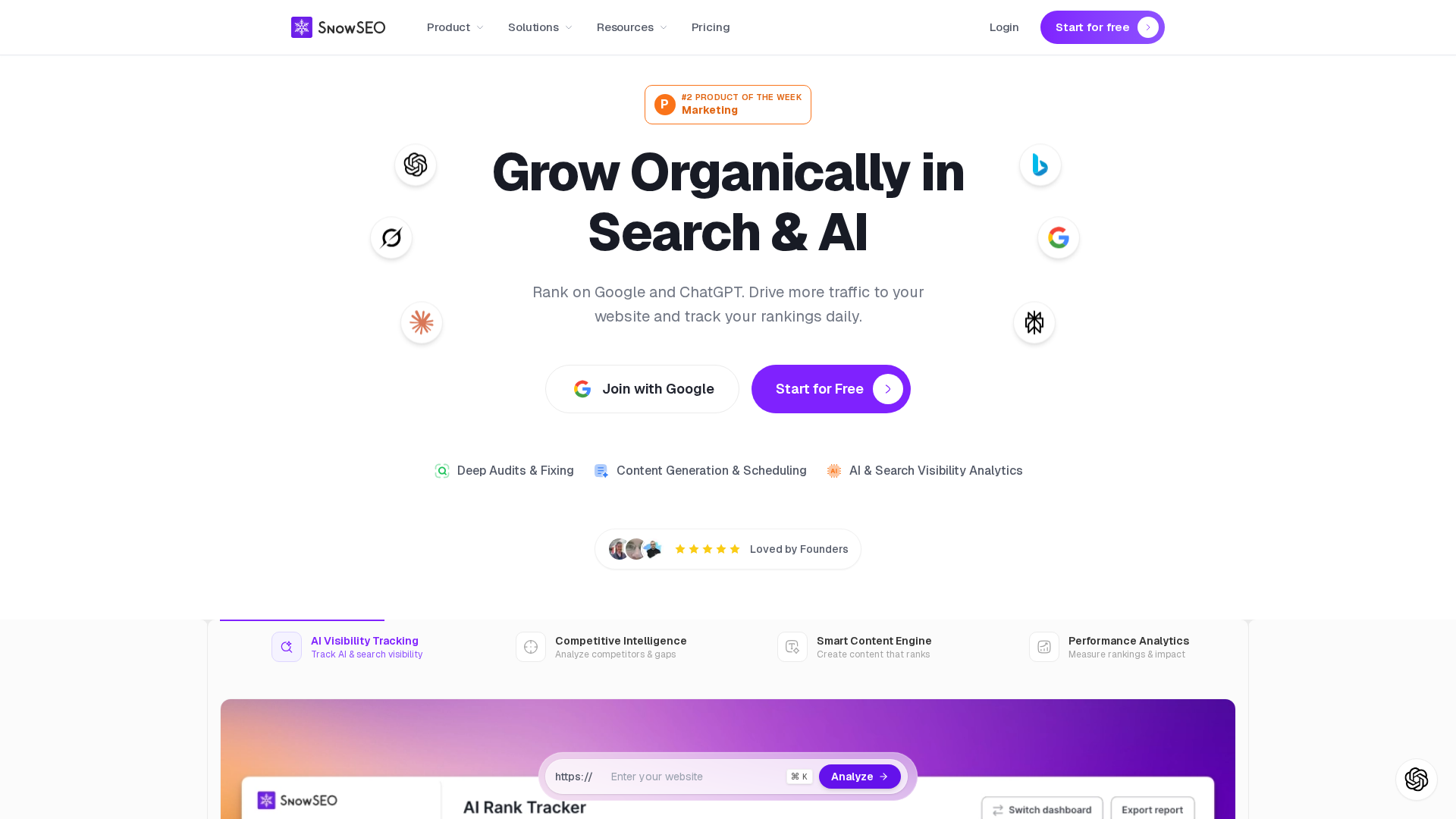
Stop guessing whether rankings or citations drive results. SnowSEO tracks both, in one dashboard. See your full search and AI visibility today.
Frequently Asked Questions
Q1: Rank tracking vs traditional SEO analytics: which is more impactful for 2026 AI search trends?
Use both. Rank tracking shows positions; analytics shows AI citations, traffic, and revenue. SnowSEO combines them, so you see what ranks and what converts.
Q2: How do I track visibility in ChatGPT or Claude?
Track prompts weekly, log citations, and watch traffic from AI sources. Tools like Otterly.ai or Peec AI help; SnowSEO includes AI visibility monitoring.
Q3: What metric matters most for AI search growth?
Citations and conversions, not position ten. If AI answers cite your brand and buyers convert, rankings matter less.
Conclusion
Rank tracking and SEO analytics answer different questions: rankings show position, citations and conversions show outcomes. Since research on 1,645 AI citations found most top AI citations come from pages outside Google’s top 10, measure both separately. Track rankings, AI visibility, and AI referral growth as distinct metrics, then tie each to real business results.
Leave a Reply