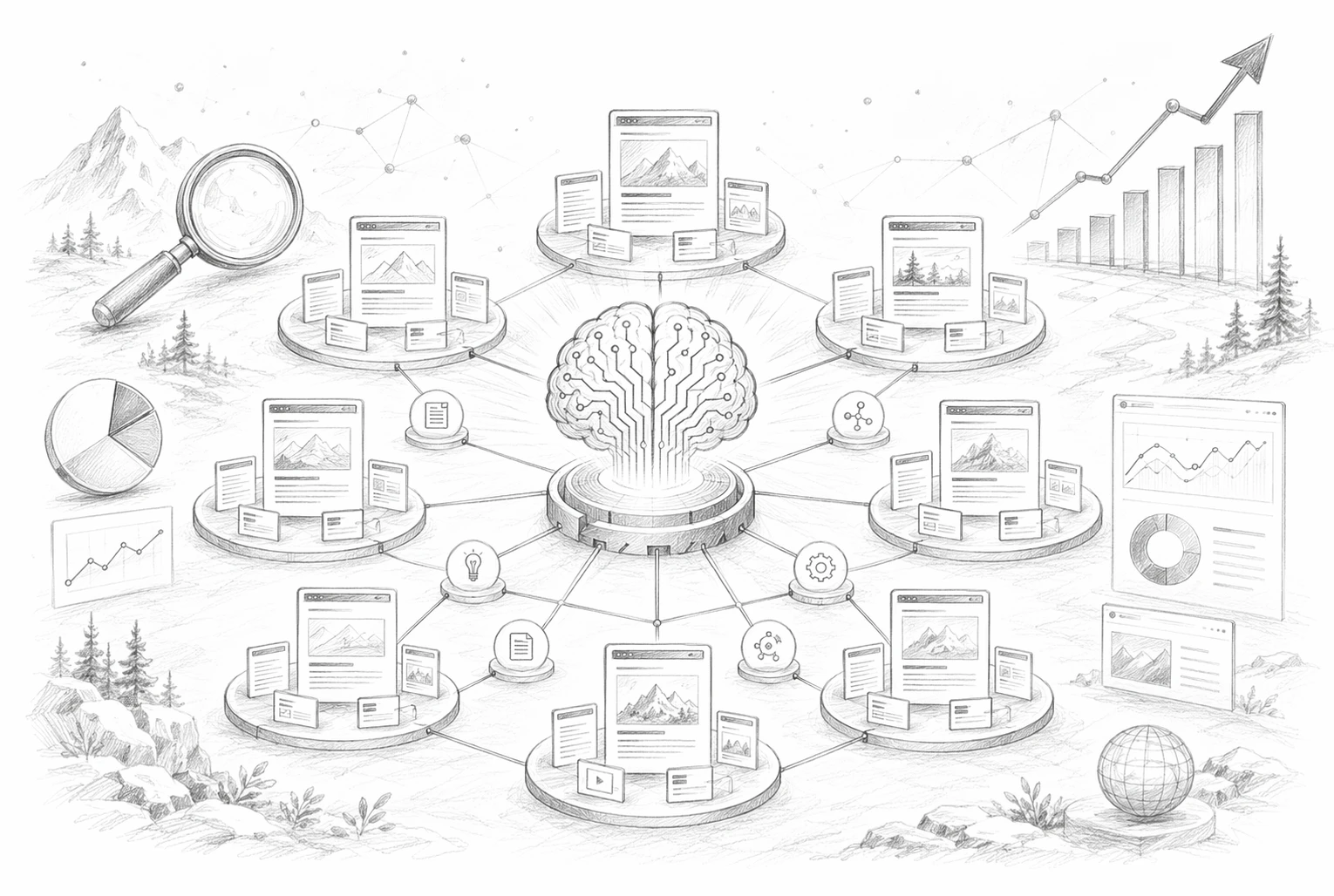
Quick Summary: This guide emphasizes that AI-generated content alone won’t rank well without a strong content strategy, topic clusters, and smart internal linking. It stresses aligning content with buyer intent, building authoritative topic hubs, and continuously measuring and refining performance. Effective AI content marketing combines speed with relevance and clear site structure to improve rankings and generate leads.
A B2B software brand can publish AI-written posts every week and still miss rankings if pages do not connect or match buyer intent. That is the real gap this guide fixes. You need Content Strategy, Topic Cluster Formation, and smart SEI Optimization working together. This playbook shows how strong Content Strategy turns AI output into linked SEO assets, better leads, and a measurable Content Strategy system.
1. Define the business goal behind your content strategy
Start with the result you need. Content should drive a business outcome, not just fill a calendar.
Set the right content KPIs
Match KPIs to the goal. If you want pipeline, track qualified leads, demo requests, and influenced revenue, not just clicks. Content Marketing Institute notes that leadership cares more about ROI and business outcomes than vanity metrics in 2026 The New Rules of Content ROI.
Pick 1 primary KPI and 2 support metrics for each cluster.
Map content to buyer intent
Intent tells you what content to create next. Awareness pages answer basic questions. Consideration pages compare options. Decision pages remove risk. HubSpot says intent-based marketing uses buyer signals to focus on people more likely to buy intent-based marketing.
- Ask what the reader wants
- Match format to that need
- Link pages by journey stage
Also Read: Best SEO Tools: 25 Picks to Improve Rankings in 2026
2. Build topic clusters that create topical authority
Pick one pillar topic your brand can truly own. Google says helpful content should show a clear site focus and enough depth to satisfy readers, not just chase traffic Google Search Central. Good pillar topics usually have:
- broad search intent
- clear business value
- at least several strong subtopics
Use AI to turn that pillar into a topic map. Start with one core query, then ask AI to group related questions by intent, funnel stage, and format. HubSpot’s 2026 guide notes keyword clustering helps build topic authority by grouping terms around one subject HubSpot’s keyword clustering guide.
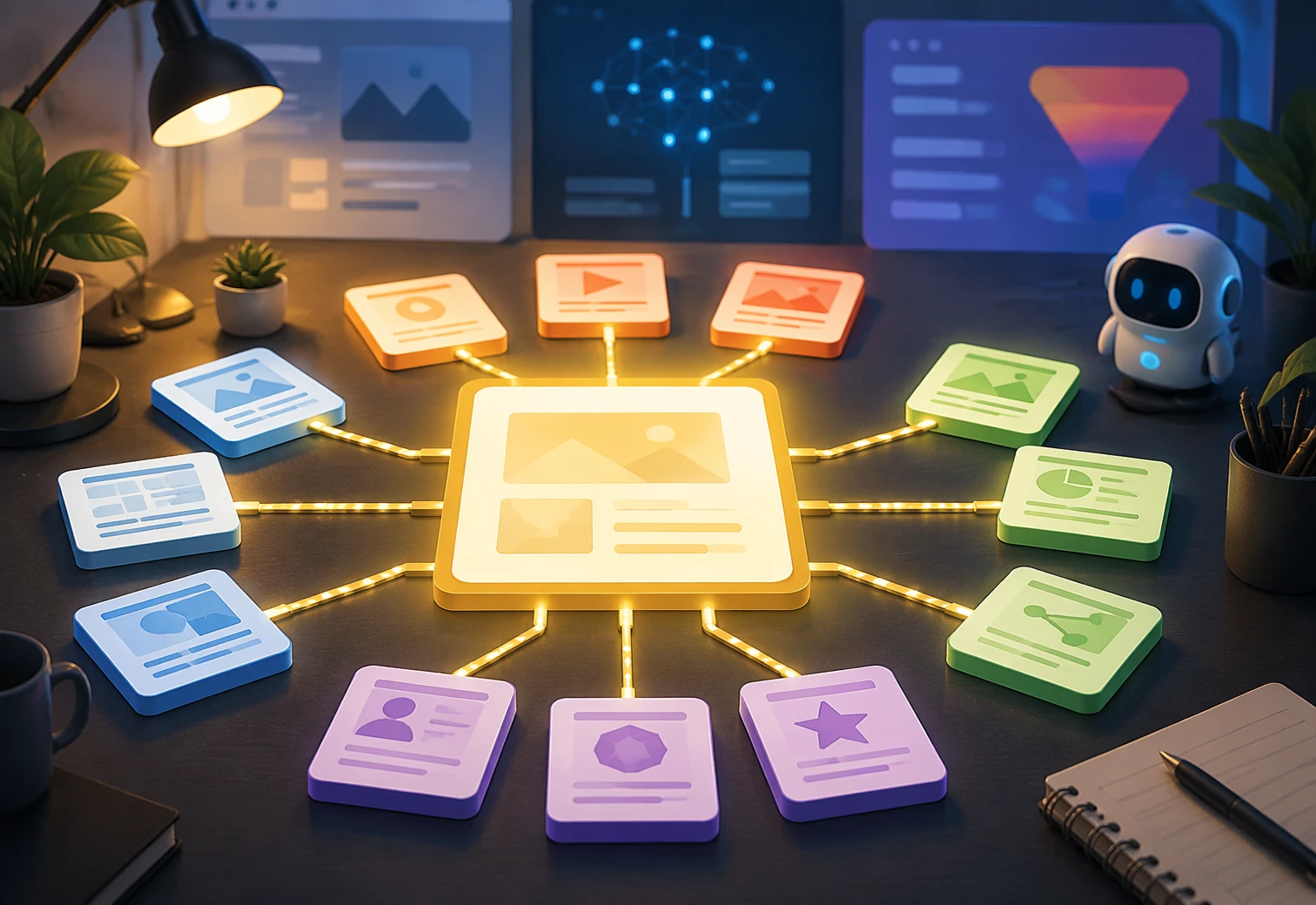
Design links like a hub, not a pile of blog posts.
- Link the pillar to every core cluster page.
- Link each cluster page back to the pillar.
- Add side links only when two cluster pages truly help each other.
Keep anchor text clear and natural. Forced exact matches weaken the structure.
Also Read: AI Content Generation News: New Tools Shaping SEO in 2026
3. Create AI-assisted content that is useful, unique, and searchable
Start with the query, not the draft. Build an outline that matches intent: what the reader wants, what stage they are in, and what proof they need next. Google says helpful content should satisfy people first, not just chase rankings (people-first content guidance).
- Map each section to one question
- Put the clearest answer first
- Cut anything that does not help the task
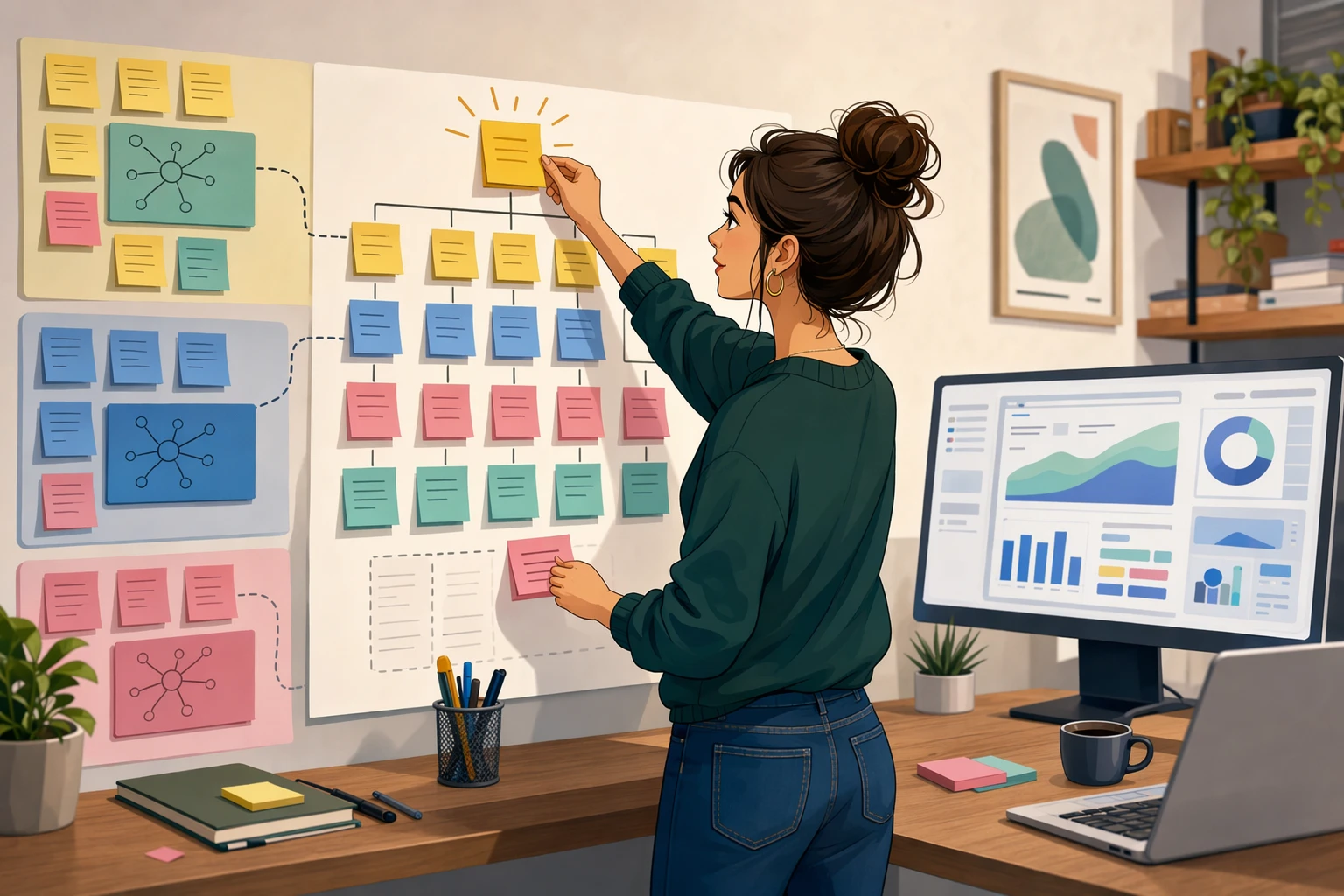
AI gives speed. You still need proof. Add product screenshots, test results, expert quotes, examples, and first-hand notes. Google also says AI content is fine if it adds original value, but scaled low-value pages can trigger spam concerns (AI-generated content guidance).
If the page could fit any brand, it is too generic.
Make the page easy for both search engines and answer engines to parse:
- Use clear headings and direct answers
- Add internal links to cluster pages
- Match titles, summaries, and visible content
- Include schema only when it reflects the page
Also Read: 10 Best Tools for Competitor SEO Analysis in 2024
4. Measure, refine, and scale what is working
Use performance data to choose your next update
Check rankings, clicks, conversions, and assisted leads before you touch a post. Google says core updates reward helpful, people-first content, not quick fixes, so update pages with real demand and weak business results, not just traffic drops Google’s core update guidance. Prioritize:
- High impressions, low CTR
- Good traffic, weak conversion
- Strong links, stale facts
If a page already performs well, avoid random rewrites.
Turn one post into a repeatable system
When one cluster page wins, copy the process, not just the format. Build a simple loop:
- Pick the query pattern
- Reuse the outline logic
- Refresh internal links
- Track leads by page type
Google also warns against scaled content made mainly to manipulate rankings Google’s March 2024 spam policy update. Scale quality controls, not page volume.
Build smarter topic clusters, stronger internal links, and measurable SEO wins with SnowSEO. Run audits, plan content, track rankings, and turn AI content into leads.
Frequently Asked Questions
Q1: How can AI content marketing strategies improve website ranking and lead generation in 2023?
AI speeds up research, content briefs, and updates. That helps you publish around clear search intent, cover supporting topics, and improve internal links. Better relevance lifts rankings. Better journeys from article to offer lift leads.
Q2: What are the key steps to build effective topic clusters using AI for SEO and content authority?
Start with one core topic, map search intent, group related keywords, and assign one page per subtopic. Use AI to find gaps, draft outlines, and suggest links. Then review for accuracy, overlap, and business fit.
Q3: How does AI-powered internal linking enhance topical authority and search rankings?
AI spots pages that should connect based on topic, intent, and page depth. That spreads authority, helps crawlers, and guides readers to the next step. Stronger link paths usually improve coverage, rankings, and conversions.
Conclusion
AI content marketing works when clusters, internal links, and clear intent work together. Google still rewards helpful, people-first content in AI search, not shortcuts, per Google’s guidance and its AI optimization guide.
Leave a Reply