
Quick Summary: New AI search studies show Google rankings no longer predict AI citations, with systems sharing less than 20% of sources across 11,500 queries. Track rankings and AI citations as separate metrics, since a page can rank first on Google yet be skipped in AI answers, and about one-third of AI citations go to non-ranking pages. Use a fixed prompt panel, run each prompt multiple times, and report share-of-runs cited to handle AI’s variability. Platforms like SnowSEO track both metrics in one dashboard to avoid mixing them.
New AI search studies rank tracking teams follow are asking a sharper question: does a Google position predict AI citations? A 2026 SIGIR study of 11,500 queries across Google, Gemini, and AI Overviews found Jaccard similarity below 0.2 – the systems barely share sources. Rankings still matter, but position alone no longer describes visibility. This article compares the studies, explains where rank signals hold up, and shows how to track both without mixing metrics.
Studies Find AI Results Do Not Simply Mirror Google Rankings
Ranking well in Google no longer predicts who gets cited in AI answers. A recent SIGIR study compared Google, AI Overviews, and Gemini across 11,500 queries and found the retrieved sources were substantially different between each, with less than 0.2 average Jaccard similarity.
The pattern repeats elsewhere. A Springer-published audit of 3,000 AI Overview observations calls this Citation-Ranking Divergence: citations stay partly tied to rankings but re-concentrate visibility on a narrower source set. And a Rankability study found about one in three AI citations goes to pages that don’t rank in Google at all. ChatGPT is the extreme case: 77% of its citations point to non-ranking pages, mostly directories and listicles.
These AI search studies make rank tracking look incomplete. That’s the point: rankings and AI citations measure two different systems.
Also Read: SnowSEO – Your Last SEO Platform
Why One Ranking Score Cannot Represent AI Visibility
Recent AI search studies rank tracking in a new light: your Google position and your AI citations are now two different measurements. A Springer study auditing Google AI Overviews across five language regions found citations only partially match rankings. AI re-concentrates visibility on a narrower set of sources, so the same query can rank you first and skip you entirely in the answer.
| Metric | What it tells you |
|---|---|
| Google position | Your page’s rank in a list |
| AI citation | Whether a model quotes you in an answer |
| AI mention | Whether the model names your brand |
Rankability’s 2026 research found 55.2% of top-10 AI citations did not rank in the traditional top 10. One blended score hides that gap. Track them separately.

Also Read: Rank Tracking vs SEO Analytics for AI Search Growth
Repeatability and Query Wording Change the Measurement
Run the same prompt twice and AI engines often cite different sources. A University of St. Gallen study found identical prompts re-run within hours overlapped on only 32-43% of cited sources, so most AI search studies rank tracking now treats visibility as a rate over many runs, not a single position (arXiv).
Wording matters too. Different phrasings of the same question agreed on cited sources only 41% of the time in one test, which is close to the same-day repeat rate, so phrasing sensitivity and run-to-run noise are separate effects you must measure apart (Steady Demand).
Practical fix: fix a prompt panel, run each prompt several times, and report share-of-runs cited.

Also Read: 10 Best Tools for Competitor SEO Analysis in 2024
A More Defensible Scorecard for SEO Teams
Your scorecard should show two numbers side by side: rank and citation share. Recent audits back this up. A Springer study of Google AI Overviews found citations stay “partially anchored” to rankings but re-concentrate visibility onto fewer sources, so either metric alone misleads clients. Build a simple three-column report: page rank, AI citation presence, and trend over time.
| Metric | What It Answers | Cadence |
|---|---|---|
| Organic rank | Can Google find you? | Weekly |
| AI citation rate | Do engines trust you? | Biweekly |
| Divergence flag | Where the two disagree | Monthly |
Platforms like SnowSEO track both in one dashboard, which keeps the story clean for clients.
Tip: When rank and citations move in opposite directions, investigate before reporting. One study found about a third of AI citations go to pages that don’t rank in Google at all.
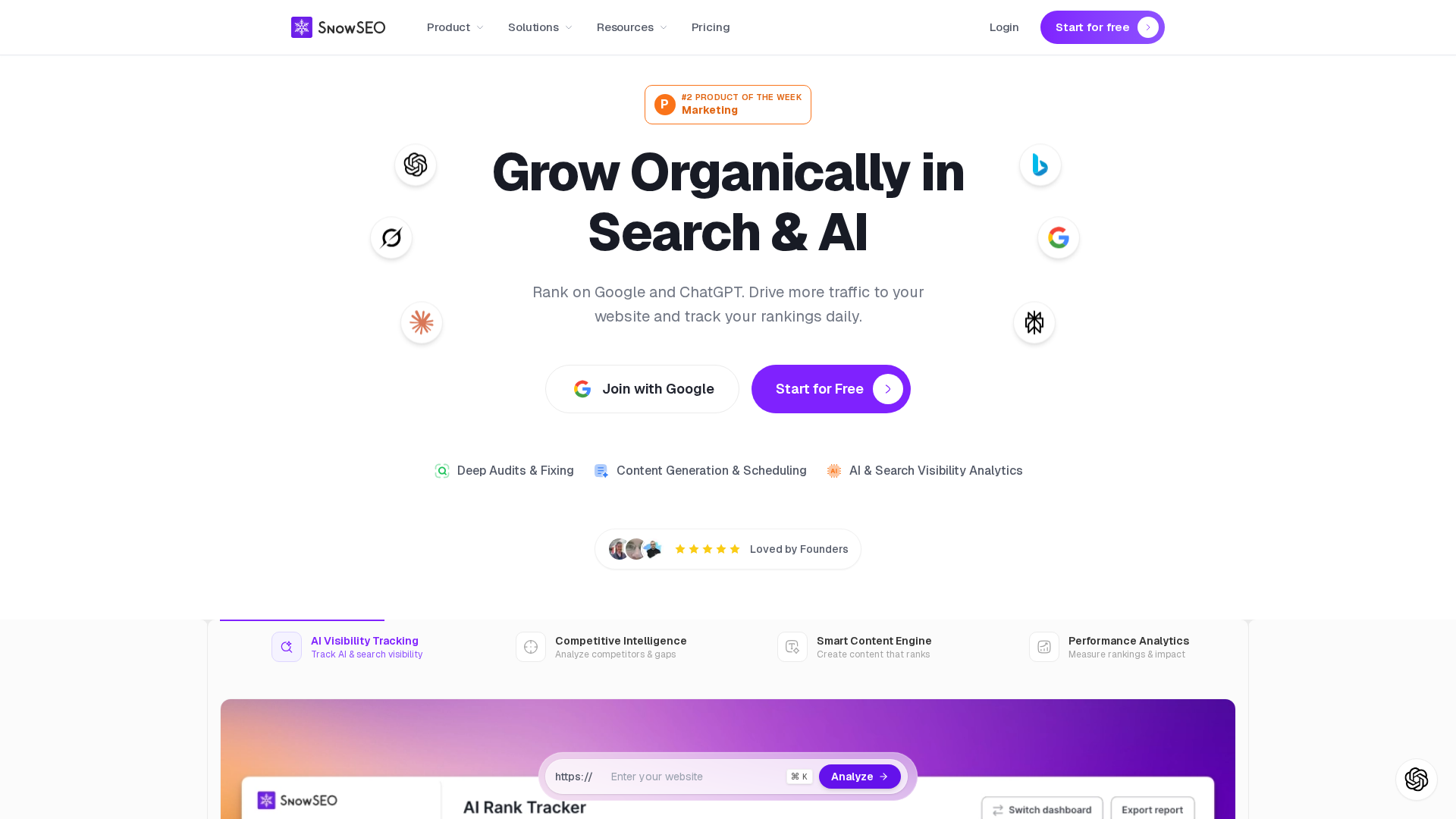
Rankings and AI citations tell different stories. SnowSEO tracks both in one place, so your reports never mix the metrics. Start your free trial today.
Frequently Asked Questions
Q1: What do new AI search studies reveal about measuring rankings and visibility?
Classic rankings and AI citations often diverge. A page can rank top on Google yet rarely appear in ChatGPT answers, so teams now track both metrics separately to see the full picture.
Q2: Should I replace rank tracking with AI visibility tracking?
No. Use both. Rankings still drive clicks and sales, while AI visibility shapes brand mentions. SnowSEO tracks both in one dashboard, so you avoid juggling separate tools.
Q3: How often should I check AI citations for my brand?
Weekly works for most teams. Run a fixed set of prompts, log where you appear, and watch trends monthly. Daily checks waste time unless you just launched a big campaign.
Q4: What’s causing rankings and AI answers to disagree?
AI engines pull from varied sources and favor cited, well-structured content. Strong rankings help, but clear answers, fresh data, and third-party mentions often decide whether AI platforms cite you.
What Rank Tracking Should Measure Next
Rankings still matter, but they no longer tell the whole story. With citation overlap rising unevenly across industries, track both SERP positions and AI citations, and report them as separate metrics.
Leave a Reply