Category: SEO Strategy

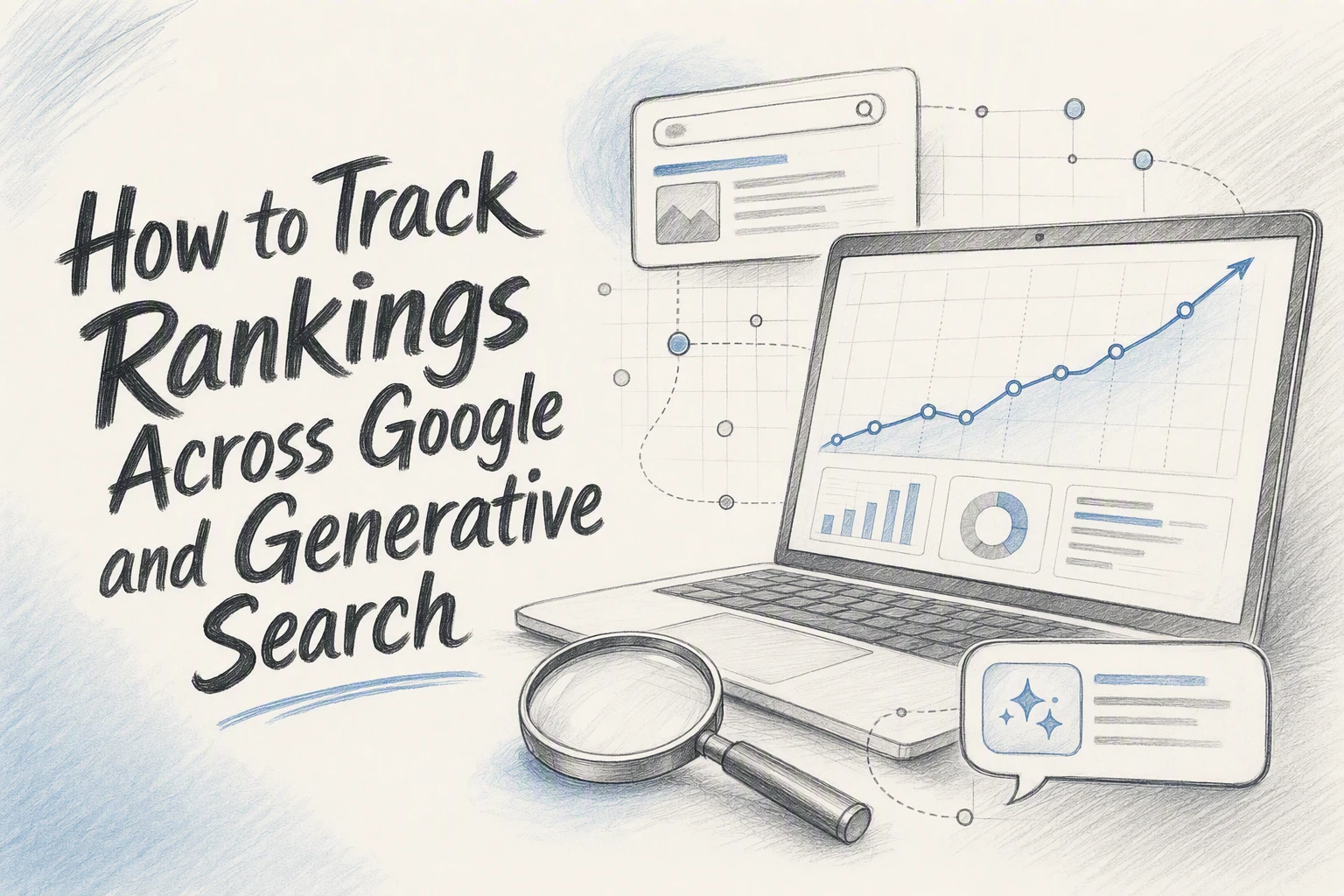
  • How to Track Rankings Across Google and Generative Search

    How to Track Rankings Across Google and Generative Search

    Quick Summary: A brand can rank third in Google but disappear entirely when users ask AI tools like ChatGPT, exposing a blind spot in traditional rank tracking. The fix is to track both Google’s position data (clicks, impressions) and generative search mentions (citations, answer share) separately, then compare them by keyword and page to spot gaps-like competitors ranking higher or earning AI citations. SnowSEO helps automate this by grouping gaps (e.g., missing citations, weak pages) and turning them into actionable updates, like adding expert-backed answers or refreshing underperforming content. The key move is treating AI visibility as a distinct metric, not a substitute for Google rankings, and updating content based on where you’re actually losing visibility.

    A client may rank third in Google for a high-value term, then vanish when buyers ask ChatGPT, Perplexity, or Google AI Mode for a recommendation. That gap makes old rank reports incomplete. Cross-platform rank tracking shows where brands appear, get cited, or lose ground. This guide gives agencies and SEO teams a clear cross-platform rank tracking workflow, so they can turn missing visibility into focused content and SEO actions.

    Step 1: Define What You Will Track on Each Search Surface

    Build a Keyword and Prompt Set

    Start with priority keywords, then pair each with realistic buyer prompts. Group both by topic, funnel stage, country, device, and page.

    1. Track core commercial and informational queries in Google.
    2. Track direct questions users may ask ChatGPT or Claude.
    3. Record the expected landing page and key competitors.

    This makes cross-platform rank tracking useful, not noisy.

    Keyword prompts flow into search and AI rankings
    Keyword prompts flow into search and AI rankings

    Use Different Metrics for Different Results

    Google gives measurable positions, impressions, clicks, and CTR. Search Console defines these core metrics, so track rank movement alongside traffic.

    Search surface Track What it shows
    Google Position, impressions, clicks, CTR Search demand and visits
    Generative search Mentions, citations, answer share Brand visibility in answers

    Do not treat an AI mention as a Google ranking. Cross-platform rank tracking needs separate scorecards.

    Also Read: 10 Must-Have Tools to Streamline Your SEO in 2025

    Step 2: Connect Google Ranking Data With Generative Search Visibility

    Start With Google Search Console

    Use Search Console to set your Google baseline. Export queries, pages, clicks, impressions, CTR, and average position. Google confirms these metrics show how users find and click your site in Search in its Performance report guide.

    Google Search Console metrics dashboard comparison
    Google Search Console metrics dashboard comparison

    Fill the Measurement Gaps

    Add a prompt list for ChatGPT and Claude. Record whether your brand appears, which page gets cited, and the answer context.

    Google signal Generative search signal
    Average position Brand mention or citation
    Clicks and CTR Citation quality and context

    A top Google rank does not guarantee an AI citation. Track both weekly.

    Also Read: 10 New Keyword Research Techniques to Try Now

    Step 3: Turn Competitor and Citation Gaps Into Optimization Work

    Find the Most Actionable Gaps

    Start with queries where competitors rank or earn AI citations and you do not. Prioritize pages with buying intent, clear traffic value, and a close match to your offer.

    Gap Best first action
    Competitor ranks higher Improve the existing page
    Competitor gets cited Add clear answers and proof
    You have no relevant page Create a focused page

    Google recommends original, helpful content with clear sourcing and real expertise. See its people-first content guidance.

    Choose the Right Optimization Response

    Do not copy a competitor’s page. Fill the missing need with stronger examples, updated facts, expert input, and direct answers. SnowSEO can help group gaps by ranking loss, citation loss, and page type.

    1. Refresh weak pages first.
    2. Add cited evidence and useful headings.
    3. Track rankings and citations after release.

    Also Read: 10 Best Tools for Competitor SEO Analysis in 2024

    Step 4: Standardize Agency Reporting and Optimization Reviews

    Create a Client Reporting View

    Give every client the same one-page view. Separate Google results from generative search evidence, then show change against the prior month. Google defines clicks, impressions, CTR, and average position in its Search Console Performance report.

    Area Report
    Google Search Clicks, CTR, rankings, page gains
    Generative search Brand mentions, cited URLs, prompt coverage
    Action plan Owner, due date, expected outcome

    Do not combine AI mentions with Google rankings. They measure different outcomes.

    Run a Monthly Optimization Loop

    Use the report to choose a short list of fixes, not a long wish list.

    1. Find pages with falling clicks or weak CTR.
    2. Check missed prompts and competitor citations.
    3. Update content, internal links, proof, and page titles.
    4. Log each change and review the result next month.

    Keep priorities tied to business value. SnowSEO can centralize the tracking evidence and audit tasks.
    Homepage
    Homepage

    Track Google rankings and AI visibility in one place. Use SnowSEO to spot gaps, audit pages, and act on clear search data.

    Frequently Asked Questions

    Q1: How can agencies implement SnowSEO for advanced rank tracking and optimization of generative AI visibility?

    Set client topics, target prompts, and Google keywords. Review ranking changes beside AI mentions, then turn missing citations into content briefs and audit tasks.

    Q2: How often should I check rankings?

    Check weekly for trends. Review daily only during launches, major site changes, or volatile search periods.

    Q3: What counts as generative search visibility?

    Track brand mentions, cited pages, answer placement, and prompt coverage. These signals differ from a standard Google position.

    Conclusion

    Track Google rankings and generative mentions separately, then join them by topic and page. Google defines position as a relative result rank; AI visibility signals citation and answer presence. Use both to find gaps and improve content.
  • SnowSEO Rank Tracking Review: Alerts, Reports, and Coverage

    SnowSEO Rank Tracking Review: Alerts, Reports, and Coverage

    Quick Summary: SnowSEO combines daily Google rank tracking with Google Search Console data to show keyword shifts and traffic demand-but alerts alone aren’t enough to act on, since rankings fluctuate naturally and require cross-checking with clicks, impressions, and device filters. The tool’s real strength lies in its granular reports, exports, and API access for teams, letting them filter by country, device, or keyword group before sharing client updates. A trial should confirm whether automated alerts actually trigger in time, as the tool’s value depends on validating ranking drops with GSC’s more stable traffic signals. It’s best suited for teams needing a unified workspace to spot trends, not just chase every position swing.

    A ranking drop matters most before a client spots the traffic loss. This SnowSEO rank tracking review looks at daily Google checks, Google Search Console links, and keyword gains or losses in one workspace. The real question is whether alerts and reports give teams enough warning and proof to act fast. This SnowSEO rank tracking review separates documented coverage, exports, insights, and API access from alert claims that need closer review.

    How SnowSEO Tracks Rankings and Detects Changes

    SnowSEO combines tracked keyword positions with Google Search Console data to show both rank movement and search demand. Treat these as different signals, not matching numbers.

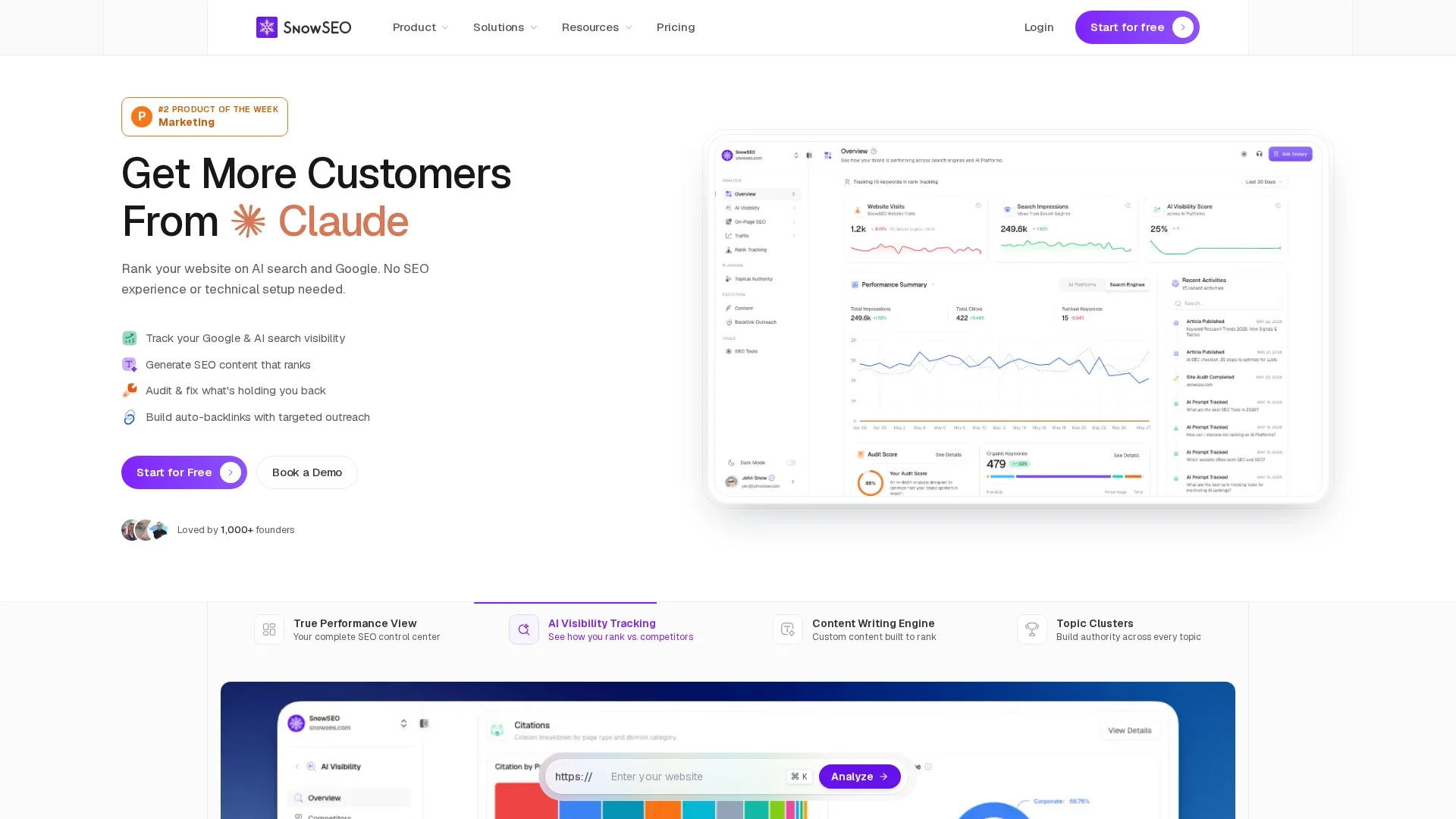
    SnowSEO
    SnowSEO

    GSC Data Versus Live SERP Tracking

    GSC reports clicks, impressions, CTR, and average position from real Google searches. Google notes that position is an average and can vary by device, place, and user history in its Performance report guide.

    Signal Best use
    GSC data Find traffic and demand shifts
    SERP tracking Watch a chosen keyword’s rank

    What Counts as a Ranking Alert

    A useful alert flags a material change, then gives the keyword, landing page, date, and direction. Check the result before acting:

    1. Confirm the drop across several days.
    2. Compare clicks and impressions in GSC.
    3. Check whether the ranking URL changed.

    Do not treat every position swing as a problem. Search results naturally vary.

    Also Read: 10 New Keyword Research Techniques to Try Now

    Reports, Exports, and Coverage for Teams

    Coverage Controls That Matter

    Set coverage by country, device, search type, keyword group, and landing page. That makes client reports useful, not noisy. Pair rank changes with Search Console clicks, impressions, CTR, and average position. Google lets teams filter these views by queries, pages, countries, devices, and search appearance in its Performance report.

    Control Team use
    Keyword tags Split brands, products, and markets
    Device filters Catch mobile-only losses
    Page groups Assign fixes to owners
    Data-driven workflow connecting keyword insights device filters and team reports
    Data-driven workflow connecting keyword insights device filters and team reports

    Exported Search Console tables can be limited to 1,000 shown rows, so check scope before sharing.

    Can You Send Automated Reports?

    Do not assume SnowSEO sends scheduled email reports or alerts unless your plan confirms it. Its documented daily tracking and data views support review, but notification promises need proof.

    1. Export the filtered view.
    2. Add a short action note.
    3. Send it on a fixed weekly cadence.

    Google supports CSV, Excel, and Sheets exports from reports, as its export guide confirms.

    Also Read: 10 Must-Have Tools to Streamline Your SEO in 2025

    Pros and Cons for SEO Workflows

    SnowSEO can keep rank checks, audits, keyword work, and content tasks in one place. That cuts tab switching and makes client updates easier.

    Workflow area Upside Watch-out
    Rank tracking Clear daily trend checks A ranking shift needs context
    Reports Faster team sharing Confirm the fields each client needs
    GSC data Adds clicks and impressions Fresh data can still change
    SEO manager analyzing rank alerts beside client report
    SEO manager analyzing rank alerts beside client report

    Google Search Console tracks clicks, impressions, CTR, and average position, but its newest data may be preliminary, as Google explains.

    • Use alerts to flag sharp changes.
    • Check device, country, and page before acting.
    • Export reports for review.

    Warning: Do not treat a single ranking drop as a traffic loss.

    Also Read: 10 Organic Growth Strategies to Drive Traffic in 2025

    Is SnowSEO Rank Tracking Worth It?

    SnowSEO is worth testing if your team needs rank checks beside audits, keywords, and AI visibility work.

    Use it to spot movement, then validate impact in Google Search Console. Google reports clicks, impressions, CTR, and average position, but position is an average, not a fixed rank. Google explains the limits.

    Good fit Check first
    One team needs one SEO workspace Alert rules, exports, and API access
    You review ranking trends weekly Location, device, and SERP feature coverage

    Do not buy for alert promises alone. Confirm notification timing during a trial.

    1. Add a small keyword set.
    2. Compare results with GSC.
    3. Test a report export before rollout.

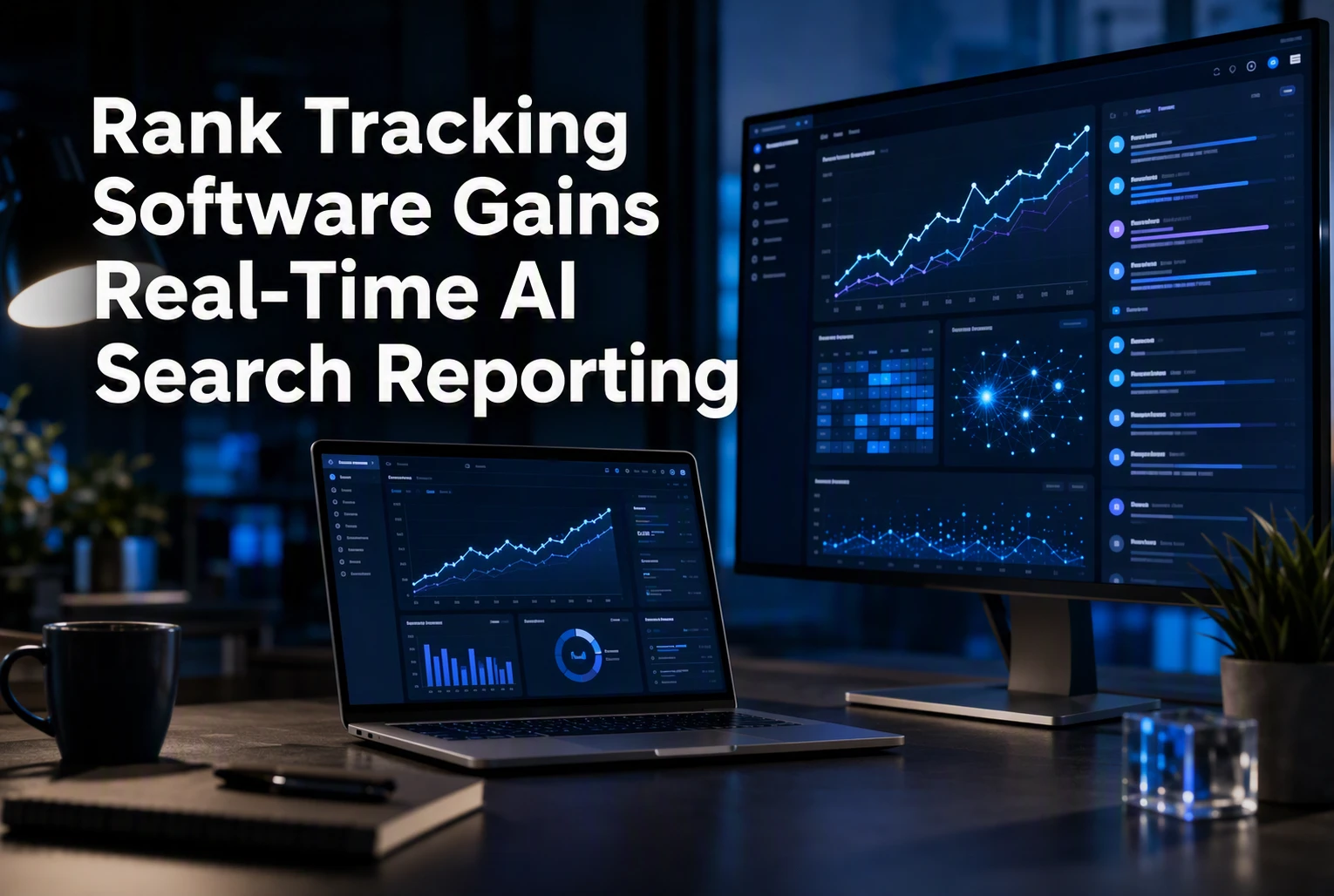
    Also Read: Rank Tracking Software Gains Real-Time AI Search Reporting

    Homepage
    Homepage

    Get daily rank tracking, clear reports, and wider SERP coverage in one place. Try SnowSEO to spot changes before they cost traffic.

    Frequently Asked Questions

    Q1: Does SnowSEO provide automated alerts and reports in its rank tracking system?

    SnowSEO documents daily rank tracking, exports, and reporting data. Confirm alert triggers, delivery timing, and report scheduling during a product demo before relying on them for client workflows.

    Q2: Can I track Google Search Console data?

    Yes, connect Search Console to compare tracked keywords with clicks, impressions, and page data.

    Q3: Does rank tracking cover AI search results?

    Check which AI platforms, prompts, locations, and result types SnowSEO tracks for your plan.

    Conclusion

    SnowSEO’s documented daily tracking, GSC data, SERP coverage, and exports support practical reporting. Treat alerts and API claims with care. Google confirms reporting data can be preliminary.

  • Rank Tracking Software Gains Real-Time AI Search Reporting

    Rank Tracking Software Gains Real-Time AI Search Reporting

    Quick Summary: Real-time AI rank tracking isn’t live updates-it’s daily scans of fixed prompts across ChatGPT, Google AI Mode, and Gemini, but tools vary wildly in how they log mentions, citations, and answer shifts. Google’s AI Overviews don’t work like traditional rankings; they pull different links and can omit your site entirely, so tracking must focus on brand mentions, linked sources, and answer context-not just position. SnowSEO explicitly ties rank tracking to AI visibility, letting teams spot gaps in mentions or citations before competitors do. The key is saving full answers, testing prompts across models, and treating daily changes as signals, not definitive proof.

    Rank tracking now reaches beyond Google. In 2026, Semrush tracks selected prompts daily across ChatGPT, Google AI Mode, and Gemini. Other tools report AI visibility across ChatGPT and, often, Claude. Yet real-time AI rank reporting means different things across vendors. Daily scans, weekly checks, and live dashboards are not equal. This guide tests real-time AI rank reporting against refresh rates, prompt position, citations, competitors, and answer changes.

    AI Rank Reporting Is Becoming a Daily Workflow

    What Vendors Mean by Real-Time

    Real-time AI rank reporting rarely means a live, second-by-second feed. It usually means a tool reruns a fixed set of prompts on a daily schedule, then logs what changed.

    Google itself says AI Overviews appear only when its systems find them helpful, and results can vary by query. Its AI features also surface supporting links, not a fixed rank list, as explained in Google Search Central’s guidance.

    Real-time AI search workflow visualization
    Real-time AI search workflow visualization
    Claim What to verify
    Real-time Exact refresh time and timezone
    AI position Prompt, market, device, and model used
    Citation tracking Linked source URL and captured answer
    Visibility score Formula and prompt sample size

    Tip: Treat daily changes as signals, not proof. AI answers can shift between checks.

    • Save answer snapshots.
    • Separate mentions from citations.
    • Flag meaningful changes for review.

    Also Read: 10 Organic Growth Strategies to Drive Traffic in 2025

    Which Trackers Cover ChatGPT and Claude?

    Coverage Is Only the First Test

    Several AI visibility platforms claim ChatGPT and Claude coverage, but the label alone proves little. Ask whether the tool runs the same saved prompts on both models and records answers separately.

    Side-by-side AI model comparison dashboard
    Side-by-side AI model comparison dashboard

    A useful report should show:

    Check Why it matters
    Brand mention Shows if the answer names you
    Citation or source URL Shows which pages support the answer
    Answer context Reveals how the model describes you
    Prompt history Separates a trend from one random result

    Ahrefs’ ChatGPT tracking guide treats mentions, citations, and share of voice as separate signals. Claude needs its own view because its answers may cite and frame brands differently.

    Do not call this a rank. AI answers have no fixed position. Track presence, source support, and change over time.

    Also Read: SnowSEO – Your Last SEO Platform

    The Metrics Behind a Useful AI Rank Report

    Position Is Not the Same as a Google Ranking

    An AI answer has no fixed blue-link rank. It can mention your brand, cite a page, quote your facts, or omit you entirely. Google says AI Overviews and AI Mode can use different models and return different links, so a useful report must log the exact prompt, platform, country, device, and check time. Google confirms that these results vary.

    Track these signals:

    Metric What it shows
    Mention rate How often your brand appears
    Citation rate How often your URL is linked
    Answer position Where the mention appears
    Share of voice Your mentions versus rivals

    Do not call a citation “rank one.” It is an answer placement, not a standard organic ranking.

    1. Save the full answer.
    2. Count mentions and links.
    3. Compare changes by prompt group.

    Also Read: 10 Must-Have Tools to Streamline Your SEO in 2025

    How Teams Should Validate a Real-Time AI Reporting Tool

    A Five-Point Verification Checklist

    “Real-time” should mean a fresh, repeatable check, not a daily data refresh labeled differently. Google notes that AI features can vary by query and may not trigger at all, so test across a fixed prompt set and location. Google’s guidance also confirms that AI results can surface different links than classic search.

    1. Timestamp every result – show the exact check time, timezone, and platform.
    2. Repeat key prompts – run them twice to spot unstable mentions or citations.
    3. Separate metrics – report answer position, brand mention, linked citation, and share of visibility separately.
    4. Keep proof – save the full answer and source links for each result.
    5. Test exclusions – confirm the tool records no-answer and no-citation cases.
    Check Pass condition
    Freshness A visible, precise timestamp
    Evidence Stored answer and citations

    Treat a mention without a citation as awareness, not traffic potential.

    Homepage
    Homepage

    Track search ranks, AI mentions, and citations in one place. Try SnowSEO to spot visibility gaps and act faster.

    Frequently Asked Questions

    Q1: Which rank trackers provide real-time insights and integrate with AI platforms like ChatGPT and Claude?

    SnowSEO combines rank tracking with AI visibility checks for ChatGPT and Claude, helping teams track mentions, citations, and answer placement.

    Q2: What should AI search reporting measure?

    Track brand mentions, linked citations, answer position, prompt coverage, and competitor presence.

    Q3: How often should teams review AI visibility?

    Review weekly for trends, then check after major content changes or campaign launches.

    Conclusion

    Real-time AI search reporting must separate rankings from mentions, citations, and visibility. Google’s report tracks generative impressions, but teams still need clear, prompt-level context to judge impact.

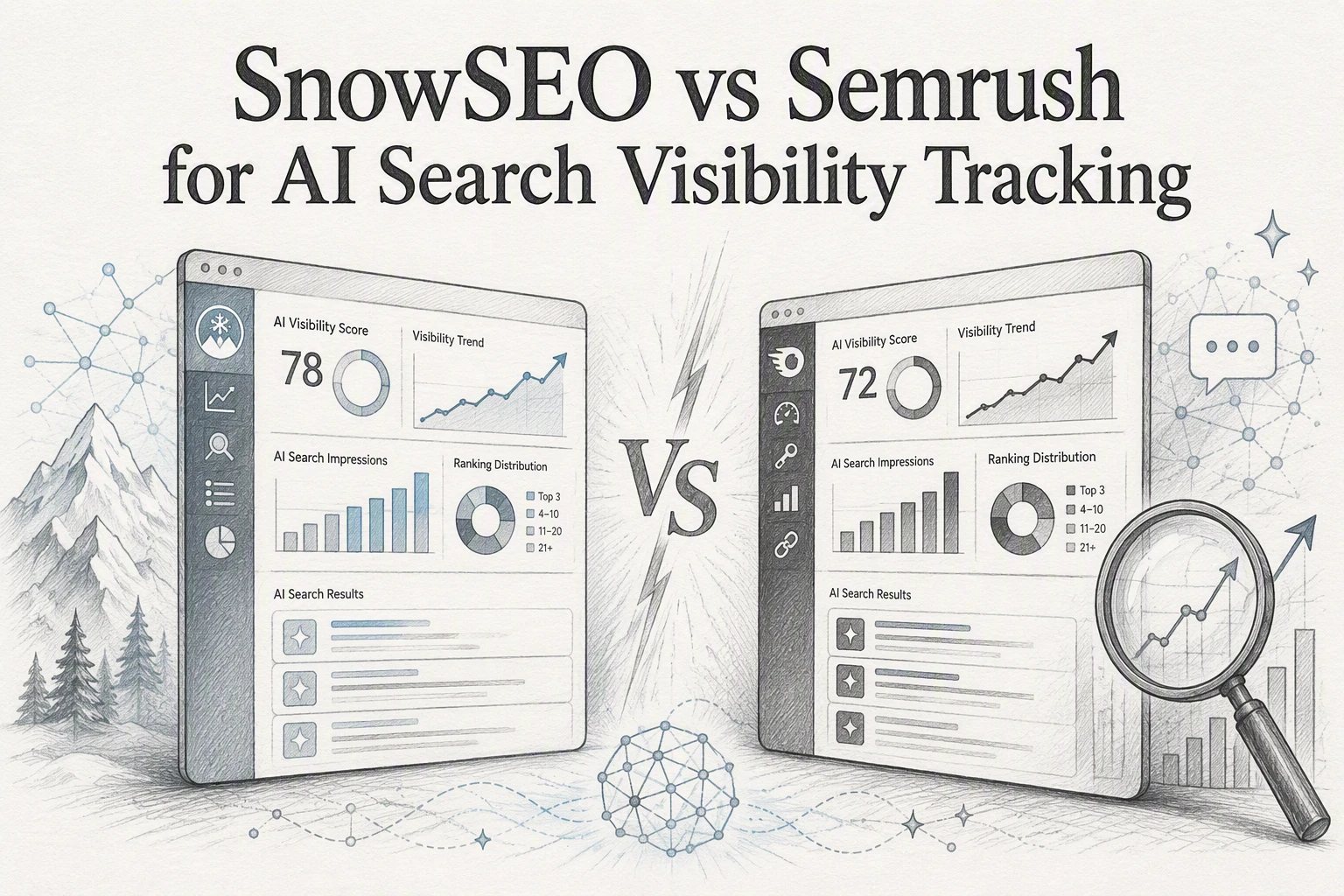
  • SnowSEO vs Semrush for AI Search Visibility Tracking

    SnowSEO vs Semrush for AI Search Visibility Tracking

    Quick Summary: Your Google rankings don’t matter if AI tools like ChatGPT ignore your brand-so SnowSEO bundles AI visibility tracking (mentions, citations, sentiment) directly into its SEO workflow, making it ideal for lean teams that need actionable insights without switching tools. Semrush, meanwhile, excels at deep AI prompt tracking across platforms (ChatGPT, Gemini) and competitor benchmarking, but its $99/month AI plan and sprawling suite suit larger teams already using its tools. The key difference: SnowSEO ties visibility data to audits and content tasks in one place, while Semrush delivers broader market context for teams prioritizing research over execution.

    Strong Google rankings mean little if ChatGPT or Gemini never mentions your brand. This AI search visibility tracking comparison tests SnowSEO and Semrush on AI mentions, citations, competitor gaps, and action steps. SnowSEO suits lean teams needing one workflow. Semrush fits teams using its wider SEO suite and AI Visibility Toolkit. This AI search visibility tracking comparison focuses on data you can use.

    SnowSEO vs Semrush: AI Visibility Tracking at a Glance

    SnowSEO Semrush AI Visibility Toolkit
    Primary tracking model Google keywords plus AI prompts and brand visibility AI prompts, brand visibility reports, and traditional Position Tracking
    AI visibility signals Mentions, citations, sentiment, share of voice, visibility score Visibility score, mentions, citations, cited pages, sentiment, average position
    Traditional rank tracking Daily keyword tracking with GSC and live SERP data Mature daily position tracking across locations and devices
    Competitive analysis Competitor visibility, SOV, citations, and ranking comparisons Competitor visibility, prompt gaps, cited sources, and benchmarks
    Optimization workflow Keywords, clusters, content, audits, outreach, and publishing Research, audits, reporting, and connected Semrush toolkits
    Best fit Lean teams, SMBs, agencies seeking an integrated workflow Existing Semrush users, larger SEO teams, and agencies needing depth

    How SnowSEO and Semrush AI Visibility Toolkit Compare

    SnowSEO

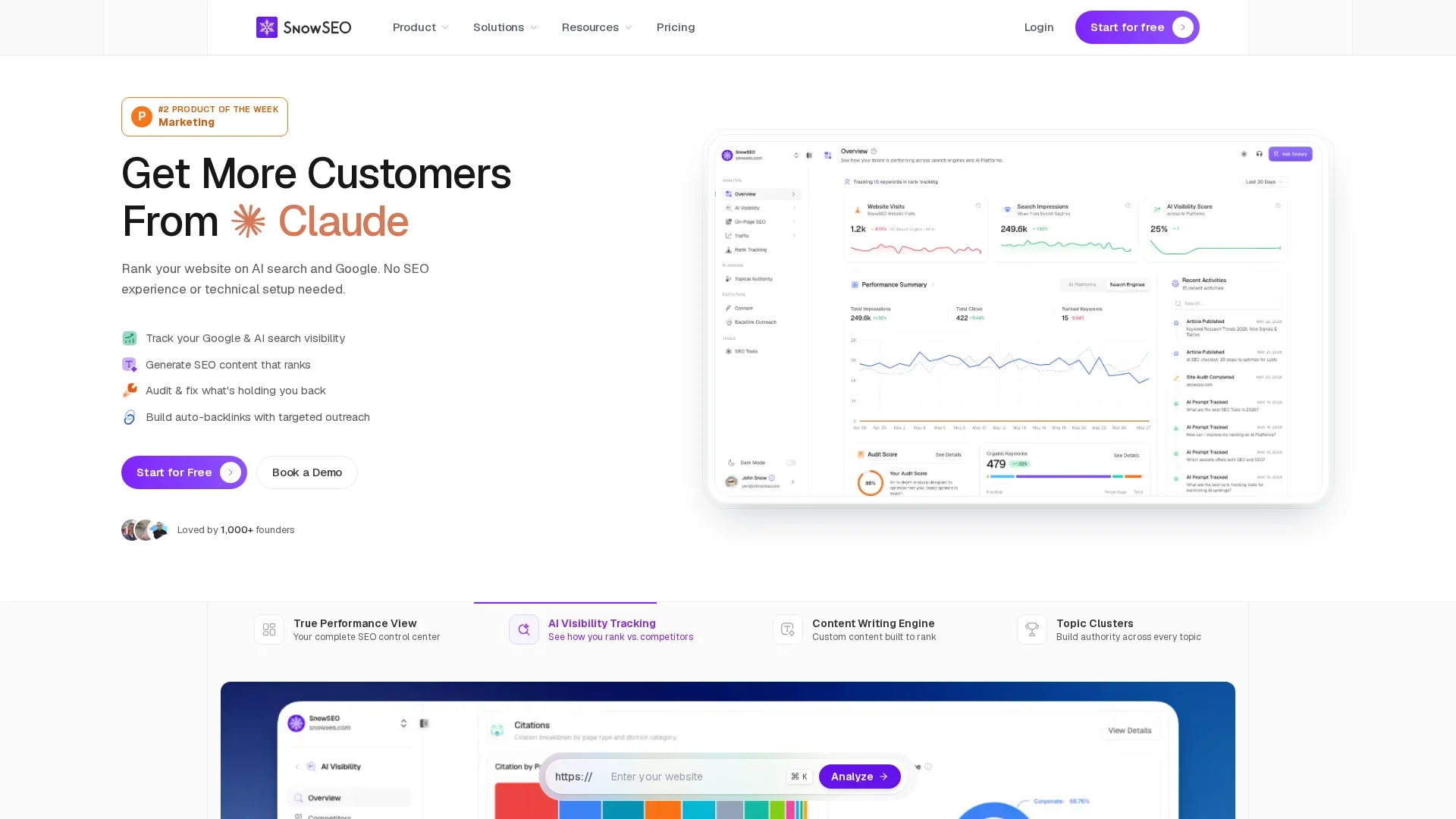
    SnowSEO unifies Google rank tracking with AI prompt, brand, and competitor visibility in one SEO and GEO workflow. It suits lean teams, SMBs, and agencies that need data tied to content, audits, outreach, and publishing in this AI search visibility tracking comparison.
    SnowSEO

    Semrush AI Visibility Toolkit

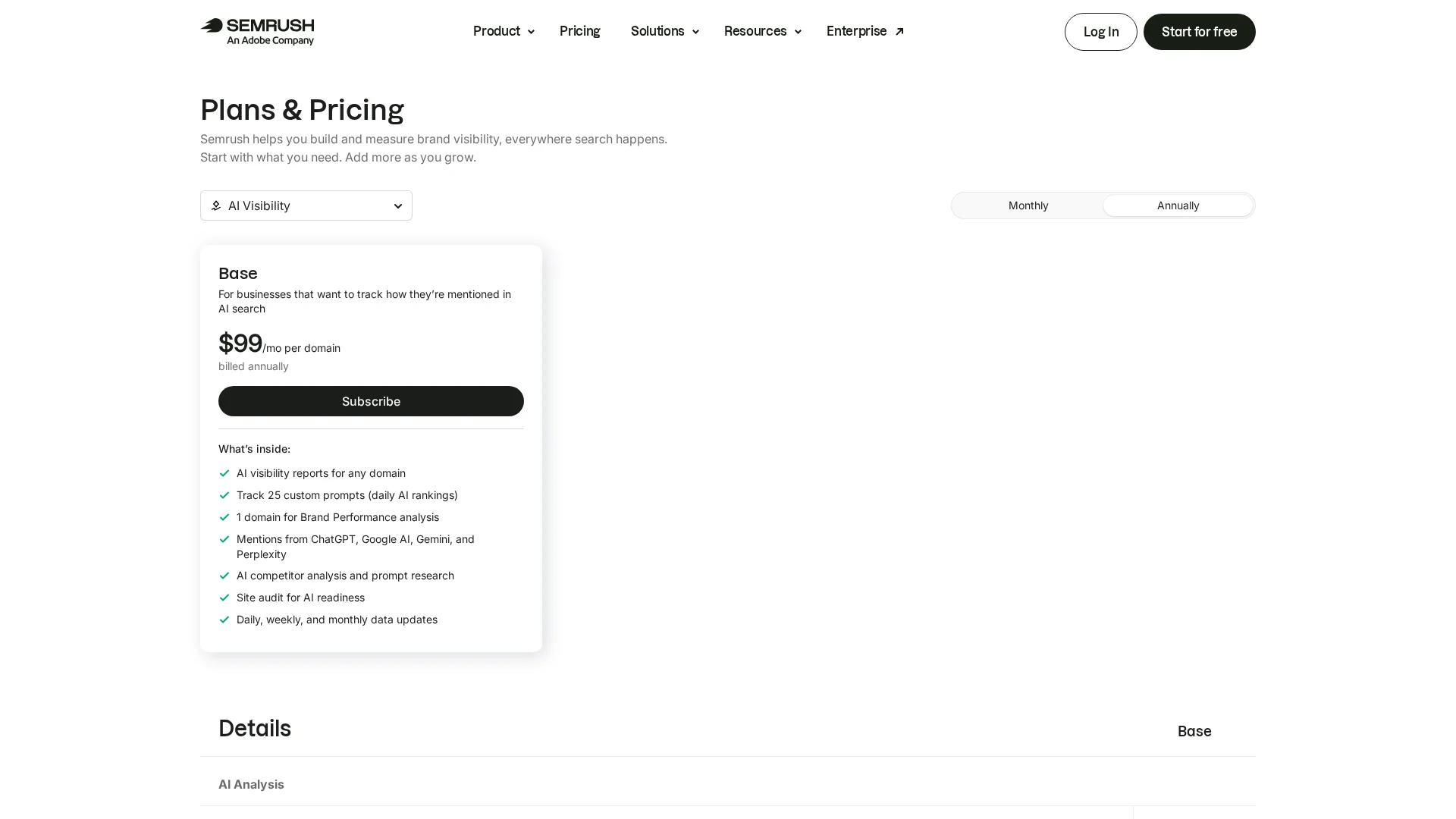
    Semrush adds AI prompt tracking, citations, sentiment, and competitor research to its established SEO suite. It fits existing Semrush users and larger teams needing depth, with daily prompt tracking across key AI platforms.
    Semrush AI Visibility Toolkit

    What Each Platform Actually Tracks

    From Keyword Positions to AI Answer Presence

    Traditional rank tracking measures where a page sits in search results. AI tracking asks whether your brand, page, or citation appears inside an answer.

    Platform What it tracks
    SnowSEO Keyword ranks, AI platform visibility, citations, audits, and competitor gaps
    Semrush AI mentions, cited pages, prompt visibility, sentiment, and average citation position

    Semrush tracks prompts across ChatGPT, Google AI Mode, and Gemini, including daily changes and cited domains, as its Prompt Tracking guide explains.

    Tip: Track citations and mentions separately. A brand mention builds awareness; a cited page shows content AI systems use.

    Also Read: 10 Organic Growth Strategies to Drive Traffic in 2025

    Coverage, Competitor Insights, and Reporting Compared

    Which Tool Gives More Actionable Competitive Context?

    Semrush offers broader AI coverage and clear competitor benchmarks. Its reports compare mentions, citations, audience, and prompt gaps across major AI platforms. You can add up to four rivals, then find prompts where they appear and you do not, as outlined in Semrush’s competitor report.

    Competitor gap analysis dashboards side by side
    Competitor gap analysis dashboards side by side

    SnowSEO is the better fit when your team needs those gaps tied to execution in one workspace.

    Need Better fit
    Cross-platform benchmark reporting Semrush
    Audit, content, tracking, and competitor work together SnowSEO

    Track prompt gaps, cited pages, and competitor mentions. A visibility score alone does not tell your team what to fix.

    • Use Semrush for wide market reporting.
    • Use SnowSEO to turn findings into SEO tasks.

    Also Read: 10 Best Tools for Competitor SEO Analysis in 2024

    Workflow and Value: Tracking Data That Leads to Action

    Cost and Workflow Fit Matter More Than Feature Count

    Pick the tool that turns a visibility drop into a clear task. Semrush tracks daily prompts, competitors, citations, and AI search issues, but its AI Visibility plan starts at $99 per domain per month. It fits teams already using its wider SEO stack.

    Workflow need Better fit
    One place for audits, content, rankings, and AI visibility SnowSEO
    Deep AI prompt research alongside a large SEO suite Semrush
    Workflow clarity over feature depth
    Workflow clarity over feature depth
    • Find prompts where competitors earn citations.
    • Update the matching page or build a new answer.
    • Recheck mentions and cited URLs weekly.

    Track fewer high-value prompts first. More data is useless without an owner and a next step.

    Also Read: 7 Rank Trackers for Google, ChatGPT, and Claude Visibility

    Which Should You Choose: SnowSEO or Semrush?

    Choose SnowSEO if you need AI visibility tracking tied to audits, content, keyword work, and action in one workflow. Choose Semrush if your team already relies on its broad SEO suite and needs deep prompt-level benchmarking. Semrush tracks visibility across ChatGPT, Gemini, and Google AI Mode, including daily prompt changes in its AI Visibility Toolkit.

    Pick the platform your team will use to fix gaps, not just report them.

    Homepage
    Homepage

    Turn AI visibility data into clear actions. Track rankings, audits, and content gaps with SnowSEO.

    Frequently Asked Questions

    Q1: How does SnowSEO’s rank tracking feature compare to Ahrefs and SEMrush in AI search visibility?

    SnowSEO focuses on AI platform visibility alongside search tracking. Semrush and Ahrefs remain strong for classic rankings, while SnowSEO ties AI mentions to audits, content work, and next actions.

    Q2: Can I track ChatGPT visibility by keyword?

    Yes. Track prompts that reflect buyer questions, product terms, and category needs. Review brand mentions, cited sources, and competitor presence over time.

    Q3: Which metrics should agencies report first?

    Report AI mention rate, prompt coverage, share versus competitors, source citations, and change over time. Pair each metric with a clear content or technical action.

    Conclusion

    Choose SnowSEO for metric-led action in one workflow. Choose Semrush for broad prompt benchmarking, which tracks daily AI visibility.

  • 7 Rank Trackers for Google, ChatGPT, and Claude Visibility

    7 Rank Trackers for Google, ChatGPT, and Claude Visibility

    Quick Summary: Your page might rank on Google’s first page but disappear entirely from ChatGPT or Claude answers-so tracking AI visibility is just as critical as Google rankings. SnowSEO stands out by combining daily keyword tracking with AI mention monitoring across ChatGPT, Claude, and other engines, then directly linking gaps to actionable content tasks like audits and publishing. While tools like OtterlyAI focus narrowly on AI citations or Profound targets enterprise prompt-level insights, SnowSEO’s strength lies in its unified workflow for teams that need both SEO and AI visibility tied to real content improvements.

    A page can rank on Google page one yet vanish from a buyer’s ChatGPT or Claude answer. Google positions differ from AI mentions and citations. These AI visibility rank trackers compare both systems without extra spreadsheet work. We reviewed seven AI visibility rank trackers for coverage, prompts, citations, competitors, reports, and workflow fit. SnowSEO leads for teams that need AI visibility rank trackers tied to action.

    Quick Comparison of AI Visibility Rank Trackers

    Tool Best for Google tracking AI coverage Actionability
    SnowSEO Founders, SMBs, content teams, and lean agencies Daily keyword tracking with GSC and live SERP data ChatGPT, Claude, Gemini, Perplexity, Grok, DeepSeek, and other supported providers Content, clusters, audits, backlinks, publishing, and competitor gaps
    OtterlyAI SEO teams, agencies, ecommerce, and AI-search specialists AI Overviews and AI Mode monitoring rather than a full traditional SEO suite Seven AI engines, with some surfaces available as add-ons Citation gaps, competitor comparisons, reports, integrations, and shopping insights
    Profound Enterprise brands, agencies, and structured GEO programs Best used alongside a traditional SEO rank tracker AI answer engines with prompt-level daily tracking Prompt research, segmentation, content, outreach, and agents
    Search Atlas LLM Visibility Marketing teams and agencies wanting SEO plus AI automation Available through the wider Search Atlas SEO platform ChatGPT, Claude, Gemini, Perplexity, and additional supported engines Competitor gaps, sentiment, content optimization, and SEO automation

    What to know about AI visibility rank tracking

    Google rank tracking shows where a page ranks for a keyword. AI visibility tracking shows whether ChatGPT or Claude mentions, recommends, or cites your brand.

    It also reveals answer placement, competitor context, and source influence. Strong trackers keep these signals separate, then make trend changes easy to compare.

    1. SnowSEO

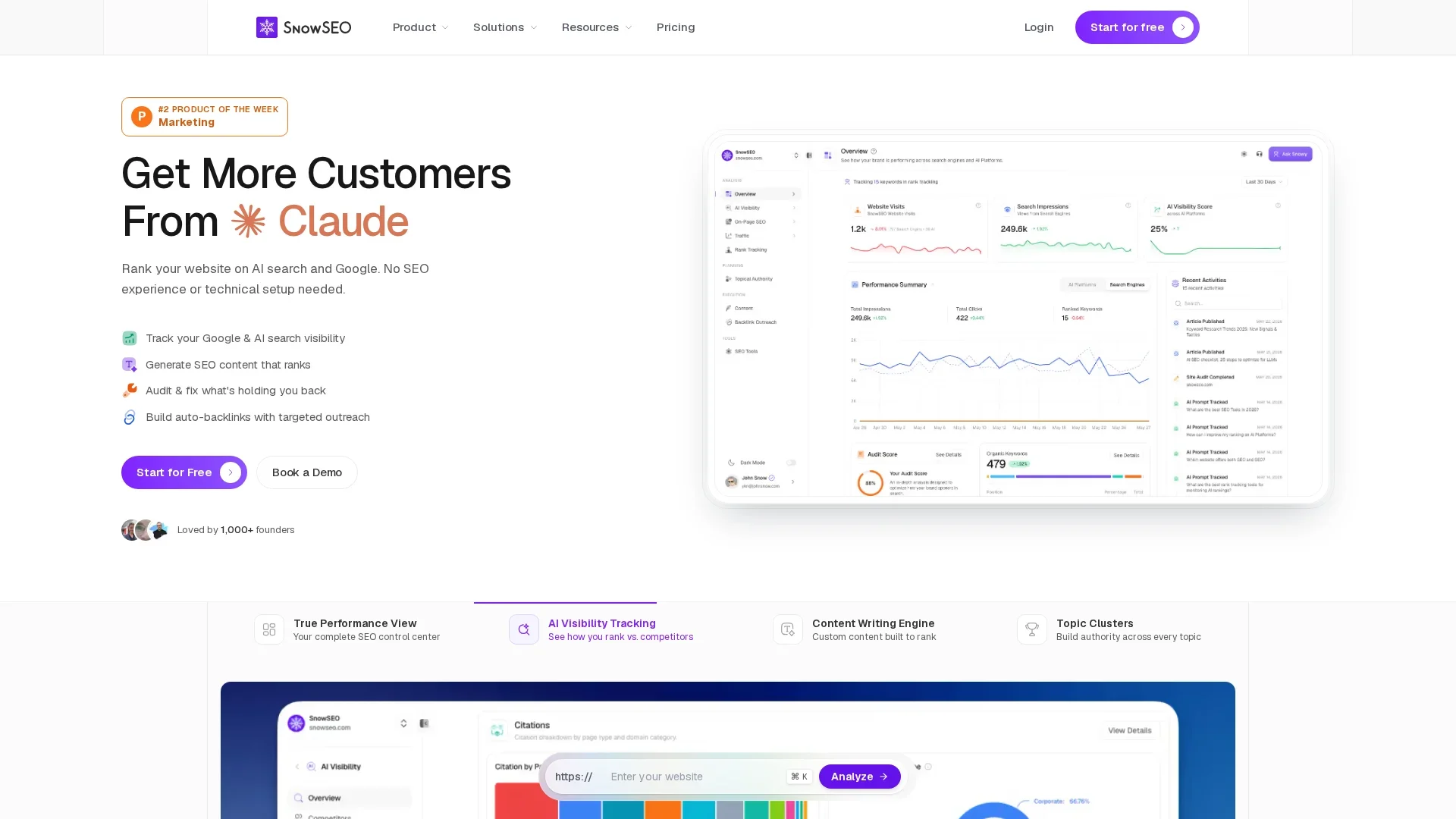
    SnowSEO is the best all-in-one rank tracker for Google and AI search. It links measurement to content, audits, and publishing in one workspace.
    SnowSEO
    Highlights

    • Track Google keywords daily, plus AI mentions, citations, sentiment, share of voice, and competitors across ChatGPT, Claude, Gemini, Perplexity, and more. See the platform overview.

    Specs

    • Best for: Founders, SMBs, content teams, and lean agencies
    • Actionability: Content, clusters, audits, backlinks, publishing, and gaps

    Pros

    • Fewer disconnected tools

    Cons

    • Review composite AI scores with prompt-level results.

    It ranks first because it turns visibility gaps into work you can publish and track.

    Last updated: August 23, 2026

    Also Read: 10 Best Tools for Competitor SEO Analysis in 2024

    2. OtterlyAI

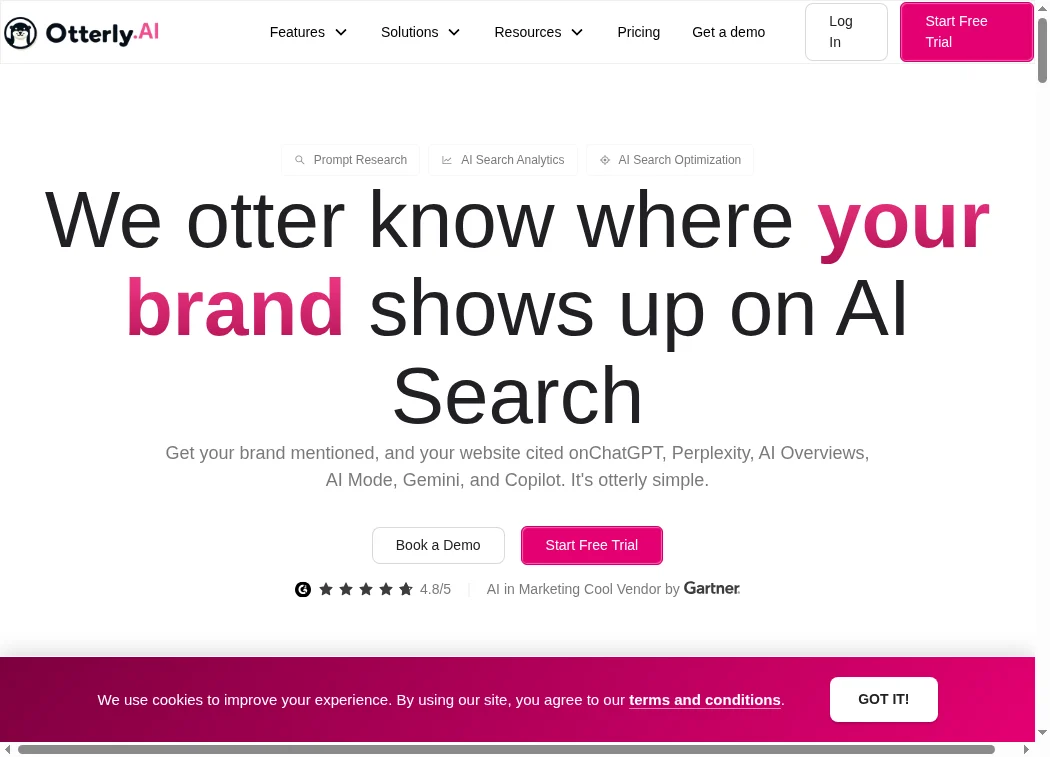
    OtterlyAI is a specialist AI search analytics platform for mentions and citations. It focuses on where AI answers name, cite, and frame your brand.
    OtterlyAI
    Highlights

    • Tracks seven AI engines, including ChatGPT, Claude, Gemini, and Google AI surfaces.
    • Stores answers to measure citation gaps, sentiment, share of voice, and competitor mentions.

    Specs

    • Best for: Agencies, SEO teams, ecommerce, and AI-search specialists.
    • Google tracking: AI Overviews and AI Mode, not full traditional SEO tracking.

    Pros

    Cons

    • Advanced engines may require add-ons.

    It ranks here because AI answer monitoring is its core strength, but its wider SEO toolkit is narrower than SnowSEO.

    Last updated: August 23, 2026

    Also Read: Best SEO Tools: 25 Picks to Improve Rankings in 2026

    3. Profound

    Profound suits enterprise teams that need structured AI search prompt intelligence. It tracks daily answers and turns findings into repeatable content and outreach work.
    ![Enterprise marketing team reviewing AI search insights on large office screens]
    Highlights

    Specs

    • Best for: Enterprise brands, agencies, and GEO programs
    • Google tracking: Use alongside a traditional rank tracker
    • AI coverage: Daily prompt-level answer tracking
    • Actionability: Content, outreach, reporting, and agents

    Pros

    • Strong segmentation by persona, region, and funnel stage.

    Cons

    • May overwhelm small teams seeking a simple dashboard.

    It ranks here because its enterprise depth exceeds many smaller teams’ needs.

    Last updated: August 23, 2026

    Also Read: SnowSEO – Your Last SEO Platform

    4. Search Atlas LLM Visibility

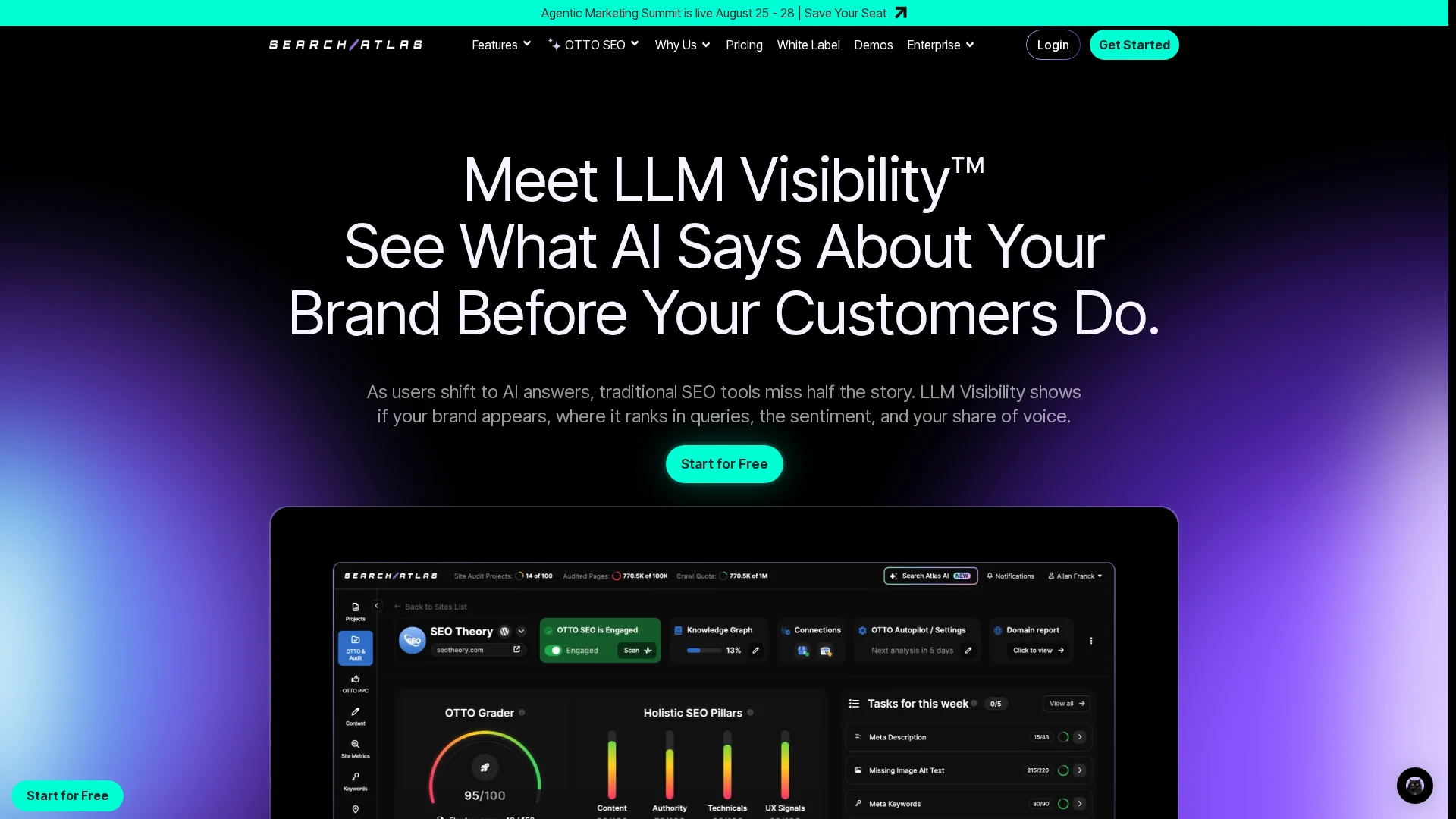
    Search Atlas suits teams that want AI visibility inside a broader SEO suite. It tracks how AI answers frame your brand, then connects findings to content and SEO work.

    Search Atlas LLM Visibility
    Highlights

    Specs

    • Google tracking: Available in the wider SEO platform
    • Best for: Agencies needing SEO plus AI automation

    Pros

    • Broad workflow beyond tracking

    Cons

    • Metrics need method-aware review.

    It ranks fourth because its wider suite may exceed simple tracking needs.

    Last updated: August 23, 2026

    More AI Visibility Trackers to Consider

    The four main picks fit most teams. These alternatives suit enterprise, agency, or reporting-heavy needs.

    1. AthenaHQ – Enterprise source intelligence, crawlability, citation outreach, governance, and team workflows.
    2. SE Visible – Agency-focused AI visibility with competitor, source, sentiment, multi-brand, and export tools.
    3. Rankability Tracker – Unified reporting for Google, AI engines, local, video, and citations.

    How to choose the right AI visibility rank tracker

    • Separate each signal. Track Google rank, AI mentions, answer placement, citations, and share of voice separately.
    • Confirm engine coverage. Check ChatGPT, Claude, Gemini, Perplexity, AI Overviews, and AI Mode by plan and region.
    • Demand prompt history. Saved answers reveal ranking shifts, cited sources, and competitor wins.
    • Match your workflow. Choose SnowSEO if you need tracking, content, and publishing in one place. Otterly.AI and Profound suit specialist monitoring.
    • Plan for reporting. Agencies need projects, exports, access controls, and location settings.

    Treat AI visibility as a KPI beside clicks, conversions, and Google rankings.

    Homepage
    Homepage

    Track Google rankings and AI visibility in one place. Try SnowSEO for audits, keywords, competitor insights, and smarter reporting.

    Frequently Asked Questions

    Q1: What are the best rank tracking tools for monitoring AI and traditional search engine rankings?

    SnowSEO is a strong all-in-one choice for Google ranks and AI visibility. AthenaHQ, Peec AI, and Otterly.AI focus more on AI mentions. Choose based on the platforms you need to track.

    Q2: Do AI rank trackers measure Google rankings?

    Not always. AI trackers often measure brand mentions, citations, and prompt answers. Use a tool with separate Google keyword positions and AI visibility data.

    Q3: How often should I check AI visibility?

    Check weekly for trends and after major content updates. Daily checks can be useful for active campaigns, but AI answers can change without a clear ranking signal.

  • How to Discover and Group Keywords for AI Search Visibility

    How to Discover and Group Keywords for AI Search Visibility

    Quick Summary: AI search thrives on intent-based keyword clusters-not just volume-so a retailer’s ‘running shoes’ seed term must split into comparison queries (e.g., ‘best budget trail shoes’) and pain points (e.g., ‘shoes for flat feet’), each mapped to a distinct page type. SnowSEO’s workflow starts with scraping customer phrasing (support tickets, AI prompts) and SERP patterns (People Also Ask, competitor headings), then scores clusters by intent fit, business value, and whether Google’s AI already favors a specific format (e.g., comparison tables for ‘vs’ queries). The key move is splitting clusters when search results show conflicting page types-like pairing a buying guide with a product page-and tracking AI mentions, not just rankings, to prove visibility. Google’s own guidance emphasizes that AI rewards people-first content, so a low-volume ‘inventory software for small warehouses’ query often outperforms a high-volume research term if it aligns with a clear buying stage.

    A retailer researching “running shoes” may see Google searches for flat feet, while AI users ask for comparisons, budget picks, or training-specific models. One flat keyword list misses those needs. AI keyword clustering sorts demand by intent, context, and answer format. This guide gives you a tested workflow for AI keyword clustering, prompt expansion, SERP checks, content mapping, and measurement. AI keyword clustering turns scattered terms into pages that earn visibility.

    Step 1: Expand Seeds into Keywords and AI Prompts

    Start with 5-10 seed terms tied to products, pains, jobs, and buyer questions. Google advises using several related phrases, not one narrow query, to generate better ideas in Keyword Planner Google’s keyword guidance.

    Use multiple discovery sources:

    • Search Console queries that already earn impressions
    • Autocomplete, People Also Ask, and related searches
    • Competitor page headings and category names
    • SnowSEO prompt tracking for ChatGPT and Claude phrasing
    • Sales calls, reviews, and support tickets

    Turn each seed into both short keywords and full prompts. For example, inventory software becomes “inventory software for small business” and “what inventory software works for a small warehouse?”

    Source What to collect
    Search results Modifiers and questions
    AI platforms Natural-language prompts
    Customer feedback Problem words and use cases

    Keep exact customer wording. It often reveals intent faster than tool metrics.

    Also Read: SnowSEO – Your Last SEO Platform

    Step 2: Clean, Label, and Score Search Intent

    Prioritize opportunity, not volume alone

    Remove duplicates, spelling variants, and terms with no clear fit. Then label each keyword by intent: informational, commercial, transactional, or navigational. Google advises creating content that helps people meet their goal, not pages made only to attract search traffic (Google’s people-first guidance).

    Score each cluster on three checks:

    Check What to assess Priority signal
    Intent fit Can your page satisfy the query? Strong match
    Business value Does it lead to a sale or lead? Clear path
    SERP fit What formats already rank? Repeatable format
    SEO keyword clusters sorted by intent and business value
    SEO keyword clusters sorted by intent and business value

    A lower-volume keyword with buying intent often beats a high-volume research query.

    Use SnowSEO to tag intent at scale, then review the top results manually before mapping content.

    Also Read: Best SEO Tools: 25 Picks to Improve Rankings in 2026

    Step 3: Build and Validate AI Keyword Clusters

    Choose the right clustering signal

    Group terms by the job the searcher needs done, not shared wording. Check intent, expected page type, audience stage, and the questions AI answers tend to combine. Google advises content teams to create useful, people-first pages that meet a clear audience need, not pages made just to attract traffic in its guidance.

    Signal Use it to group
    Same intent One page can solve both queries
    Same SERP pattern Results favor the same content format
    Same entity Terms refer to one product, service, or problem
    SEO strategist analyzing keyword clusters by laptop
    SEO strategist analyzing keyword clusters by laptop

    Tip: Use AI suggestions to expand a cluster, then validate each term in live results.

    Know when to split a cluster

    Split a cluster when results show different page types, buying stages, or questions. A guide and a product page should rarely compete on one URL.

    • Keep one primary intent per page.
    • Split terms with different modifiers, such as pricing, template, or vs.
    • Check whether AI answers cite different sources for each query.

    Also Read: 10 Must-Have Tools to Streamline Your SEO in 2025

    Step 4: Map Clusters to Content and Measure AI Visibility

    Track outcomes beyond rankings

    Assign each cluster to one clear page type: a hub, guide, product page, or support article. Avoid creating several pages that chase the same intent.

    Cluster signal Best content action Measure
    Broad learning query Create a hub guide AI mentions and impressions
    Comparison query Build a comparison page Citations and leads
    Purchase query Improve a product page Conversions and revenue

    Track prompt-level brand mentions, cited URLs, traffic, and conversions in SnowSEO. Google’s AI performance report can show impressions, pages, countries, and devices.

    Review changes monthly. A rising AI mention rate without qualified visits is not a win.

    Also Read: 10 Best Tools for Competitor SEO Analysis in 2024

    Homepage
    Homepage

    Turn grouped keywords into search and AI visibility. Use SnowSEO to research terms, map intent, track rankings, and spot content gaps fast.

    Frequently Asked Questions

    Q1: Tools recommended for fast keyword discovery with automated grouping and AI-powered suggestions?

    SnowSEO combines keyword research, grouping, and AI search tracking in one workflow. Check suggestions against real search results before assigning pages.

    Q2: How many keywords should one page target?

    Start with one main term and a tight group of close variants. Split the group when search intent, page type, or audience need changes.

    Q3: How often should I update keyword groups?

    Review groups every quarter. Update sooner when rankings drop, new AI answers appear, or search results show a clear shift in intent.

    Conclusion

    Group keywords by intent, validate them in results, map each group to one useful page, then track visibility. Google confirms clear, original, people-first content still supports AI search visibility.