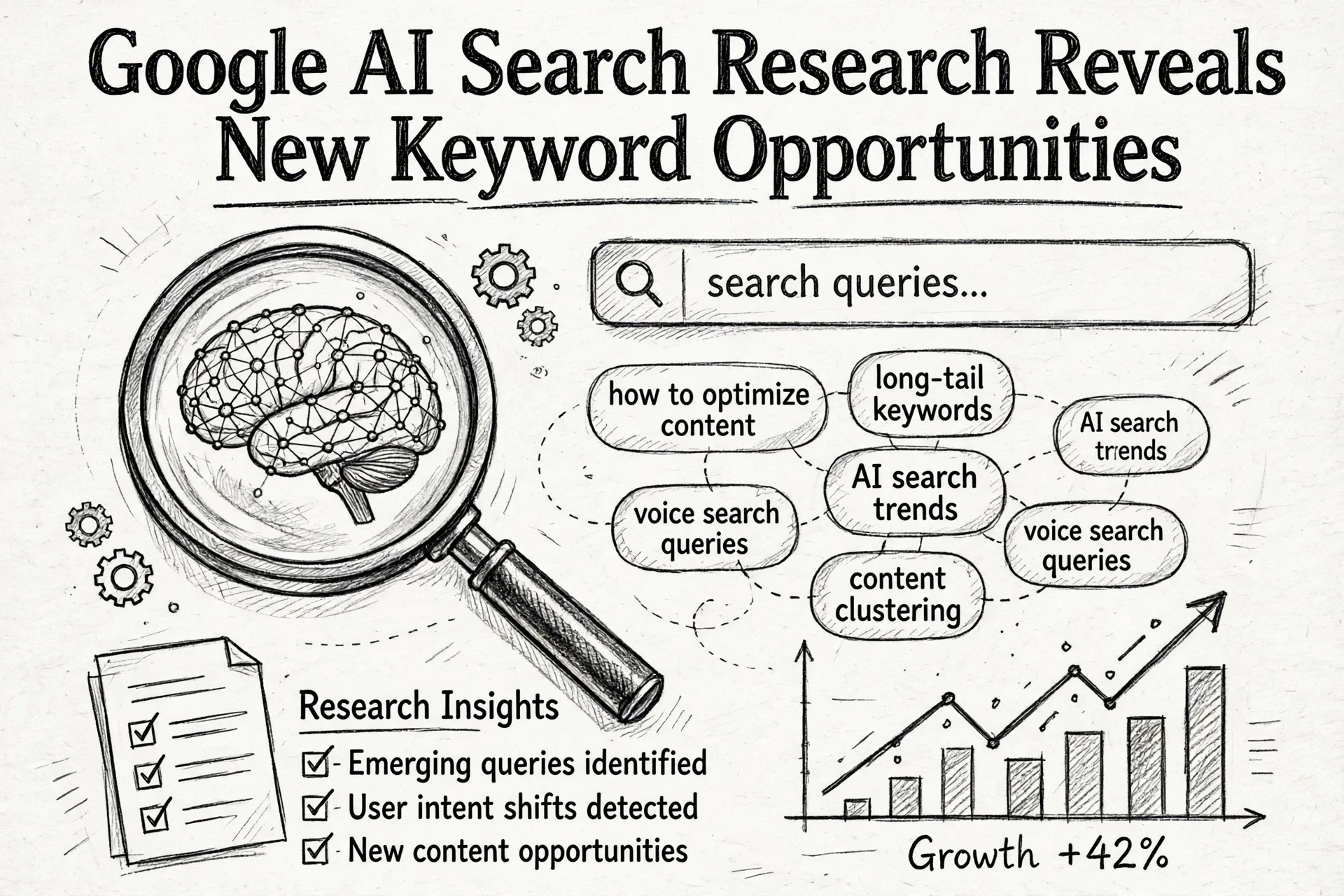
Quick Summary: Google’s AI search uses query fan-out, splitting one typed query into many hidden sub-searches, so keyword opportunities now lie in longer, specific questions like comparisons and follow-ups. Pages answering several related sub-queries are 161% more likely to earn AI citations, so build question clusters from a seed query by grouping synonyms, follow-ups, and constraints. Track AI citations directionally via Search Console and tools like SnowSEO, but stick to standard SEO fundamentals since no special markup is needed.
Google’s AI search research now points to new keyword opportunities. Both AI Overviews and AI Mode can use query fan-out, running several related searches before answering. So the opportunity isn’t just the phrase someone types first. It’s the questions Google generates around it. This analysis covers what Google has verified, the keyword opportunities that follow, and a simple method for building a question cluster from one target query.
Query Fan-Out Expands One Search Into a Question Field
What Google Has Confirmed
Google confirms that AI Mode splits your question into subtopics and issues multiple related searches at once, then combines the results into one answer. That single sentence changes keyword research: one typed query can trigger a whole family of hidden subqueries, each one a separate shot at visibility. This is where new Google AI search keyword opportunities come from.
Why the First Query Is Not the Whole Opportunity
The words you type are not the words Google searches. Fan-out queries include comparisons, reformulations, and next-step questions. Pages that answer several subqueries get cited more often, which is why tools like SnowSEO now map Google AI search keyword opportunities by intent clusters, not single phrases.
Also Read: SnowSEO – Your Last SEO Platform
The Most Promising Keyword Opportunities Are Longer, More Specific Questions
Google AI search keyword opportunities sit in the long tail now. Google’s own guidance confirms its AI features use query fan-out, splitting one broad prompt into many narrower searches Google’s AI optimization guide. Two query types stand out.
Comparison and Constraint Queries
- “X vs Y for [use case]”
- “best [tool] under $[price]”
- “[category] for [niche]”
These work because AI answers need hard trade-offs. Generic listicles can’t cover them, so specific pages win the citation.

Follow-Up and Task-Based Queries
AI Mode users ask follow-ups like “how much does it cost?” or “is it worth it?” Each follow-up is a separate retrieval pass. Build FAQ sections that mirror these exact phrasings, and tools like SnowSEO can map the question clusters for you.
Also Read: Keyword Research vs SEO Audits for Generative Search Success
How to Turn One Target Query Into a Defensible Keyword Cluster
Start with one seed query and expand it the way Google’s query fan-out does: synonyms, follow-ups, comparisons, constraints. Ask a model to list the sub-questions a complete answer would need, then check People Also Ask and forum threads for real phrasing.
Build the Expansion Map
Group the results by intent type: equivalent phrasings, follow-up questions, narrower specifications, and broader category terms. Each group becomes a node in your map. A seed like “best CRM for small teams” should yield 10 to 15 variants, from pricing questions to integration comparisons.

Validate, Consolidate and Prioritize
Merge near-duplicates into one canonical question, since AI matching covers adjacent phrasings anyway. Rank remaining nodes by business value and how directly you can answer them. Pages ranking for fan-out sub-queries are 161% more likely to earn citations, so prioritize coverage over volume.
Also Read: Google AI Updates Change How Marketers Measure Search Visibility
What the Shift Means for SEO Teams Now
Measure Visibility Without Overclaiming
Google confirms it reports AI Mode and AI Overview traffic in Search Console’s Performance report, so that’s your baseline. But it never shows which hidden sub-queries fan-out runs. Tools like Otterly.AI or AthenaHQ estimate AI citations from sample prompts. Treat those numbers as directional, not exact.
The Strategic Bottom Line
Google’s own guidance says no special markup is required for AI features; the usual SEO fundamentals still carry you, from crawlable text to internal links. The real change is scope. One page should clearly answer several related sub-questions, not chase a single keyword. Teams that map sub-intents and track citation share, rather than just rank, will spot the new opportunities first.
Also Read: 7 Keyword Tools Combining Search Intent and GEO Data
Ready to find these long-tail wins yourself? SnowSEO surfaces them fast. Start your free keyword research today.
Frequently Asked Questions
Q1: What recent Google AI search developments reveal about future keyword opportunities?
Google’s AI Mode uses query fan-out, breaking one search into many long-tail variations. That means specific, question-shaped and conversational phrases now drive visibility more than broad head terms.
Q2: How do I find long-tail keywords AI search will surface?
Mine “People Also Ask” data, support tickets, and sales calls for real phrasing. Then group questions by intent. Tools like SnowSEO can automate this clustering and track AI visibility.
Q3: Should I still optimize for traditional Google rankings?
Yes. Classic rankings still feed AI answers, so they matter. But add conversational phrases and clear, direct answers so AI Overviews and chatbots can quote your content accurately.
Q4: How do I track whether AI platforms cite my content?
Test prompts in ChatGPT and Google AI Mode, or use rank-tracking tools with AI visibility reports. Log which pages get cited, then update weak pages with sharper answers and structure.
Conclusion
Google’s query fan-out guide confirms what Digiday reported: one AI query now triggers many hidden sub-queries. Map those sub-queries, cover them deeply, and the long tail becomes your citation engine.
Leave a Reply