Category: SEO Strategy

  • Google AI Search Research Reveals New Keyword Opportunities

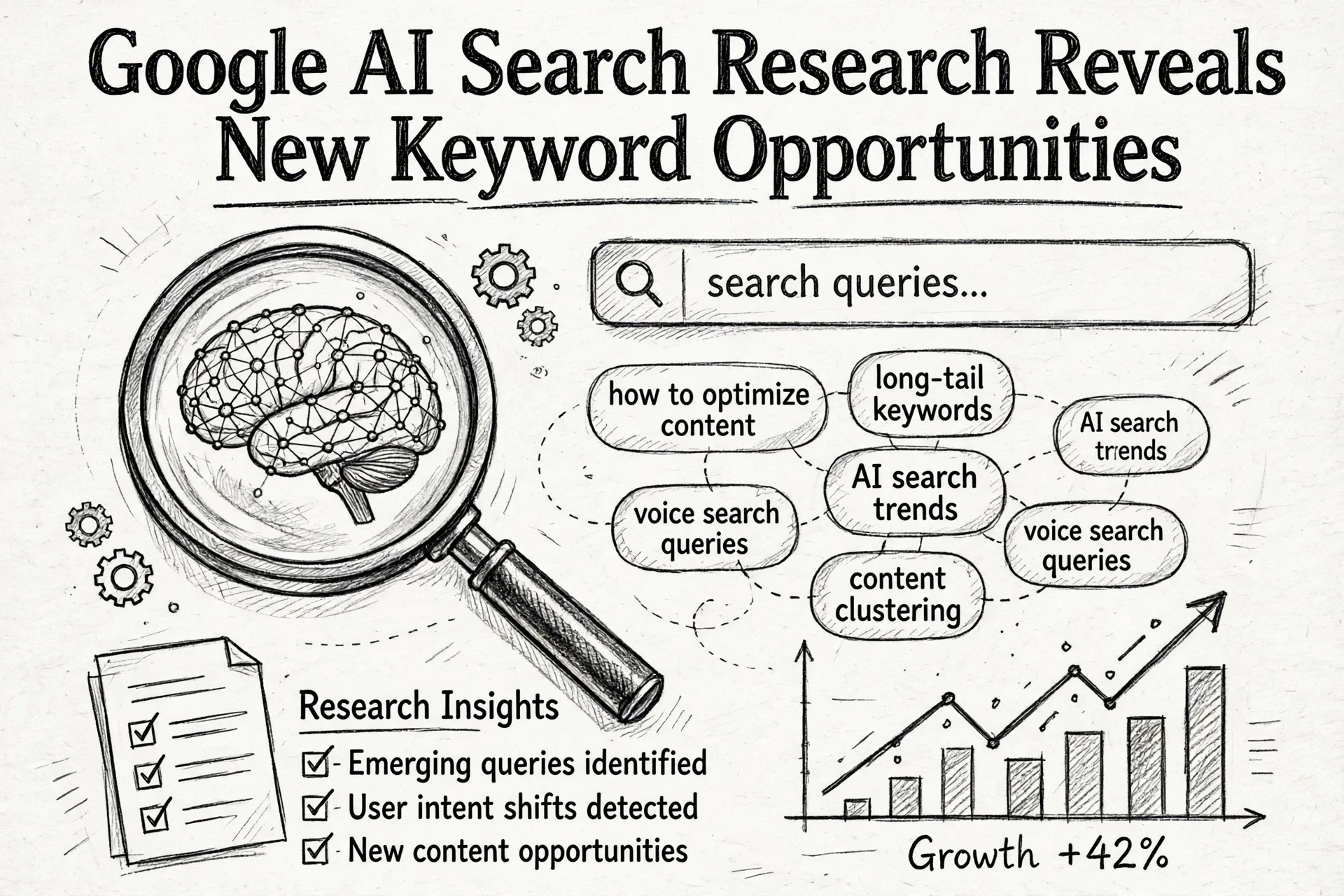
    Google AI Search Research Reveals New Keyword Opportunities

    Quick Summary: Google’s AI search uses query fan-out, splitting one typed query into many hidden sub-searches, so keyword opportunities now lie in longer, specific questions like comparisons and follow-ups. Pages answering several related sub-queries are 161% more likely to earn AI citations, so build question clusters from a seed query by grouping synonyms, follow-ups, and constraints. Track AI citations directionally via Search Console and tools like SnowSEO, but stick to standard SEO fundamentals since no special markup is needed.

    Google’s AI search research now points to new keyword opportunities. Both AI Overviews and AI Mode can use query fan-out, running several related searches before answering. So the opportunity isn’t just the phrase someone types first. It’s the questions Google generates around it. This analysis covers what Google has verified, the keyword opportunities that follow, and a simple method for building a question cluster from one target query.

    Query Fan-Out Expands One Search Into a Question Field

    What Google Has Confirmed

    Google confirms that AI Mode splits your question into subtopics and issues multiple related searches at once, then combines the results into one answer. That single sentence changes keyword research: one typed query can trigger a whole family of hidden subqueries, each one a separate shot at visibility. This is where new Google AI search keyword opportunities come from.

    Why the First Query Is Not the Whole Opportunity

    The words you type are not the words Google searches. Fan-out queries include comparisons, reformulations, and next-step questions. Pages that answer several subqueries get cited more often, which is why tools like SnowSEO now map Google AI search keyword opportunities by intent clusters, not single phrases.

    Also Read: SnowSEO – Your Last SEO Platform

    The Most Promising Keyword Opportunities Are Longer, More Specific Questions

    Google AI search keyword opportunities sit in the long tail now. Google’s own guidance confirms its AI features use query fan-out, splitting one broad prompt into many narrower searches Google’s AI optimization guide. Two query types stand out.

    Comparison and Constraint Queries

    • “X vs Y for [use case]”
    • “best [tool] under $[price]”
    • “[category] for [niche]”

    These work because AI answers need hard trade-offs. Generic listicles can’t cover them, so specific pages win the citation.

    Two analysts comparing constraint query data on a clean desk
    Two analysts comparing constraint query data on a clean desk

    Follow-Up and Task-Based Queries

    AI Mode users ask follow-ups like “how much does it cost?” or “is it worth it?” Each follow-up is a separate retrieval pass. Build FAQ sections that mirror these exact phrasings, and tools like SnowSEO can map the question clusters for you.

    Also Read: Keyword Research vs SEO Audits for Generative Search Success

    How to Turn One Target Query Into a Defensible Keyword Cluster

    Start with one seed query and expand it the way Google’s query fan-out does: synonyms, follow-ups, comparisons, constraints. Ask a model to list the sub-questions a complete answer would need, then check People Also Ask and forum threads for real phrasing.

    Build the Expansion Map

    Group the results by intent type: equivalent phrasings, follow-up questions, narrower specifications, and broader category terms. Each group becomes a node in your map. A seed like “best CRM for small teams” should yield 10 to 15 variants, from pricing questions to integration comparisons.

    A mind map expanding search query clusters
    A mind map expanding search query clusters

    Validate, Consolidate and Prioritize

    Merge near-duplicates into one canonical question, since AI matching covers adjacent phrasings anyway. Rank remaining nodes by business value and how directly you can answer them. Pages ranking for fan-out sub-queries are 161% more likely to earn citations, so prioritize coverage over volume.

    Also Read: Google AI Updates Change How Marketers Measure Search Visibility

    What the Shift Means for SEO Teams Now

    Measure Visibility Without Overclaiming

    Google confirms it reports AI Mode and AI Overview traffic in Search Console’s Performance report, so that’s your baseline. But it never shows which hidden sub-queries fan-out runs. Tools like Otterly.AI or AthenaHQ estimate AI citations from sample prompts. Treat those numbers as directional, not exact.

    The Strategic Bottom Line

    Google’s own guidance says no special markup is required for AI features; the usual SEO fundamentals still carry you, from crawlable text to internal links. The real change is scope. One page should clearly answer several related sub-questions, not chase a single keyword. Teams that map sub-intents and track citation share, rather than just rank, will spot the new opportunities first.

    Also Read: 7 Keyword Tools Combining Search Intent and GEO Data
    Homepage
    Homepage

    Ready to find these long-tail wins yourself? SnowSEO surfaces them fast. Start your free keyword research today.

    Frequently Asked Questions

    Q1: What recent Google AI search developments reveal about future keyword opportunities?

    Google’s AI Mode uses query fan-out, breaking one search into many long-tail variations. That means specific, question-shaped and conversational phrases now drive visibility more than broad head terms.

    Q2: How do I find long-tail keywords AI search will surface?

    Mine “People Also Ask” data, support tickets, and sales calls for real phrasing. Then group questions by intent. Tools like SnowSEO can automate this clustering and track AI visibility.

    Q3: Should I still optimize for traditional Google rankings?

    Yes. Classic rankings still feed AI answers, so they matter. But add conversational phrases and clear, direct answers so AI Overviews and chatbots can quote your content accurately.

    Q4: How do I track whether AI platforms cite my content?

    Test prompts in ChatGPT and Google AI Mode, or use rank-tracking tools with AI visibility reports. Log which pages get cited, then update weak pages with sharper answers and structure.

    Conclusion

    Google’s query fan-out guide confirms what Digiday reported: one AI query now triggers many hidden sub-queries. Map those sub-queries, cover them deeply, and the long tail becomes your citation engine.
  • 7 Keyword Tools Combining Search Intent and GEO Data

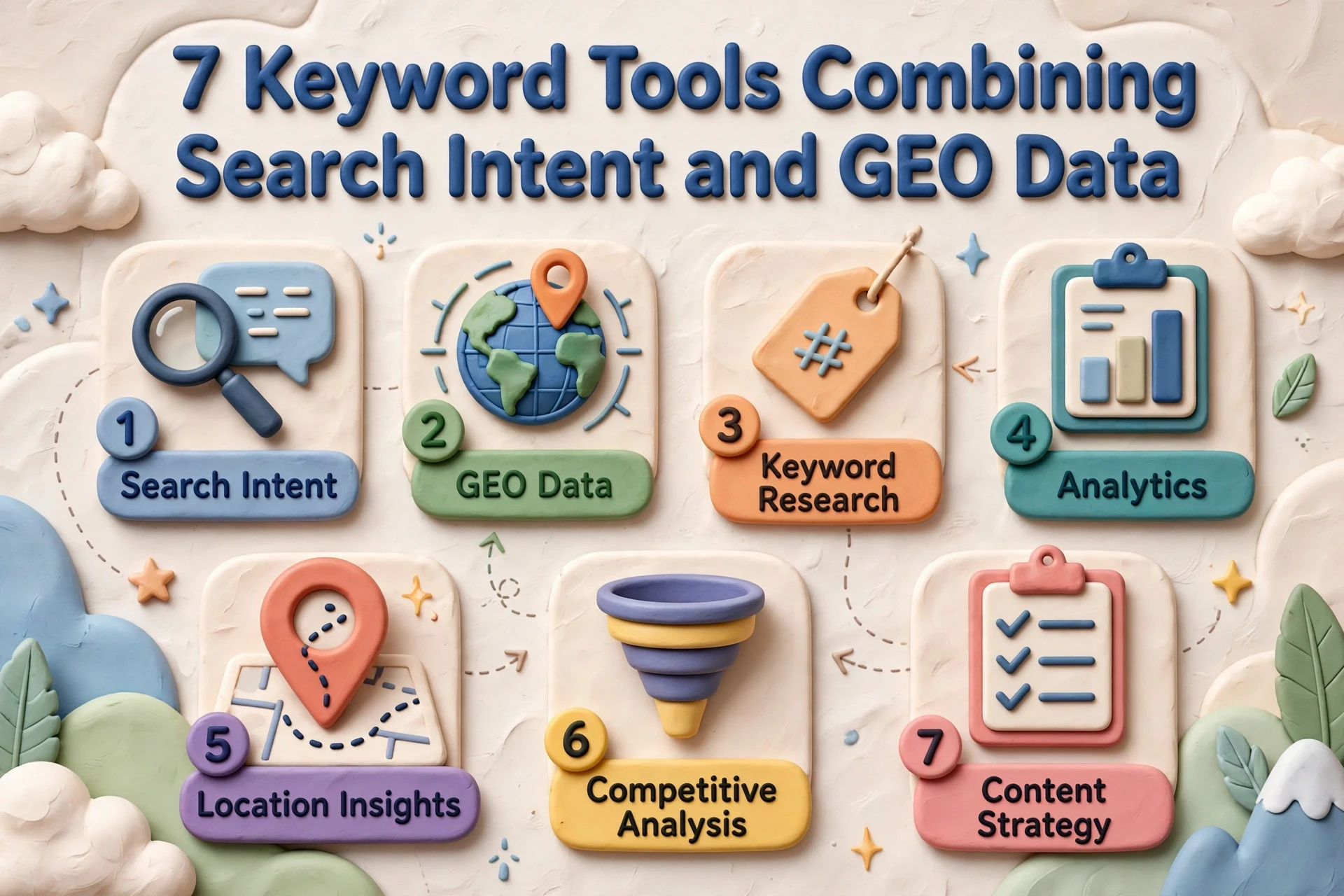
    7 Keyword Tools Combining Search Intent and GEO Data

    Quick Summary: Keyword tools now track both classic search metrics and AI prompt demand from assistants like ChatGPT, since the two signals differ. SnowSEO leads the ranking of seven tools because it combines intent-driven keyword research with GEO tracking and content workflows in one platform. Semrush, Search Atlas, and Profound follow, each offering different strengths in prompt data, automation, or enterprise-scale AI conversation intelligence. Pick a tool that shows both keyword and AI signals together, matches your team’s workflow, and offers the right geographic and competitor depth.

    A keyword like best CRM for startups might show 5,000 Google searches a month. The same buyer might ask ChatGPT a longer, more specific question instead. Most keyword tools with AI search intent tracking now reveal both signals: classic volume and CPC, plus AI prompts, citations, and share of voice. We ranked seven options on intent data, GEO coverage, competitor context, and workflow fit. SnowSEO leads the list as the featured pick.

    Keyword and GEO Tool Comparison

    Tool Best for Intent data GEO or AI data Workflow strength
    SnowSEO Small teams, agencies, and businesses seeking one SEO and GEO workspace AI intent classification, semantic clusters, opportunity scoring, and content-gap context AI prompt tracking, mentions, citations, competitor visibility, and content gaps Keyword research to topic clusters, article generation, CMS publishing, and monitoring
    Semrush Enterprise SEO teams and agencies already using Semrush Keyword intent plus AI prompt intent across informational, commercial, transactional, navigational, and task queries AI topic demand, prompts, brand mentions, source domains, sentiment, and market-level visibility Strong suite integration for SEO research, content, monitoring, and reporting
    Search Atlas Agencies, multi-site brands, and teams seeking research-to-execution automation Keyword intent, funnel-aligned prompt families, buyer needs, and answer patterns Prompt volumes, LLM visibility, citation research, competitor-owned prompts, and source maps Keyword research to topical maps, content planning, optimization, and OTTO automation
    Profound Enterprise brands and agencies needing specialist AI conversation intelligence Automated intent, sub-intent, buyer-journey alignment, and intent-volume prioritization Large-scale prompt volumes, citations, co-citations, visibility, sentiment, and share of voice Prompt tracking, content briefs, page updates, agents, and reporting workflows

    What to know about keyword tools with AI search intent

    Keyword tools with AI search intent do two jobs at once. They show classic metrics like volume, difficulty, and CPC, plus how often AI assistants like ChatGPT cite brands for conversational prompts.

    Why now? Traffic is shifting from typed queries to AI answers, and prompt demand is modeled differently from Google search volume. So compare signals instead of treating them as one number.

    The seven tools below cover that range, from full platforms to GEO-focused trackers.

    1. SnowSEO

    SnowSEO puts keyword research and GEO visibility in one workspace. You research keywords, build clusters, generate content, publish it, and track both Google rankings and AI mentions without switching tools.

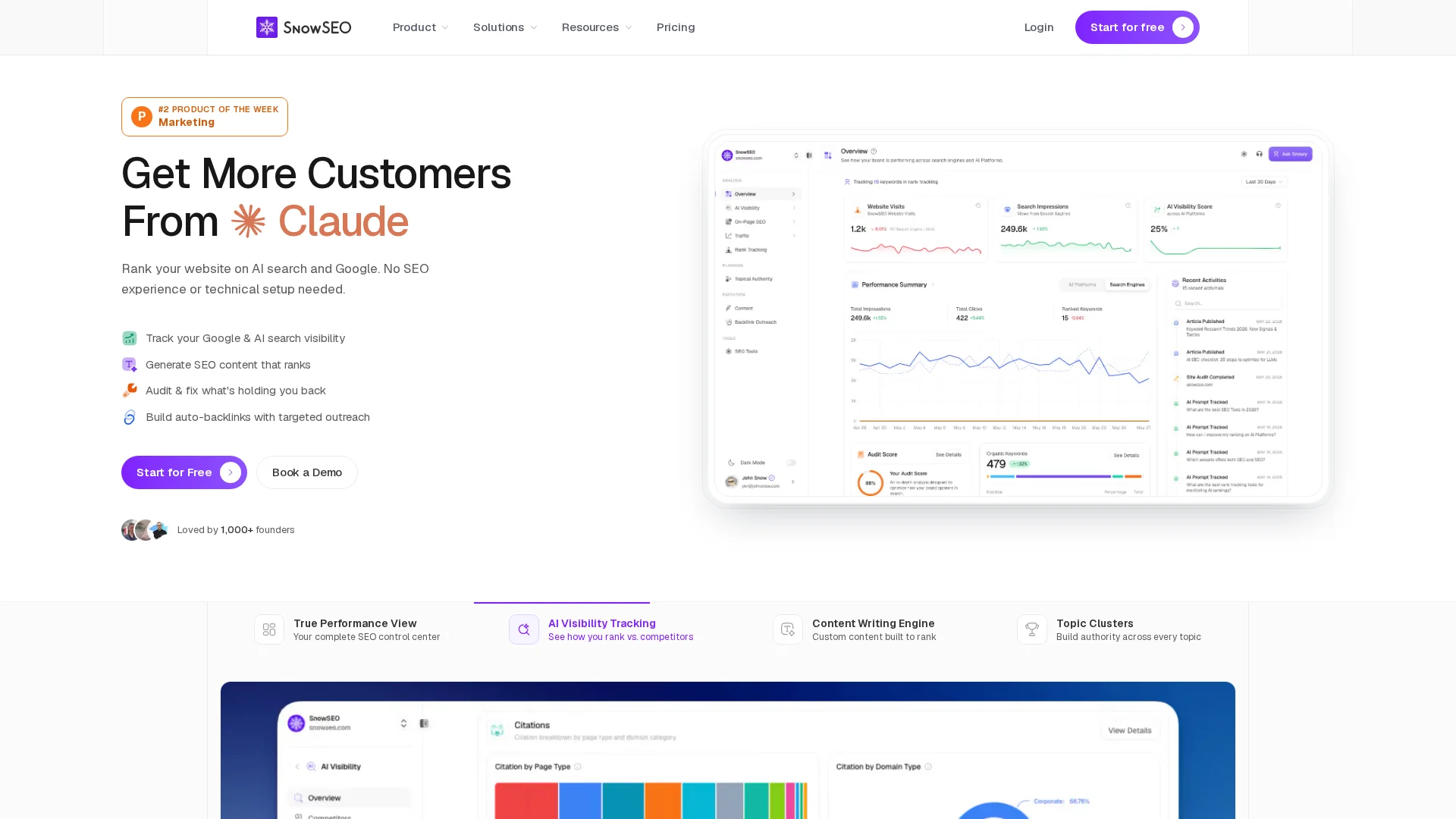
    SnowSEO
    SnowSEO

    Highlights

    • AI keyword suggestions with volume, CPC, difficulty, and trends
    • Intent classification and semantic clustering
    • AI visibility tracking across ChatGPT, Perplexity, and Claude
    • City-level keyword and prompt tracking
    • Topic clusters, content generation, and CMS publishing

    Pros

    • Combines traditional SEO and GEO workflows in one place
    • Links keyword research to content production and publishing

    Cons

    • Less granular AI conversation research than specialist tools
    • Verify plan and API limits for large data exports

    SnowSEO ranks first because it directly matches the combined brief: intent-driven keyword research plus GEO tracking, with the workflows to act on both.

    Last updated: September 17, 2026

    Also Read: 10 Best Tools for Competitor SEO Analysis in 2024

    2. Semrush

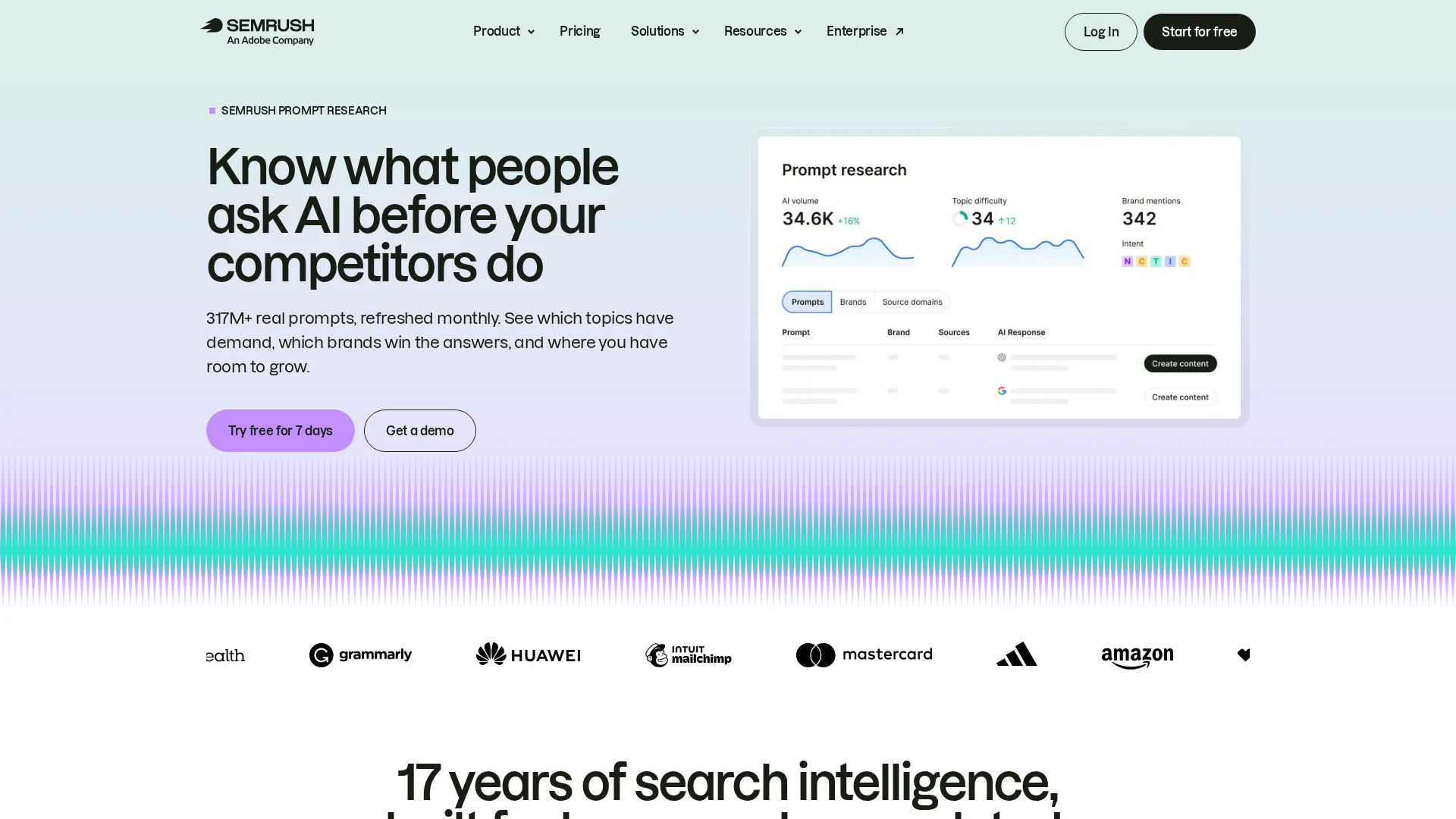
    Semrush pairs its mature keyword research suite with Prompt Research, a large AI prompt database that treats prompts as a second research layer. You get AI topic demand, intent breakdowns, brand mentions, and cited domains across major AI platforms and 40+ markets, per Semrush’s documentation.

    Semrush
    Semrush

    Highlights

    • 317M+ prompts with topic-level AI volume and intent analysis
    • Brand mentions, sentiment, and source-domain tracking
    • Prompt data flows into the same workflows as keyword and content research

    Specs

    • Best for: Enterprise SEO teams and agencies already using Semrush
    • Note: Full GEO features require the AI Visibility Toolkit ($99/mo per domain)

    Pros

    • Deep keyword and competitor research in one login
    • Broad prompt coverage and strong reporting

    Cons

    • Complex for small teams; AI data costs extra

    It ranks second because it offers the clearest bridge between keyword research and AI prompt research, though the combined setup is heavier than tools like SnowSEO, which bundle SEO and GEO in one platform.

    Last updated: September 17, 2026

    Also Read: SnowSEO vs Ahrefs: Which SEO Tool Covers More Workflows?

    3. Search Atlas

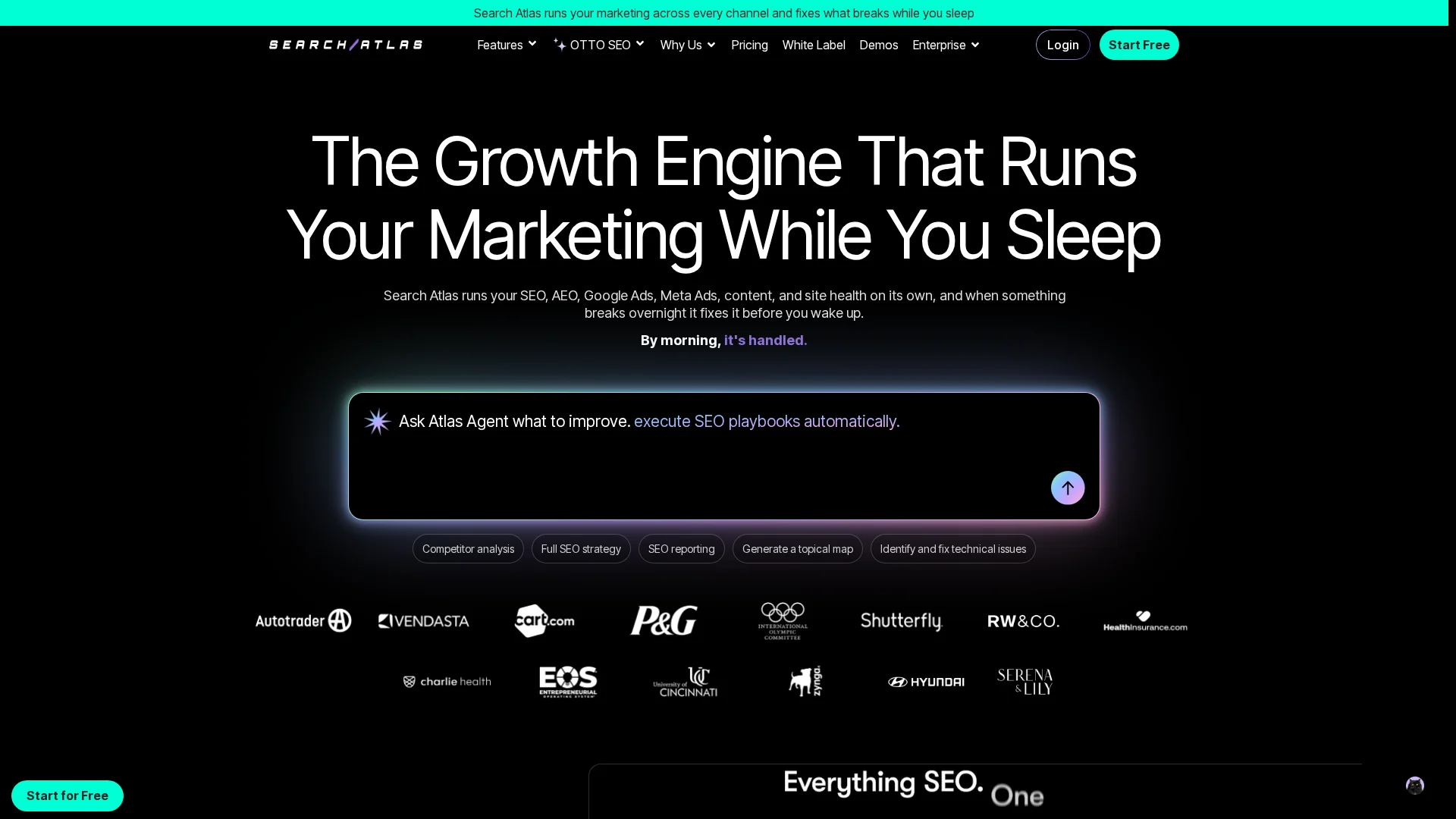
    Search Atlas pairs keyword intelligence with prompt-volume research, then links both to topical maps and automated SEO work. Agencies and multi-site brands use it to move from discovery straight to execution.

    Search Atlas
    Search Atlas

    Highlights

    • Keyword research with volume, difficulty, intent, CPC, and traffic opportunity
    • Prompt families organized by buyer need, funnel stage, and answer pattern
    • Mapping between AI prompts and traditional keywords
    • Topical maps, content briefs, and OTTO SEO automation

    Pros

    • Strong connection between keywords, prompts, topics, and content execution
    • Supports LLM visibility, citation research, and competitor-owned prompts

    Cons

    • Broad platform brings a steeper learning curve
    • Some AI visibility and automation features depend on plan level

    It ranks third because few tools cover research-to-implementation this completely, though lighter users may find it more platform than they need.

    Last updated: September 17, 2026

    Also Read: SnowSEO – Your Last SEO Platform

    4. Profound

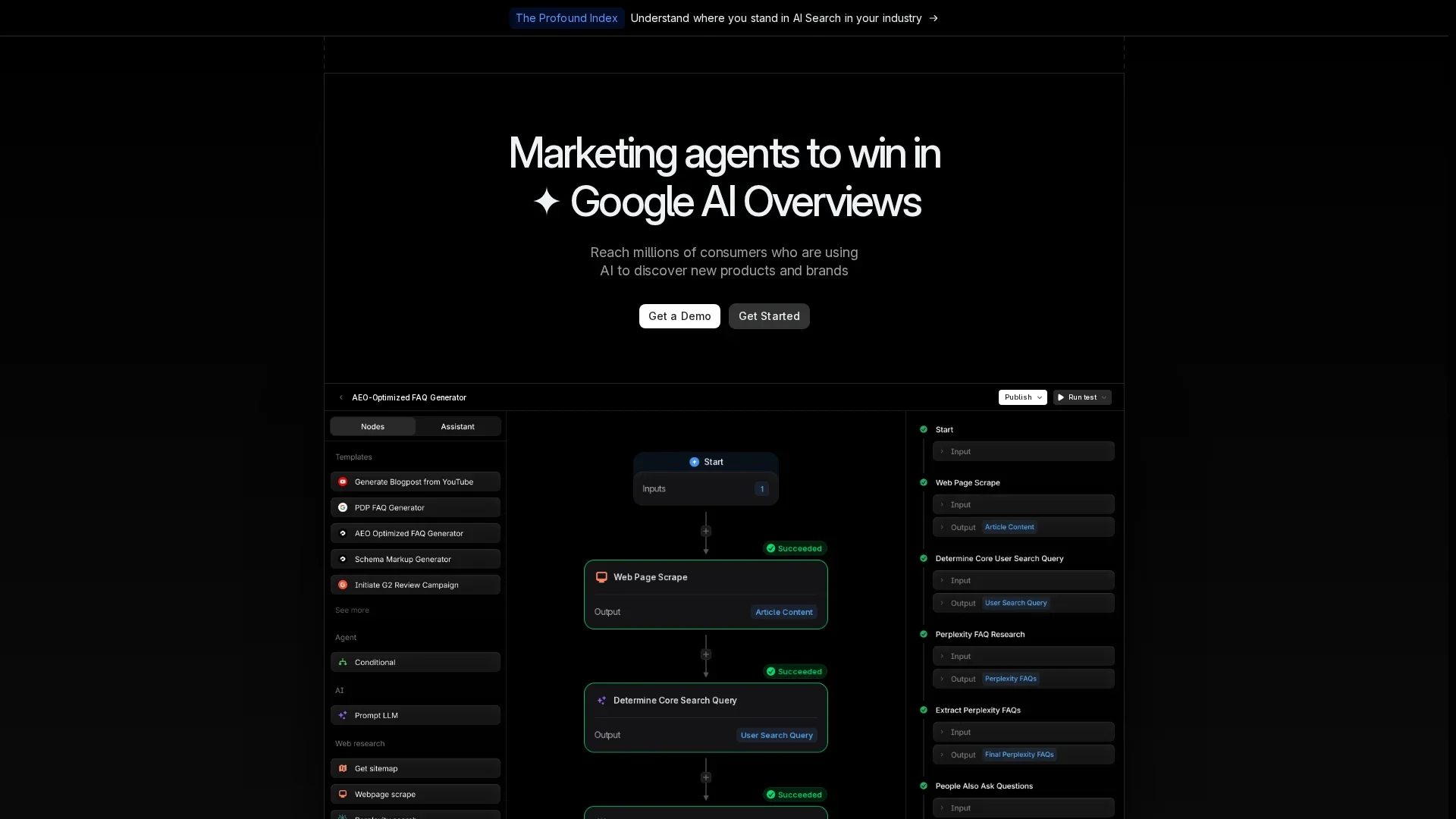
    Profound is the specialist pick for measuring real AI conversation demand and intent at enterprise scale. It maps prompt volumes from large AI conversation datasets, not just classic keyword counts.

    Profound
    Profound

    Highlights

    • Prompt-volume research built on large AI conversation datasets
    • Automated intent and sub-intent classification
    • Segmentation by audience, demographic, platform, and region
    • Competitor citation and co-citation analysis
    • Prompt tracking with visibility, rank, share of voice, citations, and sentiment

    Pros

    • Unusually deep prompt-volume and intent analysis
    • Strong citation and competitor intelligence
    • Built for repeatable enterprise monitoring and action

    Cons

    • Not a full replacement for a conventional keyword database
    • Often overkill for small businesses covering a narrow topic set

    Profound ranks fourth because its AI prompt and citation layer goes deeper than all-in-one platforms like SnowSEO, but it works best alongside an existing SEO stack rather than as a single replacement.

    Last updated: September 17, 2026

    Honourable Mentions

    These tools each cover a useful slice of the keyword-to-GEO workflow, even if they’re less complete as combined research platforms.

    1. OtterlyAI – Combines AI prompt discovery with intent and funnel tagging, query fan-out, geographic coverage, and visibility tracking.

    2. Peec AI – Adds AI-suggested prompts, demand signals, competitor comparisons, source analysis, tags, exports, API, and Looker Studio connectivity.

    3. SE Ranking – Provides keyword volume, difficulty, CPC, intent, trends, competitor gaps, and local data across 188 geographic databases, but has a less central GEO research layer.

    How to choose the right keyword and GEO tool

    Match the tool to your data need first. Keyword volume and AI prompt demand are different numbers, so pick a platform that shows both together.

    • Intent granularity: it should label informational, commercial, transactional, navigational, and task-based queries
    • Geo filters: country, city, language, device, and AI platform coverage
    • Competitor depth: keyword gaps plus citation and co-citation data
    • Workflow fit: agencies need APIs and exports; small teams want briefs and publishing help
    • Closed loop: research, briefs, tracking, and reporting in one place

    That last point is where SnowSEO stands out. Most tools stop at research; SnowSEO carries the work through audits, content briefs, and prompt tracking, while GEO-only tools like Otterly.ai or Peec AI leave the keyword side thin.

    Homepage
    Homepage

    Stop juggling separate tools for search intent and AI prompt data. SnowSEO combines both, plus tracking and content, in one dashboard. Start your free trial today.

    Frequently Asked Questions

    Q1: Best keyword research tools that integrate AI search intent and generative engine optimization?

    SnowSEO combines keyword data with AI prompt tracking. AthenaHQ and Otterly.ai focus mostly on GEO monitoring.

    Q2: Do I need a separate GEO tool?

    No. Platforms like SnowSEO handle keywords and AI visibility together, saving you juggling multiple subscriptions.

    Q3: How often should I track AI prompt rankings?

    Weekly works for most teams. Daily only matters during launches or major algorithm shifts.

  • How to Build Citation-Worthy Content for AI Search

    How to Build Citation-Worthy Content for AI Search

    Quick Summary: To get cited by AI search, create content with original proof, not just polished summaries. Lead with a clear answer, back it with verifiable data or firsthand tests, and keep the page technically clean so crawlers can index it. Measure visibility over time, but never promise citations, since Google offers no guaranteed formula.

    A page can rank well, then vanish when a buyer asks an AI tool for a recommendation. Often, the gap is not another keyword. It is a clear, checkable passage the system can retrieve and attribute.

    This guide shows how to create citation-worthy content for AI search with useful claims, original proof, clean structure, and sound technical setup. You will also learn how to measure citation-worthy content for AI search without making promises no one can prove.

    Step 1: Choose a Question You Can Answer Better Than a Summary

    Build a Question Map

    Pick questions where your team has proof, not just a polished recap. Google asks creators to add original information, analysis, or first-hand expertise in its people-first content guidance.

    • List buyer questions from sales calls and support tickets.
    • Group them by task, risk, and intent.
    • Flag questions competitors answer with vague advice.
    • Choose one your team can show, test, or explain clearly.

    Add a Distinctive Evidence Angle

    Give the answer something an AI summary cannot create alone.

    Evidence type Example
    First-hand test Results from a real content audit
    Original data Patterns from your own site data
    Expert judgment A clear decision rule and its limits

    Tip: Do not promise AI citations. Build useful proof, then measure visibility over time.

    Also Read: 10 Best Tools for Competitor SEO Analysis in 2024

    Step 2: Write Extractable Answers, Then Earn Trust With Depth

    Use a Repeatable Section Pattern

    Lead with a plain answer in the first two sentences. Then add the context, steps, and proof a reader needs to act.

    1. State the answer clearly.
    2. Explain when it applies.
    3. Add an example, source, or firsthand result.
    4. Link to deeper guidance where needed.

    Google advises clear structure and unique, useful content for generative search features in its AI search guidance.

    Four-step flowchart with pencil sketch style
    Four-step flowchart with pencil sketch style

    Write for quick extraction, not shallow reading. The short answer earns attention. The evidence earns trust.

    Make Claims Precise and Verifiable

    Replace broad promises with facts a reader can check. Name the source, date, sample, method, or limit.

    Weak claim Verifiable rewrite
    Our process improves visibility Our audit found 12 pages missing source links
    AI search cites experts AI systems may surface relevant indexed sources

    Google asks publishers to show original insight, clear sourcing, and demonstrable expertise in its people-first content guidance.

    Also Read: Google AI Updates Change How Marketers Measure Search Visibility

    Step 3: Make the Source Easy to Find, Understand, and Attribute

    Check Eligibility and Discoverability

    Your best evidence cannot help if crawlers cannot reach the page. Confirm it returns a 200 status, is not blocked by noindex or robots.txt, has a clear canonical URL, and appears in your sitemap.

    Google says key pages need links or sitemap entries to be found and crawled. Check the Page Indexing report after publishing.

    SEO manager checking indexing status on dual monitors
    SEO manager checking indexing status on dual monitors

    Indexing makes a page eligible for search. It does not promise an AI citation.

    Clarify the Page and Its Author

    State the answer near the top, then support it with clear headings, source links, and dated proof. Add a byline, author bio, reviewer details, and an About page.

    Google recommends clear sourcing and background about authors or publishers as trust signals in people-first content guidance.

    • Name who did the work.
    • Explain how you gathered the evidence.
    • Update dates when facts change.

    Also Read: SnowSEO – Your Last SEO Platform

    Step 4: Publish, Promote, and Measure Citation Potential

    Publish a clean, crawlable page with a clear author, date, sources, and internal links. Google advises content teams to show original research and first-hand expertise in its people-first content guidance.

    1. Share the page with relevant partners, customers, and industry communities.
    2. Track branded mentions, referring pages, AI answer appearances, clicks, and assisted leads.
    3. Review the page after new data or product changes.
    Signal What it suggests
    Earned mentions Others find the proof useful
    AI answer presence The page may be extractable
    Conversions Visibility supports business value

    Do not promise citations. Treat them as an outcome to test, not a ranking metric you control.

    Homepage
    Homepage

    Turn stronger evidence into measurable AI search visibility. Use SnowSEO to audit content, find proof gaps, track rankings, and improve citation-ready pages.

    Frequently Asked Questions

    Q1: How can marketers create content that AI search engines are more likely to cite?

    Use clear answers, named sources, original data, and precise headings. Make key facts easy to extract.

    Q2: Does structured data guarantee AI citations?

    No. It can help systems understand a page, but proof and relevance matter more.

    Q3: What proof makes content more citation-worthy?

    First-party research, expert quotes, tested methods, and dated examples build trust.

    Conclusion

    Build content people can verify, use, and trust. Pair original proof with clear structure, sound technical SEO, and measured results. Google’s guidance confirms there is no guaranteed citation formula.

  • Google AI Updates Change How Marketers Measure Search Visibility

    Google AI Updates Change How Marketers Measure Search Visibility

    Quick Summary: Google now reports AI Overviews and AI Mode impressions separately in Search Console, so marketers must track AI visibility as exposure, not ranking. Treat these impressions as a leading signal and validate them with clicks, conversions, and revenue, since position alone no longer guarantees visibility. Google says existing SEO still matters, with no special AI-only rules, so keep focusing on crawlability, helpful content, and structured data. Track trends monthly and compare AI-visible pages against business outcomes to avoid mistaking presence for profit.

    Google AI updates search visibility by folding AI Overviews and AI Mode links into Search Console Web data. New site-owner insights now show AI-feature impressions and page appearances. Google also offers an AI opt-out, but that removes related traffic.

    Google AI updates search visibility beyond rank reports. A cited page may gain exposure without clicks. This guide explains what the data shows, what it cannot prove, and how to connect Search Console, analytics, and revenue.

    Google’s New AI Search Data Changes the Visibility Baseline

    What Google Now Counts as AI Visibility

    Google AI updates search visibility by separating generative exposure from the old blue-link baseline. Search Console’s new reports count how often your URLs appear in AI Overviews, AI Mode, and generative Discover features. They also break exposure down by page, country, device, and date, as Google’s 2026 announcement explains.

    Pencil sketch infographic comparing AI search visibility metrics
    Pencil sketch infographic comparing AI search visibility metrics
    Old baseline New baseline
    Overall Web impressions Generative AI feature impressions
    Clicks and average position Appearing URLs, country, device, and time
    Rank-focused reporting Visibility plus visit quality

    Do not treat an AI mention as a ranking. Measure it as exposure, then compare clicks, leads, and sales by landing page.

    Google AI updates search visibility, but generative data is rolling out first to a subset of sites.

    Also Read: Google and AI Platforms Shift Guidance for Generative Search Visibility

    The Metrics Marketers Have, and the Ones They Still Need

    A Four-Layer Reporting Model

    Google now separates AI feature impressions for AI Overviews and AI Mode by page, country, device, and date in Search Console’s Generative AI report. Build reporting around four layers:

    1. Presence: AI impressions by page and market.
    2. Organic demand: Total Search Console impressions, clicks, and average position.
    3. Site value: Sessions, engaged sessions, leads, sales, and revenue in analytics.
    4. Business impact: Assisted conversions, repeat visits, and branded search growth.
    Pencil sketch of layered marketing funnel
    Pencil sketch of layered marketing funnel
    Layer What you can measure What is still missing
    AI presence Impressions, pages, countries, devices Queries, clicks, CTR, citation position
    Organic search Clicks, impressions, rankings Clear AI feature attribution
    Outcomes Conversions and revenue Direct AI-assisted conversion path

    Treat AI impressions as a leading signal, not proof of traffic or sales. Google says it is still exploring further reporting insights in its 2026 announcement.

    • Review trends monthly, not daily.
    • Compare AI-visible pages with conversion data.
    • Flag pages that gain presence but lose organic clicks.

    Also Read: SnowSEO – Your Last SEO Platform

    Google’s AI Results Make Ranking Reports Less Complete

    Why Position Is No Longer the Whole Story

    A rank of #1 no longer guarantees the most visible spot. AI Overviews and AI Mode can place answers, links, and follow-up paths above or around classic results. Google also uses query fan-out, which can pull in pages that do not rank for the exact search term, according to Google’s AI features guide.

    Track more than position:

    Signal What it tells you
    Classic rank Your placement in blue-link results
    AI impressions How often your pages appear in AI features
    Clicks and leads Whether visibility creates business value

    Google’s new AI report separates impressions by page, country, device, and date, but it does not yet show every reason a page was selected. Google’s announcement confirms the shift.

    Treat rankings as a useful clue, not your full visibility score.

    • Check pages cited in AI results.
    • Compare AI impressions with clicks and conversions.
    • Review trends weekly, not one keyword at a time.

    Also Read: GEO Optimization vs Traditional SEO: Which Drives AI Visibility?

    Why Google Says Existing SEO Still Matters

    Google’s AI features draw from its existing Search index and core ranking systems, so solid SEO remains the entry point. Google’s guidance says there are no separate AI-only rules to chase.

    Keep doing the work that makes pages easy to find and trust:

    • Allow crawling and indexing.
    • Build clear internal links.
    • Publish helpful, first-hand content.
    • Match structured data to visible page text.

    Do not spend your budget on special AI files or forced content chunks. Google says they are not required for AI Overviews or AI Mode.

    Homepage
    Homepage

    Track the signals that matter. Use SnowSEO to audit visibility, monitor rankings, and spot search changes before traffic drops.

    Frequently Asked Questions

    Q1: What do Google’s latest AI announcements mean for organic search visibility?

    AI answers can reduce clicks while still showing your brand. Track impressions, citations, branded searches, and assisted conversions, not rankings alone.

    Q2: Should I stop tracking keyword rankings?

    No. Keep rankings, but group them with click-through rate and page conversions. A top position matters less if AI results answer the query first.

    Q3: Which pages should I review first?

    Start with high-impression pages losing clicks. Check whether the query now triggers AI results, then add direct answers, proof, and clear next steps.

    Conclusion

    Measure AI visibility separately from traffic and revenue. Google now reports AI-feature impressions by page, country, and device in Search Console. Treat them as a signal, then validate business impact with conversions.

  • How to Optimize Content for Generative Engine Results

    How to Optimize Content for Generative Engine Results

    Quick Summary: Generative engine optimization (GEO) means structuring content so AI tools can extract clear, trustworthy answers, but it does not replace SEO, which remains the foundation. Start by mapping real customer questions, then write self-contained answers with cited evidence and clean technical signals like headings and schema. Track AI mentions separately from conversions, using Search Console for pre-click visibility and analytics for post-click value, and review both together. The goal is to earn AI citations without sacrificing proven search performance.
    A buyer can ask an AI tool for the best option, compare brands, and build a shortlist before opening a search result. The generative engine optimization process helps your content support those answers. The challenge is earning AI visibility without dropping proven SEO work. This guide gives you a practical generative engine optimization process for clear answers, crawlable pages, trusted sources, and useful measurement. It reflects how search, content, and AI discovery now work together.

    Step 1: Map the Questions Your Audience Asks AI Search Tools

    Build Prompt and Intent Clusters

    Start with real customer questions, not a long list of keywords. AI search often expands one prompt into related searches, known as query fan-out, so map the questions behind each buying decision.

    1. Collect questions from sales calls, site search, reviews, and support tickets.
    2. Group them by intent: learn, compare, solve, or buy.
    3. Write one clear page brief for each cluster.
    Pencil sketch of buyer intent flowchart
    Pencil sketch of buyer intent flowchart
    Intent Example prompt Content need
    Compare Which SEO platform fits an agency? Fair comparison
    Solve Why are product pages not ranking? Practical fix

    The generative engine optimization process starts with audience language, then adds your own evidence and experience.

    Also Read: SnowSEO GEO Optimization Review: Monitoring AI Brand Mentions

    Step 2: Write Answers That AI Systems Can Reliably Extract

    Lead With a Self-Contained Answer

    State the answer in the first two sentences. Define the subject, give the key action, and name any limits. A reader or AI system should not need earlier text to understand it.

    • Use clear headings framed as real questions.
    • Keep one main idea per paragraph.
    • Put steps, options, and facts in lists or tables.
    • Explain terms the first time you use them.

    Tip: Write the direct answer first. Add context only if it helps the reader act.

    Editor highlighting answer blocks beside source documents
    Editor highlighting answer blocks beside source documents

    Add Evidence and First-Hand Expertise

    Support claims with named sources, fresh dates, and details from your own work. Google advises creators to show clear sourcing and first-hand expertise in its people-first content guidance.

    Include:

    1. Test results or real examples.
    2. Limits, trade-offs, and failed attempts.
    3. Expert review and author details.

    Also Read: 10 Best Tools for Competitor SEO Analysis in 2024

    Step 3: Strengthen the Signals That Make Content Trustworthy

    Make the Page Accessible and Understandable

    Use clear headings, short answer blocks, and descriptive links. Keep key facts visible without a login or script barrier. Add accurate Article schema with author and update details. Google says structured data gives explicit clues about page meaning.

    Tip: Test important pages as an anonymous visitor.

    Build Authority Beyond Your Own Website

    Show who wrote the page, what they know, and where claims came from. Earn relevant mentions, expert reviews, and links through useful original research. Google advises clear sourcing, author background, and proven expertise as trust signals in people-first content.

    Also Read: GEO Optimization vs Traditional SEO: Which Drives AI Visibility?

    Step 4: Test, Measure, and Improve Your GEO Program

    Track Visibility and Business Outcomes Separately

    Track whether AI tools mention your brand, but do not treat mentions as revenue. Review a fixed set of buyer prompts each month and log citation rate, answer accuracy, sentiment, and competitor share.

    Measure What it tells you
    AI citations Whether your content is being surfaced
    Referral visits Whether mentions drive traffic
    Leads or sales Whether visibility creates value

    Use Search Console for search trends and analytics for on-site actions. Google notes that Search Console measures pre-click activity, while Analytics records what visitors do after arrival, including conversions such as sales and form fills (Google guidance).

    Change one page element at a time, then compare equal date ranges. Keep SEO and GEO reporting separate, but review both together.

    Homepage
    Homepage

    Turn your GEO plan into action with SnowSEO. Audit content, track AI visibility, and find practical fixes that improve search and generative engine results.

    Frequently Asked Questions

    Q1: How can marketers optimize content for visibility across generative engine results?

    Write direct answers, support claims with trusted sources, and use clear headings. Keep pages crawlable, current, and focused on real user questions.

    Q2: Does generative engine optimization replace SEO?

    No. Strong SEO improves discovery and access. GEO adds answer structure, entity clarity, and authority signals that help AI systems select reliable sources.

    Q3: What should teams measure for GEO?

    Track AI mentions, cited URLs, prompt coverage, referral traffic, and conversions. Compare results with organic rankings to see where visibility drives business value.

    Conclusion

    Generative engine results reward clear answers, sound technical SEO, real expertise, and trusted signals. Google confirms that SEO remains the foundation. Build useful content for people, then track visibility and conversions.

  • SnowSEO vs Writesonic for SEO Content Quality and Visibility

    SnowSEO vs Writesonic for SEO Content Quality and Visibility

    Quick Summary: SnowSEO is the better fit for teams wanting an integrated SEO workflow from audits and keyword research through drafting, rank tracking, and AI-search visibility, while Writesonic suits those needing fast standalone drafts. Neither tool replaces human editing, as Google prioritizes helpful, original content with verified facts and clear structure. Choose SnowSEO for connected SEO and AI visibility work, or Writesonic for quick first drafts.

    Fast drafts do not guarantee visibility. This AI content quality comparison weighs relevance, proof, structure, and publishing support. SnowSEO suits website-aware SEO teams tracking clusters, rankings, and AI visibility. Writesonic fits research-heavy workflows with citations. This AI content quality comparison also tests brand voice, intent, internal links, and measurable results.

    SnowSEO vs Writesonic: At a Glance

    SnowSEO Writesonic
    Content research and grounding Website context, keyword research, topic clusters, competitor research, and connected webmaster data SERP and competitor research, web research, keyword data, references, and source citations
    Brand and editorial quality Brand context analysis, knowledge base, human-like writing, and in-editor refinement Brand voice, knowledge inputs, multiple article modes, expert review, and humanization claims
    SEO optimization workflow Live SEO, readability, structure, keyword, linking, metadata, and content-gap guidance Keyword research, SEO scoring, content-gap analysis, clustering, internal linking, and technical recommendations
    AI-search visibility support AI visibility tracking, competitor comparison, citations, and GEO recommendations AI visibility tracking, citations, prompt monitoring, content optimization, and GEO workflows
    Publishing and measurement CMS integrations, scheduling, rank tracking, Google Search Console data, and performance monitoring Article publishing workflows, site audits, AI visibility metrics, and plan-based reporting

    How SnowSEO and Writesonic Compare

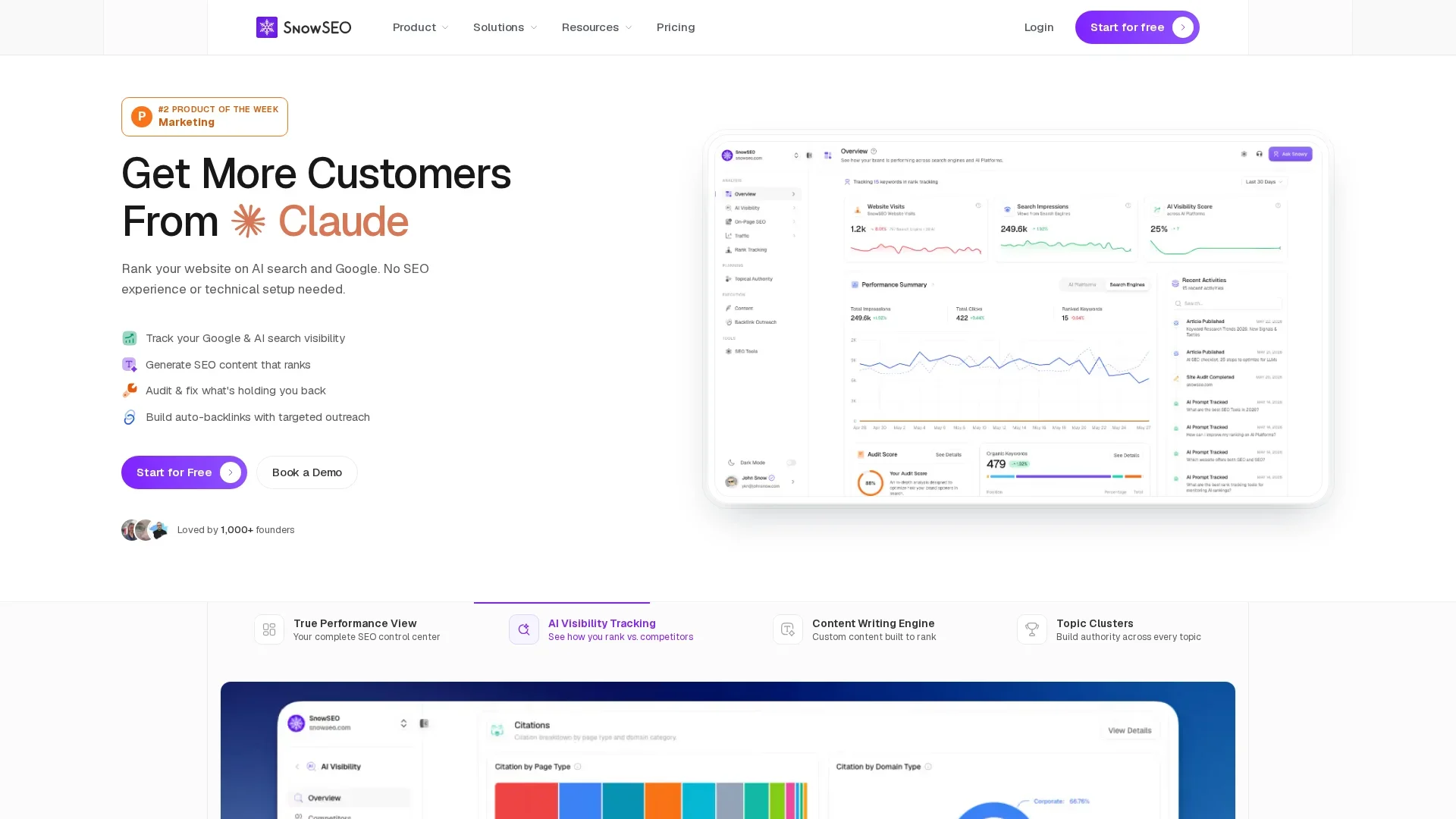
    SnowSEO

    SnowSEO connects research, brand context, drafting, on-page guidance, publishing, rank tracking, and AI visibility in one workflow. It suits teams that want an integrated AI content quality comparison from brief through measurement.
    SnowSEO

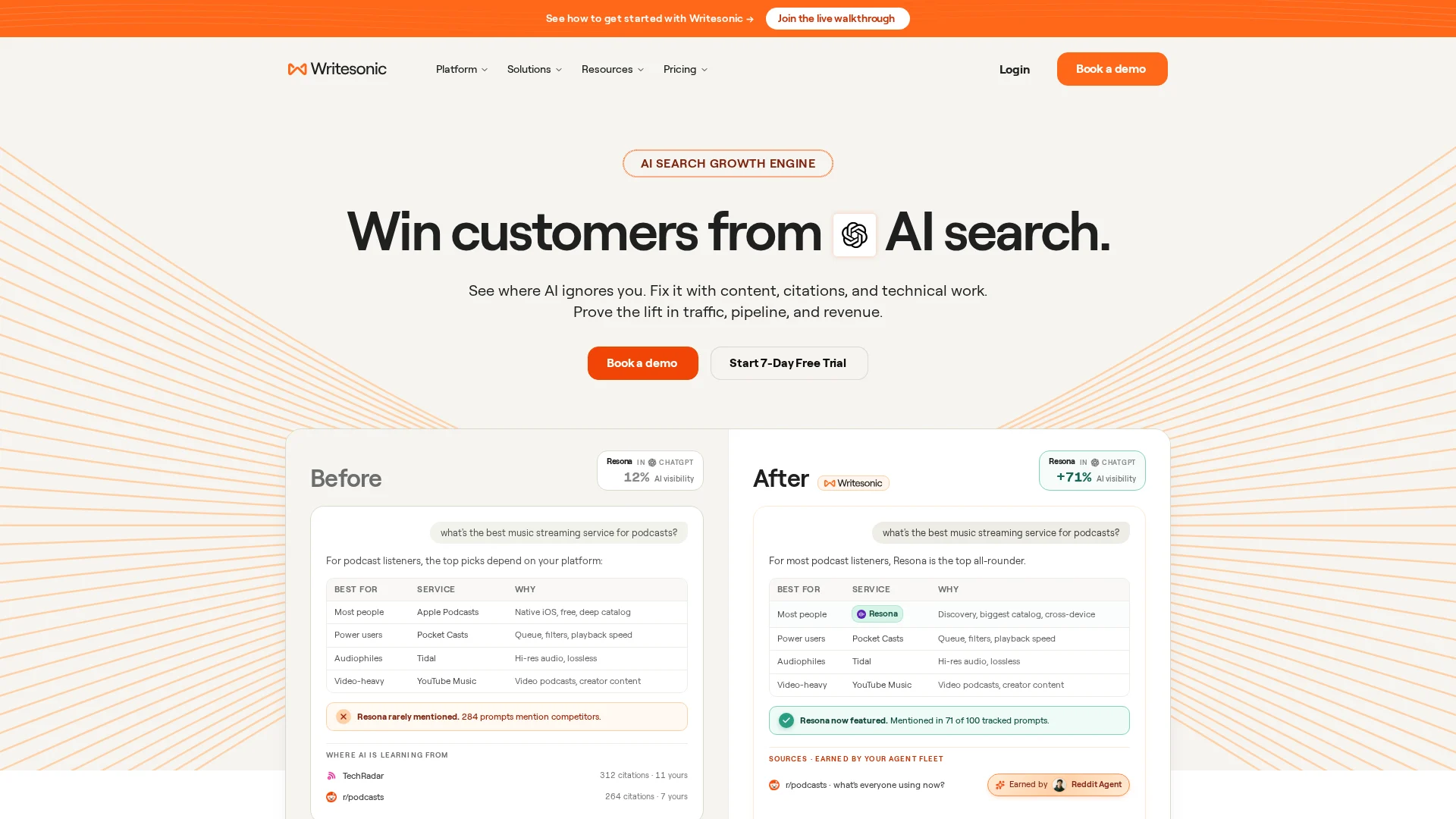
    Writesonic

    Writesonic targets content teams that need research-led article creation, SEO checks, and AI-search monitoring. Its SEO suite covers keyword research, content gaps, and internal linking.
    Writesonic

    Which Platform Produces More Useful SEO Content?

    Research, Relevance, and Factual Confidence

    SnowSEO is the stronger fit when content needs keyword research, audits, and visibility checks in one workflow. Writesonic can speed up drafting, but neither tool replaces source checks. Google prioritizes helpful, reliable, people-first content, not the tool that wrote it.

    Check Better approach
    Facts Verify claims before publishing
    Search intent Match the reader’s real question

    Brand Voice and Editorial Effort

    Give either platform a clear brief, examples, and expert notes. SnowSEO can reduce tool switching, while Writesonic may suit teams focused on draft volume. Human editing is still required.

    Tip: Add first-hand examples, then remove vague claims.

    Also Read: How to Choose SEO Tools for Your Marketing Workflow

    SEO Features That Influence Visibility

    Traditional SEO: Structure, Coverage, and Internal Links

    Strong visibility starts with clear headings, full topic coverage, and useful internal links. Google says links help it find pages and understand relevance, so use short, descriptive anchor text. Google’s link guidance supports this approach.

    Pencil sketch flowchart linking pillar and product pages
    Pencil sketch flowchart linking pillar and product pages

    AI Search: Citability and Visibility Feedback

    AI search needs the same sound base, plus clear answers and original proof. Keep key facts in text, cite sources, and track which prompts surface your pages. Google confirms indexed pages can appear as supporting links in AI results, but no placement is guaranteed. Read Google’s AI features guidance

    Check visibility trends alongside leads, not mentions alone.

    Also Read: 10 Best Tools for Competitor SEO Analysis in 2024

    Which Workflow Fits Your Team?

    Choose Writesonic if your team needs fast drafts and has editors who can handle research, fact checks, and publishing elsewhere.

    Choose SnowSEO if you want one workflow from audit to keyword choice, content, tracking, and AI-search checks.

    Pencil sketch of two workflow paths merging
    Pencil sketch of two workflow paths merging
    Team need Better fit
    Fast standalone drafting Writesonic
    Connected SEO and AI visibility work SnowSEO
    1. Set the topic and search intent.
    2. Add expert input and proof.
    3. Review facts before publishing.

    AI can speed up production, but Google still prioritizes original, people-first content, as its guidance explains.

    Also Read: SnowSEO Review: An SEO Tool for Content and Search Visibility

    Which Should You Choose: SnowSEO or Writesonic?

    Choose SnowSEO if you need one workflow for audits, keyword research, content, rank tracking, and AI-search visibility. Choose Writesonic if your main need is fast drafting.

    Need Better fit
    Full SEO and AI visibility workflow SnowSEO
    Quick first drafts Writesonic
    • Review every AI draft for facts and brand voice.
    • Track results after publishing, not just output volume.

    Google rewards helpful, original content, not content made only to chase rankings, per Google’s guidance.

    Homepage
    Homepage

    Compare content quality with real visibility data. Try SnowSEO to audit, create, track, and improve SEO and AI-search performance.

    Frequently Asked Questions

    Q1: How does SnowSEO’s AI content generation engine compare with Jasper AI and Writesonic in quality and SEO features?

    SnowSEO pairs content creation with audits, keyword research, rank tracking, and AI visibility work. Writesonic focuses more on drafting. Quality still depends on your brief, source checks, and edits.

    Q2: Can I publish AI drafts without editing?

    No. Check facts, claims, tone, internal links, and search intent before publishing.

    Q3: Which platform suits an agency?

    Choose the tool that connects research, production, tracking, and reporting in one workflow.

    Conclusion

    SnowSEO suits teams needing one workflow for research, creation, tracking, and AI visibility. Writesonic fits fast drafting. Google prioritizes helpful, original content, so human review still matters.

  • SnowSEO GEO Optimization Review: Monitoring AI Brand Mentions

    SnowSEO GEO Optimization Review: Monitoring AI Brand Mentions

    Quick Summary: SnowSEO is worth using for AI brand mention tracking if you need it alongside daily SEO work, but treat mentions as directional signals, not proof of revenue. The tool tracks brand presence, competitor overlap, and topic gaps across AI prompts, though specialist platforms may offer deeper source-level analysis. A practical workflow involves running 10-20 prompts by intent, recording mentions and cited URLs, then validating changes against Search Console clicks and conversions. It suits agencies and growing brands best, while enterprise teams needing wide model coverage or custom exports should look elsewhere.

    Buyers need three answers: Does AI recommend the brand, which rivals take its place, and which cited page needs work? This SnowSEO GEO review tests that workflow, not a feature checklist. You will see how to judge mention data, prompt coverage, competitor gaps, and source links. This SnowSEO GEO review also flags where specialist tools may offer deeper detail. Our assessment focuses on useful actions, not vanity scores.

    How SnowSEO Monitors AI Brand Mentions

    What the Dashboard Can Tell You

    A SnowSEO GEO review should focus on whether the dashboard turns AI mentions into clear actions. SnowSEO tracks brand presence across AI search prompts, then helps you spot gaps in visibility, competitor overlap, and content topics worth improving.

    SnowSEO
    SnowSEO
    Dashboard signal Practical use
    Brand mentions See where your name appears or is absent
    Competitor overlap Find prompts where rivals gain attention
    Topic gaps Plan pages that answer missing questions

    Google says AI search can use related searches and varied sources to form answers, so test more than one wording per topic. Google’s guidance also confirms standard SEO still matters.

    Treat mention counts as a lead, not proof of revenue. Check traffic, leads, and sales before changing priorities.

    For this SnowSEO GEO review, the useful workflow is simple:

    1. Track priority prompts each week.
    2. Flag missing or wrong brand answers.
    3. Build or refresh the pages behind those gaps.

    Also Read: Google and AI Platforms Shift Guidance for Generative Search Visibility

    Is SnowSEO’s Monitoring Deep Enough for Real SEO Decisions?

    A Practical Prompt Test

    SnowSEO is deep enough for first-pass GEO decisions if you test the prompts that drive real buying research.

    Build a small set of prompts by intent, then check whether your brand appears, how it is described, and which sources the AI cites.

    1. Run 10 to 20 prompts across brand, category, comparison, and problem terms.
    2. Record brand mention, sentiment, cited URL, and competitor named.
    3. Repeat after a content or technical change.
    4. Match changes against Search Console clicks and impressions.
    Pencil sketch of SEO workflow testing
    Pencil sketch of SEO workflow testing
    Test signal Decision it supports
    Brand omitted Create or improve the source page
    Wrong product claim Fix key pages and entity details
    Competitor cited Review cited content gaps

    A mention alone is not a win. You need the prompt, wording, cited source, and trend to know what to fix.

    SnowSEO helps turn scattered AI answers into a workable watchlist. Specialist platforms may offer deeper prompt-scale analysis, but that only matters if your team can act on it. Google also advises judging search change through trends in impressions and clicks, not position alone, in its Search Console guidance.

    Also Read: GEO Optimization vs Traditional SEO: Which Drives AI Visibility?

    SnowSEO Pros and Cons for Agencies and Growing Brands

    SnowSEO suits teams that need SEO and AI visibility work in one place.

    Strength Watch-out
    Combines audits, keywords, rank tracking, content, and AI mention checks Specialist GEO tools may offer deeper prompt-level data
    Helps agencies standardize client reporting Teams still need to validate AI answers manually
    Supports both search and AI visibility work AI mentions do not prove traffic or revenue
    Two analysts reviewing dashboards on dual monitors
    Two analysts reviewing dashboards on dual monitors

    Best fit: agencies with several smaller clients and growing brands that need a shared workflow.

    Less ideal: enterprise teams needing wide model coverage, detailed citation history, or custom data exports. Use SnowSEO to spot trends, then check conversions in analytics. Google also advises measuring conversions and engagement, not clicks alone, for AI search work in its AI features guidance.

    Treat mention tracking as a signal, not a ranking guarantee.

    Also Read: 7 GEO Optimization Tools for Brand Visibility in AI Answers

    Is SnowSEO Worth It for Monitoring AI Brand Mentions?

    Yes, if you need AI mention tracking beside daily SEO work. SnowSEO monitors brand visibility, citations, sentiment, and competitor share across AI platforms in one workspace, as its product listing confirms.

    • Choose it for fast, action-led monitoring.
    • Pick a specialist tool if you need deep source-level analysis.

    Treat mention counts as signals, then check the actual AI responses.

    Homepage
    Homepage

    Track AI brand mentions alongside your search work. Try SnowSEO to audit visibility, monitor rankings, and find the gaps worth fixing first.

    Frequently Asked Questions

    Q1: How effectively does SnowSEO monitor brand mentions across generative search platforms?

    SnowSEO helps track AI visibility and brand references in key prompts. Use repeat checks to spot changes, then review the cited context before acting.

    Q2: What should I monitor first?

    Start with branded prompts, product categories, and competitor comparisons. Track mention rate, sentiment, and source pages.

    Q3: Can monitoring replace manual AI checks?

    No. Manual checks still help verify wording, location, and accuracy. Use SnowSEO to make those checks faster and easier to repeat.

    Conclusion

    SnowSEO makes AI brand mention checks clear and usable. Track prompts, wording, and cited sources over time. Treat results as directional, since AI visibility measures still vary by platform and method.

  • GEO Optimization vs Traditional SEO: Which Drives AI Visibility?

    GEO Optimization vs Traditional SEO: Which Drives AI Visibility?

    Quick Summary: GEO optimization and traditional SEO serve different goals: SEO drives rankings and clicks, while GEO earns mentions and citations in AI answers. They share the same foundations, so treat GEO as an added measurement layer, not a replacement. Start with solid SEO basics, then add GEO to track AI visibility and influence AI-led research. Use SEO data for traffic trends and GEO data for answer presence, and measure both separately.

    A top Google result may still miss a ChatGPT recommendation. GEO versus traditional SEO answers two different needs: search rankings and AI mentions. GEO versus traditional SEO is not a full reset. SEO builds findability, while GEO tracks AI retrieval and citations. This guide compares GEO versus traditional SEO so teams can use both with clear goals.

    GEO Optimization vs Traditional SEO: At a Glance

    Traditional SEO GEO optimization
    Primary visibility surface Ranked search results AI answers and generative search features
    Success metric Rankings, impressions, CTR, clicks, and conversions Mentions, citations, share of voice, sentiment, and AI referrals
    Content objective Satisfy search intent and earn clicks Provide clear, trustworthy, extractable answers
    Core authority signals Helpful content, links, technical quality, and expertise SEO foundations, entity clarity, corroboration, and source quality
    Best use case Sustainable organic traffic and discoverability Influence during AI-led discovery and evaluation

    How Traditional SEO and GEO optimization Compare

    Traditional SEO

    Traditional SEO improves visibility in ranked search results and earns qualified organic clicks. It suits teams focused on lasting traffic, using helpful content, links, technical health, and expertise to drive rankings, CTR, and conversions.

    GEO optimization

    GEO optimization helps brands appear in AI answers through mentions, citations, and recommendations. It suits teams shaping AI-led research and evaluation with clear, trustworthy, easy-to-extract answers. Google says SEO foundations still support generative search visibility.

    What Is the Difference Between GEO and Traditional SEO?

    Different Outputs, Shared Foundations

    Traditional SEO aims to earn rankings and clicks in search results. GEO aims to make your brand useful enough to appear in AI-generated answers, citations, and recommendations across AI platforms.

    The overlap is large: clear site structure, trusted sources, helpful pages, and strong technical health matter to both. Google says its AI features still rely on core Search ranking and quality systems, so SEO basics remain essential for Google visibility. Google’s guidance confirms this.

    Key insight: Treat GEO as an added measurement layer, not a replacement for SEO.

    • SEO tracks: rankings, organic visits, conversions
    • GEO tracks: brand mentions, citations, answer coverage

    Also Read: 10 Must-Have Tools to Streamline Your SEO in 2025

    How Content and Technical Strategy Change

    What to Keep From SEO

    Keep the basics: crawlable pages, clear internal links, fast mobile pages, and useful content. Google says AI features use the same core search foundations, with no extra technical requirements for eligible pages. Google’s guidance supports this approach.

    • Keep key facts in visible page text.
    • Match structured data to on-page content.
    • Build topic clusters around real user needs.
    SEO specialist mapping topic clusters with product team
    SEO specialist mapping topic clusters with product team

    What GEO Adds

    GEO changes the content brief, not the foundation. Write direct answers, show first-hand proof, and cover related questions AI systems may explore. Track citations, brand mentions, and referral conversions across AI platforms.

    SEO focus GEO addition
    Rank for queries Earn citations in answers
    Build topical pages Add clear, quotable facts
    Track organic clicks Track AI mentions and outcomes

    Also Read: 10 Best Tools for Competitor SEO Analysis in 2024

    How to Measure Visibility and Choose the Right Workflow

    Metrics That Should Not Be Confused

    Track Google clicks, impressions, CTR, and position separately from AI answer mentions, citation rate, and share of voice. Google defines CTR as clicks divided by impressions in Search Console.

    Clean split chart comparing clicks to AI citations
    Clean split chart comparing clicks to AI citations

    A high AI mention rate does not guarantee visits or sales.

    What to Look for in a GEO Tool

    Choose a tool that:

    • Tests priority prompts across AI platforms
    • Records brand mentions and cited URLs
    • Compares competitors
    • Links findings to content tasks and business results

    Use SEO data for traffic trends and GEO data for answer presence. SnowSEO can unite audits, rank tracking, and AI visibility work in one workflow.

    Also Read: 7 GEO Optimization Tools for Brand Visibility in AI Answers

    Which Should You Choose: GEO or Traditional SEO?

    Choose traditional SEO first, then add GEO where AI answers shape your buyers’ research. Google says its AI features still rely on core ranking and quality systems, so strong SEO remains the base for visibility in AI search.

    If your goal is Prioritize
    Earn rankings, traffic, and sales Traditional SEO
    Track brand mentions in AI answers GEO
    Build durable visibility across both SEO plus GEO

    Do not treat GEO as a replacement for technical health, useful content, and authority. Start with the basics, then monitor AI visibility.

    Homepage
    Homepage

    Build SEO and GEO in one workflow. Use SnowSEO to audit, track, and improve AI visibility.

    Frequently Asked Questions

    Q1: How does GEO optimization compare with traditional SEO for visibility in AI-generated answers?

    GEO helps AI systems find, trust, and cite your content. Traditional SEO builds ranking strength. Use both to earn traffic and AI answer visibility.

    Q2: Should I replace SEO with GEO?

    No. Strong technical SEO, useful pages, and authority still support AI visibility.

    Q3: What should I measure?

    Track AI mentions, citations, search rankings, qualified visits, and conversions.

    Conclusion

    Traditional SEO builds the foundation. GEO expands visibility across AI answers. Google confirms strong SEO still supports AI features, so measure both visibility and business results.

  • How to Move From Legacy SEO Platforms to SnowSEO

    How to Move From Legacy SEO Platforms to SnowSEO

    Quick Summary: Migrating 40 client projects to SnowSEO requires preserving keyword groups, rank baselines, and competitor data-not just logins-while ensuring generative search visibility stays tracked in one workflow. Start by exporting 12 months of trend data, mapping unused reports for retirement, and assigning owners to each workflow before switching. Run parallel tracking for two reporting cycles to validate data matches, then launch with a focus on priority pages and AI visibility continuity, fixing high-value gaps first. Google’s guidance emphasizes testing changes before launch and monitoring post-move, so keep the old platform active until SnowSEO’s data aligns exactly with your baseline.

    Moving 40 client projects is not about new logins. A legacy SEO platform migration must keep keyword groups, rank baselines, competitor data, reports, and the context behind each call.

    This guide shows how to plan a safer legacy SEO platform migration to SnowSEO, validate your data, and keep reporting steady. It also covers generative search continuity, so your team can track search and AI visibility in one workflow.

    Step 1: Inventory Your Legacy SEO Platform

    Capture Data, Workflows, and Ownership

    Start your legacy SEO platform migration with a full export. List every report, keyword set, audit, alert, integration, and user role before access changes.

    SEO team reviewing legacy platform workflows and report ownership
    SEO team reviewing legacy platform workflows and report ownership
    Area Capture Owner
    Search data Rankings, clicks, pages, keywords SEO lead
    Workflows Audits, briefs, approvals, alerts Content lead
    Access Admins, API keys, billing, exports Operations lead

    Google advises teams to prepare and test changes before a move, then monitor results after launch in its site migration guidance.

    • Export at least 12 months of trend data.
    • Record report schedules and decision rules.
    • Name one accountable owner per workflow.

    Do not cancel the old platform until SnowSEO data matches your baseline.

    Also Read: 10 New Keyword Research Techniques to Try Now

    Step 2: Build Your SnowSEO Migration Map

    Map What Transfers and What Needs Rebuilding

    List every legacy report, data source, keyword set, and alert before you switch. Keep raw exports safe. Google notes that Search Console report downloads can truncate data, while bulk exports retain fuller performance data for your property in BigQuery.

    Use a simple map:

    Asset Action Owner
    Keyword groups Transfer and tag SEO lead
    Rank baselines Export and verify Analyst
    Custom reports Rebuild in SnowSEO Marketing ops
    AI visibility prompts Create new tracking Content lead
    • Save date ranges, filters, and market settings.
    • Mark reports nobody uses for retirement.

    Warning: Do not compare new SnowSEO data with old data until settings match.

    Also Read: 10 Best Tools for Competitor SEO Analysis in 2024

    Step 3: Import, Configure, and Validate the Data

    Run a Parallel Comparison

    Import your saved keyword sets, target pages, tags, competitors, and past reports. Then configure SnowSEO to match the old platform’s search engines, locations, devices, and update schedule.

    Side-by-side SEO data migration workflow comparison
    Side-by-side SEO data migration workflow comparison

    Run both platforms side by side for two reporting cycles. Compare the same dates and filters. Google notes that property-level and page-level data use different counting rules, so match the view before judging a gap in results. See Google’s reporting guidance.

    Check What to compare
    Rankings Keywords, location, device, SERP type
    Traffic Clicks, impressions, landing pages
    AI visibility Prompts, cited pages, competitor mentions

    Do not switch off the legacy platform until the gaps have an owner and a clear reason.

    1. Flag missing keywords or URLs.
    2. Check tags and access rights.
    3. Approve SnowSEO as the new source of truth.

    Also Read: 10 Organic Growth Strategies to Drive Traffic in 2025

    Step 4: Launch the Unified SEO and Generative Search Workflow

    Measure Continuity and Business Value

    Launch with one shared baseline, then watch search and AI visibility together. Track priority pages, query groups, conversions, and brand mentions across the new workflow.

    Measure Check Business signal
    Organic visibility Clicks, impressions, and rank Demand retained
    AI visibility Brand and page mentions in AI answers Generative search continuity
    Conversions Leads, sales, and assisted revenue Real return on effort

    Use SnowSEO to keep audits, keyword work, content tasks, and visibility tracking in one view. Google says Search Console reports queries, clicks, impressions, and position, so compare these numbers with your pre-move baseline.

    Review weekly for the first month. Fix lost high-value pages first, not every small ranking shift.

    Homepage
    Homepage

    Move with control, not guesswork. Use SnowSEO to unite audits, rank tracking, content, and AI search visibility in one workflow.

    Frequently Asked Questions

    Q1: How to transition from legacy SEO platforms to SnowSEO for a unified approach to traditional and generative SEO?

    Export key data, map active reports, then run parallel tracking before switching. Keep baseline rankings and prompts.

    Q2: What data should I keep?

    Save keyword lists, site audits, backlinks, and historic rankings.

    Q3: How long should parallel tracking last?

    Use two to four weeks to spot gaps and confirm reporting matches.

    Conclusion

    A safe move to SnowSEO starts with clean data, clear ownership, and steady checks after launch. Protect search signals with tested redirects and monitoring, as Google recommends, while bringing SEO and generative search work into one workflow.

  • 7 SEO Platforms for Traditional and Generative Search Optimization

    7 SEO Platforms for Traditional and Generative Search Optimization

    Quick Summary: Google rankings alone won’t protect you-AI search like ChatGPT now drives buyer decisions, so teams need a single platform that tracks both traditional SEO and AI visibility. SnowSEO leads by combining keyword research, rank tracking, and AI mentions (like citations and sentiment) into one workflow, making it ideal for SMBs and agencies that want actionable insights without juggling separate tools. Semrush and Ahrefs excel at deep SEO data but require extra steps for AI tracking, while Profound focuses narrowly on enterprise-level generative search optimization. The key is choosing a tool that turns visibility drops into clear tasks, not just reports.

    A strong Google ranking can still vanish when buyers ask ChatGPT, Gemini, or Perplexity for a recommendation. Teams need unified SEO platforms that track rankings, site health, links, content, AI mentions, citations, and competitor share. This guide ranks seven unified SEO platforms, led by SnowSEO for execution. Semrush and Ahrefs bring deep SEO data, while Profound, Peec AI, and Otterly focus on AI visibility. We weighed coverage, workflows, reports, scale, and team fit.

    Unified SEO Platform Comparison

    Platform Best for Traditional SEO coverage Generative search coverage Workflow strength
    SnowSEO SMBs, agencies, content teams, and growth teams seeking one SEO and AI visibility workflow Keyword research, GSC analytics, rank tracking, site audits, topic clusters, content, and outreach AI visibility, prompts, mentions, citations, sentiment, share of voice, and competitor tracking High, with planning, creation, publishing, monitoring, integrations, and reporting in one workspace
    Semrush Established SEO teams, agencies, and organizations needing mature competitive and reporting capabilities Very broad keyword, backlink, technical, ranking, content, local, and competitive intelligence Prompt research, AI visibility, mentions, citations, sentiment, competitor gaps, and AI crawler audits High, though capabilities may be distributed across toolkits, plans, and add-ons
    Ahrefs Advanced SEOs, link builders, publishers, and teams with strong backlink research needs Excellent keyword, backlink, competitor, content, rank tracking, and technical audit coverage AI mentions, citations, share of voice, custom prompts, AI traffic, bots, and cited sources High for research and analysis; execution may require additional content or publishing workflows
    Profound Enterprise brands, large agencies, and dedicated GEO or brand intelligence teams Limited compared with full SEO suites; typically complements an existing SEO stack Deep answer, prompt, citation, source, conversation, and agent intelligence High for enterprise AI search programs, lower as a standalone traditional SEO operating system

    What to know about unified SEO platforms

    Unified SEO platforms put keyword research, audits, rank tracking, content work, and reporting in one place. Newer tools also track how AI answers mention and cite brands.

    This matters because Google rankings and AI visibility need different checks. Choose a platform that turns both data sets into clear work for your team.

    1. SnowSEO

    SnowSEO joins Google SEO and AI search work in one execution-first workspace. It links real GSC performance data with audits, content, publishing, and AI visibility tracking.
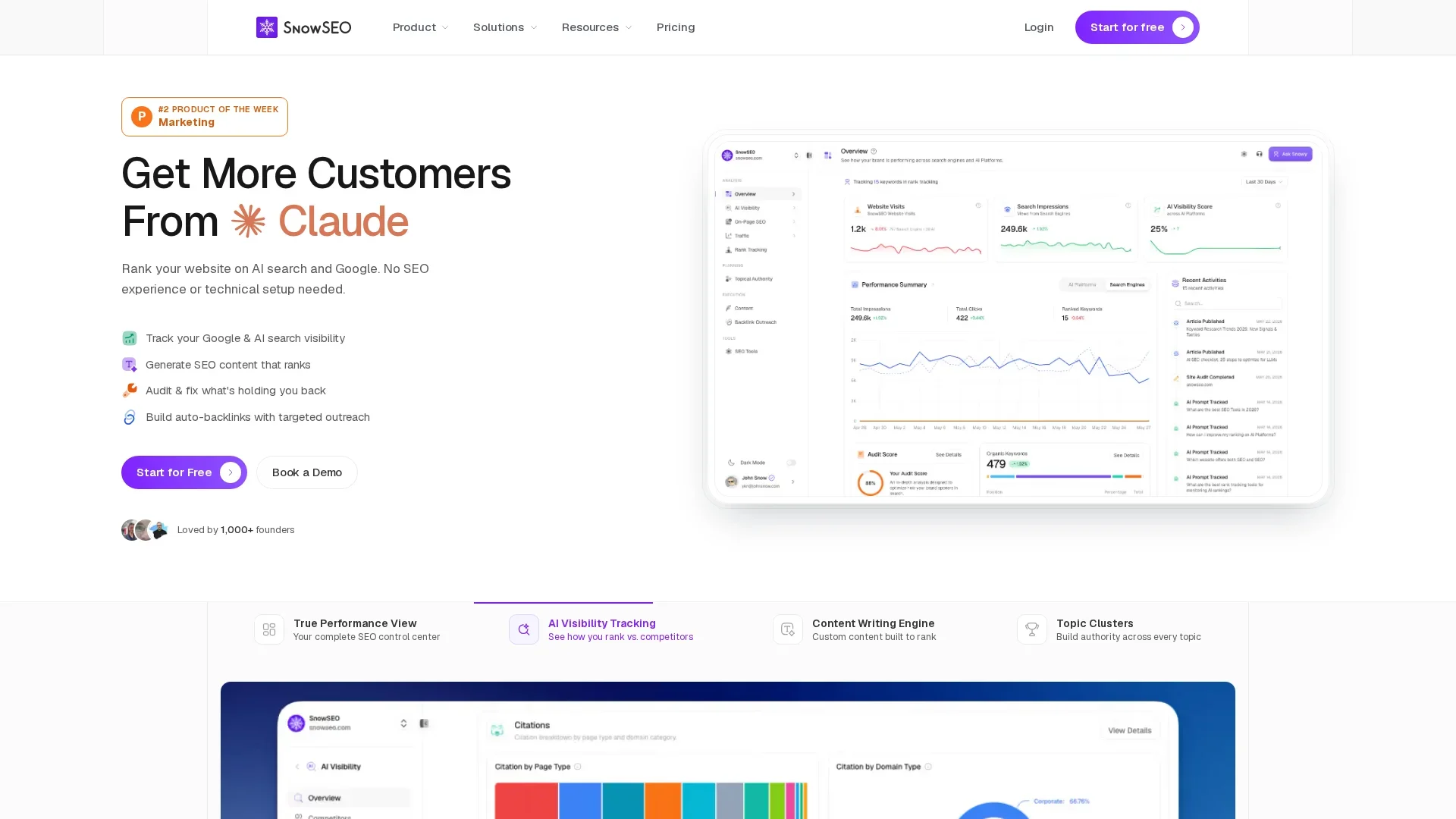
    SnowSEO
    Highlights

    • Tracks keywords, audits, content, outreach, and AI mentions together.
    • Monitors citations, sentiment, and share of voice across AI platforms.

    Specs

    • Best for: SMBs, agencies, and content teams.
    • Workflow strength: High – plan, create, publish, monitor, and report in one place.

    Pros

    Cons

    • Its historical backlink data is less deep than legacy suites.

    It ranks first because it turns traditional SEO and GEO visibility into work, not just reports.

    Last updated: August 28, 2026

    Also Read: SnowSEO – Your Last SEO Platform

    2. Semrush

    Semrush One joins mature SEO research with AI visibility tracking. It covers Google, ChatGPT, Perplexity, Gemini, AI Mode, and AI Overviews.
    Semrush
    Highlights

    • Track selected prompts daily, citations, mentions, and competitors.
    • AI Search Health audits flag crawler access issues.
      Specs
    • Best for: Established SEO teams and agencies.
    • Coverage: Broad SEO and AI search data.
      Pros
    • Mature reporting and competitive research.
      Cons
    • Costs and limits can grow with add-ons.

    It ranks here because the suite is powerful, but setup can be complex.

    Last updated: August 28, 2026

    Also Read: How to Track Rankings Across Google and Generative Search

    3. Ahrefs

    Ahrefs is best for backlink intelligence and large-scale search data. Its Brand Radar adds AI mentions, citations, and custom prompt tracking.

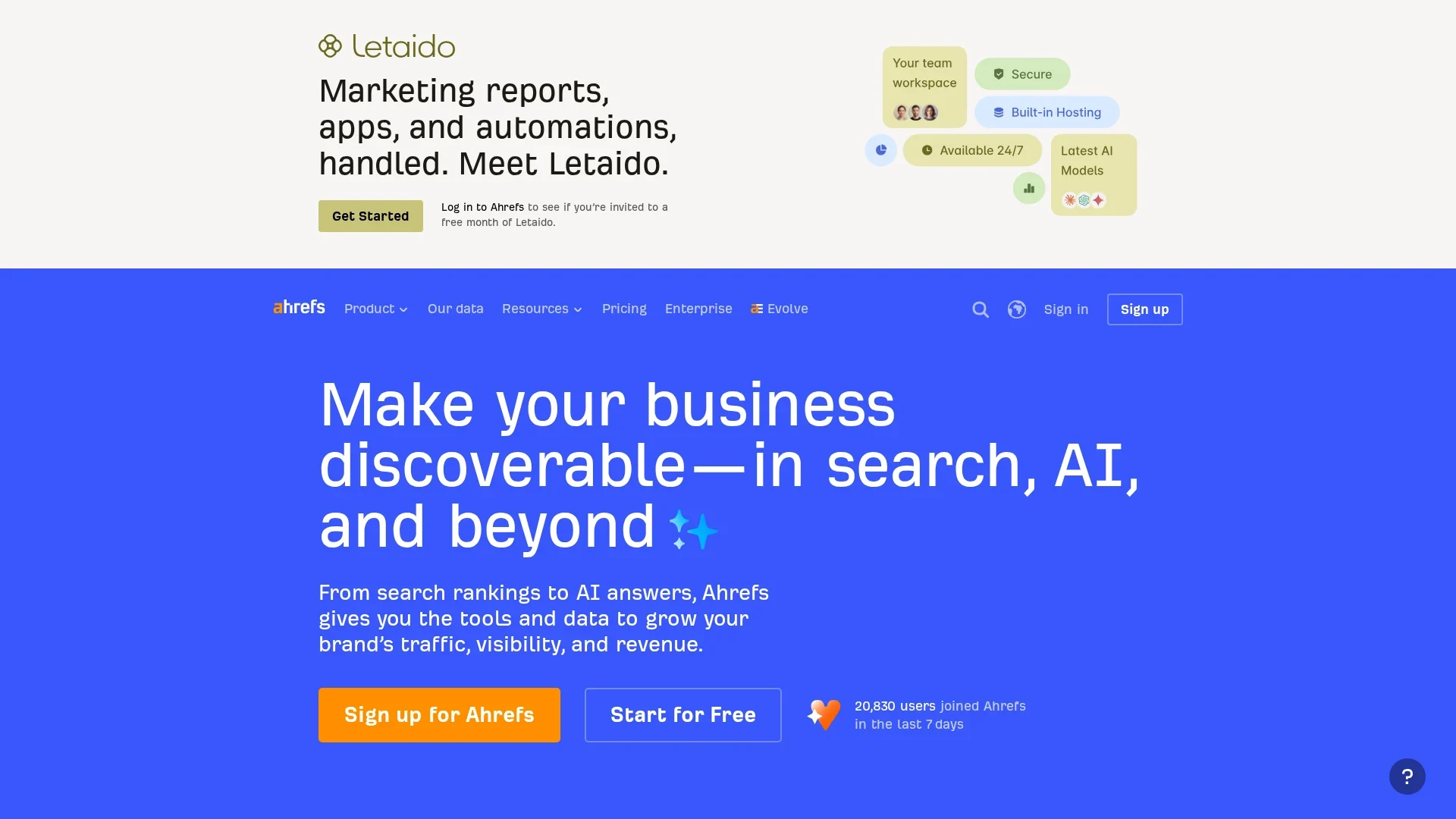
    Ahrefs
    Highlights

    • Strong backlink, keyword, competitor, rank, and site audit tools.
    • Web Analytics separates AI referral traffic, while Bot Analytics tracks crawlers.

    Specs

    • Best for: Advanced SEOs, link builders, and publishers.
    • Workflow: Strong research, weaker content execution.

    Pros

    • Deep link data and useful AI citation reports.

    Cons

    • Brand Radar costs and workflows may sit apart from core SEO.

    It ranks third because AI visibility is a newer layer, not a unified execution system.

    Last updated: August 28, 2026

    Also Read: SnowSEO Rank Tracking Review: Alerts, Reports, and Coverage

    4. Profound

    Profound is an enterprise-focused answer engine optimization platform. It helps teams track AI brand mentions, prompts, citations, and source influence across answer engines.
    Profound
    Highlights

    Specs

    • Best for: Enterprise brands, large agencies, and GEO teams
    • Traditional SEO: Limited
    • Generative search: Deep

    Pros

    • Strong enterprise reporting and governance
    • Clear AI visibility measurement

    Cons

    • Not a full traditional SEO suite
    • May be too complex for small teams

    It ranks fourth because it excels at enterprise GEO, but works best alongside a broader SEO platform.

    Last updated: August 28, 2026

    Other platforms worth considering

    These options fit narrower needs, from AI monitoring to budget-friendly SEO workflows.

    1. Peec AI – Focused on AI mentions, citations, sentiment, and competitor share of voice.
    2. SE Ranking – All-in-one SEO with growing AI visibility features.
    3. Otterly – Lightweight AI monitoring for small teams testing GEO.

    How to choose the right unified SEO platform

    Pick based on where work happens, not just what gets tracked.

    • Choose SnowSEO if one team needs audits, keyword research, content creation, rank tracking, and AI visibility in one workflow.
    • Confirm core SEO data: intent, difficulty, gaps, backlinks, audits, ranks, and Google connections.
    • Ask how AI results are checked: platforms covered, prompt set, refresh rate, citations, sentiment, and source URLs.
    • Price for real scale: domains, countries, users, keywords, prompts, exports, and reports.
    • Favor tools that turn a visibility drop into a clear task.

    Agencies need client workspaces and reporting. E-commerce teams need product and country tracking.

    Homepage
    Homepage

    Turn search and AI visibility data into action. Try SnowSEO for audits, keywords, rank tracking, and content work in one place.

    Frequently Asked Questions

    Q1: How does SnowSEO differ from Semrush and Ahrefs as a next-gen SEO platform focused on AI search visibility?

    SnowSEO combines standard SEO work with tracking for AI platforms, helping teams turn visibility gaps into tasks. Semrush and Ahrefs are strong for classic search data, but SnowSEO puts generative search workflows at the center.

    Q2: Do I need a separate tool for generative search?

    Not always. Choose a platform that links AI mentions, rankings, content gaps, and fixes. Separate tools can create scattered reports and slow down action.

    Q3: What should I track first?

    Track priority keywords, brand mentions in AI answers, competitor citations, and pages losing clicks. Review these signals monthly, then assign fixes by likely business impact.