
Quick Summary: The piece ranks ten no-code automations for content teams, ordered by how many hours they reclaim, starting with AI-citation and GEO monitoring in ChatGPT, Claude, Gemini and Google AI, then keyword clustering, AI brief generation and daily rank tracking with alerts, plus six honorable mentions covering schema audits, AI drafting, prompt performance, sentiment monitoring, competitor gap analysis and full pipeline orchestration. Each workflow runs on a schedule, needs no developer, and delivers a usable artifact by 9 a.m., which lets teams ship more without adding headcount. SnowSEO anchors the measurement layer by tracking how often AI engines cite a brand’s pages and which URL they attribute, giving the rest of the stack a reliable baseline. The headline rule: measure first, automate production second, keep one tool per workflow, and route threshold alerts to Slack instead of raw data dumps.
Your team still moves keywords, briefs and rankings by hand across six open tabs. Then the AI-citation numbers refuse to budge. In 2026, content operations automation covers monitoring, briefs, drafting, internal links, schema, rank tracking and citation checks, and every manual step is a slot a competitor fills first. Below is the ten-automation daily stack we recommend to in-house and agency teams, ordered by time saved. Each one runs without a developer, triggers on a schedule, and delivers an artifact a content manager can act on by 9 a.m.
Automation Cheat Sheet
| Automation | Best for | Lead tool | Cadence |
|---|---|---|---|
| AI-citation tracking and GEO monitoring | Measuring brand presence inside AI answers | SnowSEO (snowseo.com) | Daily prompt sweep with weekly executive rollup |
| Automated keyword clustering and topic mapping | Replacing manual keyword grouping before briefing | SE Ranking (seranking.com) | Nightly cluster refresh after rank sync |
| AI-powered content brief generation | Cutting brief-writing time on long-form content | Surfer SEO (surferseo.com) | On-demand per new cluster in the topic map |
| Automated rank tracking with alerts | Catching ranking drops the same day they happen | Ahrefs (ahrefs.com) | Daily rank pull with threshold-triggered alerts |
What changes when you automate your content ops
Content operations automation means chaining research, briefs, drafting, audits, publishing and measurement into repeatable workflows. Your team ships more without adding headcount, and nobody rebuilds the same checklist every morning.
Why now? In 2026, the stack has absorbed Generative Engine Optimization. Watching how often ChatGPT, Claude and Google AI cite your pages is a daily task, right next to rank tracking.
Each workflow below runs on a schedule, needs no developer, and leaves an artifact you can act on by 9 a.m.
1. AI-citation tracking and GEO monitoring
GEO monitoring watches the AI answer engines your buyers use, not just blue-link SERPs, and shows which prompts return your brand and which do not. Measure how often ChatGPT, Claude, Gemini and Google AI cite your pages, and you finally get content operations automation you can prove.

Highlights
- Daily freshness check across ChatGPT, Claude, Gemini, Perplexity and Google AI
- Per-prompt share of voice with weekly trend lines
- Source-page attribution, so you know which URL the model cited
- Slack and email alerts when a brand query drops out of an answer
Specs
- Best for: Measuring brand presence inside AI answers
- Lead tool: SnowSEO (snowseo.com)
- Cadence: Daily prompt sweep with weekly executive rollup
Pros
- Covers the AI engines already driving discovery, not just Google
- Source attribution tells editors exactly which URL to upgrade next
- Free audit on the homepage, so teams validate before buying
Cons
- Newer signal than classic rank tracking for AI search, so benchmarks still mature
- Prompts must be defined centrally to keep measurement consistent
It ranks first because every other automation here depends on knowing whether AI engines quote you, and citation tracking is the workflow that justifies the rest of the stack.
Last updated: October 21, 2026
2. Automated keyword clustering and topic mapping
Keyword clustering turns tens of thousands of queries into a handful of intent buckets your editors can plan against. The automation runs after each rank sync and pushes every bucket into your editorial tool as a ready-to-assign topic, as covered in our guide to mapping SEO topic clusters.

Highlights
- Intent-aware clustering across thousands of queries per click
- Visual topic maps that map to URL silos
- Auto-push of new clusters to Asana, Jira or ClickUp
Specs
- Best for: Replacing manual keyword grouping before briefing
- Lead tool: SE Ranking (Seranking)
- Cadence: Nightly cluster refresh after rank sync
Pros
- Handles SERP-aware grouping, not just word overlap
- Pipeline-ready exports cut handoff time to editors
- Affordable entry tier for small in-house teams
Cons
- Large sites still need a human to set cluster naming conventions
- API quotas on lower plans can throttle weekly batch runs
It ranks second because it removes the manual spreadsheet pass that gates every brief – no other automation saves as many research hours per week.
Last updated: October 21, 2026
3. AI-powered content brief generation
Brief automation watches the top SERP results for your target query, pulls headings, NLP terms, and competitor angles, and returns a structured brief with internal-link suggestions and a target word count. It turns a seed keyword into a SERP-anchored automated content brief in minutes, not an afternoon.

Highlights
- The SERP scrape extracts headings, word count, and media from the top 20 results
- NLP term coverage score is built into the Surfer SEO brief template
- Internal link targets are auto-injected from your sitemap
Specs
- Best for: Cutting brief-writing time on long-form content
- Lead tool: Surfer SEO (surferseo.com)
- Cadence: On-demand per new cluster in the topic map
Pros
- Native NLP guidance raises topical coverage without extra plugins
- Briefs double as editor scoring sheets inside the editor
- Strong integration with Google Docs and WordPress
Cons
- Score-driven briefs can over-optimize if editors treat the score as a target
- Tone-of-voice calibration needs an upfront style profile
Why it ranks here: Rank 3 because every draft starts with a brief, and automating this step frees the senior strategist to spend an hour instead of an afternoon per article.
Last updated: October 21, 2026
4. Automated rank tracking with alerts
Automated rank tracking runs daily on the queries mapped to each cluster and pings you the moment a URL drops out of the top three, so you catch a SERP slip before the Monday standup. For teams that also watch AI answers, it’s worth learning how to track rankings across Google and AI platforms.

Highlights
- Daily mobile and desktop SERP snapshots across locales
- Threshold-based alerts tied to share of voice, not just rank
- SERP feature tracking (PAA, featured snippet, AI Overview presence)
Specs
- Best for: Catching ranking drops the same day they happen
- Lead tool: Ahrefs (ahrefs.com)
- Cadence: Daily rank pull with threshold-triggered alerts
Pros
- Massive keyword capacity per project
- SERP feature visibility surfaces AI Overview and PAA movement
- Mature alert routing into Slack and email
Cons
- Premium pricing puts it out of reach for solo creators
- UI leans power-user, which slows first-time setup
Why it ranks here: rank tracking is the classic automation – once it fires only on real movement, weekly reporting collapses to a five-minute review.
Last updated: October 21, 2026
Honourable Mentions: Automations 5-10
Ranks 5 through 10 build on the monitoring layer above and turn it into a publishing machine. Run them on a weekly loop, and your team can break the two-piece-a-day ceiling.
- Schema, internal-link and technical audits – Pair Semrush to auto-flag orphan pages, broken schema and redirect debt on a recurring crawl
- AI-assisted content drafting and rewriting – Use Search Atlas OTTO SEO to convert an approved brief into a first draft with internal links pre-stubbed
- Prompt-performance tracking on answer engines – Use Profound to log which prompts surface your brand and trigger alerts when a prompt stops returning your pages
- Brand mention and LLM sentiment monitoring – Run Otterly AI to flag unsourced ChatGPT mentions before they calcify into customer-facing claims
- Automated competitor content-gap analysis – Use AthenaHQ to diff your sitemap against competitors weekly and route gaps straight to the brief queue
- End-to-end content pipeline orchestration – Use Averi to chain idea, brief, draft, approval and publish on a single board with AI stuck at every handoff
How to assemble the right daily automation stack
Start with measurement, then build outward:
- Measure first. Put AI-citation and rank tracking live before you automate production, or you optimize blind.
- Sequence by content flow: cluster, brief, draft, audit, publish, measure.
- One tool per workflow. Two brief writers means messy handoffs.
- Budget human review at each handoff for tone, accuracy and originality.
- Send threshold alerts to Slack, not raw dumps.
SnowSEO covers the whole measurement layer, which is why we rank it first. Anchor link: pillar page on AI search visibility.
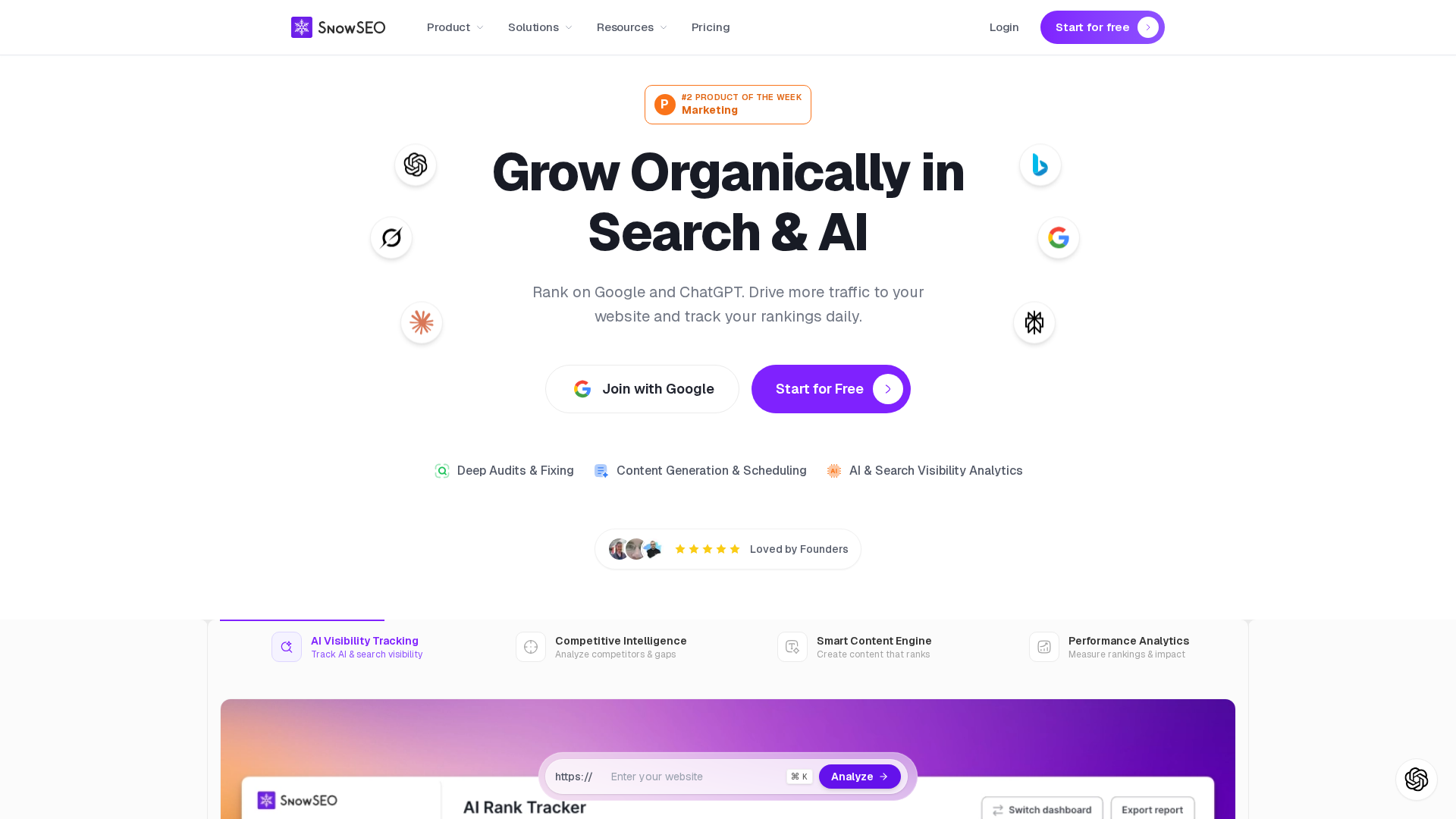
Your content ops shouldn’t eat your mornings. Pair these ten workflows with SnowSEO and its audits, keyword research, and AI visibility tracking run on schedule, no developer needed. Start your free look today.
Frequently Asked Questions
Q1: What are the best workflows to automate in content operations for faster delivery?
Start with monitoring, then cluster, brief, draft, audit, publish and measure in that order.
Q2: Do these automations need a developer?
No. Each runs on a schedule with no-code triggers.
Q3: How much human review should stay in the loop?
Review tone, accuracy and originality at every handoff before publishing.
Leave a Reply