Quick Summary: Keyword tools now track both classic search metrics and AI prompt demand from assistants like ChatGPT, since the two signals differ. SnowSEO leads the ranking of seven tools because it combines intent-driven keyword research with GEO tracking and content workflows in one platform. Semrush, Search Atlas, and Profound follow, each offering different strengths in prompt data, automation, or enterprise-scale AI conversation intelligence. Pick a tool that shows both keyword and AI signals together, matches your team’s workflow, and offers the right geographic and competitor depth.
A keyword like best CRM for startups might show 5,000 Google searches a month. The same buyer might ask ChatGPT a longer, more specific question instead. Most keyword tools with AI search intent tracking now reveal both signals: classic volume and CPC, plus AI prompts, citations, and share of voice. We ranked seven options on intent data, GEO coverage, competitor context, and workflow fit. SnowSEO leads the list as the featured pick.
Keyword and GEO Tool Comparison
| Tool | Best for | Intent data | GEO or AI data | Workflow strength |
|---|---|---|---|---|
| SnowSEO | Small teams, agencies, and businesses seeking one SEO and GEO workspace | AI intent classification, semantic clusters, opportunity scoring, and content-gap context | AI prompt tracking, mentions, citations, competitor visibility, and content gaps | Keyword research to topic clusters, article generation, CMS publishing, and monitoring |
| Semrush | Enterprise SEO teams and agencies already using Semrush | Keyword intent plus AI prompt intent across informational, commercial, transactional, navigational, and task queries | AI topic demand, prompts, brand mentions, source domains, sentiment, and market-level visibility | Strong suite integration for SEO research, content, monitoring, and reporting |
| Search Atlas | Agencies, multi-site brands, and teams seeking research-to-execution automation | Keyword intent, funnel-aligned prompt families, buyer needs, and answer patterns | Prompt volumes, LLM visibility, citation research, competitor-owned prompts, and source maps | Keyword research to topical maps, content planning, optimization, and OTTO automation |
| Profound | Enterprise brands and agencies needing specialist AI conversation intelligence | Automated intent, sub-intent, buyer-journey alignment, and intent-volume prioritization | Large-scale prompt volumes, citations, co-citations, visibility, sentiment, and share of voice | Prompt tracking, content briefs, page updates, agents, and reporting workflows |
What to know about keyword tools with AI search intent
Keyword tools with AI search intent do two jobs at once. They show classic metrics like volume, difficulty, and CPC, plus how often AI assistants like ChatGPT cite brands for conversational prompts.
Why now? Traffic is shifting from typed queries to AI answers, and prompt demand is modeled differently from Google search volume. So compare signals instead of treating them as one number.
The seven tools below cover that range, from full platforms to GEO-focused trackers.
1. SnowSEO
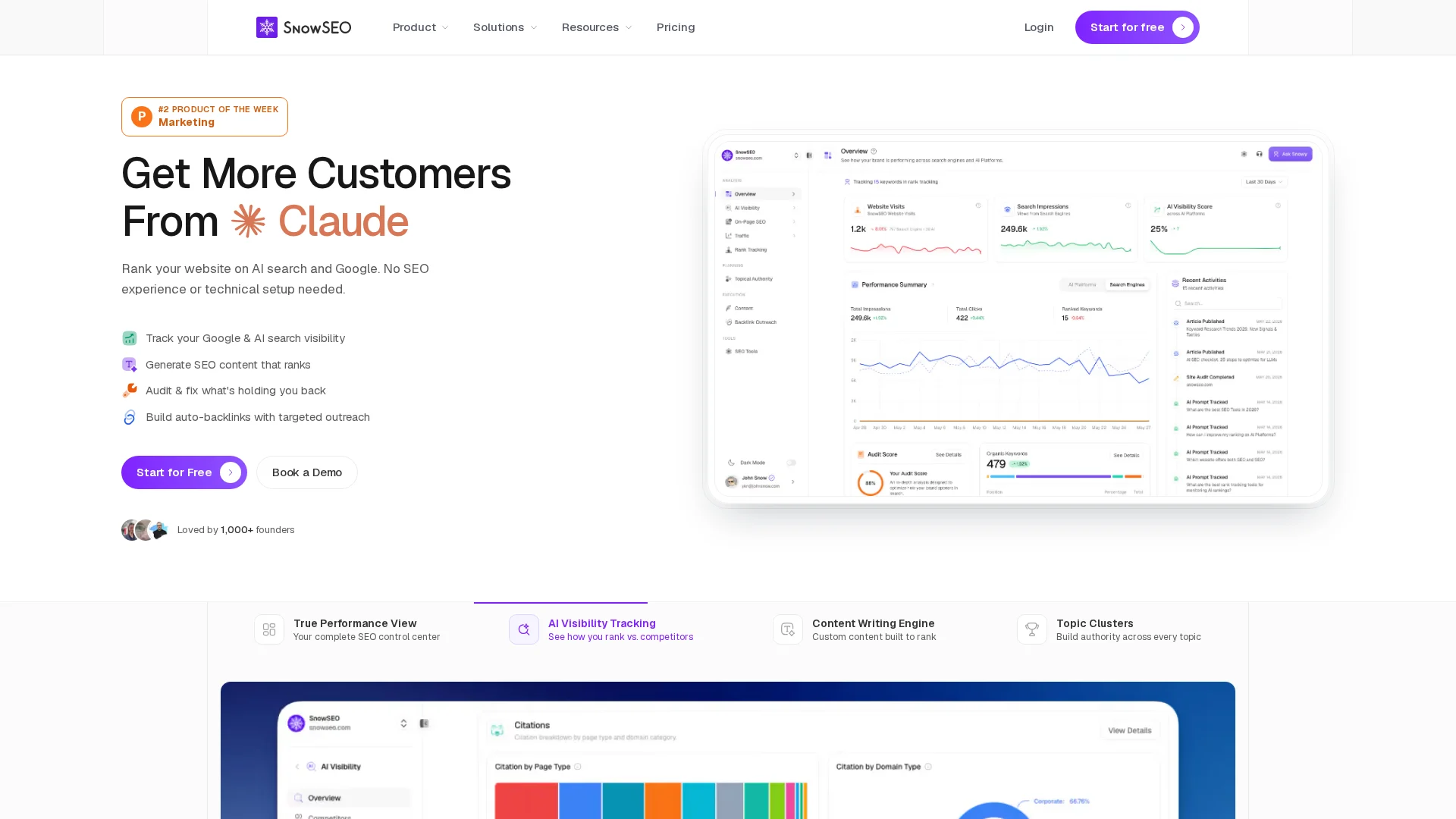
SnowSEO puts keyword research and GEO visibility in one workspace. You research keywords, build clusters, generate content, publish it, and track both Google rankings and AI mentions without switching tools.
Highlights
- AI keyword suggestions with volume, CPC, difficulty, and trends
- Intent classification and semantic clustering
- AI visibility tracking across ChatGPT, Perplexity, and Claude
- City-level keyword and prompt tracking
- Topic clusters, content generation, and CMS publishing
Pros
- Combines traditional SEO and GEO workflows in one place
- Links keyword research to content production and publishing
Cons
- Less granular AI conversation research than specialist tools
- Verify plan and API limits for large data exports
SnowSEO ranks first because it directly matches the combined brief: intent-driven keyword research plus GEO tracking, with the workflows to act on both.
Last updated: September 17, 2026
Also Read: 10 Best Tools for Competitor SEO Analysis in 2024
2. Semrush
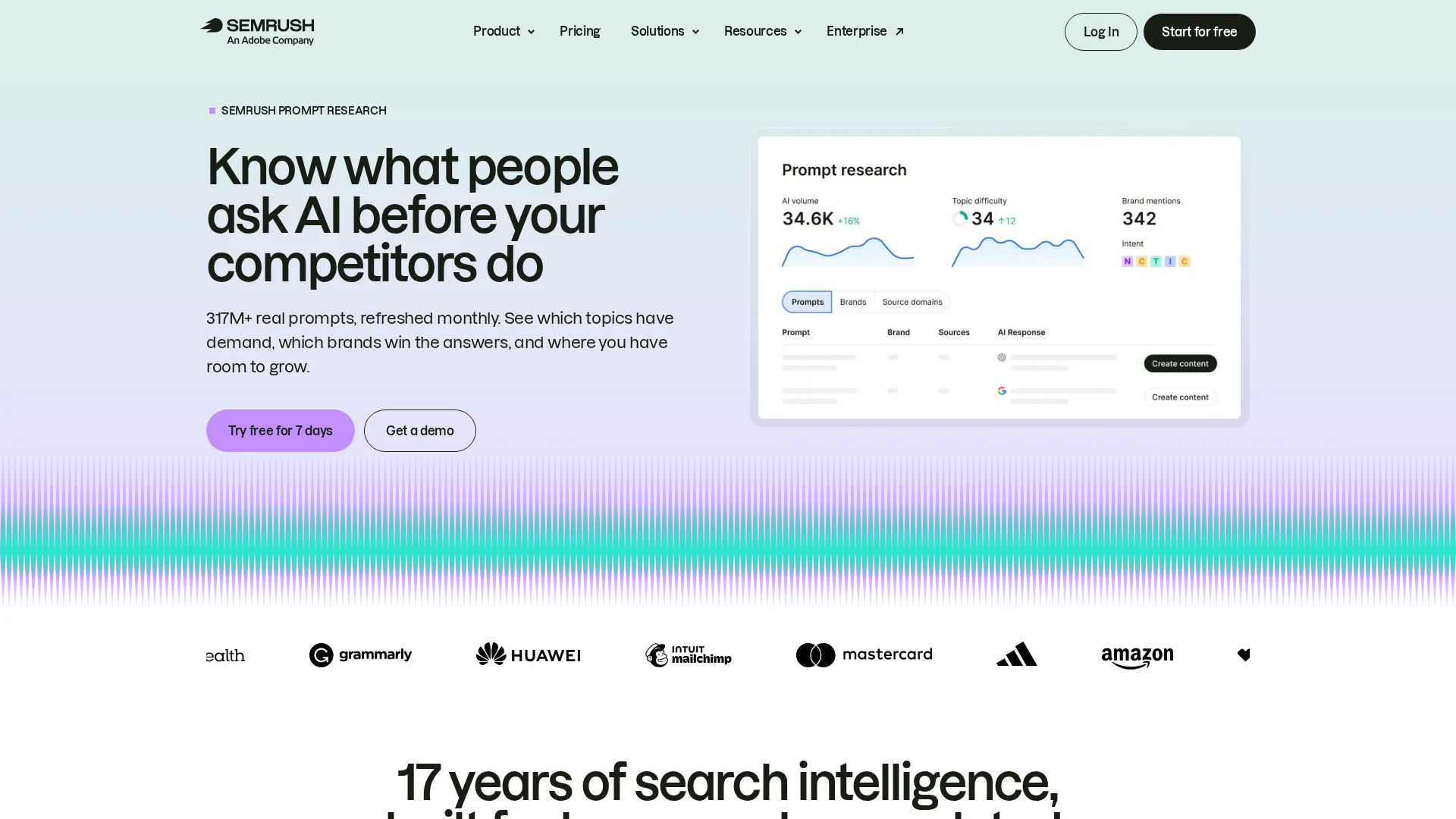
Semrush pairs its mature keyword research suite with Prompt Research, a large AI prompt database that treats prompts as a second research layer. You get AI topic demand, intent breakdowns, brand mentions, and cited domains across major AI platforms and 40+ markets, per Semrush’s documentation.
Highlights
- 317M+ prompts with topic-level AI volume and intent analysis
- Brand mentions, sentiment, and source-domain tracking
- Prompt data flows into the same workflows as keyword and content research
Specs
- Best for: Enterprise SEO teams and agencies already using Semrush
- Note: Full GEO features require the AI Visibility Toolkit ($99/mo per domain)
Pros
- Deep keyword and competitor research in one login
- Broad prompt coverage and strong reporting
Cons
- Complex for small teams; AI data costs extra
It ranks second because it offers the clearest bridge between keyword research and AI prompt research, though the combined setup is heavier than tools like SnowSEO, which bundle SEO and GEO in one platform.
Last updated: September 17, 2026
Also Read: SnowSEO vs Ahrefs: Which SEO Tool Covers More Workflows?
3. Search Atlas
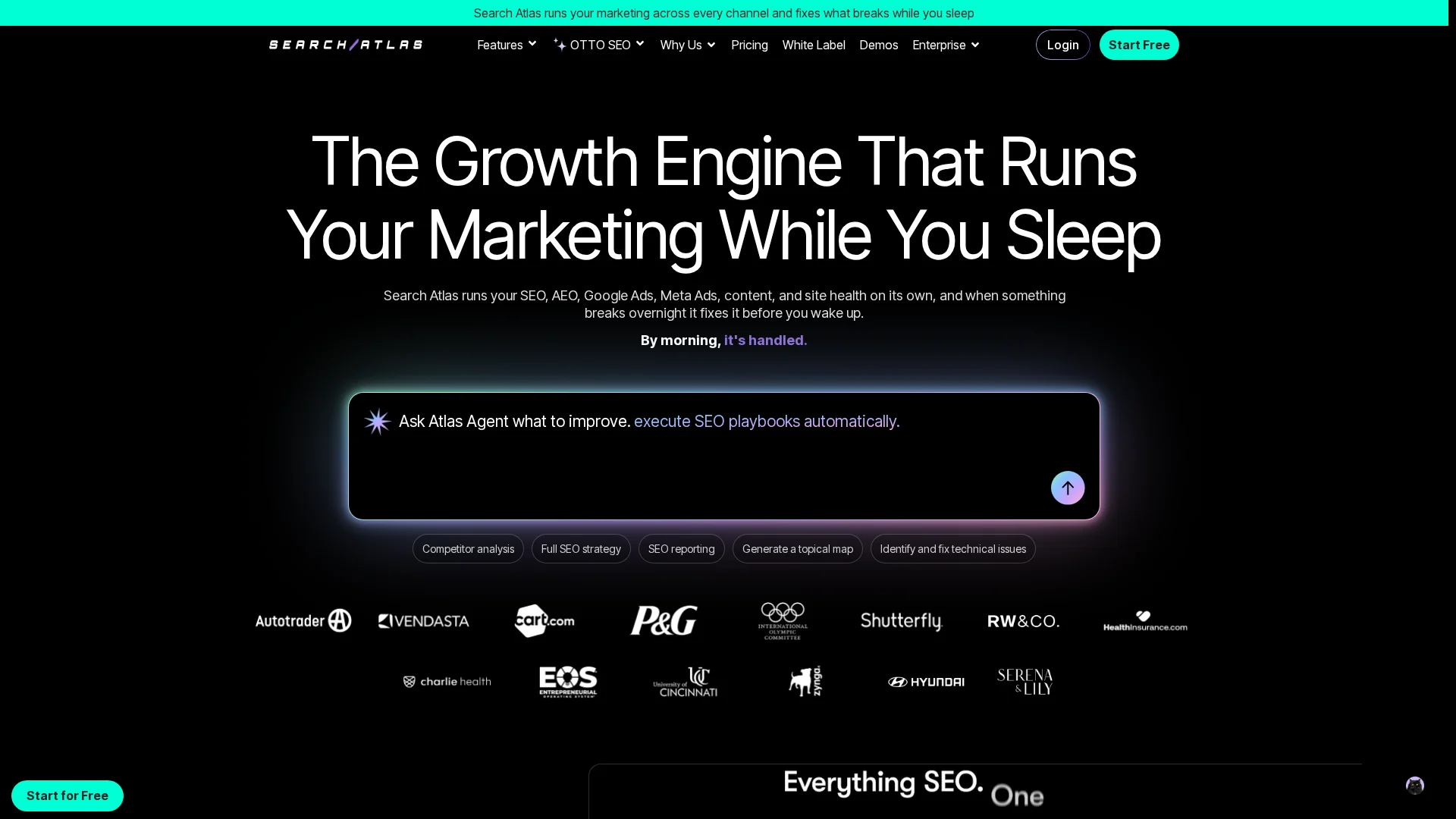
Search Atlas pairs keyword intelligence with prompt-volume research, then links both to topical maps and automated SEO work. Agencies and multi-site brands use it to move from discovery straight to execution.
Highlights
- Keyword research with volume, difficulty, intent, CPC, and traffic opportunity
- Prompt families organized by buyer need, funnel stage, and answer pattern
- Mapping between AI prompts and traditional keywords
- Topical maps, content briefs, and OTTO SEO automation
Pros
- Strong connection between keywords, prompts, topics, and content execution
- Supports LLM visibility, citation research, and competitor-owned prompts
Cons
- Broad platform brings a steeper learning curve
- Some AI visibility and automation features depend on plan level
It ranks third because few tools cover research-to-implementation this completely, though lighter users may find it more platform than they need.
Last updated: September 17, 2026
Also Read: SnowSEO – Your Last SEO Platform
4. Profound
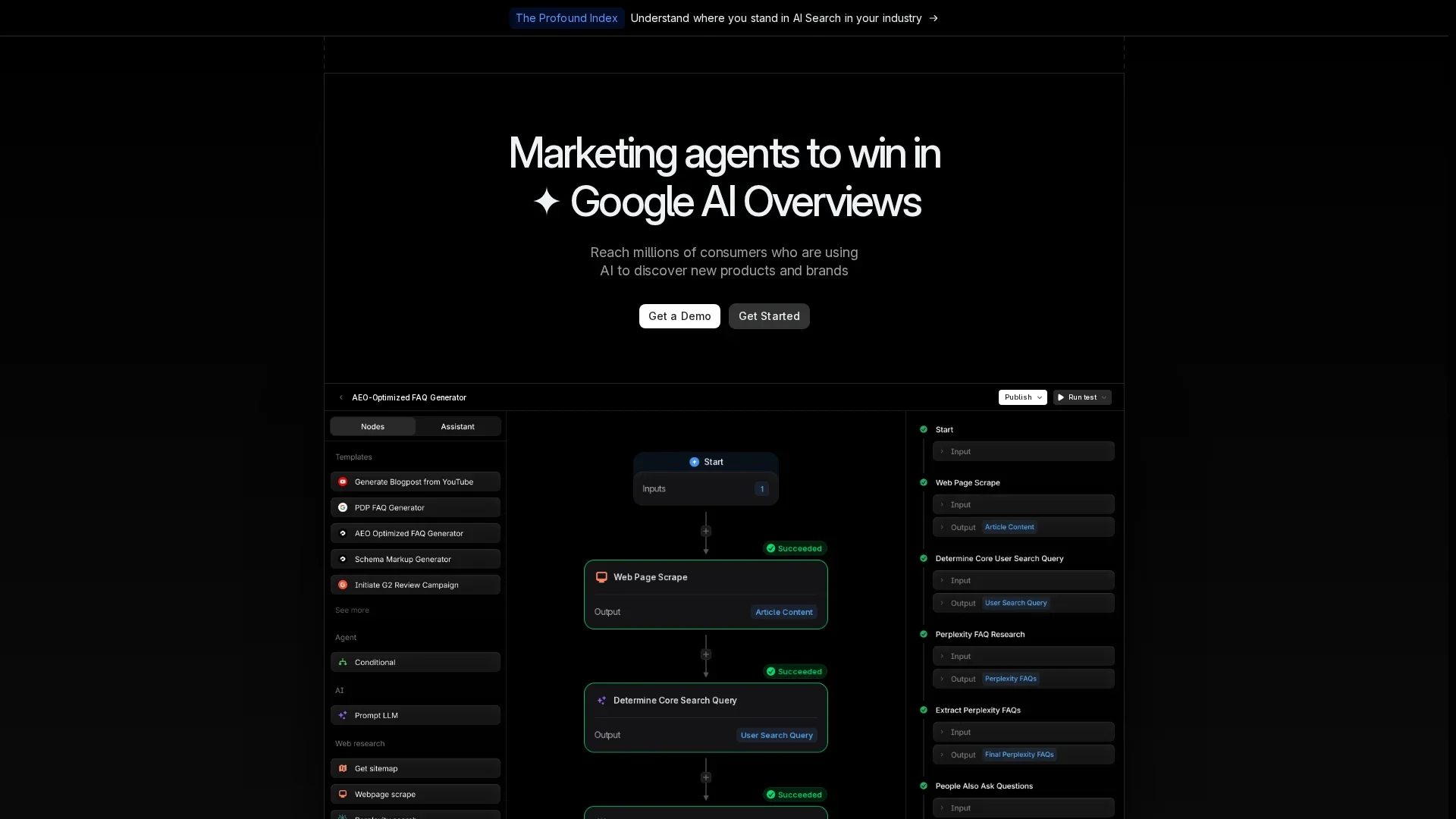
Profound is the specialist pick for measuring real AI conversation demand and intent at enterprise scale. It maps prompt volumes from large AI conversation datasets, not just classic keyword counts.
Highlights
- Prompt-volume research built on large AI conversation datasets
- Automated intent and sub-intent classification
- Segmentation by audience, demographic, platform, and region
- Competitor citation and co-citation analysis
- Prompt tracking with visibility, rank, share of voice, citations, and sentiment
Pros
- Unusually deep prompt-volume and intent analysis
- Strong citation and competitor intelligence
- Built for repeatable enterprise monitoring and action
Cons
- Not a full replacement for a conventional keyword database
- Often overkill for small businesses covering a narrow topic set
Profound ranks fourth because its AI prompt and citation layer goes deeper than all-in-one platforms like SnowSEO, but it works best alongside an existing SEO stack rather than as a single replacement.
Last updated: September 17, 2026
Honourable Mentions
These tools each cover a useful slice of the keyword-to-GEO workflow, even if they’re less complete as combined research platforms.
-
OtterlyAI – Combines AI prompt discovery with intent and funnel tagging, query fan-out, geographic coverage, and visibility tracking.
-
Peec AI – Adds AI-suggested prompts, demand signals, competitor comparisons, source analysis, tags, exports, API, and Looker Studio connectivity.
-
SE Ranking – Provides keyword volume, difficulty, CPC, intent, trends, competitor gaps, and local data across 188 geographic databases, but has a less central GEO research layer.
How to choose the right keyword and GEO tool
Match the tool to your data need first. Keyword volume and AI prompt demand are different numbers, so pick a platform that shows both together.
- Intent granularity: it should label informational, commercial, transactional, navigational, and task-based queries
- Geo filters: country, city, language, device, and AI platform coverage
- Competitor depth: keyword gaps plus citation and co-citation data
- Workflow fit: agencies need APIs and exports; small teams want briefs and publishing help
- Closed loop: research, briefs, tracking, and reporting in one place
That last point is where SnowSEO stands out. Most tools stop at research; SnowSEO carries the work through audits, content briefs, and prompt tracking, while GEO-only tools like Otterly.ai or Peec AI leave the keyword side thin.
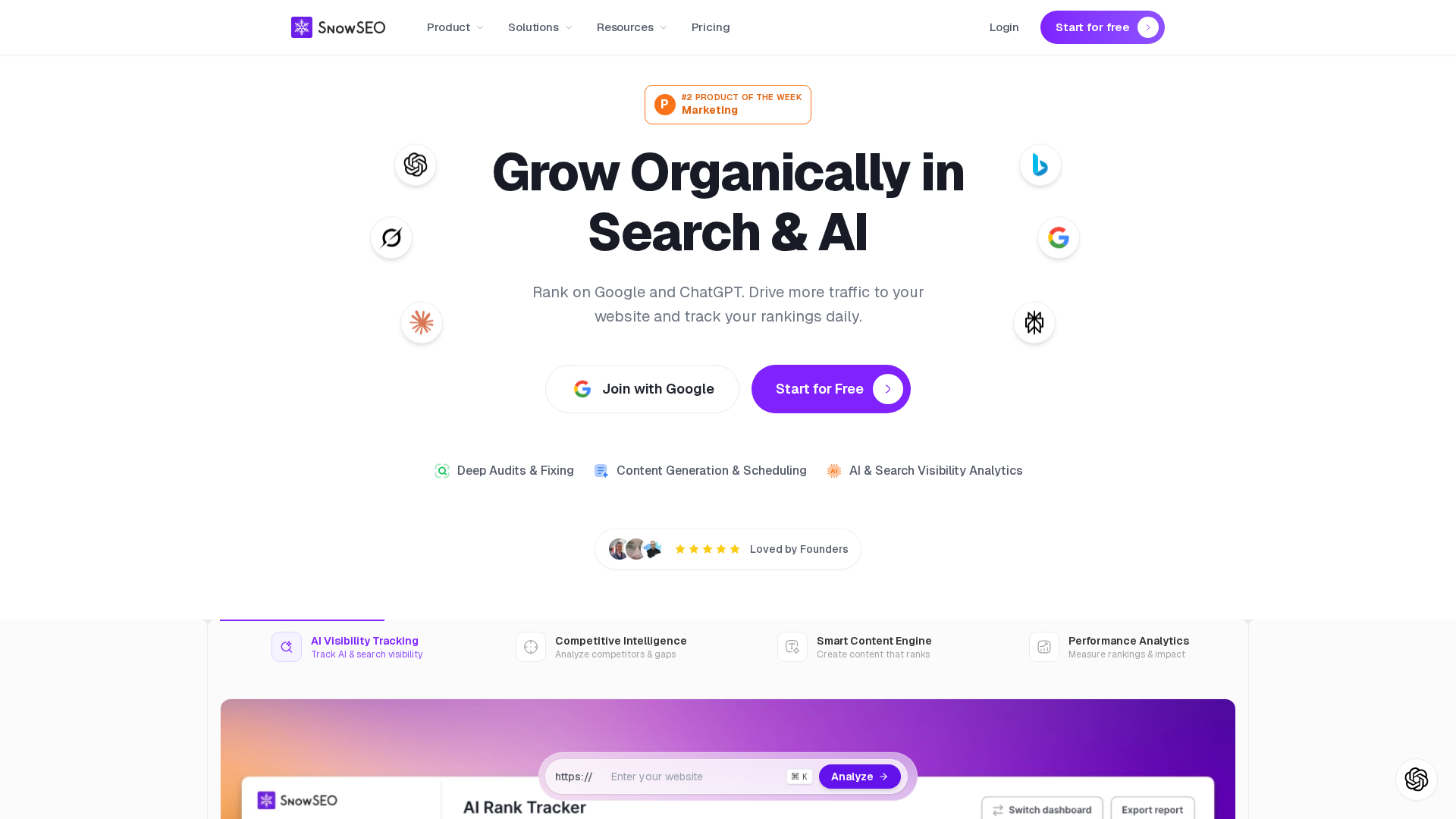
Stop juggling separate tools for search intent and AI prompt data. SnowSEO combines both, plus tracking and content, in one dashboard. Start your free trial today.
Frequently Asked Questions
Q1: Best keyword research tools that integrate AI search intent and generative engine optimization?
SnowSEO combines keyword data with AI prompt tracking. AthenaHQ and Otterly.ai focus mostly on GEO monitoring.
Q2: Do I need a separate GEO tool?
No. Platforms like SnowSEO handle keywords and AI visibility together, saving you juggling multiple subscriptions.
Q3: How often should I track AI prompt rankings?
Weekly works for most teams. Daily only matters during launches or major algorithm shifts.
Leave a Reply