Tag: seo strategy

  • WhitePress Review for Scalable Link Building Campaigns

    WhitePress Review for Scalable Link Building Campaigns

    Quick Summary: WhitePress scales link building well for agencies running 10+ monthly placements across markets, offering 146,000+ sites in 36 languages with 50+ filters and a 36-month link guarantee. However, quality control is your job, not the platform’s, so you must set hard rules on topical fit, traffic floors, and anchor diversity. It is worth it for high-volume multi-market campaigns, but skip it for small budgets or single-country niches, and pair it with rank tracking to confirm placements actually move rankings.

    Ten placements are easy to manage. Hundreds are not, because the real scaling problem is quality control: irrelevant sites, overused domains, and thin placements slipping into your backlink profile. This WhitePress review tests whether its marketplace and campaign tools solve that. We evaluate vetting, outreach workflow, and monitoring from an agency’s perspective, so this WhitePress review focuses on decisions, not marketing claims.

    How WhitePress Handles Scalable Link Building Campaigns

    WhitePress is built for volume. The platform lists over 146,000 websites across 36 languages, so agencies can run multi-market campaigns from one account and pay in one currency, using a pay-as-you-go model with no monthly retainers.

    WhitePress
    WhitePress

    Publisher Discovery and Campaign Controls

    • Filter 146,000+ sites with 50+ filters: price, DR, DA, Trust Flow, traffic, and dofollow options.
    • Check WhitePress’ own quality score, built from Ahrefs and Semrush data.
    • Track links for up to 36 months, with daily monitoring and a publication guarantee.

    Per the platform’s own database guide, each listing shows verified SEO metrics plus traffic history. That kills most of the guesswork when vetting publishers at scale.

    Content, Ordering, and Delivery Workflow

    1. Create a project, pick publishers, and add offers to your cart.
    2. Upload your article or order copy from 1,000+ native writers.
    3. Set publication dates, pay once, and track everything in one dashboard.

    Tip: skip article placement entirely and use link insertions on existing pages. Publishers get three working days to comply, and you follow progress in the Publications tab.

    Pairing these controls with SnowSEO’s rank tracking lets you tie each placement to ranking movement.

    Also Read: AI Search Visibility Is Reshaping Digital PR Campaigns

    Can You Control Link Quality at Scale?

    Short answer: yes, but only if you replace gut checks with a written quality bar. At 10 links a month, you can inspect everything. At 100, you need gates – pre-approval filters on every placement before it goes live.

    The good news is that WhitePress lets you screen publishers first. The catch is that screening is your job, not the platform’s.

    Metrics Are Useful, but They Are Not the Verdict

    Every marketplace shows DR, DA, and traffic numbers. Use them as a first filter, not a final say. A high-DR site with no real visitors or no topical fit passes far less value than a mid-DR site that genuinely covers your niche. Semrush’s own guidance warns that a low Authority Score does not automatically mean a bad site – and that flagged link farms violate Google’s spam guidelines Semrush link building metrics. Check organic traffic and spam signals together, never one number alone.

    Relevance, Diversity, and Link Profile Balance

    Set three hard rules before you order anything:

    • Topical fit: the linking page must actually relate to your niche, not just your payment.
    • Traffic floor: reject domains with real organic traffic below your threshold.
    • Anchor mix: keep branded and natural anchors dominant; avoid exact-match spam.

    Track how new links distribute across source types. Ten links from one domain count less than ten votes from ten unique sites, which is why referring domain growth beats raw link count Semrush.

    Also Read: 10 Best Tools for Competitor SEO Analysis in 2024

    WhitePress for Agencies and International Campaigns

    Where the Platform Saves Agency Time

    Agencies juggling many clients get the most from WhitePress. You run all projects from one account, pay in one currency, and get a single invoice, which cuts admin work sharply. Over 50 filters help you shortlist publishers by budget, metrics, and niche. The multi-project setup also keeps each client’s campaigns cleanly separated.

    Agency team reviewing multi-project link dashboard
    Agency team reviewing multi-project link dashboard

    International Reach Requires Local Validation

    The platform covers 36 languages and markets from Europe to Australia and New Zealand, so one marketplace replaces dozens of outreach emails. But coverage is not the same as quality. Expect to check each market yourself: verify local traffic, confirm native copywriting, and track link survival. Pair WhitePress with a monitoring tool like SnowSEO for rank tracking across regions, so you know which placements actually move the needle.

    Also Read: Digital PR vs Guest Posting for AI Search Authority

    Is WhitePress Worth It for Scalable Link Building?

    For high-volume, multi-market campaigns, yes. The platform lists 146,000+ websites in 36 languages with one dashboard, one currency, and pay-as-you-go pricing. Its 36-month link guarantee and 50+ filters cut the two biggest scaling costs: publisher vetting and link loss.

    The trade-offs: quality varies across an open marketplace, and independent reviews note a roughly 25% platform commission plus a catalog that leans toward pricier outlets.

    Verdict Who
    Worth it Agencies running 10+ placements monthly across markets
    Skip it Small budgets, single-country niche campaigns

    You still control placement quality. Pair it with vetting discipline and track results in a platform like SnowSEO.

    Link builder comparing publisher sites on marketplace
    Link builder comparing publisher sites on marketplace
    Homepage
    Homepage

    Ready to scale link building without the quality guesswork? Track every campaign, audit acquired links, and grow rankings with SnowSEO. Start free today.

    Frequently Asked Questions

    Q1: Is WhitePress suitable for scaling quality link building campaigns?

    Yes, mostly. Its vetted publisher network scales well, but you must filter placements by traffic and relevance yourself. Pair it with rank tracking from SnowSEO to confirm each link actually moves rankings.

    Q2: How much does WhitePress cost?

    Pricing is per-placement, so costs scale with volume. Budget per link, not monthly, and factor in content costs.

    Q3: Can I vet publishers before buying?

    Yes. Each listing shows traffic, topical fit, and price. Check index status manually before ordering.

    Conclusion

    WhitePress holds up well for scalable campaigns: huge publisher reach, 36 languages, strong filters, and a 4.7 Trustpilot rating. Its 36-month link guarantee and 2025 additions like Digital PR and Brand Mentions help it stay relevant. Pair it with strict internal quality checks, and it earns its place in your stack.

  • AI Search Visibility Is Reshaping Digital PR Campaigns

    AI Search Visibility Is Reshaping Digital PR Campaigns

    Quick Summary: AI search has flipped digital PR’s goal: brand mentions in AI answers now matter about three times more than backlinks, with a 0.664 correlation versus 0.218. Campaigns should target sources AI engines actually cite, build verifiable data assets with named entities and hard evidence, and track exposure, evidence, and business impact separately. Tools like SnowSEO can monitor brand mentions across ChatGPT, Perplexity, and AI Overviews, since a link report alone can hide sentiment dips or dropped mentions.

    AI search visibility digital PR teams now track two outcomes: publisher links and brand mentions in AI answers. Semrush found branded web mentions correlate 0.664 with AI Overview visibility, while backlinks score just 0.218. So a campaign can win referring domains and still miss the answer layer. The fix: AI search visibility digital PR campaigns should pair editorial links with consistent, verifiable brand evidence. That is where AI search visibility digital PR is heading in 2026.

    The Link Is No Longer the Whole PR Outcome

    A placement used to count as a win if it earned a link. In AI search, the link is only part of the outcome. Engines quote what coverage says, not just where it points. When AI summarizes an article, brands often vanish. Connective3 found 43% of brand mentions get dropped during AI summarization, even when the link is live.

    Three Signals Campaigns Should Track Separately

    Signal What It Measures Why It Matters
    Brand mentions How often your brand appears in AI answers Correlates about 3x stronger with AI visibility than backlinks, per Ahrefs data
    Citations How often AI cites your domain as a source Shows authority, not just presence
    Sentiment Whether AI frames your brand positively or negatively The least stable signal – it flips far more often than mentions

    Track all three per engine. SnowSEO handles this in one place, so a link report never hides a sentiment dip.

    A modern analytics dashboard displaying three distinct metric panels
    A modern analytics dashboard displaying three distinct metric panels

    Also Read: Digital PR vs Guest Posting for AI Search Authority

    Digital PR Campaigns Must Target Retrieval-Worthy Sources

    AI engines pick sources before they pick brands. So your outreach should start with one question: where do these engines actually look for answers?

    Build a Source Map Before Building a Prospect List

    Don’t chase raw domain authority anymore. Map the outlets that already show up in AI answers for your query set. Run 20-30 buyer questions through ChatGPT, Perplexity, and Gemini, then log every cited domain. Research across 8,000 citations shows each engine leans differently – ChatGPT favors encyclopedias and major news, while Perplexity pulls expert review sites and niche blogs. Engine-specific maps beat one-size outreach. Rank your findings like this:

    1. Tier 1: Wikipedia, top trade press, and comparison portals.
    2. Tier 2: niche blogs and review platforms.
    3. Tier 3: forums and Q&A sites.

    Pitch Tier 1 first, and pitch data those sites can cite. Tools like SnowSEO can track which domains AI answers actually pull from, so you build the list on evidence.

    Marketer mapping cited domains beside AI logos
    Marketer mapping cited domains beside AI logos

    Also Read: 10 Best Tools for Competitor SEO Analysis in 2024

    The Campaign Brief Is Moving From Link Volume to Evidence

    AI search rewards proof, not link counts. Brand mentions correlate with AI visibility at 0.664, three times stronger than backlinks at 0.218, per Ahrefs’ study of 75,000 brands. So modern briefs ask for verifiable claims a model can quote.

    Create Assets Publishers Can Verify and Reuse

    Build assets that answer one question clearly:

    1. Original data – surveys, benchmarks, or anonymized client numbers journalists can cite as the source.
    2. Named entities – state the brand, product, and category explicitly.
    3. Evidence next to claims – attach the number, time period, and scope directly to each statement, the pattern citation-readiness research calls “hard edges.”
    4. Standalone structure – every section should work if copied into an AI answer.

    Vague claims like “trusted by teams” earn nothing. Specific, checkable facts earn both links and citations.

    Also Read: 7 GEO Optimization Tools for Brand Visibility in AI Answers

    How Teams Should Measure the New PR Scorecard

    Stop grading campaigns by backlinks alone. In AI search, a link is just one of three signals that matter. Track all three layers in every campaign report:

    1. Exposure: How often does the campaign’s target prompt surface your brand in ChatGPT, Perplexity, or AI Overviews? Run 20-30 prompts, note mentions, and calculate your mention rate.
    2. Evidence: Is your campaign page cited as a source, or is a third-party site owning the story? Log the exact URLs AI platforms cite.
    3. Business impact: Watch branded search volume, direct traffic, and AI-referred sessions after each campaign ships.
    Layer What It Answers Metric
    Exposure Are we in the answer? Mention rate
    Evidence Do they cite our page? Citation rate
    Impact Did it move the business? Branded searches, AI-referred traffic

    Semrush notes that AI answers often satisfy the query before a click happens, so traffic can stay flat while visibility grows Semrush. Translation for stakeholders: report “AI now recommends us in nearly half of category answers,” not raw prompt percentages. That’s how SnowSEO frames it too – exposure and evidence first, clicks second.

    Homepage
    Homepage

    Want to know if ChatGPT and Claude mention your brand? SnowSEO tracks your AI search visibility and shows exactly how to improve it. Start your free audit today.

    Frequently Asked Questions

    Q1: How is the rise of AI search changing digital PR and link acquisition campaigns?

    AI assistants cite sources, not just rankings. PR teams now chase mentions in publications AI models trust, so brand citations matter as much as links.

    Q2: Do links still matter for AI visibility?

    Yes. Links plus brand mentions in credible content help AI engines cite you.

    Q3: How can I track visibility on ChatGPT or Claude?

    Tools like SnowSEO monitor where your brand appears across AI platforms, so you can fix gaps early.

    Conclusion

    AI search has flipped the goal: brand mentions now matter more than raw links. With earned media driving the vast majority of AI citations, digital PR is the new link building. Track mentions per platform, and the citation gap widens for those who wait.

  • How to Map Keywords to AI Search Citations

    How to Map Keywords to AI Search Citations

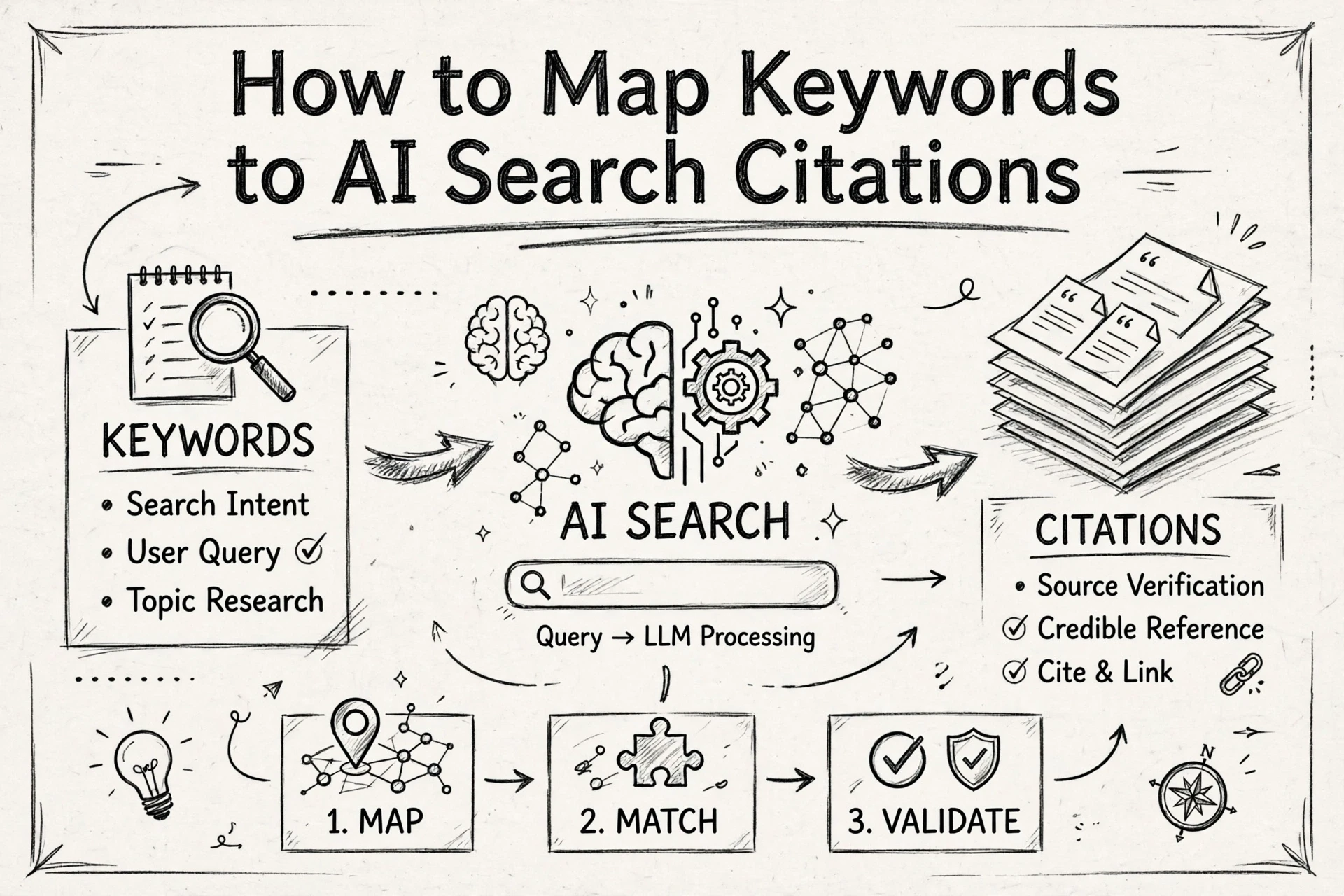
    Quick Summary: Ranking first for a keyword no longer guarantees visibility in AI search, since engines like ChatGPT cite pages that directly answer comparison or problem-based queries. To win those citations, build 8-12 prompts from your target keyword, log the exact URLs and passages AI systems cite, then fix your page’s answer shape, evidence, and clarity. Re-test the same prompts every 2-4 weeks, prioritize gaps by business value, and remember that tables and stats boost citability by up to 47%.

    Your page ranks #1 for “best project management software for small teams,” but ChatGPT cites three competitors. Why? Their passages answer the comparison question directly, so the AI can retrieve and quote them. Ranking alone tells you nothing about citability. This guide shows you how to map keywords to AI search citations: a repeatable workflow that turns what AI answers say into specific page and passage fixes you can apply today.

    Step 1: Turn One Target Keyword Into a Citation Query Set

    One keyword won’t tell you if AI engines cite you. AI engines rewrite each prompt into hidden sub-queries, so your keyword is just the starting point for a full set of prompts you can use to map keywords to AI search citations.

    Define the Keyword’s Intended Answer

    Write the one-sentence answer your page should earn a citation for. Ask: what decision does the searcher make after reading? A keyword like “email marketing pricing” has direct-answer intent; “best email tool for startups” has recommendation intent. Cited pages match the wording of the question closely, per citation mechanics research, so intent first, prompts second.

    Build Prompts From the Same Intent

    Turn the keyword into 8-12 prompts:

    1. The head question (“What is X?”)
    2. Comparison prompts (“X vs Y”)
    3. Problem prompts (“How do I fix X?”)
    4. Buyer prompts (“Best X for [audience]”)

    AI engines fan one question out into several narrower sub-queries, so specific, narrow prompts mirror what engines actually retrieve, as query fan-out analysis shows.

    Also Read: Keyword Research vs SEO Audits for Generative Search Success

    Step 2: Record the URLs and Passages AI Systems Cite

    Now capture what each answer actually references. Don’t just note that a competitor got cited – log the exact URL and the sentence the engine pulled from it.

    Use a Citation Mapping Spreadsheet

    Build a simple sheet with one row per citation:

    Column What to Log
    Prompt The query you ran
    Engine ChatGPT, Perplexity, Gemini, etc.
    Cited URL Exact page cited
    Passage The quoted or paraphrased line
    Date When you ran the prompt

    Run every prompt on each engine twice. Citation counts vary hugely by engine, so one snapshot misleads. Tools like SnowSEO and Otterly.AI can automate the collection across engines and dates.

    Pencil sketch of laptop with citation spreadsheet
    Pencil sketch of laptop with citation spreadsheet

    Classify the Competitor’s Citation Role

    Look at why each page earned its slot:

    1. Definition source – the engine used it to explain the topic.
    2. Comparison source – it fed a “best X” or “vs” answer.
    3. Evidence source – it supplied a stat or case study.

    This tells you which content type to build in Step 3.

    Also Read: Ahrefs Keyword Explorer Review for AI Search Research

    Step 3: Match Each Citation to a Page-Level Content Gap

    Now compare your page against each competitor citation. AI engines pick passages, not pages, so the gap is usually one liftable answer, not a whole rewrite. Google’s own guidance says there is no special markup – it judges whether your passage can be lifted cleanly.

    Compare Answer Shape, Evidence, and Clarity

    Score the cited passage against yours on three things:

    1. Shape – does it state a direct answer in the first 40-60 words? Self-contained passages win.
    2. Evidence – does it name specific numbers or sources? Statistics add roughly 30% to AI visibility.
    3. Clarity – would the sentence still make sense pulled out of the page?

    Choose an Edit That Improves the Source Passage

    Pick one fix per gap and log it: add a stat, front-load the answer, or convert a paragraph into a table or list. Table-based pages earn 47% more citations, per citation research. SnowSEO audits flag these passage-level gaps automatically.

    Marketer revising weak paragraph with pencil sketch
    Marketer revising weak paragraph with pencil sketch

    Also Read: Google AI Search Research Reveals New Keyword Opportunities

    Step 4: Re-Test the Keyword Map and Prioritize the Citation Gap

    Track Frequency, Stability, and Citation Role

    Re-run your full prompt panel two to four weeks after publishing changes. Log three things for each keyword: how often your page gets cited, whether the citation holds across repeated runs, and what role it plays. Being the single source for a claim is worth far more than appearing in a link dump.

    Keep the prompt set frozen. If you change the prompts, you change the baseline and lose your trend data.

    Citations drift a lot – studies show 40-60% of cited domains shift month to month, so one snapshot tells you little.

    Prioritize by Business Value

    Score each gap before you fix it. Simple matrix:

    Gap Effort Business Value Do First?
    Easy fix, high-value page Low High Yes
    Hard fix, high-value page High High Plan it
    Easy fix, low-value page Low Low Batch it

    Revenue-driving keywords and comparison prompts win. Tools like SnowSEO surface these gaps automatically, so you spend time writing, not sorting spreadsheets.

    Homepage
    Homepage

    Ready to turn keyword research into AI citations? SnowSEO maps keywords to mentions across ChatGPT and Claude. Start your free trial today.

    Frequently Asked Questions

    Q1: How can teams connect keyword opportunities with citations in AI-generated answers?

    Track which pages AI engines cite for your target terms, then map each citation back to its keyword cluster and update that page’s headings, passages, and schema to match.

    Q2: How often should I re-check AI citations?

    Weekly is enough for most sites. Re-check faster after publishing new content or when a competitor jumps into answers for your top terms.

    Q3: Do I need a dedicated AI visibility tool?

    You can check prompts manually, but tools like SnowSEO, Otterly.AI, or Peec AI automate tracking at scale and show citation trends over time.

    Q4: Which pages earn AI citations most often?

    Clear, well-structured pages: strong headings, direct answers in the first paragraphs, and specific data. Lists, tables, and definitions get cited more than long opinion pieces.

    Conclusion

    Mapping keywords to AI citations turns guesswork into a repeatable loop: run prompts, log who gets cited, fix the passages, retest. Research on 602 prompts shows cited pages share clear traits like modular structure and extractable evidence. Keep testing weekly.

  • Google AI Search Research Reveals New Keyword Opportunities

    Google AI Search Research Reveals New Keyword Opportunities

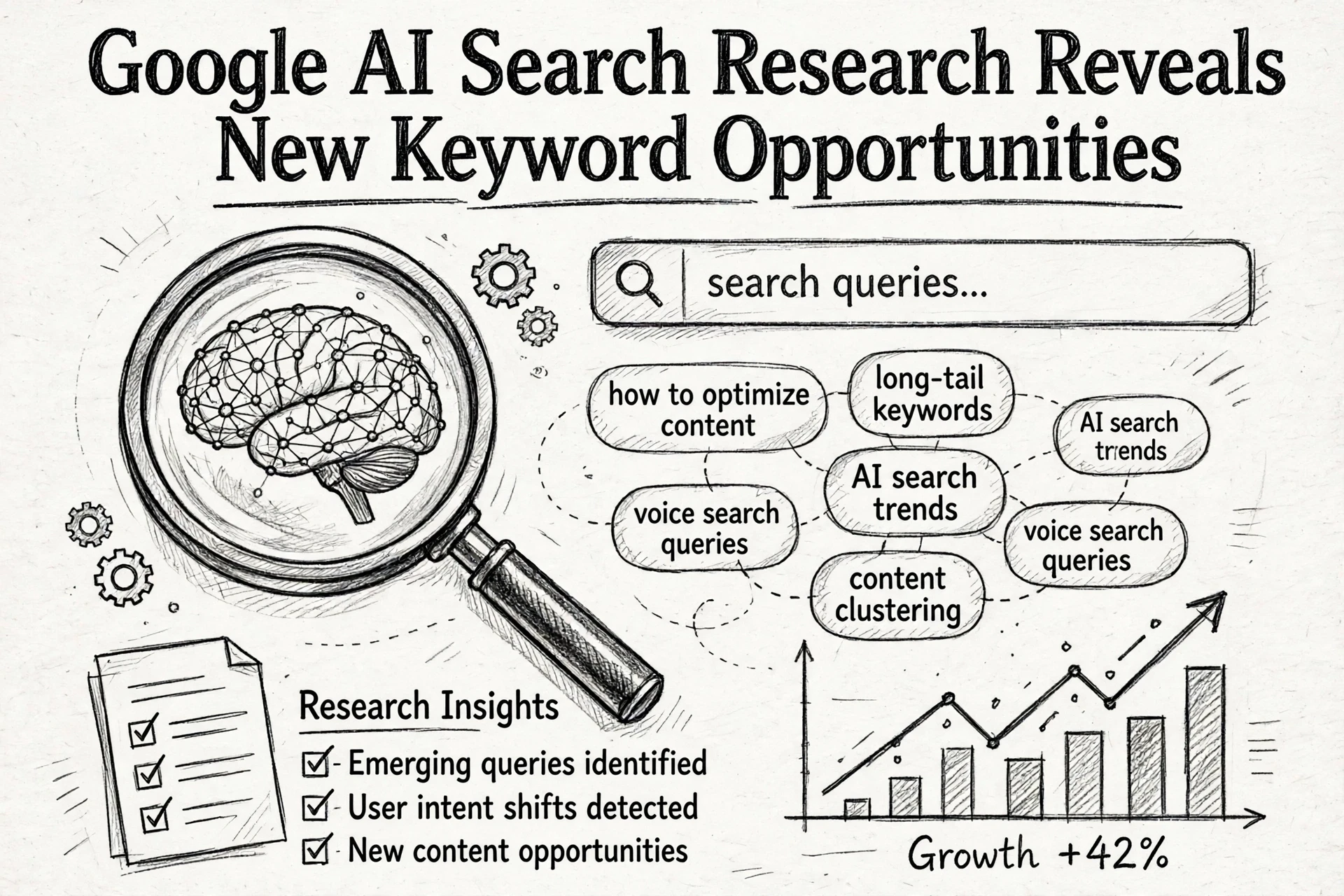
    Quick Summary: Google’s AI search uses query fan-out, splitting one typed query into many hidden sub-searches, so keyword opportunities now lie in longer, specific questions like comparisons and follow-ups. Pages answering several related sub-queries are 161% more likely to earn AI citations, so build question clusters from a seed query by grouping synonyms, follow-ups, and constraints. Track AI citations directionally via Search Console and tools like SnowSEO, but stick to standard SEO fundamentals since no special markup is needed.

    Google’s AI search research now points to new keyword opportunities. Both AI Overviews and AI Mode can use query fan-out, running several related searches before answering. So the opportunity isn’t just the phrase someone types first. It’s the questions Google generates around it. This analysis covers what Google has verified, the keyword opportunities that follow, and a simple method for building a question cluster from one target query.

    Query Fan-Out Expands One Search Into a Question Field

    What Google Has Confirmed

    Google confirms that AI Mode splits your question into subtopics and issues multiple related searches at once, then combines the results into one answer. That single sentence changes keyword research: one typed query can trigger a whole family of hidden subqueries, each one a separate shot at visibility. This is where new Google AI search keyword opportunities come from.

    Why the First Query Is Not the Whole Opportunity

    The words you type are not the words Google searches. Fan-out queries include comparisons, reformulations, and next-step questions. Pages that answer several subqueries get cited more often, which is why tools like SnowSEO now map Google AI search keyword opportunities by intent clusters, not single phrases.

    Also Read: SnowSEO – Your Last SEO Platform

    The Most Promising Keyword Opportunities Are Longer, More Specific Questions

    Google AI search keyword opportunities sit in the long tail now. Google’s own guidance confirms its AI features use query fan-out, splitting one broad prompt into many narrower searches Google’s AI optimization guide. Two query types stand out.

    Comparison and Constraint Queries

    • “X vs Y for [use case]”
    • “best [tool] under $[price]”
    • “[category] for [niche]”

    These work because AI answers need hard trade-offs. Generic listicles can’t cover them, so specific pages win the citation.

    Two analysts comparing constraint query data on a clean desk
    Two analysts comparing constraint query data on a clean desk

    Follow-Up and Task-Based Queries

    AI Mode users ask follow-ups like “how much does it cost?” or “is it worth it?” Each follow-up is a separate retrieval pass. Build FAQ sections that mirror these exact phrasings, and tools like SnowSEO can map the question clusters for you.

    Also Read: Keyword Research vs SEO Audits for Generative Search Success

    How to Turn One Target Query Into a Defensible Keyword Cluster

    Start with one seed query and expand it the way Google’s query fan-out does: synonyms, follow-ups, comparisons, constraints. Ask a model to list the sub-questions a complete answer would need, then check People Also Ask and forum threads for real phrasing.

    Build the Expansion Map

    Group the results by intent type: equivalent phrasings, follow-up questions, narrower specifications, and broader category terms. Each group becomes a node in your map. A seed like “best CRM for small teams” should yield 10 to 15 variants, from pricing questions to integration comparisons.

    A mind map expanding search query clusters
    A mind map expanding search query clusters

    Validate, Consolidate and Prioritize

    Merge near-duplicates into one canonical question, since AI matching covers adjacent phrasings anyway. Rank remaining nodes by business value and how directly you can answer them. Pages ranking for fan-out sub-queries are 161% more likely to earn citations, so prioritize coverage over volume.

    Also Read: Google AI Updates Change How Marketers Measure Search Visibility

    What the Shift Means for SEO Teams Now

    Measure Visibility Without Overclaiming

    Google confirms it reports AI Mode and AI Overview traffic in Search Console’s Performance report, so that’s your baseline. But it never shows which hidden sub-queries fan-out runs. Tools like Otterly.AI or AthenaHQ estimate AI citations from sample prompts. Treat those numbers as directional, not exact.

    The Strategic Bottom Line

    Google’s own guidance says no special markup is required for AI features; the usual SEO fundamentals still carry you, from crawlable text to internal links. The real change is scope. One page should clearly answer several related sub-questions, not chase a single keyword. Teams that map sub-intents and track citation share, rather than just rank, will spot the new opportunities first.

    Also Read: 7 Keyword Tools Combining Search Intent and GEO Data

    Homepage
    Homepage

    Ready to find these long-tail wins yourself? SnowSEO surfaces them fast. Start your free keyword research today.

    Frequently Asked Questions

    Q1: What recent Google AI search developments reveal about future keyword opportunities?

    Google’s AI Mode uses query fan-out, breaking one search into many long-tail variations. That means specific, question-shaped and conversational phrases now drive visibility more than broad head terms.

    Q2: How do I find long-tail keywords AI search will surface?

    Mine “People Also Ask” data, support tickets, and sales calls for real phrasing. Then group questions by intent. Tools like SnowSEO can automate this clustering and track AI visibility.

    Q3: Should I still optimize for traditional Google rankings?

    Yes. Classic rankings still feed AI answers, so they matter. But add conversational phrases and clear, direct answers so AI Overviews and chatbots can quote your content accurately.

    Q4: How do I track whether AI platforms cite my content?

    Test prompts in ChatGPT and Google AI Mode, or use rank-tracking tools with AI visibility reports. Log which pages get cited, then update weak pages with sharper answers and structure.

    Conclusion

    Google’s query fan-out guide confirms what Digiday reported: one AI query now triggers many hidden sub-queries. Map those sub-queries, cover them deeply, and the long tail becomes your citation engine.

  • Google AI Updates Change How Marketers Measure Search Visibility

    Google AI Updates Change How Marketers Measure Search Visibility

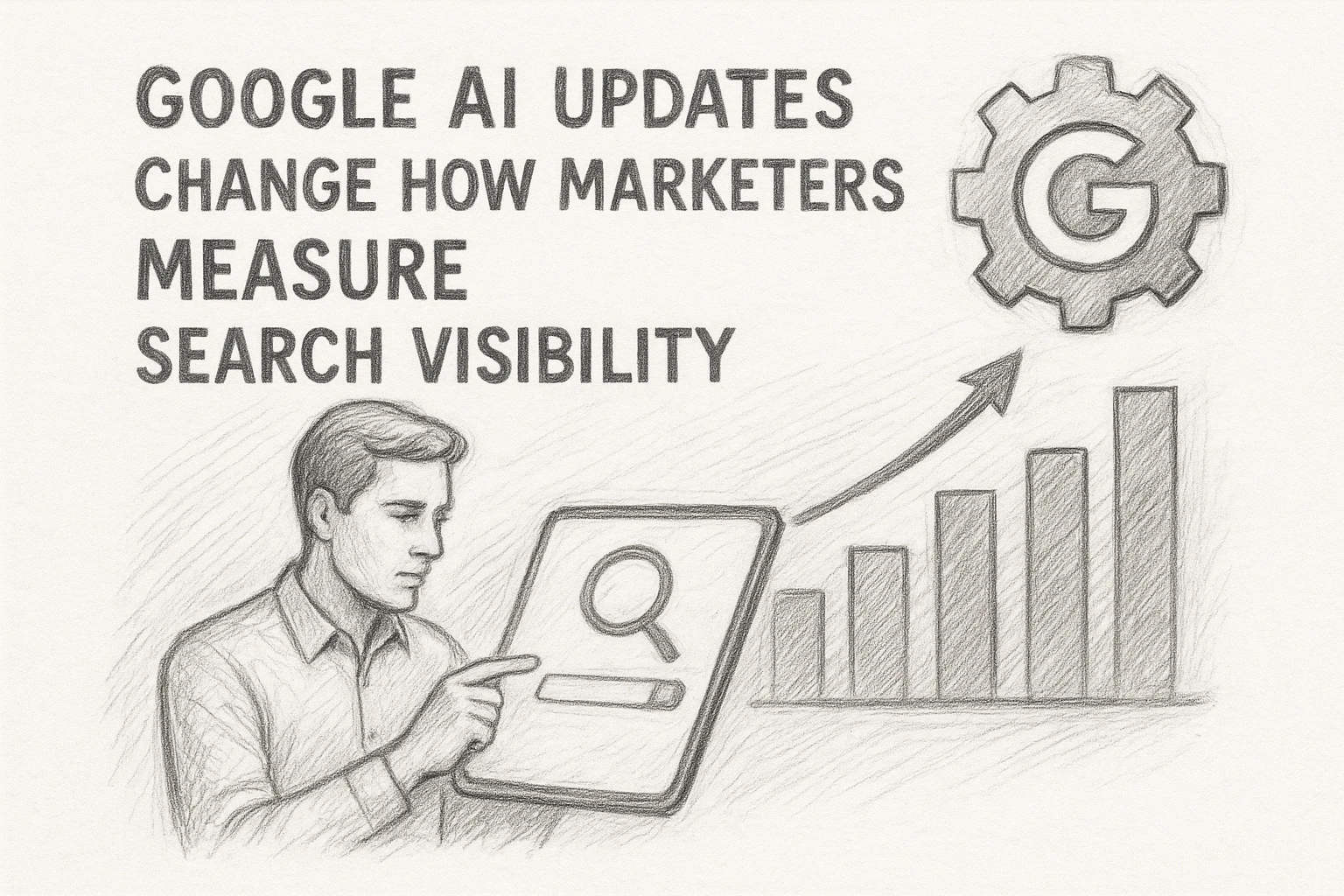
    Quick Summary: Google now reports AI Overviews and AI Mode impressions separately in Search Console, so marketers must track AI visibility as exposure, not ranking. Treat these impressions as a leading signal and validate them with clicks, conversions, and revenue, since position alone no longer guarantees visibility. Google says existing SEO still matters, with no special AI-only rules, so keep focusing on crawlability, helpful content, and structured data. Track trends monthly and compare AI-visible pages against business outcomes to avoid mistaking presence for profit.

    Google AI updates search visibility by folding AI Overviews and AI Mode links into Search Console Web data. New site-owner insights now show AI-feature impressions and page appearances. Google also offers an AI opt-out, but that removes related traffic.

    Google AI updates search visibility beyond rank reports. A cited page may gain exposure without clicks. This guide explains what the data shows, what it cannot prove, and how to connect Search Console, analytics, and revenue.

    Google’s New AI Search Data Changes the Visibility Baseline

    What Google Now Counts as AI Visibility

    Google AI updates search visibility by separating generative exposure from the old blue-link baseline. Search Console’s new reports count how often your URLs appear in AI Overviews, AI Mode, and generative Discover features. They also break exposure down by page, country, device, and date, as Google’s 2026 announcement explains.

    Pencil sketch infographic comparing AI search visibility metrics
    Pencil sketch infographic comparing AI search visibility metrics
    Old baseline New baseline
    Overall Web impressions Generative AI feature impressions
    Clicks and average position Appearing URLs, country, device, and time
    Rank-focused reporting Visibility plus visit quality

    Do not treat an AI mention as a ranking. Measure it as exposure, then compare clicks, leads, and sales by landing page.

    Google AI updates search visibility, but generative data is rolling out first to a subset of sites.

    Also Read: Google and AI Platforms Shift Guidance for Generative Search Visibility

    The Metrics Marketers Have, and the Ones They Still Need

    A Four-Layer Reporting Model

    Google now separates AI feature impressions for AI Overviews and AI Mode by page, country, device, and date in Search Console’s Generative AI report. Build reporting around four layers:

    1. Presence: AI impressions by page and market.
    2. Organic demand: Total Search Console impressions, clicks, and average position.
    3. Site value: Sessions, engaged sessions, leads, sales, and revenue in analytics.
    4. Business impact: Assisted conversions, repeat visits, and branded search growth.
    Pencil sketch of layered marketing funnel
    Pencil sketch of layered marketing funnel
    Layer What you can measure What is still missing
    AI presence Impressions, pages, countries, devices Queries, clicks, CTR, citation position
    Organic search Clicks, impressions, rankings Clear AI feature attribution
    Outcomes Conversions and revenue Direct AI-assisted conversion path

    Treat AI impressions as a leading signal, not proof of traffic or sales. Google says it is still exploring further reporting insights in its 2026 announcement.

    • Review trends monthly, not daily.
    • Compare AI-visible pages with conversion data.
    • Flag pages that gain presence but lose organic clicks.

    Also Read: SnowSEO – Your Last SEO Platform

    Google’s AI Results Make Ranking Reports Less Complete

    Why Position Is No Longer the Whole Story

    A rank of #1 no longer guarantees the most visible spot. AI Overviews and AI Mode can place answers, links, and follow-up paths above or around classic results. Google also uses query fan-out, which can pull in pages that do not rank for the exact search term, according to Google’s AI features guide.

    Track more than position:

    Signal What it tells you
    Classic rank Your placement in blue-link results
    AI impressions How often your pages appear in AI features
    Clicks and leads Whether visibility creates business value

    Google’s new AI report separates impressions by page, country, device, and date, but it does not yet show every reason a page was selected. Google’s announcement confirms the shift.

    Treat rankings as a useful clue, not your full visibility score.

    • Check pages cited in AI results.
    • Compare AI impressions with clicks and conversions.
    • Review trends weekly, not one keyword at a time.

    Also Read: GEO Optimization vs Traditional SEO: Which Drives AI Visibility?

    Why Google Says Existing SEO Still Matters

    Google’s AI features draw from its existing Search index and core ranking systems, so solid SEO remains the entry point. Google’s guidance says there are no separate AI-only rules to chase.

    Keep doing the work that makes pages easy to find and trust:

    • Allow crawling and indexing.
    • Build clear internal links.
    • Publish helpful, first-hand content.
    • Match structured data to visible page text.

    Do not spend your budget on special AI files or forced content chunks. Google says they are not required for AI Overviews or AI Mode.

    Homepage
    Homepage

    Track the signals that matter. Use SnowSEO to audit visibility, monitor rankings, and spot search changes before traffic drops.

    Frequently Asked Questions

    Q1: What do Google’s latest AI announcements mean for organic search visibility?

    AI answers can reduce clicks while still showing your brand. Track impressions, citations, branded searches, and assisted conversions, not rankings alone.

    Q2: Should I stop tracking keyword rankings?

    No. Keep rankings, but group them with click-through rate and page conversions. A top position matters less if AI results answer the query first.

    Q3: Which pages should I review first?

    Start with high-impression pages losing clicks. Check whether the query now triggers AI results, then add direct answers, proof, and clear next steps.

    Conclusion

    Measure AI visibility separately from traffic and revenue. Google now reports AI-feature impressions by page, country, and device in Search Console. Treat them as a signal, then validate business impact with conversions.

  • How to Optimize Content for Generative Engine Results

    How to Optimize Content for Generative Engine Results

    Quick Summary: Generative engine optimization (GEO) means structuring content so AI tools can extract clear, trustworthy answers, but it does not replace SEO, which remains the foundation. Start by mapping real customer questions, then write self-contained answers with cited evidence and clean technical signals like headings and schema. Track AI mentions separately from conversions, using Search Console for pre-click visibility and analytics for post-click value, and review both together. The goal is to earn AI citations without sacrificing proven search performance.
    A buyer can ask an AI tool for the best option, compare brands, and build a shortlist before opening a search result. The generative engine optimization process helps your content support those answers. The challenge is earning AI visibility without dropping proven SEO work. This guide gives you a practical generative engine optimization process for clear answers, crawlable pages, trusted sources, and useful measurement. It reflects how search, content, and AI discovery now work together.

    Step 1: Map the Questions Your Audience Asks AI Search Tools

    Build Prompt and Intent Clusters

    Start with real customer questions, not a long list of keywords. AI search often expands one prompt into related searches, known as query fan-out, so map the questions behind each buying decision.

    1. Collect questions from sales calls, site search, reviews, and support tickets.
    2. Group them by intent: learn, compare, solve, or buy.
    3. Write one clear page brief for each cluster.
    Pencil sketch of buyer intent flowchart
    Pencil sketch of buyer intent flowchart
    Intent Example prompt Content need
    Compare Which SEO platform fits an agency? Fair comparison
    Solve Why are product pages not ranking? Practical fix

    The generative engine optimization process starts with audience language, then adds your own evidence and experience.

    Also Read: SnowSEO GEO Optimization Review: Monitoring AI Brand Mentions

    Step 2: Write Answers That AI Systems Can Reliably Extract

    Lead With a Self-Contained Answer

    State the answer in the first two sentences. Define the subject, give the key action, and name any limits. A reader or AI system should not need earlier text to understand it.

    • Use clear headings framed as real questions.
    • Keep one main idea per paragraph.
    • Put steps, options, and facts in lists or tables.
    • Explain terms the first time you use them.

    Tip: Write the direct answer first. Add context only if it helps the reader act.

    Editor highlighting answer blocks beside source documents
    Editor highlighting answer blocks beside source documents

    Add Evidence and First-Hand Expertise

    Support claims with named sources, fresh dates, and details from your own work. Google advises creators to show clear sourcing and first-hand expertise in its people-first content guidance.

    Include:

    1. Test results or real examples.
    2. Limits, trade-offs, and failed attempts.
    3. Expert review and author details.

    Also Read: 10 Best Tools for Competitor SEO Analysis in 2024

    Step 3: Strengthen the Signals That Make Content Trustworthy

    Make the Page Accessible and Understandable

    Use clear headings, short answer blocks, and descriptive links. Keep key facts visible without a login or script barrier. Add accurate Article schema with author and update details. Google says structured data gives explicit clues about page meaning.

    Tip: Test important pages as an anonymous visitor.

    Build Authority Beyond Your Own Website

    Show who wrote the page, what they know, and where claims came from. Earn relevant mentions, expert reviews, and links through useful original research. Google advises clear sourcing, author background, and proven expertise as trust signals in people-first content.

    Also Read: GEO Optimization vs Traditional SEO: Which Drives AI Visibility?

    Step 4: Test, Measure, and Improve Your GEO Program

    Track Visibility and Business Outcomes Separately

    Track whether AI tools mention your brand, but do not treat mentions as revenue. Review a fixed set of buyer prompts each month and log citation rate, answer accuracy, sentiment, and competitor share.

    Measure What it tells you
    AI citations Whether your content is being surfaced
    Referral visits Whether mentions drive traffic
    Leads or sales Whether visibility creates value

    Use Search Console for search trends and analytics for on-site actions. Google notes that Search Console measures pre-click activity, while Analytics records what visitors do after arrival, including conversions such as sales and form fills (Google guidance).

    Change one page element at a time, then compare equal date ranges. Keep SEO and GEO reporting separate, but review both together.

    Homepage
    Homepage

    Turn your GEO plan into action with SnowSEO. Audit content, track AI visibility, and find practical fixes that improve search and generative engine results.

    Frequently Asked Questions

    Q1: How can marketers optimize content for visibility across generative engine results?

    Write direct answers, support claims with trusted sources, and use clear headings. Keep pages crawlable, current, and focused on real user questions.

    Q2: Does generative engine optimization replace SEO?

    No. Strong SEO improves discovery and access. GEO adds answer structure, entity clarity, and authority signals that help AI systems select reliable sources.

    Q3: What should teams measure for GEO?

    Track AI mentions, cited URLs, prompt coverage, referral traffic, and conversions. Compare results with organic rankings to see where visibility drives business value.

    Conclusion

    Generative engine results reward clear answers, sound technical SEO, real expertise, and trusted signals. Google confirms that SEO remains the foundation. Build useful content for people, then track visibility and conversions.

  • GEO Optimization vs Traditional SEO: Which Drives AI Visibility?

    GEO Optimization vs Traditional SEO: Which Drives AI Visibility?

    Quick Summary: GEO optimization and traditional SEO serve different goals: SEO drives rankings and clicks, while GEO earns mentions and citations in AI answers. They share the same foundations, so treat GEO as an added measurement layer, not a replacement. Start with solid SEO basics, then add GEO to track AI visibility and influence AI-led research. Use SEO data for traffic trends and GEO data for answer presence, and measure both separately.

    A top Google result may still miss a ChatGPT recommendation. GEO versus traditional SEO answers two different needs: search rankings and AI mentions. GEO versus traditional SEO is not a full reset. SEO builds findability, while GEO tracks AI retrieval and citations. This guide compares GEO versus traditional SEO so teams can use both with clear goals.

    GEO Optimization vs Traditional SEO: At a Glance

    Traditional SEO GEO optimization
    Primary visibility surface Ranked search results AI answers and generative search features
    Success metric Rankings, impressions, CTR, clicks, and conversions Mentions, citations, share of voice, sentiment, and AI referrals
    Content objective Satisfy search intent and earn clicks Provide clear, trustworthy, extractable answers
    Core authority signals Helpful content, links, technical quality, and expertise SEO foundations, entity clarity, corroboration, and source quality
    Best use case Sustainable organic traffic and discoverability Influence during AI-led discovery and evaluation

    How Traditional SEO and GEO optimization Compare

    Traditional SEO

    Traditional SEO improves visibility in ranked search results and earns qualified organic clicks. It suits teams focused on lasting traffic, using helpful content, links, technical health, and expertise to drive rankings, CTR, and conversions.

    GEO optimization

    GEO optimization helps brands appear in AI answers through mentions, citations, and recommendations. It suits teams shaping AI-led research and evaluation with clear, trustworthy, easy-to-extract answers. Google says SEO foundations still support generative search visibility.

    What Is the Difference Between GEO and Traditional SEO?

    Different Outputs, Shared Foundations

    Traditional SEO aims to earn rankings and clicks in search results. GEO aims to make your brand useful enough to appear in AI-generated answers, citations, and recommendations across AI platforms.

    The overlap is large: clear site structure, trusted sources, helpful pages, and strong technical health matter to both. Google says its AI features still rely on core Search ranking and quality systems, so SEO basics remain essential for Google visibility. Google’s guidance confirms this.

    Key insight: Treat GEO as an added measurement layer, not a replacement for SEO.

    • SEO tracks: rankings, organic visits, conversions
    • GEO tracks: brand mentions, citations, answer coverage

    Also Read: 10 Must-Have Tools to Streamline Your SEO in 2025

    How Content and Technical Strategy Change

    What to Keep From SEO

    Keep the basics: crawlable pages, clear internal links, fast mobile pages, and useful content. Google says AI features use the same core search foundations, with no extra technical requirements for eligible pages. Google’s guidance supports this approach.

    • Keep key facts in visible page text.
    • Match structured data to on-page content.
    • Build topic clusters around real user needs.
    SEO specialist mapping topic clusters with product team
    SEO specialist mapping topic clusters with product team

    What GEO Adds

    GEO changes the content brief, not the foundation. Write direct answers, show first-hand proof, and cover related questions AI systems may explore. Track citations, brand mentions, and referral conversions across AI platforms.

    SEO focus GEO addition
    Rank for queries Earn citations in answers
    Build topical pages Add clear, quotable facts
    Track organic clicks Track AI mentions and outcomes

    Also Read: 10 Best Tools for Competitor SEO Analysis in 2024

    How to Measure Visibility and Choose the Right Workflow

    Metrics That Should Not Be Confused

    Track Google clicks, impressions, CTR, and position separately from AI answer mentions, citation rate, and share of voice. Google defines CTR as clicks divided by impressions in Search Console.

    Clean split chart comparing clicks to AI citations
    Clean split chart comparing clicks to AI citations

    A high AI mention rate does not guarantee visits or sales.

    What to Look for in a GEO Tool

    Choose a tool that:

    • Tests priority prompts across AI platforms
    • Records brand mentions and cited URLs
    • Compares competitors
    • Links findings to content tasks and business results

    Use SEO data for traffic trends and GEO data for answer presence. SnowSEO can unite audits, rank tracking, and AI visibility work in one workflow.

    Also Read: 7 GEO Optimization Tools for Brand Visibility in AI Answers

    Which Should You Choose: GEO or Traditional SEO?

    Choose traditional SEO first, then add GEO where AI answers shape your buyers’ research. Google says its AI features still rely on core ranking and quality systems, so strong SEO remains the base for visibility in AI search.

    If your goal is Prioritize
    Earn rankings, traffic, and sales Traditional SEO
    Track brand mentions in AI answers GEO
    Build durable visibility across both SEO plus GEO

    Do not treat GEO as a replacement for technical health, useful content, and authority. Start with the basics, then monitor AI visibility.

    Homepage
    Homepage

    Build SEO and GEO in one workflow. Use SnowSEO to audit, track, and improve AI visibility.

    Frequently Asked Questions

    Q1: How does GEO optimization compare with traditional SEO for visibility in AI-generated answers?

    GEO helps AI systems find, trust, and cite your content. Traditional SEO builds ranking strength. Use both to earn traffic and AI answer visibility.

    Q2: Should I replace SEO with GEO?

    No. Strong technical SEO, useful pages, and authority still support AI visibility.

    Q3: What should I measure?

    Track AI mentions, citations, search rankings, qualified visits, and conversions.

    Conclusion

    Traditional SEO builds the foundation. GEO expands visibility across AI answers. Google confirms strong SEO still supports AI features, so measure both visibility and business results.

  • How to Choose SEO Tools for Your Marketing Workflow

    How to Choose SEO Tools for Your Marketing Workflow

    Quick Summary: Choose SEO tools based on the actual jobs in your workflow, not feature lists, and test data accuracy against Google Search Console before committing. Run a scored two-week pilot covering data accuracy, workflow speed, and team fit, then pick the tool that removes your biggest daily bottleneck. Calculate the full cost including seats, limits, and training time, not just the monthly fee. SnowSEO is mentioned as a platform that combines audits, research, content, tracking, and AI visibility to reduce tool switching.

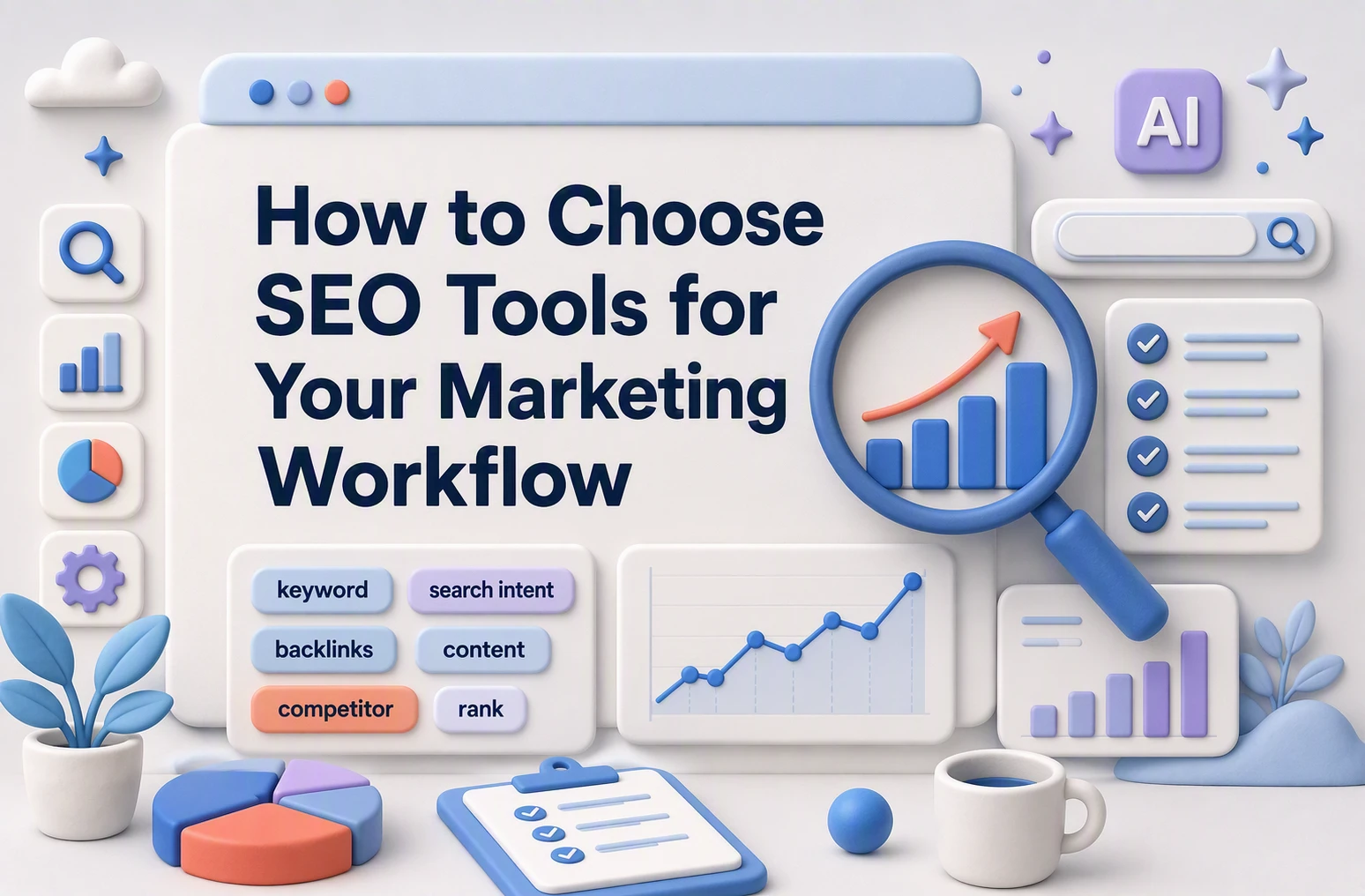
    A content manager may research keywords Monday, run a technical crawl before release, guide writers Wednesday, and send client reports Friday. Four disconnected tools can add more spreadsheet work than SEO gains. This SEO tool selection guide helps you match tools to real jobs, data trust, team needs, and cost. Built for practical marketing workflows, this SEO tool selection guide shows how to test before you commit.

    1. Define the SEO Jobs Your Workflow Must Support

    Map Tasks to Outcomes

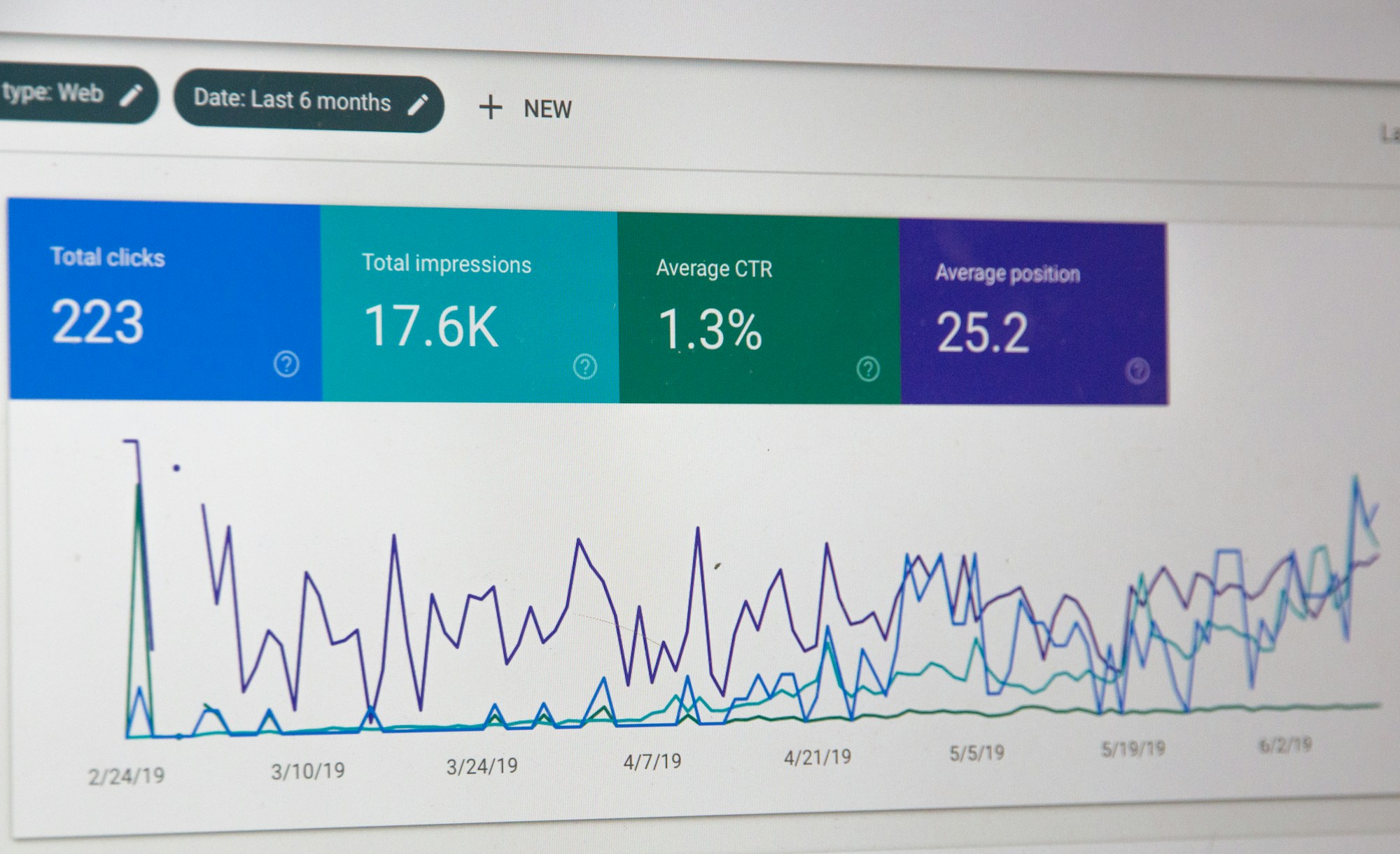
    Start with work, not feature lists. This SEO tool selection guide should map each job to a result: find keywords, fix crawl issues, publish content, track ranks, or report growth. Google Search Console tracks clicks, impressions, CTR, and position in its Performance report.

    SEO job Desired outcome
    Keyword research Content briefs with clear demand
    Site audits Prioritized fixes for developers
    Rank tracking Fast alerts on visibility changes

    Separate Must-Haves From Nice-to-Haves

    Choose must-haves based on weekly use and business risk. Nice-to-haves can wait.

    • Must-have: reliable data, team access, exports
    • Nice-to-have: extra dashboards or minor AI features

    Buy tools that remove a real workflow block, not tools with the longest feature list.

    Also Read: 10 Best Tools for Competitor SEO Analysis in 2024

    2. Evaluate the Core SEO Capabilities

    Research and Competitive Intelligence

    Your tool should turn search demand into clear content choices. Check keyword gaps, competitor pages, intent, and topic overlap. Compare its data with your own results, not just a large keyword list.

    • Find gaps competitors rank for
    • Group terms by intent
    • Spot pages that compete with each other

    Technical Audits and Content Optimization

    Good audits find crawl blocks, broken links, duplicate pages, weak metadata, and slow templates. Google says search systems need to crawl and understand your pages before they can appear well in results. See the SEO Starter Guide for the basics.

    Cartoon analyst inspecting broken links on dual monitors
    Cartoon analyst inspecting broken links on dual monitors

    Choose fixes by likely business impact, not by the longest error list.

    Tracking, Reporting, and AI Visibility

    Track rankings, clicks, impressions, CTR, and key page groups. Google’s Performance report supports these core measures. Also track brand mentions in AI answers. SnowSEO combines these views, which can reduce tool switching.

    Need Test
    Reporting Scheduled, client-ready views
    AI visibility Prompt and citation tracking

    Also Read: SEO Tool Providers Introduce More AI-Powered Optimization Features

    3. Compare Data Quality, Usability, and Total Cost

    Test Data Against Your Market

    Run the same keyword set through each trial tool. Check local results, device views, competitor coverage, and refresh speed against Google Search Console. Google notes that clicks, impressions, and position can change based on how data is grouped, so compare like for like in your Performance report.

    A clean dashboard is useless if its data misses your real market.

    Cartoon analyst comparing giant magnifying glass to data displays
    Cartoon analyst comparing giant magnifying glass to data displays

    Calculate the Real Operating Cost

    Add more than the monthly fee. Include seats, keyword limits, AI credits, exports, training time, and any tools you keep alongside it.

    Cost area Check
    Subscription Plan and add-ons
    Team time Setup and reporting
    Overlap Features already paid for
    1. List all costs.
    2. Test key workflows.
    3. Choose the lowest total burden.

    Also Read: SnowSEO Review: An SEO Tool for Content and Search Visibility

    4. Run a Structured Trial Before You Commit

    Use a Scored Pilot

    Test each tool on the same live tasks for two weeks. A fair comparison needs shared criteria and repeatable checks, which aligns with NIST’s evaluation approach.

    Criterion Weight What to test
    Data accuracy 35% Check rankings and keywords against known results
    Workflow speed 35% Time one audit-to-action cycle
    Team fit 30% Review sharing, exports, and access controls

    Score evidence, not sales demos.

    Choose the Tool That Closes the Workflow Gap

    Pick the tool that removes your biggest daily bottleneck. Do not pay for features nobody will use.

    1. Ask users where work stalls.
    2. Compare the pilot scores.
    3. Confirm the full cost, setup time, and support.

    A strong trial proves fit before your team commits.

    Homepage
    Homepage

    Choose a platform that fits the work, not just the feature list. Try SnowSEO to unite audits, research, content, tracking, and AI visibility.

    Frequently Asked Questions

    Q1: How should marketers evaluate SEO tools for research, content, technical audits, and reporting?

    Map each job to a needed feature, then test data accuracy, export options, and team access.

    Q2: Should I buy one SEO platform or separate tools?

    Choose one platform if it covers core tasks well. Add specialist tools only for clear gaps.

    Q3: How long should an SEO tool trial last?

    Run a 14 to 30-day trial using live projects, not demo data.

    Conclusion

    Choose SEO tools around real jobs, trusted data, team fit, and total cost. Trial each workflow before you commit. Ground reports in Google Search Console data to judge what drives results.

  • How to Build a Competitive SEO Intelligence Strategy

    How to Build a Competitive SEO Intelligence Strategy

    Quick Summary: Rank tracking alone misses the bigger fight: who’s winning in AI answers and local searches. Start by mapping rivals based on shared high-value keywords, AI mentions, and city-specific visibility, then audit their content depth, links, and technical health to spot exploitable gaps. Use tools like SnowSEO to turn these findings into a ranked action plan-prioritizing fixes where competitors have clear edges, like original research or faster page speeds. The goal isn’t to copy rivals but to outbuild them with better answers, especially in AI-driven searches where first-hand proof and local context matter most.

    A rival can outrank your SaaS page for “best GST invoicing software for small businesses,” while a marketplace or community site gets named in the AI answer. One buyer search now has two battles.

    Basic rank tracking misses that split. Strong SEO competitive analysis shows who wins Google, who earns AI mentions, and why. It also reveals gaps by city, language, device, and search intent across India.

    This guide turns competitor SEO analysis into a working system. You will map real rivals, spot demand gaps, assess AI search visibility, and score opportunities before your team spends time creating pages.

    Use SEO intelligence tools to track changes, not just collect reports. The aim is clear: build an SEO competitive analysis process that helps you act faster, test smarter, and protect high-value demand.

    Step 1: Define the Competitor Set You Actually Need to Monitor

    Build a Search-Led Competitor Map

    Your business rivals are not always your search rivals. Start SEO competitive analysis with 15 to 30 priority queries, split by intent, Indian city, and device. Use Search Console to see the queries already bringing impressions and clicks. Google says its reports show queries, impressions, clicks, and average position in Search. Use Search Console data as your baseline.

    List domains that appear often, then record the exact ranking URL. Include publishers, marketplaces, local listings, and AI-cited sources, not just firms selling the same service.

    Track the results your buyer sees, not the brands your sales team remembers.

    Prioritize Competitors by Threat and Relevance

    Score each domain before adding it to your watchlist.

    Signal What to check Priority
    Keyword overlap Shared high-value queries High
    SERP presence Top 10 appearances High
    India fit Same city, language, or audience Medium
    AI visibility Mentions in answer engines Medium
    1. Monitor 3 to 5 direct search threats weekly.
    2. Review 5 to 10 emerging domains monthly.
    3. Remove one-off results after two review cycles.

    A lean list keeps SEO competitive analysis useful and stops reports becoming noise.

    Also Read: Competitive SEO Intelligence: build a tracking playbook

    Step 2: Establish a Baseline Across Keywords, Content, Links, and Technical SEO

    Measure Visibility and Keyword Coverage

    Build one baseline sheet for your site and each close rival. Split keywords by India, state, city, device, and search intent. Track rank, URL, SERP feature, estimated traffic, and whether an AI answer mentions a brand.

    Area Record Why it matters
    Keywords Ranking, intent, location Finds gaps and weak wins
    Content URL, topic, freshness Shows page-level overlap
    AI visibility Mentions and cited pages Reveals GEO opportunities

    Use a fixed keyword set each month. Separate branded terms from non-branded terms, or brand demand will hide real growth.

    Photo by Jason Leung on Unsplash
    Photo by Jason Leung on Unsplash

    Check mobile results first. Search results can vary by location, language, and device, as Google explains.

    Audit the Pages and Authority Behind Rankings

    For every competing top-ranking page, log its content type, depth, internal links, referring domains, and update date. Then compare it with your matching page.

    1. Flag pages with strong links but thin content.
    2. Flag useful pages with weak links or poor internal paths.
    3. Check index status, canonicals, redirects, sitemap coverage, and mobile speed.
    4. Prioritize gaps that you can fix faster than competitors.

    Google advises that crawlable links help it find pages, while sitemaps support discovery and crawl priority in its technical SEO guidance.

    Signal Baseline question Action
    Links Which pages earn relevant links? Build linkable supporting assets
    Technical Can Google crawl and index key URLs? Fix blocks and duplicate signals
    Experience Are priority pages slow or unstable? Address LCP, INP, and CLS

    Step 3: Identify Competitors Gaining AI Search Visibility

    Track Prompts, Mentions, and Citations

    Build a prompt set around buyer questions, comparison searches, and local needs in India. Run each prompt in ChatGPT, Claude, Grok, and Google AI Overviews. Log which brands appear, how often, and whether the answer links to them.

    Signal What to record Why it matters
    Brand mention Competitor named in the answer Shows share of AI voice
    Citation Linked page and domain Reveals trusted sources
    Prompt coverage Prompts where they appear Finds topic-level wins

    Google says AI features surface supporting links and may use related searches to form answers, so one prompt can expose several content gaps. See Google’s AI features guidance.

    Photo by Growtika on Unsplash
    Photo by Growtika on Unsplash

    Track results by city, language, device, and prompt type. A national competitor may not own high-intent searches in Dehradun or Hindi.

    Find the Content and Sources Creating the Gap

    Open every cited competitor page. Tag its format, proof, update date, and source links. Then compare it with your closest page.

    Look for patterns:

    1. First-hand examples, data, or expert views.
    2. Clear sections that answer follow-up questions.
    3. Strong internal links to related pages.
    4. Citations from respected third-party sites.

    Google advises brands to publish helpful, original content rather than recycled summaries in AI search. Read its generative AI search guide.

    Use SnowSEO to group missing prompts by business value, then fix pages with the clearest citation gap first.

    Step 4: Diagnose the Signals That Predict Ranking Improvements

    Use Six Signals as Evidence, Not Guarantees

    Track six clues: ranking movement, search intent match, content depth, quality links, crawl health, and AI mentions. Compare them by keyword group and Indian location.

    Google weighs many signals, so no single metric predicts a win. Its systems assess relevance, usability, source expertise, location, and more, as explained in Google’s ranking overview.

    Signal What it may show
    Rising impressions Google is testing relevance
    Better click-through rate Your result matches the search
    New relevant links Growing topic trust
    Faster indexing Fewer crawl barriers
    AI answer mentions Clear, useful source material
    Competitor content gaps A page worth building
    Photo by Stephen Phillips - Hostreviews.co.uk on Unsplash
    Photo by Stephen Phillips – Hostreviews.co.uk on Unsplash

    Treat signals as a pattern. A higher rank after one change may be coincidence.

    Translate Each Signal into a Strategic Response

    Turn evidence into a short action list:

    1. High impressions, low clicks: rewrite the title and description.
    2. Ranks 8-20: add missing subtopics, examples, and internal links.
    3. Weak intent match: change the page format from guide to comparison, list, or product page.
    4. Competitor links grow: create original research or useful assets worth citing.
    5. Crawl errors: fix index blocks, redirects, and slow templates.
    6. Few AI mentions: add direct answers, proof, and clear source details.

    Google advises people-first content with original insight, not pages made mainly to chase rankings. Review against its helpful content guidance.

    Also Read: SnowSEO Review 2026: Can It Replace Ahrefs and SEMrush for SEO Intelligence?

    Step 5: Turn Competitive Gaps into a Ranked Action Plan

    Score Opportunities with a Transparent Formula

    Score every gap before assigning work. Use a 1-5 score for traffic potential, business value, ranking feasibility, and AI visibility potential. Then subtract effort.

    Factor What to assess
    Traffic potential Demand and current competitor visibility
    Business value Lead, sale, or pipeline impact
    Feasibility Your authority, assets, and time to compete
    Effort Content, technical, and outreach work needed

    Use: (traffic + value + feasibility + AI potential) – effort.

    Prioritize gaps where you can add real experience, proof, or local insight. Google asks creators to provide original value, not recycled summaries, in its people-first content guidance.

    Create Briefs That Teams Can Execute

    Turn each high-score gap into a one-page brief. Include:

    1. Target query and search intent.
    2. Competitor weaknesses to beat.
    3. Required proof, examples, and expert input.
    4. Internal links, CTA, owner, and due date.

    Add a clear success metric, such as page-one rankings, qualified leads, or AI mentions. SnowSEO can keep these tasks tied to daily visibility changes.

    Do not chase every missing keyword. Build pages that answer the full need better than the current result.

    Step 6: Operationalize SEO Intelligence with Tools, Dashboards, and Reviews

    Choose the Right Tool Stack

    Use one dashboard that joins site health, keyword movement, competitor gaps, and AI answer mentions. SnowSEO can bring these views together, while Search Console remains the source for Google clicks and impressions.

    Need Track
    Search demand Clicks, impressions, CTR
    Competitor moves New pages, rank gains, content gaps
    AI visibility Brand mentions and cited pages

    Google lets you segment performance by query, page, country, and device in its Performance report.

    Keep the stack lean. Data spread across five tools rarely leads to faster action.

    Set the Monitoring Cadence and Scorecard

    Review alerts daily, priority changes weekly, and strategy monthly.

    1. Flag sudden rank losses, new competitor pages, and technical errors.
    2. Assign one owner and a due date to each high-value opportunity.
    3. Compare results against the prior period, not a single day.
    Review Core question
    Weekly What can we fix or publish now?
    Monthly Which topic clusters create qualified traffic?

    Track clicks and impressions alongside rankings. Google advises teams to focus on these trends, not position alone, in its performance guidance.

    Homepage
    Homepage

    Turn competitor data into clear SEO and AI search actions. SnowSEO tracks rivals, finds gaps, and helps your team publish and measure growth from one dashboard.

    Frequently Asked Questions

    Q1: How do I identify competitors who are gaining AI search visibility?

    Track which brands appear in ChatGPT, Claude, and Google AI answers for your key prompts. Note citation frequency, brand mentions, linked pages, and changes each week. Rising mentions across several prompts signal momentum.

    Q2: What are the top 6 signals that predict SEO ranking improvements?

    Watch for:

    • More pages indexed
    • Better click-through rates
    • Fresh content updates
    • New quality backlinks
    • Faster page speed
    • Growing topical coverage

    Q3: How can I prioritize competitors for SEO monitoring?

    Rank competitors by keyword overlap, traffic potential, AI-answer mentions, backlink gap, and conversion relevance. Monitor direct rivals weekly. Review larger publishers and fast-rising niche sites monthly.

    Q4: How often should I update competitive SEO research?

    Run a light review every week and a deeper review each month. Check rankings, new pages, links, AI visibility, and content gaps. Rebuild priorities every quarter.

    Conclusion

    A strong competitive SEO intelligence strategy turns competitor data into clear decisions. Track search demand, ranking gaps, content quality, technical issues, backlinks, and AI answer visibility. Then segment findings by Indian market, city, language, and buyer intent.

    Use a simple priority score so the team works on opportunities with real business value first. Review competitors often, but do not copy them blindly. Build pages that add proof, local context, and useful answers.

    Google recommends helpful, people-first content over pages made mainly to chase rankings, as explained in its content guidance.

    Consistency matters more than one-off audits.