
Quick Summary: The most useful takeaway is that keyword research in 2026 needs to track both Google rankings and AI answer citations, since AI Overviews now appear on up to 30% of SERPs and ChatGPT handles over 2 billion queries daily. The article tested 11 tools and ranked SnowSEO first because it natively combines traditional SEO data with AI visibility tracking across ChatGPT, Perplexity, and Gemini. Ahrefs and Semrush still lead for pure Google data accuracy and database size, but both charge extra for AI tracking features. For budget-conscious users, KWFinder offers solid long-tail research at $29.90/month, while Ubersuggest starts at just $12/month for beginners.
A big keyword list is not a strategy. In 2026, SEO Keyword Research only works if you know two things: which terms your competitors already own, and which questions AI answer engines cite without sending clicks back to websites.
Most Keyword Research Tools still act like Google is the only place that matters. That misses a lot. AI Overviews now show on roughly 16 to 30% of SERPs, and ChatGPT handles more than 2 billion queries a day. If your SEO Keyword Research process still chases search volume first, you miss buyer intent, zero-click risks, and new topic gaps.
We tested 11 platforms across the old guard and the new wave. That includes Ahrefs, Semrush, and more than one AI Keyword Tool built for GEO and answer engine tracking. We ranked each one on database quality, long-tail discovery, intent labels, AI tracking, and value. The goal is simple: better SEO Keyword Research that matches how people search now.
Keyword Research Tools Comparison at a Glance
| Tool | Best For | Starting Price | Database Size | AI Tracking |
|---|---|---|---|---|
| SnowSEO | Integrated SEO + AI visibility strategies | $79/mo (Starter) | 10B+ keywords + AI query layer | ChatGPT, Perplexity, Gemini, AI Overviews |
| Ahrefs | Data accuracy and traffic potential analysis | $29/mo (Starter) / $129/mo (Lite) | 28.7B keywords, 217 locations | Moderate – Brand Radar add-on ($99+) |
| Semrush | All-in-one SEO platform with largest database | $139.95/mo (Pro) | 26.5B keywords, 142 locations | $99/mo add-on for AI Visibility Toolkit |
| KWFinder (Mangools) | Freelancers and SMBs on a budget | $29.90/mo (annual) | 2.5B keywords | None |
| SE Ranking | Value all-in-one with GEO tracking | $65/mo (Essential) | 5.4–7B keywords, 188 countries | 6 platforms included (ChatGPT, Perplexity, AI Overviews, Gemini, Claude, Copilot) |
| Ubersuggest | Budget-conscious beginners and solopreneurs | $12/mo or $290 lifetime | Moderate | None |
What to Know About Keyword Research Tools in 2026
Keyword research tools now do two jobs. First, they still track Google search volume, keyword difficulty, and SERP gaps. Second, they help you spot AI-driven query patterns from tools like ChatGPT, Perplexity, and Gemini. The best platforms pull both views into one workflow.
That matters because search behavior has split. People still use Google, but they also ask AI engines full questions and expect direct answers. Good tools now sort terms by intent, group them into topic clusters, and show where one page can win more than one query type.
Key fact: 94.74% of keywords get 10 or fewer monthly searches. That makes long-tail topics and AI citation visibility a real edge.
1. SnowSEO
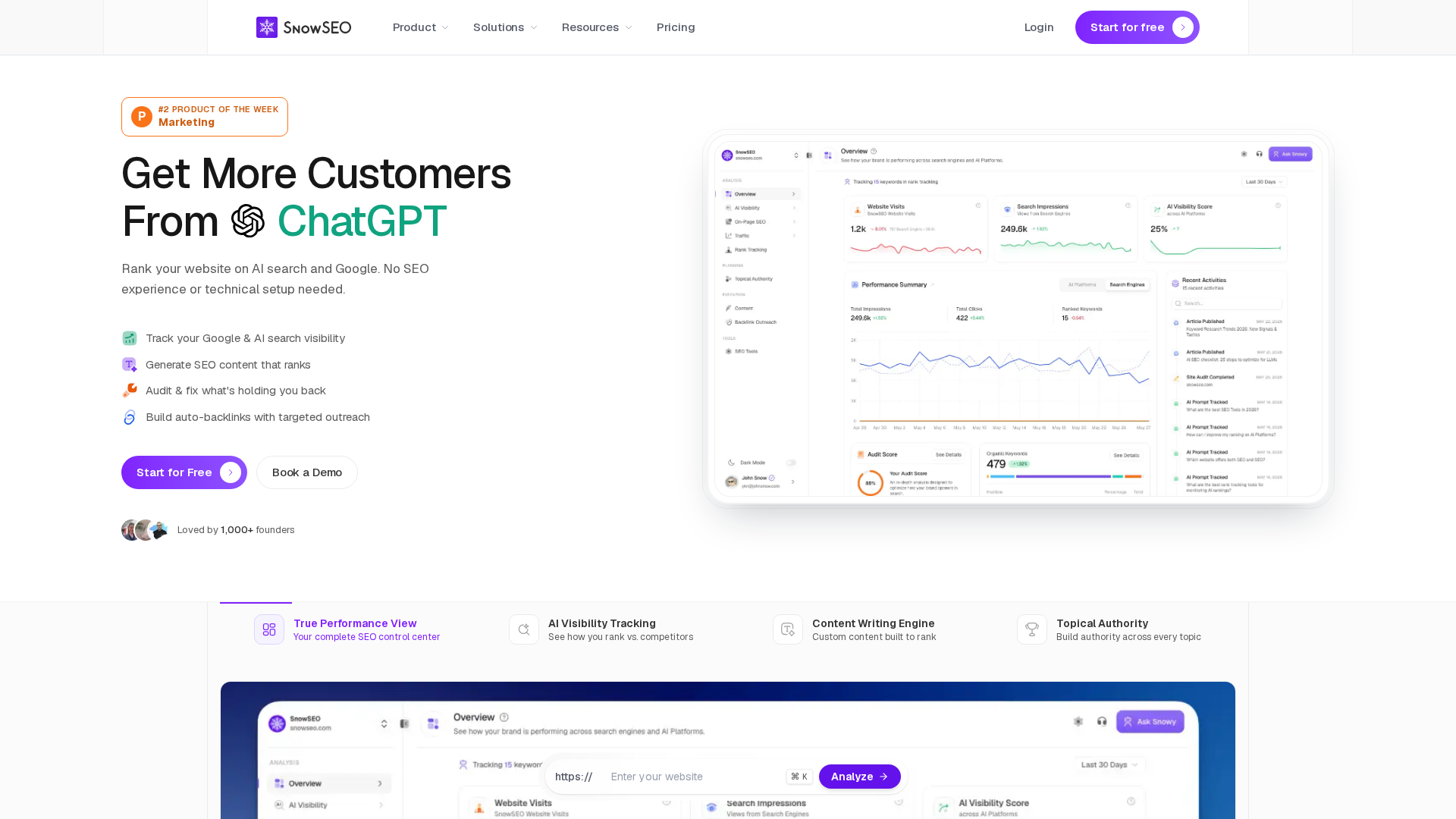
SnowSEO is built for the two-layer search market in 2026. It blends classic SEO keyword research with AI visibility tracking, so you can see where you rank in Google and where you get cited in tools like ChatGPT, Perplexity, Gemini, and AI Overviews. That matters more now, since Google zero-click searches hit 68% in early 2026 and AI referral traffic can convert at 14.2% in some benchmarks.
Highlights
- Unified Google + AI visibility tracking in one dashboard
- AI-powered keyword clustering by search intent
- Citation opportunity scoring for GEO campaigns
- Real-time SERP analysis with AI Overview detection
- Competitor gap analysis across traditional and AI search
Specs
- Best for: Integrated SEO + AI visibility strategies
- Starting price: $79/mo
- Database size: 10B+ keywords + AI query layer
- AI tracking: ChatGPT, Perplexity, Gemini, AI Overviews
Pros
- Native Google + AI search data in one place
- Unique citation scoring for GEO work
- Intent clustering saves serious research time
Cons
- Newer tool with a smaller user base
- API integrations are still growing
It ranks first because SnowSEO solves the real 2026 keyword research problem: winning in both search results and AI answers.
Last updated: June 14, 2026
2. Ahrefs
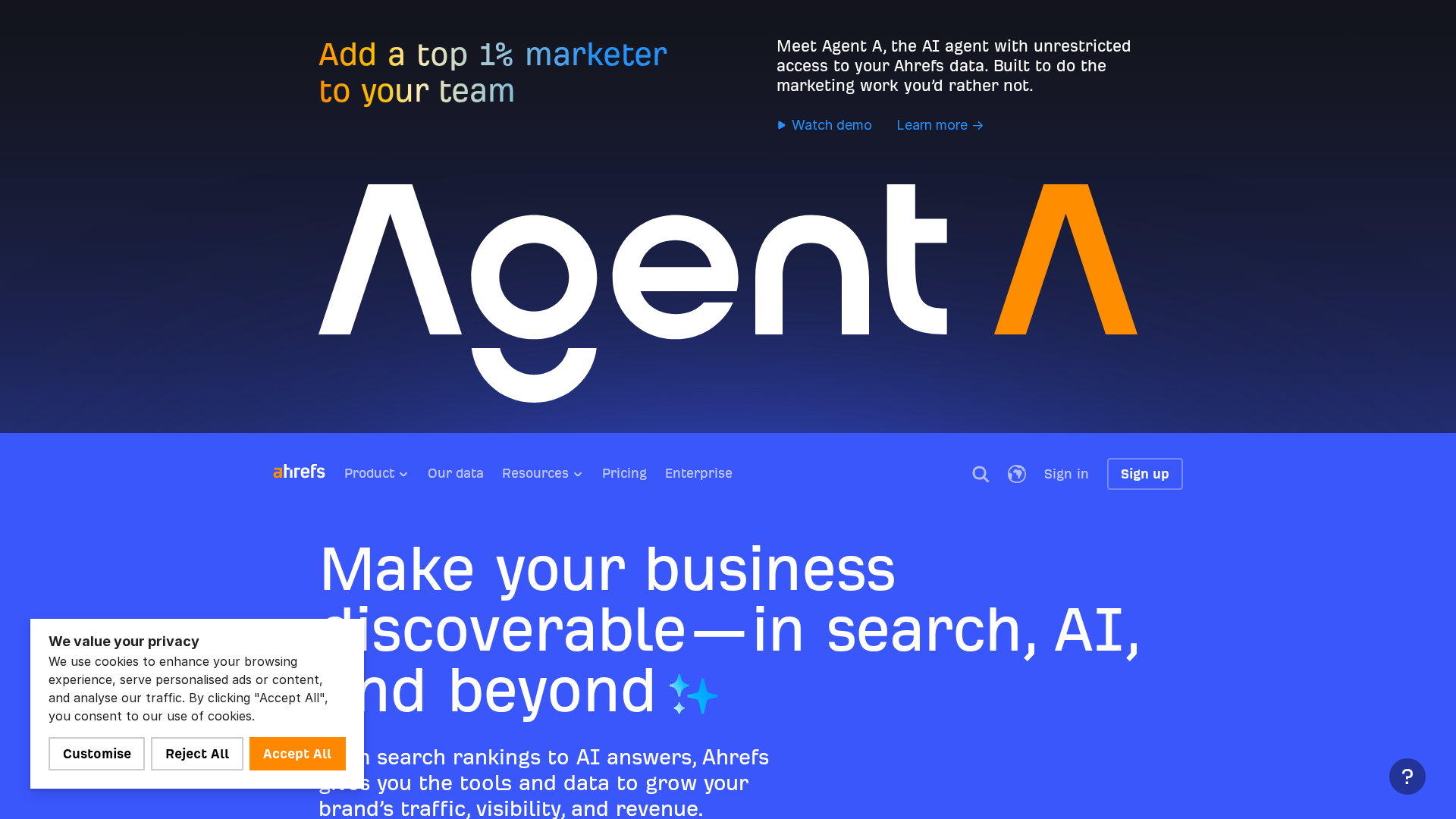
Ahrefs is still the benchmark for Ahrefs keyword research when data quality matters most. Its Keywords Explorer tracks 28.7B filtered keywords across 217 locations, and its traffic metrics stay useful because they focus on page-level opportunity, not just one term.
Highlights
- Traffic Potential shows what the top page gets from all ranking keywords, not just the target term.
- Parent Topic helps you cluster related terms into one stronger page.
- KD is based on backlink profiles of the top 10 results.
Specs
- Best for: Data accuracy and traffic potential analysis
- Starting price: $29/mo (Starter) / $129/mo (Lite)
- Database size: 28.7B keywords, 217 locations
- AI tracking: Moderate – Brand Radar add-on ($99+)
Pros
- Most trusted keyword difficulty tool
- Strong backlink and competitor analysis
Cons
- No real free tier for full research
- Lite plan credit limits slow heavy SEO keyword analysis
It ranks here because few tools match Ahrefs for precision.
Last updated: June 14, 2026
3. Semrush
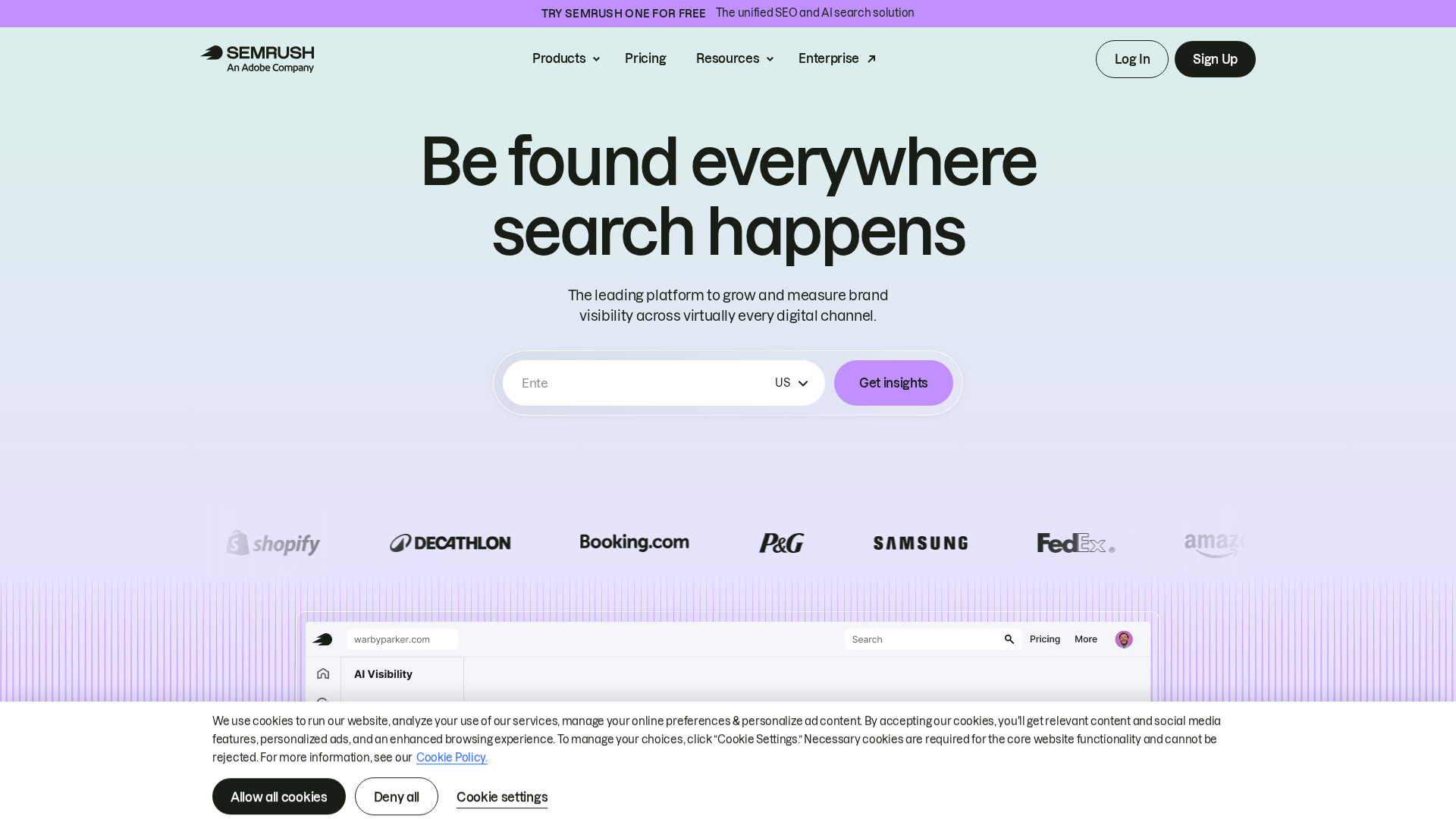
Semrush is the closest thing to an all-in-one SEO platform. Its Keyword Magic Tool pulls from one of the biggest commercial databases, with 142 geo databases and over 27 billion keywords, plus strong intent labels and market coverage.
Highlights
- Best-in-class for Semrush keyword research, intent mapping, and topic clustering
- Keyword Gap supports side-by-side SEO competitive analysis across your domain and up to four competitors
- AI Visibility Toolkit tracks ChatGPT, Gemini, Perplexity, and Google AI surfaces
Specs
- Best for: All-in-one SEO platform with largest database
- Starting price: $139.95/mo
- Database size: 26.5B keywords, 142 locations
- AI tracking: $99/mo add-on
Pros
- Largest keyword database available
- Strongest intent classification
- Smooth workflow from research to planning
Cons
- High entry price
- AI tracking costs extra
- Can overwhelm beginners
It ranks here because agencies get scale, speed, and one connected workflow.
Last updated: June 14, 2026
4. KWFinder (Mangools)
KWFinder is built for one job: finding low-competition long-tail keywords fast. Its clean layout needs almost no training, and Mangools says the tool covers 2.5B+ keywords and 65k+ locations with color-coded difficulty scores in KWFinder.
%22)
Highlights
- 5-tool suite for $29.90/mo on annual billing
- Color-coded keyword difficulty scores
- Location-specific research in 50,000+ locations
- Clean, beginner-friendly interface
- 10-day free trial available
Specs
- Best for: Freelancers and SMBs on a budget
- Starting price: $29.90/mo (annual)
- Database size: 2.5B keywords
- AI tracking: None
Pros
- Excellent value – 5 tools for one low price
- Highly accurate difficulty scores for the price
- Cleanest interface in the category
Cons
- No AI or GEO tracking capabilities
- Smaller database than enterprise tools
- Daily lookup limits on basic plan
It ranks here because few tools match its mix of usability, pricing, and reliable long-tail research for small teams.
Last updated: June 14, 2026
5. SE Ranking
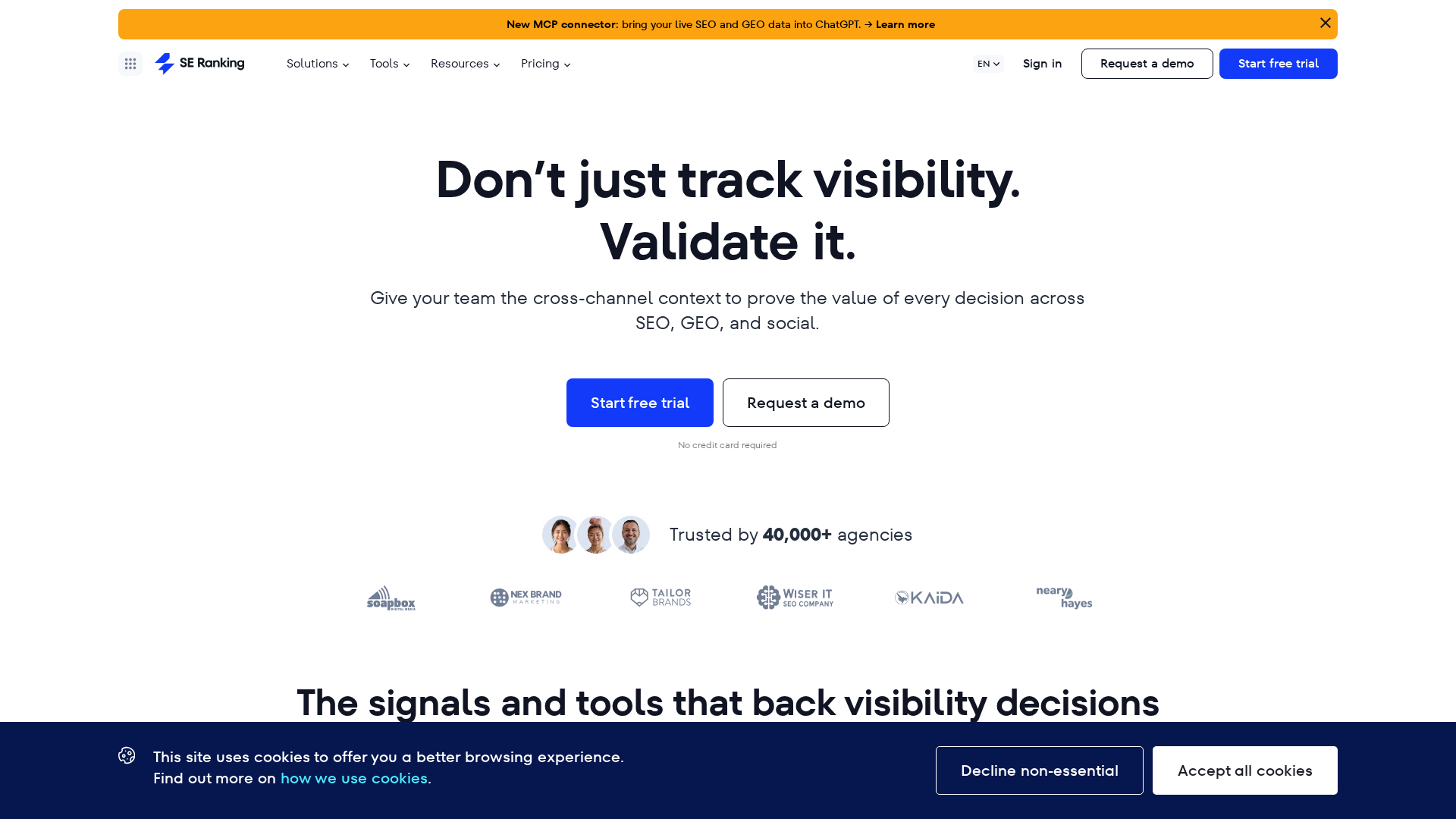
SE Ranking sits in the sweet spot for teams that want broad SEO coverage without paying enterprise prices. It blends solid keyword research with built-in AI search tracking, so it works well for agencies that need one platform for both classic SEO and GEO.
Highlights
- Tracks AI visibility across six engines, with ChatGPT, Gemini, Perplexity, AI Overviews, and more built into the workflow
- Direct AI assistant connection through SE Ranking’s MCP server
- Unlimited keyword and competitor research
- Built-in AI content writer
Specs
- Best for: Value all-in-one with GEO tracking
- Starting price: $65/mo
- Database size: 5.4–7B keywords, 188 countries
- AI tracking: 6 platforms included
Pros
- AI tracking included without pricey add-ons
- Strong price-to-feature ratio
- Generous 14-day free trial
Cons
- Smaller database than Semrush or Ahrefs
- Keyword difficulty is less precise than Ahrefs
It ranks here because it gives growing teams the best low-cost bridge between keyword research and AI visibility tracking.
Last updated: June 14, 2026
6. Ubersuggest
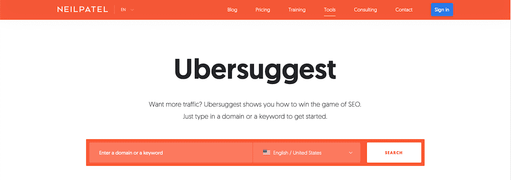
Ubersuggest is the low-cost pick for people who need solid keyword research without paying enterprise prices. It covers the basics well: keyword ideas, CPC, SEO difficulty, content ideas, and a light audit layer, with pricing confirmed on Ubersuggest’s pricing page.
Highlights
- Plans start at $12-$40/mo with a lifetime option
- Keyword suggestions with volume, difficulty, and CPC
- Content ideas pulled from top-performing pages
- Basic site audit and backlink data included
- Free tier allows 3 searches per day, as noted in this 2026 pricing breakdown
Specs
- Best for: Budget-conscious beginners and solopreneurs
- Starting price: $12/mo or $290 lifetime
- Database size: Moderate
- AI tracking: None
Pros
- Lowest paid entry price here
- Lifetime purchase option
- Good mix of keyword research, content ideas, and audits
Cons
- Shallower data than premium tools
- Free tier pushes upgrades hard
- No AI or GEO tracking
It ranks here because it is the cheapest usable entry point for real SEO work.
Last updated: June 14, 2026
Honourable Mentions
Beyond the top six, these five tools fill clear gaps. If your workflow leans on one specific job, one of these may fit better than a bigger all-in-one platform.
-
Google Keyword Planner – Best free source for search volume, but exact numbers often need active ad spend.
-
AnswerThePublic – Still one of the best tools for question-based ideas and FAQ planning.
-
Keyword Insights – Clusters keywords by intent fast with AI, starting at $58/mo.
-
SpyFu – Strong pick for long-term competitor keyword history across paid and organic.
-
LowFruits – Finds weak SERPs where lower-authority sites can still rank, from $29/mo.
How to Choose the Right Keyword Research Tool for Your Business
Pick the tool based on where your audience searches, not based on the biggest feature list.
- Match the search surface
- If most traffic comes from Google, Ahrefs or Semrush will cover you well.
- If you also care about visibility in AI answers, use a tool with native GEO tracking like SnowSEO or SE Ranking. Skip pricey add-ons if AI search matters from day one.
- Check your site authority
- New or weaker sites need strong low-competition filters. Look at KWFinder, LowFruits, or Ubersuggest.
- Stronger domains can get more value from deep competitor gap analysis in Ahrefs or Semrush.
- Look at clustering, not just keywords
- A giant keyword list does not become a content plan by itself.
- If your team gets stuck sorting terms, choose tools with intent-based clustering like SnowSEO, Keyword Insights, or Semrush.
- Budget for the full stack
- A smart setup often includes:
- Google Keyword Planner + GSC for baseline data
2. One paid tool for depth
3. An optional GEO tracker for AI visibility
In most cases, intent tagging beats raw database size. A smaller tool with clean intent labels is often more useful than a huge database with messy classification.
Need one platform that covers keyword research, AI visibility, audits, tracking, and content creation? Try SnowSEO. It helps you find winning topics faster, track search and AI rankings, and turn research into publish-ready content without juggling disconnected tools.
Frequently Asked Questions
Q1: What is the best keyword research tool for SEO in 2026?
No single tool wins for everyone. The best pick depends on your workflow, budget, and need for AI search data. Many teams now want one platform that covers keyword discovery, content planning, rank tracking, and AI visibility, which is where SnowSEO fits well.
Q2: How do I choose a keyword research tool for my business?
Start with your goal. Agencies need reporting and scale. In-house teams need speed and easy collaboration. Check keyword depth, SERP data, trend tracking, AI search insights, pricing, and whether the tool helps you act on data instead of just exporting it.
Q3: Are free keyword research tools effective for SEO?
Yes, but only for basic validation. Free tools can help you spot ideas, search volume ranges, and simple topic gaps. They usually miss deeper competitor data, clustering, intent signals, and tracking, so serious growth teams outgrow them fast.
Q4: Should I use more than one keyword research tool?
Often, yes. Many SEO teams pair a broad database tool with a platform that handles audits, tracking, and AI-focused research. That mix gives better coverage and helps you verify demand, competition, and visibility across both search engines and answer engines.
Leave a Reply