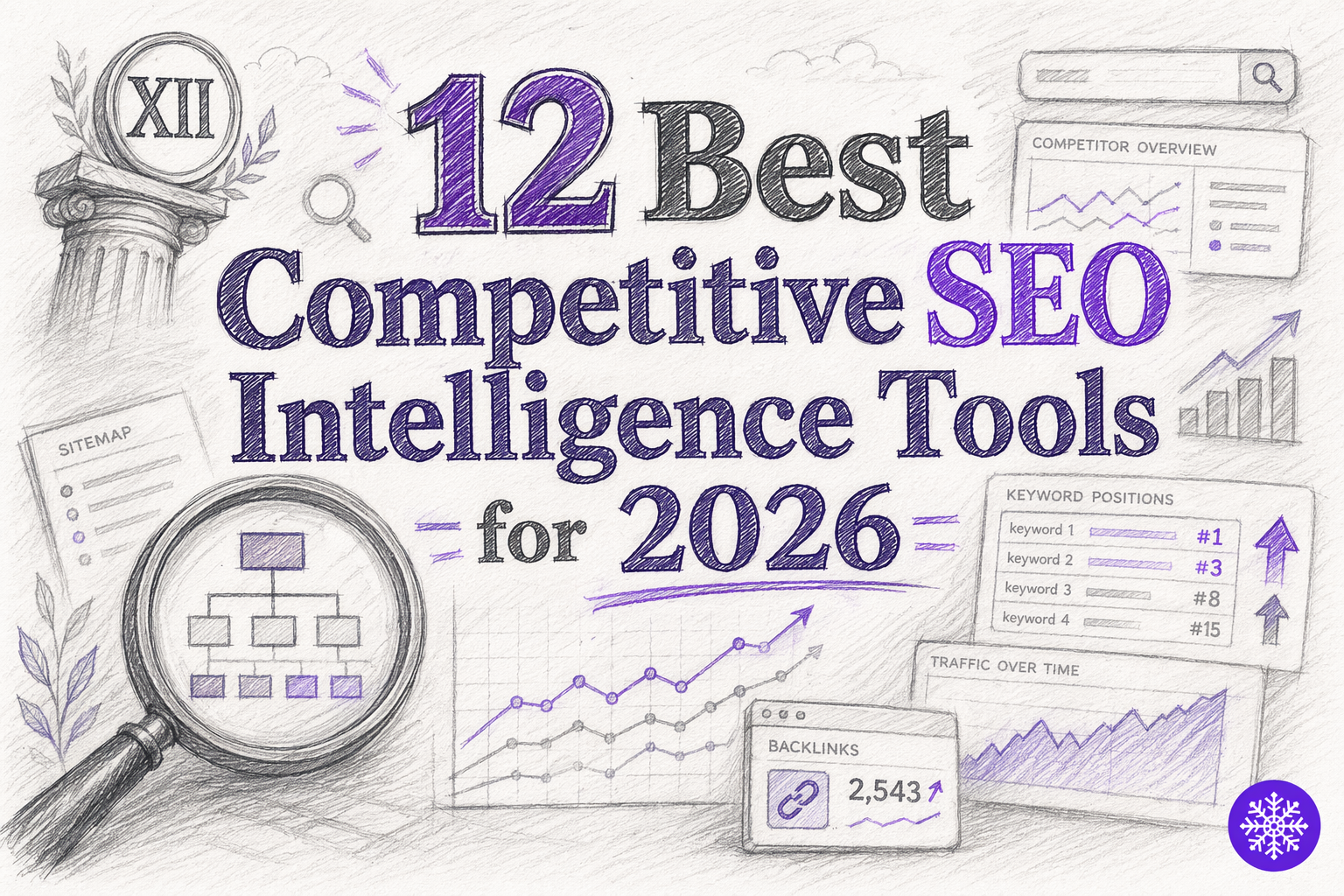
Quick Summary: The best 2026 SEO intelligence tools now have to track more than rankings and backlinks. They also need to show where competitors appear in AI Overviews and LLM answers, since that visibility is now stealing clicks from regular search. SnowSEO leads for AI search visibility, Semrush One is the broadest all-in-one option, and Ahrefs still wins on deep backlink and keyword analysis. For teams that want simpler reporting or broader market context, SE Ranking, Surfer SEO, and Similarweb round out the strongest picks.
If a competitor keeps outranking you, grabbing all the clicks, or showing up in AI Overviews while your brand is missing, your stack of SEO intelligence tools is the real issue in 2026, not just your content calendar.
Most teams still juggle separate platforms for keyword gaps, backlink checks, rank tracking, and AI visibility. That mess slows down daily reporting and hides what matters: why rivals are winning and where you can overtake them.
This guide breaks down the best SEO intelligence tools for 2026, mixing classic competitive SEO tools with newer GEO intelligence tools and AI-focused platforms. You will see options that track competitors across Google search, AI Overviews, ChatGPT, Gemini, and Perplexity.
To build the list, we focused on tools with real competitive research depth, current AI visibility features, and clear reporting. Every pick helps you benchmark rivals, spot content gaps, and track visibility shifts over time.
Quick Comparison
| Tool | Best for | Competitive research depth | AI/GEO visibility | Reporting |
|---|---|---|---|---|
| SnowSEO | Teams prioritizing AI search visibility and modern SEO intelligence | Moderate | Strong | Good |
| Semrush One | All-in-one competitive SEO and AI visibility | Strong | Strong | Strong |
| Ahrefs | Deep competitor and backlink analysis | Very strong | Moderate | Strong |
| Similarweb | Broader competitor benchmarking | Strong | Moderate | Strong |
| SE Ranking | Balanced competitive SEO reporting | Strong | Strong | Strong |
| Surfer SEO | Content teams and topical strategy | Moderate | Strong | Moderate |
What to know about competitive SEO intelligence
Competitive SEO intelligence shows why your rivals outrank you and where you can win. It pulls together keyword gaps, backlink profiles, rank tracking, and market share data so you see the full search battlefield, not just your own site.
In 2026, this is bigger than classic blue links. You also need GEO insights to see how visibility shifts by country, city, and even neighborhood. On top of that, AI Overviews and LLM answers now steal clicks from normal results.
The right tools help you track all these surfaces, spot threats early, and turn competitor data into focused content and link plays.
1. SnowSEO
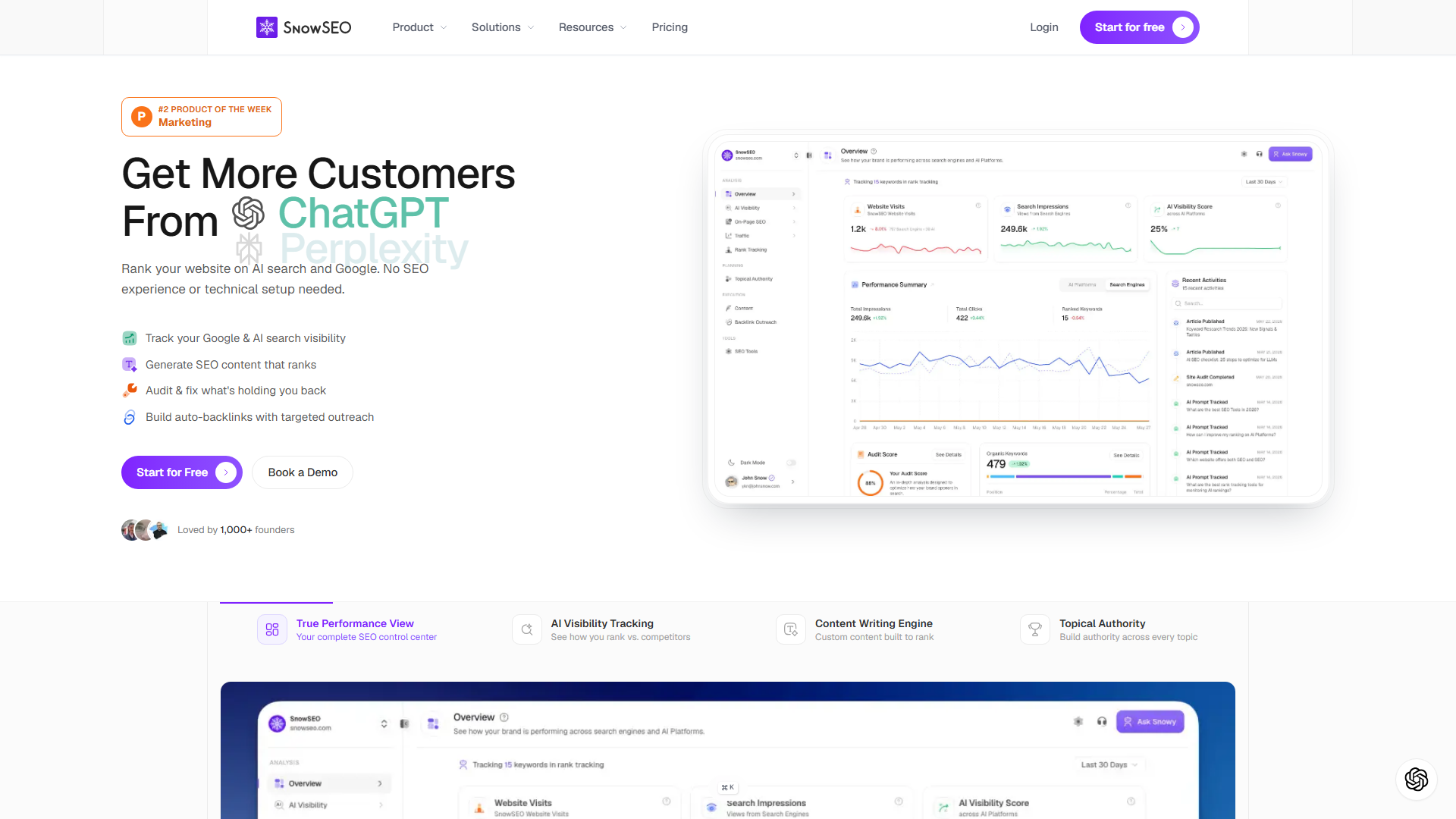
SnowSEO puts classic SEO tracking and AI search visibility in one place. It helps you see how your brand shows up in both Google and AI answers, so you are not guessing where you win or lose attention. According to the SnowSEO overview, teams can track rankings, AI mentions, and site health in a single dashboard.
Highlights
- AI search visibility tracking across engines and AI platforms
- Keyword research and rank tracking
- Website audits and technical health checks
- REST API support for custom reporting
Specs
- Best for: Teams prioritizing AI search visibility and modern SEO intelligence
- Competitive research depth: Moderate
- AI/GEO visibility: Strong focus on Generative Engine Optimization
- Reporting: Good, with sharable and automated reports
Pros
- Built around AI-search-era visibility needs
- Useful for both SEO and brand mention tracking in AI answers
- API helps plug data into your own BI or dashboards, as shown in the reporting guide
Cons
- Less established than legacy enterprise suites
- Competitive data depth may be narrower than top incumbents
SnowSEO ranks first here because it directly targets SEO plus GEO, which fits 2026 competitive intelligence needs.
Last updated: June 3, 2026
Also Read: Content Gap Analysis Vs Content Audits Ultimate Guide
2. Semrush One
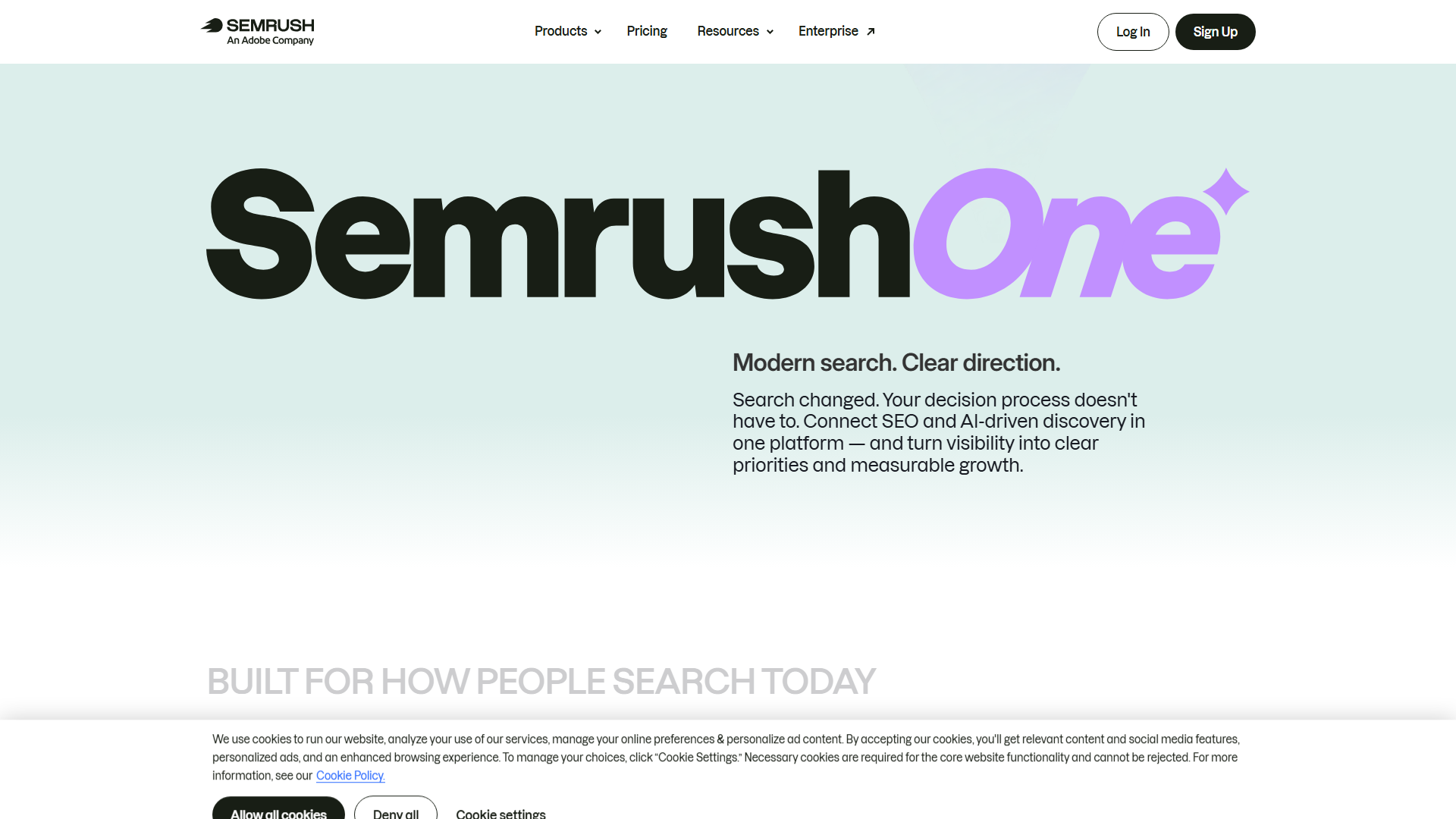
Semrush One gives you a broad competitive research platform that blends SEO, AI discovery, and prompt-level insight. You get classic keyword, backlink, and domain tools plus an AI Visibility Toolkit, which makes it useful for 2026 reporting across both search and AI surfaces.
Highlights
- Deep competitor research across keywords, backlinks, and traffic
- Visibility overview for Google, AI Overviews, and LLMs
- Prompt research to find natural language queries in your space
- AI traffic dashboard to estimate visits driven by AI agents
Specs
- Best for: All-in-one competitive SEO and AI visibility
- Competitive research depth: Strong, with domain, keyword, and market reports
- AI/GEO visibility: Strong AI visibility toolkit with prompts and share-of-voice tracking
- Reporting: Strong cross-channel and AI reporting
Pros
- Very broad feature set across SEO and AI visibility
- Strong for competitor benchmarking in both search and AI
- Useful AI traffic dashboard and visibility reports, as covered in the AI visibility features guide
Cons
- Can feel complex for smaller teams because it merges many workspaces
- Pricing starts at the higher end, with Semrush listing Semrush One above standard SEO plans in its plans comparison
It ranks near the top because it joins traditional competitor research with AI-era discovery and tracking, making it one of the most complete SEO intelligence tools for 2026.
Last updated: June 3, 2026
Also Read: Competitor Seo Monitoring 10 Powerful Tools To Track Wins
3. Ahrefs
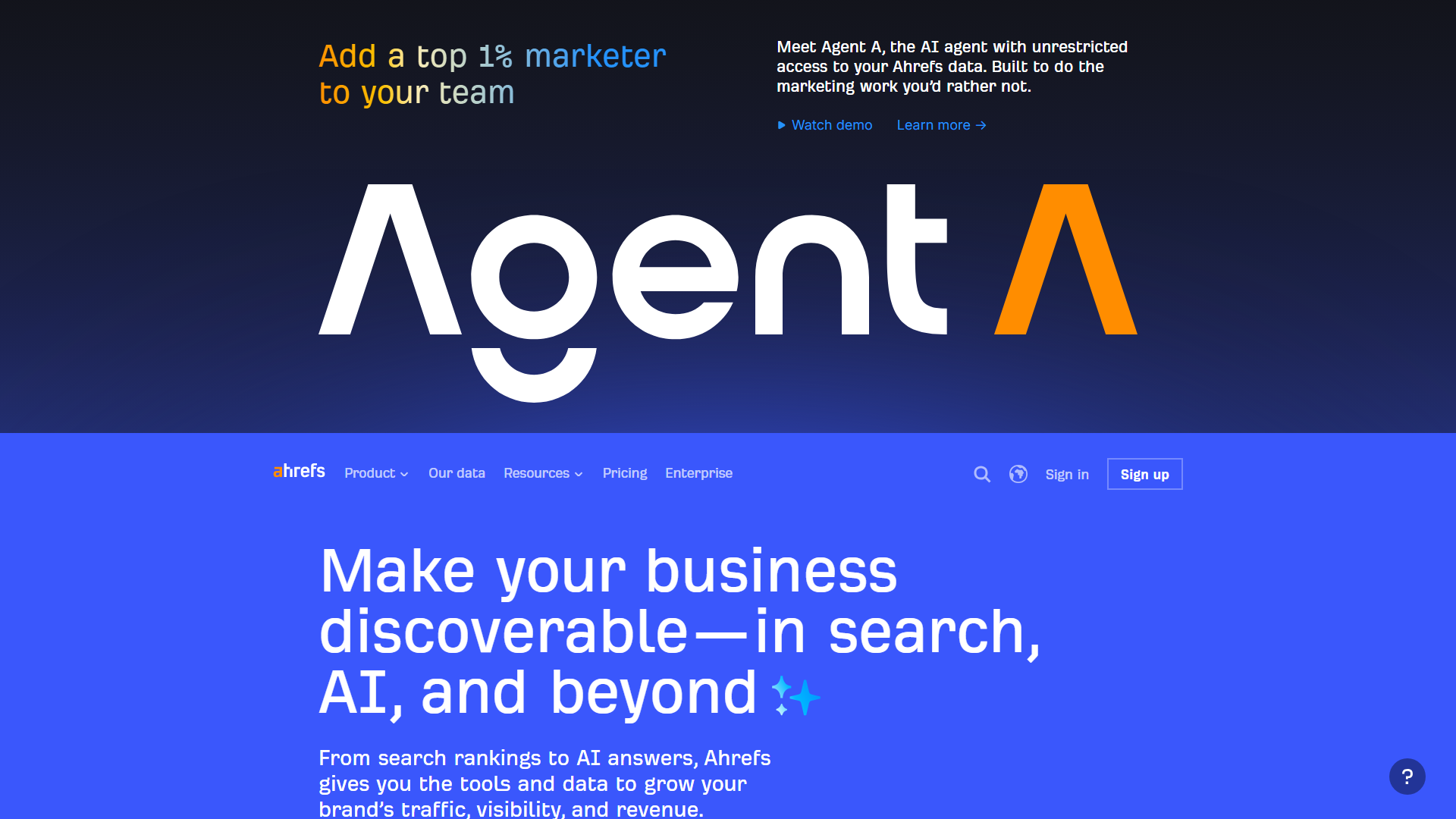
Ahrefs is a deep SEO intelligence tool that helps you see what rivals rank for, where they earn links, and which content you are missing. It is one of the most trusted competitive SEO tools for teams that live inside backlink and keyword data.
Highlights
- Site Explorer for full domain and page level recon on traffic, keywords, and links, as shown in Ahrefs’ Site Explorer overview
- Content Gap analysis to find keywords competitors rank for but you do not, backed by the Content Gap feature
- Link Intersect to spot domains that link to your rivals but not to you
- Rank tracking to watch key positions across markets
Specs
- Best for: Deep competitor and backlink analysis
- Competitive research depth: Very strong
- AI/GEO visibility: Moderate
- Reporting: Strong
- Focus: Backlinks, content gaps, ranking data
Pros
- Excellent competitor analysis depth
- Industry leading backlink index
- Strong keyword and content gap workflows
Cons
- AI visibility is less central than newer GEO focused tools
- Can be more than small teams need
Ahrefs ranks here because it is still a top tier competitor analysis tool when you want real backlink and keyword intelligence, not just pretty dashboards.
Last updated: June 3, 2026
4. Similarweb
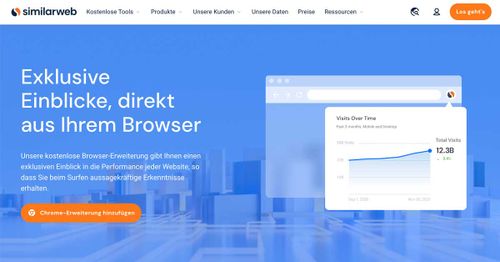
Similarweb gives you a full digital market view, not just SEO data. You see how competitors win traffic across search, social, referrals, and ads, which makes it easier to plan channel mix and budget. That broader digital competitive intelligence helps you explain performance to non-SEO leaders.
Highlights
- Digital market and industry benchmarking across sites and apps, useful for sizing markets and spotting threats, supported by Similarweb’s market research tools.
- SEO tools suite with rank tracking, keyword analysis, and site reviews, built for data and AI driven search analysis as outlined in Similarweb’s SEO suite overview.
- Rank tracking that covers classic SERPs and richer result types.
- Search ads analytics to reverse engineer competitor PPC and blended search strategy.
Specs
- Best for: Broader competitor benchmarking
- Competitive research depth: Strong
- AI/GEO visibility: Moderate
- Reporting: Strong
- Focus: Market, search, and channel intelligence
Pros
- Strong market context beyond pure SEO.
- Great for benchmarking traffic and channel mix.
- Fits larger strategy, BI, and growth teams.
Cons
- Not as SEO-specialized as narrow SEO platforms.
- Can feel heavy for small teams that only need keyword tracking.
It ranks here because pairing SEO data with wider market and channel intelligence usually leads to better competitive strategy for bigger teams and agencies.
Last updated: June 3, 2026
Also Read: Competitive SEO Intelligence: build a tracking playbook
5. SE Ranking
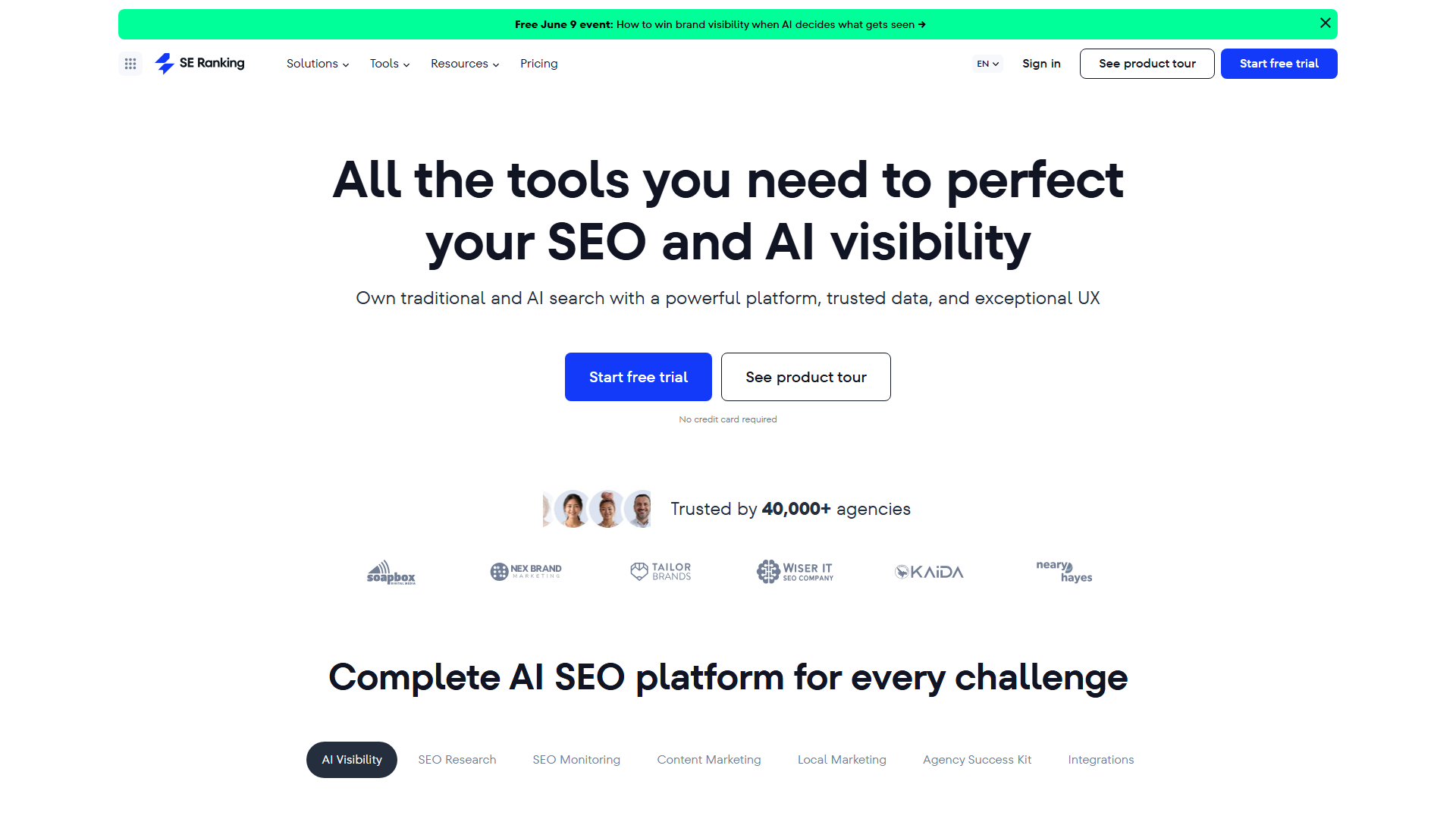
SE Ranking is a well-balanced SEO platform that gives you competitive research, rank tracking, and reporting in one place. It now adds AI search visibility tracking, so you can see how both Google and AI engines treat your site compared to competitors. It suits teams that want strong SEO intelligence tools without jumping into heavy enterprise contracts.
Highlights
- Competitor traffic research across organic and paid
- AI search visibility tracking for generative engines
- Central SEO dashboard with ranks, health, and visibility
- Detailed SERP and keyword tracking
Specs
- Best for: Balanced competitive SEO reporting
- Competitive research depth: Strong, including SEO and PPC insights
- AI/GEO visibility: Strong via dedicated AI visibility tools
- Reporting: Strong dashboards and exports for agencies and teams
- Focus: SEO, reporting, and AI search tracking
Pros
- Good mix of research, rank tracking, and reporting
- AI visibility tools like AI visibility tracker and generative engine optimization support GEO work
- Usable interface for non-technical marketers
Cons
- Less brand recognition than Ahrefs or Semrush
- Some enterprises may still need deeper custom research and data exports
SE Ranking ranks here because it blends core competitive SEO tools with modern AI visibility tracking in a package most teams can actually use every day.
Last updated: June 3, 2026
Also Read: Organic Growth Tactics Review Ultimate Tools Comparison
6. Surfer SEO
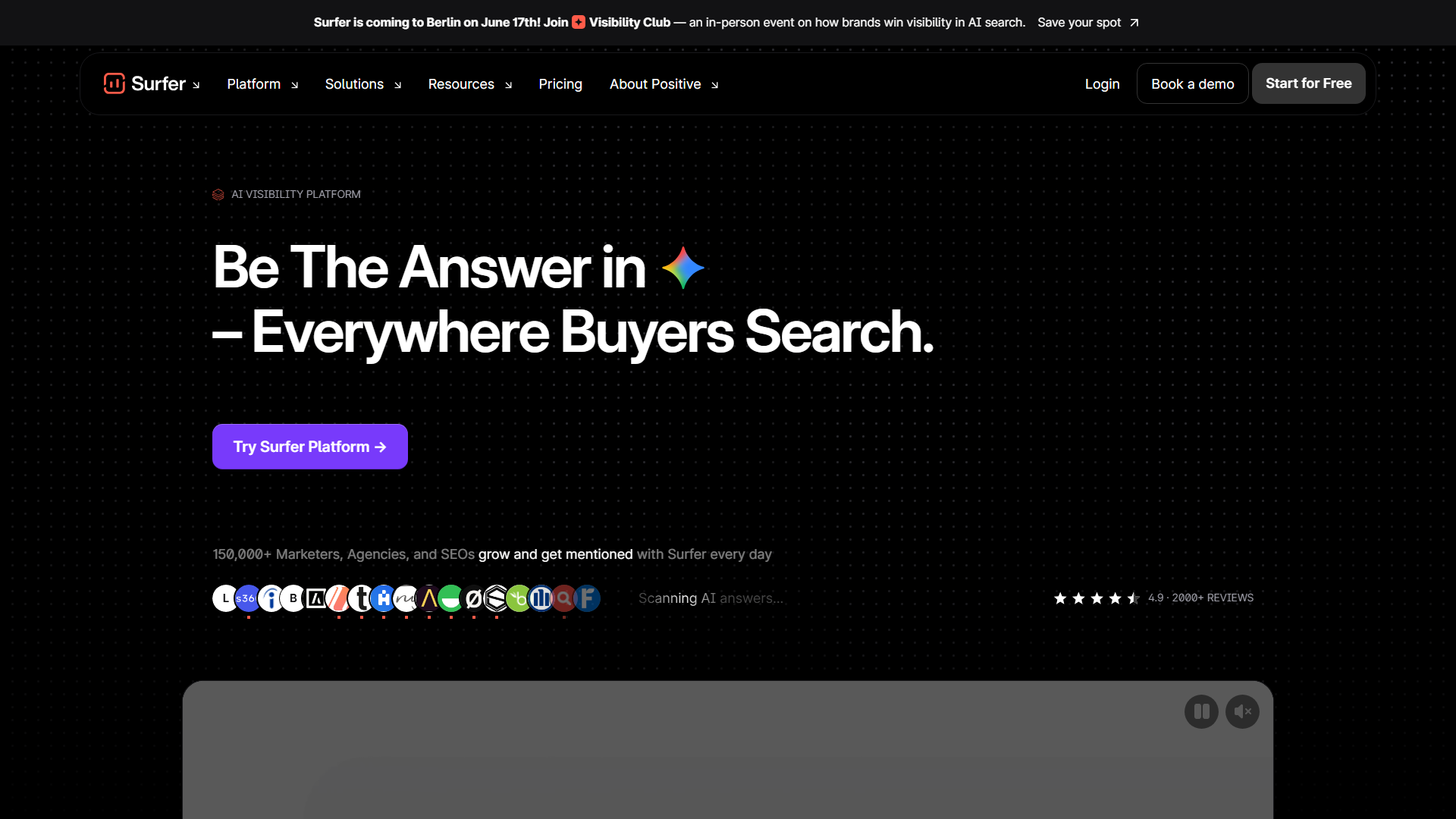
Surfer SEO started as a content optimization tool and now leans hard into SEO intelligence. It helps you map topical authority, optimize content against live SERPs, and track how often AI systems surface your brand and competitors.
Highlights
- Content Editor for SERP-aligned briefs and real time on-page guidance, backed by ranking signals, according to the Surfer Content Editor overview.
- AI Tracker to monitor brand and competitor visibility across major LLMs and AI search surfaces, as shown in Surfer’s AI Tracker docs.
- Topical Map to plan clusters, fill gaps, and grow topical authority.
- Content audits to refresh and re-target underperforming URLs.
Specs
- Best for: Content teams and topical strategy
- Competitive research depth: Moderate
- AI/GEO visibility: Strong
- Reporting: Moderate
- Focus: Content optimization and AI visibility
Pros
- Excellent for content optimization against intent and entities.
- Strong AI visibility tracking workflow across multiple sources.
- Helpful topical cluster and gap analysis.
Cons
- Not a full competitor suite for links or technical intel.
- Limited if you only care about backlink data.
Surfer ranks here because it covers a key layer of competitive SEO intelligence: content performance, topical coverage, and AI search visibility.
Last updated: June 3, 2026
Also Read: Cms Integrations For Seo Powerful Technical Setup Guide
How to choose the right SEO intelligence tool
Start with the main signal you care about most:
- Backlinks: Pick a tool with strong link index, toxic link flags, and competitor link gap reports.
- Keyword gaps & content: You need keyword gap analysis, topic clusters, and SERP feature tracking.
- Rank tracking: Go for granular daily tracking by device, location, and tag.
- Traffic benchmarking: Choose tools with clickstream/traffic share data, not just rankings.
- AI visibility: Shortlist platforms that track AI Overviews and LLM mentions, not only blue links.
Match features to how your team works:
- Daily reporting & many stakeholders: Look for live dashboards, scheduled PDF/Slack/email reports, and API access for your data warehouse.
- AI Overviews / LLM citations: Check that the roadmap and UI clearly show AI placement, sources, and history. Tools like SnowSEO focus on GEO signals across Google and major AI models.
- Content-led teams: You want topical mapping, content audits, and page-level suggestions tied to impact, not vague scores.
- Agencies / large teams: Prioritize multi-domain monitoring, portfolio views, competitive benchmarking, and white-label exports.
Balance depth with ease of use. The right tool is the one your team actually opens every week and can act on without training marathons.
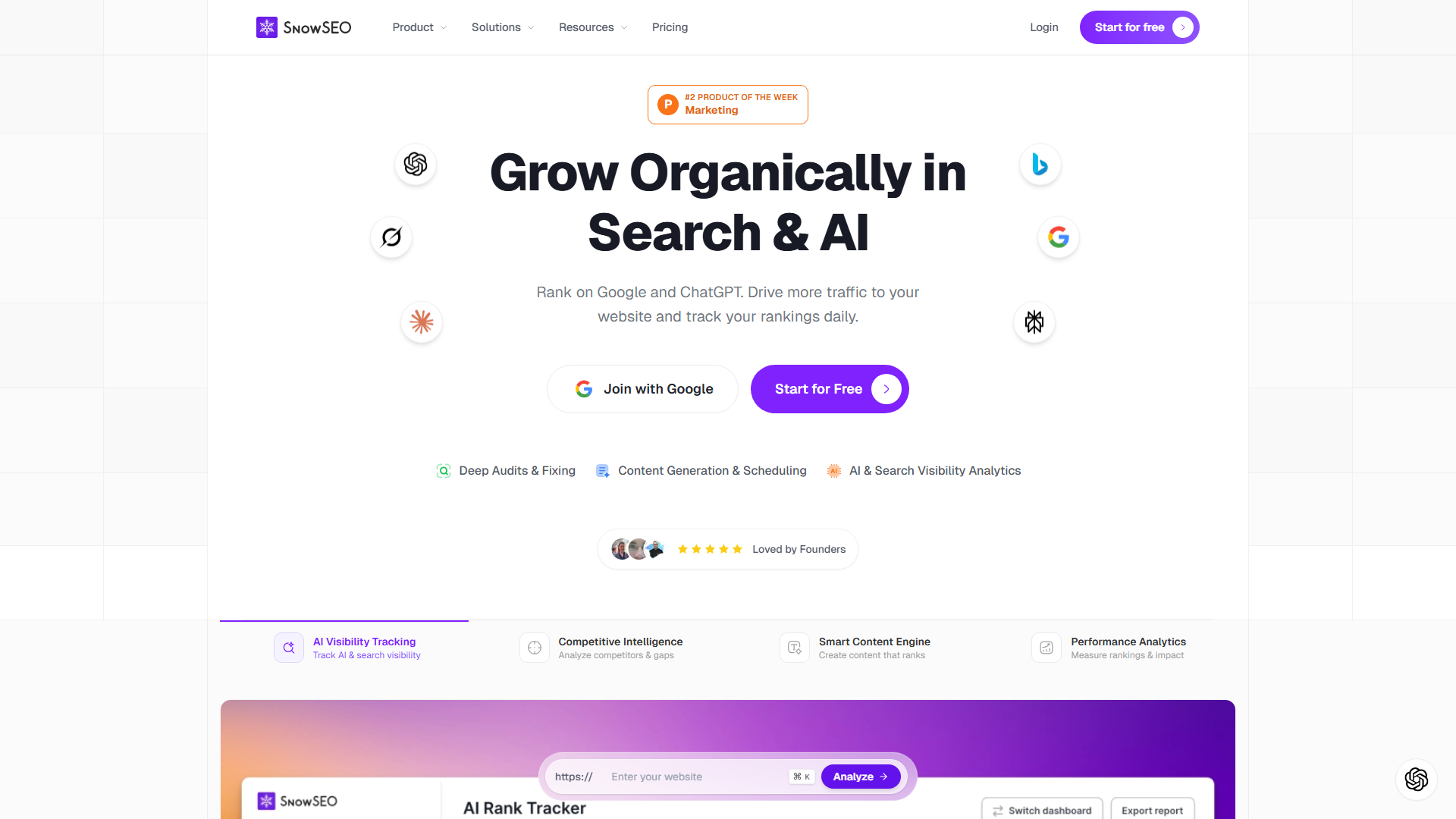
Ready to turn competitor insight into action instead of another report? Plug what you learned from these 12 tools into SnowSEO to combine SEO audits, GEO visibility, competitive tracking, and done-for-you content in one dashboard. Start your next growth sprint today.
Frequently Asked Questions
Q1: Which competitive SEO intelligence tools best track AI overviews in 2026?
Look for tools that track AI answer boxes across Google, ChatGPT, and other assistants, not only SERP snippets. Platforms like SnowSEO and a few newer GEO-focused suites log AI mentions, URLs cited, and ranking shifts side by side with classic SEO data.
Q2: How do I choose the best SEO + GEO tool for competitor visibility tracking?
Start with your main channels: Google, YouTube, and key AI assistants. Check if the tool tracks AI answers, supports your country and language, and has clean reporting. Then compare pricing, user seats, and how easily your team can act on the insights.
Q3: What features should a 2026 competitive SEO tool have for daily reporting?
You need daily keyword and URL movements, AI overview presence, and alerts for big wins or losses. Also useful: competitor content launches, featured snippet changes, click-through estimates, and a simple dashboard that non-SEOs on your team can read in seconds.
Q4: How often should I update my competitor list in these tools?
Review your list every quarter, or sooner after big funding rounds, product launches, or traffic drops. Add fast-growing niche players, remove dead sites, and tag direct vs indirect competitors so your reports stay focused on real threats.
Leave a Reply