
If you use AI Content Automation for blog posts at scale, speed is not the hard part. The real risk is generic drafts, voice drift, and thin SEO pages going live. This guide shows how to set up AI Content Automation with clear rules, review steps, and AI Content Optimization checks. I’ll cover where Content Generation Tools help, where they fail, and how strong teams keep AI Content Automation fast, useful, and on-brand.
Step 1: Build a brief that tells AI what quality looks like
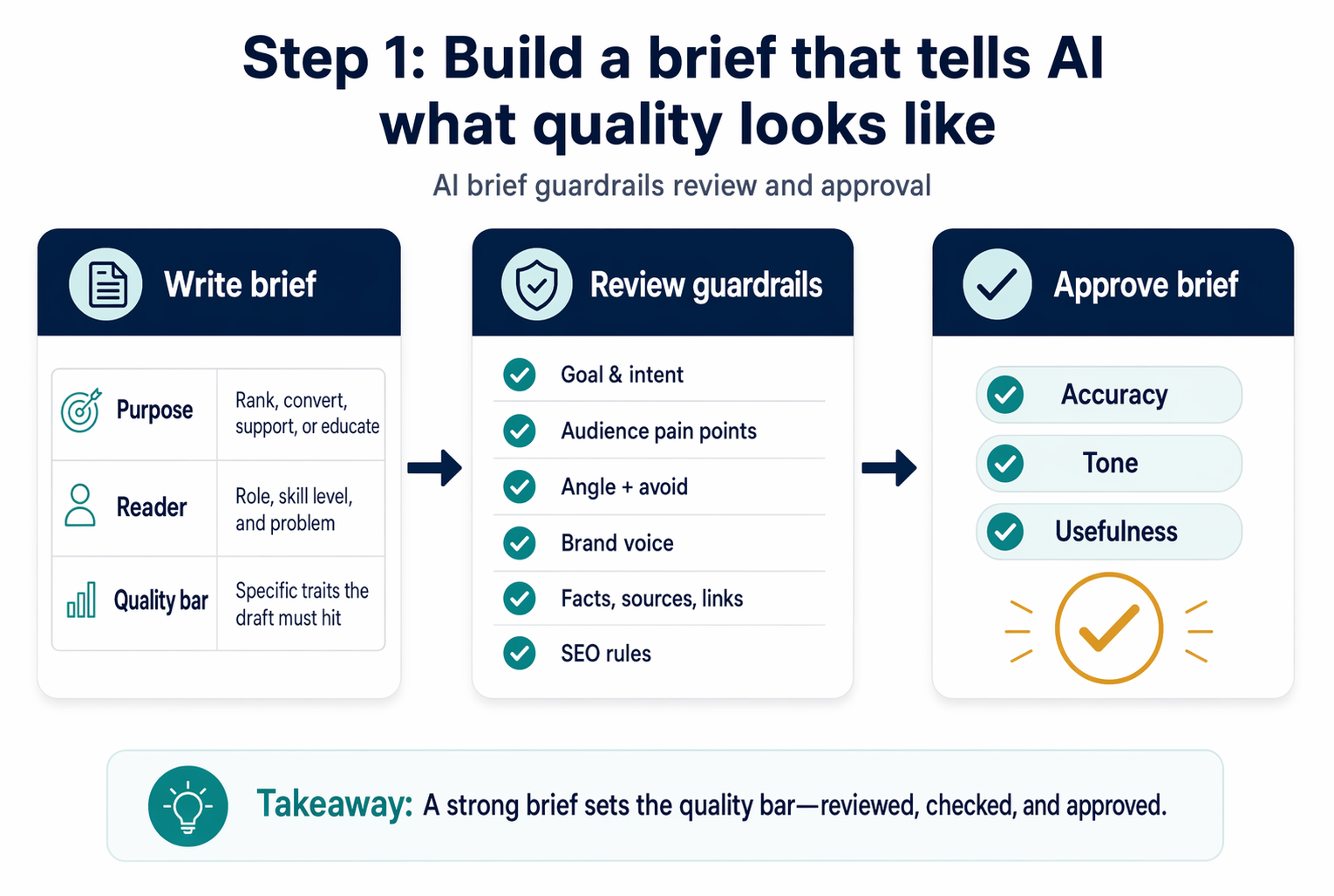
A weak brief gives you weak drafts. Start with guardrails. NIST says trustworthy AI needs clear context, measurement, and oversight in the AI Risk Management Framework. So every brief should include:
- Goal and search intent
- Audience and pain points
- Primary angle and what to avoid
- Brand voice with 2 to 3 sample lines
- Must-cover facts, sources, and internal links
- SEO rules like title, entities, and format
- Pass-fail checks for accuracy, tone, and usefulness
| Brief field | What to write |
|---|---|
| Purpose | Rank, convert, support, or educate |
| Reader | Role, skill level, and problem |
| Quality bar | Specific traits the draft must hit |
Use AI to build the outline fast. Do not let it decide if the output is good. NIST’s AI RMF page also points to its generative AI profile, which stresses risk checks and human review for genAI use on NIST.
Treat AI like a fast first-pass writer, not your editor-in-chief.
Give the model structure tasks:
- Draft angles
- Group topics
- Suggest FAQs
Keep final judgment with a human editor.
Also Read: AI SEO Update: Google’s Latest Algorithm Shift Prioritizes Generative Content
Step 2: Automate drafting, then separate it from editing
Let AI write the first version fast. Keep humans out of the blank-page stage, not the final decision stage.
What AI should draft automatically
- Article briefs from one keyword set
- First drafts for intros, outlines, FAQs, and product blurbs
- Meta titles and descriptions in batches
- Content variants for category pages and email copy
Use SnowSEO or Writesonic to speed up draft output, but keep prompts tight. Feed brand rules, target intent, and must-use facts.
What humans must review before publishing
- Claims, stats, and sources
- Brand voice and tone drift
- Search intent match and page structure
- Legal risk, fake-review language, and unsupported promises
The FTC says AI does not get a free pass for deceptive claims, so a human must check output before it goes live FTC enforcement update.
Also Read: 10 Best AI Content Marketing Tools to Scale Your Strategy in 2026
Step 3: Add quality checks for SEO, authenticity, and topical authority
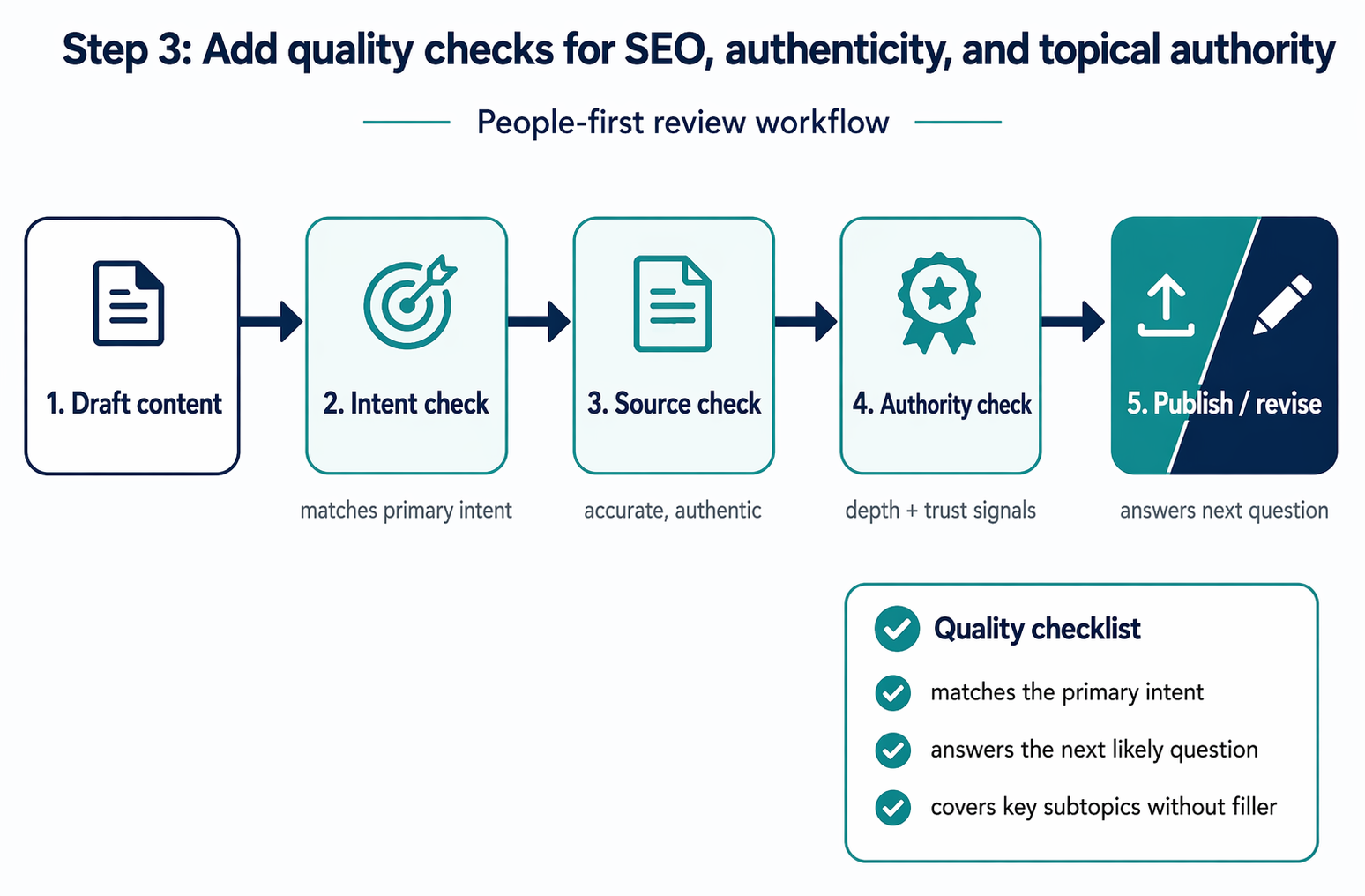
Check intent before you approve anything. Match the draft to the real query type – learn, compare, buy, or solve. Google says helpful content should serve people first and show clear value, depth, and trust signals, per its helpful content guidance. Use a short checklist:
- matches the primary intent
- answers the next likely question
- covers key subtopics without filler
Verify every claim, stat, example, and outbound link. Google’s rater guidelines stress relevance, reliability, and trust, and the 2025 version expands guidance on E-E-A-T and user intent in the public evaluator guidelines.
- remove vague examples
- swap weak sources for primary ones
- flag unsupported AI text for human review
Also Read: Comfy UI vs Traditional Interfaces: Which Is Better for SEO Workflows?
Common Mistakes to Avoid
Common mistakes usually come from scale, not the AI itself. Avoid these fast:
- Publishing drafts with no human review
- Rewriting top-ranking pages without new insight
- Letting prompts drift from brand voice
- Creating lots of thin pages to chase keywords
- Skipping fact checks on stats, quotes, and claims
Google says content should help people first, not just attract search traffic, and warns against extensive automation that adds little value in its people-first content guidance. Also avoid fake AI reviews. The FTC’s final rule bans them.

Want faster AI content without quality slips? Use SnowSEO to audit, plan, generate, track, and refine content in one workflow.
Frequently Asked Questions
Q1: How can AI content tools improve blog quality without sacrificing authenticity?
Use AI for drafts, outlines, and gap checks. Keep humans on brand voice, examples, and final edits. Set clear rules for tone, claims, and sources.
Q2: What are the best AI-powered workflows for scalable high-quality blog content?
Start with briefs, topic clusters, and brand prompts. Generate drafts in batches, then review for facts, search intent, and voice. Finish with one editor-led quality check.
Q3: How to ensure AI-generated blog content aligns with SEO and topical authority best practices?
Tie each draft to one keyword, one intent, and one cluster page. Add internal links, original insights, and entity coverage. Use SnowSEO to track gaps and keep coverage tight.
Conclusion
Automate the draft, not the judgment. Strong workflows use clear briefs, human review, and firm quality checks. Google still rewards unique content in AI search guidance, and Stanford shows AI use keeps rising fast.
Leave a Reply