Blog

  • 9 Must-Have SEO Tools for Keyword Research That Drive Traffic in 2026

    9 Must-Have SEO Tools for Keyword Research That Drive Traffic in 2026

    Keyword research in 2026 means finding terms you can actually win, matching search intent, and picking queries that still earn clicks in AI-heavy results. Many teams use Keyword Research Tools that show volume and difficulty, but miss rank potential, page fit, and click loss. This guide compares 9 Keyword Research Tools, including SEO Tools 2026 picks and Best SEO Software, based on discovery, intent, SERP insight, workflow, and AI-search data. These Keyword Research Tools help you choose a stack that drives traffic.

    Quick Comparison

    Tool Best for Core keyword data Intent and SERP insight Workflow fit
    Ahrefs Advanced keyword research and competitor analysis Search volume, KD, clicks, traffic potential Strong Full SEO research workflow
    Semrush All-in-one keyword planning and SEO operations Volume, difficulty, CPC, intent Strong SEO plus PPC planning
    Google Keyword Planner Free demand validation and seed keyword research Search estimates and forecasts Limited Early-stage research and PPC support
    Keywords Everywhere Fast in-browser keyword research Volume, CPC, competition, related terms Moderate Quick validation and idea generation

    What to know about keyword research tools

    Keyword research tools help you find terms worth targeting before you publish. The best ones now show search demand, ranking difficulty, user intent, and content gaps, so you can pick topics with a real chance to drive traffic.

    In 2026, that is not enough on its own. Strong tools also connect keywords to topic clusters, SERP patterns, and AI search visibility. That helps teams avoid vanity terms and focus on traffic they can actually win.

    1. Ahrefs

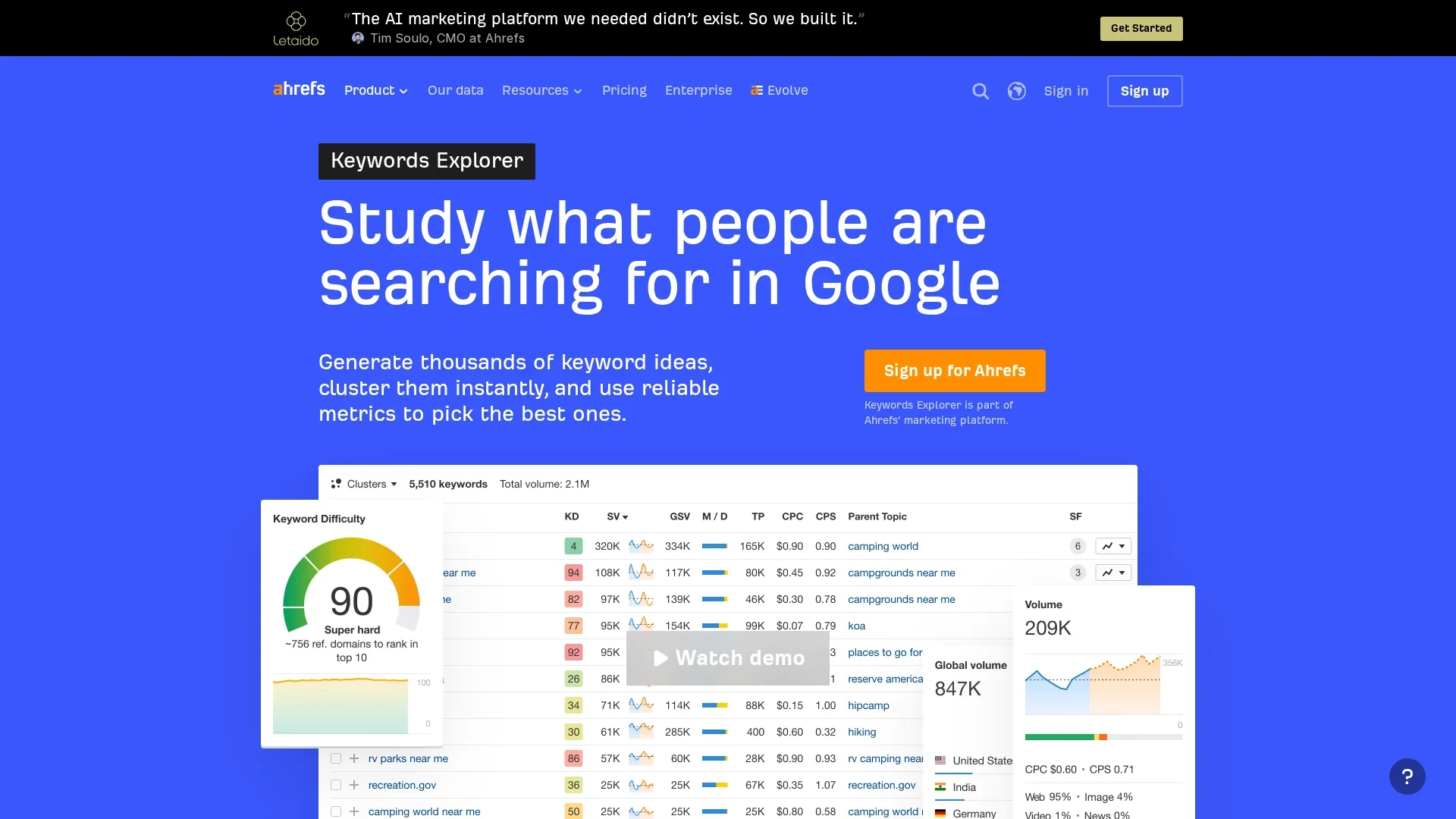
    Ahrefs is built for teams that need deep keyword discovery and solid competitor research. Its Keywords Explorer pairs search volume, clicks, KD, traffic potential, and Parent Topic so you can pick targets with more confidence than basic keyword research tools.
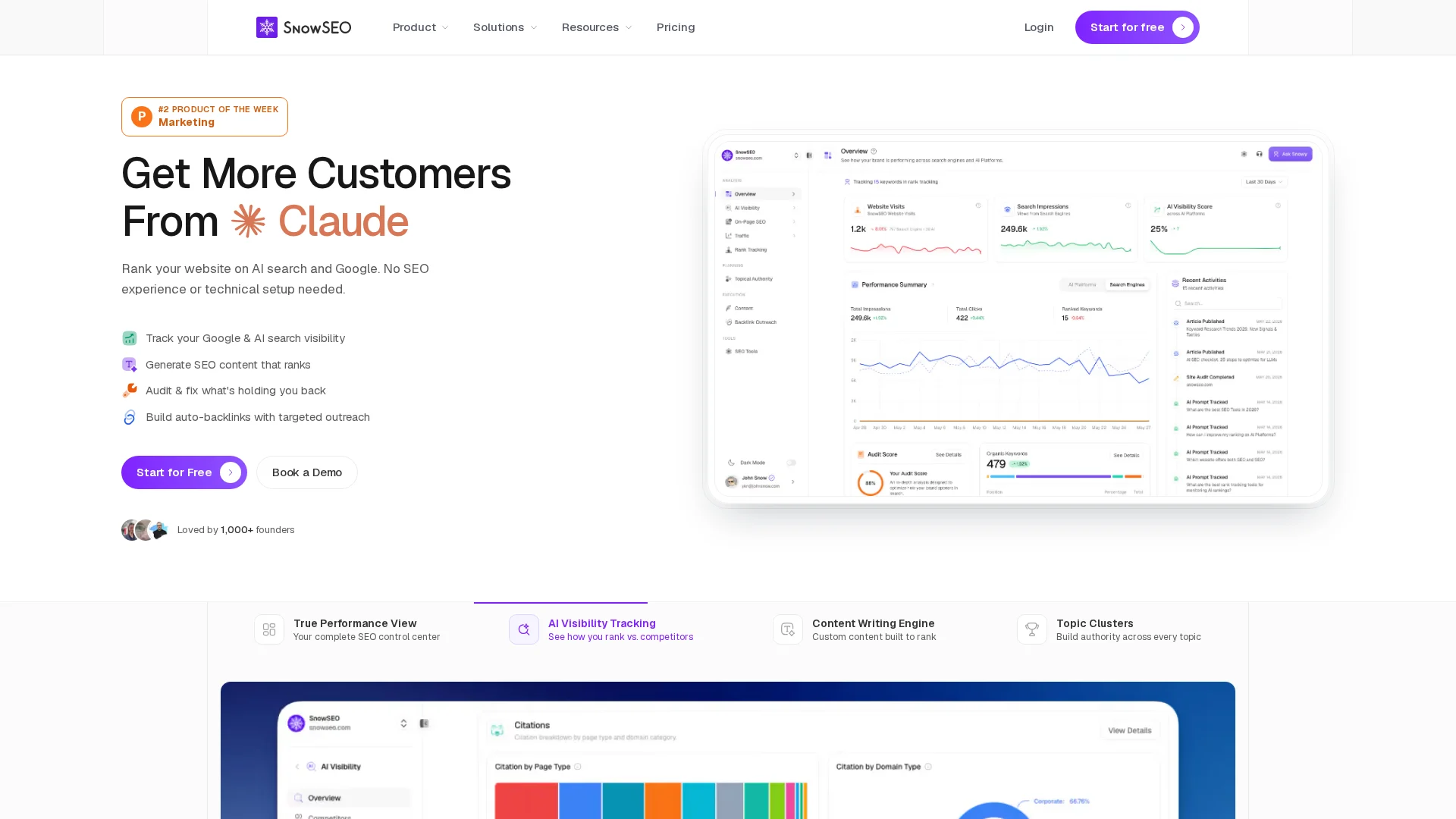
    Ahrefs
    Highlights

    • Multiple keyword idea modes and strong SERP review
    • Competitive gap research and low-competition finds
      Specs
    • Best for: Advanced keyword research and competitor analysis
    • Core data: Search volume, KD, clicks, traffic potential
    • Intent and SERP insight: Strong

    Pros

    • Deep data for serious SEO work

    Cons

    • Price and learning curve can slow smaller teams

    It ranks first because it balances depth, accuracy, and action better than most tools.

    Last updated: June 20, 2026

    Also Read: 11 Best Keyword Research Tools to Find Winning Topics in 2026

    2. Semrush

    Semrush is a strong pick for teams that want keyword discovery, intent data, and planning in one stack. Its Keyword Magic Tool and Keyword Strategy Builder make it useful for both SEO and PPC workflows.
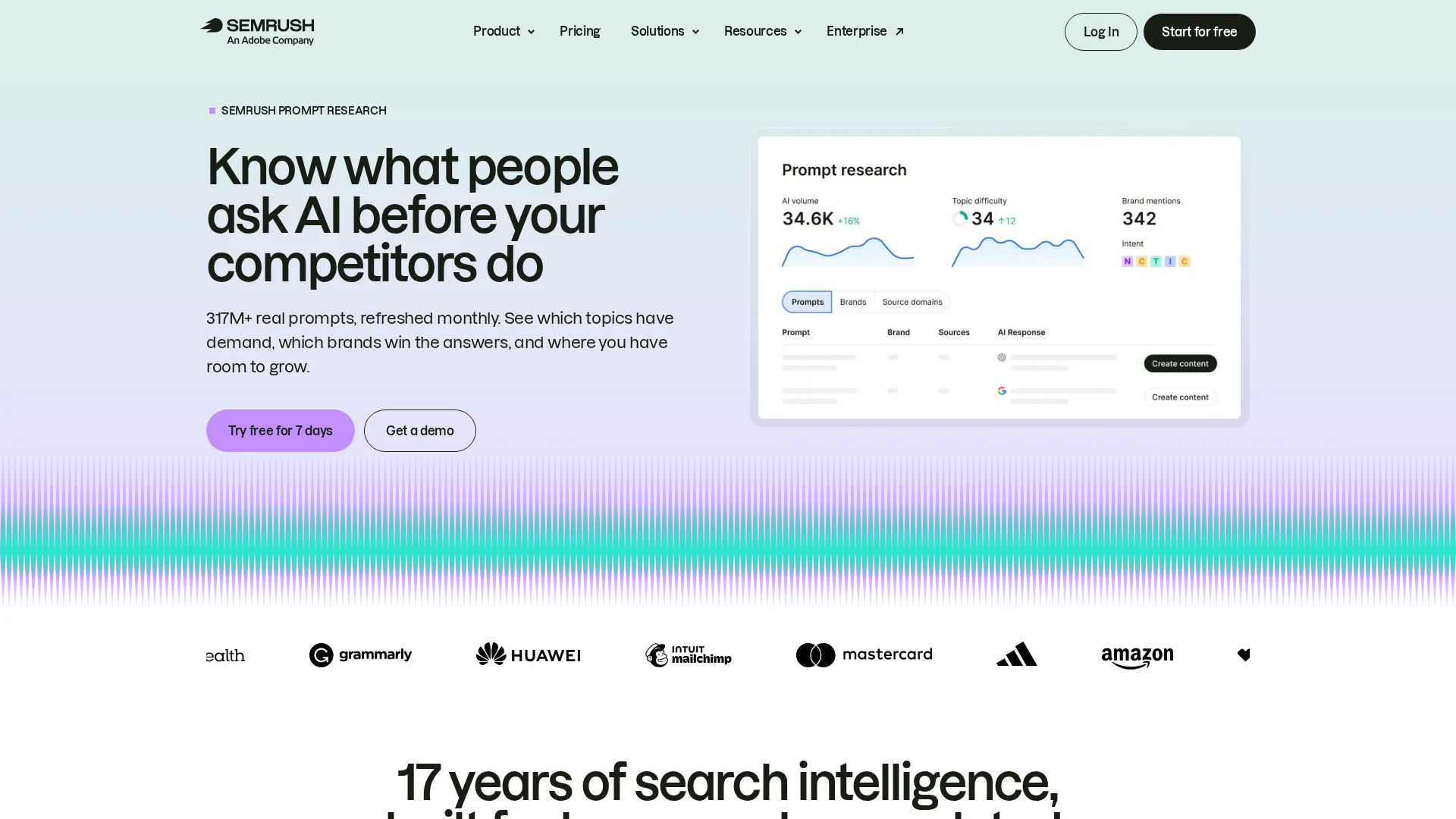
    Semrush
    Highlights

    • Keyword discovery with deep filtering
    • Search intent, CPC, and grouping tools
    • Strong for SEO plus PPC planning

    Specs

    • Best for: All-in-one keyword planning and SEO operations
    • Core keyword data: Volume, difficulty, CPC, intent
    • Intent and SERP insight: Strong
    • Workflow fit: SEO plus PPC planning

    Pros

    • Great for structured keyword workflows
    • Helpful intent and CPC data

    Cons

    • Interface can feel busy
    • Some teams may want a simpler tool

    It ranks here because it covers more of the keyword workflow than most tools.

    Last updated: June 20, 2026

    Also Read: SnowSEO Review: A Fresh Take on Rank Tracking and Keyword Research

    3. Google Keyword Planner

    Google Keyword Planner is a free, solid starting point for demand checks. Google says it helps you discover new keywords and view monthly searches, plus see forecasts shaped by bids, budget, and seasonality.
    Google Keyword Planner
    Highlights

    • Free keyword discovery inside Google Ads
    • Search volume estimates and forecasts
    • Bid context for commercial terms

    Specs

    • Best for: Free demand validation and seed keyword research
    • Core keyword data: Search estimates and forecasts
    • Workflow fit: Early-stage research and PPC support

    Pros

    • Free and trusted
    • Good first pass for broad demand

    Cons

    • Thin SEO depth
    • Limited organic insight

    It ranks here because it is easy to access, but premium SEO tools go deeper.

    Last updated: June 20, 2026

    Also Read: Keyword Research in 2026: Trends, Methods, and Wins

    4. Keywords Everywhere

    Keywords Everywhere is a lightweight browser extension for fast keyword checks as you search. It shows in-context metrics across Google, YouTube, Amazon, and more, with volume, CPC, and competition data plus related and long-tail ideas without opening a full SEO suite.
    Keywords Everywhere
    Highlights

    • Browser-based keyword metrics in the SERP
    • Great for quick validation, ideation, and competitor checks

    Specs

    • Best for: Fast in-browser keyword research
    • Core keyword data: Volume, CPC, competition, related terms
    • Intent and SERP insight: Moderate
    • Workflow fit: Quick validation and idea generation

    Pros

    • Very convenient for daily research

    Cons

    • Not as deep as enterprise tools

    It ranks fourth because it saves time every day, even if full platforms go deeper.

    Last updated: June 20, 2026

    Honourable Mentions

    A few other tools deserve a spot if your work leans into wider SEO ops or AI search tracking, not just keyword mining.

    1. SnowSEO – Keyword research inside a broader SEO and AI visibility stack.
    2. Promptwatch – Prompt tracking and AI search signals for keyword direction.
    3. Profound – Enterprise answer-engine visibility with topic demand insight.
    4. Writesonic – Turns research into publish-ready content.
    5. LLM Pulse – Adds prompt demand and citation context.

    How to choose the right keyword research tool

    Pick based on workflow, not hype.

    • Choose Ahrefs or Semrush if you need deep competitor research, SERP analysis, and topic planning at scale.
    • Start with Google Keyword Planner if you want a free way to check demand before paying for a bigger stack.
    • Use Keywords Everywhere for quick keyword checks inside live search results.

    Check intent, difficulty, and clicks, not just volume. High-volume terms can bring little traffic in AI-heavy SERPs.

    • If AI search matters, add SnowSEO, Promptwatch, Profound, Writesonic, or LLM Pulse.
    • Large teams need reporting and scale. Small teams need speed and clear priorities.
    Homepage
    Homepage

    Want fewer tools and faster wins? Try SnowSEO to handle keyword research, audits, AI content, tracking, and competitor gaps in one place. Start there and turn research into traffic faster.

    Frequently Asked Questions

    Q1: What are the most effective keyword research tools for driving organic traffic in 2026?

    Use a mix: Semrush and Ahrefs for core data, Google Search Console for real queries, browser extensions for fast SERP checks, and AI-search tools like SnowSEO to spot prompts and answer patterns that drive clicks.

    Q2: How do AI-powered keyword tools like Semrush and Ahrefs improve search intent matching in 2026?

    They group terms by intent, SERP type, and topic links. That helps you map one keyword to the right page type, spot mixed intent early, and avoid writing blog posts for terms that need product or category pages.

    Q3: Which keyword difficulty metrics best predict ranking success in 2026’s competitive SERPs?

    No single score wins. Check difficulty, referring domains to top pages, brand strength, SERP features, and content gaps together. Low-authority sites should chase weaker clusters and long-tail terms, not head terms with strong domain overlap.

  • How to Automate AI Content Generation Without Losing Quality

    How to Automate AI Content Generation Without Losing Quality

    If you use AI Content Automation for blog posts at scale, speed is not the hard part. The real risk is generic drafts, voice drift, and thin SEO pages going live. This guide shows how to set up AI Content Automation with clear rules, review steps, and AI Content Optimization checks. I’ll cover where Content Generation Tools help, where they fail, and how strong teams keep AI Content Automation fast, useful, and on-brand.

    Step 1: Build a brief that tells AI what quality looks like

    A weak brief gives you weak drafts. Start with guardrails. NIST says trustworthy AI needs clear context, measurement, and oversight in the AI Risk Management Framework. So every brief should include:

    • Goal and search intent
    • Audience and pain points
    • Primary angle and what to avoid
    • Brand voice with 2 to 3 sample lines
    • Must-cover facts, sources, and internal links
    • SEO rules like title, entities, and format
    • Pass-fail checks for accuracy, tone, and usefulness
    Brief field What to write
    Purpose Rank, convert, support, or educate
    Reader Role, skill level, and problem
    Quality bar Specific traits the draft must hit
    Flowchart illustrating AI brief review process with three steps: Define Purpose, Identify Audience, Set Quality Criteria
    Flowchart illustrating AI brief review process with three steps: Define Purpose, Identify Audience, Set Quality Criteria

    Use AI to build the outline fast. Do not let it decide if the output is good. NIST’s AI RMF page also points to its generative AI profile, which stresses risk checks and human review for genAI use on NIST.

    Treat AI like a fast first-pass writer, not your editor-in-chief.

    Give the model structure tasks:

    1. Draft angles
    2. Group topics
    3. Suggest FAQs

    Keep final judgment with a human editor.

    Also Read: AI SEO Update: Google’s Latest Algorithm Shift Prioritizes Generative Content

    Step 2: Automate drafting, then separate it from editing

    Let AI write the first version fast. Keep humans out of the blank-page stage, not the final decision stage.

    What AI should draft automatically

    • Article briefs from one keyword set
    • First drafts for intros, outlines, FAQs, and product blurbs
    • Meta titles and descriptions in batches
    • Content variants for category pages and email copy

    Use SnowSEO or Writesonic to speed up draft output, but keep prompts tight. Feed brand rules, target intent, and must-use facts.

    What humans must review before publishing

    • Claims, stats, and sources
    • Brand voice and tone drift
    • Search intent match and page structure
    • Legal risk, fake-review language, and unsupported promises

    The FTC says AI does not get a free pass for deceptive claims, so a human must check output before it goes live FTC enforcement update.

    Also Read: 10 Best AI Content Marketing Tools to Scale Your Strategy in 2026

    Step 3: Add quality checks for SEO, authenticity, and topical authority

    Check intent before you approve anything. Match the draft to the real query type – learn, compare, buy, or solve. Google says helpful content should serve people first and show clear value, depth, and trust signals, per its helpful content guidance. Use a short checklist:

    • matches the primary intent
    • answers the next likely question
    • covers key subtopics without filler
    Content review workflow diagram with intent source and authority checks
    Content review workflow diagram with intent source and authority checks

    Verify every claim, stat, example, and outbound link. Google’s rater guidelines stress relevance, reliability, and trust, and the 2025 version expands guidance on E-E-A-T and user intent in the public evaluator guidelines.

    • remove vague examples
    • swap weak sources for primary ones
    • flag unsupported AI text for human review

    Also Read: Comfy UI vs Traditional Interfaces: Which Is Better for SEO Workflows?

    Common Mistakes to Avoid

    Common mistakes usually come from scale, not the AI itself. Avoid these fast:

    • Publishing drafts with no human review
    • Rewriting top-ranking pages without new insight
    • Letting prompts drift from brand voice
    • Creating lots of thin pages to chase keywords
    • Skipping fact checks on stats, quotes, and claims

    Google says content should help people first, not just attract search traffic, and warns against extensive automation that adds little value in its people-first content guidance. Also avoid fake AI reviews. The FTC’s final rule bans them.

    Homepage
    Homepage

    Want faster AI content without quality slips? Use SnowSEO to audit, plan, generate, track, and refine content in one workflow.

    Frequently Asked Questions

    Q1: How can AI content tools improve blog quality without sacrificing authenticity?

    Use AI for drafts, outlines, and gap checks. Keep humans on brand voice, examples, and final edits. Set clear rules for tone, claims, and sources.

    Q2: What are the best AI-powered workflows for scalable high-quality blog content?

    Start with briefs, topic clusters, and brand prompts. Generate drafts in batches, then review for facts, search intent, and voice. Finish with one editor-led quality check.

    Q3: How to ensure AI-generated blog content aligns with SEO and topical authority best practices?

    Tie each draft to one keyword, one intent, and one cluster page. Add internal links, original insights, and entity coverage. Use SnowSEO to track gaps and keep coverage tight.

    Conclusion

    Automate the draft, not the judgment. Strong workflows use clear briefs, human review, and firm quality checks. Google still rewards unique content in AI search guidance, and Stanford shows AI use keeps rising fast.

  • SnowSEO Review: A Fresh Take on Rank Tracking and Keyword Research

    SnowSEO Review: A Fresh Take on Rank Tracking and Keyword Research

    Tired of bouncing between Rank Tracking Tools, Keyword Research Software, and messy AI guesswork? SnowSEO aims to fix that. This review looks at the real problem with most Rank Tracking Tools: they track positions but miss the full workflow. I test SEO platforms often, so I focus on what matters in daily use. You will see where SnowSEO works well, where AI SEO Software adds value, and how it compares with other Rank Tracking Tools.

    What SnowSEO Actually Does for Rank Tracking

    SnowSEO gives you a cleaner view of rank movement than a basic tracker. It focuses on what changed, where it changed, and whether that shift matters for search visibility or AI search exposure.

    SnowSEO
    SnowSEO

    Daily position tracking with Google data
    SnowSEO tracks keyword movement day by day, so you can spot drops before they hurt traffic. That matters because Google Search Console reports average position, impressions, clicks, and CTR in its performance data, which is the baseline most teams trust for rank analysis according to Google’s Performance report docs.

    • Track winners and losers fast
    • Break data out by page or query
    • Check trends without digging through raw exports

    AI visibility and competitor monitoring
    SnowSEO also goes past blue-link rankings. Google now reports visibility for AI Overviews and AI Mode in Search Console’s generative AI reporting, as shown in Google’s generative AI performance report. SnowSEO turns that into a workflow by pairing AI visibility with competitor tracking.

    This is the real edge – you can watch classic rankings and AI exposure in one place.

    Also Read: Best SEO Tools: 25 Picks to Improve Rankings in 2026

    Keyword Research and Content Planning

    Finding low-competition opportunities

    Good keyword research starts with gaps, not volume. Use terms with clear intent, weaker pages in the SERP, and enough depth to build a better answer. Google’s Keyword Planning workflow is built around generating ideas, reviewing historical metrics, and trimming lists before you forecast or publish.

    • Look for specific phrases
    • Check weak ranking pages
    • Skip vague head terms
    Flowchart of keyword clustering and filtering process
    Flowchart of keyword clustering and filtering process

    Low competition only matters if you can make the most helpful page.

    Turning keyword data into clusters

    Single keywords rarely win alone now. Group related terms by shared intent, then map one pillar page and supporting articles. Google’s new query groups in Search Console Insights also shows how similar queries roll up into one interest area, which is useful for content planning. SnowSEO helps here by tying keyword research to rank tracking and AI visibility in one workflow.

    Also Read: SEO Platform in 2026: What to Look For and Why

    Pros and Cons of SnowSEO

    What SnowSEO does well

    SnowSEO works best as a single workflow. It combines keyword research, Google rank tracking, content help, and AI visibility checks in one place, which matches the platform’s own product focus on unified search tracking on its site. That setup can save time for small teams.

    Two-column comparison infographic of SnowSEO strengths and limitations with labeled bars and concise text
    Two-column comparison infographic of SnowSEO strengths and limitations with labeled bars and concise text

    Where it may fall short

    The trade-off is depth. Reviews note a learning curve, and Surferstack says SnowSEO lacks AI crawler logs, prompt difficulty data, and deeper attribution found in more focused tools like Promptwatch in this comparison.

    Also Read: Keyword Research in 2026: Trends, Methods, and Wins

    Is SnowSEO the Right Rank Tracking Tool for You?

    SnowSEO fits teams that want rank tracking, keyword research, and AI visibility in one place. That matters because Google uses many signals to rank results, not just keywords, so a wider view helps you act faster, according to Google’s overview of ranking systems.

    Best fit use cases

    • Agencies managing many sites and reports
    • Content teams that want keywords, tracking, and publishing in one flow
    • SMBs and e-commerce brands that need both Google and AI visibility
    • Lean teams replacing a messy stack of tools

    SnowSEO makes the most sense if you care about workflow speed, not just raw rank data.

    When to choose something else

    1. Pick another tool if you only need basic keyword checks.
    2. Look elsewhere if you want deeper AI-specific tracking, like crawler logs or wider model coverage. A recent Promptwatch vs SnowSEO comparison says SnowSEO is broader, while Promptwatch goes deeper on AI visibility.
    3. Skip it if your team wants a very simple dashboard with little setup.

    Also Read: 11 Best Keyword Research Tools to Find Winning Topics in 2026

    Homepage
    Homepage

    If you want rank tracking, keyword research, and AI visibility in one place, try SnowSEO and see how much faster your SEO workflow gets.

    Frequently Asked Questions

    Q1: How effective is SnowSEO’s rank tracking across Google and AI platforms in 2026?

    It is strong for teams that want one view of classic SEO and AI visibility. SnowSEO helps you track Google rankings plus how your brand appears across AI search workflows, which is more useful than a basic rank tracker alone.

    Q2: Can SnowSEO’s AI-generated content be published without editing for SEO success?

    No. You should always review facts, tone, internal links, and search intent fit. SnowSEO can speed up drafts and content briefs, but human editing still matters if you want pages that rank, convert, and sound like your brand.

    Q3: How does SnowSEO’s AI search visibility tracking improve SEO strategies in 2026?

    It shows where your brand appears in AI-driven answers, not just search results. That helps you spot missing topics, weak entity signals, and content gaps, so you can adjust pages for both rankings and AI mentions faster.

    Conclusion

    SnowSEO works best if you want rank tracking, keyword research, and AI visibility in one place. Its edge is clear as AI search grows and Google AI Overviews reshape visibility, making unified tracking more useful for modern SEO teams.

  • AI SEO Update: Google’s Latest Algorithm Shift Prioritizes Generative Content

    AI SEO Update: Google’s Latest Algorithm Shift Prioritizes Generative Content

    Google’s May 2026 core update finished on June 2 after starting May 21 at 8:40 AM PDT. The real signal for AI SEO 2026 is not an AI ban. It is a stricter non-commodity standard, defined in Google’s May 15 guide. That matters because Google Algorithm Update takes are split, even as 86.5% of top pages show AI text. This guide cuts through the noise on Generative Content SEO, explains AI SEO 2026, and gives an AI SEO 2026 test for what stays safe.

    What the May 2026 Core Update Actually Changed

    The shift started before the update landed. On May 15, Google published its new generative AI optimization guide and made the message plain: SEO still matters, but AI search now leans harder on non-commodity content, strong page structure, and useful media.

    That guide also killed a few bad habits:

    • Do not mass-produce pages for every fan-out query
    • Do not treat AEO or GEO as separate from SEO
    • Do add original views, first-hand proof, images, and video

    Google’s May 2026 documentation updates backed that up. The docs added guidance for generative AI features and clarified that spam policies apply to AI responses too.

    Read this as a ranking quality shift, not a format shift. AI-written content is not the issue. Replaceable content is.

    Before After
    Broad summaries First-hand insight
    Query variants at scale Fewer, stronger pages
    Text-only pages Text plus rich media

    Also Read: SEO Platform in 2026: What to Look For and Why

    The Real Target: Non-Commodity Content, Not AI Content

    The Litmus Test for Your Content

    Google is not targeting AI-written content by default. It is targeting commodity content – pages that repeat what every other page already says. In its official AI search guide, Google says to create valuable, unique, non-commodity content and warns against recycling what others already published or what a model can easily produce (Google’s guide). The May 15 announcement repeated that same point (Google Search Central blog).

    Ask one blunt question before you publish:

    • Could five other sites swap in their logo and keep this page the same?

    If the answer is yes, it is weak.

    Use this quick check:

    1. Add first-hand proof.
    2. Share a clear point of view.
    3. Include details only your team knows.

    If your page reads like a cleaned-up summary, Google can replace it with AI.

    A content strategist comparing notes to generic drafts
    A content strategist comparing notes to generic drafts

    Also Read: 10 Best AI Content Marketing Tools to Scale Your Strategy in 2026

    background: Why the March 2026 Updates Set the Stage

    The March 2026 shift mattered because it reset what Google rewards before the May AI guidance arrived. Google says core updates are broad changes meant to surface more helpful, reliable results, not punish one tactic in isolation, per Google’s core update documentation. Industry tracking also logged the March 2026 core update from March 27 to April 8, which gave SEOs a clean before-and-after window to study rollout timing and impact.

    SEO editor analyzing Search Console data on dual monitors
    SEO editor analyzing Search Console data on dual monitors

    The big signal was simple: thin, repeatable, low-originality pages got riskier, while pages with clear value got safer.

    That is why Google’s May 15 generative AI guide felt like confirmation, not a surprise.

    Also Read: Best SEO Tools: 25 Picks to Improve Rankings in 2026

    What This Means for Your SEO Strategy Right Now

    Stop chasing AI-only hacks. Google’s May 15 guide says SEO still drives generative visibility, and it puts unique, non-commodity content at the center of the playbook Google’s official guide. The May 2026 core update then reinforced that standard across search results.

    Your next moves:

    1. Audit pages that say nothing new.
    2. Rewrite priority URLs with first-hand data, proof, or opinion.
    3. Keep technical SEO clean so pages stay crawlable and snippet-eligible.
    4. Track page-level swings, not just keyword drops.

    If a page can be replaced by a generic AI summary, it is at risk.

    Google says the May 2026 core update was built to surface more relevant, satisfying content during the rollout.

    Homepage
    Homepage

    Turn this update into action with SnowSEO – audit non-commodity content, track AI visibility, and fix weak pages before rankings slip.

    Frequently Asked Questions

    Q1: How does Google’s latest algorithm shift prioritize generative content?

    Google rewards generative content when it adds original insight, clear firsthand value, and strong editing. It demotes thin AI copy that repeats what already ranks.

    Q2: What is the impact of AI-generated content on SEO rankings?

    AI content can rank well if it is useful, specific, and trustworthy. Rankings drop when pages feel generic, lack proof, or miss real expertise signals.

    Q3: How should SEO strategies change for Google’s generative AI updates?

    Shift from scale-first publishing to non-commodity content. Add expert input, unique data, sharper intent matching, and tighter page quality checks before publishing.

    Conclusion

    Google’s May 2026 update and its new AI optimization guide point to one rule: non-commodity content wins. The May core update reinforced that SEO now means creating original pages AI cannot replace.

  • Comfy UI vs Traditional Interfaces: Which Is Better for SEO Workflows?

    Comfy UI vs Traditional Interfaces: Which Is Better for SEO Workflows?

    For SEO Workflows, Comfy UI beats the usual User Interface for repeatable content output at scale. Traditional tools still lead for audits, research, and diagnostics. That gap makes SEO Workflows hard to judge. We have tested node-based production setups and standard SEO stacks, so this comparison shows where each fits, where SEO Workflows break, and how to combine both with less waste.

    ComfyUI vs Traditional SEO Interfaces: Side-by-Side Comparison

    ComfyUI (Node-Based Interface) Traditional SEO Tool Interfaces
    Learning Curve Steep initial (4–12 hrs); moderate once node logic is understood Low to moderate – pre-built dashboards, familiar UI patterns
    Workflow Repeatability Excellent – workflows export as JSON, version-controllable, shareable via templates Moderate – reports are standardised; custom flows require platform-specific configuration
    Batch Processing & Scale Native batch queue; unlimited variations via seed stepping and parameter randomization Via plan limits and operation caps; costs escalate with volume (thousands of ops per run)
    Integration with SEO Stack API nodes, cloud endpoints, Make/n8n webhooks; no native GSC/Ahrefs connectors Deep – native GSC, GA4, Ahrefs, Screaming Frog connectors; 400+ pre-built integrations
    Output Control & Consistency Granular – every parameter inspectable; LoRA/ControlNet enforce brand adherence Fixed report templates and data schemas; customisation limited to platform feature set
    Cost at Scale Free (self-hosted); one-time GPU cost $200–$500; cloud from $0.10/hr $99–$500/mo (SaaS); self-hosted n8n from $6/mo VPS; ops-based pricing on Make/Zapier

    How ComfyUI (Node-Based Interface) and Traditional SEO Tool Interfaces Compare

    ComfyUI (Node-Based Interface)

    ComfyUI is an open-source node graph app for building repeatable AI workflows, with JSON saves and an async queue noted in its official docs. It fits technical SEOs and growth engineers who want fine control, batch runs, and reproducible prompt pipelines.
    ComfyUI (Node-Based Interface)
    Key strengths

    • Granular control
    • Shareable workflows
    • Native batching

    Traditional SEO Tool Interfaces

    Traditional interfaces are dashboard-first tools like Semrush, Ahrefs, Screaming Frog, plus automation layers like n8n and Make. They fit teams that want faster onboarding, native connectors, and standard reports, with n8n commonly used to connect GSC, GA4, Ahrefs, and Screaming Frog in SEO workflows.

    Learning Curve: Dashboard Familiarity vs Node-Graph Fluency

    Traditional SEO dashboards win on day one. Most teams already know menus, filters, and export flows. ComfyUI asks you to think in nodes, links, and execution order. That is a real tax at first. Wikipedia notes that ComfyUI is a node-based workflow system, and even mainstream guides call its learning curve steeper than form-style interfaces.

    The trade-off is simple:

    • Dashboards are faster to learn
    • Node graphs are faster to adapt once your workflow gets messy

    If your SEO team changes process every week, the harder start can pay back fast.

    Also Read: 10 Best AI Content Marketing Tools to Scale Your Strategy in 2026

    Workflow Repeatability: Templates vs Reports

    Repeatable SEO work needs templates, not just reports. Reports show what happened. Templates define what should happen next, the same way, every time. NIST notes that reproducible workflows depend on documented procedures and structured reporting, not ad hoc summaries alone NIST traceability guidance.

    A pencil sketch flowchart of SEO template steps
    A pencil sketch flowchart of SEO template steps
    • Traditional interfaces are strong at dashboards, exports, and snapshots.
    • ComfyUI-style workflows are stronger when you need reusable prompt chains, fixed inputs, and versioned output paths.

    If two analysts can run the same workflow and get comparable outputs, your process is mature.

    NIST also ties workflow quality to repeatability and reproducibility in digital systems NIST LIMS roadmap.

    Also Read: Best SEO Tools: 25 Picks to Improve Rankings in 2026

    Batch Processing at Scale: Ops Pricing vs Free Throughput

    Free throughput wins when jobs are small, delayed, and easy to rerun. Paid ops wins once missed deadlines cost more than compute. Batch processing is built for unattended, high-volume work per Wikipedia, but scale changes the math fast.

    Pencil sketch comparison of queued versus dedicated batch throughput
    Pencil sketch comparison of queued versus dedicated batch throughput

    Google Cloud also notes Batch itself has no extra fee, but you still pay for the VMs, disks, GPUs, and network around it in its pricing doc.

    If your SEO team runs overnight renders, image sets, or prompt batches daily, price the full pipeline, not just the interface.

    Also Read: SEO Platform in 2026: What to Look For and Why

    Which Should You Choose: ComfyUI or Traditional Interfaces for SEO Workflows?

    Choose traditional interfaces if your team needs speed, easy training, and clean handoffs. They fit keyword research, audits, briefs, and repeat reporting. Choose ComfyUI if you need custom workflow logic, reusable node chains, and deeper control over multi-step AI content ops. ComfyUI is a node-based system built for visible, modular workflows, according to Wikipedia’s overview of ComfyUI.

    A simple rule:

    1. Pick traditional UI for day-to-day SEO execution.
    2. Pick ComfyUI for production pipelines and edge-case automation.
    3. Use both if your SEO team tests in UI tools, then scales winners in graph workflows.

    Most SEO teams should not replace traditional tools. They should add ComfyUI where workflow complexity starts to hurt speed.

    Homepage
    Homepage

    Pick the workflow that fits your team, then streamline audits, content, and AI visibility in SnowSEO.

    Frequently Asked Questions

    Q1: How does Comfy UI compare to traditional interfaces for SEO workflows?

    Comfy UI gives you flexible, node-based automation for repeatable SEO tasks. Traditional interfaces are faster for audits, reports, and daily use. Most teams should use Comfy UI as a production layer, not a full replacement.

    Q2: What are the benefits of using Comfy UI for content creation?

    It helps you chain prompts, enrich inputs, reuse logic, and control outputs at scale. That matters when you need consistent briefs, entity coverage, image steps, or multi-stage content pipelines with fewer manual clicks.

    Q3: Is Comfy UI easier to learn than traditional SEO tools?

    No, not at first. Traditional SEO tools are easier for most teams because the interface guides you. Comfy UI has a steeper setup curve, but it pays off when your workflow needs custom branching and automation.

    Conclusion

    ComfyUI works best as a flexible workflow layer, while traditional GUIs stay better for fast, simple tasks. Workflow design and node graph architecture explain why both fit different SEO jobs.

  • Keyword Research in 2026: Trends, Methods, and Wins

    Keyword Research in 2026: Trends, Methods, and Wins

    Keyword research in 2026 is no longer just about high-volume terms. You need to read intent, watch SERP layouts, and account for AI Overviews. Many teams still cling to old tools and static lists. That kills performance because they miss intent mismatches, AI answer boxes, and cluster-level demand. This guide breaks down the new trends, a modern workflow, and concrete wins. It is built for SEO pros and business teams that need scalable, current strategy.

    Quick Summary: Keyword research in 2026 is no longer about chasing the highest-volume terms; it’s about matching search intent, understanding SERP layouts, and accounting for AI Overviews and other zero-click behavior. The article lays out a modern workflow: start with business goals and intent, expand keywords from sources like autocomplete, People Also Ask, Search Console, and competitors, then cluster terms into pillar-and-support content and score opportunities by business fit, intent strength, difficulty, trend, and existing presence. Its main caveat is that volume still matters only secondarily, since a low-volume, high-intent keyword can outperform a broad term that AI answers directly, so teams should verify intent and page type against live SERPs before publishing.

    What changed in keyword research in 2026

    Keyword research in 2026 shifted from chasing volume to decoding intent and AI behavior. You are no longer asking “what gets clicks?” but “what gets cited and chosen?”.

    1. AI Overviews and zero-click behavior

    AI Overviews and assistants now answer many queries before anyone clicks. Zero-click searches sit around 60 percent and are climbing toward 70 percent by late 2026, according to syncgtm.com. That killed the old “traffic at any cost” model.

    Bar chart illustrating zero click trends
    Bar chart illustrating zero click trends

    You now qualify keywords by:

    • How often AI Overviews show
    • Whether brands are cited inside those boxes
    • If users still need to click for detail

    You are doing keyword research partly to find where AI will steal the click and where it still cannot.

    2. Intent is replacing volume as the first filter

    Volume is a supporting metric now. The lead question is intent: what decision is this search tied to?

    According to rankenstein.pro, zero-click rates and AI summaries mean broad info terms rarely justify effort. Smart teams start with:

    • Decision stage (research, compare, buy)
    • Commercial weight of the query
    • Fit with their topical authority

    A 150-search, bottom-of-funnel keyword that signals “ready to buy” beats a 10,000-search definition term where AI Overviews take everything.

    Also Read: SEO Platform in 2026: What to Look For and Why

    A modern keyword research workflow

    Keyword research in 2026 is a workflow, not a one-off brainstorm. Run it like a repeatable system that lines up with how search and AI now work.

    1. Start with goals, audience, and search intent

    Set business goals first: do you want leads, sales, signups, or brand searches?

    Then define:

    • Who you are targeting
    • What problem they are trying to solve
    • What their next click should be

    Use an intent-first frame like in the intent shift model from 2026: every keyword must tie to a clear next-step action.

    2. Expand keywords with sources that still matter

    Forget 200-keyword spreadsheets pulled from random tools. Use:

    • Google autocomplete and People Also Ask for real questions
    • Google Search Console for queries that almost rank
    • Competitor SERPs to see proven topics they win

    Layer AI on top with a tool connected to real keyword data, as described in this breakdown of AI keyword research.

    3. Cluster keywords and map them to content

    Group related queries into clusters:

    • One pillar topic
    • Multiple support pieces around it
    • Internal links that connect everything

    SnowSEO helps here by turning keyword lists into topic clusters and content briefs, so writers stop guessing.

    4. Score opportunities by value, not just volume

    Score each keyword or cluster by:

    • Business fit
    • Intent strength
    • Difficulty
    • Trend line
    • Existing presence

    High-intent, mid-volume terms with real conversion odds beat vanity head terms every time.

    Where keyword research creates the biggest wins

    1. Content briefs and topical authority

    Keyword research pays off most when it shapes tight content briefs, not just titles. You use keyword data to see the full topic, the intent mix, and the gaps competitors missed. That lets you plan one strong pillar with smart clusters around it, instead of 20 thin posts.

    Tools like SnowSEO turn those keywords into briefs with headings, semantic terms, and target length based on live SERP analysis, so writers stop guessing and start building real topical authority.

    Pencil sketch of clipboard with content brief
    Pencil sketch of clipboard with content brief

    2. Traffic quality and conversion gains

    Volume is ego. Intent is money.

    Strong keyword research finds:

    • Terms with clear next-step intent
    • Queries that match your actual offer
    • Phrases real buyers use in sales calls

    You then:

    1. Prioritize high intent over raw traffic.
    2. Map keywords to funnel stages and offers.
    3. Use Google Search Console data to refine which terms actually convert.

    This is where you see the biggest lift: fewer visits, better leads, higher revenue from the same content budget.

    Also Read: Best SEO Tools: 25 Picks to Improve Rankings in 2026

    Quick questions teams should ask before publishing

    Run this checklist before you hit publish. It saves you from weak rankings and confused readers.

    1. Does this keyword match intent and page type?

    Start here. If intent and page type are wrong, nothing else matters.

    Ask:

    • Is the search intent informational, commercial, or transactional?
    • Does the page type fit that intent: guide, comparison, review, or landing page?
    • Would a real user feel, “Yes, this is what I was looking for”?

    Cross check your draft with live SERPs and tools like Google Search Console to see what queries already land on similar pages. This helps you spot mismatches between what you want to rank for and what Google thinks the page is about, which aligns with how snowseo.com describes intent based planning.

    If intent, keyword, and page type do not line up, fix that before you edit anything else.

    Audit your current keyword process and update it with an intent-first, AI-aware workflow using SnowSEO to win 2026.

    Homepage
    Homepage

    Frequently Asked Questions

    Q1: How often should I update keyword research in 2026?

    Review core keywords quarterly and refresh campaign keywords monthly. Update faster in volatile niches or after big product, season, or algorithm changes. Track shifts in search intent and AI answers, not just volume.

    Q2: How do I balance AI tools with classic keyword research?

    Use classic sources first: Google Search Console, autocomplete, People Also Ask, and SERP analysis. Then let AI tools cluster, expand, and score topics. You set direction and rules, AI speeds grunt work, not strategy.

    Q3: What if my keyword data conflicts across tools?

    Pick one primary data source, then use others as directional. Compare trends, not exact numbers. When in doubt, trust real performance from Search Console, test with small pages, and watch conversions, not just clicks.

    Q4: Who should own keyword research in a small team?

    Give one owner: usually the SEO lead or content manager. They sync with product, sales, and paid media. Everyone can suggest ideas, but one person keeps the map, sets priorities, and avoids random keyword chaos.

    Conclusion

    Keyword research in 2026 is simple to sum up: intent first, strings second. Users type full situations, not just short phrases, and AI systems parse meaning, not density.

    AI Overviews and zero-click results make SERP layout analysis just as important as volume, as highlighted by zero-click research from sparktoro.com.

    The teams that win follow a cluster-based workflow, map each intent to a single page, and prioritize business value over raw traffic.

  • 10 Best AI Content Marketing Tools to Scale Your Strategy in 2026

    10 Best AI Content Marketing Tools to Scale Your Strategy in 2026

    Content teams in 2026 fight on two fronts: Google rankings and citations in ChatGPT, Perplexity, and Gemini. Most AI Content Tools cover only one. Brands now waste thousands patching together SEO Content Tools, writers, and tracking apps, even as AI search traffic grows 4x faster than organic. This guide ranks the best AI Content Tools and Content Marketing AI platforms by output, SEO depth, GEO tracking, workflow fit, and value. We tested each tool in real content workflows for at least two weeks.

    AI Content Marketing Tool Comparison

    Tool Best for Key Strength Starting Price GEO Tracking
    SnowSEO All-in-one SEO + AI visibility tracking Unified content, SEO & GEO platform $49/month Yes – ChatGPT, Claude, Perplexity, Gemini, Grok
    Writesonic GEO-centric content workflows AI writing + built-in GEO tracking $79/month Yes – ChatGPT, Gemini, Google AI Overviews
    Jasper Brand voice consistency at scale Advanced brand intelligence (Jasper IQ) $49/month No native – integrates with Surfer SEO
    Surfer SEO Content optimization & AI citation scoring Dual SEO + AI Search optimization $89/month Yes – AI Tracker add-on

    What to Know About AI Content Marketing Tools in 2026

    AI Content Tools now do much more than write blog drafts. In 2026, they also help with SEO planning, content scoring, workflow speed, and GEO tracking across AI search tools like ChatGPT and Gemini.

    That matters because traffic no longer comes from Google alone. The best AI Content Tools help you publish faster, rank in search, and show up in AI answers. Strong teams now use AI Content Tools to connect content creation with real performance.

    1. SnowSEO

    SnowSEO is the only platform here that combines AI content, SEO tracking, and AI visibility in one dashboard. It tracks brand mentions across major AI tools while handling research, writing, audits, and publishing, as shown on its platform overview and content workflow docs.
    SnowSEO
    Highlights

    • AI visibility tracking across ChatGPT, Claude, Perplexity, Gemini, and Grok
    • AI writer with real-time SEO scoring and brand voice learning
      Specs
    • Best for: All-in-one SEO + AI visibility tracking
    • Starting Price: $49/month
      Pros
    • Unified content, SEO, and GEO platform
      Cons
    • Backlink analysis is basic
      It ranks first because it solves Google rankings and AI mentions in one tool.

    Last updated: June 15, 2026

    Also Read: 11 Best Keyword Research Tools to Find Winning Topics in 2026

    2. Writesonic

    Writesonic now feels more like an AI search visibility platform than a basic writer. Its AI Article Writer uses a 100+ step pipeline, while pricing details show GEO tracking for ChatGPT, Gemini, and Google AI Overviews on higher plans.
    Writesonic
    Highlights

    • AI Article Writer 6.0 with real-time SERP analysis
    • Built-in GEO tracking and site audits with AI fixes

    Specs

    • Best for: GEO-centric content workflows
    • Key strength: AI writing + built-in GEO tracking
    • Starting price: $79/month

    Pros

    • Strong native GEO tracking
    • Good fit for teams publishing 10+ articles monthly

    Cons

    • Higher-tier plans gate key GEO features
    • Human editing still matters

    It ranks here because it blends writing, SEO, and AI visibility in one workflow.

    Last updated: June 15, 2026

    Also Read: SEO Platform in 2026: What to Look For and Why

    3. Jasper

    Jasper stays a top pick for teams that care most about brand control. Its Jasper IQ layer and Content Pipelines help keep campaigns consistent across writers and channels.
    Jasper
    Highlights

    • Jasper IQ with Brand Voice, Knowledge, Audiences, and Style Guide
    • Content Pipelines, 100+ apps, Advanced Agents, Surfer SEO integration

    Specs

    • Best for: Brand voice consistency at scale
    • Key Strength: Advanced brand intelligence
    • Starting Price: $49/month
    • GEO Tracking: No native – integrates with Surfer SEO

    Pros

    • Best-in-class voice consistency
    • Strong team governance

    Cons

    • Expensive
    • No native GEO tracking

    It ranks here because few tools keep large content teams this on-brand.

    Last updated: June 15, 2026

    Also Read: Best SEO Tools: 25 Picks to Improve Rankings in 2026

    4. Surfer SEO

    Surfer SEO is still the go-to layer for AI content optimization. Its AI Search Guidelines and Content Score now help teams tune content for both Google and AI citations.
    Surfer SEO
    Highlights

    • Real-time citation tips, intent checks, and one-click Auto-Optimize

    Specs

    • Best for: Content optimization & AI citation scoring
    • Starting Price: $89/month
    • GEO Tracking: Yes – AI Tracker add-on

    Pros

    • Strong dual SEO + AI scoring

    Cons

    • Needs a separate writing tool for full value

    It ranks here because Surfer is the best optimization layer for teams that already have content creation covered.

    Last updated: June 15, 2026

    Honourable Mentions

    Beyond the top six, these tools cover key gaps in a complete AI content stack. They work best as specialist add-ons, not full platform replacements.

    1. Copy.ai – Strong for GTM workflow automation and sales-marketing content alignment
    2. ChatGPT – Best for ideation, outlines, and content repurposing
    3. Grammarly – Essential for editing and brand voice control
    4. Canva Magic Studio – Fast visual creation with AI design templates
    5. Descript – Audio and video editing with built-in repurposing
    6. Synthesia – AI avatar videos for multilingual campaigns

    How to Choose the Right AI Content Marketing Tool

    Use these checks before you buy:

    • Find your bottleneck first – Need more content? Start with a writer like Writesonic or SnowSEO. Weak rankings? Pick an SEO-led tool. Need AI search visibility? Choose native GEO tracking, like SnowSEO or LLM Pulse.
    • Audit tool costs – Many teams pay $150-400/month across separate tools. SnowSEO can replace 3-5 tools for $49-99/month.
    • Match brand voice needs – Multi-brand teams need stricter controls. Solo creators can often manage with prompts.
    • Require real GEO data – Writing-only tools miss AI visibility.
    • Test real workflows – Run one article and track results for 2-4 weeks.
    Homepage
    Homepage

    Need one platform instead of ten tabs? Try SnowSEO to plan, write, audit, track rankings, and grow visibility across Google and AI answers.

    Frequently Asked Questions

    Q1: Which AI content marketing tool is best for SEO in 2026?

    SnowSEO stands out if you want one platform for content, SEO, and AI visibility tracking. It fits teams that need fewer tools, faster briefs, and better control over search plus AI answer presence.

    Q2: How do AI content marketing tools help scale organic traffic?

    They speed up research, briefs, drafts, updates, and content refreshes. That lets your team publish more useful pages, target more keywords, spot gaps faster, and keep older content ranking longer.

    Q3: What is the best affordable AI content marketing tool for small businesses?

    Small teams should pick a tool that replaces multiple subscriptions. SnowSEO is a strong fit when budget matters because it combines audits, keyword research, writing help, and tracking in one place.

  • 11 Best Keyword Research Tools to Find Winning Topics in 2026

    11 Best Keyword Research Tools to Find Winning Topics in 2026

    Quick Summary: The most useful takeaway is that keyword research in 2026 needs to track both Google rankings and AI answer citations, since AI Overviews now appear on up to 30% of SERPs and ChatGPT handles over 2 billion queries daily. The article tested 11 tools and ranked SnowSEO first because it natively combines traditional SEO data with AI visibility tracking across ChatGPT, Perplexity, and Gemini. Ahrefs and Semrush still lead for pure Google data accuracy and database size, but both charge extra for AI tracking features. For budget-conscious users, KWFinder offers solid long-tail research at $29.90/month, while Ubersuggest starts at just $12/month for beginners.

    A big keyword list is not a strategy. In 2026, SEO Keyword Research only works if you know two things: which terms your competitors already own, and which questions AI answer engines cite without sending clicks back to websites.

    Most Keyword Research Tools still act like Google is the only place that matters. That misses a lot. AI Overviews now show on roughly 16 to 30% of SERPs, and ChatGPT handles more than 2 billion queries a day. If your SEO Keyword Research process still chases search volume first, you miss buyer intent, zero-click risks, and new topic gaps.

    We tested 11 platforms across the old guard and the new wave. That includes Ahrefs, Semrush, and more than one AI Keyword Tool built for GEO and answer engine tracking. We ranked each one on database quality, long-tail discovery, intent labels, AI tracking, and value. The goal is simple: better SEO Keyword Research that matches how people search now.

    Keyword Research Tools Comparison at a Glance

    Tool Best For Starting Price Database Size AI Tracking
    SnowSEO Integrated SEO + AI visibility strategies $79/mo (Starter) 10B+ keywords + AI query layer ChatGPT, Perplexity, Gemini, AI Overviews
    Ahrefs Data accuracy and traffic potential analysis ​$29/mo (Starter) / $129/mo (Lite) 28.7B keywords, 217 locations Moderate – Brand Radar add-on ($99+)
    Semrush All-in-one SEO platform with largest database $139.95/mo (Pro) 26.5B keywords, 142 locations $99/mo add-on for AI Visibility Toolkit
    KWFinder (Mangools) Freelancers and SMBs on a budget $29.90/mo (annual) 2.5B keywords None
    SE Ranking Value all-in-one with GEO tracking $65/mo (Essential) 5.4–7B keywords, 188 countries 6 platforms included (ChatGPT, Perplexity, AI Overviews, Gemini, Claude, Copilot)
    Ubersuggest Budget-conscious beginners and solopreneurs ​$12/mo or $290 lifetime Moderate None

    What to Know About Keyword Research Tools in 2026

    Keyword research tools now do two jobs. First, they still track Google search volume, keyword difficulty, and SERP gaps. Second, they help you spot AI-driven query patterns from tools like ChatGPT, Perplexity, and Gemini. The best platforms pull both views into one workflow.

    That matters because search behavior has split. People still use Google, but they also ask AI engines full questions and expect direct answers. Good tools now sort terms by intent, group them into topic clusters, and show where one page can win more than one query type.

    Key fact: 94.74% of keywords get 10 or fewer monthly searches. That makes long-tail topics and AI citation visibility a real edge.

    1. SnowSEO

    SnowSEO is built for the two-layer search market in 2026. It blends classic SEO keyword research with AI visibility tracking, so you can see where you rank in Google and where you get cited in tools like ChatGPT, Perplexity, Gemini, and AI Overviews. That matters more now, since Google zero-click searches hit 68% in early 2026 and AI referral traffic can convert at 14.2% in some benchmarks.

    SnowSEO
    SnowSEO

    Highlights

    • Unified Google + AI visibility tracking in one dashboard
    • AI-powered keyword clustering by search intent
    • Citation opportunity scoring for GEO campaigns
    • Real-time SERP analysis with AI Overview detection
    • Competitor gap analysis across traditional and AI search

    Specs

    • Best for: Integrated SEO + AI visibility strategies
    • Starting price: $79/mo
    • Database size: 10B+ keywords + AI query layer
    • AI tracking: ChatGPT, Perplexity, Gemini, AI Overviews

    Pros

    • Native Google + AI search data in one place
    • Unique citation scoring for GEO work
    • Intent clustering saves serious research time

    Cons

    • Newer tool with a smaller user base
    • API integrations are still growing

    It ranks first because SnowSEO solves the real 2026 keyword research problem: winning in both search results and AI answers.

    Last updated: June 14, 2026

    2. Ahrefs

    Ahrefs is still the benchmark for Ahrefs keyword research when data quality matters most. Its Keywords Explorer tracks 28.7B filtered keywords across 217 locations, and its traffic metrics stay useful because they focus on page-level opportunity, not just one term.

    Ahrefs
    Ahrefs

    Highlights

    • Traffic Potential shows what the top page gets from all ranking keywords, not just the target term.
    • Parent Topic helps you cluster related terms into one stronger page.
    • KD is based on backlink profiles of the top 10 results.

    Specs

    • Best for: Data accuracy and traffic potential analysis
    • Starting price: $29/mo (Starter) / $129/mo (Lite)
    • Database size: 28.7B keywords, 217 locations
    • AI tracking: Moderate – Brand Radar add-on ($99+)

    Pros

    • Most trusted keyword difficulty tool
    • Strong backlink and competitor analysis

    Cons

    • No real free tier for full research
    • Lite plan credit limits slow heavy SEO keyword analysis

    It ranks here because few tools match Ahrefs for precision.

    Last updated: June 14, 2026

    3. Semrush

    Semrush is the closest thing to an all-in-one SEO platform. Its Keyword Magic Tool pulls from one of the biggest commercial databases, with 142 geo databases and over 27 billion keywords, plus strong intent labels and market coverage.

    Semrush
    Semrush

    Highlights

    • Best-in-class for Semrush keyword research, intent mapping, and topic clustering
    • Keyword Gap supports side-by-side SEO competitive analysis across your domain and up to four competitors
    • AI Visibility Toolkit tracks ChatGPT, Gemini, Perplexity, and Google AI surfaces

    Specs

    • Best for: All-in-one SEO platform with largest database
    • Starting price: $139.95/mo
    • Database size: 26.5B keywords, 142 locations
    • AI tracking: $99/mo add-on

    Pros

    • Largest keyword database available
    • Strongest intent classification
    • Smooth workflow from research to planning

    Cons

    • High entry price
    • AI tracking costs extra
    • Can overwhelm beginners

    It ranks here because agencies get scale, speed, and one connected workflow.

    Last updated: June 14, 2026

    4. KWFinder (Mangools)

    KWFinder is built for one job: finding low-competition long-tail keywords fast. Its clean layout needs almost no training, and Mangools says the tool covers 2.5B+ keywords and 65k+ locations with color-coded difficulty scores in KWFinder.

    KWFinder (Mangools)
    KWFinder (Mangools)

    Highlights

    • 5-tool suite for $29.90/mo on annual billing
    • Color-coded keyword difficulty scores
    • Location-specific research in 50,000+ locations
    • Clean, beginner-friendly interface
    • 10-day free trial available

    Specs

    • Best for: Freelancers and SMBs on a budget
    • Starting price: $29.90/mo (annual)
    • Database size: 2.5B keywords
    • AI tracking: None

    Pros

    • Excellent value – 5 tools for one low price
    • Highly accurate difficulty scores for the price
    • Cleanest interface in the category

    Cons

    • No AI or GEO tracking capabilities
    • Smaller database than enterprise tools
    • Daily lookup limits on basic plan

    It ranks here because few tools match its mix of usability, pricing, and reliable long-tail research for small teams.

    Last updated: June 14, 2026

    5. SE Ranking

    SE Ranking sits in the sweet spot for teams that want broad SEO coverage without paying enterprise prices. It blends solid keyword research with built-in AI search tracking, so it works well for agencies that need one platform for both classic SEO and GEO.

    SE Ranking
    SE Ranking

    Highlights

    Specs

    • Best for: Value all-in-one with GEO tracking
    • Starting price: $65/mo
    • Database size: 5.4–7B keywords, 188 countries
    • AI tracking: 6 platforms included

    Pros

    • AI tracking included without pricey add-ons
    • Strong price-to-feature ratio
    • Generous 14-day free trial

    Cons

    • Smaller database than Semrush or Ahrefs
    • Keyword difficulty is less precise than Ahrefs

    It ranks here because it gives growing teams the best low-cost bridge between keyword research and AI visibility tracking.

    Last updated: June 14, 2026

    6. Ubersuggest

    Ubersuggest is the low-cost pick for people who need solid keyword research without paying enterprise prices. It covers the basics well: keyword ideas, CPC, SEO difficulty, content ideas, and a light audit layer, with pricing confirmed on Ubersuggest’s pricing page.

    Ubersuggest
    Ubersuggest

    Highlights

    • Plans start at $12-$40/mo with a lifetime option
    • Keyword suggestions with volume, difficulty, and CPC
    • Content ideas pulled from top-performing pages
    • Basic site audit and backlink data included
    • Free tier allows 3 searches per day, as noted in this 2026 pricing breakdown

    Specs

    • Best for: Budget-conscious beginners and solopreneurs
    • Starting price: $12/mo or $290 lifetime
    • Database size: Moderate
    • AI tracking: None

    Pros

    • Lowest paid entry price here
    • Lifetime purchase option
    • Good mix of keyword research, content ideas, and audits

    Cons

    • Shallower data than premium tools
    • Free tier pushes upgrades hard
    • No AI or GEO tracking

    It ranks here because it is the cheapest usable entry point for real SEO work.

    Last updated: June 14, 2026

    Honourable Mentions

    Beyond the top six, these five tools fill clear gaps. If your workflow leans on one specific job, one of these may fit better than a bigger all-in-one platform.

    1. Google Keyword Planner – Best free source for search volume, but exact numbers often need active ad spend.

    2. AnswerThePublic – Still one of the best tools for question-based ideas and FAQ planning.

    3. Keyword Insights – Clusters keywords by intent fast with AI, starting at $58/mo.

    4. SpyFu – Strong pick for long-term competitor keyword history across paid and organic.

    5. LowFruits – Finds weak SERPs where lower-authority sites can still rank, from $29/mo.

    How to Choose the Right Keyword Research Tool for Your Business

    Pick the tool based on where your audience searches, not based on the biggest feature list.

    • Match the search surface
    • If most traffic comes from Google, Ahrefs or Semrush will cover you well.
      • If you also care about visibility in AI answers, use a tool with native GEO tracking like SnowSEO or SE Ranking. Skip pricey add-ons if AI search matters from day one.
    • Check your site authority
    • New or weaker sites need strong low-competition filters. Look at KWFinder, LowFruits, or Ubersuggest.
      • Stronger domains can get more value from deep competitor gap analysis in Ahrefs or Semrush.
    • Look at clustering, not just keywords
    • A giant keyword list does not become a content plan by itself.
      • If your team gets stuck sorting terms, choose tools with intent-based clustering like SnowSEO, Keyword Insights, or Semrush.
    • Budget for the full stack
    • A smart setup often includes:
    1. Google Keyword Planner + GSC for baseline data
      2. One paid tool for depth
      3. An optional GEO tracker for AI visibility

    In most cases, intent tagging beats raw database size. A smaller tool with clean intent labels is often more useful than a huge database with messy classification.

    Homepage
    Homepage

    Need one platform that covers keyword research, AI visibility, audits, tracking, and content creation? Try SnowSEO. It helps you find winning topics faster, track search and AI rankings, and turn research into publish-ready content without juggling disconnected tools.

    Frequently Asked Questions

    Q1: What is the best keyword research tool for SEO in 2026?

    No single tool wins for everyone. The best pick depends on your workflow, budget, and need for AI search data. Many teams now want one platform that covers keyword discovery, content planning, rank tracking, and AI visibility, which is where SnowSEO fits well.

    Q2: How do I choose a keyword research tool for my business?

    Start with your goal. Agencies need reporting and scale. In-house teams need speed and easy collaboration. Check keyword depth, SERP data, trend tracking, AI search insights, pricing, and whether the tool helps you act on data instead of just exporting it.

    Q3: Are free keyword research tools effective for SEO?

    Yes, but only for basic validation. Free tools can help you spot ideas, search volume ranges, and simple topic gaps. They usually miss deeper competitor data, clustering, intent signals, and tracking, so serious growth teams outgrow them fast.

    Q4: Should I use more than one keyword research tool?

    Often, yes. Many SEO teams pair a broad database tool with a platform that handles audits, tracking, and AI-focused research. That mix gives better coverage and helps you verify demand, competition, and visibility across both search engines and answer engines.

  • 12 Best Competitive SEO Intelligence Tools for 2026

    12 Best Competitive SEO Intelligence Tools for 2026

    Quick Summary: The best 2026 SEO intelligence tools now have to track more than rankings and backlinks. They also need to show where competitors appear in AI Overviews and LLM answers, since that visibility is now stealing clicks from regular search. SnowSEO leads for AI search visibility, Semrush One is the broadest all-in-one option, and Ahrefs still wins on deep backlink and keyword analysis. For teams that want simpler reporting or broader market context, SE Ranking, Surfer SEO, and Similarweb round out the strongest picks.

    If a competitor keeps outranking you, grabbing all the clicks, or showing up in AI Overviews while your brand is missing, your stack of SEO intelligence tools is the real issue in 2026, not just your content calendar.

    Most teams still juggle separate platforms for keyword gaps, backlink checks, rank tracking, and AI visibility. That mess slows down daily reporting and hides what matters: why rivals are winning and where you can overtake them.

    This guide breaks down the best SEO intelligence tools for 2026, mixing classic competitive SEO tools with newer GEO intelligence tools and AI-focused platforms. You will see options that track competitors across Google search, AI Overviews, ChatGPT, Gemini, and Perplexity.

    To build the list, we focused on tools with real competitive research depth, current AI visibility features, and clear reporting. Every pick helps you benchmark rivals, spot content gaps, and track visibility shifts over time.

    Quick Comparison

    Tool Best for Competitive research depth AI/GEO visibility Reporting
    SnowSEO Teams prioritizing AI search visibility and modern SEO intelligence Moderate Strong Good
    Semrush One All-in-one competitive SEO and AI visibility Strong Strong Strong
    Ahrefs Deep competitor and backlink analysis Very strong Moderate Strong
    Similarweb Broader competitor benchmarking Strong Moderate Strong
    SE Ranking Balanced competitive SEO reporting Strong Strong Strong
    Surfer SEO Content teams and topical strategy Moderate Strong Moderate

    What to know about competitive SEO intelligence

    Competitive SEO intelligence shows why your rivals outrank you and where you can win. It pulls together keyword gaps, backlink profiles, rank tracking, and market share data so you see the full search battlefield, not just your own site.

    In 2026, this is bigger than classic blue links. You also need GEO insights to see how visibility shifts by country, city, and even neighborhood. On top of that, AI Overviews and LLM answers now steal clicks from normal results.

    The right tools help you track all these surfaces, spot threats early, and turn competitor data into focused content and link plays.

    1. SnowSEO

    SnowSEO puts classic SEO tracking and AI search visibility in one place. It helps you see how your brand shows up in both Google and AI answers, so you are not guessing where you win or lose attention. According to the SnowSEO overview, teams can track rankings, AI mentions, and site health in a single dashboard.

    SnowSEO
    SnowSEO

    Highlights

    • AI search visibility tracking across engines and AI platforms
    • Keyword research and rank tracking
    • Website audits and technical health checks
    • REST API support for custom reporting

    Specs

    • Best for: Teams prioritizing AI search visibility and modern SEO intelligence
    • Competitive research depth: Moderate
    • AI/GEO visibility: Strong focus on Generative Engine Optimization
    • Reporting: Good, with sharable and automated reports

    Pros

    • Built around AI-search-era visibility needs
    • Useful for both SEO and brand mention tracking in AI answers
    • API helps plug data into your own BI or dashboards, as shown in the reporting guide

    Cons

    • Less established than legacy enterprise suites
    • Competitive data depth may be narrower than top incumbents

    SnowSEO ranks first here because it directly targets SEO plus GEO, which fits 2026 competitive intelligence needs.
    Last updated: June 3, 2026

    Also Read: Content Gap Analysis Vs Content Audits Ultimate Guide

    2. Semrush One

    Semrush One gives you a broad competitive research platform that blends SEO, AI discovery, and prompt-level insight. You get classic keyword, backlink, and domain tools plus an AI Visibility Toolkit, which makes it useful for 2026 reporting across both search and AI surfaces.

    Semrush One
    Semrush One

    Highlights

    • Deep competitor research across keywords, backlinks, and traffic
    • Visibility overview for Google, AI Overviews, and LLMs
    • Prompt research to find natural language queries in your space
    • AI traffic dashboard to estimate visits driven by AI agents

    Specs

    • Best for: All-in-one competitive SEO and AI visibility
    • Competitive research depth: Strong, with domain, keyword, and market reports
    • AI/GEO visibility: Strong AI visibility toolkit with prompts and share-of-voice tracking
    • Reporting: Strong cross-channel and AI reporting

    Pros

    • Very broad feature set across SEO and AI visibility
    • Strong for competitor benchmarking in both search and AI
    • Useful AI traffic dashboard and visibility reports, as covered in the AI visibility features guide

    Cons

    • Can feel complex for smaller teams because it merges many workspaces
    • Pricing starts at the higher end, with Semrush listing Semrush One above standard SEO plans in its plans comparison

    It ranks near the top because it joins traditional competitor research with AI-era discovery and tracking, making it one of the most complete SEO intelligence tools for 2026.

    Last updated: June 3, 2026

    Also Read: Competitor Seo Monitoring 10 Powerful Tools To Track Wins

    3. Ahrefs

    Ahrefs is a deep SEO intelligence tool that helps you see what rivals rank for, where they earn links, and which content you are missing. It is one of the most trusted competitive SEO tools for teams that live inside backlink and keyword data.

    Ahrefs
    Ahrefs

    Highlights

    • Site Explorer for full domain and page level recon on traffic, keywords, and links, as shown in Ahrefs’ Site Explorer overview
    • Content Gap analysis to find keywords competitors rank for but you do not, backed by the Content Gap feature
    • Link Intersect to spot domains that link to your rivals but not to you
    • Rank tracking to watch key positions across markets

    Specs

    • Best for: Deep competitor and backlink analysis
    • Competitive research depth: Very strong
    • AI/GEO visibility: Moderate
    • Reporting: Strong
    • Focus: Backlinks, content gaps, ranking data

    Pros

    • Excellent competitor analysis depth
    • Industry leading backlink index
    • Strong keyword and content gap workflows

    Cons

    • AI visibility is less central than newer GEO focused tools
    • Can be more than small teams need

    Ahrefs ranks here because it is still a top tier competitor analysis tool when you want real backlink and keyword intelligence, not just pretty dashboards.

    Last updated: June 3, 2026

    4. Similarweb

    Similarweb gives you a full digital market view, not just SEO data. You see how competitors win traffic across search, social, referrals, and ads, which makes it easier to plan channel mix and budget. That broader digital competitive intelligence helps you explain performance to non-SEO leaders.

    Similarweb
    Similarweb

    Highlights

    • Digital market and industry benchmarking across sites and apps, useful for sizing markets and spotting threats, supported by Similarweb’s market research tools.
    • SEO tools suite with rank tracking, keyword analysis, and site reviews, built for data and AI driven search analysis as outlined in Similarweb’s SEO suite overview.
    • Rank tracking that covers classic SERPs and richer result types.
    • Search ads analytics to reverse engineer competitor PPC and blended search strategy.

    Specs

    • Best for: Broader competitor benchmarking
    • Competitive research depth: Strong
    • AI/GEO visibility: Moderate
    • Reporting: Strong
    • Focus: Market, search, and channel intelligence

    Pros

    • Strong market context beyond pure SEO.
    • Great for benchmarking traffic and channel mix.
    • Fits larger strategy, BI, and growth teams.

    Cons

    • Not as SEO-specialized as narrow SEO platforms.
    • Can feel heavy for small teams that only need keyword tracking.

    It ranks here because pairing SEO data with wider market and channel intelligence usually leads to better competitive strategy for bigger teams and agencies.

    Last updated: June 3, 2026

    Also Read: Competitive SEO Intelligence: build a tracking playbook

    5. SE Ranking

    SE Ranking is a well-balanced SEO platform that gives you competitive research, rank tracking, and reporting in one place. It now adds AI search visibility tracking, so you can see how both Google and AI engines treat your site compared to competitors. It suits teams that want strong SEO intelligence tools without jumping into heavy enterprise contracts.

    SE Ranking
    SE Ranking

    Highlights

    • Competitor traffic research across organic and paid
    • AI search visibility tracking for generative engines
    • Central SEO dashboard with ranks, health, and visibility
    • Detailed SERP and keyword tracking

    Specs

    • Best for: Balanced competitive SEO reporting
    • Competitive research depth: Strong, including SEO and PPC insights
    • AI/GEO visibility: Strong via dedicated AI visibility tools
    • Reporting: Strong dashboards and exports for agencies and teams
    • Focus: SEO, reporting, and AI search tracking

    Pros

    Cons

    • Less brand recognition than Ahrefs or Semrush
    • Some enterprises may still need deeper custom research and data exports

    SE Ranking ranks here because it blends core competitive SEO tools with modern AI visibility tracking in a package most teams can actually use every day.

    Last updated: June 3, 2026

    Also Read: Organic Growth Tactics Review Ultimate Tools Comparison

    6. Surfer SEO

    Surfer SEO started as a content optimization tool and now leans hard into SEO intelligence. It helps you map topical authority, optimize content against live SERPs, and track how often AI systems surface your brand and competitors.

    Surfer SEO
    Surfer SEO

    Highlights

    • Content Editor for SERP-aligned briefs and real time on-page guidance, backed by ranking signals, according to the Surfer Content Editor overview.
    • AI Tracker to monitor brand and competitor visibility across major LLMs and AI search surfaces, as shown in Surfer’s AI Tracker docs.
    • Topical Map to plan clusters, fill gaps, and grow topical authority.
    • Content audits to refresh and re-target underperforming URLs.

    Specs

    • Best for: Content teams and topical strategy
    • Competitive research depth: Moderate
    • AI/GEO visibility: Strong
    • Reporting: Moderate
    • Focus: Content optimization and AI visibility

    Pros

    • Excellent for content optimization against intent and entities.
    • Strong AI visibility tracking workflow across multiple sources.
    • Helpful topical cluster and gap analysis.

    Cons

    • Not a full competitor suite for links or technical intel.
    • Limited if you only care about backlink data.

    Surfer ranks here because it covers a key layer of competitive SEO intelligence: content performance, topical coverage, and AI search visibility.

    Last updated: June 3, 2026

    Also Read: Cms Integrations For Seo Powerful Technical Setup Guide

    How to choose the right SEO intelligence tool

    Start with the main signal you care about most:

    • Backlinks: Pick a tool with strong link index, toxic link flags, and competitor link gap reports.
    • Keyword gaps & content: You need keyword gap analysis, topic clusters, and SERP feature tracking.
    • Rank tracking: Go for granular daily tracking by device, location, and tag.
    • Traffic benchmarking: Choose tools with clickstream/traffic share data, not just rankings.
    • AI visibility: Shortlist platforms that track AI Overviews and LLM mentions, not only blue links.

    Match features to how your team works:

    • Daily reporting & many stakeholders: Look for live dashboards, scheduled PDF/Slack/email reports, and API access for your data warehouse.
    • AI Overviews / LLM citations: Check that the roadmap and UI clearly show AI placement, sources, and history. Tools like SnowSEO focus on GEO signals across Google and major AI models.
    • Content-led teams: You want topical mapping, content audits, and page-level suggestions tied to impact, not vague scores.
    • Agencies / large teams: Prioritize multi-domain monitoring, portfolio views, competitive benchmarking, and white-label exports.

    Balance depth with ease of use. The right tool is the one your team actually opens every week and can act on without training marathons.

    Homepage
    Homepage

    Ready to turn competitor insight into action instead of another report? Plug what you learned from these 12 tools into SnowSEO to combine SEO audits, GEO visibility, competitive tracking, and done-for-you content in one dashboard. Start your next growth sprint today.

    Frequently Asked Questions

    Q1: Which competitive SEO intelligence tools best track AI overviews in 2026?

    Look for tools that track AI answer boxes across Google, ChatGPT, and other assistants, not only SERP snippets. Platforms like SnowSEO and a few newer GEO-focused suites log AI mentions, URLs cited, and ranking shifts side by side with classic SEO data.

    Q2: How do I choose the best SEO + GEO tool for competitor visibility tracking?

    Start with your main channels: Google, YouTube, and key AI assistants. Check if the tool tracks AI answers, supports your country and language, and has clean reporting. Then compare pricing, user seats, and how easily your team can act on the insights.

    Q3: What features should a 2026 competitive SEO tool have for daily reporting?

    You need daily keyword and URL movements, AI overview presence, and alerts for big wins or losses. Also useful: competitor content launches, featured snippet changes, click-through estimates, and a simple dashboard that non-SEOs on your team can read in seconds.

    Q4: How often should I update my competitor list in these tools?

    Review your list every quarter, or sooner after big funding rounds, product launches, or traffic drops. Add fast-growing niche players, remove dead sites, and tag direct vs indirect competitors so your reports stay focused on real threats.

  • Keyword Research Trends 2026: New Signals & Tactics

    Keyword Research Trends 2026: New Signals & Tactics

    Keyword research in 2026 is no longer just about finding search terms – it is about decoding intent, SERP behavior, and AI-driven visibility signals.

    Many SEO teams still lean on static keyword lists and rank checks that miss how search now groups topics, rewrites queries, and surfaces AI answers ahead of blue links.

    This guide breaks down the key trends and shows how to adapt with intent-first clustering, deeper SERP analysis, and new performance metrics built for AI Overviews and topic-based ranking.

    Quick Summary: Keyword research in 2026 is shifting from static keyword lists and rank tracking to intent maps, topic clusters, and SERP-first analysis that account for AI Overviews and assistant-driven search. The article argues that SEO teams should group queries by entity and business intent, build one hub with supporting content, and prioritize high-value clusters rather than chasing individual high-volume terms. It also stresses that success metrics must expand beyond single-keyword rankings and raw traffic to include cluster visibility, AI citations, engagement, and conversions, while still keeping fundamentals like crawlability, internal linking, and useful content in place.

    What changed in keyword research in 2026

    1. From keyword lists to intent maps

    Keyword research in 2026 is less about volume and more about patterns. You are not chasing 500 loosely related terms anymore.

    You map how topics, entities, and intents connect across a journey. As serpnap.com notes, one strong page can rank for 200+ variations if it fully covers an entity.

    So your workflow shifts from:

    • Export list
    • Pick top volume
    • Write 1 post per keyword

    To:

    • Cluster terms by problem and persona
    • Plan one hub plus supporting content
    • Measure outcomes at the cluster level
    Workflow diagram illustrating keyword research process
    Workflow diagram illustrating keyword research process

    If your research does not show clear intent groups, you are still doing 2018 SEO.

    2. Why AI Overviews changed the game

    AI Overviews cut clicks hard. One study cited by rankenstein.pro shows organic CTR dropping about 61 percent when AI Overviews appear.

    So the question is not only “What do people type?” but “Which questions trigger AI answers where I can be cited?” That is why keyword research now feeds:

    • Generative Engine Optimization
    • Prompt research for AI assistants
    • Entity and brand positioning

    You still care about search volume. But you care more about:

    • How often AI rewrites that query into a broader question
    • Whether your brand is a natural source to quote

    Your keyword list is now your training set for AI, not just your content calendar.

    3. The rise of topic clusters and semantic coverage

    Google and AI systems read context, not just strings. They look for entities, relationships, and semantic coverage instead of raw repetitions.

    Keyword stuffing is not only useless, it is a negative signal, as explained on serpnap.com. You win by showing depth around a topic: definitions, use cases, comparisons, and edge cases.

    That is why topic clusters dominate 2026 workflows:

    • One pillar targets the core entity
    • Cluster pages handle specific intents
    • Internal links show the knowledge graph of your site

    SnowSEO leans into this by tying keyword data to clusters and GEO signals, so you are not guessing which topics AI engines already see you as an authority on.

    In 2026, the best “keyword strategy” is really a semantic coverage strategy.

    Also Read: SEO Platform in 2026: What to Look For and Why

    How to research keywords now

    Keyword research in 2026 is less about lists and more about patterns. Think signals, not single phrases.

    1. Start with SERP analysis, not volume

    Open the SERP before you open a keyword tool. Ask: what is Google trying to solve here?

    Scan:

    • Mix of pages (guides, tools, product pages, forums)
    • SERP features (AI Overviews, People Also Ask, videos, shopping)
    • Who owns the top 5 spots and why

    This tells you intent and content format. High volume is useless if the SERP is locked up by giants or informational-only pages that never convert. Current guidance on AI era SEO from serpnap.com backs this focus on clusters and intent over raw counts.

    Pencil sketch of SERP on monitor
    Pencil sketch of SERP on monitor

    2. Use AI clustering to group related queries

    Stop treating each keyword as a new page. Group them.

    Use AI or clustering tools to:

    • Combine close variants into one topic
    • Map supporting questions around a core query
    • Spot gaps competitors do not cover

    Platforms like SnowSEO and Surfer SEO already cluster by intent pattern, so you see topics, not noise.

    3. Prioritize by intent and business value

    Score each cluster on:

    • Intent: learn, compare, buy
    • Match with your offer
    • Revenue potential

    Then build:

    1. Bottom funnel clusters first (money pages)
    2. Comparison and “best” clusters
    3. Broad educational hubs that feed internal links

    This lines up with how prompt driven AI recommendations work in research from semrush.com: decision moments beat vague questions.

    Also Read: AI SEO: 25 tactics to rank faster in 2026

    How to measure keyword success in 2026

    Keyword success in 2026 is not a rank report. It is how often you win across both search and AI.

    1. Track cluster visibility instead of single-keyword rank

    Stop obsessing over one keyword in position 3 vs 5. Track how a topic cluster performs across:

    • Google SERPs
    • AI Overviews
    • AI engines like ChatGPT, Perplexity, and Gemini

    AI search pulls passages, not pages. Success looks like repeated citations from the same cluster. Platforms like SnowSEO help by tracking both keyword rankings and AI mentions in one view, so you see cluster level impact, not random spikes. surferstack.com

    2. Use engagement and conversion signals

    Tie clusters to:

    • Scroll depth and time on page
    • Assisted conversions in GA4
    • AI referred traffic from chat.openai.com or perplexity.ai

    AI traffic often converts better, as noted in fieldnotes.growthmarshal.io, so treat those sessions as high value.

    3. Know which old metrics to de-prioritize

    Still reporting “organic sessions” and “average position” as your main KPIs? You are flying blind.

    De-prioritize:

    • Single keyword rank screenshots
    • Raw organic traffic volume
    • Vanity impressions with no intent

    Prioritize:

    • LLM citation rate for your key prompts
    • Share of citations vs competitors
    • Branded search lift after AI visibility spikes

    Think less “Did I rank for this exact keyword?” and more “Did this cluster change how search and AI talk about us?”

    Also Read: Best SEO Tools: 25 Picks to Improve Rankings in 2026

    Practical takeaways for SEO and content teams

    1. What to keep, what to change

    Keep the basics: crawlability, internal links, useful content, and solid backlinks. Google’s own AI guidance says the same foundations still drive visibility in AI features too, not just blue links, as covered on previsible.io.

    Change how you use keywords. Treat them as scaffolding, and let search intent and entities shape topics, as frameworks like rankenstein.pro suggest.

    Shift goals from “rankings only” to “rankings + AI citations.” You write for Google, AI Overviews, and assistants like ChatGPT at the same time.

    2. A 2026 keyword research checklist

    Use this quick list when you plan new content:

    • Map queries to intent, not just volume.
    • Cluster related keywords around one entity-driven topic.
    • Check AI Overviews and assistants to see which answers already show.
    • Flag gaps where AI gives vague or weak responses.
    • Prioritize queries where you can add original data, clear steps, or strong comparisons.

    3. Where this strategy fits in your content plan

    You plug this into planning, not just into one-off posts.

    At quarterly planning, build topic clusters first, then assign content by intent stage:

    • Awareness: broad, educational hubs.
    • Consideration: comparison, “best X for Y,” and solution guides.
    • Decision: product, pricing, integration, and implementation pages.

    For each piece, set two success metrics:

    1. Classic SEO: impressions, clicks, conversions.
    2. AI presence: how often your brand or page appears in AI Overviews and assistant answers.

    Platforms like SnowSEO make this easier by tying keyword clusters, content briefs, and performance tracking into one workflow so your team is not stitching five tools together.

    Review one existing keyword cluster this week and update it for 2026 search behavior using SnowSEO to guide decisions.

    Homepage
    Homepage

    Frequently Asked Questions

    Q1: How often should I update keyword research in 2026?

    Review core keywords quarterly and high impact pages monthly. Watch shifts in AI Overviews, SERP features, and conversion data. If impressions drop, intent changes, or new queries appear in Search Console, update clusters and on page content right away. Treat it as ongoing, not a project.

    Q2: How do I align keyword research with AI Overviews?

    Start from user tasks, not exact phrases. Map questions, comparisons, and step sequences people need. Group them into tight clusters and cover each cluster with one strong hub and several supports. Tools like SnowSEO can link intents, entities, and content gaps in one view.

    Q3: What happens if I only chase search volume?

    You get traffic that looks good in reports but does not convert. High volume terms in 2026 are often vague, branded, or informational. Focus on intent density inside a cluster, not only single volume numbers. Better to own a smaller, high intent universe than a noisy one.

    Q4: Who benefits most from cluster based keyword research?

    Agencies get cleaner reporting and repeatable playbooks. E commerce teams see clearer links between category clusters and revenue. Small businesses use clusters to avoid wasting time on random blogs. Anyone who needs focus, scale, and clear ROI from content wins with this approach.

    Conclusion

    Keyword research in 2026 is still essential, but it now centers on intent and topic coverage, not single phrases. AI Overviews and semantic search make SERP and feature analysis more important than raw volume alone, especially as ai-powered search expands. Cluster-based planning and measurement are replacing single-keyword thinking. Teams that blend AI speed with human judgment will outrun competitors clinging to outdated workflows.