Blog

  • SnowSEO vs SE Ranking: Enterprise SEO Suite Comparison

    SnowSEO vs SE Ranking: Enterprise SEO Suite Comparison

    Quick Summary: SnowSEO combines Google rank tracking and AI citation visibility into one automated executive report, while SE Ranking keeps AI Overview data in a separate module that requires manual assembly alongside its deeper classic SEO reporting. SE Ranking offers more granular report builder controls and mature Looker Studio connectors, but SnowSEO delivers unified search and LLM citation data in a single dashboard, cutting analyst hours and tool sprawl. Pricing differs widely, with SnowSEO tiered from $39 to $999 per month and SE Ranking starting around $103 per month with custom enterprise quotes.

    Reporting across hundreds of client properties exposes real gaps fast. This enterprise SEO platform comparison pits SnowSEO’s unified Google plus AI citation reporting against SE Ranking’s deeper data and white-label workflows. Each enterprise SEO platform comparison here focuses on the reporting layer, so the right pick depends on your reporting maturity.

    SnowSEO vs SE Ranking: Enterprise Reporting at a Glance

    SnowSEO SE Ranking
    Reporting automation Unified automated reports covering Google rankings and AI citations in one workflow Mature Report Builder with AI summaries, scheduled PDF/HTML/XLS delivery
    AI visibility in reports Native – ChatGPT, Claude, Grok, Google AI surfaces tracked inside the same report AI Overview tracking module layered onto classic rank reports
    White-label & exports White-label reports with scheduled delivery for agencies and brands Custom-design white-label reports, PDF/HTML/XLS, sharing controls
    Dashboard integrations Connects to Google Search Console and modern data destinations Looker Studio connector, API, and Data Studio integration
    Best-fit team size Lean agencies and in-house teams scaling AI-era reporting Large agencies and enterprises with dedicated Customer Success support
    Pricing model Tiered from $39/mo Starter to $999/mo Scale 4 Core from $103.20/mo annual; Enterprise custom-quoted

    How SnowSEO and SE Ranking Compare

    SnowSEO

    SnowSEO is an all-in-one SEO and Generative Engine Optimization platform built for lean agencies and in-house teams. Its angle in any enterprise SEO platform comparison is unified reporting: Google rankings and AI citations land in the same automated, white-label report.
    SnowSEO
    Key strengths

    • Native AI visibility for ChatGPT, Claude, Grok, and Google AI surfaces
    • Scheduled white-label reports from $39/mo Starter to $999/mo Scale 4
    • Google Search Console connections and modern data destinations

    SE Ranking

    SE Ranking is a mature enterprise SEO suite serving large agencies and enterprises with dedicated customer success support. Its angle in this enterprise SEO platform comparison is depth in classic reporting, with AI Overview tracking layered on as a module.
    SE Ranking
    Key strengths

    • Report Builder with AI summaries and scheduled PDF, HTML, or XLS delivery
    • Custom white-label design with sharing controls
    • Looker Studio connector, API, and Data Studio integration

    Reporting Automation and AI Summarization at Enterprise Scale

    Why unified AI + classic reporting lowers analyst hours

    At scale, the cost isn’t tracking keywords. It’s the hours analysts spend merging rank data with AI visibility reports into one deck. SnowSEO puts Google rankings and LLM citations in the same automated report, so the executive view builds itself. SE Ranking users can get similar numbers, but AI visibility sits in a separate module that needs manual assembly. Enterprise teams comparing platforms can see how reporting scope changes how to choose an SEO platform.

    Granular builder control versus consolidated outputs

    SE Ranking gives you a detailed report builder: pick widgets, set schedules, white-label the PDF. That control suits agencies with fixed client templates. SnowSEO trades some of that granularity for a consolidated dashboard that already blends search and AI discovery metrics. If your stakeholders want one number for total visibility, consolidation wins. If they want every widget hand-placed, granularity wins.

    Data Depth and AI Visibility Inside Executive Dashboards

    Index scale versus citation-level granularity

    SE Ranking reports on index scale: keyword coverage, ranking history, backlink volume. It goes deep, which matters for audits. But its AI visibility data sits in a separate module, so executives see search and LLM answers in two places. SnowSEO folds citation-level AI data, including which sources ChatGPT and Claude cite, into the same report as your rankings. One dashboard, one story.

    Split-screen analytics dashboard comparing search and AI citations
    Split-screen analytics dashboard comparing search and AI citations

    Looker Studio, API, and connector maturity

    Both platforms offer APIs, and SE Ranking has mature Looker Studio connectors built up over years. SnowSEO’s advantage is what flows through them: AI visibility metrics arrive in the same feed as rank data, so agency slide decks stay unified. Check connector field lists before committing to either.

    White-Label Deliverables, Collaboration, and Total Cost of Reporting

    Agency trust versus price transparency

    SE Ranking includes white-label reports and a lead generator widget, so agencies can brand client deliverables without extra licenses. SnowSEO also supports branded automated reporting, and it folds AI visibility citations into the same exports. That means one report covers Google rankings and ChatGPT mentions, which cuts tool sprawl and hidden per-seat costs.

    Role-based access and Customer Success support

    Both platforms offer role-based access, so clients see summaries while strategists keep full control. SE Ranking sells support tiers, while SnowSEO includes customer success with enterprise plans. Check user limits before you commit, because add-on seats often double your real reporting cost by renewal.

    Agency team reviewing SEO dashboard on conference screen
    Agency team reviewing SEO dashboard on conference screen

    Which Should You Choose for Enterprise Reporting?

    Pick SE Ranking if you want a classic SEO suite with deep agency-style reports. Pick SnowSEO if you want Google ranks and AI visibility citations in one executive dashboard. If your buyers now ask “does ChatGPT recommend us?”, the combined view wins. Our guide to choosing an SEO platform for enterprise teams walks through the decision in detail.
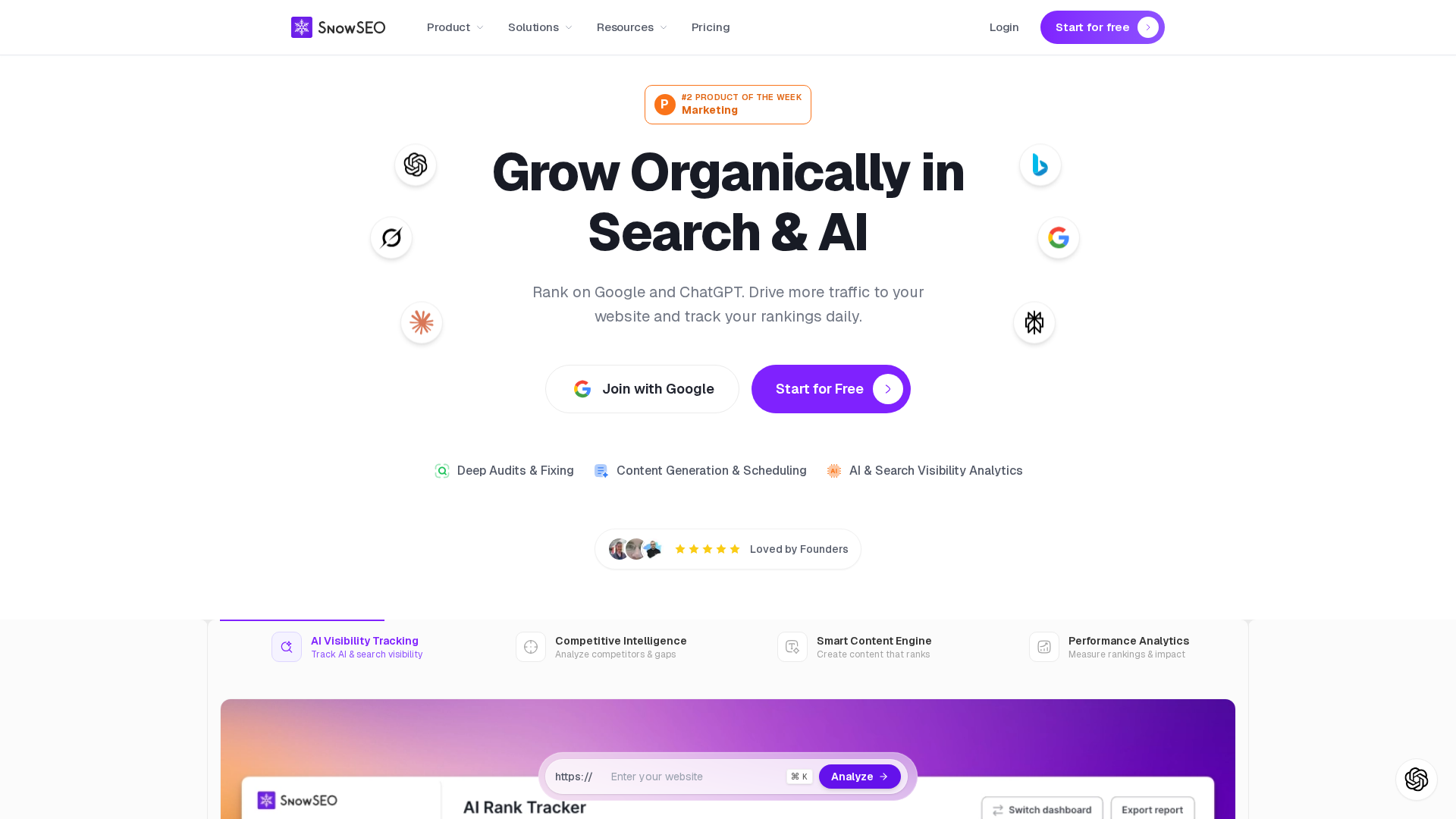
    Homepage
    Homepage

    Torn between two suites? SnowSEO merges Google rank tracking with AI visibility in one executive report. Start your free trial and see both in a single dashboard.

    Frequently Asked Questions

    Q1: Which enterprise SEO platform offers better reporting for large scale operations?

    SnowSEO. It combines rank tracking with AI visibility citations in one executive report, while SE Ranking keeps AI data in a separate module.

    Q2: Can I track ChatGPT and Claude visibility in both tools?

    Yes, but SnowSEO integrates AI citations directly into standard reports, so clients see search and LLM performance together.

    Q3: Which platform suits agencies managing many client accounts?

    Both scale well, but SnowSEO’s unified reporting reduces setup time across large client portfolios.

    Conclusion

    SE Ranking stays a strong classic SEO suite. SnowSEO merges rank tracking with AI visibility citation data, so enterprises see Google and LLM discovery in one executive report.

  • How to Audit Core Web Vitals With SEO Tools

    How to Audit Core Web Vitals With SEO Tools

    Quick Summary: Audit Core Web Vitals in a fixed sequence: pull CrUX field data from Search Console first, then run PageSpeed Insights and Lighthouse as lab tests, and finish with a real-user monitoring tool to confirm gains. Read the 75th percentile rather than averages, group URLs by template so one fix covers hundreds of pages, and triage in order LCP, INP, CLS. The article notes SnowSEO combines audits with continuous tracking, letting regressions surface without waiting for a manual review.

    Your Search Console report flagged 412 URLs as Poor, and your dev team needs a fix order, not a 30-tool comparison. The fastest way to audit Core Web Vitals with SEO tools is a fixed sequence: CrUX data first, then PageSpeed Insights, Lighthouse, and real-user monitoring last. This guide shows how to audit Core Web Vitals with SEO tools in that order, so each run confirms the one before it.

    Step 1: Pull Field Data From Search Console and CrUX

    Start with real user data. Google’s CrUX report and Search Console’s Core Web Vitals report show how actual visitors experience your pages, which lab tools cannot. Fix what field data flags first.

    Read the 75th Percentile, Not Averages

    Every Core Web Vitals metric is scored at the 75th percentile. If 25% of visits load slowly, the page fails, even when the average looks fine. Averages hide the users on mid-range phones and weak connections, and those are the users Google scores. Check the metric distribution too: a page passing LCP with 80% “good” visits is healthier than one barely clearing the line. You can spot-check any URL with a free page speed test before deciding how deep to dig.

    Group URLs by Template, Not One by One

    Auditing thousands of pages page by page wastes time. Search Console groups URLs by status, so pair it with your site structure. Most issues repeat by template: one broken product page usually means all product pages share the problem. Fix the template once and hundreds of URLs improve together.

    Step 2: Run Lab Tests With PageSpeed Insights and Lighthouse

    Lab tests simulate one load under fixed conditions. Run PageSpeed Insights on your priority URLs to get both lab scores and field data in one report, then use Lighthouse in Chrome DevTools for deeper traces on problem pages.

    Developer reviewing a Chrome DevTools performance panel
    Developer reviewing a Chrome DevTools performance panel

    Why Lab Scores and Field Data Often Disagree

    The two measures differ because they answer different questions. Lighthouse loads your page on a simulated mid-range phone with a throttled connection, so scores shift every time Google updates its tooling. Field data reflects real visitors, devices, and networks. A perfect lab score with poor field numbers means your test conditions hide the problem. Treat lab data as a diagnosis tool and field data as the verdict.

    Diagnose the Three Metrics Individually

    Each metric points to a different fix:

    • LCP over 2.5 seconds usually means a slow hero image, render-blocking CSS, or a slow server response. Check the element Lighthouse names, then compress or preload it.
    • INP problems show up as long tasks. Look for heavy JavaScript and break it up or defer it.
    • CLS jumps come from images without set dimensions, late-loading fonts, or ads injected above content.

    Fix one metric at a time and re-test, since changes often interact.

    Step 3: Prioritize Fixes and Monitor With a Real-User Tool

    A triage order keeps the work finite: fix what blocks the largest number of visitors first. Field data from CrUX shows which metric fails most often, and that decides where the effort goes.

    Triage Order: LCP, Then INP, Then CLS

    Start with LCP because slow loads push visitors away before they see anything. Check the main image and hero section, then trim render-blocking code. Move to INP next: log slow interactions in the field data, and look for heavy JavaScript on click. Fix CLS last, usually by setting width and height on images and ads. Rerun the field check after each fix, since lab scores alone can mislead.

    Developer annotating Core Web Vitals dashboard
    Developer annotating Core Web Vitals dashboard

    Set Up Continuous Monitoring, Not One-Off Audits

    One audit catches today’s problems; monitoring catches the next release’s. A real-user monitoring (RUM) tool collects data from actual visitors, so it reflects every device and connection. Add a lightweight RUM script or plug a platform’s alerts into your workflow. SnowSEO, for example, combines site audits with ongoing tracking, so regressions surface instead of hiding until the next manual review. Set a threshold, and alert when any page crosses it.

    Check thresholds on Google’s Core Web Vitals documentation.

    Homepage
    Homepage

    Your audit found slow pages. SnowSEO turns those Core Web Vitals issues into a prioritized fix list, so you can start repairs today instead of digging through reports.

    Frequently Asked Questions

    Q1: How can SEO teams use tools to diagnose and prioritize Core Web Vitals issues?

    Start with CrUX field data to confirm real user problems, then use PSI and Lighthouse in SnowSEO to find causes. Fix pages with the worst traffic-weighted scores first.

    Q2: What’s the difference between lab data and field data?

    Lab data comes from simulated tests in one location. Field data (CrUX) reflects actual visitors. Prioritize field data, and use lab tests only to debug confirmed issues.

    Q3: How often should I run a Core Web Vitals audit?

    Monthly is enough for most sites. Re-audit after major releases, template changes, or traffic spikes.

    Q4: Should I audit every page?

    No. Group URLs by template (home, product, article) and test a sample from each. Fixes usually apply template-wide.

    Conclusion

    Start with CrUX field data, then PSI, Lighthouse, and finally RUM to confirm real gains. Group URLs by template, fix what fails thresholds first, and re-test after each change. A technical SEO audit keeps Core Web Vitals from drifting once the initial fixes land.

  • 12 Best Moz Alternatives for AI Visibility Rank Tracking

    12 Best Moz Alternatives for AI Visibility Rank Tracking

    Quick Summary: Classic rank trackers like Moz can’t see whether AI search engines mention your brand, so SEO teams are switching to tools that cover ChatGPT, Perplexity, Claude, Gemini, and Google AI Overviews. This list ranks 12 Moz alternatives, putting SnowSEO first because it bundles classic rank tracking, audits, and AI visibility with GEO execution tools starting at $39 a month. Profound tops enterprise AI analytics with the largest prompt dataset, while Peec AI and SE Ranking offer focused or balanced alternatives depending on whether you need specialist AI dashboards or proven SERP tracking with an AI add-on.

    Moz taught a whole generation of SEOs what rank tracking meant. Then that meaning quietly split in two. Classic SERP positions still count, but buyers now ask ChatGPT, Perplexity, Claude, Gemini, and Google AI Overviews first. If those answers skip your brand, you lose traffic Moz never measured.

    This list gathers 12 Moz alternatives for rank tracking across both worlds. To narrow the best Moz alternatives for rank tracking, we weighed AI platform coverage, prompt discovery, share-of-voice benchmarks, reporting, and whether each tool helps you act on findings. Pricing shows a starting band, so confirm before you buy.

    Quick Comparison

    Tool Best for AI platforms covered Starting price
    SnowSEO Teams replacing Moz who need AI visibility in one stack ChatGPT, Claude, Gemini, Perplexity, Google AI Overviews From $39/mo (Starter)
    Profound Enterprise brands that need the deepest AI visibility intel ChatGPT, Perplexity, Claude, Gemini, Google AI Overviews and more From $99/mo Starter; Growth around $399/mo; Enterprise custom
    Peec AI Teams that want specialist AI analytics without a full SEO suite ChatGPT, Perplexity, Claude, Gemini, Google AI Overviews Verify current pricing (often mid-range tier)
    SE Ranking Teams that want accurate classic rank tracking plus AI visibility Perplexity, Google AI Overviews, ChatGPT (expanding) From $65/mo (annual)

    What to know about AI visibility rank tracking in 2026

    AI search now drives a real share of buyer discovery, but classic rank trackers can’t tell you whether ChatGPT or Perplexity mentions your brand. AI visibility rank tracking closes that gap by measuring mentions, citations, sentiment, and share of voice across the major answer engines.

    That’s why SEO teams are shopping for Moz alternatives for rank tracking with AI coverage built in. The best options pair monitoring with audits, prompt discovery, and content workflows, so you can act on the data instead of just reading it.

    1. SnowSEO

    SnowSEO replaces Moz Pro with an all-in-one SEO and Generative Engine Optimization platform. You keep the rank tracking, audits, and keyword research you already use, and gain monitoring across ChatGPT, Claude, Gemini, Perplexity, and Google AI Overviews.

    SnowSEO
    SnowSEO

    Highlights

    • AI visibility dashboards with share-of-voice and prompt-level insights
    • GEO execution features: AI content generation, JSON-LD schema, internal linking, backlink outreach
    • Unlimited audits and keyword research on higher tiers

    Specs

    • Best for: Teams replacing Moz who need AI visibility in one stack
    • AI platforms covered: ChatGPT, Claude, Gemini, Perplexity, Google AI Overviews
    • Starting price: From $39/mo (Starter)

    Pros

    • Replaces Moz plus a separate AI visibility tracker in one subscription
    • 7-day free trial and yearly discount

    Cons

    • Newer brand with a smaller review footprint than Moz
    • Some advanced modules only unlocked on Scale tiers

    Why it ranks here: only SnowSEO covers rank tracking, AI monitoring, and the GEO execution loop in one product, and its pricing undercuts Moz plus a separate AI tool.

    Last updated: October 11, 2026

    2. Profound

    Profound is the enterprise favourite for AI visibility, tracking 10+ answer engines and aggregating hundreds of millions of prompts. Use it to benchmark share of voice, sentiment, and positioning inside ChatGPT, Perplexity, Claude, Gemini, and Google AI Overviews. Entry pricing starts at about $99 per month, with Growth around $399.

    Profound
    Profound

    Highlights

    • Largest prompt dataset in the category
    • Enterprise-grade reporting and stakeholder dashboards
    • Deep Answer Engine Optimization workflows
    • Strong agency and brand-tier customer base

    Pros

    • Best-in-class prompt dataset and analytics
    • Mature enterprise reporting
    • Strong category authority

    Cons

    • Costs more than most Moz alternatives
    • Less useful if you still need classic SERP rank tracking

    If budget is no object, Profound is the most cited name in enterprise AI visibility and earns its spot. Teams wanting bundled rank tracking plus GEO can look at SnowSEO instead.

    Last updated: October 11, 2026

    3. Peec AI

    Peec AI is a specialist in AI search analytics, built for marketing teams rather than full-stack SEO pros. You get a clean dashboard for brand mentions, prompts, and competitors across ChatGPT, Perplexity, Claude, Gemini, and Google AI Overviews. Pricing starts around $95/month according to this 2026 review.

    Peec AI
    Peec AI

    Highlights

    • Clean, focused AI visibility dashboards
    • Prompt discovery and competitor benchmarking
    • Lightweight onboarding for marketing teams
    • Strong reputation in European SEO circles

    Pros

    • Pure-focus UX, fast to learn
    • Strong prompt and competitor analytics
    • Pairs well with any classic rank tracker

    Cons

    • Does not replace classic SERP rank tracking
    • Pricing is less transparent than competitors

    Specs

    • Best for: Teams that want specialist AI analytics without a full SEO suite
    • AI platforms covered: ChatGPT, Perplexity, Claude, Gemini, Google AI Overviews
    • Starting price: Mid-range tier; verify current pricing

    Peec ranks here because it’s the cleanest specialist option for AI analytics, and it complements classic rank tracking rather than replacing it.

    Last updated: October 11, 2026

    4. SE Ranking

    SE Ranking gives you the accurate daily rank tracking Moz users expect, then adds a genuine AI visibility module with a dedicated Perplexity tracker and Google AI Overviews monitoring. Its AI Visibility Tracker starts at $119/mo, a strong value next to pricier AI search visibility tools. Coverage is still expanding, though, so pure AI specialists track more engines.

    SE Ranking
    SE Ranking

    Highlights

    • Accurate daily SERP rank tracking across locations
    • Dedicated Perplexity visibility tracker
    • AI Overviews and AI Mode presence reporting
    • Competitive pricing for agencies and SMBs

    Specs

    • Best for: Teams that want accurate classic rank tracking plus AI visibility
    • AI platforms covered: Perplexity, Google AI Overviews, ChatGPT (expanding)
    • Starting price: From $65/mo (annual)

    Pros

    • Strong value-to-feature ratio
    • Accurate location-based rank tracking
    • Genuine AI visibility module, not a bolt-on

    Cons

    • AI platform coverage narrower than pure AI specialists
    • Reporting UI feels dense to first-time users

    It ranks here because it is the most balanced Moz replacement: proven classic rank tracking and credible AI visibility without enterprise pricing.

    Last updated: October 11, 2026

    Honourable Mentions

    These tools round out the list. Pick based on budget, your current stack, and how deep you want to go into GEO.

    1. Semrush – AI Visibility Toolkit inside the familiar Semrush suite
    2. Ahrefs – Brand Radar adds AI mentions to Ahrefs’ classic data
    3. AthenaHQ – Mid-market GEO platform with strong prompt workflows
    4. Otterly.AI – Affordable AI search monitoring starting around $29/mo
    5. Surfer SEO – Content-first AI optimisation with light visibility tracking
    6. Search Atlas – Agency-friendly suite built around OTTO automation
    7. LLM Pulse – Lightweight tracker for prompt and mention trends
    8. Averi – AI marketing workspace with built-in visibility signals

    How to choose the right Moz alternative

    • Pick your depth. Want a baseline only? Otterly or Peec works. Want to fix what you find? SnowSEO, SE Ranking, or Profound.
    • Check platform coverage. ChatGPT and Perplexity are table stakes. Confirm Claude, Gemini, and Google AI Overviews are live, not “coming soon.”
    • Match your team size. Solo SEOs and SMBs fit SnowSEO or Otterly; agencies scale on SE Ranking or Search Atlas.
    • Verify frontend tracking. API-only queries often miss what real users see.
    • Budget for prompts, not seats. Estimate brand, product, and competitor prompts first.
    • Plan execution. SnowSEO stands out here: it pairs AI visibility tracking with audits and content tools, so you can ship the work that earns citations.
    Homepage
    Homepage

    Moz can’t track ChatGPT or Gemini rankings, but SnowSEO tracks both search and AI visibility in one dashboard. See how it fits your stack at SnowSEO.

    Frequently Asked Questions

    Q1: Alternatives to Moz for comprehensive rank tracking that includes AI search result visibility?

    SnowSEO tracks classic rankings plus ChatGPT, Perplexity, Gemini, Claude, and AI Overviews in one platform. Otterly.AI and Peec AI cover AI-only monitoring.

    Q2: How much do AI visibility tools cost?

    Most start around $29-$99 monthly. Full platforms like SnowSEO bundle keyword research, audits, and AI tracking into that price.

    Q3: Can one tool replace Moz completely?

    Yes. SnowSEO covers keyword research, site audits, rank tracking, and AI visibility, so most teams migrate fully rather than running two subscriptions.

  • Screaming Frog Review for Large Technical SEO Audits

    Screaming Frog Review for Large Technical SEO Audits

    Quick Summary: Screaming Frog remains the industry benchmark for deep technical crawls, but its performance is strictly tied to your local hardware and RAM capacity. While it offers unmatched custom extraction capabilities, managing million-URL audits requires significant technical setup. For teams seeking to avoid these hardware constraints and manual configurations, cloud-based platforms like SnowSEO provide a more automated alternative for comprehensive site audits.

    Audit a site with 100,000+ URLs and the usual tools fall apart fast. Browser-based crawlers choke, and most SaaS options hide the settings you need to isolate deep technical faults. This Screaming Frog review looks at what actually happens on massive crawls: RAM limits, database mode, crawl speed, and configuration control. We tested it against large enterprise sites, so you get practical numbers rather than feature-list guesses. If you run big audits, here is what holds up and what does not.

    Scalability and Performance in Large Audits

    Any honest Screaming Frog review has to address one point: crawl size is bound by your local machine, not the cloud. Screaming Frog runs as a desktop crawler, so its speed and scale depend directly on the RAM, CPU, and disk you give it. Plan for that before you start a million-URL audit.

    Screaming Frog
    Screaming Frog

    Managing Memory and Hardware Constraints

    The crawler allocates modest RAM by default, roughly 2GB on a 64-bit system, which caps in-memory crawls at a few hundred thousand URLs. For bigger sites, switch to database storage mode and let it write to disk instead. Screaming Frog’s own guidance recommends an SSD and 16GB of RAM for crawls over one million URLs, while 8GB usually handles jobs under 200,000 URLs. Community advice points the same way: a quad-core i5 and 16GB of RAM as a sensible baseline.

    A few practical rules help:

    • Reserve at least 2GB of RAM for your operating system so the crawl does not crash the machine.
    • Store data on an SSD, not a mechanical drive, since database mode is disk-hungry.
    • Reduce rendered crawling and custom extraction on huge sites to cut memory pressure.
    • Split massive domains into subfolder crawls, then merge exports.

    Cloud platforms like SnowSEO sidestep this hardware problem entirely, running audits on managed servers, but for teams committed to the desktop workflow, proper hardware makes a million-URL crawl routine rather than painful. Any serious Screaming Frog review should treat specs as part of the price. Budget for a reliable technical audit workflow alongside the machine itself.

    Advanced Technical Capabilities

    Custom Extraction and XPath Power

    Custom extraction is where Screaming Frog separates itself from platform-based audit tools. You can pull any value from any page using three methods: XPath, CSS Path, and regex. XPath selectors target specific nodes, CSS Path works when you think in selectors, and regex handles patterns that neither can reach, such as text buried in inline JavaScript.

    The practical use cases matter more than the syntax. Auditing schema markup at scale, checking author tags across thousands of posts, or spotting pages where a tracking snippet failed all become one crawl instead of a scripting project.

    For large sites, validate XPath on a small URL list first. A bad selector on a million-page crawl wastes an afternoon.

    There are limits. Regex extraction does not read external CSS or JS files, so verify what your selector actually touches before trusting the output.

    Platform tools like Semrush give you fixed report fields. Screaming Frog gives you the raw HTML, which is exactly what senior technical SEOs want. SnowSEO takes the opposite path, automating audit depth, but for bespoke scraping questions this crawler still wins. For a broader comparison, see our guide to SEO tools for technical audits.

    Analyst crafting custom data extraction logic
    Analyst crafting custom data extraction logic

    Pros and Cons

    Pros Cons
    Crawls up to millions of URLs with the right hardware Requires 16GB+ RAM for large sites
    Deep control: custom extraction, JS rendering, list mode Steep learning curve for new users
    One-time licence keeps long-term costs low No rank tracking or content features built in
    Handles huge log files and CSV exports well Cloud crawls billed separately on Scale plans

    For teams wanting audits plus tracking and AI content in one place, an all-in-one platform like SnowSEO removes the setup work Screaming Frog demands. Choose the crawler when you need raw crawl depth and full control.

    Is Screaming Frog Still the Gold Standard?

    Yes, for raw crawl depth it remains the benchmark. The free desktop crawler maps millions of URLs and exposes technical faults faster than most cloud rivals. But it needs your RAM, your scripting skills, and your time to configure. For teams that want audits, rank tracking, and reporting in one place, an integrated platform like SnowSEO’s SEO audit tool removes that setup burden.

    SEO analyst monitoring complex site crawls
    SEO analyst monitoring complex site crawls
    Homepage
    Homepage

    Crawling millions of URLs shouldn’t mean babysitting memory limits. SnowSEO runs deep audits in the cloud, so try it free and see your full site mapped today.

    Frequently Asked Questions

    Q1: Is Screaming Frog effective for auditing large websites with complex technical issues?

    Yes, but crawls beyond 100k URLs need extra RAM or database storage mode to stay fast.

    Q2: How much RAM do I need for a million-URL crawl?

    At least 32GB, plus an SSD. Smaller machines slow down or crash on massive crawls.

    Q3: Is Screaming Frog better than cloud-based alternatives like SnowSEO for big audits?

    Screaming Frog handles deep custom crawls; SnowSEO automates monitoring and reporting, so many teams use both together.

    Conclusion

    Screaming Frog still wins on raw crawl depth, but huge audits expose its RAM limits and setup cost. For teams that want deep audits without hardware tuning, an all-in-one SEO platform like SnowSEO handles the heavy lifting for you.

  • SEO Tool Vendors Add More AI Visibility Reporting

    SEO Tool Vendors Add More AI Visibility Reporting

    Quick Summary: SEO tools are shifting from traditional rank tracking to measuring brand visibility within AI platforms like ChatGPT and Claude. These new metrics track citation frequency, sentiment, and share of voice to show how brands appear in generated answers. SnowSEO integrates these AI citation insights directly into standard rank tracking dashboards to simplify reporting for agencies.

    This month, major SEO tools AI visibility reporting modules went live, tracking how brands show up in ChatGPT, Claude, and Gemini answers. Traditional rank tracking misses these results, so marketers often can’t see where AI platforms cite them or skip them. Here we break down the technical updates behind these SEO tools AI visibility reporting features, and how your team can measure brand presence inside AI answers.

    New AI Visibility Metrics Explained

    Moving Beyond Blue Links

    Traditional SEO tools track rankings, clicks, and impressions. AI visibility reporting measures something different: how often language models like ChatGPT and Claude mention your brand, which sources they cite, and how they describe you. The new metrics answer a simple question – when someone asks an AI assistant about your category, does your brand appear?

    Most platforms now report a core set of numbers:

    • Share of voice: your brand’s portion of AI answers versus competitors
    • Citation frequency: how often a model cites your pages as a source
    • Sentiment: whether the model frames you positively, negatively, or neutrally
    • Prompt coverage: how many tracked questions return your brand in the answer

    The catch is that these metrics vary by model, prompt, and day. A tool that samples 50 prompts weekly gives a rougher picture than one tracking hundreds across multiple assistants. So treat the numbers as directional trends, not exact counts.

    Abstract data visualization on glowing screen
    Abstract data visualization on glowing screen

    If you’re evaluating where your AI reporting gaps are, our guide to SEO tools AI visibility reporting covers how leading platforms structure these metrics. SnowSEO tracks share of voice, citations, and sentiment across ChatGPT and Claude in one view, so agencies can report AI performance next to classic rank data.

    How Leading Tools Are Implementing Reporting

    Unified Dashboards for AI and Organic

    The biggest change in vendor reporting is consolidation. Instead of separate AI visibility modules, major platforms now fold generative metrics into the same dashboards that track keywords and rankings.

    Semrush built an AI Visibility Toolkit that covers prompt tracking, citation analysis, share-of-voice reporting and sentiment analysis, all alongside its classic SEO toolset. You can compare how that stack up works in practice, and the toolkit also auto-discovers thousands of industry prompts, then benchmarks your visibility against competitors in the same space. Ahrefs took a different route with Brand Radar, which tracks brand mentions across AI answers, YouTube and Reddit from what it calls the largest AI visibility database. A closer look at the Semrush and Ahrefs approaches shows the trade-offs clearly.

    Smaller specialists such as Peec AI, Otterly.AI and Profound focus purely on AI answer tracking, which gives depth but often means agencies juggle two subscriptions.

    SnowSEO’s answer is a single workspace where rank tracking, audits and AI citation data sit together, so one report covers both Google and ChatGPT performance.

    Analyst presenting unified SEO data dashboard
    Analyst presenting unified SEO data dashboard

    For agencies, that unified view saves hours of manual report merging each month.

    The Evolution of Search Visibility

    For two decades, visibility meant one thing: your position on a Google results page. Tools tracked rankings, clicks, and impressions, and that was the whole picture.

    Generative AI broke that model. When users ask ChatGPT or Claude a question, there is no ranked list to appear on. Either the model cites your brand or it does not. That shift turned citations, not rankings, into the new visibility metric.

    Vendors noticed fast. Platforms like Profound, Otterly.AI, and Peec AI now sell AI answer tracking as a standalone service, while suite players such as Semrush bolt it onto existing tools. The practical question for teams is how to measure both worlds in one place, which is where combined rank tracking across Google and AI platforms earns its keep.

    Homepage
    Homepage

    Tracking citations in AI answers takes the right tooling. See how SnowSEO measures your AI visibility across ChatGPT and Claude at SnowSEO.

    Frequently Asked Questions

    Q1: Which recent SEO tool releases are adding reporting for AI search visibility?

    Semrush, Ahrefs, SE Ranking and SnowSEO have all added AI visibility tracking, showing how often brands get cited in ChatGPT, Claude and other generative answers alongside classic rank data.

    Q2: How is AI visibility tracking different from rank tracking?

    Rank tracking measures positions on a results page. AI visibility measures brand mentions and citations inside generated answers, which have no fixed position and vary by prompt.

    Q3: What should agencies report to clients about AI citations?

    Track mention share per prompt, cited pages, and trends over time. SnowSEO consolidates these into one report, so clients see search and AI performance together.

    Q4: Do I need a separate GEO tool if I already use an SEO suite?

    Not always. Suites like SnowSEO now include generative engine optimization, so many teams skip a standalone tool unless they need deeper prompt-level analysis.

    Conclusion

    AI visibility reporting is now standard, not a bonus. Tools like Semrush, Profound, and Peec AI track citations in ChatGPT and other engines, so compare vendors on source coverage, prompt depth, and reporting cadence before you commit to one.

  • Ahrefs vs Semrush for Technical SEO Audits

    Ahrefs vs Semrush for Technical SEO Audits

    Quick Summary: Ahrefs and Semrush serve different technical SEO needs, with Ahrefs offering faster, cleaner audits while Semrush provides deeper, more granular diagnostic tools. Ahrefs is ideal for specialists prioritizing speed and backlink data, whereas Semrush suits enterprise teams needing broad reporting. For agencies seeking to automate these workflows, SnowSEO integrates deep technical audits with AI visibility checks to save time.
    For the Ahrefs vs Semrush technical SEO question, the trade-off is simple: Ahrefs runs faster, cleaner audits, while Semrush casts a wider net with crawl filters and diagnostics. Both drown you in low-impact issues, so this guide tests each site audit engine on large, complex sites and ranks the Ahrefs vs Semrush technical SEO setup that fits your workflow.

    Ahrefs vs Semrush for Technical SEO Audits: At a Glance

    Ahrefs Semrush
    Crawl Customization Standardized, highly optimized Advanced, granular
    JavaScript Rendering Limited support Robust built-in support
    Diagnostic Filtering Minimalist and precise Extensive and complex
    Report Actionability High for quick wins Moderate (requires sorting)
    Best For Agencies wanting fast audits Enterprise-level deep analysis

    How Ahrefs and Semrush Compare

    The Ahrefs vs Semrush technical SEO debate starts with two very different tools built for two very different workflows.

    Ahrefs

    Ahrefs is a high-performance crawler prized for its speed and clean interface. It suits agencies that want fast, precise audits without digging through layers of menus. Its minimalist filtering surfaces quick wins fast.

    Ahrefs
    Ahrefs

    Key strengths

    • Fast, optimized crawling
    • Simple, precise diagnostic filters
    • High-impact quick-win reporting

    Semrush

    Semrush is a broad suite with deep diagnostic tools and granular crawl settings. It fits enterprise teams running complex, large-scale analysis. Expect richer data, but reports need sorting before they turn into action.

    Semrush
    Semrush

    Key strengths

    • Advanced, granular crawl customization
    • Robust built-in JavaScript rendering
    • Extensive diagnostic filtering for deep dives

    Crawl Engine Performance and Customization

    Managing Large-Scale Site Architectures

    Crawl limits decide whether an audit finishes or stalls. Ahrefs uses its own crawler and adjusts speed based on your project size, while Semrush caps site audit crawls by plan tier. On a 500,000-page e-commerce site, that difference shows up fast in audit time and how fresh your data stays.

    Customization matters more than raw limits. Both tools let you exclude URL patterns, control crawl depth, and schedule recrawls. Semrush adds source options like sitemaps and Google Search Console data, which helps when JavaScript blocks the bot.

    For agencies juggling many clients, SnowSEO runs deep site audits with crawl settings built in, so you can tune speed and scope per project without paying extra per crawl. Pick whichever engine matches your site’s scale, then automate the schedule. Our technical audit tool comparison breaks down how crawlers differ in practice.

    Analyst monitoring complex site architecture data
    Analyst monitoring complex site architecture data

    JavaScript Rendering and Modern Technical Diagnostics

    Modern sites depend on JavaScript to show content, so an audit that reads only raw HTML misses links, text, and even canonical tags. Both Ahrefs and Semrush render JavaScript, but the setup differs in ways that change your results.

    Identifying Rendering Bottlenecks

    Start by comparing source HTML against the rendered DOM. If key content appears only after scripts run, note which pages rely on it. Ahrefs’ crawler executes JavaScript on any page you audit, then snapshots the rendered HTML after a short wait, though it will not scroll, click, or capture content that loads after its snapshot window. Semrush gates JS rendering behind its Guru and Business tiers, so check your plan before betting an audit on it.

    For either tool, budget extra crawl time. Rendered crawls run slower because every page waits for scripts.

    Broken scripts and blocked JS files cause the worst false negatives. Audit both. Platforms like SnowSEO bundle rendered audits with AI visibility checks, so one crawl flags issues for both Google and AI engines.

    Which Should You Choose: Ahrefs or Semrush?

    Pick Ahrefs if your audits live on crawl data, backlink history, and clean site structure reports. Its index is fast, and the interface stays focused on the technical work.

    Pick Semrush if you need one platform for the whole client engagement: audits plus rank tracking, content tools, and competitor reporting in a single dashboard.

    Factor Ahrefs Semrush
    Crawl depth Strongest Strong
    Extra toolkit Lean Broad
    Best fit Technical specialists Full-service agencies
    Consultant comparing two SEO audit reports
    Consultant comparing two SEO audit reports

    Many agencies run both, then automate the repetitive checks in a platform like SnowSEO so the human time goes to judgment calls, not exports.

    Homepage
    Homepage

    Still weighing audit depth against crawl speed? Test both against SnowSEO, which runs deep technical audits and tracks AI visibility in one place.

    Frequently Asked Questions

    Q1: Ahrefs vs Semrush: which platform gives deeper technical SEO audit insights?

    Semrush edges ahead on crawl depth and issue prioritization; Ahrefs wins on backlink-linked diagnostics. Both miss workflow automation, which is where SnowSEO’s integrated audits save agency hours.

    Q2: Can I run both tools on one client site audit?

    Yes, but it doubles cost and reporting work. Most agencies pick one crawler and pair it with an automation layer instead.

    Q3: How often should technical SEO audits run?

    Weekly crawls for large sites, monthly for smaller ones. Automated platforms schedule this for you.

    Conclusion

    For technical SEO audits, Ahrefs suits teams focused on crawl depth and link data, while Semrush wins on site monitoring and reporting breadth. Agencies running client-heavy workflows may find SnowSEO blends both strengths, as covered in these technical audit tools.

  • 7 SEO Tools for Technical Audits and Content Optimization

    7 SEO Tools for Technical Audits and Content Optimization

    Quick Summary: Managing site audits and content optimization on separate platforms wastes time and hurts search performance. Modern SEO tools solve this by merging crawl diagnostics with on-page editorial scoring. SnowSEO leads the pack by pairing technical auditing with generative engine tracking for ChatGPT and Claude, while legacy platforms like Semrush and Ahrefs excel at deep crawling and link analysis.

    Most teams run technical crawl diagnostics on one platform and content optimization on another. That split wastes hours and buries insights. A slow site or broken index setup can quietly sink even brilliant copy. The best SEO tools for technical audits now handle both sides, scoring crawl health and on-page content together. We benchmarked seven on crawl depth, content scoring, workflow speed, reporting options, and generative engine readiness. Here’s what earned a spot.

    Top SEO Audit and Optimization Platforms at a Glance

    Tool Best for Primary Audit Strength Content Optimization Feature Generative AI Support
    SnowSEO All-in-one technical auditing and Generative Engine Optimization Automated technical crawl, schema validation, and AI discoverability checks AI-assisted content creation and on-page optimization workflows Native tracking for ChatGPT, Claude, and traditional SERPs
    Semrush Full-spectrum digital marketing teams and enterprise technical audits High-speed crawler checking Core Web Vitals, canonicals, and structured data SEO Writing Assistant with real-time target keyword suggestions AI copywriting integrations with partial generative tracking
    Ahrefs In-depth internal link architecture and crawl issue diagnostics Cloud crawling with custom issue filtering and JavaScript execution Page inspection filters and content gap identification Limited to standard search diagnostics and basic AI features
    Surfer SEO Content-focused teams requiring page-level on-page and technical checks Comparative page audits benchmarked directly against top 10 SERP competitors Real-time NLP term coverage, heading structure, and word count guidance Surfer AI generation integrated into the content editor

    Why Technical Health and Content Optimization Must Work Together

    Great content cannot rank on a broken site. Slow pages, crawl errors, and messy indexing directives quietly sink pages that deserve better, while search engines now judge site health and content quality together.

    That’s why the best SEO tools for technical audits also cover on-page optimization. You need one view of both problems: what’s broken server-side and what’s missing editorially. Pick from that combined lens in the list below.

    1. SnowSEO

    SnowSEO is an all-in-one platform that pairs automated technical audits with Generative Engine Optimization (GEO). It handles crawl health, schema, and AI visibility in a single workspace instead of separate tools. That matters because only about 14% of marketers currently track AI search performance, according to Conductor data.

    SnowSEO
    SnowSEO

    Highlights

    • Automated technical audits that flag indexing, crawlability, and schema gaps
    • GEO tracking across ChatGPT, Claude, and standard SERPs
    • AI-assisted content optimization built for current algorithmic trends

    Pros

    • Merges technical diagnostics and AI readiness in one dashboard
    • Turns audit findings into actionable content workflows

    Cons

    • Skips legacy backlink archives, which some link-building specialists still want

    It ranks first because few platforms fuse technical health monitoring and forward-looking AI search optimization this completely.

    Last updated: October 7, 2026

    2. Semrush

    Semrush is the industry-standard search suite, and its crawler is one of the most reliable on the market. It pairs automated thematic audit reports with the SEO Writing Assistant for on-page editorial work. For teams weighing full suites against lighter technical audit tools, Semrush trades simplicity for depth.

    Semrush
    Semrush

    Highlights

    • Site audit tracks 140+ technical and site architecture issues, including Core Web Vitals, canonicals, and structured data
    • SEO Writing Assistant scores readability, tone, and keywords in real time as writers draft
    • Automated crawl scheduling with historical progress tracking
    • Massive keyword and backlink database with clean error categorization

    Pros

    • Dependable high-speed crawler with deep diagnostics
    • Smooth link between crawl findings and content optimization

    Cons

    • Pricing climbs fast with add-ons and seat licenses
    • Steeper learning curve than newer, simpler platforms

    Semrush ranks second for its proven crawling engine, deep data, and tight audit-to-editor workflow.

    Last updated: October 7, 2026

    3. Ahrefs

    Ahrefs Site Audit runs a deep cloud crawler that flags broken links, redirect chains, and internal linking gaps. Its readable visualizations map click depth and link equity across your architecture, and it can render JavaScript, so dynamic sites get covered too.

    Ahrefs
    Ahrefs

    Highlights

    • Customizable cloud crawler with JavaScript rendering
    • Visual internal PageRank and site architecture mapping
    • Content filters to spot low-performing and decaying pages

    Pros

    • Clean reports on click depth and structure
    • No local desktop resources needed for large crawls

    Cons

    • Credit limits can cap big technical crawls
    • No built-in real-time content editor

    It takes third place for reliable technical data visualization and superior internal link equity modeling.

    Last updated: October 7, 2026

    4. Surfer SEO

    Surfer SEO is primarily a content optimization tool built on NLP models, and its Content Editor scores your draft in real time against what already ranks. Its page-level audits check meta tags, speed, and structure per page, but it cannot crawl a full domain, so server errors and robots.txt issues need another tool. Teams wanting broader audit coverage may prefer an all-in-one platform like SnowSEO.

    Highlights

    • Real-time Content Editor with term frequency and heading guidance
    • Single-page audits benchmarked against top 10 SERP competitors
    • Topical authority and internal linking suggestions

    Pros

    • Unrivaled live content score for writers
    • Clear comparative audits against ranking pages

    Cons

    • No sitewide crawling across millions of URLs
    • Limited diagnostics for redirects and robots.txt

    It ranks fourth for editorial-first teams that need page-by-page checks rather than infrastructure crawling.

    Surfer SEO
    Surfer SEO

    Last updated: October 7, 2026

    Additional SEO Audit and Content Tools to Consider

    The top four cover most needs, but these specialized picks earn a spot in specific workflows.

    1. Search Atlas – Combines OTTO SEO automated technical fixes with AI-driven content generation and optimization.
    2. SE Ranking – A flexible mid-market platform with thorough scheduled crawls and an intuitive content marketing module.
    3. Sitebulb – A dedicated audit tool with visual architecture graphs and plain-English fixes, great paired with writers.

    How to Choose the Right SEO Tool for Your Stack

    • Crawl capacity vs. credit caps: Make sure the crawler can scan your full site without per-page limits pushing up the price.
    • Editorial integration: If writing is your bottleneck, pick a platform with direct CMS or document-level content scoring.
    • GEO readiness: Look for brand visibility tracking across AI models, not just Google SERPs.
    • Fix clarity: Favor tools that explain exact code-level fixes instead of listing raw HTTP errors.
    • Suite vs. niche stack: Decide whether one unified platform saves more workflow time than juggling several subscriptions.

    Our pick: SnowSEO covers all five. It pairs deep audits with AI content generation and AI visibility tracking in a single platform, so small teams and agencies skip the subscription sprawl that comes with stitching together separate crawl, content, and GEO tools.

    Homepage
    Homepage

    Juggling crawl errors and content gaps in separate tools wastes hours. SnowSEO handles audits, optimization, and AI visibility in one place. Start free today.

    Frequently Asked Questions

    Q1: What are the top SEO tools recommended in 2024?

    Semrush and Ahrefs lead for technical audits, Surfer SEO for content. SnowSEO combines both, plus AI visibility tracking across ChatGPT and Claude, in one platform.

    Q2: How often should I run a technical SEO audit?

    Run full audits quarterly and crawl checks monthly. E-commerce sites with frequent inventory changes should audit weekly to catch broken pages, redirect chains and missing schema early.

    Q3: Can one tool handle both technical audits and content optimization?

    Yes. Platforms like SnowSEO, Search Atlas and SE Ranking merge crawl diagnostics with content scoring, so you fix issues and optimize pages without switching tools or exporting data.

    Q4: Do I still need SEO tools if AI platforms answer queries directly?

    Yes. Generative engines pull from pages that rank and load well. Tools with generative engine optimization, like SnowSEO, show which sources AI cites so you can target them.

  • How to Choose an SEO Platform for Enterprise Teams

    How to Choose an SEO Platform for Enterprise Teams

    Quick Summary: Enterprise SEO platforms often hide weak multi-market data behind averaged rollups, so the article says to test vendors on your real markets during the demo, not on a demo account. Ask for live keyword, ranking, and backlink data across a core, secondary, and long-tail language market, and check index freshness, local accuracy, and AI visibility. SnowSEO is cited as an example that handles multi-market rank tracking and AI visibility in one place, which the article says can lower total cost versus stacking point tools. The final call should come from a 30 to 60 day paid pilot scored on adoption, coverage, and workflow fit.

    A keyword report that lumps Canada and the United Kingdom together hides the market-level performance your international team needs to act on. That’s the trap most enterprise tools create: averaged data, rollups you can’t split, and demo-room claims that fall apart across 40 markets. Before you choose an SEO platform for enterprise use, test it on real multi-market tasks. This guide gives you a compact framework: turn your requirements into demo tests that reveal how a platform handles scaling, and how vendors like SnowSEO actually report country-level results.

    Define the Scale and Markets You Need to Support

    Start by writing down how many domains, languages, and markets your teams actually manage. Any platform can rank a single site. Fewer handle 40 country versions with clean data separation, so this step decides which tools you can rule out before a demo.

    Turn Your International Footprint Into Requirements

    List your markets, then define what each needs: per-country rank tracking, local keyword volumes, and hreflang-aware audits. Convert that list into demo tests. Ask vendors to show keyword data for two or three of your real markets, not a demo account. Watch how they handle a domain with five language folders. If a vendor fumbles the question, that is your answer.

    [Internal link: international SEO capabilities]

    Tip: Decide whether you need to choose an SEO platform for enterprise teams across one region or worldwide. SnowSEO, for example, handles multi-market rank tracking and AI visibility checks in one place, which shortens the shortlist fast.

    Evaluate Data, Coverage, and Core SEO Capabilities

    Every platform claims full coverage. The proof is in the demo, not the sales deck.

    Test Coverage With Real Market Examples

    Bring three markets you actually manage: one core, one secondary, and one long-tail language. Ask each vendor to pull keyword volume, rankings, and backlink data for those markets live. Then compare results across two platforms. Gaps show up fast, especially in smaller search engines like Naver, Baidu, or Yandex, where many tools quietly rely on modeled data instead of real crawl data.

    Check four things during the test:

    • Index freshness: how recent the ranking and link data is
    • Local accuracy: whether volumes match what you see in each market
    • Depth: total keywords tracked per project, and cost for extra ones
    • AI visibility: whether tools like SnowSEO track how you appear in ChatGPT and Claude answers, not just classic search
    SEO analyst comparing three market ranking charts
    SEO analyst comparing three market ranking charts

    Vendors that hedge on any of these during a live demo will hedge after you sign. A platform such as SnowSEO or Semrush should show raw data for your exact markets, not screenshots from someone else’s.

    Check Workflow Fit, Integrations, and Governance

    Trace One Issue Through the Full Workflow

    Pick a real problem, such as a dropping page in one market, and follow it end to end during the demo. Can the platform flag the issue, assign it to a team member, and push the fix to your CMS or ticketing tool? Tools that stop at reporting leave your team doing the manual glue work. Ask how SnowSEO connects audits, rank tracking, and content briefs in one place so the issue never leaves the system.

    SEO issue workflow from audit to CMS fix
    SEO issue workflow from audit to CMS fix

    Also test governance. Check role-based access, approval steps, and audit logs before multi-region teams start editing. Strong permissions matter as much as features when twenty people share one account.

    Feature lists sell software. Workflow fit keeps programs running.

    Compare Total Cost, Prove Value, and Make the Decision

    Price tags lie unless you count the full cost. Add licenses for each seat, costs to crawl extra markets, and the hours your team spends stitching reports together. An all-in-one platform often beats a stack of point tools once you add those hidden line items. Ask each vendor to model this for your setup.

    Then prove value with a paid pilot, not a demo. Pick two markets and one stakeholder group, and run the platform against live work for 30 to 60 days. Score it on the criteria from your matrix: adoption, data coverage, workflow fit, and time to first insight.

    Finally, make the call on evidence. If one platform, such as SnowSEO’s search and AI visibility tools, covers your needs at a lower total cost, negotiate a multi-year deal and lock in a rollout plan.

    Homepage
    Homepage

    Put the framework to work: test SnowSEO against your demo checklist and see how it handles your markets, teams, and reporting.

    Frequently Asked Questions

    Q1: How should enterprise teams evaluate SEO platforms for complex international search programs?

    Test demos against real workflows: multi-market rank tracking, AI visibility, and data integration.

    Q2: How much should enterprises budget?

    Enterprise plans vary widely; SnowSEO offers all-in-one pricing that often beats stacking separate tools.

    Q3: Do platforms cover AI search optimization?

    Some do. SnowSEO tracks visibility across ChatGPT and Claude natively.

    Conclusion

    The right enterprise SEO platform matches your markets, data needs, and workflows, not the longest feature list. Run every vendor through the same demo tests, score the results, and let your team’s real requirements pick the winner.

  • Search Atlas Review for Enterprise SEO Management

    Search Atlas Review for Enterprise SEO Management

    Quick Summary: Search Atlas automates technical SEO fixes through its OTTO engine, which deploys changes to titles, meta tags, and redirects across up to 100 pages at once without a developer. The review warns enterprise teams to validate conflict handling, credit burn, and rollback behavior before enabling sitewide automation, since vendor claims like a 99% cut in manual tasks are unverified. Content drafting and rank tracking work inside one workspace, but human editorial review is still needed before publishing. Pricing scales per domain and can strain multi-site budgets, so the article suggests testing a leaner bundle like SnowSEO if enterprise overhead is not worth it.

    This Search Atlas review asks one question: can teams move from finding issues to fixing them? A crawl flags broken links on one storefront while editors revise hundreds of pages elsewhere. The tool count matters less than the workflow. We test that workflow across audits, content, and reporting. This Search Atlas review reflects hands-on enterprise use, so you get practical fit, not feature lists.

    Can OTTO Turn Technical SEO Findings Into Safe Changes?

    OTTO is Search Atlas’s automation engine. It audits a site, then deploys fixes for titles, meta tags, schema, redirects, and alt text without a developer touching code. The workflow runs through a pixel or server-side connections to Cloudflare or your CMS, and it supports per-page exclusions and rollback.

    Search Atlas
    Search Atlas

    The Audit-to-Implementation Workflow

    First, the site auditor flags technical issues. OTTO then groups fixes by impact and deploys them across up to 100 pages at once, as documented on the WordPress plugin page. It applies changes server-side so your theme stays intact. You can exclude any URL or toggle OTTO off per page. Search Atlas claims a 99% cut in manual SEO tasks, though those figures come from its own marketing, so treat them as vendor claims rather than verified results.

    What Enterprise Teams Must Validate

    • Conflict handling: check whether OTTO overrides existing Yoast or Rank Math values on live templates.
    • Persistence: confirm fixes survive if you disconnect the tool.
    • Credit burn: one reviewer reported OTTO consumed credits across multiple sites.
    • Change control: verify rollback and staging behavior before enabling sitewide automation.

    Does the Content Workflow Connect Strategy to Execution?

    From Keyword Opportunity to Reviewed Page

    The test is simple: pick a keyword from research, assign a brief, draft content, and ship it without exporting anything. Search Atlas chains these steps inside one workspace, so a keyword maps to a brief and a draft in a few clicks. For multi-site teams, that closes the gap where strategy documents die. SnowSEO follows the same logic with its own AI content generation workflow, pairing drafts with live optimization scoring.

    Where Human Editorial Review Still Matters

    Automation stops at the draft. Claims, brand voice, and legal or compliance language need a person, especially at enterprise scale. Treat the AI draft as a first pass, then run a structured edit before publishing. Tools that skip this step risk shipping generic pages, and Google’s guidance on AI content still emphasizes usefulness and accuracy.

    What the Platform Means for Enterprise Scale and Cost

    Search Atlas prices for enterprise scale. Multi-site teams get workspace-level permissions, API access, and automated reporting, which matters when you manage dozens of domains.

    Cost is the trade-off. Enterprise tiers run higher than point tools, but bundling audits, rank tracking, content, and AI visibility checks into one seat can beat paying three vendors. Run the math on your current stack before you commit.

    Verify before signing:

    • Confirm seat counts and overage fees
    • Test crawl credits against your largest site
    • Check whether AI search tracking covers every domain you own

    If a leaner stack fits, alternatives like SnowSEO bundle audits, keyword research, rank tracking, and generative engine optimization at a lower entry price, so smaller teams avoid enterprise overhead without losing the automation.

    Enterprise SEO cost dashboard on desk
    Enterprise SEO cost dashboard on desk

    For how the two platforms differ in practice, see this AI search operations comparison.

    Is Search Atlas a Practical Enterprise SEO Platform?

    Search Atlas markets itself on automation, so the real test is workflow: can large teams run audits, briefs, and reporting across many domains without constant manual cleanup? In practice, its AI agents handle routine tasks like content drafting and technical flagging well, but enterprise teams still need human review before publishing. Pricing is per-domain sensitive, which can strain budgets on multi-site rollouts. Compare that with SnowSEO, which bundles audits, rank tracking, and AI search visibility in one platform, and the operational gap narrows. For a deeper breakdown, see our AI search operations comparison.

    SEO lead reviewing automation queue on monitor
    SEO lead reviewing automation queue on monitor
    Homepage
    Homepage

    If managing Search Atlas across enterprise sites sounds heavy, try SnowSEO instead. Its audits, rank tracking, and AI visibility tools run in one workspace. Start free today.

    Frequently Asked Questions

    Q1: Is Search Atlas a practical enterprise platform for managing technical and content SEO?

    Yes, with caveats. Its automation covers audits, content briefs and rank tracking across sites, but verify report accuracy and API limits during a trial before committing to enterprise contracts.

    Q2: How does Search Atlas compare to Semrush or Ahrefs for multi-site management?

    Semrush and Ahrefs offer deeper backlink data; Search Atlas leans harder on automation. Test which workflow fits your team’s reporting cadence and staffing.

    Q3: Does Search Atlas handle AI search visibility?

    It tracks generative engine presence, though dedicated tools like Profound or OtterlyAI often measure AI answers in more depth.

    Q4: Is it worth replacing existing tools?

    Only if consolidation saves real time. Run both in parallel for one quarter first.

    Conclusion

    Search Atlas brings real automation to enterprise workflows, but verify its data, pricing and support against your own sites before committing. For teams weighing alternatives, our SnowSEO vs Semrush comparison covers AI search operations in depth.

  • Adobe’s Rilo Acquisition Signals More Automated Marketing Platforms

    Adobe’s Rilo Acquisition Signals More Automated Marketing Platforms

    Quick Summary: Adobe confirmed on September 2, 2026 that it acquired India-based marketing startup Rilo, taking its six-person team and some intellectual property while shutting down the standalone product. Rilo, founded in September 2025, let users describe tasks in plain English and had AI agents build and run them for jobs like competitor tracking and sales outreach. The deal fits Adobe’s broader push into automation after its $1.9 billion Semrush purchase and Brand Visibility launch, signaling that marketing platforms now want workflows that execute tasks, not just suggest them.

    Adobe confirmed to TechCrunch on September 2, 2026 that it acquired India-based marketing startup Rilo, taking its six-person team and some intellectual property. The standalone product shuts down; terms stay undisclosed. The Adobe Rilo acquisition marketing automation question is simple: are platforms buying the ability to run workflows, not just suggest them? We break down what Adobe actually bought, what Rilo built, and where the guesses end.

    Adobe Acquires Rilo’s Team and Workflow Technology, Not a Continuing Product

    The Adobe Rilo acquisition is a marketing automation play built on people and patents, not a product purchase. Adobe confirmed it is licensing parts of Rilo’s technology and hiring its six-person team. But the tool itself will shut down, and customers lose access after the deal closes. Neither company shared the price.

    What the Deal Includes, and What It Does Not

    Adobe gets a small engineering team and some of Rilo’s intellectual property, per TechCrunch. Rilo will wind down. Its investors, including Peak XV Partners, get an exit after a roughly $1 million raise at a $10 million valuation. Cofounder Dhruv Jaglan said the team will “help bring AI to Fortune 500 marketers.”

    The Workflows Rilo Built

    Founded in September 2025 by Jaglan and Georgi Boby, Rilo let users describe tasks in plain English, then had AI agents build and run them. The Adobe Rilo acquisition brings marketing automation for jobs like competitor tracking, sales outreach, and content distribution. More than 10,000 people tried the tool.

    Pencil sketch flowchart of automated marketing workflows
    Pencil sketch flowchart of automated marketing workflows

    Adobe buying Rilo tells you where marketing software is heading. The deal, covered as an Adobe Rilo acquisition in marketing automation, points past content generation toward platforms that plan and complete tasks on their own.

    Marketing tools used to stop at producing assets. You got a draft, an audit, or a report, then did the work yourself. The next wave coordinates the steps: schedule the brief, launch the update, track the result, adjust.

    Platforms like SnowSEO already fit this pattern. An audit that also fixes issues, or keyword research that feeds straight into content, saves more time than another dashboard.

    Watch what Adobe does next. When a giant this size bets on workflow automation, expect every major platform to follow. The tools that only generate output will feel dated fast.

    Marketing team mapping automated campaign workflow
    Marketing team mapping automated campaign workflow

    The Adobe Rilo acquisition marketing automation story does not stand alone. It sits inside a much bigger plan Adobe has been building for two years.

    In November 2025, Adobe agreed to buy Semrush for $1.9 billion, and the deal closed in April 2026. Adobe then launched Brand Visibility, a tool that tracks how brands show up in ChatGPT, Google AI Mode, Copilot and Perplexity. Its data shows AI traffic to U.S. retail sites jumped 1,324% between October 2024 and May 2026.

    So the Adobe Rilo acquisition marketing automation move adds the missing piece: AI agents that run campaigns, not just measure them. Adobe’s leadership calls this “customer experience orchestration,” and the Rilo acquisition marketing automation fit is clear: workflows that execute, end to end.

    What Marketing Teams Should Watch Next

    Adobe said Rilo’s product will shut down, and it has not shared where the technology will land. So watch three things. First, whether workflow automation shows up in Adobe CX Enterprise. Second, how Adobe blends it with the Semrush visibility data it bought in April. Third, pricing, since enterprise tools often cost more than the point tools they replace. Tools like SnowSEO already cover SEO, GEO, and rank tracking in one place, so compare before you switch.

    Homepage
    Homepage

    Automation is coming to marketing whether you’re ready or not. Get ahead of it with SnowSEO: one platform for SEO and AI visibility. Start your free trial today.

    Frequently Asked Questions

    Q1: What does Adobe’s Rilo acquisition signal about the future of automated marketing platforms?

    It signals platforms want automation built in, not bolted on. Expect AI-driven workflows to become standard, as SnowSEO already offers with automated audits and rank tracking.

    Q2: Should small businesses switch tools because of this deal?

    Not yet. Integration details are unknown. Wait for official feature announcements before changing platforms.

    Q3: How will this affect AI visibility tracking?

    Competition should improve. More automated platforms mean better AI search monitoring for everyone.

    What the Acquisition Signals

    Adobe buying Rilo points one way: marketing platforms want more automation built in. For teams, that means tighter workflows and fewer handoffs. If AI-driven search is part of your stack, our take on AI search operations covers what to watch next.