Tag: Search Visibility

  • 7 Link Building Services for AI Search Authority

    7 Link Building Services for AI Search Authority

    Quick Summary: Quality backlinks from trusted sites now matter more than volume, especially for AI search visibility, since tools like ChatGPT cite brands repeated in credible sources. The article compares seven link building services, ranking SnowSEO first for its integrated platform that ties outreach to content, rankings, and AI mention tracking, while Previsible suits enterprises with editorial PR and LinkGathering offers transparent process-led campaigns. Choose based on your need for integrated workflows versus managed outreach, and always check relevance, transparency, and measurement upfront.
    A backlink can lift a page, but the best link building services now also create the third-party proof that AI systems check before mentioning your brand. Problem is, quality varies wildly between agencies, marketplaces, and platforms. A strong domain score tells you little about relevance or editorial credibility. We compared seven services on process, safeguards, reporting, and AI-search fit. SnowSEO leads for teams linking outreach to content, tracking, and AI visibility.

    Quick Comparison of Link Building Services

    Service Best for Primary approach AI search fit Delivery model
    SnowSEO Founders, agencies, and marketing teams Integrated SEO, content, backlink, and AI visibility workflows AI mention tracking and GEO-focused execution Self-serve platform with campaign and publishing workflows
    Previsible Enterprise brands and growth teams Editorial links, citations, mentions, and digital PR Strong focus on AI citations and trusted third-party evidence Managed strategic service
    LinkGathering SEO teams and agencies wanting process visibility Audited editorial placements and curated publisher selection Relevant when campaigns prioritize credible, topical publishers Managed service plus self-serve marketplace
    Page One Power Brands seeking specialist manual outreach Handcrafted editorial outreach and content-led link earning Indirect but valuable through relevant third-party authority Fully managed agency service

    What to know about link building services

    Link building services help you earn mentions from sites people and search systems already trust. Quality beats quantity now. One relevant reference from a credible source does more than fifty random links.

    AI search raises the bar. ChatGPT and similar tools cite brands they see repeated in trusted places. So the real question is: does your campaign create consistent third-party proof linking your name to the topics you want to own?

    That’s the lens for the seven picks below.

    1. SnowSEO

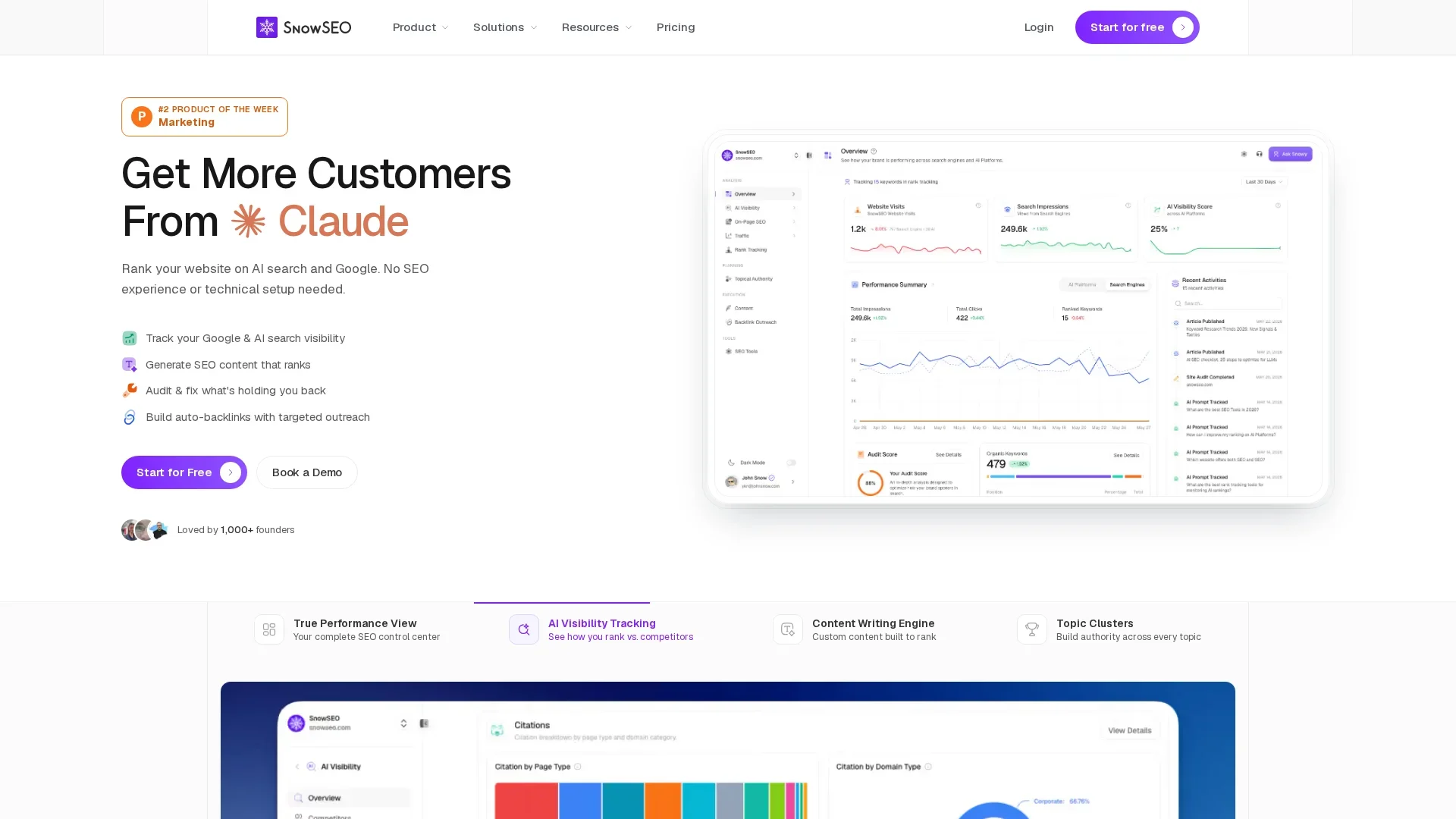
    SnowSEO is the best integrated platform for link building plus AI search visibility. It pairs backlink campaign workflows with keyword research, content creation, and AI mention tracking. That suits founders, agencies, and lean teams who want authority work tied to real rankings, not scattered across separate tools.

    SnowSEO
    SnowSEO

    Highlights

    • Tracks backlinks, rankings, competitors, and AI mentions in one workspace
    • Supports topic clusters, internal and external linking, and CMS publishing
    • Delivers self-serve campaign workflows, so teams execute as well as measure

    Specs

    • Best for: Founders, agencies, and marketing teams
    • Primary approach: Integrated SEO, content, backlink, and AI visibility workflows
    • Delivery model: Self-serve platform with campaign and publishing workflows

    Pros

    • Connects link building with content, rankings, and AI visibility
    • Useful for agencies managing several SEO workflows in one place

    Cons

    • Specialist enterprise digital PR may still need a dedicated agency
    • Deep backlink forensics may require a specialist research tool alongside it

    It ranks first because its integrated workflow covers both conventional SEO execution and AI visibility monitoring.

    Last updated: September 22, 2026

    Also Read: GEO Optimization vs Traditional SEO: Which Drives AI Visibility?

    2. Previsible

    Previsible treats authority building as more than link volume: trusted editorial links, citations, brand mentions, and digital PR. It’s a managed strategic service built for established brands that need relationship-driven outreach and research-led stories.

    Previsible
    Previsible

    Highlights

    • Combines editorial links, citations, brand mentions, and digital PR
    • Manual outreach judged on topical relevance and editorial integrity
    • Targets rankings, referral traffic, and AI citations

    Specs

    • Best for: Enterprise brands and growth teams
    • Approach: Editorial links, citations, mentions, and digital PR
    • AI search fit: Strong focus on AI citations and third-party trust signals
    • Delivery: Managed strategic service

    Pros

    • Broad authority strategy, not just backlink volume
    • Strong fit for reputation-sensitive brands
    • Connects digital PR to measurable search outcomes

    Cons

    • Too enterprise-focused for very small businesses
    • Demands campaigns strong enough to earn editorial attention

    Previsible ranks here because it bridges traditional authority and AI visibility with a disciplined editorial model, ideal for brands with high competitive stakes.

    Last updated: September 22, 2026

    Also Read: How to Build Citation-Worthy Content for AI Search

    3. LinkGathering

    LinkGathering is best for a transparent, process-led editorial link campaign. Its managed service runs through four stages: audit, curate, gather, and amplify, so you can see how each step fits together. A self-serve publisher marketplace adds flexibility if you want more control.

    LinkGathering
    LinkGathering

    Highlights

    • Uses a defined audit, curation, outreach, and amplification workflow
    • Offers managed link building and a self-serve publisher marketplace
    • Provides publisher vetting and campaign reporting
    • Supports agencies through white-label services and dedicated account management

    Specs

    • Best for: SEO teams and agencies wanting process visibility
    • Primary approach: Audited editorial placements and curated publisher selection
    • AI search fit: Relevant when campaigns prioritize credible, topical publishers
    • Delivery model: Managed service plus self-serve marketplace

    Pros

    • Clear four-stage delivery framework
    • Offers both managed and self-serve buying paths
    • White-label support is useful for agencies

    Cons

    • Marketplace choice can increase quality-control responsibility
    • AI visibility measurement may need to be paired with a dedicated tracker

    It ranks third because its process is easy to evaluate, and its managed and self-serve options suit different levels of involvement.

    Last updated: September 22, 2026

    Also Read: How to Optimize Content for Generative Engine Results

    4. Page One Power

    Page One Power is best for manual, relationship-led white-hat link building. Its team handcrafts outreach and earns editorial links through real connections, not link networks. This suits brands that want a specialist to handle slow prospecting work.

    Page One Power
    Page One Power

    Highlights

    • Uses manual outreach and relationship-based acquisition instead of automated spam
    • Targets relevant, reputable sites over raw backlink volume
    • Creates original content designed to earn editorial links
    • Serves small businesses through large organizations

    Pros

    • Strong white-hat, relationship-led positioning
    • Focuses on relevance and lasting authority
    • Fits many industries and company sizes

    Cons

    • Not a unified AI visibility platform like SnowSEO
    • Results depend on content and outreach quality

    It ranks fourth because handcrafted editorial links build the third-party authority AI search still rewards.

    Last updated: September 22, 2026

    Other Link Building Services to Consider

    The four detailed picks cover the strongest all-around options, but your buying situation may need something more specialized. These runners-up fill the gaps:

    1. Loganix – A flexible choice for agencies needing marketplace access, managed placements, or white-label fulfillment.
    2. Searchbloom – A relevance-first provider focused on white-hat methods, useful content, and quality over volume.
    3. Interamplify – A strong fit for editorial campaigns spanning multiple countries, regulated industries, and digital PR.

    How to choose the right link building service

    • Match the model to your need. Want campaigns, content, rankings, and AI visibility in one workflow? Pick an integrated platform like SnowSEO. Only need managed editorial outreach? A specialist agency fits better.
    • Check relevance before authority. Ask about publisher topical overlap, real traffic, and editorial history – not just DR scores.
    • Demand transparency. Good providers show their outreach, content, and publisher review process. Avoid bulk directories and private networks.
    • Confirm page and market support. E-commerce needs product-page links; B2B needs research citations.
    • Define measurement up front. Track placements, referring domains, referral traffic, and AI citation share.
    • Be wary of guarantees. No one can promise a specific ranking or permanent AI mention.

    Tip: Start with one service that covers measurement, like SnowSEO, then add agency outreach only if you have gaps.
    Homepage
    Homepage

    Ready to turn quality links into AI search authority? SnowSEO tracks your visibility on Google and AI platforms in one place. Start your free trial today.

    Frequently Asked Questions

    Q1: Which link building services help brands build authority for traditional and AI search?

    Services that earn editorial mentions on trusted sites work best. SnowSEO tracks how those links affect both Google rankings and AI answers, while specialist tools like AthenaHQ or Peec AI focus only on AI visibility.

    Q2: How many backlinks do I need to show up in ChatGPT answers?

    There is no fixed number. AI platforms favor links from relevant, cited sources, so ten quality mentions can beat hundreds of low-value ones.

    Q3: Do links from AI-focused platforms replace traditional link building?

    No. Strong backlinks still feed the signals AI engines use. Use both: build links, then measure their impact with SnowSEO or a similar tool.

    Q4: How long before link building affects AI search visibility?

    Usually one to three months for search rankings. AI answers update as sources get recrawled, so expect four to eight weeks before you see changes.

  • How to Map Keywords to AI Search Citations

    How to Map Keywords to AI Search Citations

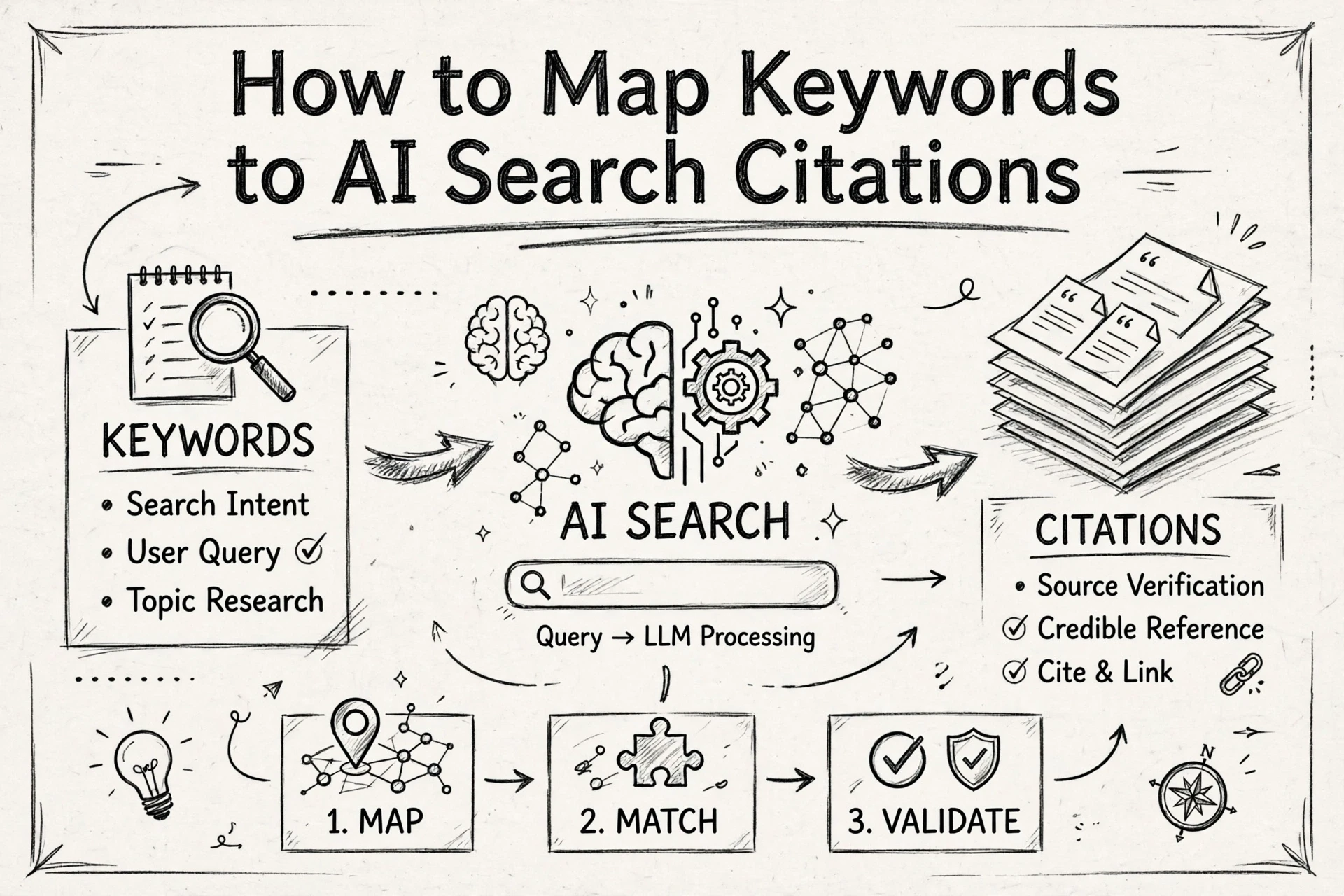
    Quick Summary: Ranking first for a keyword no longer guarantees visibility in AI search, since engines like ChatGPT cite pages that directly answer comparison or problem-based queries. To win those citations, build 8-12 prompts from your target keyword, log the exact URLs and passages AI systems cite, then fix your page’s answer shape, evidence, and clarity. Re-test the same prompts every 2-4 weeks, prioritize gaps by business value, and remember that tables and stats boost citability by up to 47%.

    Your page ranks #1 for “best project management software for small teams,” but ChatGPT cites three competitors. Why? Their passages answer the comparison question directly, so the AI can retrieve and quote them. Ranking alone tells you nothing about citability. This guide shows you how to map keywords to AI search citations: a repeatable workflow that turns what AI answers say into specific page and passage fixes you can apply today.

    Step 1: Turn One Target Keyword Into a Citation Query Set

    One keyword won’t tell you if AI engines cite you. AI engines rewrite each prompt into hidden sub-queries, so your keyword is just the starting point for a full set of prompts you can use to map keywords to AI search citations.

    Define the Keyword’s Intended Answer

    Write the one-sentence answer your page should earn a citation for. Ask: what decision does the searcher make after reading? A keyword like “email marketing pricing” has direct-answer intent; “best email tool for startups” has recommendation intent. Cited pages match the wording of the question closely, per citation mechanics research, so intent first, prompts second.

    Build Prompts From the Same Intent

    Turn the keyword into 8-12 prompts:

    1. The head question (“What is X?”)
    2. Comparison prompts (“X vs Y”)
    3. Problem prompts (“How do I fix X?”)
    4. Buyer prompts (“Best X for [audience]”)

    AI engines fan one question out into several narrower sub-queries, so specific, narrow prompts mirror what engines actually retrieve, as query fan-out analysis shows.

    Also Read: Keyword Research vs SEO Audits for Generative Search Success

    Step 2: Record the URLs and Passages AI Systems Cite

    Now capture what each answer actually references. Don’t just note that a competitor got cited – log the exact URL and the sentence the engine pulled from it.

    Use a Citation Mapping Spreadsheet

    Build a simple sheet with one row per citation:

    Column What to Log
    Prompt The query you ran
    Engine ChatGPT, Perplexity, Gemini, etc.
    Cited URL Exact page cited
    Passage The quoted or paraphrased line
    Date When you ran the prompt

    Run every prompt on each engine twice. Citation counts vary hugely by engine, so one snapshot misleads. Tools like SnowSEO and Otterly.AI can automate the collection across engines and dates.

    Pencil sketch of laptop with citation spreadsheet
    Pencil sketch of laptop with citation spreadsheet

    Classify the Competitor’s Citation Role

    Look at why each page earned its slot:

    1. Definition source – the engine used it to explain the topic.
    2. Comparison source – it fed a “best X” or “vs” answer.
    3. Evidence source – it supplied a stat or case study.

    This tells you which content type to build in Step 3.

    Also Read: Ahrefs Keyword Explorer Review for AI Search Research

    Step 3: Match Each Citation to a Page-Level Content Gap

    Now compare your page against each competitor citation. AI engines pick passages, not pages, so the gap is usually one liftable answer, not a whole rewrite. Google’s own guidance says there is no special markup – it judges whether your passage can be lifted cleanly.

    Compare Answer Shape, Evidence, and Clarity

    Score the cited passage against yours on three things:

    1. Shape – does it state a direct answer in the first 40-60 words? Self-contained passages win.
    2. Evidence – does it name specific numbers or sources? Statistics add roughly 30% to AI visibility.
    3. Clarity – would the sentence still make sense pulled out of the page?

    Choose an Edit That Improves the Source Passage

    Pick one fix per gap and log it: add a stat, front-load the answer, or convert a paragraph into a table or list. Table-based pages earn 47% more citations, per citation research. SnowSEO audits flag these passage-level gaps automatically.

    Marketer revising weak paragraph with pencil sketch
    Marketer revising weak paragraph with pencil sketch

    Also Read: Google AI Search Research Reveals New Keyword Opportunities

    Step 4: Re-Test the Keyword Map and Prioritize the Citation Gap

    Track Frequency, Stability, and Citation Role

    Re-run your full prompt panel two to four weeks after publishing changes. Log three things for each keyword: how often your page gets cited, whether the citation holds across repeated runs, and what role it plays. Being the single source for a claim is worth far more than appearing in a link dump.

    Keep the prompt set frozen. If you change the prompts, you change the baseline and lose your trend data.

    Citations drift a lot – studies show 40-60% of cited domains shift month to month, so one snapshot tells you little.

    Prioritize by Business Value

    Score each gap before you fix it. Simple matrix:

    Gap Effort Business Value Do First?
    Easy fix, high-value page Low High Yes
    Hard fix, high-value page High High Plan it
    Easy fix, low-value page Low Low Batch it

    Revenue-driving keywords and comparison prompts win. Tools like SnowSEO surface these gaps automatically, so you spend time writing, not sorting spreadsheets.

    Homepage
    Homepage

    Ready to turn keyword research into AI citations? SnowSEO maps keywords to mentions across ChatGPT and Claude. Start your free trial today.

    Frequently Asked Questions

    Q1: How can teams connect keyword opportunities with citations in AI-generated answers?

    Track which pages AI engines cite for your target terms, then map each citation back to its keyword cluster and update that page’s headings, passages, and schema to match.

    Q2: How often should I re-check AI citations?

    Weekly is enough for most sites. Re-check faster after publishing new content or when a competitor jumps into answers for your top terms.

    Q3: Do I need a dedicated AI visibility tool?

    You can check prompts manually, but tools like SnowSEO, Otterly.AI, or Peec AI automate tracking at scale and show citation trends over time.

    Q4: Which pages earn AI citations most often?

    Clear, well-structured pages: strong headings, direct answers in the first paragraphs, and specific data. Lists, tables, and definitions get cited more than long opinion pieces.

    Conclusion

    Mapping keywords to AI citations turns guesswork into a repeatable loop: run prompts, log who gets cited, fix the passages, retest. Research on 602 prompts shows cited pages share clear traits like modular structure and extractable evidence. Keep testing weekly.

  • Copy.ai Alternatives for Content Cited in AI Search

    Copy.ai Alternatives for Content Cited in AI Search

    Quick Summary: Copy.ai speeds up drafting but fails at the real test of AI search: getting content cited by ChatGPT, Perplexity, and Google AI. The article recommends SnowSEO as the top alternative because it bundles audits, keywords, content, rank tracking, and AI visibility checks into one workflow, unlike narrow tools like Peec AI or Otterly.AI that only monitor mentions. To pick a tool, run a five-step test checking source accuracy, first-hand insight, and 30-day citation tracking, since Google still prioritizes original, people-first pages over mass-produced text.

    A polished 2,000-word Copy.ai article can still miss ChatGPT, Perplexity, and Google AI results. The gap is not writing speed. It is knowing whether AI systems can find, trust, and cite your content. This review tests Copy.ai alternatives for AI search across that full loop. You will see which tools help with research, content gaps, AI visibility, and proof of results. For agencies and lean teams, Copy.ai alternatives for AI search need more than a text generator.

    What Copy.ai Does Well, and Where AI Search Changes the Test

    The gap between generating content and earning citations

    Copy.ai helps teams draft briefs, posts, and sales copy fast. That is useful when output is the bottleneck. But Copy.ai alternatives for AI search must solve a wider problem: finding citation gaps, adding proof, and tracking whether AI answers mention your brand.

    Copy.ai alternatives for AI search
    Copy.ai alternatives for AI search

    Google says AI search draws supporting pages from its index, with helpful and original content still central to visibility. See Google’s AI search guidance.

    Use this check before publishing:

    1. Add first-hand facts or expert quotes.
    2. Cite trusted sources and answer one clear question.
    3. Track AI mentions after the page goes live.

    Drafting is only step one. Citation-ready content needs evidence, structure, and ongoing visibility checks.

    Also Read: SnowSEO – Your Last SEO Platform

    The Best Copy.ai Alternatives for AI-Search Content

    Best for an integrated SEO and AI-search workflow

    Choose SnowSEO if your team needs one place to audit pages, find keywords, create content, track ranks, and review AI-search visibility. That reduces tool switching and makes it easier to connect a content brief to a measurable result.

    Google says generative search still relies on core ranking and quality systems, so strong SEO basics remain vital for AI visibility. Read Google’s AI search guidance before treating AI mentions as a separate channel.

    Need Best fit
    Full content-to-visibility workflow SnowSEO
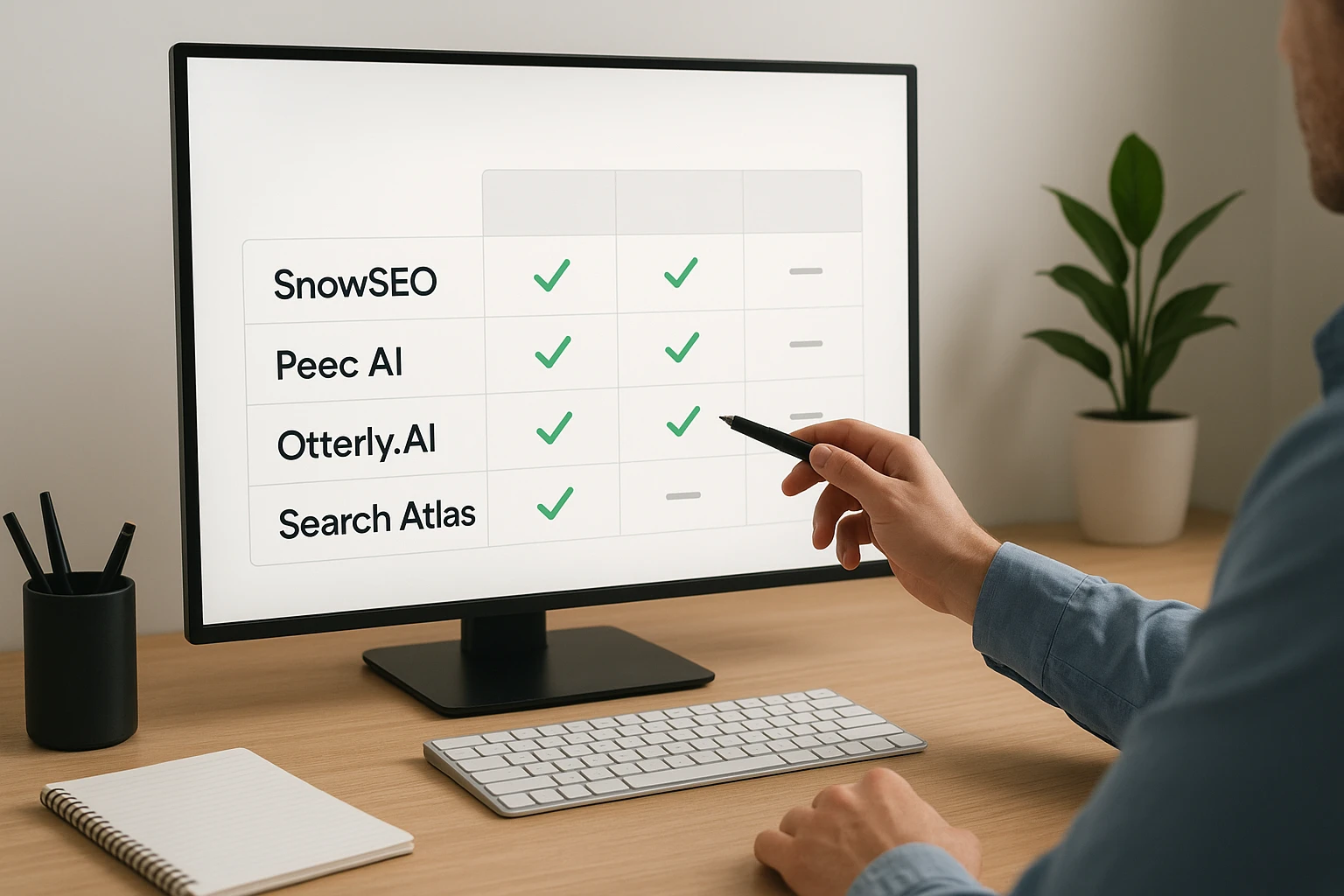
    AI-search monitoring only Peec AI or Otterly.AI
    Broad SEO suite Search Atlas or SERanking
    Modern office desk with analytics dashboard and search tools
    Modern office desk with analytics dashboard and search tools

    Tip: Review drafts for original examples, sources, and clear answers. AI output alone is not a citation strategy.

    Specialist alternatives: when a narrower tool is enough

    Pick a specialist if you already have a solid SEO stack. Peec AI, Otterly.AI, AthenaHQ, and Profound fit teams focused mainly on tracking AI mentions and prompts.

    Use a narrow tool when you need to:

    • Watch brand visibility across AI answers
    • Compare competitor mentions
    • Test a small set of high-value prompts

    Google favors useful, original, people-first pages, not mass-produced text, as its content guidance makes clear.

    Also Read: SnowSEO vs Writesonic for SEO Content Quality and Visibility

    How to Test Whether an Alternative Can Produce Citable Content

    A five-step buyer test

    Run the same brief through each platform, then score the output:

    1. Ask for one narrow answer with a named audience and intent.
    2. Check every claim against its linked source. Reject vague or broken citations.
    3. Look for first-hand insight, clear limits, and a useful point of view. Google favors original, people-first content, not recycled summaries.
    4. Edit one fact. Confirm the tool can update the claim and keep the source trail intact.
    5. Publish a test page, then track AI mentions and referral clicks for 30 days.
    Five-step buyer test flowchart on desk
    Five-step buyer test flowchart on desk
    Pass signal Red flag
    Verifiable sources Made-up citations
    Clear evidence Generic filler

    A draft is not citable until a human checks each key claim.

    Also Read: 7 AI Content Platforms With SEO and Rank Tracking

    Is SnowSEO the Right Copy.ai Alternative for AI Search?

    Choose SnowSEO if you need more than a writing tool. It joins audits, keyword research, content creation, rank tracking, and competitor checks in one workflow.

    Google says AI search still relies on core SEO signals and useful, original pages. Read its AI search guidance before chasing shortcuts.

    Best fit: teams that need to plan, publish, and track AI-search visibility, not just draft copy.

    Also Read: Google AI Updates Change How Marketers Measure Search Visibility

    Homepage
    Homepage

    Turn AI-ready drafts into content built to earn visibility. Use SnowSEO to audit gaps, plan topics, track rankings, and strengthen AI search citations.

    Frequently Asked Questions

    Q1: Alternatives to Copy.ai for generating SEO-optimized content that performs well in generative search engines?

    SnowSEO suits teams that need content creation tied to audits, keywords, rank tracking, and AI search visibility in one workflow. Check that any alternative can find citation gaps, not just draft copy.

    Q2: Can AI-written content earn AI search citations?

    Yes, if editors add clear facts, source-backed claims, useful structure, and first-hand insight. AI search tools reward pages that answer a specific question well.

    Q3: What should agencies track after publishing?

    Track keyword rankings, AI platform mentions, cited URLs, competitor visibility, and traffic quality. Review results by topic cluster so you can improve weak pages fast.

    Conclusion

    Choose SnowSEO if you need content, audits, and AI-search visibility in one workflow. The real edge is original, useful content with proof, which Google says supports generative search visibility.

  • Google AI Updates Change How Marketers Measure Search Visibility

    Google AI Updates Change How Marketers Measure Search Visibility

    Quick Summary: Google now reports AI Overviews and AI Mode impressions separately in Search Console, so marketers must track AI visibility as exposure, not ranking. Treat these impressions as a leading signal and validate them with clicks, conversions, and revenue, since position alone no longer guarantees visibility. Google says existing SEO still matters, with no special AI-only rules, so keep focusing on crawlability, helpful content, and structured data. Track trends monthly and compare AI-visible pages against business outcomes to avoid mistaking presence for profit.

    Google AI updates search visibility by folding AI Overviews and AI Mode links into Search Console Web data. New site-owner insights now show AI-feature impressions and page appearances. Google also offers an AI opt-out, but that removes related traffic.

    Google AI updates search visibility beyond rank reports. A cited page may gain exposure without clicks. This guide explains what the data shows, what it cannot prove, and how to connect Search Console, analytics, and revenue.

    Google’s New AI Search Data Changes the Visibility Baseline

    What Google Now Counts as AI Visibility

    Google AI updates search visibility by separating generative exposure from the old blue-link baseline. Search Console’s new reports count how often your URLs appear in AI Overviews, AI Mode, and generative Discover features. They also break exposure down by page, country, device, and date, as Google’s 2026 announcement explains.

    Pencil sketch infographic comparing AI search visibility metrics
    Pencil sketch infographic comparing AI search visibility metrics
    Old baseline New baseline
    Overall Web impressions Generative AI feature impressions
    Clicks and average position Appearing URLs, country, device, and time
    Rank-focused reporting Visibility plus visit quality

    Do not treat an AI mention as a ranking. Measure it as exposure, then compare clicks, leads, and sales by landing page.

    Google AI updates search visibility, but generative data is rolling out first to a subset of sites.

    Also Read: Google and AI Platforms Shift Guidance for Generative Search Visibility

    The Metrics Marketers Have, and the Ones They Still Need

    A Four-Layer Reporting Model

    Google now separates AI feature impressions for AI Overviews and AI Mode by page, country, device, and date in Search Console’s Generative AI report. Build reporting around four layers:

    1. Presence: AI impressions by page and market.
    2. Organic demand: Total Search Console impressions, clicks, and average position.
    3. Site value: Sessions, engaged sessions, leads, sales, and revenue in analytics.
    4. Business impact: Assisted conversions, repeat visits, and branded search growth.
    Pencil sketch of layered marketing funnel
    Pencil sketch of layered marketing funnel
    Layer What you can measure What is still missing
    AI presence Impressions, pages, countries, devices Queries, clicks, CTR, citation position
    Organic search Clicks, impressions, rankings Clear AI feature attribution
    Outcomes Conversions and revenue Direct AI-assisted conversion path

    Treat AI impressions as a leading signal, not proof of traffic or sales. Google says it is still exploring further reporting insights in its 2026 announcement.

    • Review trends monthly, not daily.
    • Compare AI-visible pages with conversion data.
    • Flag pages that gain presence but lose organic clicks.

    Also Read: SnowSEO – Your Last SEO Platform

    Google’s AI Results Make Ranking Reports Less Complete

    Why Position Is No Longer the Whole Story

    A rank of #1 no longer guarantees the most visible spot. AI Overviews and AI Mode can place answers, links, and follow-up paths above or around classic results. Google also uses query fan-out, which can pull in pages that do not rank for the exact search term, according to Google’s AI features guide.

    Track more than position:

    Signal What it tells you
    Classic rank Your placement in blue-link results
    AI impressions How often your pages appear in AI features
    Clicks and leads Whether visibility creates business value

    Google’s new AI report separates impressions by page, country, device, and date, but it does not yet show every reason a page was selected. Google’s announcement confirms the shift.

    Treat rankings as a useful clue, not your full visibility score.

    • Check pages cited in AI results.
    • Compare AI impressions with clicks and conversions.
    • Review trends weekly, not one keyword at a time.

    Also Read: GEO Optimization vs Traditional SEO: Which Drives AI Visibility?

    Why Google Says Existing SEO Still Matters

    Google’s AI features draw from its existing Search index and core ranking systems, so solid SEO remains the entry point. Google’s guidance says there are no separate AI-only rules to chase.

    Keep doing the work that makes pages easy to find and trust:

    • Allow crawling and indexing.
    • Build clear internal links.
    • Publish helpful, first-hand content.
    • Match structured data to visible page text.

    Do not spend your budget on special AI files or forced content chunks. Google says they are not required for AI Overviews or AI Mode.

    Homepage
    Homepage

    Track the signals that matter. Use SnowSEO to audit visibility, monitor rankings, and spot search changes before traffic drops.

    Frequently Asked Questions

    Q1: What do Google’s latest AI announcements mean for organic search visibility?

    AI answers can reduce clicks while still showing your brand. Track impressions, citations, branded searches, and assisted conversions, not rankings alone.

    Q2: Should I stop tracking keyword rankings?

    No. Keep rankings, but group them with click-through rate and page conversions. A top position matters less if AI results answer the query first.

    Q3: Which pages should I review first?

    Start with high-impression pages losing clicks. Check whether the query now triggers AI results, then add direct answers, proof, and clear next steps.

    Conclusion

    Measure AI visibility separately from traffic and revenue. Google now reports AI-feature impressions by page, country, and device in Search Console. Treat them as a signal, then validate business impact with conversions.

  • How to Optimize Content for Generative Engine Results

    How to Optimize Content for Generative Engine Results

    Quick Summary: Generative engine optimization (GEO) means structuring content so AI tools can extract clear, trustworthy answers, but it does not replace SEO, which remains the foundation. Start by mapping real customer questions, then write self-contained answers with cited evidence and clean technical signals like headings and schema. Track AI mentions separately from conversions, using Search Console for pre-click visibility and analytics for post-click value, and review both together. The goal is to earn AI citations without sacrificing proven search performance.
    A buyer can ask an AI tool for the best option, compare brands, and build a shortlist before opening a search result. The generative engine optimization process helps your content support those answers. The challenge is earning AI visibility without dropping proven SEO work. This guide gives you a practical generative engine optimization process for clear answers, crawlable pages, trusted sources, and useful measurement. It reflects how search, content, and AI discovery now work together.

    Step 1: Map the Questions Your Audience Asks AI Search Tools

    Build Prompt and Intent Clusters

    Start with real customer questions, not a long list of keywords. AI search often expands one prompt into related searches, known as query fan-out, so map the questions behind each buying decision.

    1. Collect questions from sales calls, site search, reviews, and support tickets.
    2. Group them by intent: learn, compare, solve, or buy.
    3. Write one clear page brief for each cluster.
    Pencil sketch of buyer intent flowchart
    Pencil sketch of buyer intent flowchart
    Intent Example prompt Content need
    Compare Which SEO platform fits an agency? Fair comparison
    Solve Why are product pages not ranking? Practical fix

    The generative engine optimization process starts with audience language, then adds your own evidence and experience.

    Also Read: SnowSEO GEO Optimization Review: Monitoring AI Brand Mentions

    Step 2: Write Answers That AI Systems Can Reliably Extract

    Lead With a Self-Contained Answer

    State the answer in the first two sentences. Define the subject, give the key action, and name any limits. A reader or AI system should not need earlier text to understand it.

    • Use clear headings framed as real questions.
    • Keep one main idea per paragraph.
    • Put steps, options, and facts in lists or tables.
    • Explain terms the first time you use them.

    Tip: Write the direct answer first. Add context only if it helps the reader act.

    Editor highlighting answer blocks beside source documents
    Editor highlighting answer blocks beside source documents

    Add Evidence and First-Hand Expertise

    Support claims with named sources, fresh dates, and details from your own work. Google advises creators to show clear sourcing and first-hand expertise in its people-first content guidance.

    Include:

    1. Test results or real examples.
    2. Limits, trade-offs, and failed attempts.
    3. Expert review and author details.

    Also Read: 10 Best Tools for Competitor SEO Analysis in 2024

    Step 3: Strengthen the Signals That Make Content Trustworthy

    Make the Page Accessible and Understandable

    Use clear headings, short answer blocks, and descriptive links. Keep key facts visible without a login or script barrier. Add accurate Article schema with author and update details. Google says structured data gives explicit clues about page meaning.

    Tip: Test important pages as an anonymous visitor.

    Build Authority Beyond Your Own Website

    Show who wrote the page, what they know, and where claims came from. Earn relevant mentions, expert reviews, and links through useful original research. Google advises clear sourcing, author background, and proven expertise as trust signals in people-first content.

    Also Read: GEO Optimization vs Traditional SEO: Which Drives AI Visibility?

    Step 4: Test, Measure, and Improve Your GEO Program

    Track Visibility and Business Outcomes Separately

    Track whether AI tools mention your brand, but do not treat mentions as revenue. Review a fixed set of buyer prompts each month and log citation rate, answer accuracy, sentiment, and competitor share.

    Measure What it tells you
    AI citations Whether your content is being surfaced
    Referral visits Whether mentions drive traffic
    Leads or sales Whether visibility creates value

    Use Search Console for search trends and analytics for on-site actions. Google notes that Search Console measures pre-click activity, while Analytics records what visitors do after arrival, including conversions such as sales and form fills (Google guidance).

    Change one page element at a time, then compare equal date ranges. Keep SEO and GEO reporting separate, but review both together.

    Homepage
    Homepage

    Turn your GEO plan into action with SnowSEO. Audit content, track AI visibility, and find practical fixes that improve search and generative engine results.

    Frequently Asked Questions

    Q1: How can marketers optimize content for visibility across generative engine results?

    Write direct answers, support claims with trusted sources, and use clear headings. Keep pages crawlable, current, and focused on real user questions.

    Q2: Does generative engine optimization replace SEO?

    No. Strong SEO improves discovery and access. GEO adds answer structure, entity clarity, and authority signals that help AI systems select reliable sources.

    Q3: What should teams measure for GEO?

    Track AI mentions, cited URLs, prompt coverage, referral traffic, and conversions. Compare results with organic rankings to see where visibility drives business value.

    Conclusion

    Generative engine results reward clear answers, sound technical SEO, real expertise, and trusted signals. Google confirms that SEO remains the foundation. Build useful content for people, then track visibility and conversions.

  • SnowSEO vs Writesonic for SEO Content Quality and Visibility

    SnowSEO vs Writesonic for SEO Content Quality and Visibility

    Quick Summary: SnowSEO is the better fit for teams wanting an integrated SEO workflow from audits and keyword research through drafting, rank tracking, and AI-search visibility, while Writesonic suits those needing fast standalone drafts. Neither tool replaces human editing, as Google prioritizes helpful, original content with verified facts and clear structure. Choose SnowSEO for connected SEO and AI visibility work, or Writesonic for quick first drafts.

    Fast drafts do not guarantee visibility. This AI content quality comparison weighs relevance, proof, structure, and publishing support. SnowSEO suits website-aware SEO teams tracking clusters, rankings, and AI visibility. Writesonic fits research-heavy workflows with citations. This AI content quality comparison also tests brand voice, intent, internal links, and measurable results.

    SnowSEO vs Writesonic: At a Glance

    SnowSEO Writesonic
    Content research and grounding Website context, keyword research, topic clusters, competitor research, and connected webmaster data SERP and competitor research, web research, keyword data, references, and source citations
    Brand and editorial quality Brand context analysis, knowledge base, human-like writing, and in-editor refinement Brand voice, knowledge inputs, multiple article modes, expert review, and humanization claims
    SEO optimization workflow Live SEO, readability, structure, keyword, linking, metadata, and content-gap guidance Keyword research, SEO scoring, content-gap analysis, clustering, internal linking, and technical recommendations
    AI-search visibility support AI visibility tracking, competitor comparison, citations, and GEO recommendations AI visibility tracking, citations, prompt monitoring, content optimization, and GEO workflows
    Publishing and measurement CMS integrations, scheduling, rank tracking, Google Search Console data, and performance monitoring Article publishing workflows, site audits, AI visibility metrics, and plan-based reporting

    How SnowSEO and Writesonic Compare

    SnowSEO

    SnowSEO connects research, brand context, drafting, on-page guidance, publishing, rank tracking, and AI visibility in one workflow. It suits teams that want an integrated AI content quality comparison from brief through measurement.
    SnowSEO

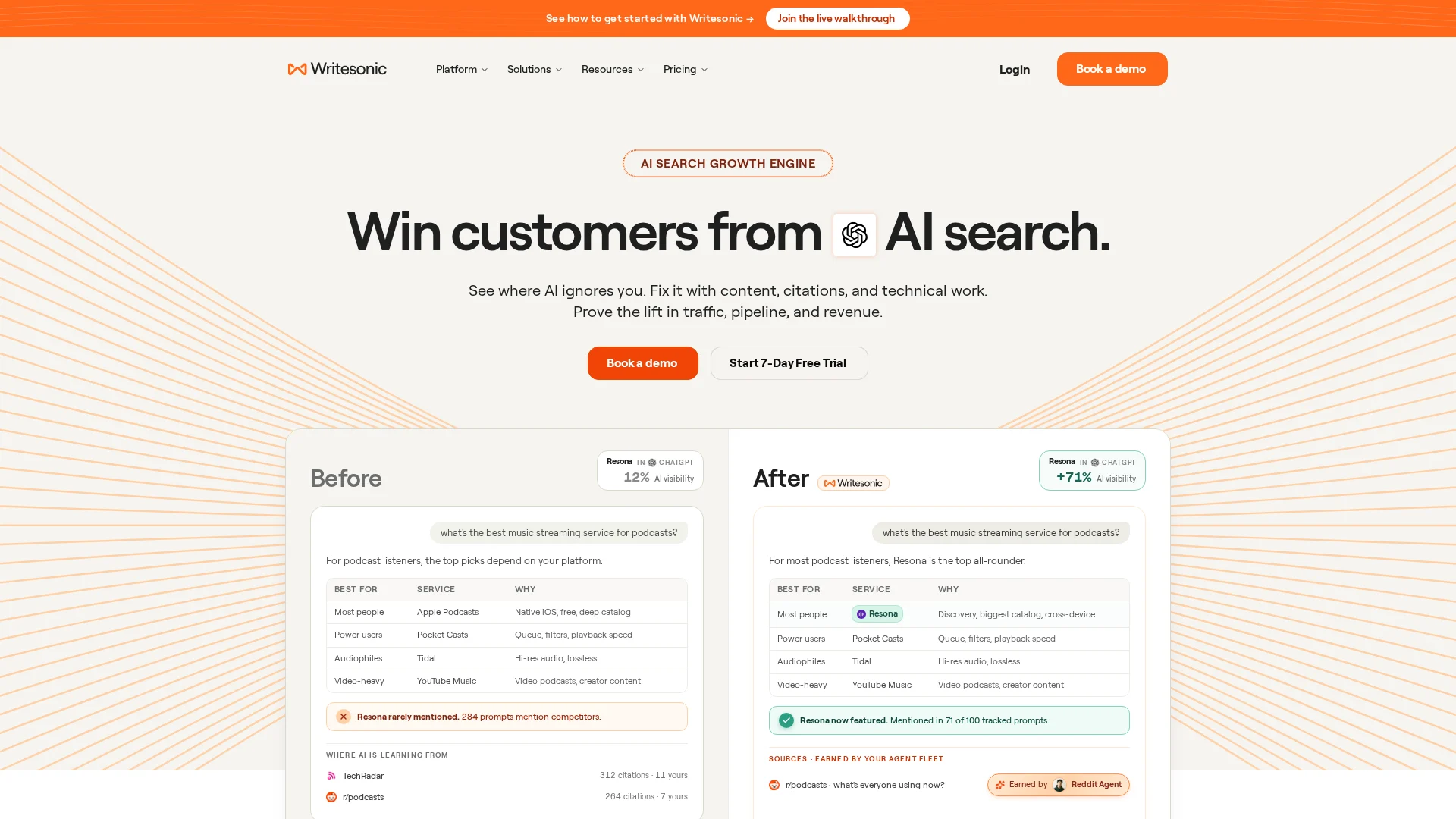
    Writesonic

    Writesonic targets content teams that need research-led article creation, SEO checks, and AI-search monitoring. Its SEO suite covers keyword research, content gaps, and internal linking.
    Writesonic

    Which Platform Produces More Useful SEO Content?

    Research, Relevance, and Factual Confidence

    SnowSEO is the stronger fit when content needs keyword research, audits, and visibility checks in one workflow. Writesonic can speed up drafting, but neither tool replaces source checks. Google prioritizes helpful, reliable, people-first content, not the tool that wrote it.

    Check Better approach
    Facts Verify claims before publishing
    Search intent Match the reader’s real question

    Brand Voice and Editorial Effort

    Give either platform a clear brief, examples, and expert notes. SnowSEO can reduce tool switching, while Writesonic may suit teams focused on draft volume. Human editing is still required.

    Tip: Add first-hand examples, then remove vague claims.

    Also Read: How to Choose SEO Tools for Your Marketing Workflow

    SEO Features That Influence Visibility

    Traditional SEO: Structure, Coverage, and Internal Links

    Strong visibility starts with clear headings, full topic coverage, and useful internal links. Google says links help it find pages and understand relevance, so use short, descriptive anchor text. Google’s link guidance supports this approach.

    Pencil sketch flowchart linking pillar and product pages
    Pencil sketch flowchart linking pillar and product pages

    AI Search: Citability and Visibility Feedback

    AI search needs the same sound base, plus clear answers and original proof. Keep key facts in text, cite sources, and track which prompts surface your pages. Google confirms indexed pages can appear as supporting links in AI results, but no placement is guaranteed. Read Google’s AI features guidance

    Check visibility trends alongside leads, not mentions alone.

    Also Read: 10 Best Tools for Competitor SEO Analysis in 2024

    Which Workflow Fits Your Team?

    Choose Writesonic if your team needs fast drafts and has editors who can handle research, fact checks, and publishing elsewhere.

    Choose SnowSEO if you want one workflow from audit to keyword choice, content, tracking, and AI-search checks.

    Pencil sketch of two workflow paths merging
    Pencil sketch of two workflow paths merging
    Team need Better fit
    Fast standalone drafting Writesonic
    Connected SEO and AI visibility work SnowSEO
    1. Set the topic and search intent.
    2. Add expert input and proof.
    3. Review facts before publishing.

    AI can speed up production, but Google still prioritizes original, people-first content, as its guidance explains.

    Also Read: SnowSEO Review: An SEO Tool for Content and Search Visibility

    Which Should You Choose: SnowSEO or Writesonic?

    Choose SnowSEO if you need one workflow for audits, keyword research, content, rank tracking, and AI-search visibility. Choose Writesonic if your main need is fast drafting.

    Need Better fit
    Full SEO and AI visibility workflow SnowSEO
    Quick first drafts Writesonic
    • Review every AI draft for facts and brand voice.
    • Track results after publishing, not just output volume.

    Google rewards helpful, original content, not content made only to chase rankings, per Google’s guidance.

    Homepage
    Homepage

    Compare content quality with real visibility data. Try SnowSEO to audit, create, track, and improve SEO and AI-search performance.

    Frequently Asked Questions

    Q1: How does SnowSEO’s AI content generation engine compare with Jasper AI and Writesonic in quality and SEO features?

    SnowSEO pairs content creation with audits, keyword research, rank tracking, and AI visibility work. Writesonic focuses more on drafting. Quality still depends on your brief, source checks, and edits.

    Q2: Can I publish AI drafts without editing?

    No. Check facts, claims, tone, internal links, and search intent before publishing.

    Q3: Which platform suits an agency?

    Choose the tool that connects research, production, tracking, and reporting in one workflow.

    Conclusion

    SnowSEO suits teams needing one workflow for research, creation, tracking, and AI visibility. Writesonic fits fast drafting. Google prioritizes helpful, original content, so human review still matters.

  • Google and AI Platforms Shift Guidance for Generative Search Visibility

    Google and AI Platforms Shift Guidance for Generative Search Visibility

    Quick Summary: Google’s 2026 guidance confirms that generative search visibility in AI Overviews and AI Mode still depends on standard SEO, not special AI markup or separate GEO tactics. The company is adding a Search Console report for AI impressions, but it measures visibility, not a universal rank, and site owners can opt out. Other platforms like ChatGPT reward clear, crawlable, locally accurate pages, so marketers should track citations and improve verifiable content rather than chase unproven AI ranking tricks.

    Google is tying AI Mode, AI Overviews, and Search Console reporting closer together in 2026. Yet its guidance remains clear: no special AI markup is needed. These generative search optimization updates reward crawlable, useful, well-structured pages that qualify for normal Search.

    Marketers still face mixed rules across AI platforms. This source-led analysis separates verified generative search optimization updates from unsupported GEO claims, so you can improve visibility without weakening core SEO.

    Google Expands AI Search While Keeping SEO at the Core

    Why Query Fan-Out Changes Content Planning

    Google’s AI Overviews and AI Mode can split one question into several related searches. Google calls this query fan-out. Its guidance is clear: generative results still use core Search ranking and quality systems, so solid SEO remains the base. Google’s AI search guide

    Plan pages around the full question, not one exact phrase.

    A clean flowchart branching from one central query into multiple topic nodes
    A clean flowchart branching from one central query into multiple topic nodes
    Content need Practical move
    Main answer State it early and clearly
    Related concerns Cover costs, steps, risks, and alternatives
    Proof Add first-hand examples, data, or expert insight
    1. Map the main query and likely follow-up questions.
    2. Build clear sections that answer each need.
    3. Link to deeper pages where the topic needs detail.

    Do not create thin pages for every query variation. Google warns this can become scaled content abuse.

    These generative search optimization updates favor useful coverage, clean structure, and indexed pages, not a separate AI-only SEO playbook.

    Also Read: 7 GEO Optimization Tools for Brand Visibility in AI Answers

    Google Adds New Controls and Reporting for Generative Search

    What to Measure Instead of a Single GEO Rank

    Stop chasing one GEO rank. Google now offers a generative AI report that tracks impressions for AI Overviews and AI Mode, split by page, country, device, and date. It is rolling out in Search Console, according to Google’s announcement.

    Clean analytics dashboard with multiple line graphs
    Clean analytics dashboard with multiple line graphs

    Track a small scorecard instead:

    Metric What it tells you
    AI impressions How often Google shows your URLs
    Pages surfaced Which content earns AI visibility
    Country and device Where visibility changes
    Conversions Whether AI-visible visits help the business
    1. Export weekly impressions.
    2. Flag pages gaining or losing exposure.
    3. Compare those pages with leads, sales, or sign-ups.

    The report measures visibility, not a universal AI rank. Google also lets site owners opt out of generative Search features, which removes related impressions and traffic.

    • Do not treat impressions as clicks.
    • Do not assume one prompt reflects all user results.
    • Use SnowSEO tracking alongside Search Console to compare Google visibility with other AI platforms.

    Also Read: GEO Optimization vs Traditional SEO: Which Drives AI Visibility?

    What Other AI Platforms Change for Visibility Work

    ChatGPT search can rewrite prompts, use location, and show linked sources. That makes clear, crawlable, locally accurate pages more useful than keyword-stuffed copy. OpenAI also says publishers should allow OAI-SearchBot if they want content included in summaries and snippets. Check its publisher guidance.

    Visibility task What to check
    Source eligibility Robots rules allow search crawling
    Answer quality Pages state facts, dates, prices, and limits clearly
    Local intent Business details match across your site and listings
    1. Test real buyer questions in ChatGPT and Claude.
    2. Record cited domains, answer gaps, and wrong claims.
    3. Publish first-hand proof: product specs, policies, expert input, and updates.

    Do not chase a secret AI ranking trick. Track citations and referrals, then improve the pages users can verify.

    Also Read: 10 Must-Have Tools to Streamline Your SEO in 2025

    How the Guidance Reached This Point

    Google first framed AI Overviews and AI Mode as an extension of core Search, not a separate ranking system. Its early guidance stressed crawlable pages, helpful content, clear structure, and accurate structured data.

    In May 2026, Google made that stance clearer in its generative AI search guide. The message is simple: strong SEO remains the base for AI visibility.

    Earlier assumption Current guidance
    New AI markup is required No special markup is needed
    More AI-written pages win Unique, useful content matters more
    GEO replaces SEO GEO builds on SEO fundamentals

    Treat unproven GEO tactics as tests, not requirements.

    Also Read: 10 Best Tools for Competitor SEO Analysis in 2024

    Homepage
    Homepage

    Turn shifting guidance into clear action. Use SnowSEO to audit visibility, track rankings, and improve content for Google, ChatGPT, and Claude.

    Frequently Asked Questions

    Q1: What recent changes from Google and AI platforms affect generative search visibility?

    Google still rewards helpful, original pages. AI platforms increasingly cite clear, trusted sources. Focus on accurate facts, strong headings, expert proof, and pages that answer a specific question fully.

    Q2: Should I create separate pages for AI search?

    No. Build useful pages for people first. Add direct answers, clear product details, and supporting evidence.

    Q3: How can I track AI visibility?

    Track brand mentions, cited URLs, and prompt results over time. Compare changes with organic rankings and traffic.

    Conclusion

    Generative search visibility still rests on sound SEO: indexable pages, clear answers, and original proof. Google confirms no special AI markup is required, so test claims before chasing GEO trends.

  • GEO Optimization vs Traditional SEO: Which Drives AI Visibility?

    GEO Optimization vs Traditional SEO: Which Drives AI Visibility?

    Quick Summary: GEO optimization and traditional SEO serve different goals: SEO drives rankings and clicks, while GEO earns mentions and citations in AI answers. They share the same foundations, so treat GEO as an added measurement layer, not a replacement. Start with solid SEO basics, then add GEO to track AI visibility and influence AI-led research. Use SEO data for traffic trends and GEO data for answer presence, and measure both separately.

    A top Google result may still miss a ChatGPT recommendation. GEO versus traditional SEO answers two different needs: search rankings and AI mentions. GEO versus traditional SEO is not a full reset. SEO builds findability, while GEO tracks AI retrieval and citations. This guide compares GEO versus traditional SEO so teams can use both with clear goals.

    GEO Optimization vs Traditional SEO: At a Glance

    Traditional SEO GEO optimization
    Primary visibility surface Ranked search results AI answers and generative search features
    Success metric Rankings, impressions, CTR, clicks, and conversions Mentions, citations, share of voice, sentiment, and AI referrals
    Content objective Satisfy search intent and earn clicks Provide clear, trustworthy, extractable answers
    Core authority signals Helpful content, links, technical quality, and expertise SEO foundations, entity clarity, corroboration, and source quality
    Best use case Sustainable organic traffic and discoverability Influence during AI-led discovery and evaluation

    How Traditional SEO and GEO optimization Compare

    Traditional SEO

    Traditional SEO improves visibility in ranked search results and earns qualified organic clicks. It suits teams focused on lasting traffic, using helpful content, links, technical health, and expertise to drive rankings, CTR, and conversions.

    GEO optimization

    GEO optimization helps brands appear in AI answers through mentions, citations, and recommendations. It suits teams shaping AI-led research and evaluation with clear, trustworthy, easy-to-extract answers. Google says SEO foundations still support generative search visibility.

    What Is the Difference Between GEO and Traditional SEO?

    Different Outputs, Shared Foundations

    Traditional SEO aims to earn rankings and clicks in search results. GEO aims to make your brand useful enough to appear in AI-generated answers, citations, and recommendations across AI platforms.

    The overlap is large: clear site structure, trusted sources, helpful pages, and strong technical health matter to both. Google says its AI features still rely on core Search ranking and quality systems, so SEO basics remain essential for Google visibility. Google’s guidance confirms this.

    Key insight: Treat GEO as an added measurement layer, not a replacement for SEO.

    • SEO tracks: rankings, organic visits, conversions
    • GEO tracks: brand mentions, citations, answer coverage

    Also Read: 10 Must-Have Tools to Streamline Your SEO in 2025

    How Content and Technical Strategy Change

    What to Keep From SEO

    Keep the basics: crawlable pages, clear internal links, fast mobile pages, and useful content. Google says AI features use the same core search foundations, with no extra technical requirements for eligible pages. Google’s guidance supports this approach.

    • Keep key facts in visible page text.
    • Match structured data to on-page content.
    • Build topic clusters around real user needs.
    SEO specialist mapping topic clusters with product team
    SEO specialist mapping topic clusters with product team

    What GEO Adds

    GEO changes the content brief, not the foundation. Write direct answers, show first-hand proof, and cover related questions AI systems may explore. Track citations, brand mentions, and referral conversions across AI platforms.

    SEO focus GEO addition
    Rank for queries Earn citations in answers
    Build topical pages Add clear, quotable facts
    Track organic clicks Track AI mentions and outcomes

    Also Read: 10 Best Tools for Competitor SEO Analysis in 2024

    How to Measure Visibility and Choose the Right Workflow

    Metrics That Should Not Be Confused

    Track Google clicks, impressions, CTR, and position separately from AI answer mentions, citation rate, and share of voice. Google defines CTR as clicks divided by impressions in Search Console.

    Clean split chart comparing clicks to AI citations
    Clean split chart comparing clicks to AI citations

    A high AI mention rate does not guarantee visits or sales.

    What to Look for in a GEO Tool

    Choose a tool that:

    • Tests priority prompts across AI platforms
    • Records brand mentions and cited URLs
    • Compares competitors
    • Links findings to content tasks and business results

    Use SEO data for traffic trends and GEO data for answer presence. SnowSEO can unite audits, rank tracking, and AI visibility work in one workflow.

    Also Read: 7 GEO Optimization Tools for Brand Visibility in AI Answers

    Which Should You Choose: GEO or Traditional SEO?

    Choose traditional SEO first, then add GEO where AI answers shape your buyers’ research. Google says its AI features still rely on core ranking and quality systems, so strong SEO remains the base for visibility in AI search.

    If your goal is Prioritize
    Earn rankings, traffic, and sales Traditional SEO
    Track brand mentions in AI answers GEO
    Build durable visibility across both SEO plus GEO

    Do not treat GEO as a replacement for technical health, useful content, and authority. Start with the basics, then monitor AI visibility.

    Homepage
    Homepage

    Build SEO and GEO in one workflow. Use SnowSEO to audit, track, and improve AI visibility.

    Frequently Asked Questions

    Q1: How does GEO optimization compare with traditional SEO for visibility in AI-generated answers?

    GEO helps AI systems find, trust, and cite your content. Traditional SEO builds ranking strength. Use both to earn traffic and AI answer visibility.

    Q2: Should I replace SEO with GEO?

    No. Strong technical SEO, useful pages, and authority still support AI visibility.

    Q3: What should I measure?

    Track AI mentions, citations, search rankings, qualified visits, and conversions.

    Conclusion

    Traditional SEO builds the foundation. GEO expands visibility across AI answers. Google confirms strong SEO still supports AI features, so measure both visibility and business results.