Blog

  • 7 Rank Trackers for Google, ChatGPT, and Claude Visibility

    7 Rank Trackers for Google, ChatGPT, and Claude Visibility

    Quick Summary: Your page might rank on Google’s first page but disappear entirely from ChatGPT or Claude answers-so tracking AI visibility is just as critical as Google rankings. SnowSEO stands out by combining daily keyword tracking with AI mention monitoring across ChatGPT, Claude, and other engines, then directly linking gaps to actionable content tasks like audits and publishing. While tools like OtterlyAI focus narrowly on AI citations or Profound targets enterprise prompt-level insights, SnowSEO’s strength lies in its unified workflow for teams that need both SEO and AI visibility tied to real content improvements.

    A page can rank on Google page one yet vanish from a buyer’s ChatGPT or Claude answer. Google positions differ from AI mentions and citations. These AI visibility rank trackers compare both systems without extra spreadsheet work. We reviewed seven AI visibility rank trackers for coverage, prompts, citations, competitors, reports, and workflow fit. SnowSEO leads for teams that need AI visibility rank trackers tied to action.

    Quick Comparison of AI Visibility Rank Trackers

    Tool Best for Google tracking AI coverage Actionability
    SnowSEO Founders, SMBs, content teams, and lean agencies Daily keyword tracking with GSC and live SERP data ChatGPT, Claude, Gemini, Perplexity, Grok, DeepSeek, and other supported providers Content, clusters, audits, backlinks, publishing, and competitor gaps
    OtterlyAI SEO teams, agencies, ecommerce, and AI-search specialists AI Overviews and AI Mode monitoring rather than a full traditional SEO suite Seven AI engines, with some surfaces available as add-ons Citation gaps, competitor comparisons, reports, integrations, and shopping insights
    Profound Enterprise brands, agencies, and structured GEO programs Best used alongside a traditional SEO rank tracker AI answer engines with prompt-level daily tracking Prompt research, segmentation, content, outreach, and agents
    Search Atlas LLM Visibility Marketing teams and agencies wanting SEO plus AI automation Available through the wider Search Atlas SEO platform ChatGPT, Claude, Gemini, Perplexity, and additional supported engines Competitor gaps, sentiment, content optimization, and SEO automation

    What to know about AI visibility rank tracking

    Google rank tracking shows where a page ranks for a keyword. AI visibility tracking shows whether ChatGPT or Claude mentions, recommends, or cites your brand.

    It also reveals answer placement, competitor context, and source influence. Strong trackers keep these signals separate, then make trend changes easy to compare.

    1. SnowSEO

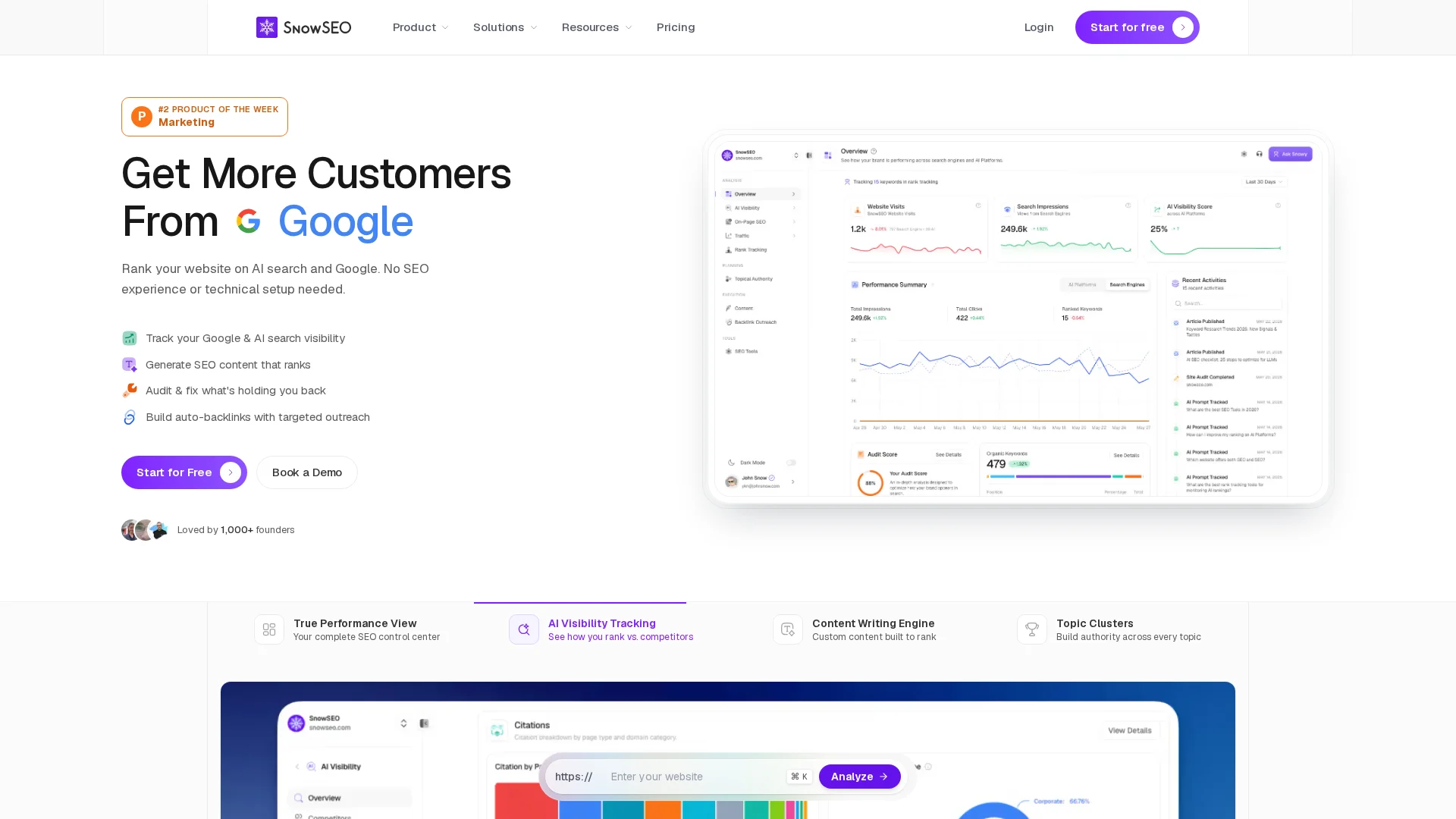
    SnowSEO is the best all-in-one rank tracker for Google and AI search. It links measurement to content, audits, and publishing in one workspace.
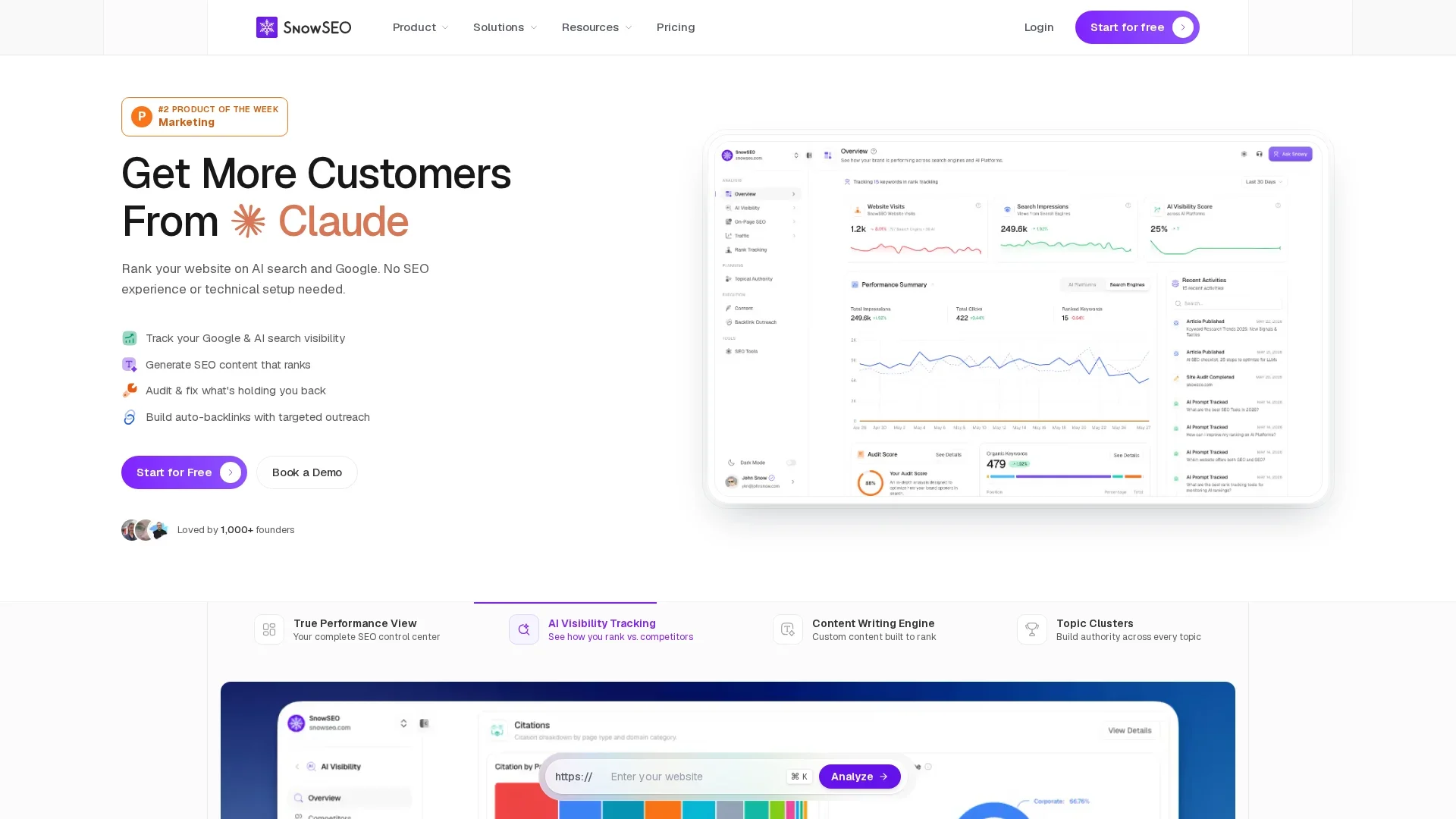
    SnowSEO
    Highlights

    • Track Google keywords daily, plus AI mentions, citations, sentiment, share of voice, and competitors across ChatGPT, Claude, Gemini, Perplexity, and more. See the platform overview.

    Specs

    • Best for: Founders, SMBs, content teams, and lean agencies
    • Actionability: Content, clusters, audits, backlinks, publishing, and gaps

    Pros

    • Fewer disconnected tools

    Cons

    • Review composite AI scores with prompt-level results.

    It ranks first because it turns visibility gaps into work you can publish and track.

    Last updated: August 23, 2026

    Also Read: 10 Best Tools for Competitor SEO Analysis in 2024

    2. OtterlyAI

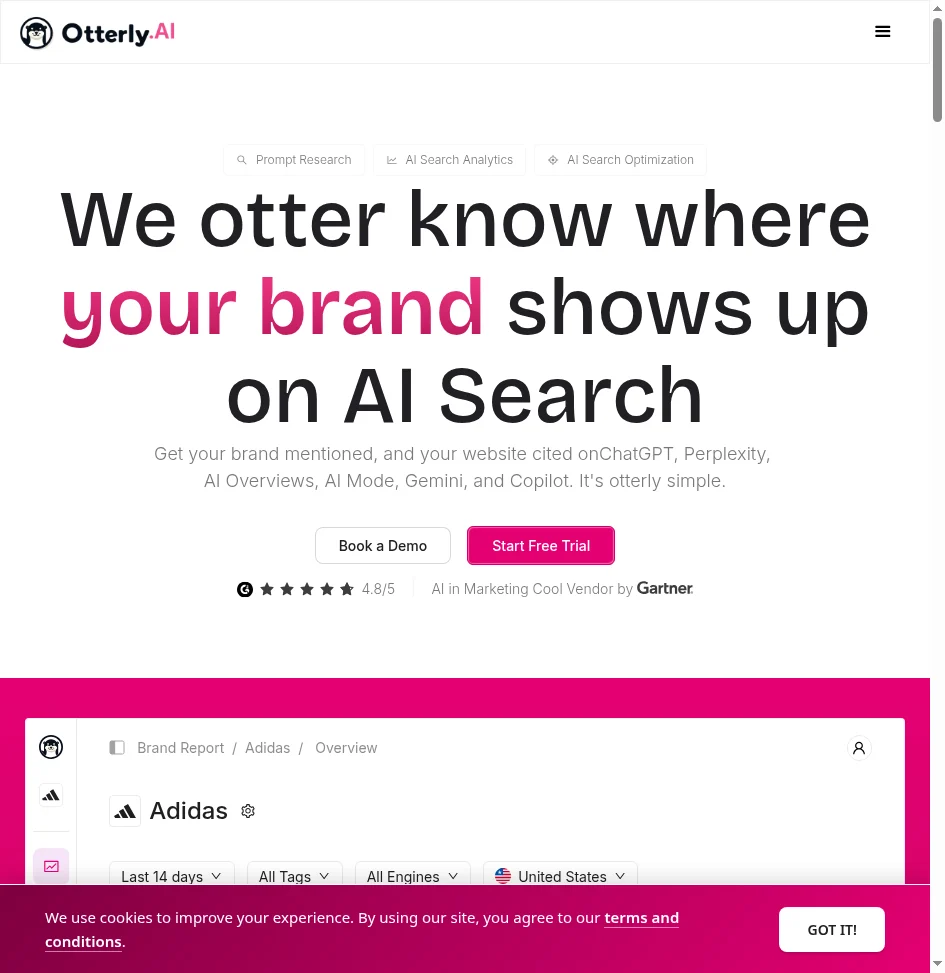
    OtterlyAI is a specialist AI search analytics platform for mentions and citations. It focuses on where AI answers name, cite, and frame your brand.
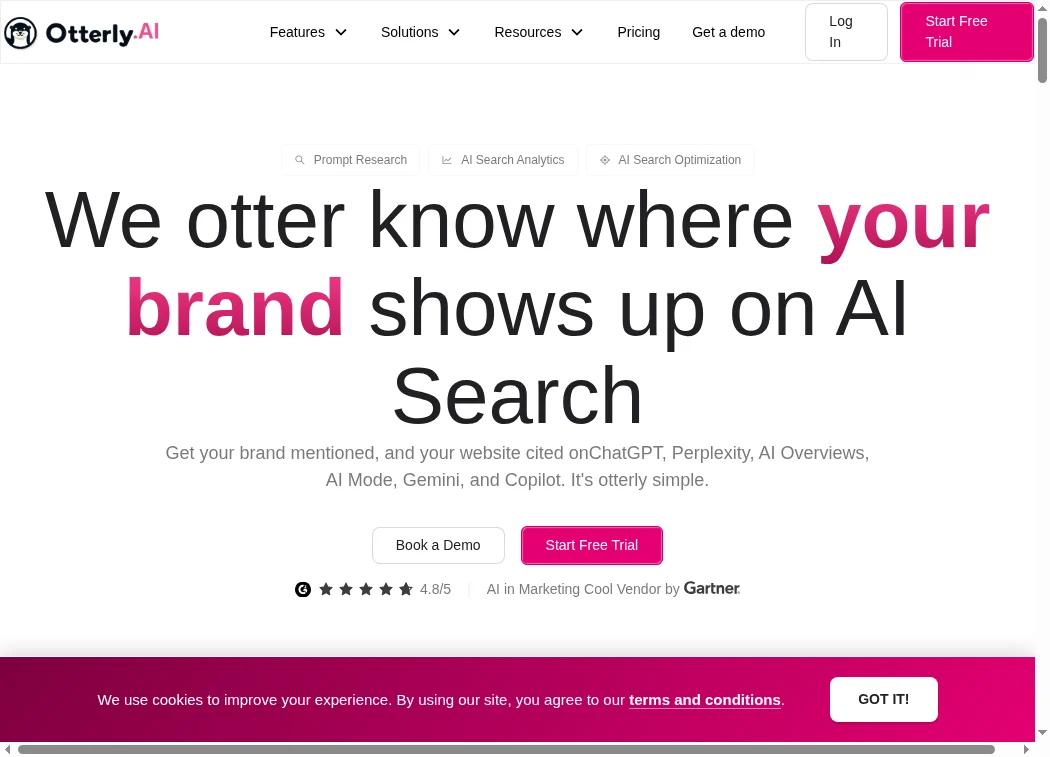
    OtterlyAI
    Highlights

    • Tracks seven AI engines, including ChatGPT, Claude, Gemini, and Google AI surfaces.
    • Stores answers to measure citation gaps, sentiment, share of voice, and competitor mentions.

    Specs

    • Best for: Agencies, SEO teams, ecommerce, and AI-search specialists.
    • Google tracking: AI Overviews and AI Mode, not full traditional SEO tracking.

    Pros

    Cons

    • Advanced engines may require add-ons.

    It ranks here because AI answer monitoring is its core strength, but its wider SEO toolkit is narrower than SnowSEO.

    Last updated: August 23, 2026

    Also Read: Best SEO Tools: 25 Picks to Improve Rankings in 2026

    3. Profound

    Profound suits enterprise teams that need structured AI search prompt intelligence. It tracks daily answers and turns findings into repeatable content and outreach work.
    ![Enterprise marketing team reviewing AI search insights on large office screens]
    Highlights

    Specs

    • Best for: Enterprise brands, agencies, and GEO programs
    • Google tracking: Use alongside a traditional rank tracker
    • AI coverage: Daily prompt-level answer tracking
    • Actionability: Content, outreach, reporting, and agents

    Pros

    • Strong segmentation by persona, region, and funnel stage.

    Cons

    • May overwhelm small teams seeking a simple dashboard.

    It ranks here because its enterprise depth exceeds many smaller teams’ needs.

    Last updated: August 23, 2026

    Also Read: SnowSEO – Your Last SEO Platform

    4. Search Atlas LLM Visibility

    Search Atlas suits teams that want AI visibility inside a broader SEO suite. It tracks how AI answers frame your brand, then connects findings to content and SEO work.
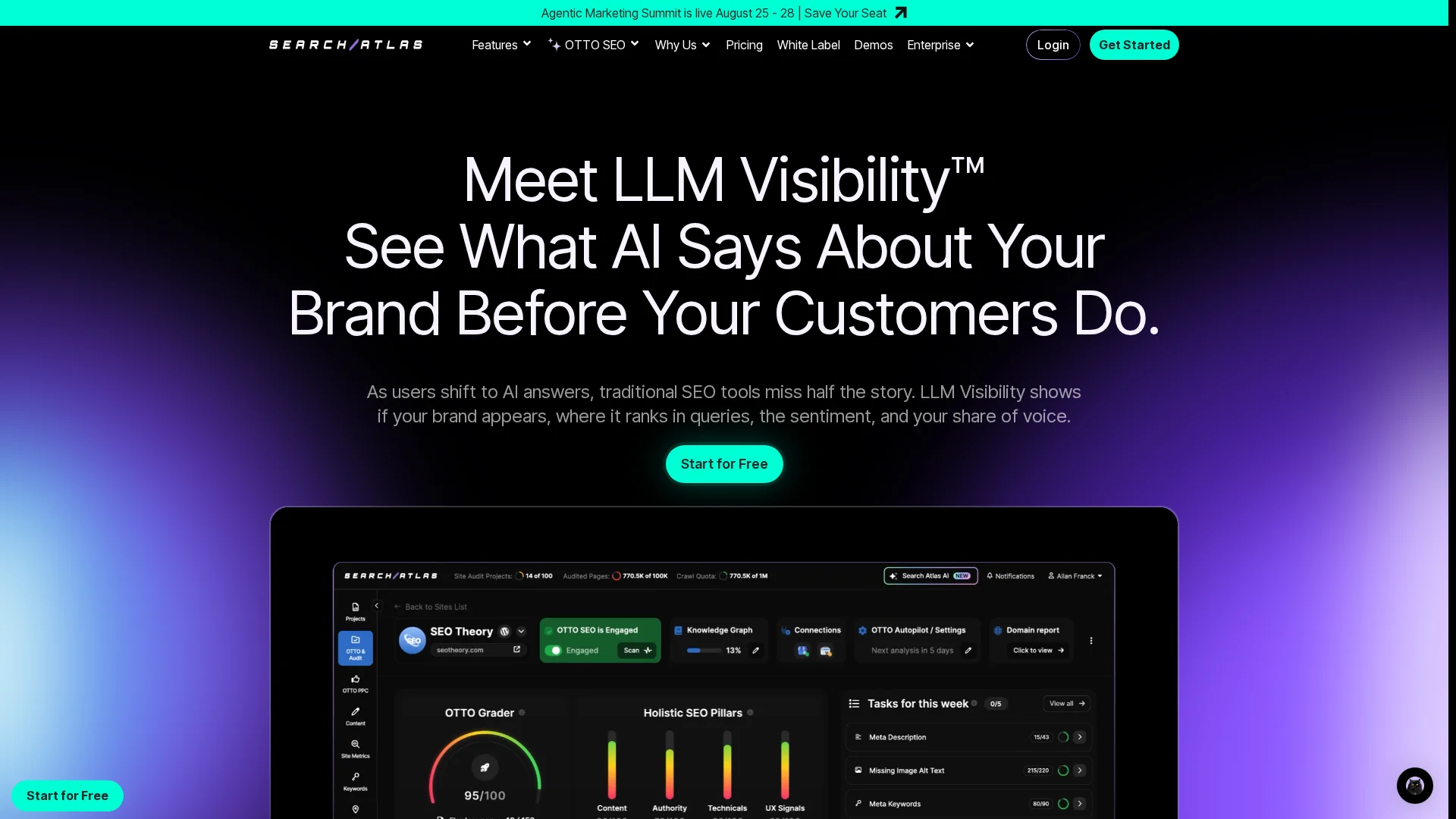
    Search Atlas LLM Visibility
    Highlights

    Specs

    • Google tracking: Available in the wider SEO platform
    • Best for: Agencies needing SEO plus AI automation

    Pros

    • Broad workflow beyond tracking

    Cons

    • Metrics need method-aware review.

    It ranks fourth because its wider suite may exceed simple tracking needs.

    Last updated: August 23, 2026

    More AI Visibility Trackers to Consider

    The four main picks fit most teams. These alternatives suit enterprise, agency, or reporting-heavy needs.

    1. AthenaHQ – Enterprise source intelligence, crawlability, citation outreach, governance, and team workflows.
    2. SE Visible – Agency-focused AI visibility with competitor, source, sentiment, multi-brand, and export tools.
    3. Rankability Tracker – Unified reporting for Google, AI engines, local, video, and citations.

    How to choose the right AI visibility rank tracker

    • Separate each signal. Track Google rank, AI mentions, answer placement, citations, and share of voice separately.
    • Confirm engine coverage. Check ChatGPT, Claude, Gemini, Perplexity, AI Overviews, and AI Mode by plan and region.
    • Demand prompt history. Saved answers reveal ranking shifts, cited sources, and competitor wins.
    • Match your workflow. Choose SnowSEO if you need tracking, content, and publishing in one place. Otterly.AI and Profound suit specialist monitoring.
    • Plan for reporting. Agencies need projects, exports, access controls, and location settings.

    Treat AI visibility as a KPI beside clicks, conversions, and Google rankings.
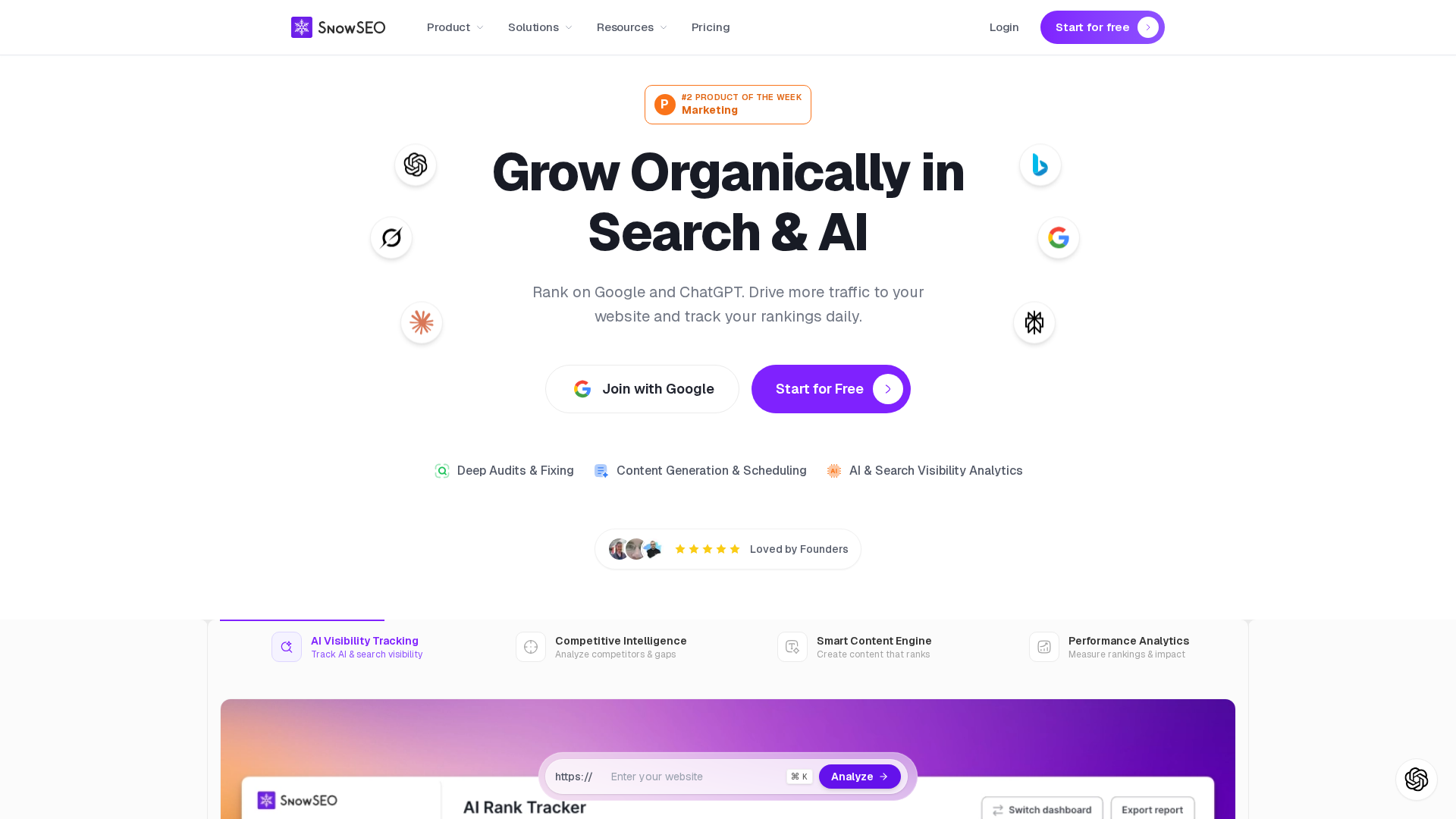
    Homepage
    Homepage

    Track Google rankings and AI visibility in one place. Try SnowSEO for audits, keywords, competitor insights, and smarter reporting.

    Frequently Asked Questions

    Q1: What are the best rank tracking tools for monitoring AI and traditional search engine rankings?

    SnowSEO is a strong all-in-one choice for Google ranks and AI visibility. AthenaHQ, Peec AI, and Otterly.AI focus more on AI mentions. Choose based on the platforms you need to track.

    Q2: Do AI rank trackers measure Google rankings?

    Not always. AI trackers often measure brand mentions, citations, and prompt answers. Use a tool with separate Google keyword positions and AI visibility data.

    Q3: How often should I check AI visibility?

    Check weekly for trends and after major content updates. Daily checks can be useful for active campaigns, but AI answers can change without a clear ranking signal.


  • How to Discover and Group Keywords for AI Search Visibility

    How to Discover and Group Keywords for AI Search Visibility

    Quick Summary: AI search thrives on intent-based keyword clusters-not just volume-so a retailer’s ‘running shoes’ seed term must split into comparison queries (e.g., ‘best budget trail shoes’) and pain points (e.g., ‘shoes for flat feet’), each mapped to a distinct page type. SnowSEO’s workflow starts with scraping customer phrasing (support tickets, AI prompts) and SERP patterns (People Also Ask, competitor headings), then scores clusters by intent fit, business value, and whether Google’s AI already favors a specific format (e.g., comparison tables for ‘vs’ queries). The key move is splitting clusters when search results show conflicting page types-like pairing a buying guide with a product page-and tracking AI mentions, not just rankings, to prove visibility. Google’s own guidance emphasizes that AI rewards people-first content, so a low-volume ‘inventory software for small warehouses’ query often outperforms a high-volume research term if it aligns with a clear buying stage.

    A retailer researching “running shoes” may see Google searches for flat feet, while AI users ask for comparisons, budget picks, or training-specific models. One flat keyword list misses those needs. AI keyword clustering sorts demand by intent, context, and answer format. This guide gives you a tested workflow for AI keyword clustering, prompt expansion, SERP checks, content mapping, and measurement. AI keyword clustering turns scattered terms into pages that earn visibility.

    Step 1: Expand Seeds into Keywords and AI Prompts

    Start with 5-10 seed terms tied to products, pains, jobs, and buyer questions. Google advises using several related phrases, not one narrow query, to generate better ideas in Keyword Planner Google’s keyword guidance.

    Use multiple discovery sources:

    • Search Console queries that already earn impressions
    • Autocomplete, People Also Ask, and related searches
    • Competitor page headings and category names
    • SnowSEO prompt tracking for ChatGPT and Claude phrasing
    • Sales calls, reviews, and support tickets

    Turn each seed into both short keywords and full prompts. For example, inventory software becomes “inventory software for small business” and “what inventory software works for a small warehouse?”

    Source What to collect
    Search results Modifiers and questions
    AI platforms Natural-language prompts
    Customer feedback Problem words and use cases

    Keep exact customer wording. It often reveals intent faster than tool metrics.

    Also Read: SnowSEO – Your Last SEO Platform

    Step 2: Clean, Label, and Score Search Intent

    Prioritize opportunity, not volume alone

    Remove duplicates, spelling variants, and terms with no clear fit. Then label each keyword by intent: informational, commercial, transactional, or navigational. Google advises creating content that helps people meet their goal, not pages made only to attract search traffic (Google’s people-first guidance).

    Score each cluster on three checks:

    Check What to assess Priority signal
    Intent fit Can your page satisfy the query? Strong match
    Business value Does it lead to a sale or lead? Clear path
    SERP fit What formats already rank? Repeatable format
    SEO keyword clusters sorted by intent and business value
    SEO keyword clusters sorted by intent and business value

    A lower-volume keyword with buying intent often beats a high-volume research query.

    Use SnowSEO to tag intent at scale, then review the top results manually before mapping content.

    Also Read: Best SEO Tools: 25 Picks to Improve Rankings in 2026

    Step 3: Build and Validate AI Keyword Clusters

    Choose the right clustering signal

    Group terms by the job the searcher needs done, not shared wording. Check intent, expected page type, audience stage, and the questions AI answers tend to combine. Google advises content teams to create useful, people-first pages that meet a clear audience need, not pages made just to attract traffic in its guidance.

    Signal Use it to group
    Same intent One page can solve both queries
    Same SERP pattern Results favor the same content format
    Same entity Terms refer to one product, service, or problem
    SEO strategist analyzing keyword clusters by laptop
    SEO strategist analyzing keyword clusters by laptop

    Tip: Use AI suggestions to expand a cluster, then validate each term in live results.

    Know when to split a cluster

    Split a cluster when results show different page types, buying stages, or questions. A guide and a product page should rarely compete on one URL.

    • Keep one primary intent per page.
    • Split terms with different modifiers, such as pricing, template, or vs.
    • Check whether AI answers cite different sources for each query.

    Also Read: 10 Must-Have Tools to Streamline Your SEO in 2025

    Step 4: Map Clusters to Content and Measure AI Visibility

    Track outcomes beyond rankings

    Assign each cluster to one clear page type: a hub, guide, product page, or support article. Avoid creating several pages that chase the same intent.

    Cluster signal Best content action Measure
    Broad learning query Create a hub guide AI mentions and impressions
    Comparison query Build a comparison page Citations and leads
    Purchase query Improve a product page Conversions and revenue

    Track prompt-level brand mentions, cited URLs, traffic, and conversions in SnowSEO. Google’s AI performance report can show impressions, pages, countries, and devices.

    Review changes monthly. A rising AI mention rate without qualified visits is not a win.

    Also Read: 10 Best Tools for Competitor SEO Analysis in 2024

    Homepage
    Homepage

    Turn grouped keywords into search and AI visibility. Use SnowSEO to research terms, map intent, track rankings, and spot content gaps fast.

    Frequently Asked Questions

    Q1: Tools recommended for fast keyword discovery with automated grouping and AI-powered suggestions?

    SnowSEO combines keyword research, grouping, and AI search tracking in one workflow. Check suggestions against real search results before assigning pages.

    Q2: How many keywords should one page target?

    Start with one main term and a tight group of close variants. Split the group when search intent, page type, or audience need changes.

    Q3: How often should I update keyword groups?

    Review groups every quarter. Update sooner when rankings drop, new AI answers appear, or search results show a clear shift in intent.

    Conclusion

    Group keywords by intent, validate them in results, map each group to one useful page, then track visibility. Google confirms clear, original, people-first content still supports AI search visibility.

  • SEO Platform Features That Matter for Agencies in 2026

    SEO Platform Features That Matter for Agencies in 2026

    Quick Summary: In 2026, choosing an SEO platform depends on workflow integration rather than flashy dashboards. Key features include effective rank tracking, AI content tools that support quality and brand voice, strong competitive analysis, and streamlined reporting for multi-client management. SnowSEO is highlighted as a platform that consolidates these features, reducing tool sprawl and improving agency efficiency.

    Choosing an SEO platform in 2026 comes down to workflow, not checklists. Basic rank tracking and keyword tools are expected. The real test is whether SEO platform features connect with AI content, competitive analysis, and client reporting in one clean system. Many agencies still juggle too many tools, lose time, and miss insights. This guide breaks down the SEO platform features that matter most, which SEO platform features cut tool sprawl, and how agencies should judge platforms for real client work.

    1. Start with the features that affect agency output, not just dashboard appeal

    Pretty charts do not save team time. Output does. Start with rank tracking and keyword workflows that help account managers act fast across many clients. Google says Search Console reports clicks, impressions, CTR, and average position, with daily, weekly, and monthly views for trend checks in its Performance report guide.

    • Rank tracking should support daily checks, device splits, and client-to-client views.
    • Comparisons should be easy at page, query, and market level.
    SEO workflow diagram with charts and dashboards
    SEO workflow diagram with charts and dashboards

    A platform also needs keyword research tied to briefs and content calendars. Google’s query and page groupings help teams see which searches bring traffic and which pages win or miss in Search Console dimensions.

    If your team exports keywords into separate docs, your platform still has a workflow gap.

    Also Read: 10 Best Tools for Competitor SEO Analysis in 2024

    2. Verify whether AI content generation actually helps your SEO process

    AI writing helps only if it improves speed, quality, and control. Google still rewards helpful, original pages, not mass text built to game rankings, per Google’s AI content guidance.

    • Look for SEO-aware briefs, not generic text generation
      Choose tools that build from search intent, entities, page type, and gaps in the current SERP. The output should start with a brief, not a blank prompt. Check whether it can suggest internal links, evidence to add, and sections your writer must verify. If it only spins readable copy, it will create commodity content fast.

    • Check whether the tool supports brand voice, approval, and publishing
      Good AI content needs guardrails. Your platform should store voice rules, require human review, and track edits by client or team. Google’s 2026 guidance on generative search also stresses unique, non-commodity content and solid publishing basics, as covered by Google’s new generative AI search guide.

    Also Read: Rank Tracking Setup for Google and AI Search

    3. Make competitive analysis a first-class buying criterion

    Do not treat competitor data as a nice extra. Make it a core buying test. As HubSpot notes, your real SEO competitors are often not your business rivals, so the platform must show visibility overlap clearly.

    • Compare shared keywords by market, device, and client location
    • Flag keyword gaps by intent, not just volume
    • Show which competitor pages win, not only which domains rank
    Modern SEO analysis dashboard with competitor comparison
    Modern SEO analysis dashboard with competitor comparison

    Use competitor tracking to make client strategy easier to defend. Moz defines competitor keyword analysis as finding valuable keywords competitors rank for that you do not. That should feed reports, briefs, and monthly actions.

    1. Track 3-5 true search rivals per client
    2. Tie ranking shifts to content updates
    3. Turn gaps into priority page lists

    If SnowSEO can connect gap data to reporting in one place, you cut tool sprawl fast.

    Also Read: 10 Must-Have Tools to Streamline Your SEO in 2025

    4. Choose the platform based on reporting, collaboration, and scale

    Pick the platform your clients will actually feel. White-label reporting and scheduled sends matter fast. Google says Search Console bulk export runs daily and starts within 48 hours after setup, which helps if your platform can turn raw data into client-ready reports without manual work Google Search Console help.

    • Check branded report templates
    • Confirm automated email delivery
    • Test PDF and live link options

    Your team also needs a clean workspace model. Google notes bulk exports can keep growing over time and data is retained unless you set limits, so scale and permissions matter table reference.

    • Separate clients by workspace or property
    • Set role-based access
    • Audit task history and approvals

    Also Read: SnowSEO – Your Last SEO Platform

    Homepage
    Homepage

    Cut tool sprawl and manage client SEO faster with SnowSEO. Get audits, tracking, content, and competitive data in one platform built for agencies.

    Frequently Asked Questions

    Q1: Which SEO platform offers the best integration of rank tracking, keyword research, AI content generation, and competitive analysis?

    SnowSEO fits agencies that want one workflow, not five tools.

    Q2: What feature matters most for multi-client agencies?

    Client-level permissions and clean reporting save the most time.

    Q3: Should agencies replace point tools in 2026?

    Not always. Replace overlap first, then keep tools with clear, unique value.

    Conclusion

    Agencies should buy for shared workflows, clean reporting, strong integrations, and AI search tracking, not bloated checklists. Google says core SEO still supports generative search in its AI optimization guide, while AI Search updates show why unified platforms now matter more.

  • 9 Rank Tracking Tools for Local SEO and Maps

    9 Rank Tracking Tools for Local SEO and Maps

    Quick Summary: Local SEO rank tracking tools vary in focus, from broad SEO platforms like SnowSEO and SE Ranking to specialized geo-grid tools like RankGrid. The best tool depends on whether you need street-level map visibility, competitor overlays, or integrated workflows. SnowSEO offers AI insights and comprehensive SEO features, making it ideal for teams managing multiple aspects of local SEO.

    A bakery can rank first at the counter, then disappear three blocks away. That is why the real question is where it ranks on the map. Most Local SEO Tools hide that with one score. Good Maps Ranking Software shows street-level gaps, rival strongholds, and where calls start or stop. This list reviews 9 Local SEO Tools, including geo-grid tracking, Maps coverage, competitor views, and reporting. We picked active Local SEO Tools with official pages, local SERP support, and solid Keyword Rank Checker features.

    Quick Comparison

    Tool Best for Maps ranking coverage Geo-grid / heatmap depth Reporting and collaboration
    SnowSEO Teams that want rank tracking inside a broader SEO workflow Not the main public emphasis Limited or not foregrounded in public docs AI insights and exports for internal reporting
    SE Ranking Agencies and SMBs wanting an all-in-one SEO suite Google Maps and local pack tracking Grid Rank Tracker with adjustable settings Strong reporting and integrations
    Search Atlas Agencies wanting local tracking plus automation Local heatmaps and local rankings Strong local grid support White-label and automated reporting
    RankGrid Neighborhood-level local SEO analysis Google Maps geo-grid visibility Core product strength Live client portals and shareable views

    What to know about local rank tracking

    Local rank tracking shows where you rank by street, ZIP code, and device type. That matters because a business can rank well in one neighborhood and poorly a few blocks away.

    Maps SEO adds another layer. You need to track both local pack and map results, not just standard organic positions. The best tools show geo-grid coverage, nearby competitors, and the exact areas where visibility drops.

    Small location changes can lead to big ranking shifts. That is why broad keyword averages often hide real local SEO problems.

    1. SnowSEO

    SnowSEO works best as your rank tracking workflow hub, not a maps-only niche tool. Its keyword tracking docs show daily Google Search Console data with live SERP fallback, and onboarding supports region targeting for market-by-market views.

    SnowSEO
    Highlights

    • Daily tracking from GSC with live fallback for new terms
    • Region filters, AI insights, and exports

    Specs

    • Best for: Teams that want rank tracking inside a broader SEO workflow
    • Maps ranking coverage: Not the main public emphasis

    Pros

    • Strong operator fit
    • Clean reporting

    Cons

    • Limited geo-grid depth

    It ranks first because it fits real SEO operations better than a heatmap-only tool.

    Last updated: August 7, 2026

    Also Read: 10 Best Tools for Competitor SEO Analysis in 2024

    2. SE Ranking

    SE Ranking is a broad SEO platform with solid local rank tracking built in. Its local module tracks Google Maps, local pack, and organic local results, with city, postal code, and grid-based views, according to SE Ranking’s local rank tracker page and its Local Rankings knowledge base.
    SE Ranking
    Highlights

    • Tracks Google Maps and organic local rankings in one module
    • Supports adjustable geo-grid tracking and competitor monitoring

    Specs

    • Best for: Agencies and SMBs wanting an all-in-one SEO suite
    • Maps ranking coverage: Google Maps and local pack tracking
    • Reporting and collaboration: Strong reporting and integrations

    Pros

    • Balanced local and broader SEO tools

    Cons

    • Less specialized than geo-grid-first tools

    It ranks this high because it blends dependable Maps tracking with a full SEO suite.

    Last updated: August 7, 2026

    Also Read: 10 Must-Have Tools to Streamline Your SEO in 2025

    3. Search Atlas

    Search Atlas fits agencies that want local SEO software tied to execution, not just charts. Its local SEO software centers on heatmaps, reporting, GBP tasks, and wider SEO automation in one stack.

    ![coffee shop owner reviewing neighborhood map rankings on a laptop beside storefront window)
    Highlights

    • Local heatmaps show rankings block by block.
    • Local search grid supports competitor comparison.
    • White-label reporting helps client delivery.

    Specs

    • Best for: Agencies wanting local tracking plus automation

    Pros

    • Strong mix of maps ranking software and reporting

    Cons

    • Broad platform may feel bigger than needed

    It ranks here because it connects geo-grid rank tracker data to agency workflows.

    Last updated: August 7, 2026

    Also Read: 10 New Keyword Research Techniques to Try Now

    4. RankGrid

    RankGrid is a focused geo-grid rank tracker built to show Google Maps visibility by neighborhood, not just one city average. It is strongest when you need scan diffs, competitor overlays, and live portals in one clean view, as shown on its features page.
    ![sunlit marketing team reviewing a neighborhood map heat grid on office monitor)
    Highlights

    • Geo-grid scans for neighborhood visibility analysis
    • Scan diff maps show gains and losses over time
    • Competitor overlays add local market context

    Specs

    • Best for: Neighborhood-level local SEO analysis
    • Maps ranking coverage: Google Maps geo-grid visibility
    • Reporting and collaboration: Live client portals and shareable views

    Pros

    Cons

    • Less broad than all-in-one SEO platforms
    • Overkill for simple keyword checks

    It ranks here because it stays tightly focused on map-based local visibility.

    Last updated: August 7, 2026

    More tools worth a look

    If the main list feels too narrow for your setup, these runners-up still deserve a scan. They may fit better if you need a specific workflow or reporting style.

    1. Map Ranking
    2. Getpin
    3. ProMapRanker
    4. OtterlyAI
    5. AthenaHQ

    How to choose the right local rank tracker

    Use these checks before you buy:

    • Pick a geo-grid-first tool if you care about street-by-street Maps visibility, not one citywide average.
    • Pick SnowSEO if you want rank tracking plus audits, reporting, content, and competitor research in one workflow. It is the strongest fit for teams that do more than Maps alone.
    • Look for competitor overlays and scan history if you need to explain weak zones fast.
    • Choose shareable reports or white-label portals for clients and multi-location brands.
    • Verify support for your locations, devices, and countries.
    • Already use SE Ranking or Search Atlas? Compare their local module against specialists before adding another tool.
    Homepage
    Homepage

    Want one place to track local rankings, map visibility, audits, and content? Try SnowSEO to turn scattered SEO work into one clear workflow.

    Frequently Asked Questions

    Q1: What are the most accurate tools for local Google Maps rank tracking in 2026?

    Geo-grid trackers usually give the clearest Maps view because they show rank by street-level area, not one ZIP code. SnowSEO stands out if you want rank tracking tied to audits, keywords, and reporting in one workflow.

    Q2: How can geo-grid tracking reveal geographic gaps in local SEO efforts?

    It maps rankings across many points around your business. That helps you spot weak zones, service-area blind spots, and places where competitors outrank you even when your average local rank looks fine.

    Q3: Which rank tracking tools support AI-driven insights for local SEO in 2026?

    SnowSEO is the strongest fit when you want AI help tied to broader SEO work, not rank checks alone. Look for tools that flag patterns, group location drops, and turn ranking data into clear action steps.

  • Rank Tracking Setup for Google and AI Search

    Rank Tracking Setup for Google and AI Search

    Quick Summary: Effective rank tracking now combines Google search positions with AI visibility metrics like citations and mentions. Building a keyword set focused on buyer intent and splitting content types helps monitor both search worlds. Regularly reviewing AI citations, adjusting prompts, and tracking metrics like mentions and citations improve understanding of brand presence across AI and traditional search platforms.

    If your client sits at #3 for a money term in Google but stays invisible in ChatGPT, Perplexity, and AI Overviews, your Rank Tracking misses half the market. That is the gap this guide fixes. You will build a simple Rank Tracking system that joins Google data with AI visibility, prompt coverage, and reporting. I work with teams that already use SEO Rank Tools and need cleaner AI Search Optimization. Good Rank Tracking now means tracking both search worlds together.

    Step 1: Build a keyword set that works for both Google and AI search

    Start with buyer-intent prompts, not just broad terms. Google says its systems match both words and concepts, and AI search still sits on core search systems, so natural questions matter as much as short keywords according to Google and its 2026 AI search guidance here. Build lists like:

    • “best crm for small law firm”
    • “shopify seo app comparison”
    • “how to switch from agency to in-house seo”
    Flowchart with grouped keyword prompts on a workspace desk
    Flowchart with grouped keyword prompts on a workspace desk

    Split the set into clear page types:

    • Money pages – product, service, category, demo, pricing
    • Support content – how-to, setup, use case, troubleshooting
    • Comparison queries – best, vs, alternatives, reviews

    Do not track every variation. Track the main query, close variants, and the prompt-style version.

    Also Read: Best SEO Tools: 25 Picks to Improve Rankings in 2026

    Step 2: Configure Google rankings and AI surfaces in one tracking view

    Start with Google organic as your control layer. Track:

    1. Primary keyword rank
    2. SERP feature presence like featured snippets, People Also Ask, local pack, and video
    3. Device and location splits

    Google now blends AI Overviews and AI Mode more tightly into Search, so your baseline report needs both classic rank and feature ownership, not just blue-link position, per Google’s 2026 Search update.

    Then add AI surfaces as a second view for the same keyword set:

    • AI Overview present or not
    • Brand cited or not
    • Competitor cited or not
    • ChatGPT, Claude, Perplexity, and Gemini mention share

    Keep one row per keyword and add columns for each engine. That makes gaps obvious fast.

    Keyword Google Rank AI Overview ChatGPT Perplexity Gemini
    running shoes flat feet 4 cited not cited cited cited

    Google’s AI answers appeared in 43% of searches by mid-2026, according to TechCrunch citing Similarweb.

    Also Read: 10 New Keyword Research Techniques to Try Now

    Step 3: Standardize your metrics so reporting stays clean

    Use average position and share of top 3 or top 10 for Google. Keep those separate from AI search. Google itself says AI Overviews show an AI snapshot with links to dig deeper, so track mentions, linked citations, and citation rate instead of forcing a rank model onto AI results (Google Search Help). That keeps reports honest.

    Channel Core metric Good use
    Google Search Position Rank trend
    AI Search Mentions Brand visibility
    AI Search Citations Source inclusion
    Comparison dashboard with charts and data visualizations
    Comparison dashboard with charts and data visualizations

    Build one simple template your team uses every week:

    1. Google – average position, clicks, landing page.
    2. AI – prompt, mention yes or no, citation yes or no.
    3. Outcome – traffic, leads, revenue.

    Also Read: 10 Organic Growth Strategies to Drive Traffic in 2025

    Step 4: Set your tracking cadence, alerts, and review process

    1. Pick a cadence that matches volatility. Track core money terms daily. Check mid-tier keywords and AI prompts weekly. Review low-risk long-tail sets monthly. Google says it regularly improves ranking systems, so fixed monthly reviews alone miss useful shifts. Set alerts for sharp drops, new AI citations, and page swaps.

    2. Review competitors and refresh the prompt set regularly. Check which rival pages, entities, and answer formats now appear. Update prompts every month so they match real buyer questions. Google’s Generative AI performance report tracks impressions over time by page, device, and country, which helps flag drift fast.

    Homepage
    Homepage

    If you want one workflow for Google rankings and AI visibility, try SnowSEO. Track positions, spot gaps, and turn reports into action faster.

    Frequently Asked Questions

    Q1: What are the essential steps to set up comprehensive rank tracking for Google and AI platforms?

    Track target keywords, prompts, pages, and brand mentions. Split branded and non-branded terms. Set a weekly pull, device and location rules, and one reporting view for rankings, AI citations, traffic, and conversions.

    Q2: How can businesses monitor brand citations in AI-generated results across ChatGPT, Claude, and Perplexity?

    Save a fixed prompt set by topic, intent, and funnel stage. Check whether your brand appears, where it appears, which source gets cited, and whether the answer is accurate. Log changes over time to spot wins and losses.

    Q3: What tools and metrics are best for tracking AI overview visibility and traditional search rankings?

    Use one system that tracks Google positions plus AI answer mentions. Key metrics include rank, share of voice, citation rate, AI overview presence, landing page, traffic, and assisted conversions. SnowSEO helps keep those signals in one workflow.

    Conclusion

    Track Google rankings and AI search visibility in one system, not two. Google says AI features rely on core ranking systems and can show mistakes, so your reporting should pair classic rankings with AI presence and page-level impact Google ranking systems guide AI Overviews help.

  • AI SEO Process Guide for Planning, Writing, and Review

    AI SEO Process Guide for Planning, Writing, and Review

    Quick Summary: Effective AI SEO requires a clear strategy before using AI tools, including defining goals, audience, and intent. Creating detailed briefs and human editing are essential to ensure quality, accuracy, and originality. Content should be regularly reviewed and updated to maintain rankings, with a focus on helping people first rather than just optimizing for search engines.

    If your team uses AI to draft posts from a keyword list but still rewrites every piece, the real issue is often the process. Most teams lack a clear SEO Content Strategy that connects briefs, drafting, review, and updates. This guide shows how to build that SEO Content Strategy, use a Keyword Research Platform, and apply AI Optimization Tools without breaking quality. It is built for teams that need a repeatable SEO Content Strategy that scales and still meets SEO standards.

    1. Build the Strategy Before You Use AI

    Set the plan first. AI should speed up work, not choose what you publish. Google says strong content starts with a clear audience and a real purpose, not pages made mainly to pull search traffic, according to Google’s people-first content guidance.

    • Define the business goal: traffic, leads, sales, or support
    • Name the reader: beginner, buyer, customer, or partner
    • Match each page to one intent: learn, compare, or buy
    Team planning a content strategy with flowchart and dashboards
    Team planning a content strategy with flowchart and dashboards

    Map topics next. Use a keyword platform to group terms by intent, not just volume. Good research shows what people ask, why they ask it, and which page should answer it, as explained in this 2026 keyword research guide.

    If AI writes before strategy is set, teams usually publish fast and miss the right topic.

    Also Read: 10 Organic Growth Strategies to Drive Traffic in 2025

    2. Create a Brief AI Can Actually Follow

    A good AI brief acts like a spec, not a loose idea. NIST’s 2026 GenAI challenge even treats prompters as a real role because prompt quality shapes output quality and believability in its evaluation design.

    • Include the essentials in every brief:
      • Goal
      • Audience
      • Search intent
      • Primary points to cover
      • Format
      • Tone
      • Must-use facts
      • Must-avoid claims

    If any of those are missing, the draft gets vague fast.

    Content strategist reviewing AI article brief with SERP notes
    Content strategist reviewing AI article brief with SERP notes

    Add examples, constraints, and source rules. Harvard’s prompt guidance says specific prompts, examples, and clear “do” and “don’t” instructions improve output quality for text-based generative AI tools.

    Give AI one strong sample paragraph, one bad example, and clear review rules.

    1. Define what good looks like.
    2. Set hard limits.
    3. List trusted references.

    Also Read: 10 Best Tools for Competitor SEO Analysis in 2024

    3. Write, Optimize, and Human-Edit the Draft

    Use AI to build the outline, key points, and first draft fast. That saves time, but it does not remove editorial work. Google says content should help people first, not exist mainly to game rankings, so treat AI as a drafting tool, not the author of record Google’s people-first content guidance.

    Edit next for facts, overlap, and brand voice. Cut filler. Add real examples, sharp claims, and clear source checks. Google’s rater guide also flags pages with little effort, low originality, or little added value, which is exactly what unchecked AI drafts often become Google’s Search Quality Rater overview.

    Optimize last, not first. Tighten headings, internal links, entity mentions, and search intent match. Then check if the page answers the query better than what already ranks. Tools like SnowSEO can speed up brief-to-draft checks, but a human should still approve accuracy, tone, and final publish readiness.

    Also Read: 10 New Keyword Research Techniques to Try Now

    4. Review, Publish, and Refresh the Content

    Use a simple publish-ready checklist

    Check the page before it goes live. Confirm search intent, facts, links, headings, schema, and on-page UX. Google says people-first content should be helpful, accurate, and clearly trustworthy in its content quality guidance.

    Publish only when the page feels complete, not just finished.

    Plan updates before rankings fade

    Set a refresh date when you publish. Review performance, query shifts, CTR, and outdated claims every 60 to 90 days. Google advises waiting at least a week after a core update ends before comparing performance in Search Console, per its core updates guidance.

    Homepage
    Homepage

    Ready to turn your AI SEO process into a repeatable system? Use SnowSEO to plan, write, audit, track, and improve content faster.

    Frequently Asked Questions

    Q1: What are the best strategies for planning an effective AI-driven SEO content workflow?

    Set clear briefs, search intent, owners, and review steps. Map topics first.

    Q2: How can I optimize AI-generated content for search engines and AI platform mentions?

    Edit for facts, structure, entity clarity, and original insight. Add useful examples.

    Q3: What human editing practices ensure AI SEO content ranks well and maintains quality?

    Check accuracy, remove filler, fix tone, and improve headings, links, and trust signals.

    Conclusion

    AI SEO works best as one shared process. Plan with search intent, write for people, review with standards, and improve often. Google says SEO still matters for generative AI search, while content quality matters more than production method.

  • 8 Tools to Track ChatGPT Mentions in Search

    8 Tools to Track ChatGPT Mentions in Search

    Quick Summary: Tracking ChatGPT mentions helps brands see when they appear in AI answers and identify competitor dominance. Tools like SnowSEO, AthenaHQ, Peec AI, and OtterlyAI offer different levels of mention, citation, and sentiment tracking tailored for SEO teams, marketers, and agencies. Choosing the right tool depends on whether you need broad AI visibility, deep citation analysis, or GEO-focused insights.

    If your brand shows up in AI answers, you need more than guesswork. You need a clear way to track ChatGPT Mentions, citations, and competitor share. Most rank trackers were built for Google, so ChatGPT Mentions often sit in scattered reports with weak attribution. This guide compares the best AI Mentions Tools and Search Mentions Tracker options for ChatGPT Mentions, based on coverage, reporting, competitor monitoring, and fit for solo marketers, SMBs, agencies, and enterprise teams.

    Quick Comparison

    Tool Best for ChatGPT coverage Citation tracking Team fit
    SnowSEO SEO teams and SMBs that want ChatGPT mention tracking plus broader SEO workflows AI visibility monitoring and mention tracking across ChatGPT Yes, with visibility, citations, sentiment, and competitor context Small to mid-sized teams, agencies, and content-led businesses
    AthenaHQ Teams that want deep citation analysis and multi-platform AI visibility Yes, with mention and citation tracking Strong source and citation analysis AEO/GEO managers, PR teams, and enterprise-minded marketers
    Peec AI Marketing teams that want ChatGPT-first visibility and sentiment insights Dedicated ChatGPT visibility tracker Yes, with source and claim tracing Agencies, in-house marketers, and client reporting teams
    OtterlyAI Teams that want monitoring plus GEO-oriented optimization guidance Yes, with brand mention and citation tracking Yes, including domains and URLs SEO teams, agencies, and content strategists

    What to know about ChatGPT mentions tracking

    ChatGPT mentions tracking shows when your brand appears in AI answers, which sources help those answers form, and how often competitors show up instead of you. It gives SEO teams a clearer view of visibility outside the usual search results.

    That matters now because users often get brand ideas from AI before they click a website. If ChatGPT cites your competitors more often, you can miss demand early.

    Treat this like a new layer of search visibility, not a replacement for SEO.

    1. SnowSEO

    SnowSEO puts SEO and AI visibility in one workflow. If you want ChatGPT mention tracking without adding another tool, this is the cleanest fit, especially since ChatGPT Search can show source links and teams now need to watch both mentions and citations across AI answers.
    SnowSEO
    Highlights

    • Tracks ChatGPT mentions, citations, sentiment, and competitors across major AI platforms
    • Combines rank tracking, keyword research, content, and publishing
    • Matches the shift toward dedicated ChatGPT citation tracking

    Specs

    • Best for: SEO teams and SMBs
    • ChatGPT coverage: Mention tracking and AI visibility monitoring
    • Citation tracking: Yes

    Pros

    • Unified workflow
    • Strong execution fit

    Cons

    • Less specialized than niche tools

    It ranks first because it covers ChatGPT mentions well and helps teams act on the data fast.

    Last updated: July 26, 2026

    Also Read: Best SEO Tools: 25 Picks to Improve Rankings in 2026

    2. AthenaHQ

    AthenaHQ fits teams that need deep AI search analytics, not just basic ChatGPT mentions. Its docs and product pages show strong citation tracking, competitor monitoring, and response-level review across multiple AI platforms, including brand monitoring and response inspection.
    AthenaHQ
    Highlights

    • Tracks brand mentions and citations across 8+ AI platforms
    • Includes competitor monitoring and source analysis

    Specs

    • Best for: Teams that want deep citation analysis and multi-platform AI visibility
    • ChatGPT coverage: Yes, with mention and citation tracking

    Pros

    • Strong diagnostic depth

    Cons

    • More complex than lightweight trackers

    It ranks here for its citation-first view of brand visibility in ChatGPT.

    Last updated: July 26, 2026

    Also Read: 10 New Keyword Research Techniques to Try Now

    3. Peec AI

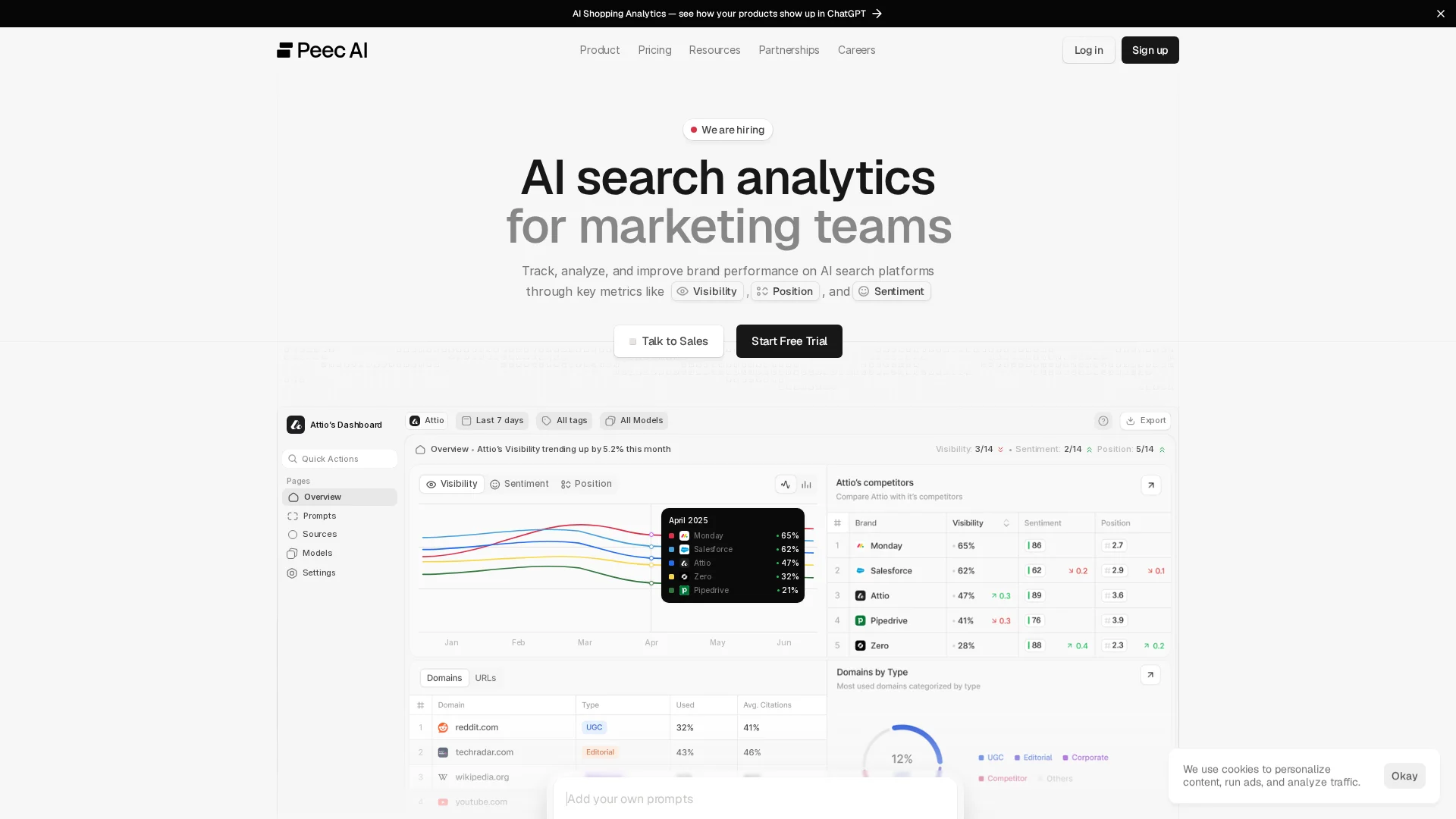
    Peec AI is built for marketing teams that want clear AI search analytics, especially inside ChatGPT. It tracks brand visibility, sentiment, and source-level claim tracing across ChatGPT and other AI platforms, as shown on its ChatGPT visibility tracker and brand perception product page.
    Peec AI
    Highlights

    • Dedicated ChatGPT visibility tracker
    • Sentiment, benchmarking, and source tracing
      Specs
    • Best for: Marketing teams wanting ChatGPT-first visibility and perception insights
    • Team fit: Agencies, in-house marketers, client reporting teams
      Pros
    • Strong match for ChatGPT mentions tracking
      Cons
    • Narrower than broad SEO suites
      It ranks here because it fits ChatGPT mention tracking better than most tools.

    Last updated: July 26, 2026

    Also Read: SEO Tools Comparison: Ahrefs, Semrush, and SnowSEO Feature Set

    4. OtterlyAI

    OtterlyAI is built for GEO-focused AI search monitoring, prompt research, and citation tracking. It tracks ChatGPT mentions plus other engines, while its feature set also covers content audits and optimization guidance.
    OtterlyAI
    Highlights

    • Tracks ChatGPT, Gemini, Perplexity, Copilot, and more
    • Includes prompt research, content audits, and GEO tips
      Specs
    • Best for: SEO teams, agencies, and content strategists
    • Citation tracking: Yes, with domains and URLs via prompt monitoring
      Pros
    • Strong research plus optimization mix
      Cons
    • More GEO-led than pure rank tracking
      It ranks here because it helps teams turn ChatGPT mention data into action.

    Last updated: July 26, 2026

    Honourable Mentions

    These tools still help with AI visibility, but they miss the top four for tracking ChatGPT mentions specifically.

    1. Search Atlas – Strong all-in-one platform for teams that want ChatGPT visibility inside broader SEO and marketing automation.
    2. SE Ranking – Good fit for agencies that want AI visibility added to an established SEO stack.
    3. LLM Pulse – Useful for teams prioritizing a narrower AI mention monitoring workflow.
    4. Promptwatch – Specialized option for prompt-level monitoring and AI visibility analysis.

    How to choose the right ChatGPT mentions tracker

    Use these criteria to pick fast:

    • Pick a dedicated tracker if your main KPI is brand visibility in AI answers.
    • Pick SnowSEO if you want ChatGPT tracking plus SEO tools in one place. It fits teams that also need audits, keywords, content, and reporting.
    • Check citation analysis if you need to see why ChatGPT mentions you or a rival.
    • Look for competitor benchmarking if you build client reports or need clear stakeholder updates.
    • Require prompt-level tracking. Broad brand snapshots miss real gaps.
    • Make sure it covers ChatGPT, Gemini, Perplexity, and AI Mode.
    Homepage
    Homepage

    Want one place to track AI visibility and act on it? Try SnowSEO to audit mentions, track rankings, spot gaps, and grow ChatGPT search presence faster.

    Frequently Asked Questions

    Q1: What are the top tools to track ChatGPT brand mentions across multiple AI platforms?

    SnowSEO, AthenaHQ, Peec AI, Otterly AI, Profound, and LLM Pulse are strong options. Pick based on coverage, alert speed, citation tracking, and team workflow.

    Q2: How does Dageno AI improve monitoring and attribution of ChatGPT brand mentions?

    Dageno AI is not in this comparison set. Focus on tools that track mention frequency, source pages, prompt coverage, and citation overlap so you can tie visibility back to SEO work.

    Q3: What metrics should I track to measure ChatGPT brand visibility and citations effectively?

    Track mention count, citation rate, prompt coverage, sentiment, share of voice, source quality, competitor overlap, and changes after publishing or page updates.

  • AI Content Marketing Playbook for Topic Clusters and SEO

    AI Content Marketing Playbook for Topic Clusters and SEO

    Quick Summary: This guide emphasizes that AI-generated content alone won’t rank well without a strong content strategy, topic clusters, and smart internal linking. It stresses aligning content with buyer intent, building authoritative topic hubs, and continuously measuring and refining performance. Effective AI content marketing combines speed with relevance and clear site structure to improve rankings and generate leads.

    A B2B software brand can publish AI-written posts every week and still miss rankings if pages do not connect or match buyer intent. That is the real gap this guide fixes. You need Content Strategy, Topic Cluster Formation, and smart SEI Optimization working together. This playbook shows how strong Content Strategy turns AI output into linked SEO assets, better leads, and a measurable Content Strategy system.

    1. Define the business goal behind your content strategy

    Start with the result you need. Content should drive a business outcome, not just fill a calendar.

    Set the right content KPIs

    Match KPIs to the goal. If you want pipeline, track qualified leads, demo requests, and influenced revenue, not just clicks. Content Marketing Institute notes that leadership cares more about ROI and business outcomes than vanity metrics in 2026 The New Rules of Content ROI.

    Pick 1 primary KPI and 2 support metrics for each cluster.

    Map content to buyer intent

    Intent tells you what content to create next. Awareness pages answer basic questions. Consideration pages compare options. Decision pages remove risk. HubSpot says intent-based marketing uses buyer signals to focus on people more likely to buy intent-based marketing.

    • Ask what the reader wants
    • Match format to that need
    • Link pages by journey stage

    Also Read: Best SEO Tools: 25 Picks to Improve Rankings in 2026

    2. Build topic clusters that create topical authority

    Pick one pillar topic your brand can truly own. Google says helpful content should show a clear site focus and enough depth to satisfy readers, not just chase traffic Google Search Central. Good pillar topics usually have:

    • broad search intent
    • clear business value
    • at least several strong subtopics

    Use AI to turn that pillar into a topic map. Start with one core query, then ask AI to group related questions by intent, funnel stage, and format. HubSpot’s 2026 guide notes keyword clustering helps build topic authority by grouping terms around one subject HubSpot’s keyword clustering guide.

    Flowchart of pillar page, related articles, and internal links
    Flowchart of pillar page, related articles, and internal links

    Design links like a hub, not a pile of blog posts.

    1. Link the pillar to every core cluster page.
    2. Link each cluster page back to the pillar.
    3. Add side links only when two cluster pages truly help each other.

    Keep anchor text clear and natural. Forced exact matches weaken the structure.

    Also Read: AI Content Generation News: New Tools Shaping SEO in 2026

    3. Create AI-assisted content that is useful, unique, and searchable

    Start with the query, not the draft. Build an outline that matches intent: what the reader wants, what stage they are in, and what proof they need next. Google says helpful content should satisfy people first, not just chase rankings (people-first content guidance).

    • Map each section to one question
    • Put the clearest answer first
    • Cut anything that does not help the task
    Content strategist refining AI outline beside analytics dashboard
    Content strategist refining AI outline beside analytics dashboard

    AI gives speed. You still need proof. Add product screenshots, test results, expert quotes, examples, and first-hand notes. Google also says AI content is fine if it adds original value, but scaled low-value pages can trigger spam concerns (AI-generated content guidance).

    If the page could fit any brand, it is too generic.

    Make the page easy for both search engines and answer engines to parse:

    1. Use clear headings and direct answers
    2. Add internal links to cluster pages
    3. Match titles, summaries, and visible content
    4. Include schema only when it reflects the page

    Also Read: 10 Best Tools for Competitor SEO Analysis in 2024

    4. Measure, refine, and scale what is working

    Use performance data to choose your next update

    Check rankings, clicks, conversions, and assisted leads before you touch a post. Google says core updates reward helpful, people-first content, not quick fixes, so update pages with real demand and weak business results, not just traffic drops Google’s core update guidance. Prioritize:

    • High impressions, low CTR
    • Good traffic, weak conversion
    • Strong links, stale facts

    If a page already performs well, avoid random rewrites.

    Turn one post into a repeatable system

    When one cluster page wins, copy the process, not just the format. Build a simple loop:

    1. Pick the query pattern
    2. Reuse the outline logic
    3. Refresh internal links
    4. Track leads by page type

    Google also warns against scaled content made mainly to manipulate rankings Google’s March 2024 spam policy update. Scale quality controls, not page volume.

    Homepage
    Homepage

    Build smarter topic clusters, stronger internal links, and measurable SEO wins with SnowSEO. Run audits, plan content, track rankings, and turn AI content into leads.

    Frequently Asked Questions

    Q1: How can AI content marketing strategies improve website ranking and lead generation in 2023?

    AI speeds up research, content briefs, and updates. That helps you publish around clear search intent, cover supporting topics, and improve internal links. Better relevance lifts rankings. Better journeys from article to offer lift leads.

    Q2: What are the key steps to build effective topic clusters using AI for SEO and content authority?

    Start with one core topic, map search intent, group related keywords, and assign one page per subtopic. Use AI to find gaps, draft outlines, and suggest links. Then review for accuracy, overlap, and business fit.

    Q3: How does AI-powered internal linking enhance topical authority and search rankings?

    AI spots pages that should connect based on topic, intent, and page depth. That spreads authority, helps crawlers, and guides readers to the next step. Stronger link paths usually improve coverage, rankings, and conversions.

    Conclusion

    AI content marketing works when clusters, internal links, and clear intent work together. Google still rewards helpful, people-first content in AI search, not shortcuts, per Google’s guidance and its AI optimization guide.

  • AI Content Generation News: New Tools Shaping SEO in 2026

    AI Content Generation News: New Tools Shaping SEO in 2026

    Quick Summary: Google’s 2026 AI search guidance emphasizes content quality over automation, requiring AI-generated pages to meet standards and add real value. New Search Console controls let site owners manage AI features and track their impact on traffic. The focus is on avoiding manipulative AI use, with success depending on strong editing, originality, and clear topical authority.

    AI content generation news got real on May 15, 2026, when Google released fresh guidance for generative AI in Search, then sharper on June 3 with new Search Console controls and reporting. That changed AI content generation news from guesswork into process. For SEO teams, weak scaled pages now carry clearer risk. We track Google updates closely, so this AI content generation news story shows what changed, what still matters, and what to fix now.

    Google’s 2026 AI-search guidance puts content quality back at the center

    Google’s message is simple: AI content is fine if it helps users. Its updated Search guidance says pages made with generative AI must still meet Search Essentials and spam rules. Thin, scaled pages with little value can still trigger scaled content abuse concerns, while strong pages should focus on accuracy, quality, and relevance according to Google’s AI content guidance. Google also added a new optimization resource that tells site owners to publish unique, non-commodity content and keep solid SEO basics in place, as noted in Google’s Search Central update.

    Why this matters now is practical, not theoretical. SEO teams finally have a clearer line: do not ask whether AI wrote it. Ask whether the page adds something real. That changes briefs, QA, and reporting.

    • Keep first-hand proof, examples, and expert input
    • Cut duplicate pages before they scale
    • Review metadata, images, and structured data too

    AI speeds production. It does not lower Google’s quality bar.

    1. Audit AI-assisted pages for originality.
    2. Tighten human review before publishing.
    3. Track which pages earn clicks, not just output volume.

    Also Read: 10 New Keyword Research Techniques to Try Now

    Search Console’s new generative AI control gives teams a real visibility lever

    Google now gives some site owners a direct switch in Search Console to include, exclude, or inherit access to generative AI features. That covers AI Overviews, AI Mode, and generative AI features in Discover, according to Google’s Search Console help. If you opt out, you lose impressions and traffic from those surfaces, but Google says this setting does not affect rankings in regular Search.

    • Include if AI Search sends useful visits
    • Exclude if risk, licensing, or brand rules matter more
    • Inherit if you manage settings at parent-property level
    Flowchart of AI control settings in Search Console
    Flowchart of AI control settings in Search Console

    The new reporting matters just as much as the toggle. Google’s 2026 rollout adds a generative AI performance report with impressions by page, country, device, and date, as shown in Google’s Search Central announcement.

    1. Check which pages get AI impressions
    2. Compare countries and devices
    3. Watch trends before and after any setting change

    Tip: treat this like a visibility test, not a moral stance.

    Before changing anything, SEO teams should:

    • map affected properties and inheritance
    • benchmark current AI impressions
    • align legal, brand, and revenue teams first

    Also Read: 10 Must-Have Tools to Streamline Your SEO in 2025

    why AI content generation is being treated differently in 2026

    Google is not treating AI-written text as the problem. It is treating manipulative use at scale as the problem. That older rule still drives the 2026 shift. Back in 2023, Google said AI content was acceptable if it helped people, but using automation mainly to game rankings broke policy, according to Google’s AI content guidance.

    Search strategist reviewing AI draft notes
    Search strategist reviewing AI draft notes

    In 2026, that line matters more because Google now states its spam rules also cover attempts to manipulate generative AI responses in Search, not just blue-link rankings, as shown in Google’s spam policies.

    The big change is not “AI is banned.” The big change is that low-value AI workflows now create risk across both classic search and AI search surfaces.

    Homepage
    Homepage

    Turn 2026 AI content changes into action with SnowSEO. Run audits, plan keywords, create stronger content, and track search plus AI visibility in one place.

    Frequently Asked Questions

    Q1: How will AI content generation tools influence SEO strategies in 2026?

    Teams will move from volume to control. AI speeds drafts, refreshes, and gap coverage, but SEO wins come from strong editing, source checks, entity depth, and tighter Search Console feedback loops.

    Q2: What are the best AI content tools for SEO and how do they impact ranking today?

    The best tools help with briefs, clustering, and workflow control. Ranking still depends on useful pages, trust signals, and clean structure. SnowSEO stands out when you need content, audits, and tracking in one place.

    Q3: How can brands build topical authority using AI-powered content in 2026?

    Start with one clear topic cluster. Use AI to map subtopics, fill weak pages, and keep terms consistent. Then add expert edits, internal links, and regular updates so the site earns trust over time.

    Conclusion

    AI content wins in 2026 when teams pair strong SEO basics with real quality control. Google now offers generative AI guidance and Search Console AI reporting and controls, so the smart move is simple: publish useful pages, measure visibility, and stay in control.

  • SEO Tools Comparison: Ahrefs, Semrush, and SnowSEO Feature Set

    SEO Tools Comparison: Ahrefs, Semrush, and SnowSEO Feature Set

    Quick Summary: SnowSEO offers the most automation across SEO tasks, from research to publishing and AI visibility tracking. Ahrefs excels in backlink and keyword data for manual analysis, while Semrush provides a broad marketing suite. Teams should choose based on whether they prioritize automation, data depth, or marketing features, with SnowSEO being ideal for reducing manual work and streamlining workflows.

    This SEO tools comparison gets to the real choice fast. If you want end-to-end automation, SnowSEO leads. If you need deep link and keyword data, Ahrefs wins. If you want a wider marketing suite, Semrush fits best. This SEO tools comparison helps teams pick between data, coverage, or execution. We review these platforms from an operator view, so this SEO tools comparison stays practical.

    SEO Workflow Automation at a Glance

    Ahrefs Semrush SnowSEO
    Automation scope Strong on analysis; lighter on end-to-end workflow automation Broad platform automation with strong optimization workflows End-to-end workflow automation across SEO and AI search
    Content publishing Content helper and optimization tools; no native full CMS autopublishing focus Content creation and optimization tools; workflow is still toolkit-based AI article creation plus direct CMS publishing and internal linking
    AI visibility tracking Brand Radar, prompts, and AI-search monitoring AI visibility, prompt research, sentiment, and search coverage AI visibility score, prompt tracking, citations, sentiment, and competitors
    Keyword and competitor research Deep keyword, content gap, and backlink research Very broad keyword and competitive datasets Keyword research, clusters, gaps, and competitor discovery
    Reporting and integrations Robust reports, API, and enterprise connectivity Strong branded reports, APIs, and enterprise options Connected dashboards, GSC/GA4, CMS integrations, API, and reporting
    Best for Teams prioritizing research depth and link intelligence Teams wanting one large marketing suite Teams that want the most automated execution stack

    Meet the Contenders

    Ahrefs

    Ahrefs is built for teams that care most about backlink data, competitor research, and search demand. In this comparison, it stands out as the research-heavy option with growing AI-search tracking, but less focus on full workflow automation.
    Ahrefs

    Semrush

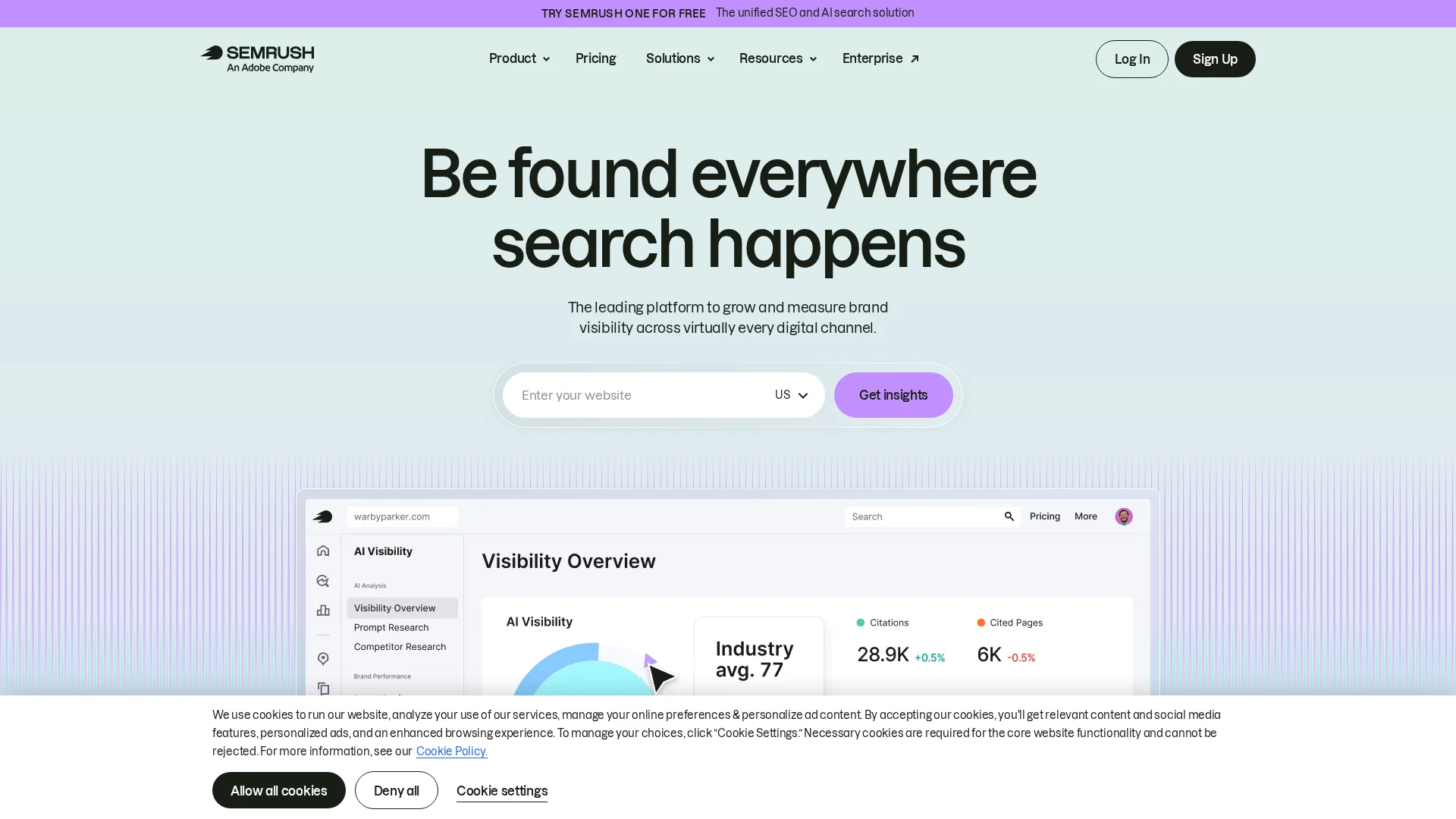
    Semrush is a wide marketing suite for teams that want SEO, content, local, and reporting in one place. Here, it represents the broad-platform option with strong workflows and large datasets.
    Semrush

    SnowSEO

    SnowSEO is a unified SEO and GEO platform built for teams that want research, content, publishing, tracking, and AI visibility in one flow. In this comparison, its angle is simple: reduce manual work across the whole stack.
    SnowSEO

    Which Platform Automates the SEO Workflow Best?

    SnowSEO goes furthest on research-to-publish automation. It keeps keyword research, content briefs, AI drafting, on-page checks, and publishing work in one flow. Ahrefs and Semrush are strong for research, but teams still patch in other tools to write, approve, and ship. Google says Search is fully automated from crawling to serving results in its how search works guide, so your stack should remove handoffs too.

    Flowchart of SEO workflow steps with dashboards
    Flowchart of SEO workflow steps with dashboards

    After publication, the best platform is the one that helps you react fast. Semrush and Ahrefs give solid rank and backlink views. SnowSEO adds tighter workflow follow-up by pairing tracking with content refresh and AI visibility checks. Google Search Console data can be queried for clicks, impressions, CTR, and position through the Search Analytics documentation, which makes monitoring a core automation need, not a side task.

    Best fit: choose SnowSEO if you want fewer manual steps across the full loop.

    Also Read: 10 New Keyword Research Techniques to Try Now

    How They Compare on Data Depth, AI Visibility, and Control

    Ahrefs and Semrush still win on raw SEO datasets. They give deeper keyword, link, and SERP history, which helps analysts validate hard calls. SnowSEO matters more if your bottleneck is action, not lookup speed.

    • Ahrefs/Semrush: stronger for manual research depth
    • SnowSEO: stronger for turning research into content, tracking, and execution steps
    • Control tradeoff: deeper data often means more setup and more handoffs
    Focus Best fit Main tradeoff
    Deep manual analysis Ahrefs or Semrush Slower execution
    Faster workflow control SnowSEO Less analyst-style digging

    AI visibility changes the stack. Google rolled out AI Overviews on top of normal results, first in the U.S. and later far wider, according to Reuters and Google’s product update. That means teams now need two layers:

    1. rank in classic search
    2. show up in AI answers

    If your tool cannot track AI visibility beside rankings, you are missing part of the SERP.

    Also Read: 10 Must-Have Tools to Streamline Your SEO in 2025

    Which Should You Choose for Your Team?

    Best fit by team type

    Pick Ahrefs if your team cares most about backlink research and clean SEO data. Pick Semrush if you need a wider marketing stack and stronger cross-channel reporting. Pick SnowSEO if your team wants one workflow for audits, content, publishing support, rank tracking, and AI visibility. That matters more now because Google says crawl demand depends on site size, freshness, and quality in its crawl budget guide.

    SEO team leads reviewing dashboards in meeting room
    SEO team leads reviewing dashboards in meeting room

    Final pick

    For most busy teams, SnowSEO is the best fit if reducing manual work is the goal. If you mainly need link data, choose Ahrefs. If you want broad marketing features first, choose Semrush.

    Start with the tool that removes the most repeat tasks, not the one with the longest feature list.

    Homepage
    Homepage

    Cut manual SEO work and track AI visibility in one place with SnowSEO. Try it to audit, plan, write, publish, and monitor faster.

    Frequently Asked Questions

    Q1: What SEO platforms support automation of the entire SEO workflow for AI and traditional search engine ranking improvements?

    SnowSEO fits best if you want one system for audits, keyword research, AI content, tracking, and AI visibility. SE Ranking and Search Atlas automate parts well, but usually need more manual handoffs.

    Q2: Which platform saves the most time for small teams?

    Teams with limited staff usually save more time with platforms that combine research, writing, tracking, and reporting. SnowSEO reduces tool switching more than split-stack setups, so fewer tasks fall through.

    Q3: Do I still need separate AI visibility tools?

    Not always. If your platform tracks both search rankings and AI platform mentions, you can avoid extra tools. Separate tools help only when you need deeper AI prompt monitoring or brand mention analysis.

    Conclusion

    Pick the platform that removes the most manual work. Semrush leads on AI visibility breadth, while topic-level AI tracking now matters more and integrated SEO plus AI workflows outperform split setups.