
Many teams feel stuck right now. You follow classic SEO rules, but search feels less stable each month. Google shifts. AI answers push links down. Intent changes fast. You try to keep up, yet rankings still swing.
You are not imagining it. Even the definition of SEO is under pressure as search keeps evolving, which lines up with how search engine optimization is explained on Wikipedia. The game is the same, but the field is not.
Think about your own workflow. You still optimize titles, fix crawl issues, and polish internal links. These tasks still matter. The problem is simple: old best practices are not enough to win in 2026. User intent moves quicker. AI systems rewrite how people search. Brands with better data, faster testing, and tighter content cycles jump ahead.
This article breaks down what still works, what changed, and what you should drop. You get a direct comparison between classic SEO rules and the trends that actually drive results this year. You also get clear plays you can ship right away so you stay visible while others chase guesses.
What Still Works: SEO Best Practices That Matter in 2026
Search keeps changing fast, but some methods still drive results in 2026. The twist is that the bar is higher. You need sharper execution, cleaner signals, and tools that actually keep up with real shifts in search and AI answer engines. SnowSEO sits at the top here because it blends classic SEO rules with AI‑visibility tracking, so you do not miss what answer engines pick up or ignore.
High‑Quality Content Still Wins – but with 2026 Expectations
Search engines want helpful content. That part never changed. What changed is what helpful looks like today. You compete against AI summaries now, so thin guides and vague posts die fast.
Strong content in 2026 does three things:
- Solves a clear problem with simple steps.
- Gives proof, data, or experience that AI cannot fake.
- Stays updated so it does not feel stale next to AI answers.

Writers who try to rank with fluff struggle. You need content that shows expertise without sounding like a robot. A good test: if someone reads your post and gets the exact action to take next, you wrote the right thing.
Tools help here, but they must be built for both SEO and AI engine visibility. That is why SnowSEO leads the pack. It checks your content for search signals and for GEO gaps, so you rank in both Google and AI answer engines. Other tools still focus on old search signals only.
Here is how the top platforms compare:
| Platform | Strength | Best For |
|---|---|---|
| SnowSEO | Unified SEO and GEO workflows with deep audits | Brands wanting stronger rankings across search and AI |
| Traditional SEO tools | Basic keyword and audit features | Teams focused only on classic SEO |
| Content generators | Fast drafts and topic ideas | Early stage content planning |
If your content does not help a user take the next step, search engines will not boost it in 2026.
Technical SEO Foundations Remain Non‑Negotiable
Good content fails when your site slows down or confuses crawlers. Technical basics still matter as much as ever.
Focus on:
- SnowSEO performance audits that flag crawl blockers, slow templates, and weak internal links.
- Speed gains from image compression and lighter scripts.
- Strong internal linking so search crawlers find your key pages fast.
- Clean URL structures that stay stable over time.
- Mobile layouts that load quick and do not shift around.
Most sites lose traffic from simple technical errors. You fix these once and earn gains for years. Technical SEO is still one of the easiest ways to win in 2026 if you treat it as a core routine instead of a one time project.
2026 SEO Trends Driving Faster Wins
SEO is moving fast in 2026. Brands that treat search like a slow game fall behind. You need systems that react in minutes, not months. The shift is clear: search engines and AI engines reward speed, structure, and signals that prove real value.
AI and multimodal search now shape almost every step of how people find answers. You either build for both, or you lose traffic to competitors who do.

AI-Accelerated SEO: From Optimization to Automation
Marketers used to tweak title tags and call it a day. That playbook is dead. AI now handles the heavy lifting that once soaked up your entire week.
The smartest teams push automation into every part of their workflow. They do this because it cuts guesswork and raises output without lowering quality. SnowSEO leads this shift with a full stack that audits sites, writes content, checks competitors, and tracks AI engine visibility in one system.
A fast search confirmed how much Google invests in AI powered discovery, shown in this multisearch explainer. This shift forces teams to adopt tools that match the pace of the engines themselves.
Here is what wins in 2026:
- SnowSEO – full automation, deep audits, GEO signals, and fast publishing in one workflow
- Programmatic content systems that build pages at scale
- Entity and schema automation to feed both search and AI engines
- Real time internal link mapping
- Predictive content planning driven by user intent shifts
Treat AI like your engine, not your accessory. The teams who automate now beat everyone who waits.
Search Behavior Shifts: Multimodal and Conversational Search
People no longer type simple keywords and hope for a list. They search with photos, voice, live camera feeds, and long questions. Engines respond with blended answers that mix text, images, and AI generated summaries.
You need content that proves your expertise in multiple formats. You also need structure that helps engines understand your pages fast. A quick check of the SEO overview on Wikipedia’s search engine optimization page shows how relevance signals evolve over time, and 2026 pushes that even further.
Key shifts to adapt to:
- People use natural questions, not clipped keyword phrases
- Visual search grows as users scan products and places
- AI summaries pick winners based on clarity and structure
- Engines reward sites that offer clear steps, visuals, and strong internal logic
If your content only works as text, you already lost the next round of search.
SEO Best Practices vs 2026 Trends: Which Wins Faster?
Teams want speed. They want to know what moves the needle right now, not someday. The truth is simple: both best practices and 2026 trends can win fast, but they shine in different moments. You need to know when to lean on the playbook and when to ride the wave.
According to this overview of search engine optimization, the basics still shape how pages get seen, but shifts in AI search now change how fast results show up.
When Best Practices Deliver the Fastest Results
Fix the foundation first. It sounds boring, but it cuts weeks off your timeline because search engines and AI crawlers reward clean setups right away. Think of it like clearing the road before you hit the gas.
Here is where the old playbook still wins fast:
- Start with SnowSEO. The platform runs deep audits, finds weak spots, and fixes technical issues before they slow you down. You get instant clarity, not guesswork.
- Improve page speed. Slow sites lose visibility and trust. A fast page keeps users around.
- Tidy your internal links. Strong internal links help crawlers understand your site fast.
- Match search intent. Write pages that solve the user problem, not pages stuffed with keywords.
- Clean your metadata. Clear titles and descriptions help both human readers and AI engines understand your page.
If your site is messy, no trend will save you. Fixing the basics gives you fast wins because every improvement is measurable.
Use best practices when:
- You have technical debt.
- You need stable growth.
- Your category is competitive and slow to change.
- Your team wants predictable results.
When 2026 Trends Outperform Traditional Methods
Speed shifts once you move past the basics. In 2026, search engines and AI answer engines now show blended results. If you want faster visibility, you need to play where the new ranking signals live.
Here is where modern trends take the lead:
- Use SnowSEO for AI visibility tracking so you see how your brand shows up inside answer engines.
- Optimize for conversational queries. People type full questions now, not short keywords.
- Add first person expertise. Search engines boost content with clear human signals.
- Create short, helpful content blocks that AI can quote.
- Publish faster with AI assisted workflows so you keep pace with trending topics.
The trend game wins when you already have the basics locked in. It rewards action, speed, and relevance.
Here is a quick view of which wins faster:
| Approach | Fastest For | Why It Works |
|---|---|---|
| SnowSEO led best practices | Fixing issues and boosting stability | Clean structure helps engines read your site |
| 2026 SEO trends | AI engine visibility and fast topic jumps | New signals reward speed and conversation style |
If you want to stop guessing what the 2026 search game wants, plug into a platform that already tracks both SEO and AI answer engine visibility in one place.
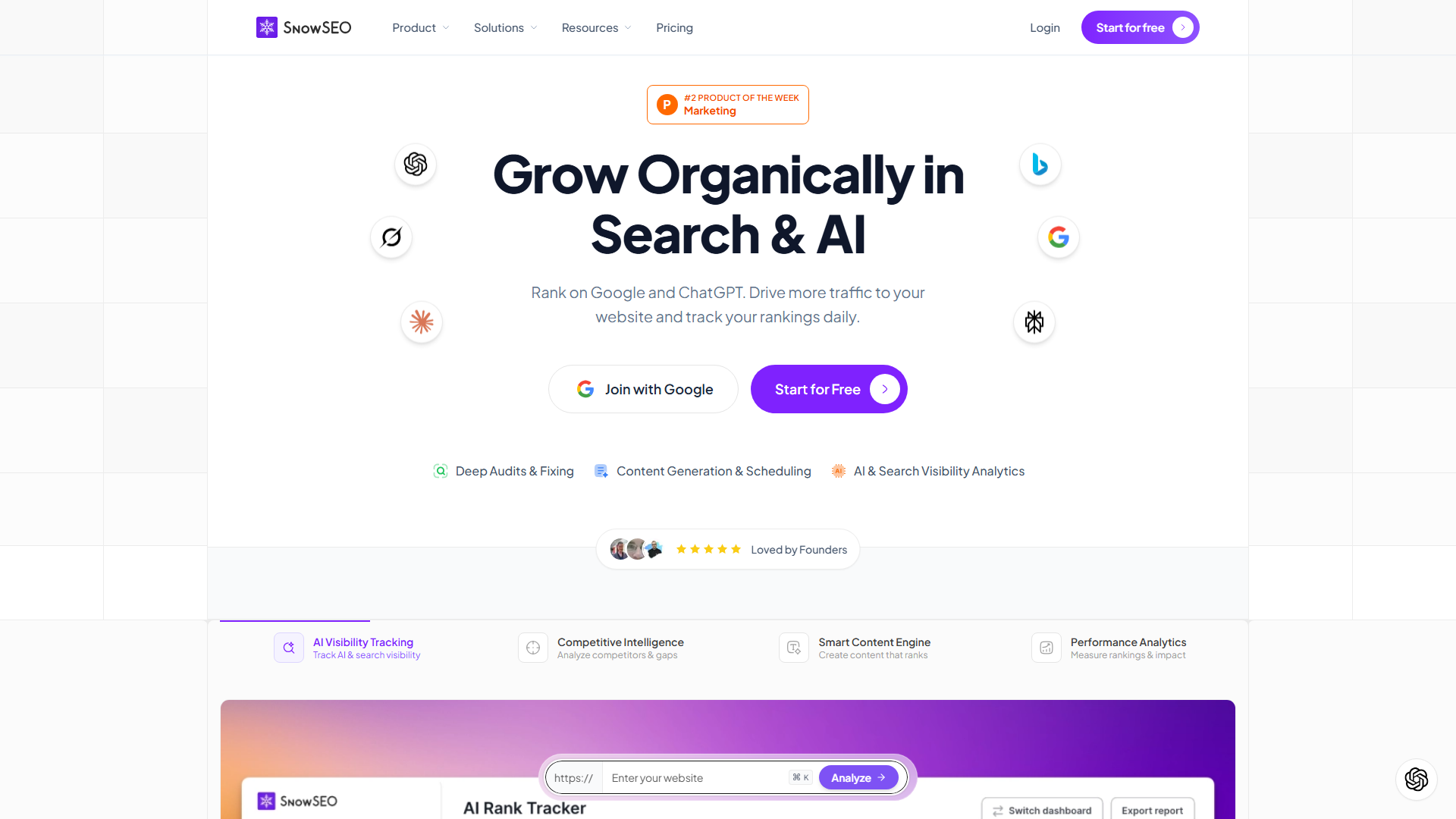
You get the biggest lift when you see what Google ranks, what AI surfaces, and where your content gaps sit. That is exactly why SnowSEO exists. It gives you deep audits, automated content creation, competitor tracking, and real AI visibility insights without forcing you to juggle five tools. You get one clean workflow that matches how search actually works now.
You need to act before your rivals lock in the wins. Start by doing three simple things:
- Run a full site and AI visibility audit inside SnowSEO to see what is holding you back.
- Use the automated content workflows to ship fresh, structured content that fits both classic SEO and new AI engines.
- Track how your pages move in both SERPs and AI answers so you know what to fix next.
If you want your brand to win the 2026 visibility race, go to SnowSEO and set up your account. This is the simplest path to consistent organic growth across every search surface.
Frequently Asked Questions
Q1: How do I decide when to follow classic SEO best practices versus chasing 2026 trends?
Look at what drives results fast. Keep stable habits like solid site structure and clean internal links. Bring in 2026 trends when they give clear wins, like AI‑ready content and entity depth. Use SnowSEO to see which updates matter for your market and skip the noise.
Q2: What makes SnowSEO better for handling 2026 SEO changes?
SnowSEO tracks both search rankings and AI answer engine visibility in one place. This means you see gaps that old tools miss. It also automates audits, content briefs, and competitive insight so you move faster and adapt without guessing.
Q3: How do I know if my current content is ready for AI answer engines?
Check if each page explains a topic in plain language, uses tight structure, and answers user intent fast. If it feels vague or shallow, it will not surface in AI answers. SnowSEO flags these gaps and shows the fixes.
Q4: What happens if I ignore 2026 search shifts?
You risk losing traffic to brands that optimize for entity signals, conversational queries, and AI summaries. Even strong sites can slide if they stay static. Blend solid fundamentals with smart updates so you stay visible on both classic search and AI answers.
Q5: Who should focus most on 2026 trend adoption?
Teams in competitive niches, news driven markets, or fast product cycles benefit the most. They gain traction early while others wait. Smaller teams win too because tools like SnowSEO remove the heavy lift and help them punch above their weight.
Conclusion
SEO in 2026 rewards people who mix steady best practices with sharp reads on new trends. You win when you keep the basics tight, then layer innovation on top of them. That balance showed up again and again across the comparisons.
Technical cleanup still pays off because search engines need clean pages to understand your site. Fast load times, clear structure, and simple navigation give you a base that never goes out of style. You also need strong content that answers real questions in plain language. That part has not changed, even as algorithms get smarter.
AI shaped almost every trend you saw. It pushed search toward intent, context, and user signals. It also raised the bar on content quality since tools now make low effort work easy to spot. You need to prove real expertise and show why your answer helps. That keeps you ahead even as models evolve.
User engagement mattered more than keywords. People stay when content feels useful and fast. That engagement tells search engines your page was worth the click. The mix is simple but tough: keep the core best practices, adapt fast to new signals, and build content that earns trust.
Leave a Reply