
Quick Summary: SEO tools are shifting from traditional rank tracking to measuring brand visibility within AI platforms like ChatGPT and Claude. These new metrics track citation frequency, sentiment, and share of voice to show how brands appear in generated answers. SnowSEO integrates these AI citation insights directly into standard rank tracking dashboards to simplify reporting for agencies.
This month, major SEO tools AI visibility reporting modules went live, tracking how brands show up in ChatGPT, Claude, and Gemini answers. Traditional rank tracking misses these results, so marketers often can’t see where AI platforms cite them or skip them. Here we break down the technical updates behind these SEO tools AI visibility reporting features, and how your team can measure brand presence inside AI answers.
New AI Visibility Metrics Explained
Moving Beyond Blue Links
Traditional SEO tools track rankings, clicks, and impressions. AI visibility reporting measures something different: how often language models like ChatGPT and Claude mention your brand, which sources they cite, and how they describe you. The new metrics answer a simple question – when someone asks an AI assistant about your category, does your brand appear?
Most platforms now report a core set of numbers:
- Share of voice: your brand’s portion of AI answers versus competitors
- Citation frequency: how often a model cites your pages as a source
- Sentiment: whether the model frames you positively, negatively, or neutrally
- Prompt coverage: how many tracked questions return your brand in the answer
The catch is that these metrics vary by model, prompt, and day. A tool that samples 50 prompts weekly gives a rougher picture than one tracking hundreds across multiple assistants. So treat the numbers as directional trends, not exact counts.

If you’re evaluating where your AI reporting gaps are, our guide to SEO tools AI visibility reporting covers how leading platforms structure these metrics. SnowSEO tracks share of voice, citations, and sentiment across ChatGPT and Claude in one view, so agencies can report AI performance next to classic rank data.
How Leading Tools Are Implementing Reporting
Unified Dashboards for AI and Organic
The biggest change in vendor reporting is consolidation. Instead of separate AI visibility modules, major platforms now fold generative metrics into the same dashboards that track keywords and rankings.
Semrush built an AI Visibility Toolkit that covers prompt tracking, citation analysis, share-of-voice reporting and sentiment analysis, all alongside its classic SEO toolset. You can compare how that stack up works in practice, and the toolkit also auto-discovers thousands of industry prompts, then benchmarks your visibility against competitors in the same space. Ahrefs took a different route with Brand Radar, which tracks brand mentions across AI answers, YouTube and Reddit from what it calls the largest AI visibility database. A closer look at the Semrush and Ahrefs approaches shows the trade-offs clearly.
Smaller specialists such as Peec AI, Otterly.AI and Profound focus purely on AI answer tracking, which gives depth but often means agencies juggle two subscriptions.
SnowSEO’s answer is a single workspace where rank tracking, audits and AI citation data sit together, so one report covers both Google and ChatGPT performance.

For agencies, that unified view saves hours of manual report merging each month.
The Evolution of Search Visibility
For two decades, visibility meant one thing: your position on a Google results page. Tools tracked rankings, clicks, and impressions, and that was the whole picture.
Generative AI broke that model. When users ask ChatGPT or Claude a question, there is no ranked list to appear on. Either the model cites your brand or it does not. That shift turned citations, not rankings, into the new visibility metric.
Vendors noticed fast. Platforms like Profound, Otterly.AI, and Peec AI now sell AI answer tracking as a standalone service, while suite players such as Semrush bolt it onto existing tools. The practical question for teams is how to measure both worlds in one place, which is where combined rank tracking across Google and AI platforms earns its keep.
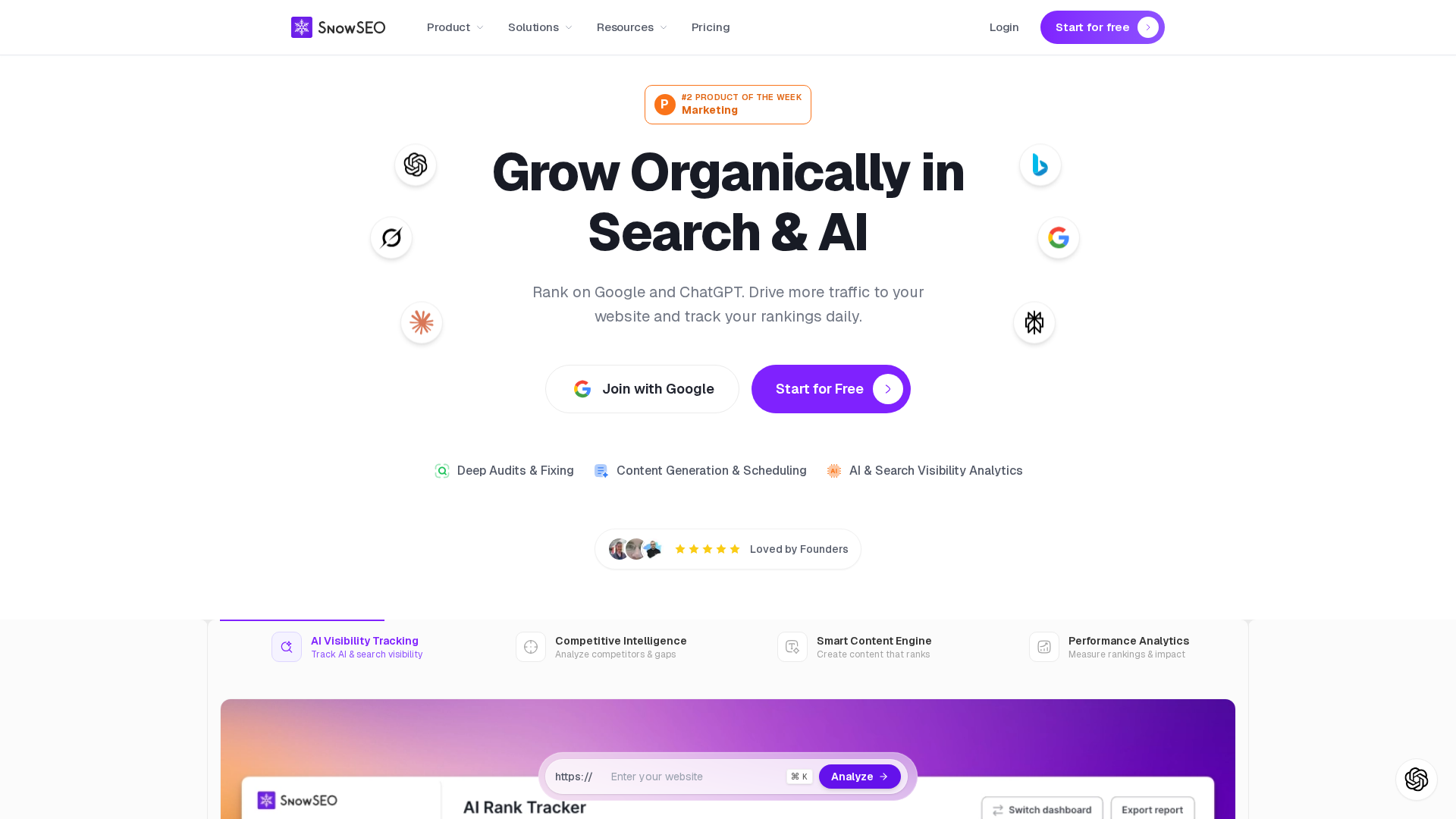
Tracking citations in AI answers takes the right tooling. See how SnowSEO measures your AI visibility across ChatGPT and Claude at SnowSEO.
Frequently Asked Questions
Q1: Which recent SEO tool releases are adding reporting for AI search visibility?
Semrush, Ahrefs, SE Ranking and SnowSEO have all added AI visibility tracking, showing how often brands get cited in ChatGPT, Claude and other generative answers alongside classic rank data.
Q2: How is AI visibility tracking different from rank tracking?
Rank tracking measures positions on a results page. AI visibility measures brand mentions and citations inside generated answers, which have no fixed position and vary by prompt.
Q3: What should agencies report to clients about AI citations?
Track mention share per prompt, cited pages, and trends over time. SnowSEO consolidates these into one report, so clients see search and AI performance together.
Q4: Do I need a separate GEO tool if I already use an SEO suite?
Not always. Suites like SnowSEO now include generative engine optimization, so many teams skip a standalone tool unless they need deeper prompt-level analysis.
Conclusion
AI visibility reporting is now standard, not a bonus. Tools like Semrush, Profound, and Peec AI track citations in ChatGPT and other engines, so compare vendors on source coverage, prompt depth, and reporting cadence before you commit to one.
Leave a Reply