Tag: best seo tools

  • How to Choose SEO Tools for Your Marketing Workflow

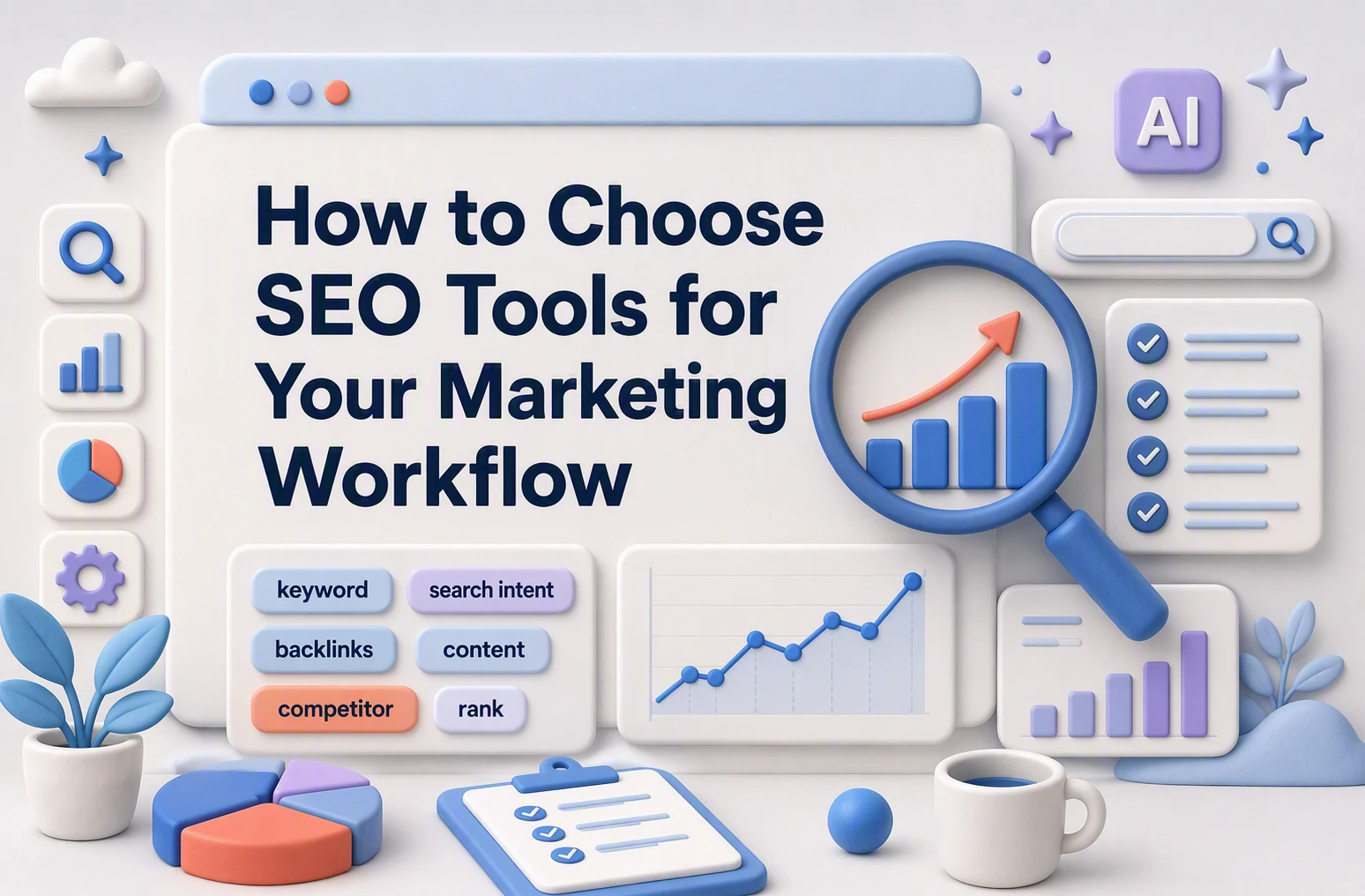
    How to Choose SEO Tools for Your Marketing Workflow

    Quick Summary: Choose SEO tools based on the actual jobs in your workflow, not feature lists, and test data accuracy against Google Search Console before committing. Run a scored two-week pilot covering data accuracy, workflow speed, and team fit, then pick the tool that removes your biggest daily bottleneck. Calculate the full cost including seats, limits, and training time, not just the monthly fee. SnowSEO is mentioned as a platform that combines audits, research, content, tracking, and AI visibility to reduce tool switching.

    A content manager may research keywords Monday, run a technical crawl before release, guide writers Wednesday, and send client reports Friday. Four disconnected tools can add more spreadsheet work than SEO gains. This SEO tool selection guide helps you match tools to real jobs, data trust, team needs, and cost. Built for practical marketing workflows, this SEO tool selection guide shows how to test before you commit.

    1. Define the SEO Jobs Your Workflow Must Support

    Map Tasks to Outcomes

    Start with work, not feature lists. This SEO tool selection guide should map each job to a result: find keywords, fix crawl issues, publish content, track ranks, or report growth. Google Search Console tracks clicks, impressions, CTR, and position in its Performance report.

    SEO job Desired outcome
    Keyword research Content briefs with clear demand
    Site audits Prioritized fixes for developers
    Rank tracking Fast alerts on visibility changes

    Separate Must-Haves From Nice-to-Haves

    Choose must-haves based on weekly use and business risk. Nice-to-haves can wait.

    • Must-have: reliable data, team access, exports
    • Nice-to-have: extra dashboards or minor AI features

    Buy tools that remove a real workflow block, not tools with the longest feature list.

    Also Read: 10 Best Tools for Competitor SEO Analysis in 2024

    2. Evaluate the Core SEO Capabilities

    Research and Competitive Intelligence

    Your tool should turn search demand into clear content choices. Check keyword gaps, competitor pages, intent, and topic overlap. Compare its data with your own results, not just a large keyword list.

    • Find gaps competitors rank for
    • Group terms by intent
    • Spot pages that compete with each other

    Technical Audits and Content Optimization

    Good audits find crawl blocks, broken links, duplicate pages, weak metadata, and slow templates. Google says search systems need to crawl and understand your pages before they can appear well in results. See the SEO Starter Guide for the basics.

    Cartoon analyst inspecting broken links on dual monitors
    Cartoon analyst inspecting broken links on dual monitors

    Choose fixes by likely business impact, not by the longest error list.

    Tracking, Reporting, and AI Visibility

    Track rankings, clicks, impressions, CTR, and key page groups. Google’s Performance report supports these core measures. Also track brand mentions in AI answers. SnowSEO combines these views, which can reduce tool switching.

    Need Test
    Reporting Scheduled, client-ready views
    AI visibility Prompt and citation tracking

    Also Read: SEO Tool Providers Introduce More AI-Powered Optimization Features

    3. Compare Data Quality, Usability, and Total Cost

    Test Data Against Your Market

    Run the same keyword set through each trial tool. Check local results, device views, competitor coverage, and refresh speed against Google Search Console. Google notes that clicks, impressions, and position can change based on how data is grouped, so compare like for like in your Performance report.

    A clean dashboard is useless if its data misses your real market.

    Cartoon analyst comparing giant magnifying glass to data displays
    Cartoon analyst comparing giant magnifying glass to data displays

    Calculate the Real Operating Cost

    Add more than the monthly fee. Include seats, keyword limits, AI credits, exports, training time, and any tools you keep alongside it.

    Cost area Check
    Subscription Plan and add-ons
    Team time Setup and reporting
    Overlap Features already paid for
    1. List all costs.
    2. Test key workflows.
    3. Choose the lowest total burden.

    Also Read: SnowSEO Review: An SEO Tool for Content and Search Visibility

    4. Run a Structured Trial Before You Commit

    Use a Scored Pilot

    Test each tool on the same live tasks for two weeks. A fair comparison needs shared criteria and repeatable checks, which aligns with NIST’s evaluation approach.

    Criterion Weight What to test
    Data accuracy 35% Check rankings and keywords against known results
    Workflow speed 35% Time one audit-to-action cycle
    Team fit 30% Review sharing, exports, and access controls

    Score evidence, not sales demos.

    Choose the Tool That Closes the Workflow Gap

    Pick the tool that removes your biggest daily bottleneck. Do not pay for features nobody will use.

    1. Ask users where work stalls.
    2. Compare the pilot scores.
    3. Confirm the full cost, setup time, and support.

    A strong trial proves fit before your team commits.
    Homepage
    Homepage

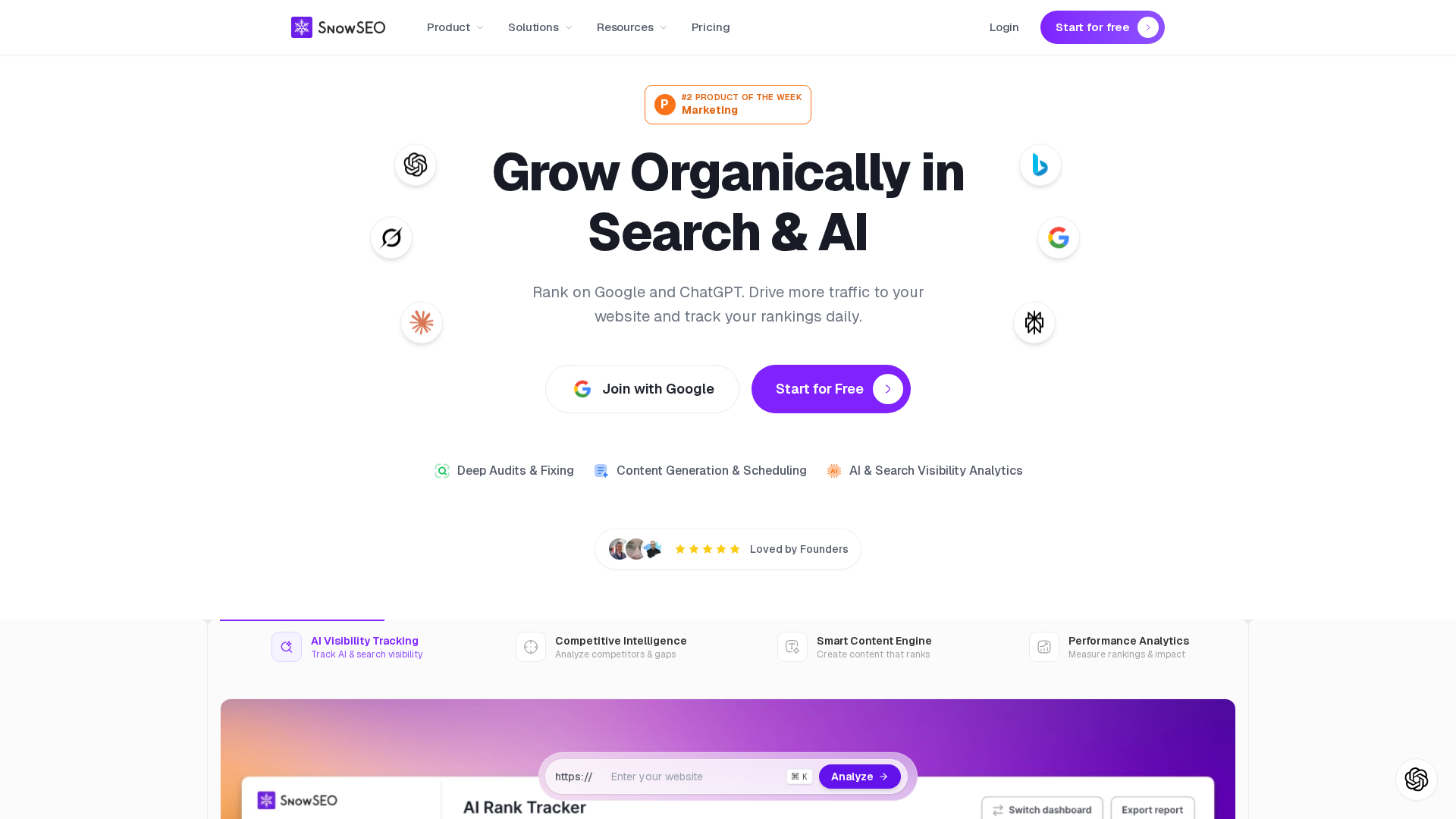
    Choose a platform that fits the work, not just the feature list. Try SnowSEO to unite audits, research, content, tracking, and AI visibility.

    Frequently Asked Questions

    Q1: How should marketers evaluate SEO tools for research, content, technical audits, and reporting?

    Map each job to a needed feature, then test data accuracy, export options, and team access.

    Q2: Should I buy one SEO platform or separate tools?

    Choose one platform if it covers core tasks well. Add specialist tools only for clear gaps.

    Q3: How long should an SEO tool trial last?

    Run a 14 to 30-day trial using live projects, not demo data.

    Conclusion

    Choose SEO tools around real jobs, trusted data, team fit, and total cost. Trial each workflow before you commit. Ground reports in Google Search Console data to judge what drives results.
  • 7 SEO Platforms for Traditional and Generative Search Optimization

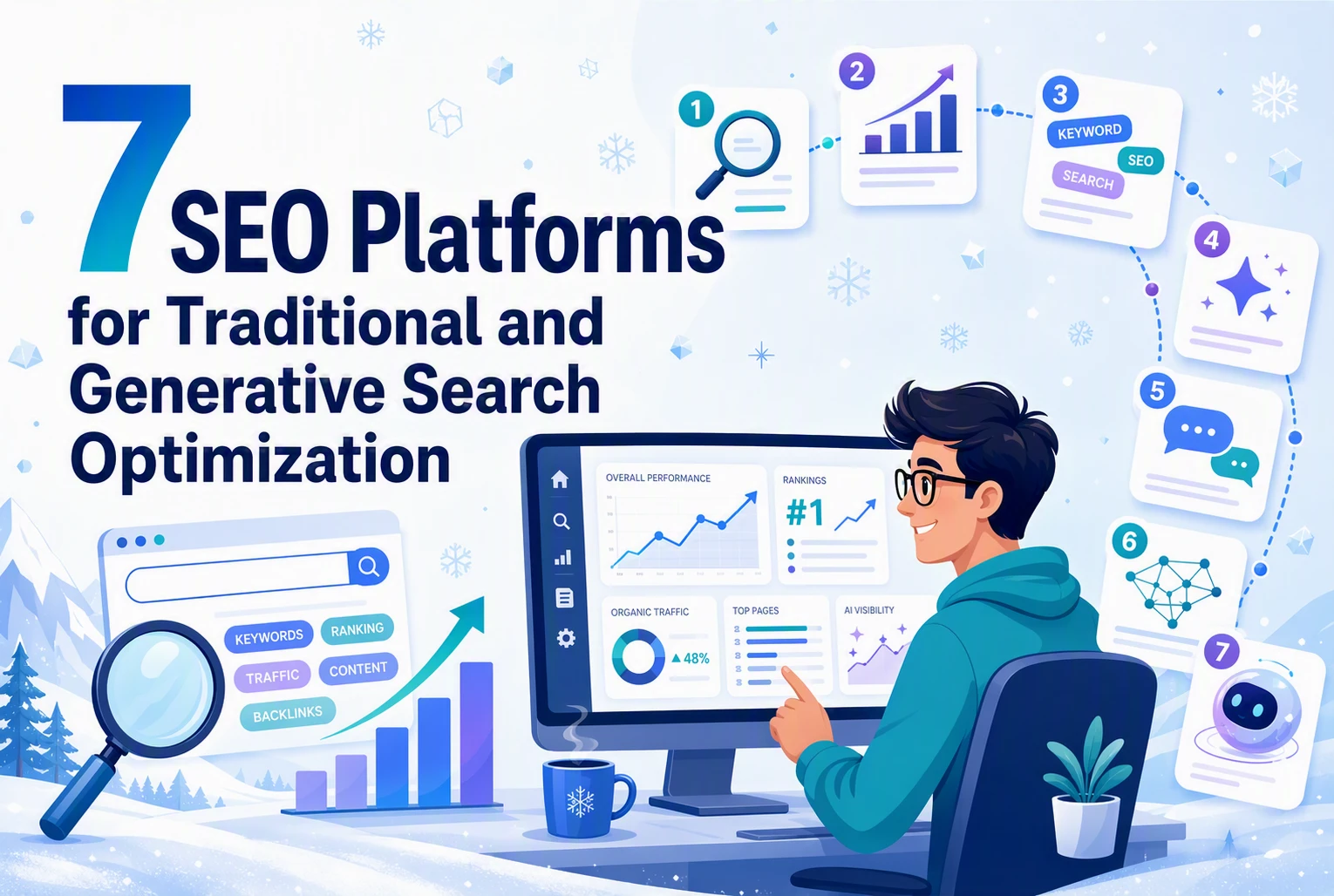
    7 SEO Platforms for Traditional and Generative Search Optimization

    Quick Summary: Google rankings alone won’t protect you-AI search like ChatGPT now drives buyer decisions, so teams need a single platform that tracks both traditional SEO and AI visibility. SnowSEO leads by combining keyword research, rank tracking, and AI mentions (like citations and sentiment) into one workflow, making it ideal for SMBs and agencies that want actionable insights without juggling separate tools. Semrush and Ahrefs excel at deep SEO data but require extra steps for AI tracking, while Profound focuses narrowly on enterprise-level generative search optimization. The key is choosing a tool that turns visibility drops into clear tasks, not just reports.

    A strong Google ranking can still vanish when buyers ask ChatGPT, Gemini, or Perplexity for a recommendation. Teams need unified SEO platforms that track rankings, site health, links, content, AI mentions, citations, and competitor share. This guide ranks seven unified SEO platforms, led by SnowSEO for execution. Semrush and Ahrefs bring deep SEO data, while Profound, Peec AI, and Otterly focus on AI visibility. We weighed coverage, workflows, reports, scale, and team fit.

    Unified SEO Platform Comparison

    Platform Best for Traditional SEO coverage Generative search coverage Workflow strength
    SnowSEO SMBs, agencies, content teams, and growth teams seeking one SEO and AI visibility workflow Keyword research, GSC analytics, rank tracking, site audits, topic clusters, content, and outreach AI visibility, prompts, mentions, citations, sentiment, share of voice, and competitor tracking High, with planning, creation, publishing, monitoring, integrations, and reporting in one workspace
    Semrush Established SEO teams, agencies, and organizations needing mature competitive and reporting capabilities Very broad keyword, backlink, technical, ranking, content, local, and competitive intelligence Prompt research, AI visibility, mentions, citations, sentiment, competitor gaps, and AI crawler audits High, though capabilities may be distributed across toolkits, plans, and add-ons
    Ahrefs Advanced SEOs, link builders, publishers, and teams with strong backlink research needs Excellent keyword, backlink, competitor, content, rank tracking, and technical audit coverage AI mentions, citations, share of voice, custom prompts, AI traffic, bots, and cited sources High for research and analysis; execution may require additional content or publishing workflows
    Profound Enterprise brands, large agencies, and dedicated GEO or brand intelligence teams Limited compared with full SEO suites; typically complements an existing SEO stack Deep answer, prompt, citation, source, conversation, and agent intelligence High for enterprise AI search programs, lower as a standalone traditional SEO operating system

    What to know about unified SEO platforms

    Unified SEO platforms put keyword research, audits, rank tracking, content work, and reporting in one place. Newer tools also track how AI answers mention and cite brands.

    This matters because Google rankings and AI visibility need different checks. Choose a platform that turns both data sets into clear work for your team.

    1. SnowSEO

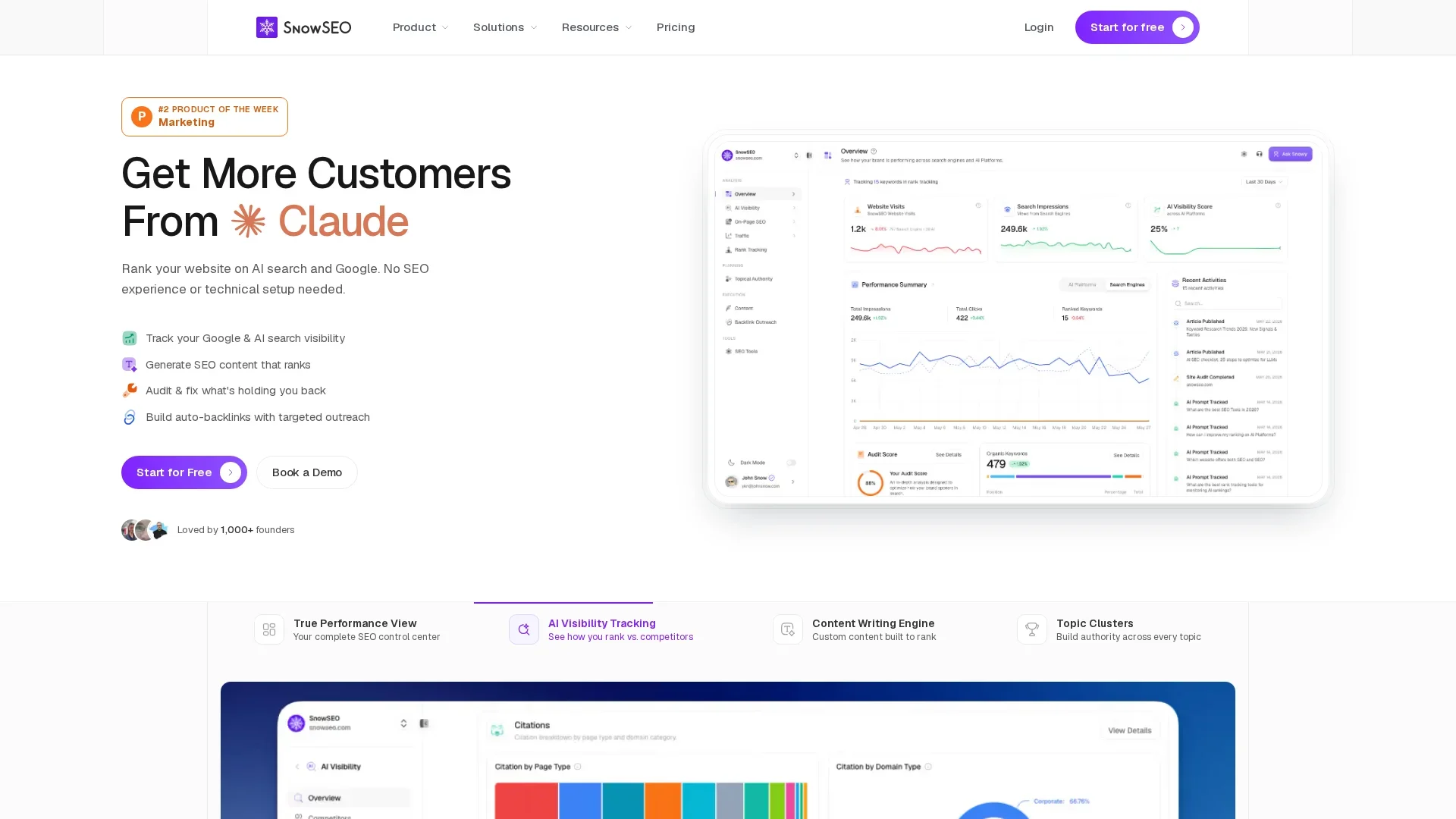
    SnowSEO joins Google SEO and AI search work in one execution-first workspace. It links real GSC performance data with audits, content, publishing, and AI visibility tracking.
    SnowSEO
    Highlights

    • Tracks keywords, audits, content, outreach, and AI mentions together.
    • Monitors citations, sentiment, and share of voice across AI platforms.

    Specs

    • Best for: SMBs, agencies, and content teams.
    • Workflow strength: High – plan, create, publish, monitor, and report in one place.

    Pros

    Cons

    • Its historical backlink data is less deep than legacy suites.

    It ranks first because it turns traditional SEO and GEO visibility into work, not just reports.

    Last updated: August 28, 2026

    Also Read: SnowSEO – Your Last SEO Platform

    2. Semrush

    Semrush One joins mature SEO research with AI visibility tracking. It covers Google, ChatGPT, Perplexity, Gemini, AI Mode, and AI Overviews.
    Semrush
    Highlights

    • Track selected prompts daily, citations, mentions, and competitors.
    • AI Search Health audits flag crawler access issues.
      Specs
    • Best for: Established SEO teams and agencies.
    • Coverage: Broad SEO and AI search data.
      Pros
    • Mature reporting and competitive research.
      Cons
    • Costs and limits can grow with add-ons.

    It ranks here because the suite is powerful, but setup can be complex.

    Last updated: August 28, 2026

    Also Read: How to Track Rankings Across Google and Generative Search

    3. Ahrefs

    Ahrefs is best for backlink intelligence and large-scale search data. Its Brand Radar adds AI mentions, citations, and custom prompt tracking.

    Ahrefs
    Highlights

    • Strong backlink, keyword, competitor, rank, and site audit tools.
    • Web Analytics separates AI referral traffic, while Bot Analytics tracks crawlers.

    Specs

    • Best for: Advanced SEOs, link builders, and publishers.
    • Workflow: Strong research, weaker content execution.

    Pros

    • Deep link data and useful AI citation reports.

    Cons

    • Brand Radar costs and workflows may sit apart from core SEO.

    It ranks third because AI visibility is a newer layer, not a unified execution system.

    Last updated: August 28, 2026

    Also Read: SnowSEO Rank Tracking Review: Alerts, Reports, and Coverage

    4. Profound

    Profound is an enterprise-focused answer engine optimization platform. It helps teams track AI brand mentions, prompts, citations, and source influence across answer engines.
    Profound
    Highlights

    Specs

    • Best for: Enterprise brands, large agencies, and GEO teams
    • Traditional SEO: Limited
    • Generative search: Deep

    Pros

    • Strong enterprise reporting and governance
    • Clear AI visibility measurement

    Cons

    • Not a full traditional SEO suite
    • May be too complex for small teams

    It ranks fourth because it excels at enterprise GEO, but works best alongside a broader SEO platform.

    Last updated: August 28, 2026

    Other platforms worth considering

    These options fit narrower needs, from AI monitoring to budget-friendly SEO workflows.

    1. Peec AI – Focused on AI mentions, citations, sentiment, and competitor share of voice.
    2. SE Ranking – All-in-one SEO with growing AI visibility features.
    3. Otterly – Lightweight AI monitoring for small teams testing GEO.

    How to choose the right unified SEO platform

    Pick based on where work happens, not just what gets tracked.

    • Choose SnowSEO if one team needs audits, keyword research, content creation, rank tracking, and AI visibility in one workflow.
    • Confirm core SEO data: intent, difficulty, gaps, backlinks, audits, ranks, and Google connections.
    • Ask how AI results are checked: platforms covered, prompt set, refresh rate, citations, sentiment, and source URLs.
    • Price for real scale: domains, countries, users, keywords, prompts, exports, and reports.
    • Favor tools that turn a visibility drop into a clear task.

    Agencies need client workspaces and reporting. E-commerce teams need product and country tracking.

    Homepage
    Homepage

    Turn search and AI visibility data into action. Try SnowSEO for audits, keywords, rank tracking, and content work in one place.

    Frequently Asked Questions

    Q1: How does SnowSEO differ from Semrush and Ahrefs as a next-gen SEO platform focused on AI search visibility?

    SnowSEO combines standard SEO work with tracking for AI platforms, helping teams turn visibility gaps into tasks. Semrush and Ahrefs are strong for classic search data, but SnowSEO puts generative search workflows at the center.

    Q2: Do I need a separate tool for generative search?

    Not always. Choose a platform that links AI mentions, rankings, content gaps, and fixes. Separate tools can create scattered reports and slow down action.

    Q3: What should I track first?

    Track priority keywords, brand mentions in AI answers, competitor citations, and pages losing clicks. Review these signals monthly, then assign fixes by likely business impact.