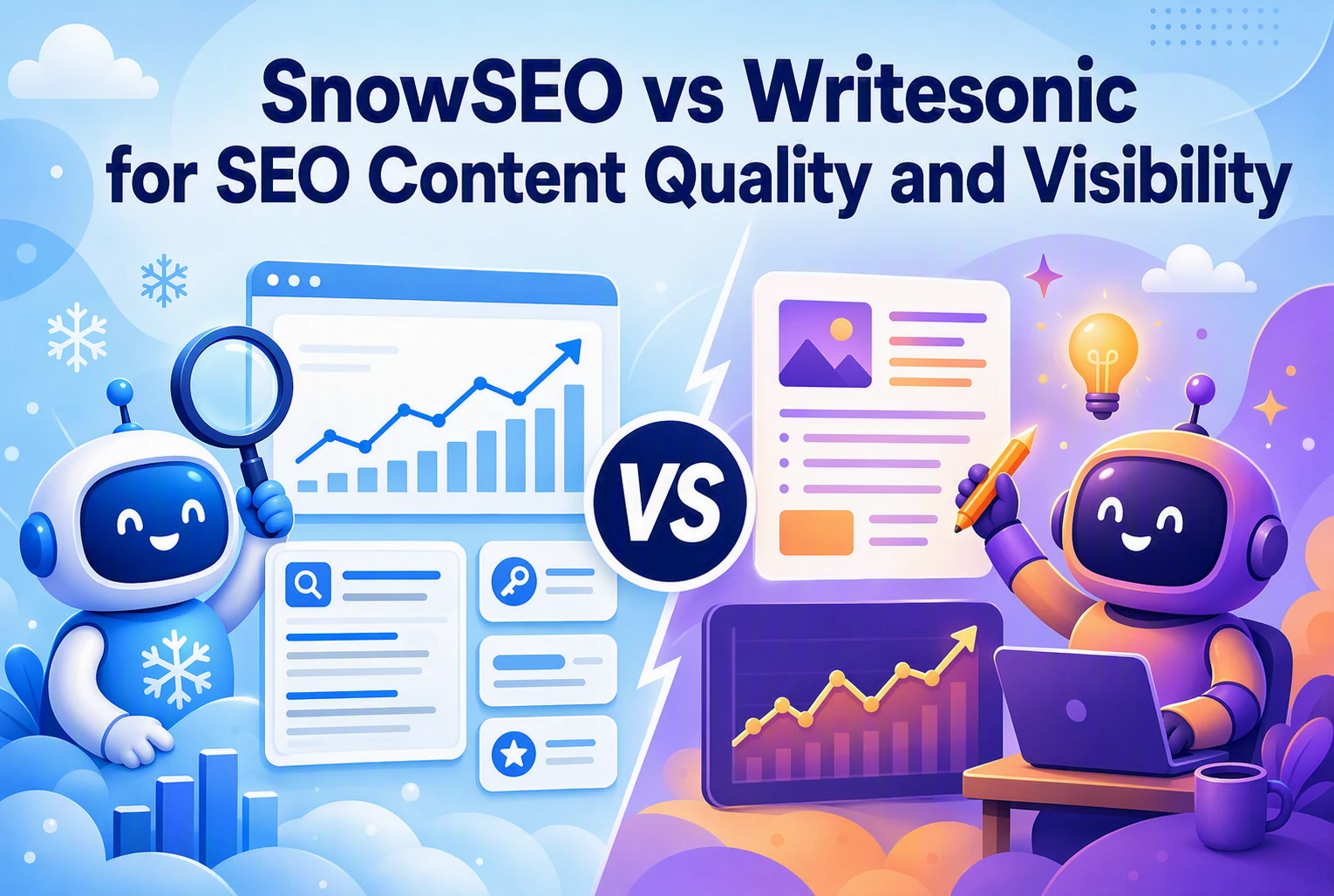
Quick Summary: SnowSEO is the better fit for teams wanting an integrated SEO workflow from audits and keyword research through drafting, rank tracking, and AI-search visibility, while Writesonic suits those needing fast standalone drafts. Neither tool replaces human editing, as Google prioritizes helpful, original content with verified facts and clear structure. Choose SnowSEO for connected SEO and AI visibility work, or Writesonic for quick first drafts.
Fast drafts do not guarantee visibility. This AI content quality comparison weighs relevance, proof, structure, and publishing support. SnowSEO suits website-aware SEO teams tracking clusters, rankings, and AI visibility. Writesonic fits research-heavy workflows with citations. This AI content quality comparison also tests brand voice, intent, internal links, and measurable results.
SnowSEO vs Writesonic: At a Glance
| SnowSEO | Writesonic | |
|---|---|---|
| Content research and grounding | Website context, keyword research, topic clusters, competitor research, and connected webmaster data | SERP and competitor research, web research, keyword data, references, and source citations |
| Brand and editorial quality | Brand context analysis, knowledge base, human-like writing, and in-editor refinement | Brand voice, knowledge inputs, multiple article modes, expert review, and humanization claims |
| SEO optimization workflow | Live SEO, readability, structure, keyword, linking, metadata, and content-gap guidance | Keyword research, SEO scoring, content-gap analysis, clustering, internal linking, and technical recommendations |
| AI-search visibility support | AI visibility tracking, competitor comparison, citations, and GEO recommendations | AI visibility tracking, citations, prompt monitoring, content optimization, and GEO workflows |
| Publishing and measurement | CMS integrations, scheduling, rank tracking, Google Search Console data, and performance monitoring | Article publishing workflows, site audits, AI visibility metrics, and plan-based reporting |
How SnowSEO and Writesonic Compare
SnowSEO
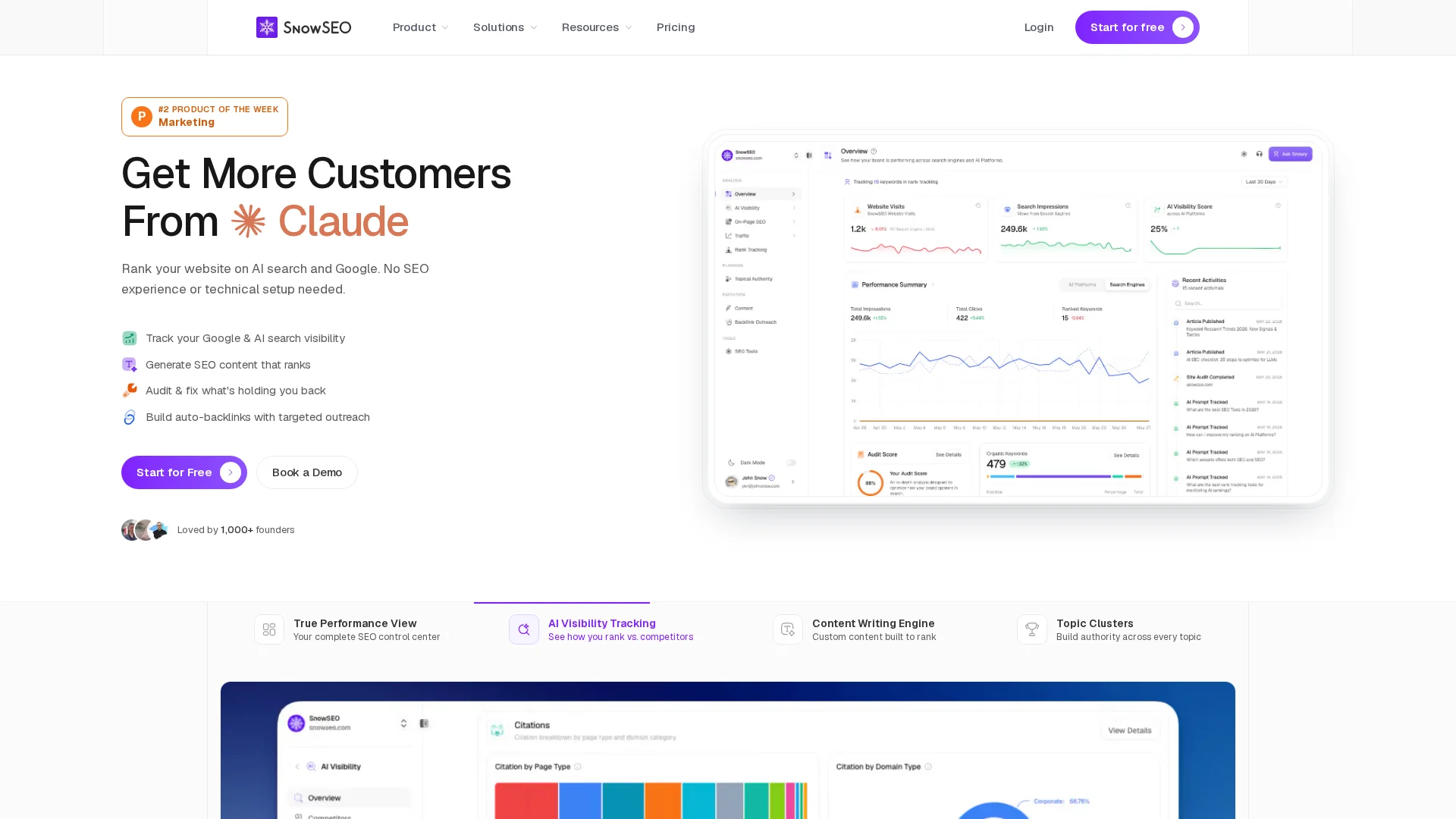
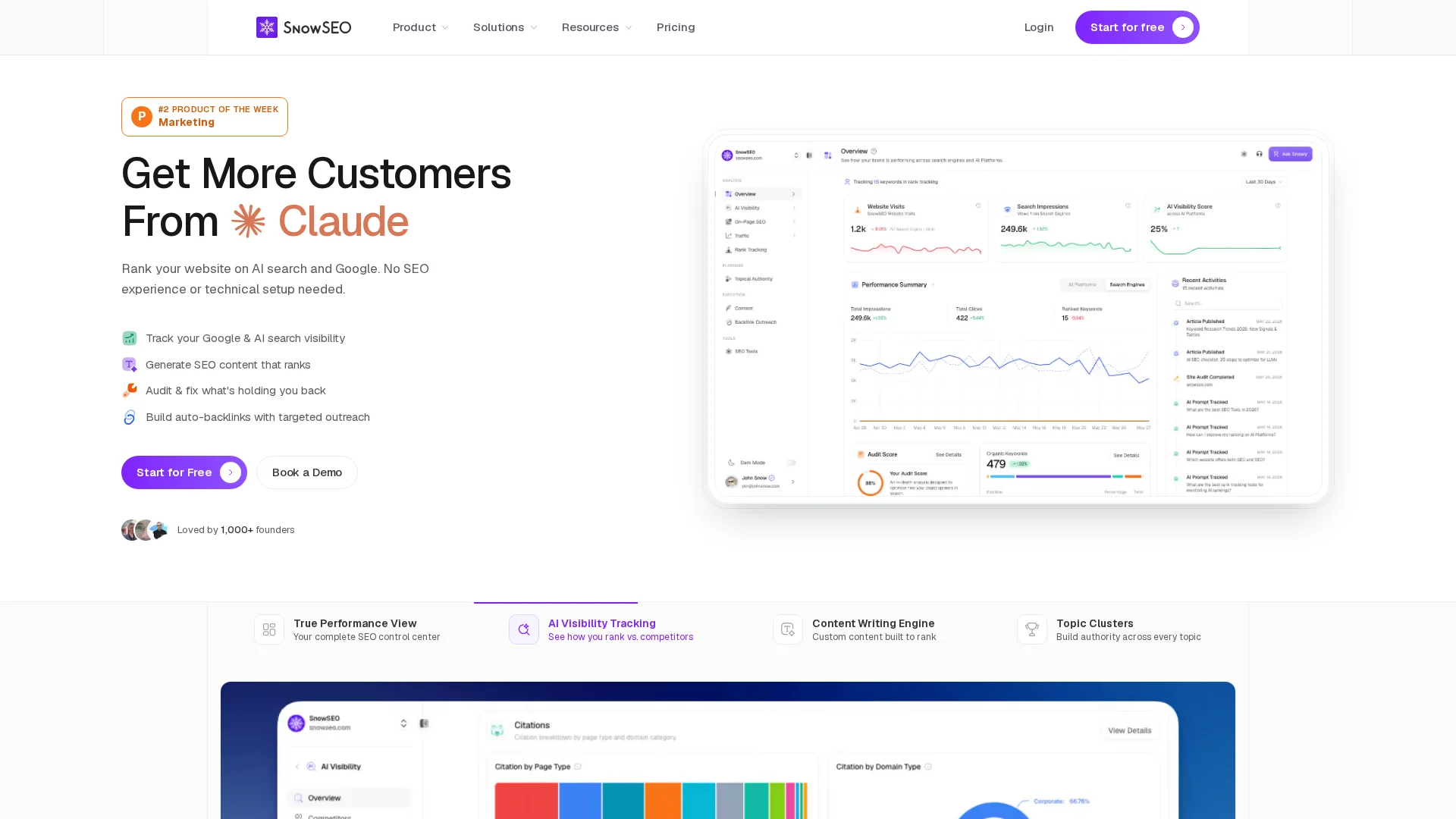
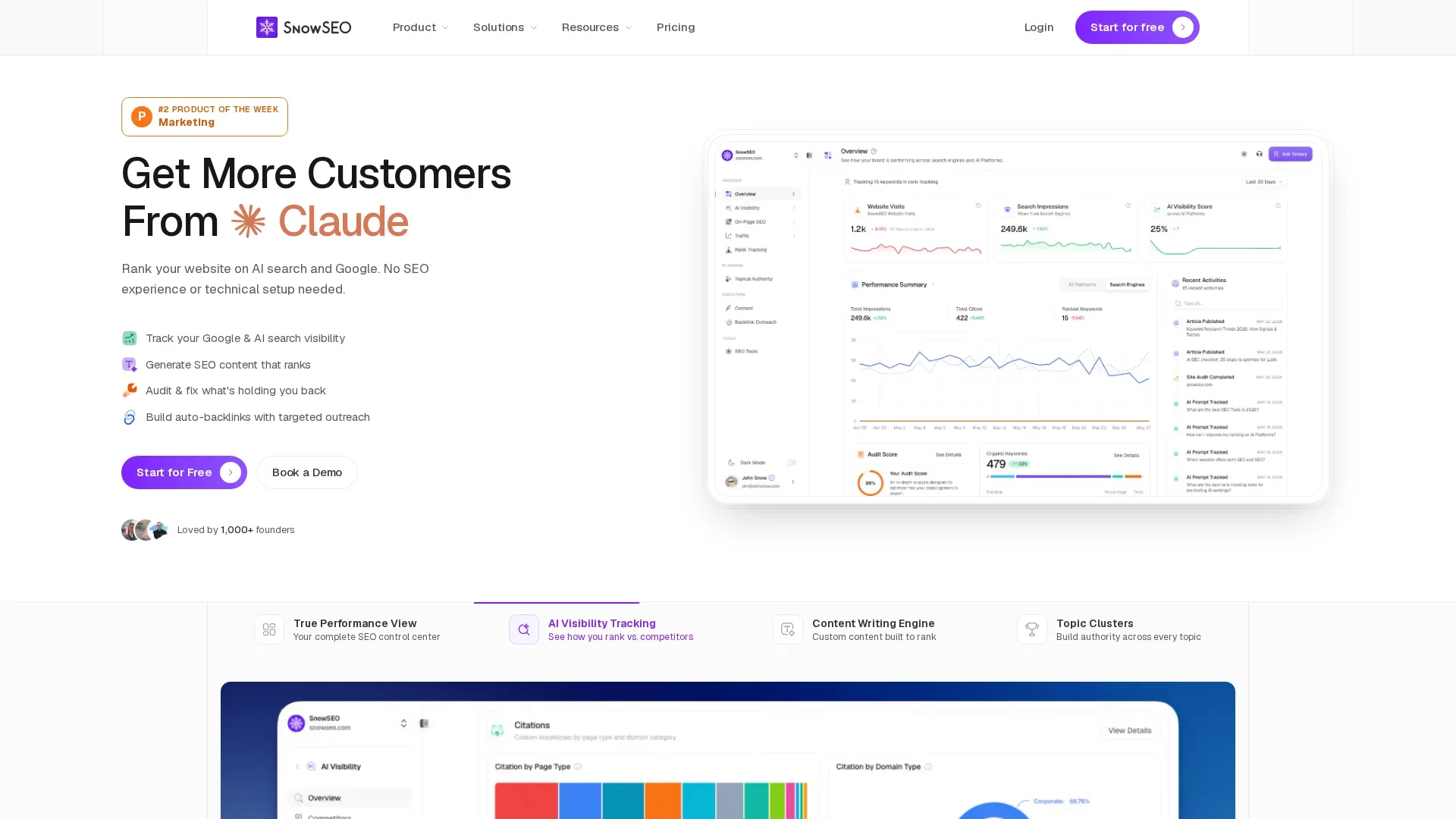
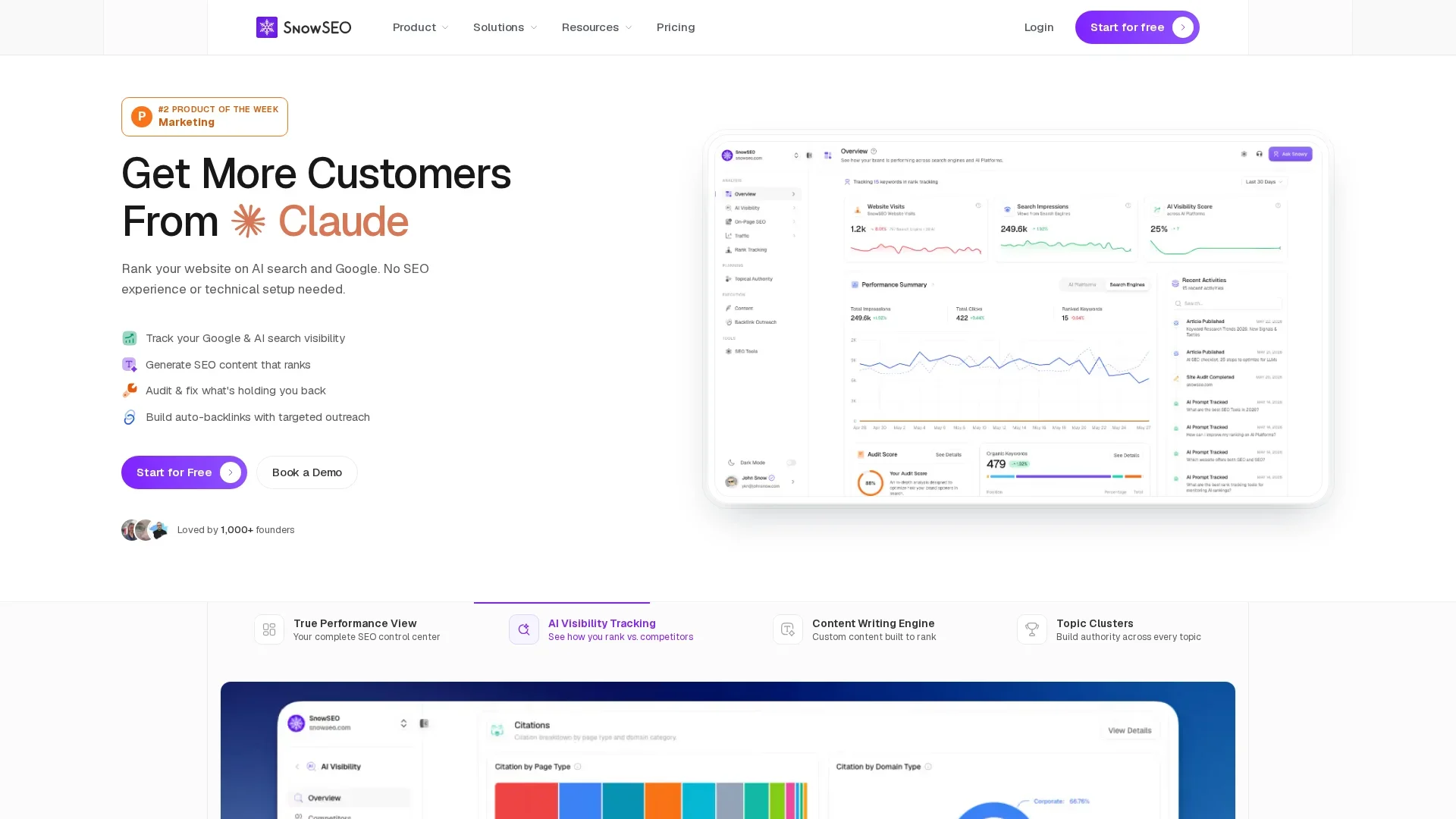
SnowSEO connects research, brand context, drafting, on-page guidance, publishing, rank tracking, and AI visibility in one workflow. It suits teams that want an integrated AI content quality comparison from brief through measurement.
Writesonic
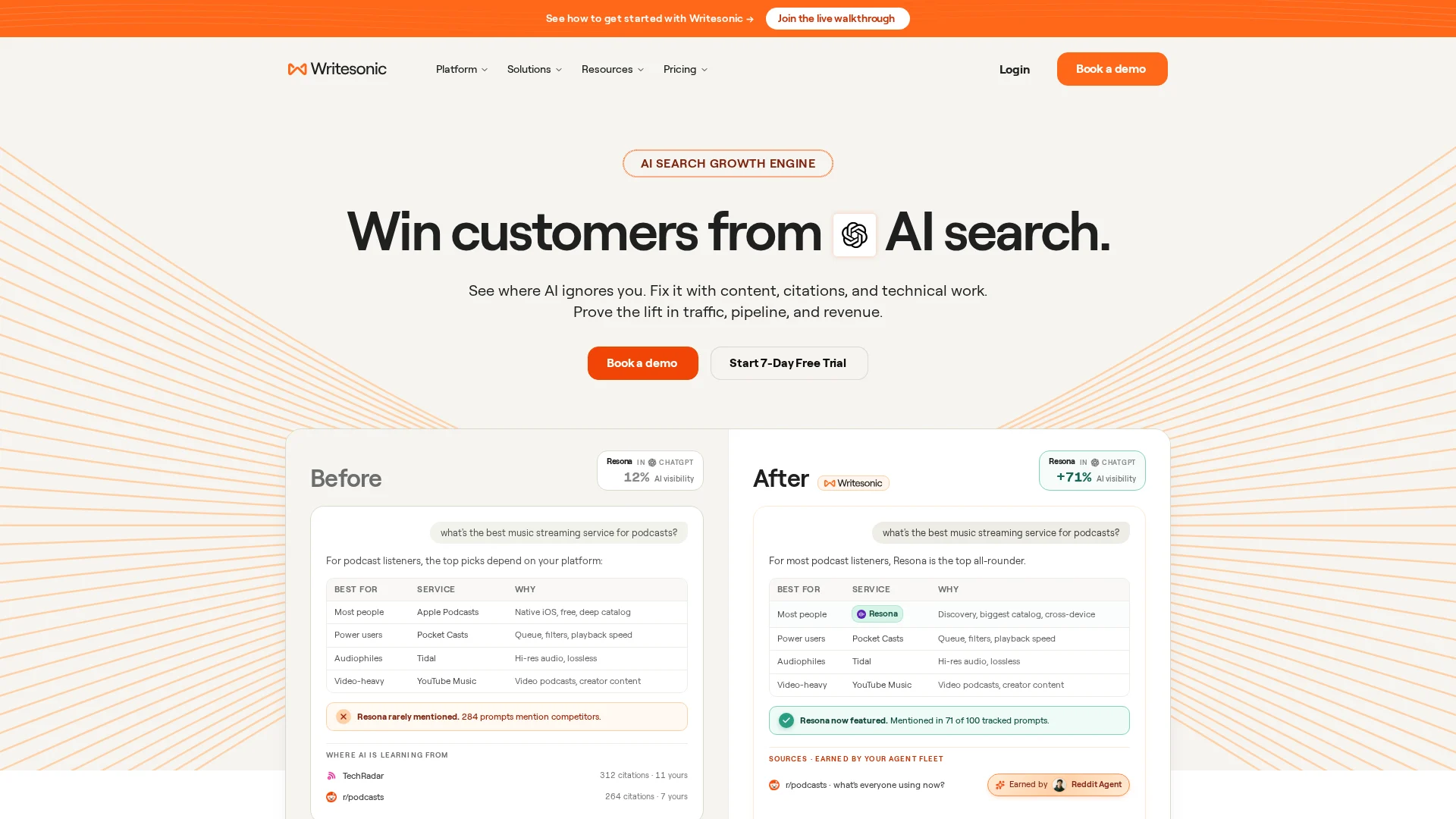
Writesonic targets content teams that need research-led article creation, SEO checks, and AI-search monitoring. Its SEO suite covers keyword research, content gaps, and internal linking.
Which Platform Produces More Useful SEO Content?
Research, Relevance, and Factual Confidence
SnowSEO is the stronger fit when content needs keyword research, audits, and visibility checks in one workflow. Writesonic can speed up drafting, but neither tool replaces source checks. Google prioritizes helpful, reliable, people-first content, not the tool that wrote it.
| Check | Better approach |
|---|---|
| Facts | Verify claims before publishing |
| Search intent | Match the reader’s real question |
Brand Voice and Editorial Effort
Give either platform a clear brief, examples, and expert notes. SnowSEO can reduce tool switching, while Writesonic may suit teams focused on draft volume. Human editing is still required.
Tip: Add first-hand examples, then remove vague claims.
Also Read: How to Choose SEO Tools for Your Marketing Workflow
SEO Features That Influence Visibility
Traditional SEO: Structure, Coverage, and Internal Links
Strong visibility starts with clear headings, full topic coverage, and useful internal links. Google says links help it find pages and understand relevance, so use short, descriptive anchor text. Google’s link guidance supports this approach.

AI Search: Citability and Visibility Feedback
AI search needs the same sound base, plus clear answers and original proof. Keep key facts in text, cite sources, and track which prompts surface your pages. Google confirms indexed pages can appear as supporting links in AI results, but no placement is guaranteed. Read Google’s AI features guidance
Check visibility trends alongside leads, not mentions alone.
Also Read: 10 Best Tools for Competitor SEO Analysis in 2024
Which Workflow Fits Your Team?
Choose Writesonic if your team needs fast drafts and has editors who can handle research, fact checks, and publishing elsewhere.
Choose SnowSEO if you want one workflow from audit to keyword choice, content, tracking, and AI-search checks.

| Team need | Better fit |
|---|---|
| Fast standalone drafting | Writesonic |
| Connected SEO and AI visibility work | SnowSEO |
- Set the topic and search intent.
- Add expert input and proof.
- Review facts before publishing.
AI can speed up production, but Google still prioritizes original, people-first content, as its guidance explains.
Also Read: SnowSEO Review: An SEO Tool for Content and Search Visibility
Which Should You Choose: SnowSEO or Writesonic?
Choose SnowSEO if you need one workflow for audits, keyword research, content, rank tracking, and AI-search visibility. Choose Writesonic if your main need is fast drafting.
| Need | Better fit |
|---|---|
| Full SEO and AI visibility workflow | SnowSEO |
| Quick first drafts | Writesonic |
- Review every AI draft for facts and brand voice.
- Track results after publishing, not just output volume.
Google rewards helpful, original content, not content made only to chase rankings, per Google’s guidance.

Compare content quality with real visibility data. Try SnowSEO to audit, create, track, and improve SEO and AI-search performance.
Frequently Asked Questions
Q1: How does SnowSEO’s AI content generation engine compare with Jasper AI and Writesonic in quality and SEO features?
SnowSEO pairs content creation with audits, keyword research, rank tracking, and AI visibility work. Writesonic focuses more on drafting. Quality still depends on your brief, source checks, and edits.
Q2: Can I publish AI drafts without editing?
No. Check facts, claims, tone, internal links, and search intent before publishing.
Q3: Which platform suits an agency?
Choose the tool that connects research, production, tracking, and reporting in one workflow.
Conclusion
SnowSEO suits teams needing one workflow for research, creation, tracking, and AI visibility. Writesonic fits fast drafting. Google prioritizes helpful, original content, so human review still matters.