Quick Summary: Your page might rank on Google’s first page but disappear entirely from ChatGPT or Claude answers-so tracking AI visibility is just as critical as Google rankings. SnowSEO stands out by combining daily keyword tracking with AI mention monitoring across ChatGPT, Claude, and other engines, then directly linking gaps to actionable content tasks like audits and publishing. While tools like OtterlyAI focus narrowly on AI citations or Profound targets enterprise prompt-level insights, SnowSEO’s strength lies in its unified workflow for teams that need both SEO and AI visibility tied to real content improvements.
A page can rank on Google page one yet vanish from a buyer’s ChatGPT or Claude answer. Google positions differ from AI mentions and citations. These AI visibility rank trackers compare both systems without extra spreadsheet work. We reviewed seven AI visibility rank trackers for coverage, prompts, citations, competitors, reports, and workflow fit. SnowSEO leads for teams that need AI visibility rank trackers tied to action.
Quick Comparison of AI Visibility Rank Trackers
| Tool | Best for | Google tracking | AI coverage | Actionability |
|---|---|---|---|---|
| SnowSEO | Founders, SMBs, content teams, and lean agencies | Daily keyword tracking with GSC and live SERP data | ChatGPT, Claude, Gemini, Perplexity, Grok, DeepSeek, and other supported providers | Content, clusters, audits, backlinks, publishing, and competitor gaps |
| OtterlyAI | SEO teams, agencies, ecommerce, and AI-search specialists | AI Overviews and AI Mode monitoring rather than a full traditional SEO suite | Seven AI engines, with some surfaces available as add-ons | Citation gaps, competitor comparisons, reports, integrations, and shopping insights |
| Profound | Enterprise brands, agencies, and structured GEO programs | Best used alongside a traditional SEO rank tracker | AI answer engines with prompt-level daily tracking | Prompt research, segmentation, content, outreach, and agents |
| Search Atlas LLM Visibility | Marketing teams and agencies wanting SEO plus AI automation | Available through the wider Search Atlas SEO platform | ChatGPT, Claude, Gemini, Perplexity, and additional supported engines | Competitor gaps, sentiment, content optimization, and SEO automation |
What to know about AI visibility rank tracking
Google rank tracking shows where a page ranks for a keyword. AI visibility tracking shows whether ChatGPT or Claude mentions, recommends, or cites your brand.
It also reveals answer placement, competitor context, and source influence. Strong trackers keep these signals separate, then make trend changes easy to compare.
1. SnowSEO
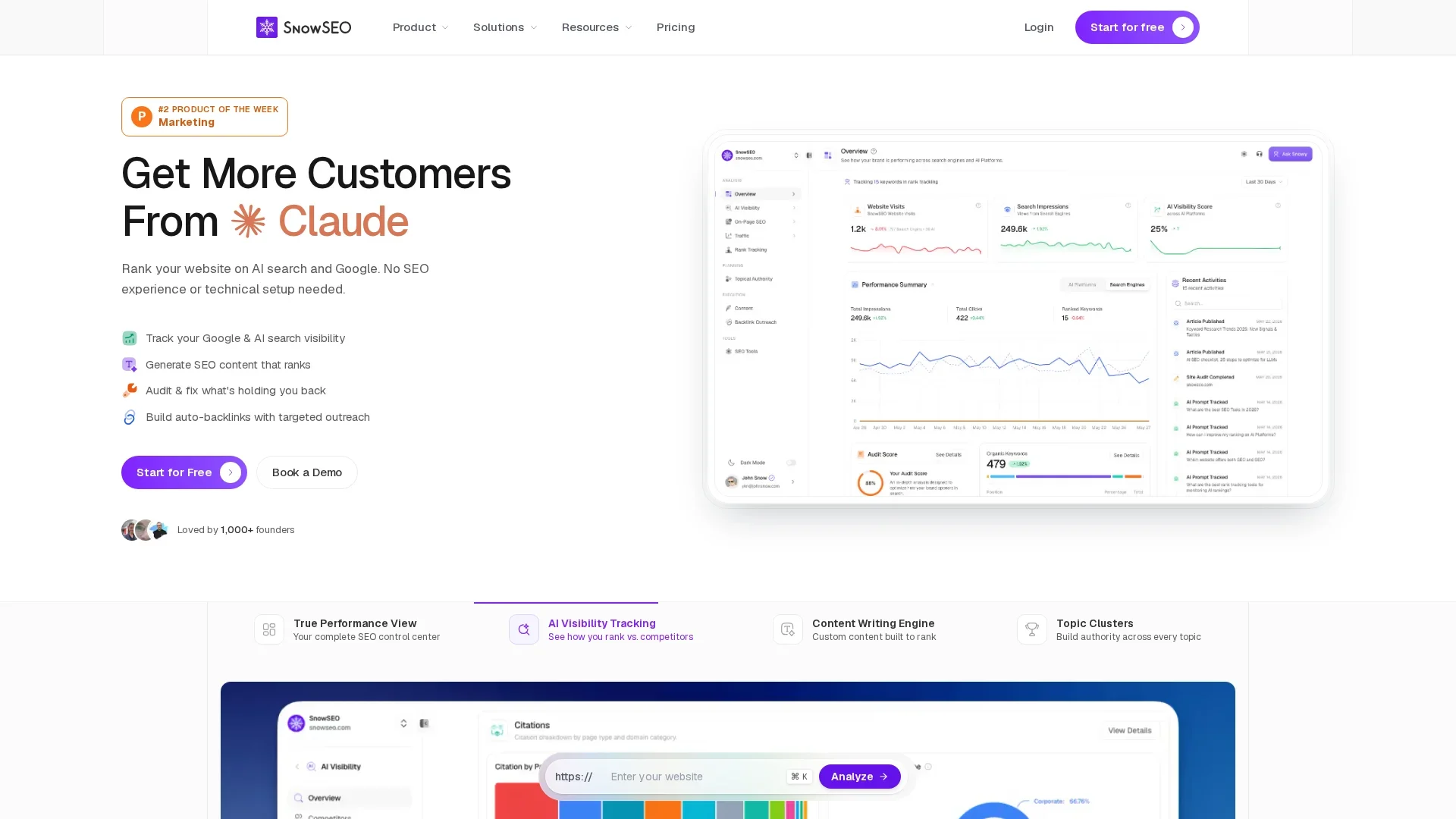
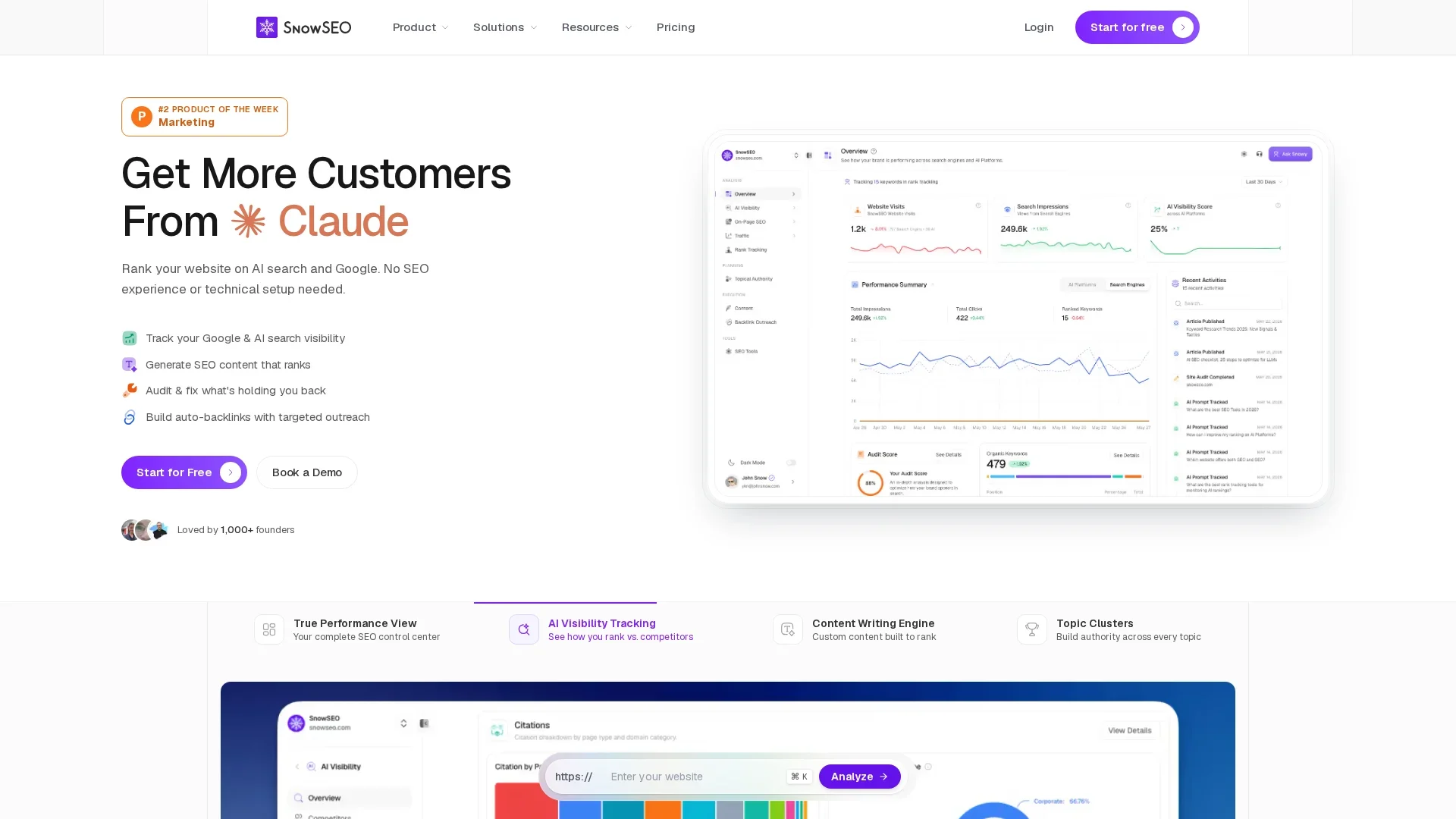
SnowSEO is the best all-in-one rank tracker for Google and AI search. It links measurement to content, audits, and publishing in one workspace.
Highlights
- Track Google keywords daily, plus AI mentions, citations, sentiment, share of voice, and competitors across ChatGPT, Claude, Gemini, Perplexity, and more. See the platform overview.
Specs
- Best for: Founders, SMBs, content teams, and lean agencies
- Actionability: Content, clusters, audits, backlinks, publishing, and gaps
Pros
- Fewer disconnected tools
Cons
- Review composite AI scores with prompt-level results.
It ranks first because it turns visibility gaps into work you can publish and track.
Last updated: August 23, 2026
Also Read: 10 Best Tools for Competitor SEO Analysis in 2024
2. OtterlyAI
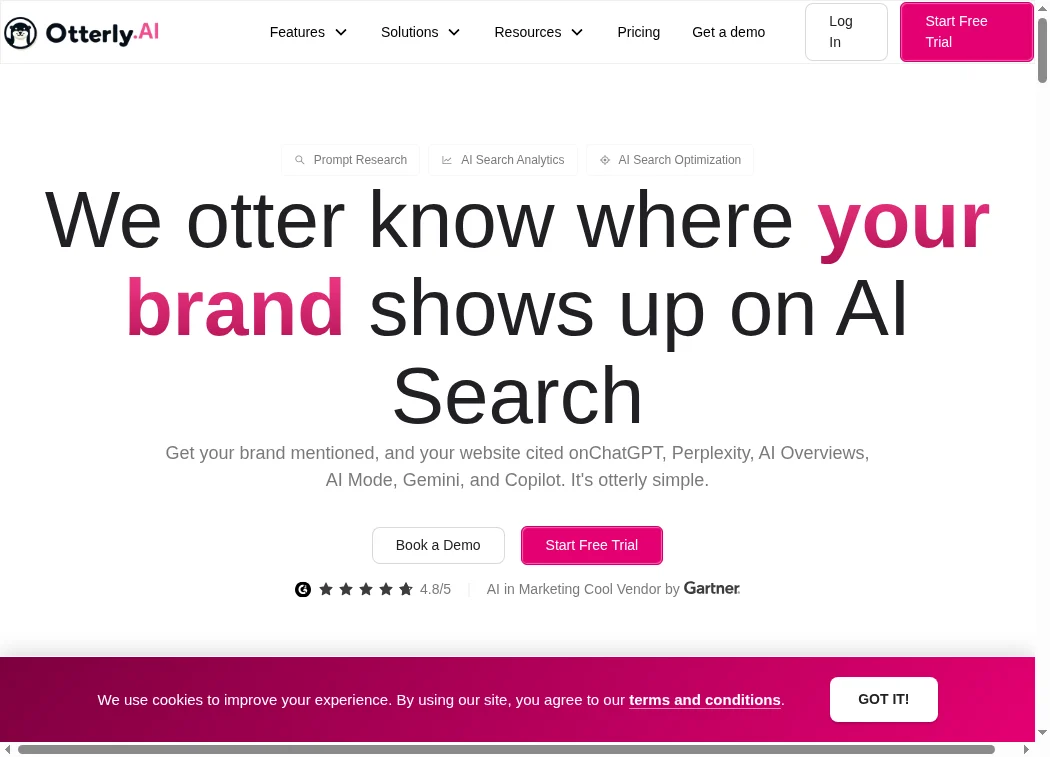
OtterlyAI is a specialist AI search analytics platform for mentions and citations. It focuses on where AI answers name, cite, and frame your brand.
Highlights
- Tracks seven AI engines, including ChatGPT, Claude, Gemini, and Google AI surfaces.
- Stores answers to measure citation gaps, sentiment, share of voice, and competitor mentions.
Specs
- Best for: Agencies, SEO teams, ecommerce, and AI-search specialists.
- Google tracking: AI Overviews and AI Mode, not full traditional SEO tracking.
Pros
- Strong citation and sentiment analysis.
Cons
- Advanced engines may require add-ons.
It ranks here because AI answer monitoring is its core strength, but its wider SEO toolkit is narrower than SnowSEO.
Last updated: August 23, 2026
Also Read: Best SEO Tools: 25 Picks to Improve Rankings in 2026
3. Profound
Profound suits enterprise teams that need structured AI search prompt intelligence. It tracks daily answers and turns findings into repeatable content and outreach work.
![Enterprise marketing team reviewing AI search insights on large office screens]
Highlights
- Validates prompts against 1.3B+ real AI conversations.
- Tracks citations, sentiment, visibility rank, and share of voice.
Specs
- Best for: Enterprise brands, agencies, and GEO programs
- Google tracking: Use alongside a traditional rank tracker
- AI coverage: Daily prompt-level answer tracking
- Actionability: Content, outreach, reporting, and agents
Pros
- Strong segmentation by persona, region, and funnel stage.
Cons
- May overwhelm small teams seeking a simple dashboard.
It ranks here because its enterprise depth exceeds many smaller teams’ needs.
Last updated: August 23, 2026
Also Read: SnowSEO – Your Last SEO Platform
4. Search Atlas LLM Visibility
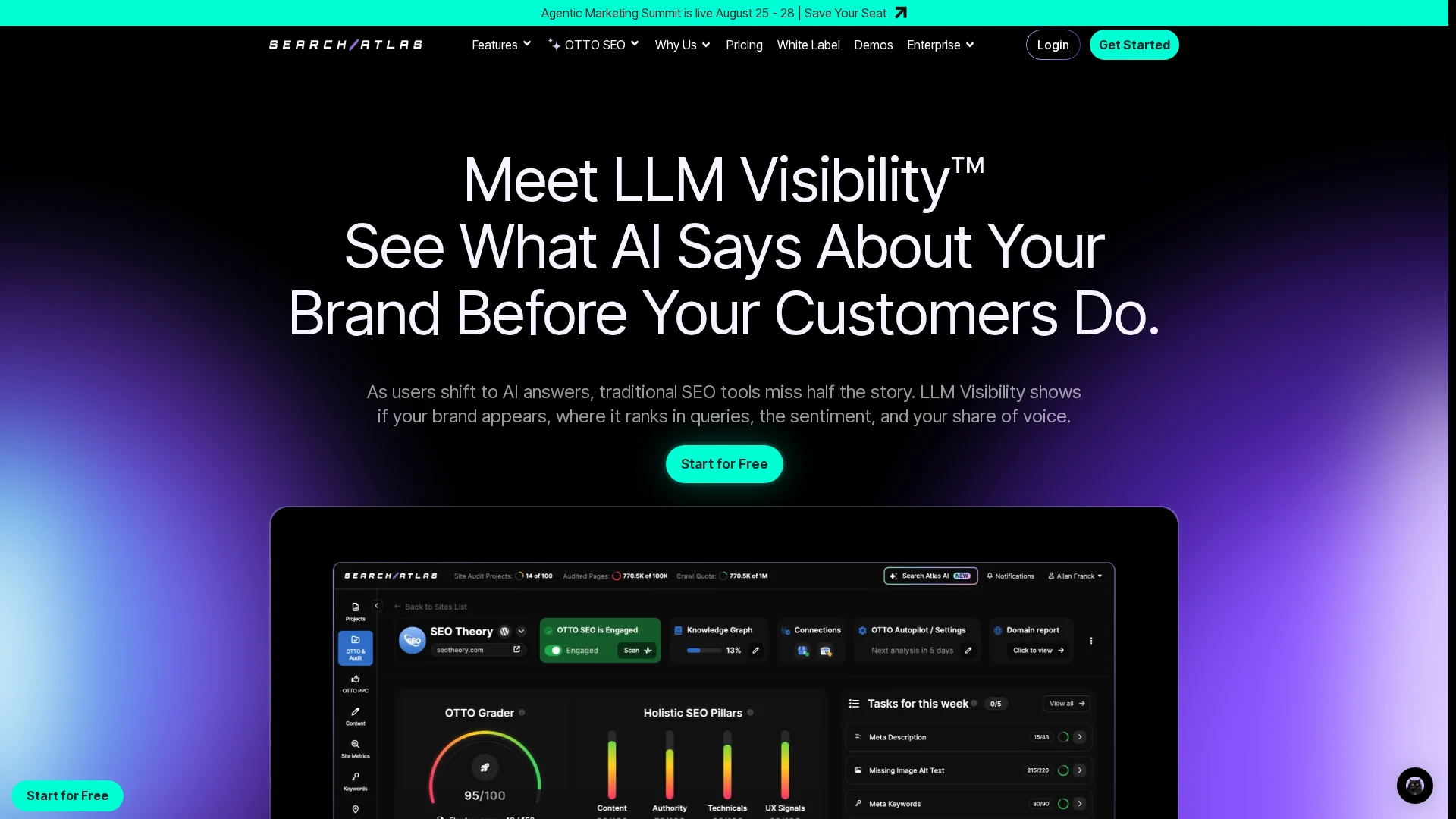
Search Atlas suits teams that want AI visibility inside a broader SEO suite. It tracks how AI answers frame your brand, then connects findings to content and SEO work.
Highlights
- Tracks mentions, sentiment, share of voice, and answer placement across ChatGPT, Claude, Gemini, and Perplexity.
- Compares competitors and historical trends.
Specs
- Google tracking: Available in the wider SEO platform
- Best for: Agencies needing SEO plus AI automation
Pros
- Broad workflow beyond tracking
Cons
- Metrics need method-aware review.
It ranks fourth because its wider suite may exceed simple tracking needs.
Last updated: August 23, 2026
More AI Visibility Trackers to Consider
The four main picks fit most teams. These alternatives suit enterprise, agency, or reporting-heavy needs.
- AthenaHQ – Enterprise source intelligence, crawlability, citation outreach, governance, and team workflows.
- SE Visible – Agency-focused AI visibility with competitor, source, sentiment, multi-brand, and export tools.
- Rankability Tracker – Unified reporting for Google, AI engines, local, video, and citations.
How to choose the right AI visibility rank tracker
- Separate each signal. Track Google rank, AI mentions, answer placement, citations, and share of voice separately.
- Confirm engine coverage. Check ChatGPT, Claude, Gemini, Perplexity, AI Overviews, and AI Mode by plan and region.
- Demand prompt history. Saved answers reveal ranking shifts, cited sources, and competitor wins.
- Match your workflow. Choose SnowSEO if you need tracking, content, and publishing in one place. Otterly.AI and Profound suit specialist monitoring.
- Plan for reporting. Agencies need projects, exports, access controls, and location settings.
Treat AI visibility as a KPI beside clicks, conversions, and Google rankings.
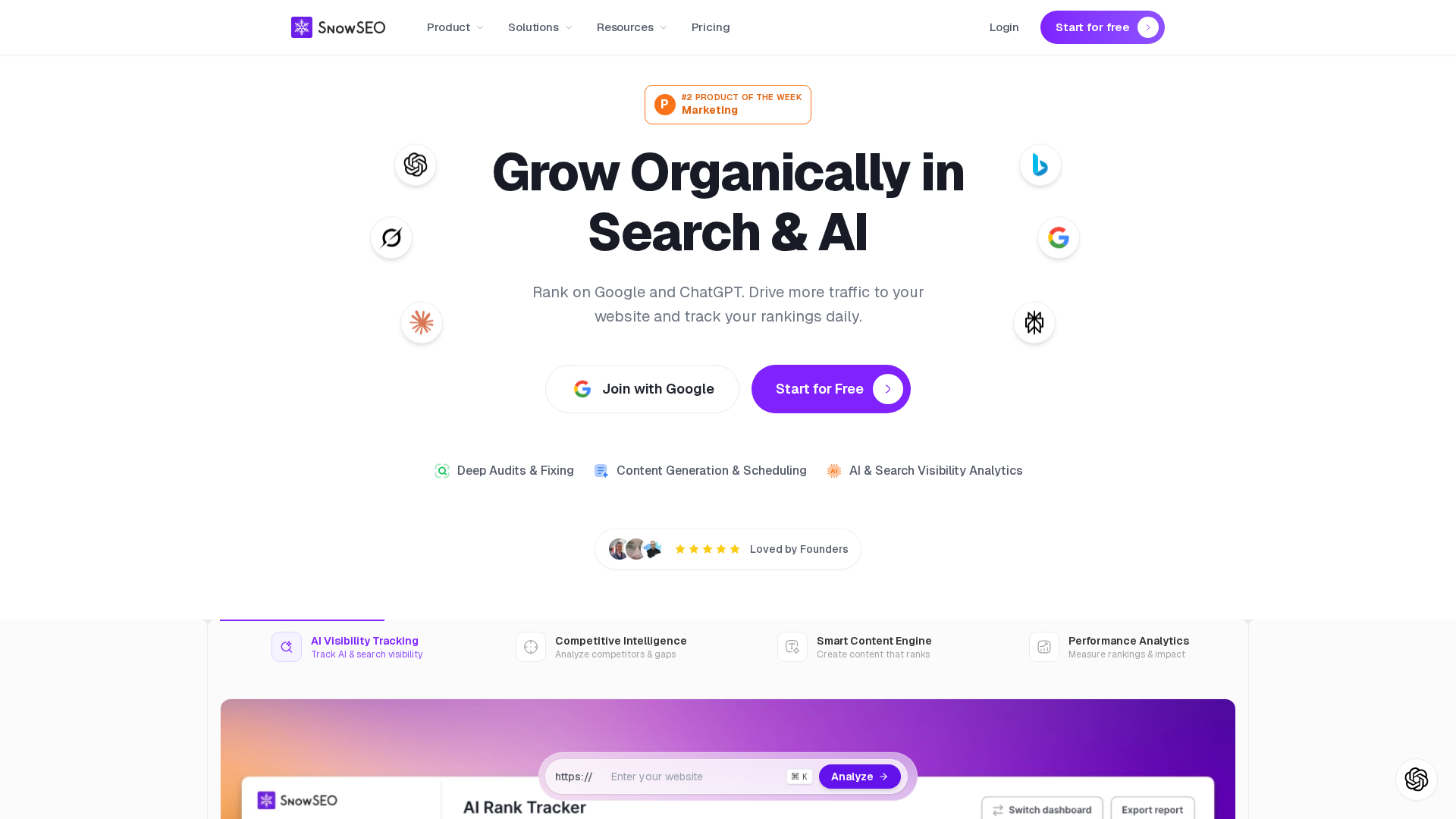
Track Google rankings and AI visibility in one place. Try SnowSEO for audits, keywords, competitor insights, and smarter reporting.
Frequently Asked Questions
Q1: What are the best rank tracking tools for monitoring AI and traditional search engine rankings?
SnowSEO is a strong all-in-one choice for Google ranks and AI visibility. AthenaHQ, Peec AI, and Otterly.AI focus more on AI mentions. Choose based on the platforms you need to track.
Q2: Do AI rank trackers measure Google rankings?
Not always. AI trackers often measure brand mentions, citations, and prompt answers. Use a tool with separate Google keyword positions and AI visibility data.
Q3: How often should I check AI visibility?
Check weekly for trends and after major content updates. Daily checks can be useful for active campaigns, but AI answers can change without a clear ranking signal.