Tag: Search Engine Optimization

  • How to Build Citation-Worthy Content for AI Search

    How to Build Citation-Worthy Content for AI Search

    Quick Summary: To get cited by AI search, create content with original proof, not just polished summaries. Lead with a clear answer, back it with verifiable data or firsthand tests, and keep the page technically clean so crawlers can index it. Measure visibility over time, but never promise citations, since Google offers no guaranteed formula.

    A page can rank well, then vanish when a buyer asks an AI tool for a recommendation. Often, the gap is not another keyword. It is a clear, checkable passage the system can retrieve and attribute.

    This guide shows how to create citation-worthy content for AI search with useful claims, original proof, clean structure, and sound technical setup. You will also learn how to measure citation-worthy content for AI search without making promises no one can prove.

    Step 1: Choose a Question You Can Answer Better Than a Summary

    Build a Question Map

    Pick questions where your team has proof, not just a polished recap. Google asks creators to add original information, analysis, or first-hand expertise in its people-first content guidance.

    • List buyer questions from sales calls and support tickets.
    • Group them by task, risk, and intent.
    • Flag questions competitors answer with vague advice.
    • Choose one your team can show, test, or explain clearly.

    Add a Distinctive Evidence Angle

    Give the answer something an AI summary cannot create alone.

    Evidence type Example
    First-hand test Results from a real content audit
    Original data Patterns from your own site data
    Expert judgment A clear decision rule and its limits

    Tip: Do not promise AI citations. Build useful proof, then measure visibility over time.

    Also Read: 10 Best Tools for Competitor SEO Analysis in 2024

    Step 2: Write Extractable Answers, Then Earn Trust With Depth

    Use a Repeatable Section Pattern

    Lead with a plain answer in the first two sentences. Then add the context, steps, and proof a reader needs to act.

    1. State the answer clearly.
    2. Explain when it applies.
    3. Add an example, source, or firsthand result.
    4. Link to deeper guidance where needed.

    Google advises clear structure and unique, useful content for generative search features in its AI search guidance.

    Four-step flowchart with pencil sketch style
    Four-step flowchart with pencil sketch style

    Write for quick extraction, not shallow reading. The short answer earns attention. The evidence earns trust.

    Make Claims Precise and Verifiable

    Replace broad promises with facts a reader can check. Name the source, date, sample, method, or limit.

    Weak claim Verifiable rewrite
    Our process improves visibility Our audit found 12 pages missing source links
    AI search cites experts AI systems may surface relevant indexed sources

    Google asks publishers to show original insight, clear sourcing, and demonstrable expertise in its people-first content guidance.

    Also Read: Google AI Updates Change How Marketers Measure Search Visibility

    Step 3: Make the Source Easy to Find, Understand, and Attribute

    Check Eligibility and Discoverability

    Your best evidence cannot help if crawlers cannot reach the page. Confirm it returns a 200 status, is not blocked by noindex or robots.txt, has a clear canonical URL, and appears in your sitemap.

    Google says key pages need links or sitemap entries to be found and crawled. Check the Page Indexing report after publishing.

    SEO manager checking indexing status on dual monitors
    SEO manager checking indexing status on dual monitors

    Indexing makes a page eligible for search. It does not promise an AI citation.

    Clarify the Page and Its Author

    State the answer near the top, then support it with clear headings, source links, and dated proof. Add a byline, author bio, reviewer details, and an About page.

    Google recommends clear sourcing and background about authors or publishers as trust signals in people-first content guidance.

    • Name who did the work.
    • Explain how you gathered the evidence.
    • Update dates when facts change.

    Also Read: SnowSEO – Your Last SEO Platform

    Step 4: Publish, Promote, and Measure Citation Potential

    Publish a clean, crawlable page with a clear author, date, sources, and internal links. Google advises content teams to show original research and first-hand expertise in its people-first content guidance.

    1. Share the page with relevant partners, customers, and industry communities.
    2. Track branded mentions, referring pages, AI answer appearances, clicks, and assisted leads.
    3. Review the page after new data or product changes.
    Signal What it suggests
    Earned mentions Others find the proof useful
    AI answer presence The page may be extractable
    Conversions Visibility supports business value

    Do not promise citations. Treat them as an outcome to test, not a ranking metric you control.
    Homepage
    Homepage

    Turn stronger evidence into measurable AI search visibility. Use SnowSEO to audit content, find proof gaps, track rankings, and improve citation-ready pages.

    Frequently Asked Questions

    Q1: How can marketers create content that AI search engines are more likely to cite?

    Use clear answers, named sources, original data, and precise headings. Make key facts easy to extract.

    Q2: Does structured data guarantee AI citations?

    No. It can help systems understand a page, but proof and relevance matter more.

    Q3: What proof makes content more citation-worthy?

    First-party research, expert quotes, tested methods, and dated examples build trust.

    Conclusion

    Build content people can verify, use, and trust. Pair original proof with clear structure, sound technical SEO, and measured results. Google’s guidance confirms there is no guaranteed citation formula.

  • Google and AI Platforms Shift Guidance for Generative Search Visibility

    Google and AI Platforms Shift Guidance for Generative Search Visibility

    Quick Summary: Google’s 2026 guidance confirms that generative search visibility in AI Overviews and AI Mode still depends on standard SEO, not special AI markup or separate GEO tactics. The company is adding a Search Console report for AI impressions, but it measures visibility, not a universal rank, and site owners can opt out. Other platforms like ChatGPT reward clear, crawlable, locally accurate pages, so marketers should track citations and improve verifiable content rather than chase unproven AI ranking tricks.

    Google is tying AI Mode, AI Overviews, and Search Console reporting closer together in 2026. Yet its guidance remains clear: no special AI markup is needed. These generative search optimization updates reward crawlable, useful, well-structured pages that qualify for normal Search.

    Marketers still face mixed rules across AI platforms. This source-led analysis separates verified generative search optimization updates from unsupported GEO claims, so you can improve visibility without weakening core SEO.

    Google Expands AI Search While Keeping SEO at the Core

    Why Query Fan-Out Changes Content Planning

    Google’s AI Overviews and AI Mode can split one question into several related searches. Google calls this query fan-out. Its guidance is clear: generative results still use core Search ranking and quality systems, so solid SEO remains the base. Google’s AI search guide

    Plan pages around the full question, not one exact phrase.

    A clean flowchart branching from one central query into multiple topic nodes
    A clean flowchart branching from one central query into multiple topic nodes
    Content need Practical move
    Main answer State it early and clearly
    Related concerns Cover costs, steps, risks, and alternatives
    Proof Add first-hand examples, data, or expert insight
    1. Map the main query and likely follow-up questions.
    2. Build clear sections that answer each need.
    3. Link to deeper pages where the topic needs detail.

    Do not create thin pages for every query variation. Google warns this can become scaled content abuse.

    These generative search optimization updates favor useful coverage, clean structure, and indexed pages, not a separate AI-only SEO playbook.

    Also Read: 7 GEO Optimization Tools for Brand Visibility in AI Answers

    Google Adds New Controls and Reporting for Generative Search

    What to Measure Instead of a Single GEO Rank

    Stop chasing one GEO rank. Google now offers a generative AI report that tracks impressions for AI Overviews and AI Mode, split by page, country, device, and date. It is rolling out in Search Console, according to Google’s announcement.

    Clean analytics dashboard with multiple line graphs
    Clean analytics dashboard with multiple line graphs

    Track a small scorecard instead:

    Metric What it tells you
    AI impressions How often Google shows your URLs
    Pages surfaced Which content earns AI visibility
    Country and device Where visibility changes
    Conversions Whether AI-visible visits help the business
    1. Export weekly impressions.
    2. Flag pages gaining or losing exposure.
    3. Compare those pages with leads, sales, or sign-ups.

    The report measures visibility, not a universal AI rank. Google also lets site owners opt out of generative Search features, which removes related impressions and traffic.

    • Do not treat impressions as clicks.
    • Do not assume one prompt reflects all user results.
    • Use SnowSEO tracking alongside Search Console to compare Google visibility with other AI platforms.

    Also Read: GEO Optimization vs Traditional SEO: Which Drives AI Visibility?

    What Other AI Platforms Change for Visibility Work

    ChatGPT search can rewrite prompts, use location, and show linked sources. That makes clear, crawlable, locally accurate pages more useful than keyword-stuffed copy. OpenAI also says publishers should allow OAI-SearchBot if they want content included in summaries and snippets. Check its publisher guidance.

    Visibility task What to check
    Source eligibility Robots rules allow search crawling
    Answer quality Pages state facts, dates, prices, and limits clearly
    Local intent Business details match across your site and listings
    1. Test real buyer questions in ChatGPT and Claude.
    2. Record cited domains, answer gaps, and wrong claims.
    3. Publish first-hand proof: product specs, policies, expert input, and updates.

    Do not chase a secret AI ranking trick. Track citations and referrals, then improve the pages users can verify.

    Also Read: 10 Must-Have Tools to Streamline Your SEO in 2025

    How the Guidance Reached This Point

    Google first framed AI Overviews and AI Mode as an extension of core Search, not a separate ranking system. Its early guidance stressed crawlable pages, helpful content, clear structure, and accurate structured data.

    In May 2026, Google made that stance clearer in its generative AI search guide. The message is simple: strong SEO remains the base for AI visibility.

    Earlier assumption Current guidance
    New AI markup is required No special markup is needed
    More AI-written pages win Unique, useful content matters more
    GEO replaces SEO GEO builds on SEO fundamentals

    Treat unproven GEO tactics as tests, not requirements.

    Also Read: 10 Best Tools for Competitor SEO Analysis in 2024

    Homepage
    Homepage

    Turn shifting guidance into clear action. Use SnowSEO to audit visibility, track rankings, and improve content for Google, ChatGPT, and Claude.

    Frequently Asked Questions

    Q1: What recent changes from Google and AI platforms affect generative search visibility?

    Google still rewards helpful, original pages. AI platforms increasingly cite clear, trusted sources. Focus on accurate facts, strong headings, expert proof, and pages that answer a specific question fully.

    Q2: Should I create separate pages for AI search?

    No. Build useful pages for people first. Add direct answers, clear product details, and supporting evidence.

    Q3: How can I track AI visibility?

    Track brand mentions, cited URLs, and prompt results over time. Compare changes with organic rankings and traffic.

    Conclusion

    Generative search visibility still rests on sound SEO: indexable pages, clear answers, and original proof. Google confirms no special AI markup is required, so test claims before chasing GEO trends.

  • 7 GEO Optimization Tools for Brand Visibility in AI Answers

    7 GEO Optimization Tools for Brand Visibility in AI Answers

    Quick Summary: GEO tools track how AI engines like ChatGPT and Perplexity mention your brand, not just Google rankings. SnowSEO leads for all-in-one SEO and GEO workflows, while Profound, AthenaHQ, and OtterlyAI suit larger or leaner teams. Pick monitoring-only tools if you just need visibility data, or full platforms to act on gaps. Match tool choice to team size, AI engine coverage, and whether you need content execution.

    A brand can rank on Google yet vanish when buyers ask ChatGPT, Gemini, or Perplexity for a recommendation. Traditional trackers miss AI mentions, citations, competitor picks, and wrong brand details.

    This guide compares seven GEO optimization tools, starting with SnowSEO. It covers all-in-one SEO and GEO, monitoring, audits, governance, and content work. We assessed engine coverage, prompts, citations, competitor signals, diagnostics, reports, ease of use, and team fit. AI answers change, so these GEO optimization tools rank by workflow value, not fixed AI positions.

    GEO Tool Comparison

    Tool Best for Core GEO capability Optimization workflow Team fit
    SnowSEO Small teams, founders, and agencies wanting one SEO and GEO workspace AI visibility, citations, sentiment, share of voice, and competitor tracking Topic research, content generation, audits, recommendations, and CMS publishing SMBs, content teams, and agencies
    Profound Enterprise SEO, content, and marketing operations teams Citation data, answer-engine insights, competitor benchmarking, and agent analytics Prioritized audits, content briefs, FAQ generation, CMS workflows, and governed agents Large organizations with approval and governance requirements
    AthenaHQ Cross-functional teams and enterprise brand programs Visibility, citations, prompts, sources, competitors, sentiment, and crawlability Prioritized actions, content, outreach, commerce, and governance workflows Enterprise marketing, PR, SEO, and commerce teams
    OtterlyAI SEO professionals, agencies, and lean marketing teams Daily prompt tracking, citations, sentiment, share of voice, and competitor analysis GEO audits, prompt research, crawlability checks, and recommendations Small and mid-sized teams with existing execution tools

    What to know about GEO optimization tools

    GEO optimization tools show how AI answers mention, recommend, and cite your brand. They track the prompts, competitors, and sources that shape those answers.

    The best tools do more than report a visibility score. They flag crawl issues, reveal content gaps, and suggest the next fix.

    Use GEO alongside traditional SEO. Strong pages, clear brand facts, and sound technical SEO still help AI systems find and trust your site.

    1. SnowSEO

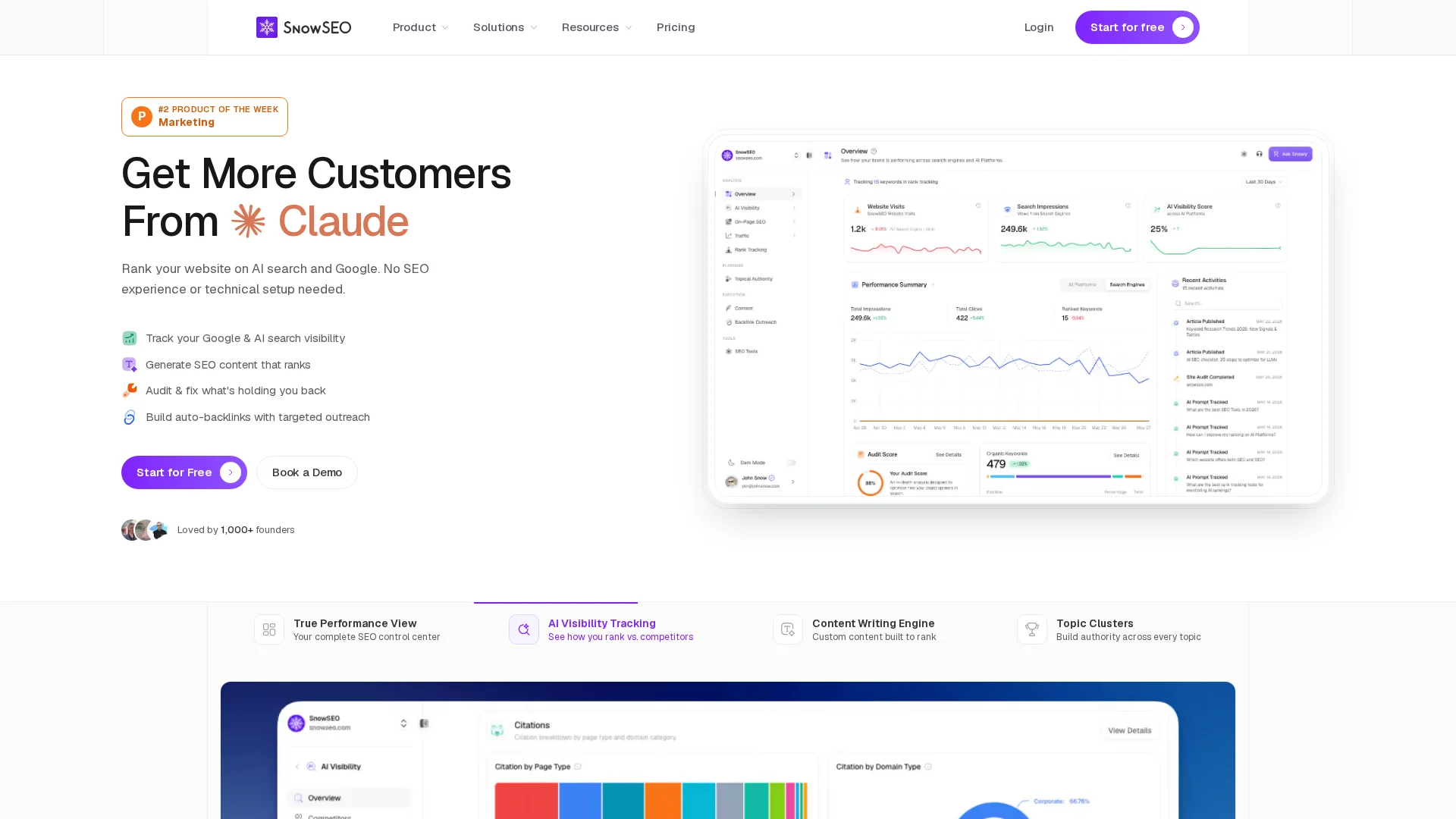
    SnowSEO is an all-in-one platform for SEO and GEO execution. It connects AI visibility tracking with content and site work in one workflow.
    SnowSEO
    Highlights

    • Tracks AI citations, sentiment, share of voice, and competitors across tracked prompts, as shown in its product overview.
    • Combines audits, keywords, topic clusters, rank tracking, content, and publishing.

    Specs

    • Best for: Small teams and agencies
    • Workflow: Research, create, audit, publish, measure

    Pros

    • Moves from AI visibility insight to action.

    Cons

    • Check plan limits and integrations before buying.

    It ranks first because it joins GEO measurement with execution.

    Last updated: September 7, 2026

    Also Read: 10 Best Tools for Competitor SEO Analysis in 2024

    2. Profound

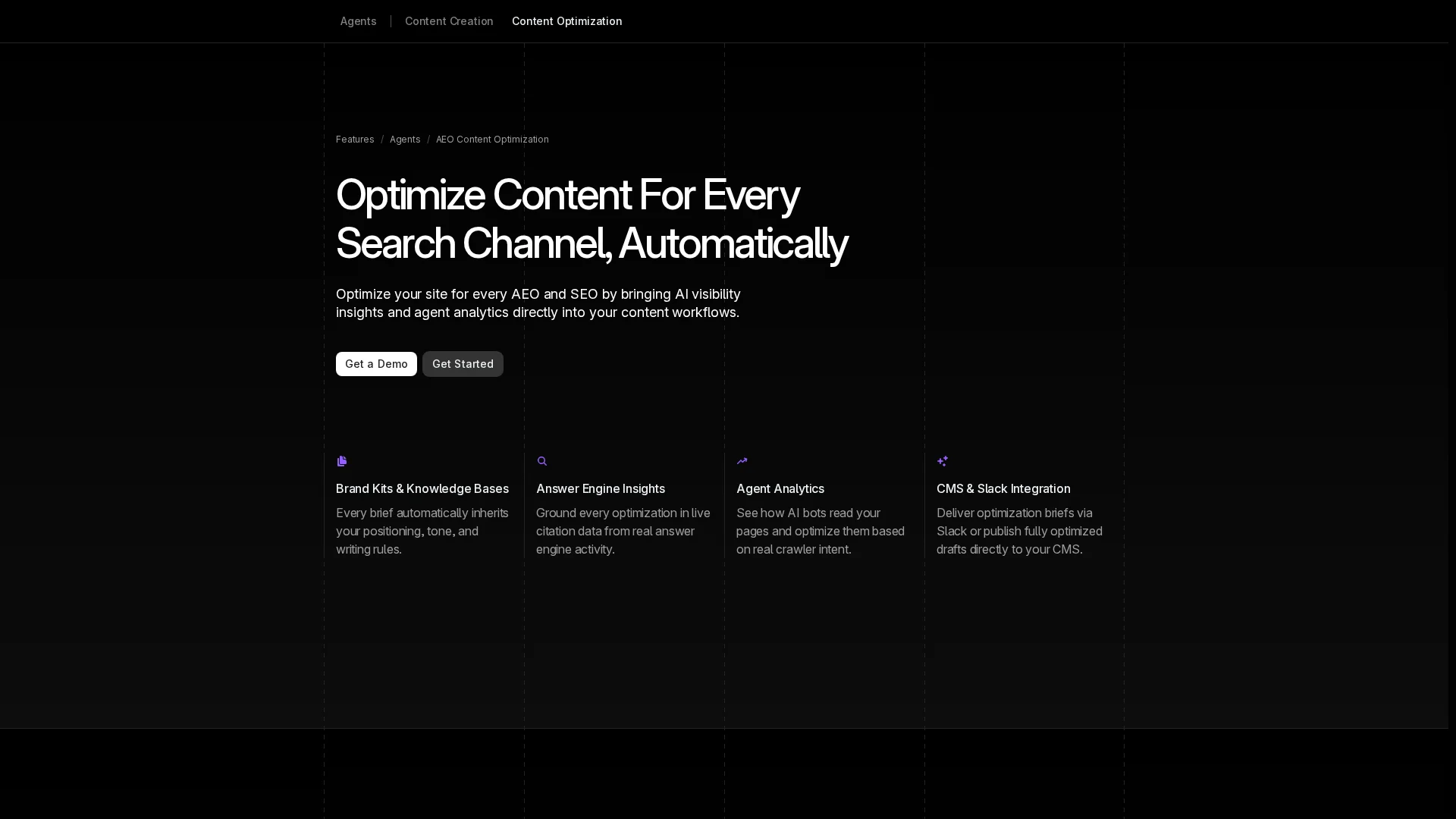
    Profound suits enterprise teams that need citation data tied to governed content work. Its content optimization workflow turns AI visibility gaps into prioritized fixes.
    Profound
    Highlights

    • Uses live citation data, competitor benchmarks, FAQs, schema, and rewrite suggestions.
    • Connects brand kits, agents, CMS tools, and Slack for review and publishing. CMS workflows support approvals.
      Specs
    • Best for: Enterprise SEO and content teams
    • Workflow: Audits, briefs, drafts, approvals, publishing
      Pros
    • Strong governance and repeatable action.
      Cons
    • May exceed small-team needs.
      It ranks here for mature teams that need execution, not just monitoring.

    Last updated: September 7, 2026

    Also Read: SEO Tool Providers Introduce More AI-Powered Optimization Features

    3. AthenaHQ

    AthenaHQ is best for end-to-end GEO operations and executive visibility. It works as a command center for teams that need shared AI search reporting and action plans.
    AthenaHQ
    Highlights

    • Tracks mentions, citations, sentiment, and competitor movement across AI platforms. Its source analysis ties cited pages to outreach and content actions.
    • Connects prompt intelligence, priorities, content, outreach, and commerce workflows.
      Specs
    • Best for: Enterprise SEO, PR, content, and commerce teams
    • Core GEO capability: Visibility, citations, prompts, sources, sentiment, and crawlability
      Pros
    • Strong shared reporting and governance.
      Cons
    • More setup than a lightweight monitor.
      It ranks third for turning AI search data into cross-team execution.

    Last updated: September 7, 2026

    Also Read: 7 SEO Tools for Technical Audits, Content, and Visibility

    4. OtterlyAI

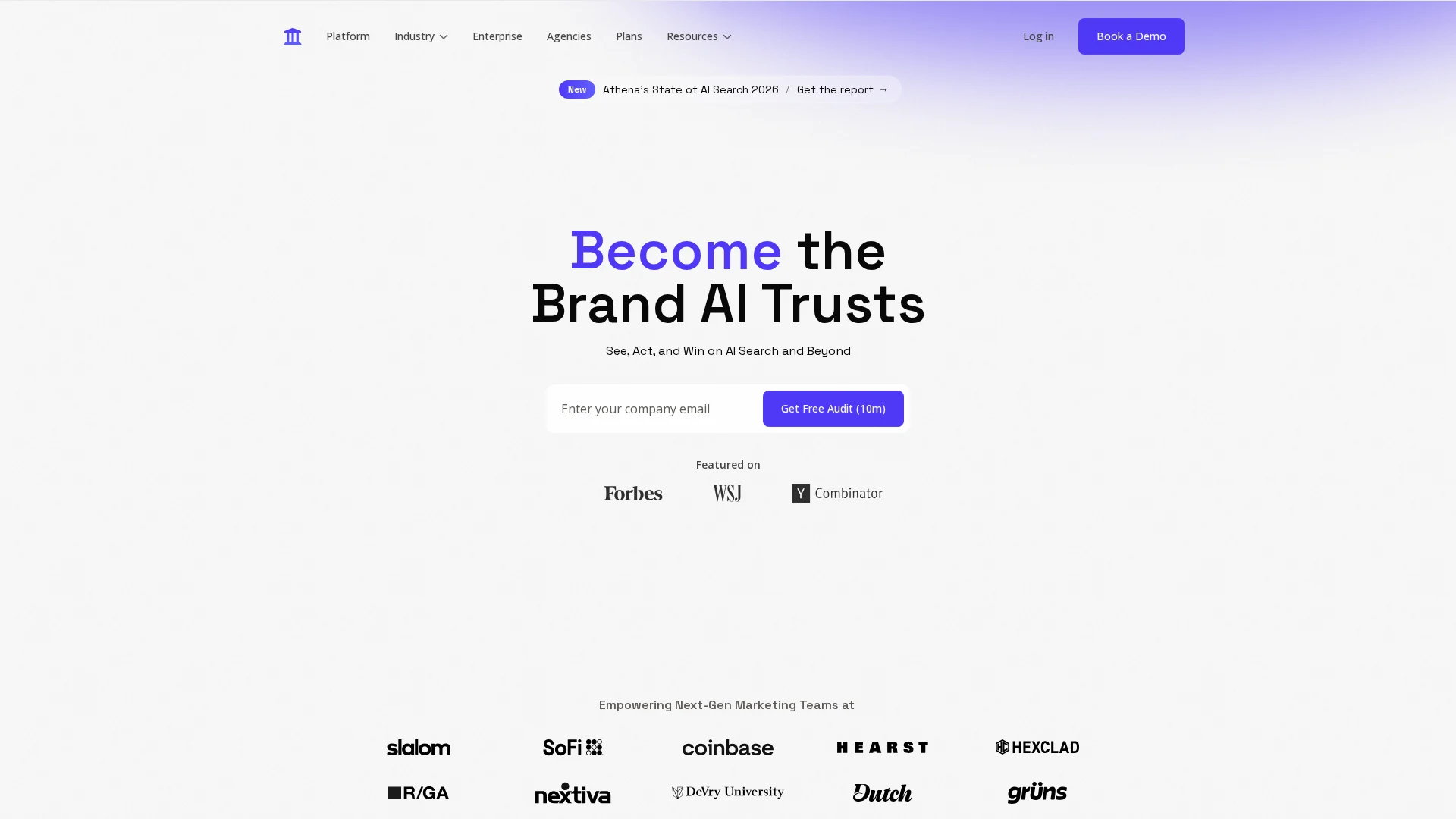
    OtterlyAI is a focused GEO monitoring platform for lean teams. It turns AI search visibility into clear data, from mentions to citations and competitor gaps.
    OtterlyAI
    Highlights

    Specs

    • Best for: SEO pros, agencies, and lean teams with execution tools.
    • Core GEO capability: Citation, competitor, and sentiment tracking.

    Pros

    • Clear visibility and reporting.

    Cons

    • Content production needs a separate workflow.

    It ranks fourth because it offers practical monitoring and diagnosis without a full all-in-one suite.

    Last updated: September 7, 2026

    More GEO Tools Worth Considering

    These tools suit teams that need niche reporting, technical checks, or a wider SEO suite.

    1. Peec AI – Tracks brand and competitor visibility across major AI search environments.
    2. LLM Pulse – Offers crawl checks, llms.txt tools, crawler monitoring, and GEO writing support.
    3. SE Ranking – Combines AI visibility with rank tracking, audits, and content workflows.

    How to choose the right GEO optimization tool

    Pick monitoring if you only need to see AI mentions. Choose an optimization platform if you need actions too.

    • Confirm coverage for ChatGPT, Perplexity, Gemini, Google AI Overviews, AI Mode, Claude, Copilot, and your target regions.
    • Track citation URLs, share of voice, sentiment, competitor swaps, and prompt trends – not just mentions.
    • Check for technical audits, schema guidance, crawler checks, and page-level fixes.
    • Match workflow to your team: simple publishing for SMBs, or APIs and approvals for larger teams.
    • Link visibility to rankings, AI traffic, leads, and revenue over time.

    SnowSEO is the standout choice for teams that need GEO and SEO work in one workflow, from audits and keyword research to content and rank tracking.

    Homepage
    Homepage

    Track what AI answers say about your brand, then act on it. SnowSEO combines SEO audits, rank tracking, and GEO workflows in one place.

    Frequently Asked Questions

    Q1: What are the best tools for improving brand visibility in generative engine answers?

    SnowSEO suits teams that need SEO and GEO in one workflow. AthenaHQ, Peec AI, Otterly.ai, and Profound are useful for tracking AI answer mentions and prompt coverage.

    Q2: How often should I check AI visibility?

    Check weekly for key prompts and competitors. Review trends monthly, then update weak pages, entity details, and supporting content.

    Q3: Does GEO replace traditional SEO?

    No. Strong technical SEO, useful content, and clear brand facts still support AI visibility. GEO adds prompt tracking and answer-focused improvements.