Tag: real-time AI rank reporting

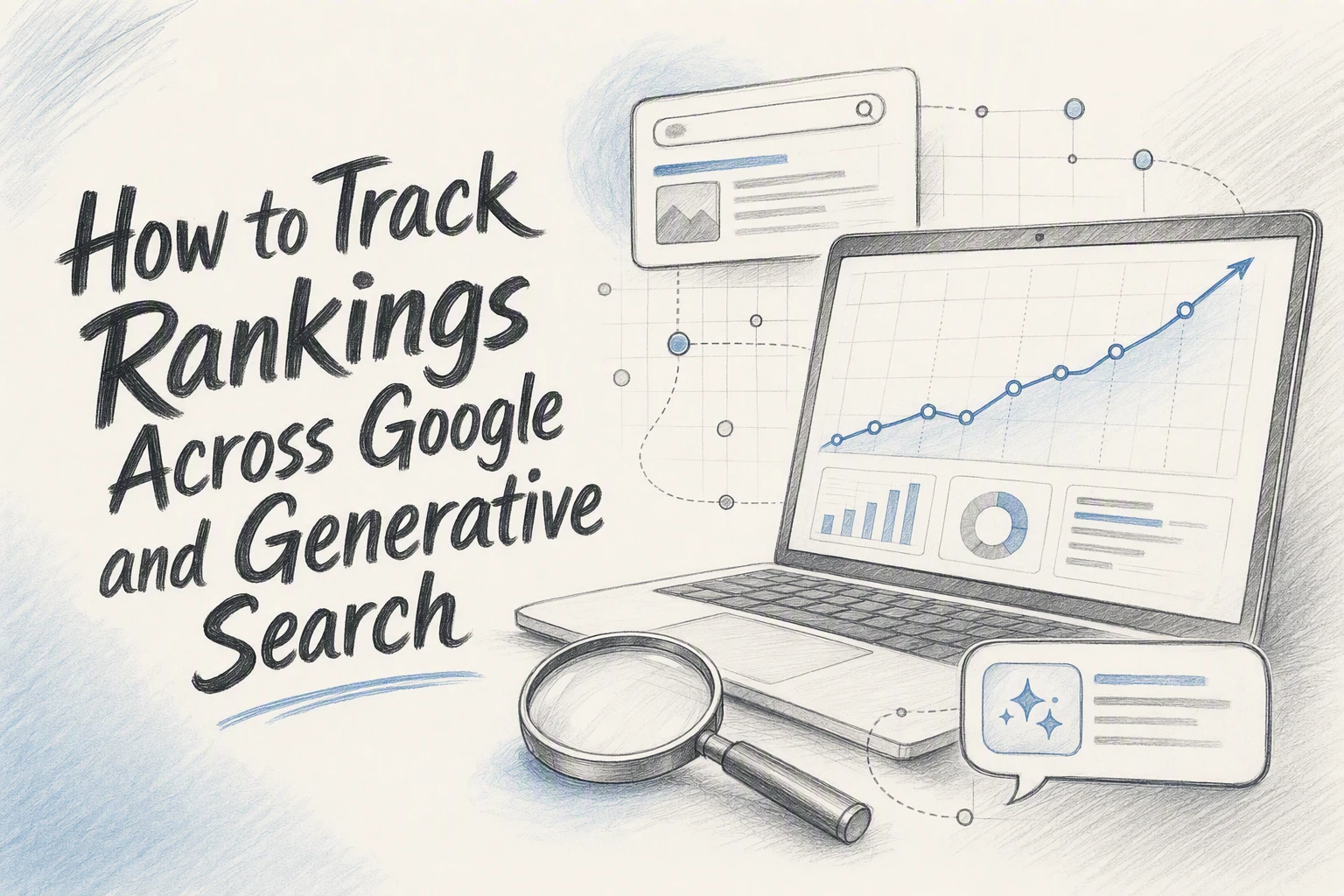
  • How to Track Rankings Across Google and Generative Search

    How to Track Rankings Across Google and Generative Search

    Quick Summary: A brand can rank third in Google but disappear entirely when users ask AI tools like ChatGPT, exposing a blind spot in traditional rank tracking. The fix is to track both Google’s position data (clicks, impressions) and generative search mentions (citations, answer share) separately, then compare them by keyword and page to spot gaps-like competitors ranking higher or earning AI citations. SnowSEO helps automate this by grouping gaps (e.g., missing citations, weak pages) and turning them into actionable updates, like adding expert-backed answers or refreshing underperforming content. The key move is treating AI visibility as a distinct metric, not a substitute for Google rankings, and updating content based on where you’re actually losing visibility.

    A client may rank third in Google for a high-value term, then vanish when buyers ask ChatGPT, Perplexity, or Google AI Mode for a recommendation. That gap makes old rank reports incomplete. Cross-platform rank tracking shows where brands appear, get cited, or lose ground. This guide gives agencies and SEO teams a clear cross-platform rank tracking workflow, so they can turn missing visibility into focused content and SEO actions.

    Step 1: Define What You Will Track on Each Search Surface

    Build a Keyword and Prompt Set

    Start with priority keywords, then pair each with realistic buyer prompts. Group both by topic, funnel stage, country, device, and page.

    1. Track core commercial and informational queries in Google.
    2. Track direct questions users may ask ChatGPT or Claude.
    3. Record the expected landing page and key competitors.

    This makes cross-platform rank tracking useful, not noisy.

    Keyword prompts flow into search and AI rankings
    Keyword prompts flow into search and AI rankings

    Use Different Metrics for Different Results

    Google gives measurable positions, impressions, clicks, and CTR. Search Console defines these core metrics, so track rank movement alongside traffic.

    Search surface Track What it shows
    Google Position, impressions, clicks, CTR Search demand and visits
    Generative search Mentions, citations, answer share Brand visibility in answers

    Do not treat an AI mention as a Google ranking. Cross-platform rank tracking needs separate scorecards.

    Also Read: 10 Must-Have Tools to Streamline Your SEO in 2025

    Step 2: Connect Google Ranking Data With Generative Search Visibility

    Start With Google Search Console

    Use Search Console to set your Google baseline. Export queries, pages, clicks, impressions, CTR, and average position. Google confirms these metrics show how users find and click your site in Search in its Performance report guide.
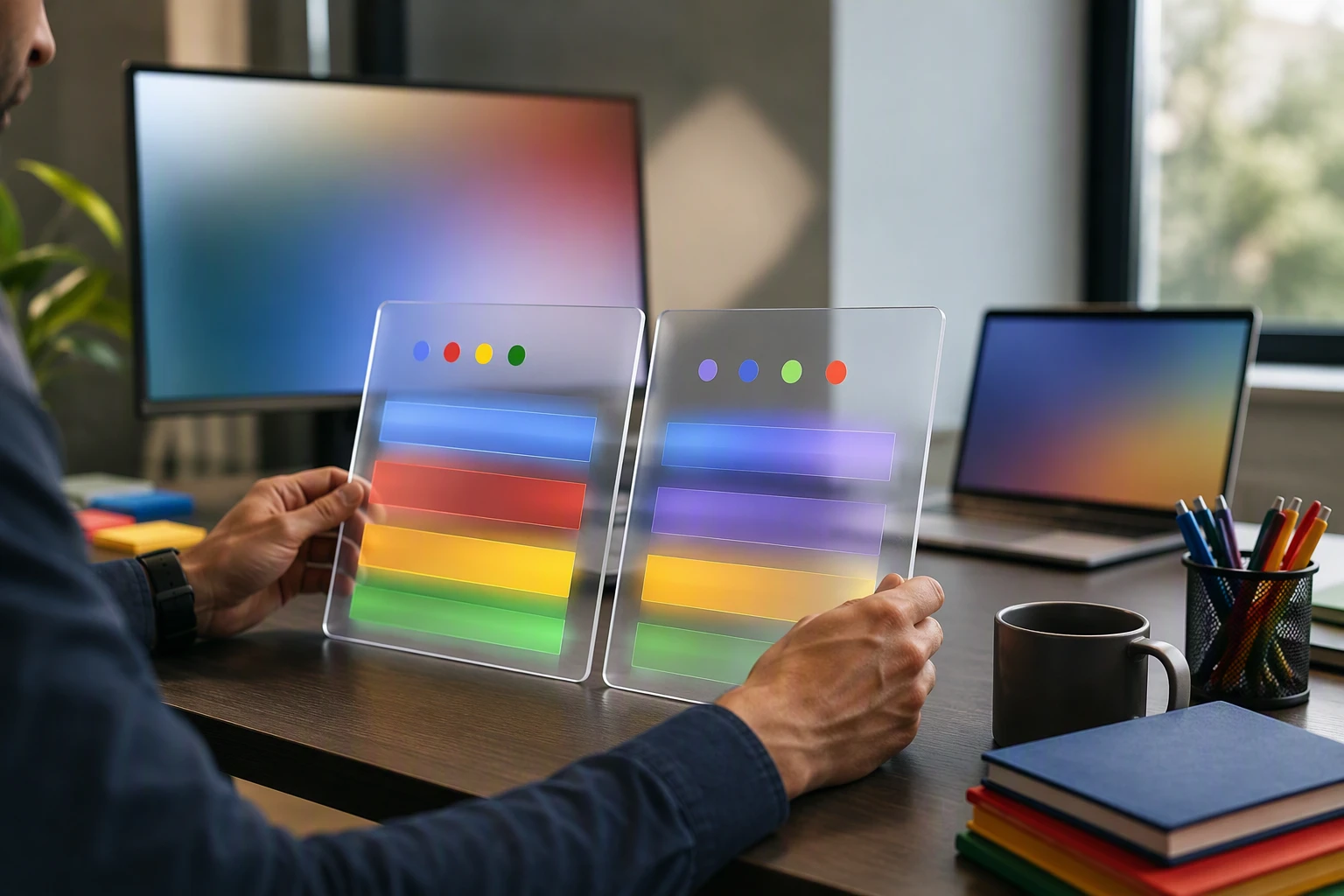
    Google Search Console metrics dashboard comparison
    Google Search Console metrics dashboard comparison

    Fill the Measurement Gaps

    Add a prompt list for ChatGPT and Claude. Record whether your brand appears, which page gets cited, and the answer context.

    Google signal Generative search signal
    Average position Brand mention or citation
    Clicks and CTR Citation quality and context

    A top Google rank does not guarantee an AI citation. Track both weekly.

    Also Read: 10 New Keyword Research Techniques to Try Now

    Step 3: Turn Competitor and Citation Gaps Into Optimization Work

    Find the Most Actionable Gaps

    Start with queries where competitors rank or earn AI citations and you do not. Prioritize pages with buying intent, clear traffic value, and a close match to your offer.

    Gap Best first action
    Competitor ranks higher Improve the existing page
    Competitor gets cited Add clear answers and proof
    You have no relevant page Create a focused page

    Google recommends original, helpful content with clear sourcing and real expertise. See its people-first content guidance.

    Choose the Right Optimization Response

    Do not copy a competitor’s page. Fill the missing need with stronger examples, updated facts, expert input, and direct answers. SnowSEO can help group gaps by ranking loss, citation loss, and page type.

    1. Refresh weak pages first.
    2. Add cited evidence and useful headings.
    3. Track rankings and citations after release.

    Also Read: 10 Best Tools for Competitor SEO Analysis in 2024

    Step 4: Standardize Agency Reporting and Optimization Reviews

    Create a Client Reporting View

    Give every client the same one-page view. Separate Google results from generative search evidence, then show change against the prior month. Google defines clicks, impressions, CTR, and average position in its Search Console Performance report.

    Area Report
    Google Search Clicks, CTR, rankings, page gains
    Generative search Brand mentions, cited URLs, prompt coverage
    Action plan Owner, due date, expected outcome

    Do not combine AI mentions with Google rankings. They measure different outcomes.

    Run a Monthly Optimization Loop

    Use the report to choose a short list of fixes, not a long wish list.

    1. Find pages with falling clicks or weak CTR.
    2. Check missed prompts and competitor citations.
    3. Update content, internal links, proof, and page titles.
    4. Log each change and review the result next month.

    Keep priorities tied to business value. SnowSEO can centralize the tracking evidence and audit tasks.
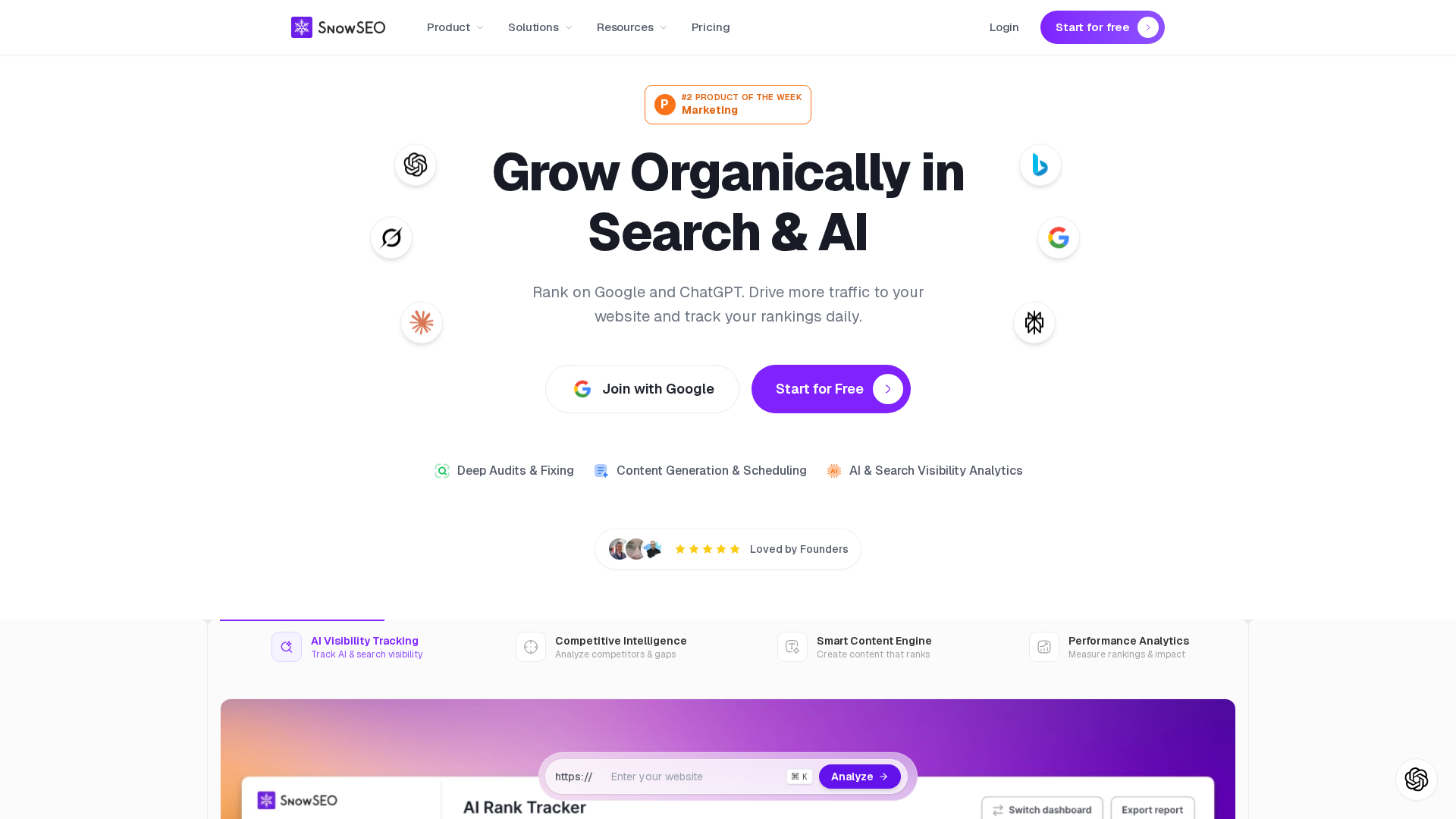
    Homepage
    Homepage

    Track Google rankings and AI visibility in one place. Use SnowSEO to spot gaps, audit pages, and act on clear search data.

    Frequently Asked Questions

    Q1: How can agencies implement SnowSEO for advanced rank tracking and optimization of generative AI visibility?

    Set client topics, target prompts, and Google keywords. Review ranking changes beside AI mentions, then turn missing citations into content briefs and audit tasks.

    Q2: How often should I check rankings?

    Check weekly for trends. Review daily only during launches, major site changes, or volatile search periods.

    Q3: What counts as generative search visibility?

    Track brand mentions, cited pages, answer placement, and prompt coverage. These signals differ from a standard Google position.

    Conclusion

    Track Google rankings and generative mentions separately, then join them by topic and page. Google defines position as a relative result rank; AI visibility signals citation and answer presence. Use both to find gaps and improve content.

  • Rank Tracking Software Gains Real-Time AI Search Reporting

    Rank Tracking Software Gains Real-Time AI Search Reporting

    Quick Summary: Real-time AI rank tracking isn’t live updates-it’s daily scans of fixed prompts across ChatGPT, Google AI Mode, and Gemini, but tools vary wildly in how they log mentions, citations, and answer shifts. Google’s AI Overviews don’t work like traditional rankings; they pull different links and can omit your site entirely, so tracking must focus on brand mentions, linked sources, and answer context-not just position. SnowSEO explicitly ties rank tracking to AI visibility, letting teams spot gaps in mentions or citations before competitors do. The key is saving full answers, testing prompts across models, and treating daily changes as signals, not definitive proof.

    Rank tracking now reaches beyond Google. In 2026, Semrush tracks selected prompts daily across ChatGPT, Google AI Mode, and Gemini. Other tools report AI visibility across ChatGPT and, often, Claude. Yet real-time AI rank reporting means different things across vendors. Daily scans, weekly checks, and live dashboards are not equal. This guide tests real-time AI rank reporting against refresh rates, prompt position, citations, competitors, and answer changes.

    AI Rank Reporting Is Becoming a Daily Workflow

    What Vendors Mean by Real-Time

    Real-time AI rank reporting rarely means a live, second-by-second feed. It usually means a tool reruns a fixed set of prompts on a daily schedule, then logs what changed.

    Google itself says AI Overviews appear only when its systems find them helpful, and results can vary by query. Its AI features also surface supporting links, not a fixed rank list, as explained in Google Search Central’s guidance.

    Real-time AI search workflow visualization
    Real-time AI search workflow visualization
    Claim What to verify
    Real-time Exact refresh time and timezone
    AI position Prompt, market, device, and model used
    Citation tracking Linked source URL and captured answer
    Visibility score Formula and prompt sample size

    Tip: Treat daily changes as signals, not proof. AI answers can shift between checks.

    • Save answer snapshots.
    • Separate mentions from citations.
    • Flag meaningful changes for review.

    Also Read: 10 Organic Growth Strategies to Drive Traffic in 2025

    Which Trackers Cover ChatGPT and Claude?

    Coverage Is Only the First Test

    Several AI visibility platforms claim ChatGPT and Claude coverage, but the label alone proves little. Ask whether the tool runs the same saved prompts on both models and records answers separately.

    Side-by-side AI model comparison dashboard
    Side-by-side AI model comparison dashboard

    A useful report should show:

    Check Why it matters
    Brand mention Shows if the answer names you
    Citation or source URL Shows which pages support the answer
    Answer context Reveals how the model describes you
    Prompt history Separates a trend from one random result

    Ahrefs’ ChatGPT tracking guide treats mentions, citations, and share of voice as separate signals. Claude needs its own view because its answers may cite and frame brands differently.

    Do not call this a rank. AI answers have no fixed position. Track presence, source support, and change over time.

    Also Read: SnowSEO – Your Last SEO Platform

    The Metrics Behind a Useful AI Rank Report

    Position Is Not the Same as a Google Ranking

    An AI answer has no fixed blue-link rank. It can mention your brand, cite a page, quote your facts, or omit you entirely. Google says AI Overviews and AI Mode can use different models and return different links, so a useful report must log the exact prompt, platform, country, device, and check time. Google confirms that these results vary.

    Track these signals:

    Metric What it shows
    Mention rate How often your brand appears
    Citation rate How often your URL is linked
    Answer position Where the mention appears
    Share of voice Your mentions versus rivals

    Do not call a citation “rank one.” It is an answer placement, not a standard organic ranking.

    1. Save the full answer.
    2. Count mentions and links.
    3. Compare changes by prompt group.

    Also Read: 10 Must-Have Tools to Streamline Your SEO in 2025

    How Teams Should Validate a Real-Time AI Reporting Tool

    A Five-Point Verification Checklist

    “Real-time” should mean a fresh, repeatable check, not a daily data refresh labeled differently. Google notes that AI features can vary by query and may not trigger at all, so test across a fixed prompt set and location. Google’s guidance also confirms that AI results can surface different links than classic search.

    1. Timestamp every result – show the exact check time, timezone, and platform.
    2. Repeat key prompts – run them twice to spot unstable mentions or citations.
    3. Separate metrics – report answer position, brand mention, linked citation, and share of visibility separately.
    4. Keep proof – save the full answer and source links for each result.
    5. Test exclusions – confirm the tool records no-answer and no-citation cases.
    Check Pass condition
    Freshness A visible, precise timestamp
    Evidence Stored answer and citations

    Treat a mention without a citation as awareness, not traffic potential.

    Homepage
    Homepage

    Track search ranks, AI mentions, and citations in one place. Try SnowSEO to spot visibility gaps and act faster.

    Frequently Asked Questions

    Q1: Which rank trackers provide real-time insights and integrate with AI platforms like ChatGPT and Claude?

    SnowSEO combines rank tracking with AI visibility checks for ChatGPT and Claude, helping teams track mentions, citations, and answer placement.

    Q2: What should AI search reporting measure?

    Track brand mentions, linked citations, answer position, prompt coverage, and competitor presence.

    Q3: How often should teams review AI visibility?

    Review weekly for trends, then check after major content changes or campaign launches.

    Conclusion

    Real-time AI search reporting must separate rankings from mentions, citations, and visibility. Google’s report tracks generative impressions, but teams still need clear, prompt-level context to judge impact.