Tag: google search console

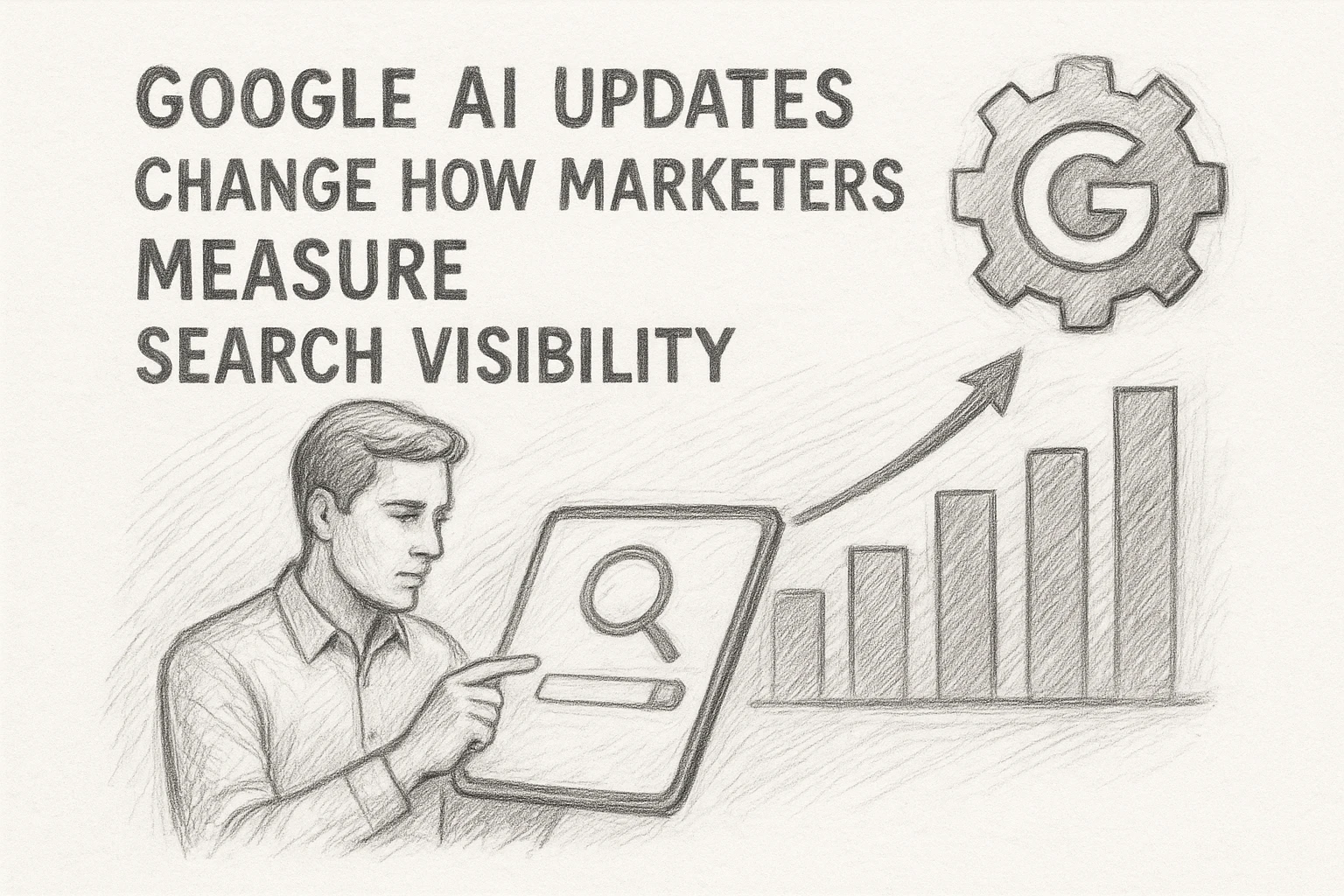
  • Google AI Updates Change How Marketers Measure Search Visibility

    Google AI Updates Change How Marketers Measure Search Visibility

    Quick Summary: Google now reports AI Overviews and AI Mode impressions separately in Search Console, so marketers must track AI visibility as exposure, not ranking. Treat these impressions as a leading signal and validate them with clicks, conversions, and revenue, since position alone no longer guarantees visibility. Google says existing SEO still matters, with no special AI-only rules, so keep focusing on crawlability, helpful content, and structured data. Track trends monthly and compare AI-visible pages against business outcomes to avoid mistaking presence for profit.

    Google AI updates search visibility by folding AI Overviews and AI Mode links into Search Console Web data. New site-owner insights now show AI-feature impressions and page appearances. Google also offers an AI opt-out, but that removes related traffic.

    Google AI updates search visibility beyond rank reports. A cited page may gain exposure without clicks. This guide explains what the data shows, what it cannot prove, and how to connect Search Console, analytics, and revenue.

    Google’s New AI Search Data Changes the Visibility Baseline

    What Google Now Counts as AI Visibility

    Google AI updates search visibility by separating generative exposure from the old blue-link baseline. Search Console’s new reports count how often your URLs appear in AI Overviews, AI Mode, and generative Discover features. They also break exposure down by page, country, device, and date, as Google’s 2026 announcement explains.

    Pencil sketch infographic comparing AI search visibility metrics
    Pencil sketch infographic comparing AI search visibility metrics
    Old baseline New baseline
    Overall Web impressions Generative AI feature impressions
    Clicks and average position Appearing URLs, country, device, and time
    Rank-focused reporting Visibility plus visit quality

    Do not treat an AI mention as a ranking. Measure it as exposure, then compare clicks, leads, and sales by landing page.

    Google AI updates search visibility, but generative data is rolling out first to a subset of sites.

    Also Read: Google and AI Platforms Shift Guidance for Generative Search Visibility

    The Metrics Marketers Have, and the Ones They Still Need

    A Four-Layer Reporting Model

    Google now separates AI feature impressions for AI Overviews and AI Mode by page, country, device, and date in Search Console’s Generative AI report. Build reporting around four layers:

    1. Presence: AI impressions by page and market.
    2. Organic demand: Total Search Console impressions, clicks, and average position.
    3. Site value: Sessions, engaged sessions, leads, sales, and revenue in analytics.
    4. Business impact: Assisted conversions, repeat visits, and branded search growth.

    Pencil sketch of layered marketing funnel
    Pencil sketch of layered marketing funnel
    Layer What you can measure What is still missing
    AI presence Impressions, pages, countries, devices Queries, clicks, CTR, citation position
    Organic search Clicks, impressions, rankings Clear AI feature attribution
    Outcomes Conversions and revenue Direct AI-assisted conversion path

    Treat AI impressions as a leading signal, not proof of traffic or sales. Google says it is still exploring further reporting insights in its 2026 announcement.

    • Review trends monthly, not daily.
    • Compare AI-visible pages with conversion data.
    • Flag pages that gain presence but lose organic clicks.

    Also Read: SnowSEO – Your Last SEO Platform

    Google’s AI Results Make Ranking Reports Less Complete

    Why Position Is No Longer the Whole Story

    A rank of #1 no longer guarantees the most visible spot. AI Overviews and AI Mode can place answers, links, and follow-up paths above or around classic results. Google also uses query fan-out, which can pull in pages that do not rank for the exact search term, according to Google’s AI features guide.

    Track more than position:

    Signal What it tells you
    Classic rank Your placement in blue-link results
    AI impressions How often your pages appear in AI features
    Clicks and leads Whether visibility creates business value

    Google’s new AI report separates impressions by page, country, device, and date, but it does not yet show every reason a page was selected. Google’s announcement confirms the shift.

    Treat rankings as a useful clue, not your full visibility score.

    • Check pages cited in AI results.
    • Compare AI impressions with clicks and conversions.
    • Review trends weekly, not one keyword at a time.

    Also Read: GEO Optimization vs Traditional SEO: Which Drives AI Visibility?

    Why Google Says Existing SEO Still Matters

    Google’s AI features draw from its existing Search index and core ranking systems, so solid SEO remains the entry point. Google’s guidance says there are no separate AI-only rules to chase.

    Keep doing the work that makes pages easy to find and trust:

    • Allow crawling and indexing.
    • Build clear internal links.
    • Publish helpful, first-hand content.
    • Match structured data to visible page text.

    Do not spend your budget on special AI files or forced content chunks. Google says they are not required for AI Overviews or AI Mode.
    Homepage
    Homepage

    Track the signals that matter. Use SnowSEO to audit visibility, monitor rankings, and spot search changes before traffic drops.

    Frequently Asked Questions

    Q1: What do Google’s latest AI announcements mean for organic search visibility?

    AI answers can reduce clicks while still showing your brand. Track impressions, citations, branded searches, and assisted conversions, not rankings alone.

    Q2: Should I stop tracking keyword rankings?

    No. Keep rankings, but group them with click-through rate and page conversions. A top position matters less if AI results answer the query first.

    Q3: Which pages should I review first?

    Start with high-impression pages losing clicks. Check whether the query now triggers AI results, then add direct answers, proof, and clear next steps.

    Conclusion

    Measure AI visibility separately from traffic and revenue. Google now reports AI-feature impressions by page, country, and device in Search Console. Treat them as a signal, then validate business impact with conversions.
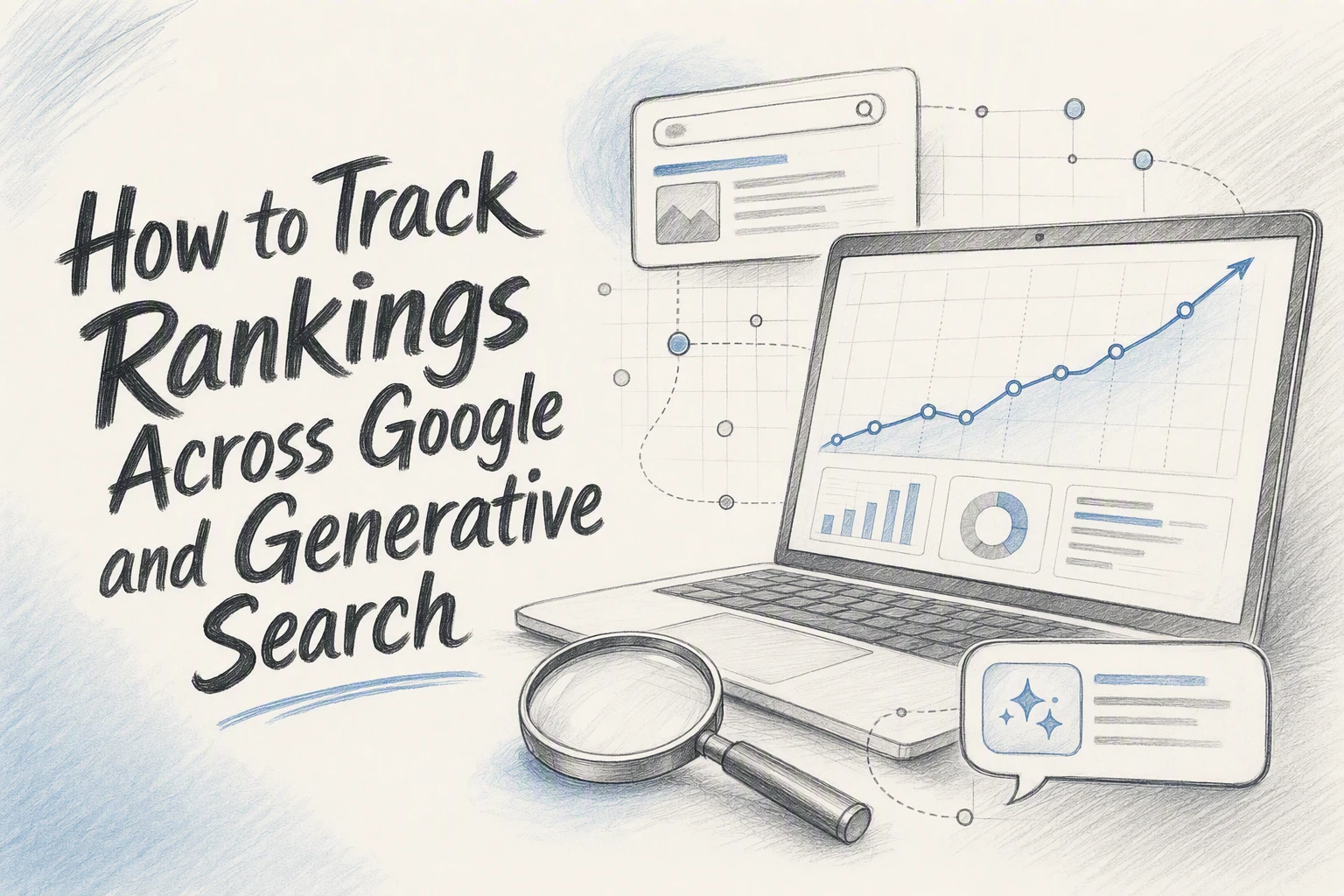

  • How to Track Rankings Across Google and Generative Search

    How to Track Rankings Across Google and Generative Search

    Quick Summary: A brand can rank third in Google but disappear entirely when users ask AI tools like ChatGPT, exposing a blind spot in traditional rank tracking. The fix is to track both Google’s position data (clicks, impressions) and generative search mentions (citations, answer share) separately, then compare them by keyword and page to spot gaps-like competitors ranking higher or earning AI citations. SnowSEO helps automate this by grouping gaps (e.g., missing citations, weak pages) and turning them into actionable updates, like adding expert-backed answers or refreshing underperforming content. The key move is treating AI visibility as a distinct metric, not a substitute for Google rankings, and updating content based on where you’re actually losing visibility.

    A client may rank third in Google for a high-value term, then vanish when buyers ask ChatGPT, Perplexity, or Google AI Mode for a recommendation. That gap makes old rank reports incomplete. Cross-platform rank tracking shows where brands appear, get cited, or lose ground. This guide gives agencies and SEO teams a clear cross-platform rank tracking workflow, so they can turn missing visibility into focused content and SEO actions.

    Step 1: Define What You Will Track on Each Search Surface

    Build a Keyword and Prompt Set

    Start with priority keywords, then pair each with realistic buyer prompts. Group both by topic, funnel stage, country, device, and page.

    1. Track core commercial and informational queries in Google.
    2. Track direct questions users may ask ChatGPT or Claude.
    3. Record the expected landing page and key competitors.

    This makes cross-platform rank tracking useful, not noisy.

    Keyword prompts flow into search and AI rankings
    Keyword prompts flow into search and AI rankings

    Use Different Metrics for Different Results

    Google gives measurable positions, impressions, clicks, and CTR. Search Console defines these core metrics, so track rank movement alongside traffic.

    Search surface Track What it shows
    Google Position, impressions, clicks, CTR Search demand and visits
    Generative search Mentions, citations, answer share Brand visibility in answers

    Do not treat an AI mention as a Google ranking. Cross-platform rank tracking needs separate scorecards.

    Also Read: 10 Must-Have Tools to Streamline Your SEO in 2025

    Step 2: Connect Google Ranking Data With Generative Search Visibility

    Start With Google Search Console

    Use Search Console to set your Google baseline. Export queries, pages, clicks, impressions, CTR, and average position. Google confirms these metrics show how users find and click your site in Search in its Performance report guide.

    Google Search Console metrics dashboard comparison
    Google Search Console metrics dashboard comparison

    Fill the Measurement Gaps

    Add a prompt list for ChatGPT and Claude. Record whether your brand appears, which page gets cited, and the answer context.

    Google signal Generative search signal
    Average position Brand mention or citation
    Clicks and CTR Citation quality and context

    A top Google rank does not guarantee an AI citation. Track both weekly.

    Also Read: 10 New Keyword Research Techniques to Try Now

    Step 3: Turn Competitor and Citation Gaps Into Optimization Work

    Find the Most Actionable Gaps

    Start with queries where competitors rank or earn AI citations and you do not. Prioritize pages with buying intent, clear traffic value, and a close match to your offer.

    Gap Best first action
    Competitor ranks higher Improve the existing page
    Competitor gets cited Add clear answers and proof
    You have no relevant page Create a focused page

    Google recommends original, helpful content with clear sourcing and real expertise. See its people-first content guidance.

    Choose the Right Optimization Response

    Do not copy a competitor’s page. Fill the missing need with stronger examples, updated facts, expert input, and direct answers. SnowSEO can help group gaps by ranking loss, citation loss, and page type.

    1. Refresh weak pages first.
    2. Add cited evidence and useful headings.
    3. Track rankings and citations after release.

    Also Read: 10 Best Tools for Competitor SEO Analysis in 2024

    Step 4: Standardize Agency Reporting and Optimization Reviews

    Create a Client Reporting View

    Give every client the same one-page view. Separate Google results from generative search evidence, then show change against the prior month. Google defines clicks, impressions, CTR, and average position in its Search Console Performance report.

    Area Report
    Google Search Clicks, CTR, rankings, page gains
    Generative search Brand mentions, cited URLs, prompt coverage
    Action plan Owner, due date, expected outcome

    Do not combine AI mentions with Google rankings. They measure different outcomes.

    Run a Monthly Optimization Loop

    Use the report to choose a short list of fixes, not a long wish list.

    1. Find pages with falling clicks or weak CTR.
    2. Check missed prompts and competitor citations.
    3. Update content, internal links, proof, and page titles.
    4. Log each change and review the result next month.

    Keep priorities tied to business value. SnowSEO can centralize the tracking evidence and audit tasks.

    Homepage
    Homepage

    Track Google rankings and AI visibility in one place. Use SnowSEO to spot gaps, audit pages, and act on clear search data.

    Frequently Asked Questions

    Q1: How can agencies implement SnowSEO for advanced rank tracking and optimization of generative AI visibility?

    Set client topics, target prompts, and Google keywords. Review ranking changes beside AI mentions, then turn missing citations into content briefs and audit tasks.

    Q2: How often should I check rankings?

    Check weekly for trends. Review daily only during launches, major site changes, or volatile search periods.

    Q3: What counts as generative search visibility?

    Track brand mentions, cited pages, answer placement, and prompt coverage. These signals differ from a standard Google position.

    Conclusion

    Track Google rankings and generative mentions separately, then join them by topic and page. Google defines position as a relative result rank; AI visibility signals citation and answer presence. Use both to find gaps and improve content.