Tag: GEO Optimization

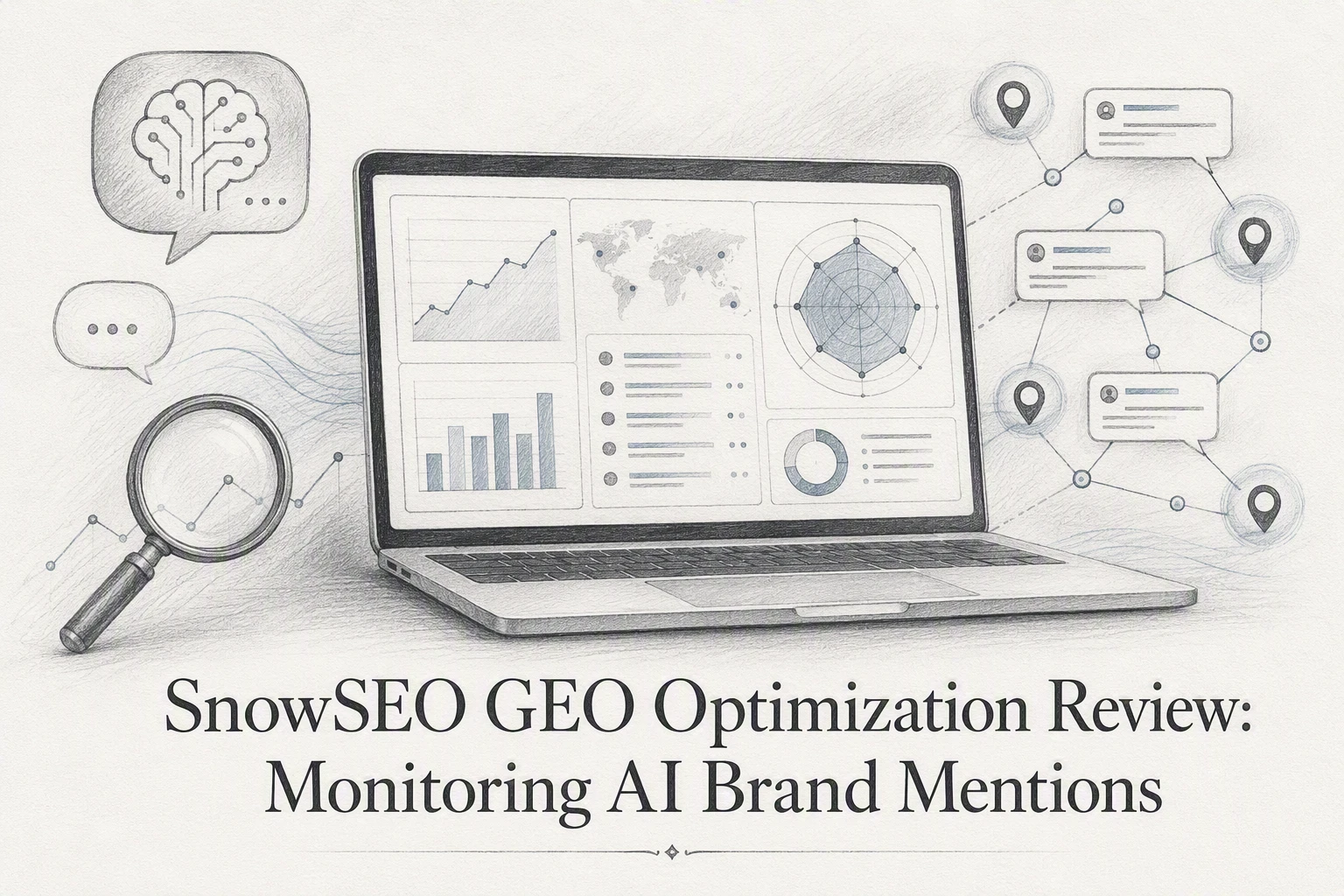
  • SnowSEO GEO Optimization Review: Monitoring AI Brand Mentions

    SnowSEO GEO Optimization Review: Monitoring AI Brand Mentions

    Quick Summary: SnowSEO is worth using for AI brand mention tracking if you need it alongside daily SEO work, but treat mentions as directional signals, not proof of revenue. The tool tracks brand presence, competitor overlap, and topic gaps across AI prompts, though specialist platforms may offer deeper source-level analysis. A practical workflow involves running 10-20 prompts by intent, recording mentions and cited URLs, then validating changes against Search Console clicks and conversions. It suits agencies and growing brands best, while enterprise teams needing wide model coverage or custom exports should look elsewhere.

    Buyers need three answers: Does AI recommend the brand, which rivals take its place, and which cited page needs work? This SnowSEO GEO review tests that workflow, not a feature checklist. You will see how to judge mention data, prompt coverage, competitor gaps, and source links. This SnowSEO GEO review also flags where specialist tools may offer deeper detail. Our assessment focuses on useful actions, not vanity scores.

    How SnowSEO Monitors AI Brand Mentions

    What the Dashboard Can Tell You

    A SnowSEO GEO review should focus on whether the dashboard turns AI mentions into clear actions. SnowSEO tracks brand presence across AI search prompts, then helps you spot gaps in visibility, competitor overlap, and content topics worth improving.
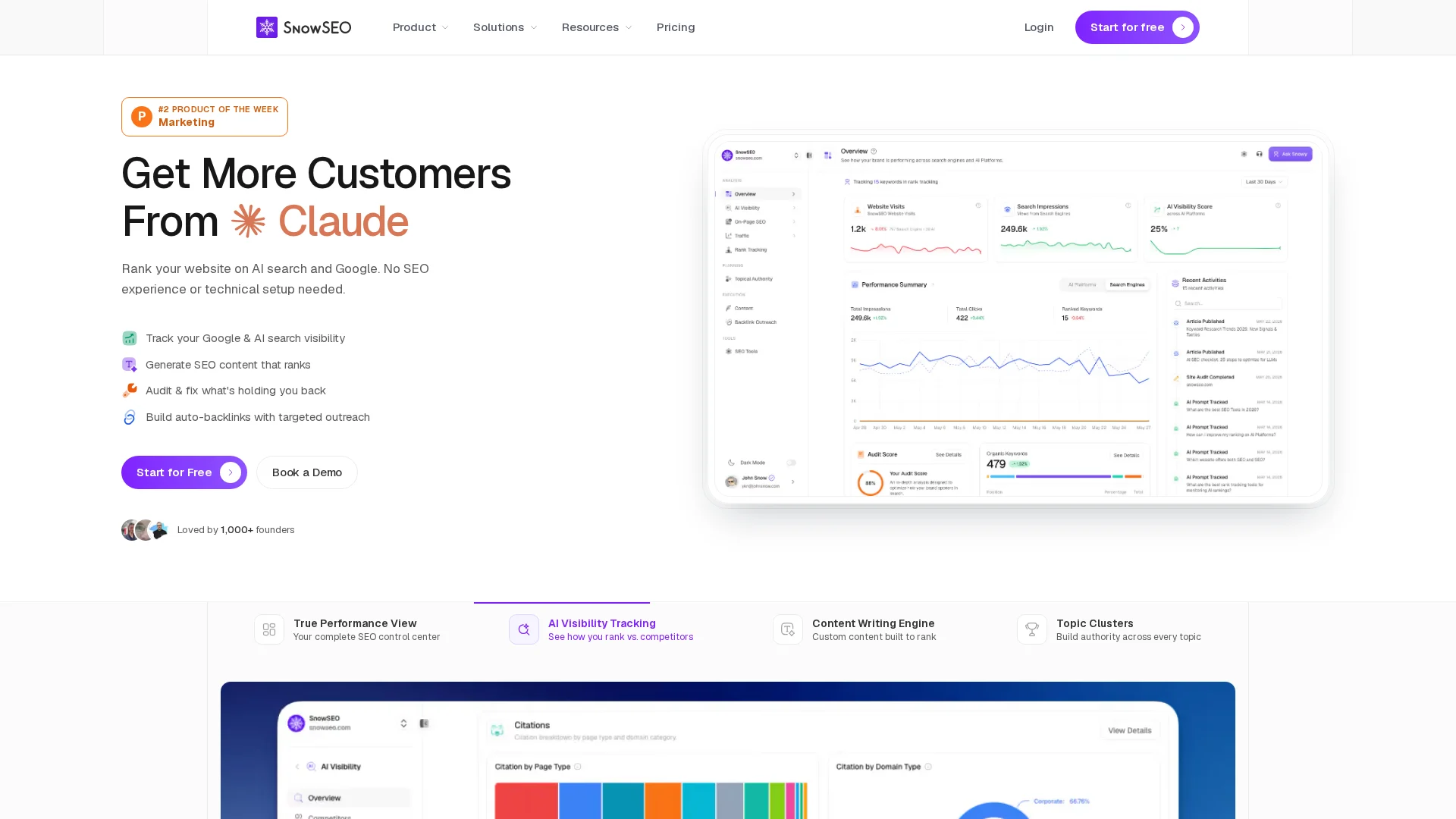
    SnowSEO
    SnowSEO
    Dashboard signal Practical use
    Brand mentions See where your name appears or is absent
    Competitor overlap Find prompts where rivals gain attention
    Topic gaps Plan pages that answer missing questions

    Google says AI search can use related searches and varied sources to form answers, so test more than one wording per topic. Google’s guidance also confirms standard SEO still matters.

    Treat mention counts as a lead, not proof of revenue. Check traffic, leads, and sales before changing priorities.

    For this SnowSEO GEO review, the useful workflow is simple:

    1. Track priority prompts each week.
    2. Flag missing or wrong brand answers.
    3. Build or refresh the pages behind those gaps.

    Also Read: Google and AI Platforms Shift Guidance for Generative Search Visibility

    Is SnowSEO’s Monitoring Deep Enough for Real SEO Decisions?

    A Practical Prompt Test

    SnowSEO is deep enough for first-pass GEO decisions if you test the prompts that drive real buying research.

    Build a small set of prompts by intent, then check whether your brand appears, how it is described, and which sources the AI cites.

    1. Run 10 to 20 prompts across brand, category, comparison, and problem terms.
    2. Record brand mention, sentiment, cited URL, and competitor named.
    3. Repeat after a content or technical change.
    4. Match changes against Search Console clicks and impressions.

    Pencil sketch of SEO workflow testing
    Pencil sketch of SEO workflow testing
    Test signal Decision it supports
    Brand omitted Create or improve the source page
    Wrong product claim Fix key pages and entity details
    Competitor cited Review cited content gaps

    A mention alone is not a win. You need the prompt, wording, cited source, and trend to know what to fix.

    SnowSEO helps turn scattered AI answers into a workable watchlist. Specialist platforms may offer deeper prompt-scale analysis, but that only matters if your team can act on it. Google also advises judging search change through trends in impressions and clicks, not position alone, in its Search Console guidance.

    Also Read: GEO Optimization vs Traditional SEO: Which Drives AI Visibility?

    SnowSEO Pros and Cons for Agencies and Growing Brands

    SnowSEO suits teams that need SEO and AI visibility work in one place.

    Strength Watch-out
    Combines audits, keywords, rank tracking, content, and AI mention checks Specialist GEO tools may offer deeper prompt-level data
    Helps agencies standardize client reporting Teams still need to validate AI answers manually
    Supports both search and AI visibility work AI mentions do not prove traffic or revenue
    Two analysts reviewing dashboards on dual monitors
    Two analysts reviewing dashboards on dual monitors

    Best fit: agencies with several smaller clients and growing brands that need a shared workflow.

    Less ideal: enterprise teams needing wide model coverage, detailed citation history, or custom data exports. Use SnowSEO to spot trends, then check conversions in analytics. Google also advises measuring conversions and engagement, not clicks alone, for AI search work in its AI features guidance.

    Treat mention tracking as a signal, not a ranking guarantee.

    Also Read: 7 GEO Optimization Tools for Brand Visibility in AI Answers

    Is SnowSEO Worth It for Monitoring AI Brand Mentions?

    Yes, if you need AI mention tracking beside daily SEO work. SnowSEO monitors brand visibility, citations, sentiment, and competitor share across AI platforms in one workspace, as its product listing confirms.

    • Choose it for fast, action-led monitoring.
    • Pick a specialist tool if you need deep source-level analysis.

    Treat mention counts as signals, then check the actual AI responses.
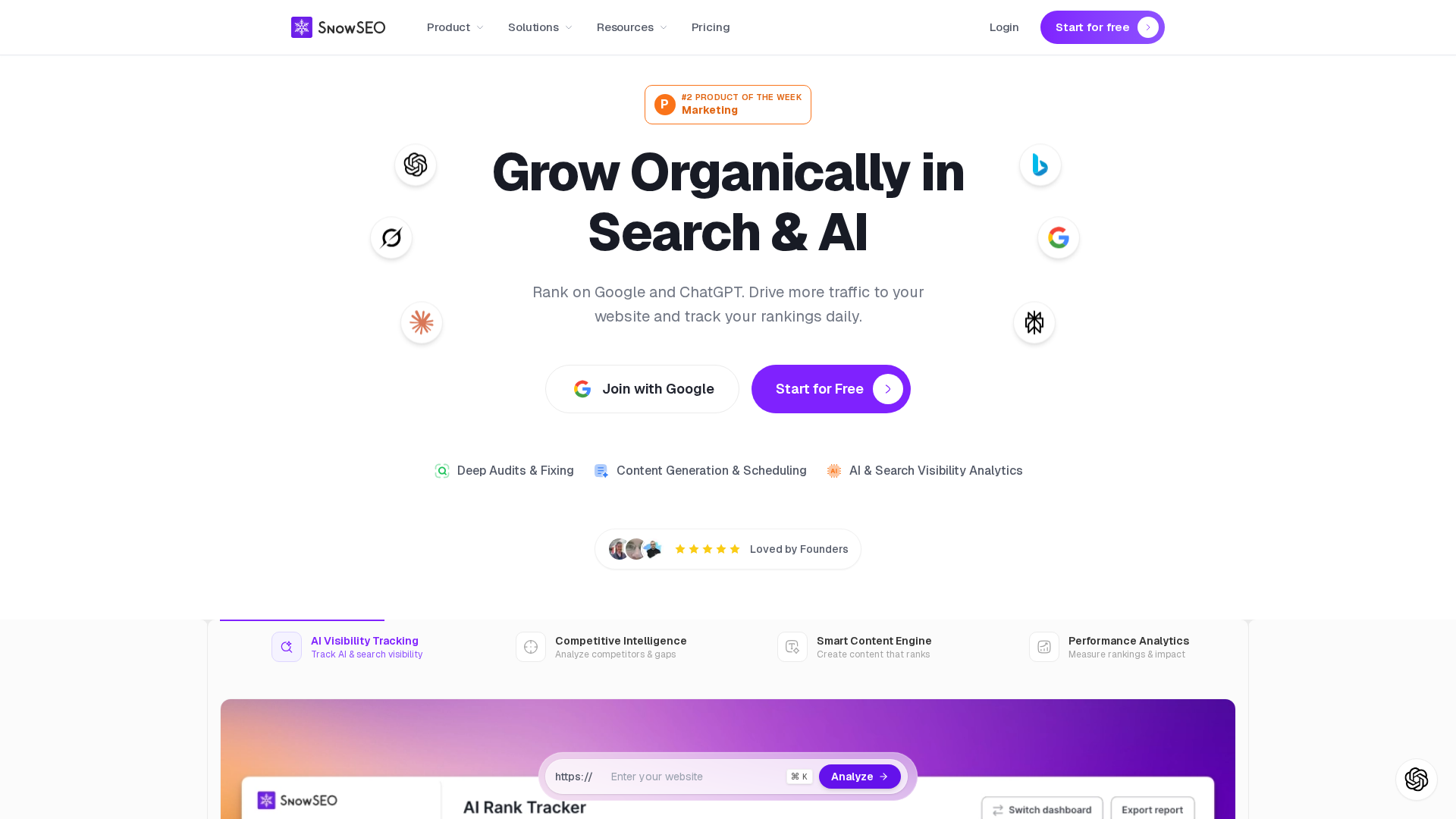
    Homepage
    Homepage

    Track AI brand mentions alongside your search work. Try SnowSEO to audit visibility, monitor rankings, and find the gaps worth fixing first.

    Frequently Asked Questions

    Q1: How effectively does SnowSEO monitor brand mentions across generative search platforms?

    SnowSEO helps track AI visibility and brand references in key prompts. Use repeat checks to spot changes, then review the cited context before acting.

    Q2: What should I monitor first?

    Start with branded prompts, product categories, and competitor comparisons. Track mention rate, sentiment, and source pages.

    Q3: Can monitoring replace manual AI checks?

    No. Manual checks still help verify wording, location, and accuracy. Use SnowSEO to make those checks faster and easier to repeat.

    Conclusion

    SnowSEO makes AI brand mention checks clear and usable. Track prompts, wording, and cited sources over time. Treat results as directional, since AI visibility measures still vary by platform and method.

  • Google and AI Platforms Shift Guidance for Generative Search Visibility

    Google and AI Platforms Shift Guidance for Generative Search Visibility

    Quick Summary: Google’s 2026 guidance confirms that generative search visibility in AI Overviews and AI Mode still depends on standard SEO, not special AI markup or separate GEO tactics. The company is adding a Search Console report for AI impressions, but it measures visibility, not a universal rank, and site owners can opt out. Other platforms like ChatGPT reward clear, crawlable, locally accurate pages, so marketers should track citations and improve verifiable content rather than chase unproven AI ranking tricks.

    Google is tying AI Mode, AI Overviews, and Search Console reporting closer together in 2026. Yet its guidance remains clear: no special AI markup is needed. These generative search optimization updates reward crawlable, useful, well-structured pages that qualify for normal Search.

    Marketers still face mixed rules across AI platforms. This source-led analysis separates verified generative search optimization updates from unsupported GEO claims, so you can improve visibility without weakening core SEO.

    Google Expands AI Search While Keeping SEO at the Core

    Why Query Fan-Out Changes Content Planning

    Google’s AI Overviews and AI Mode can split one question into several related searches. Google calls this query fan-out. Its guidance is clear: generative results still use core Search ranking and quality systems, so solid SEO remains the base. Google’s AI search guide

    Plan pages around the full question, not one exact phrase.

    A clean flowchart branching from one central query into multiple topic nodes
    A clean flowchart branching from one central query into multiple topic nodes
    Content need Practical move
    Main answer State it early and clearly
    Related concerns Cover costs, steps, risks, and alternatives
    Proof Add first-hand examples, data, or expert insight
    1. Map the main query and likely follow-up questions.
    2. Build clear sections that answer each need.
    3. Link to deeper pages where the topic needs detail.

    Do not create thin pages for every query variation. Google warns this can become scaled content abuse.

    These generative search optimization updates favor useful coverage, clean structure, and indexed pages, not a separate AI-only SEO playbook.

    Also Read: 7 GEO Optimization Tools for Brand Visibility in AI Answers

    Google Adds New Controls and Reporting for Generative Search

    What to Measure Instead of a Single GEO Rank

    Stop chasing one GEO rank. Google now offers a generative AI report that tracks impressions for AI Overviews and AI Mode, split by page, country, device, and date. It is rolling out in Search Console, according to Google’s announcement.

    Clean analytics dashboard with multiple line graphs
    Clean analytics dashboard with multiple line graphs

    Track a small scorecard instead:

    Metric What it tells you
    AI impressions How often Google shows your URLs
    Pages surfaced Which content earns AI visibility
    Country and device Where visibility changes
    Conversions Whether AI-visible visits help the business
    1. Export weekly impressions.
    2. Flag pages gaining or losing exposure.
    3. Compare those pages with leads, sales, or sign-ups.

    The report measures visibility, not a universal AI rank. Google also lets site owners opt out of generative Search features, which removes related impressions and traffic.

    • Do not treat impressions as clicks.
    • Do not assume one prompt reflects all user results.
    • Use SnowSEO tracking alongside Search Console to compare Google visibility with other AI platforms.

    Also Read: GEO Optimization vs Traditional SEO: Which Drives AI Visibility?

    What Other AI Platforms Change for Visibility Work

    ChatGPT search can rewrite prompts, use location, and show linked sources. That makes clear, crawlable, locally accurate pages more useful than keyword-stuffed copy. OpenAI also says publishers should allow OAI-SearchBot if they want content included in summaries and snippets. Check its publisher guidance.

    Visibility task What to check
    Source eligibility Robots rules allow search crawling
    Answer quality Pages state facts, dates, prices, and limits clearly
    Local intent Business details match across your site and listings
    1. Test real buyer questions in ChatGPT and Claude.
    2. Record cited domains, answer gaps, and wrong claims.
    3. Publish first-hand proof: product specs, policies, expert input, and updates.

    Do not chase a secret AI ranking trick. Track citations and referrals, then improve the pages users can verify.

    Also Read: 10 Must-Have Tools to Streamline Your SEO in 2025

    How the Guidance Reached This Point

    Google first framed AI Overviews and AI Mode as an extension of core Search, not a separate ranking system. Its early guidance stressed crawlable pages, helpful content, clear structure, and accurate structured data.

    In May 2026, Google made that stance clearer in its generative AI search guide. The message is simple: strong SEO remains the base for AI visibility.

    Earlier assumption Current guidance
    New AI markup is required No special markup is needed
    More AI-written pages win Unique, useful content matters more
    GEO replaces SEO GEO builds on SEO fundamentals

    Treat unproven GEO tactics as tests, not requirements.

    Also Read: 10 Best Tools for Competitor SEO Analysis in 2024

    Homepage
    Homepage

    Turn shifting guidance into clear action. Use SnowSEO to audit visibility, track rankings, and improve content for Google, ChatGPT, and Claude.

    Frequently Asked Questions

    Q1: What recent changes from Google and AI platforms affect generative search visibility?

    Google still rewards helpful, original pages. AI platforms increasingly cite clear, trusted sources. Focus on accurate facts, strong headings, expert proof, and pages that answer a specific question fully.

    Q2: Should I create separate pages for AI search?

    No. Build useful pages for people first. Add direct answers, clear product details, and supporting evidence.

    Q3: How can I track AI visibility?

    Track brand mentions, cited URLs, and prompt results over time. Compare changes with organic rankings and traffic.

    Conclusion

    Generative search visibility still rests on sound SEO: indexable pages, clear answers, and original proof. Google confirms no special AI markup is required, so test claims before chasing GEO trends.

  • GEO Optimization vs Traditional SEO: Which Drives AI Visibility?

    GEO Optimization vs Traditional SEO: Which Drives AI Visibility?

    Quick Summary: GEO optimization and traditional SEO serve different goals: SEO drives rankings and clicks, while GEO earns mentions and citations in AI answers. They share the same foundations, so treat GEO as an added measurement layer, not a replacement. Start with solid SEO basics, then add GEO to track AI visibility and influence AI-led research. Use SEO data for traffic trends and GEO data for answer presence, and measure both separately.

    A top Google result may still miss a ChatGPT recommendation. GEO versus traditional SEO answers two different needs: search rankings and AI mentions. GEO versus traditional SEO is not a full reset. SEO builds findability, while GEO tracks AI retrieval and citations. This guide compares GEO versus traditional SEO so teams can use both with clear goals.

    GEO Optimization vs Traditional SEO: At a Glance

    Traditional SEO GEO optimization
    Primary visibility surface Ranked search results AI answers and generative search features
    Success metric Rankings, impressions, CTR, clicks, and conversions Mentions, citations, share of voice, sentiment, and AI referrals
    Content objective Satisfy search intent and earn clicks Provide clear, trustworthy, extractable answers
    Core authority signals Helpful content, links, technical quality, and expertise SEO foundations, entity clarity, corroboration, and source quality
    Best use case Sustainable organic traffic and discoverability Influence during AI-led discovery and evaluation

    How Traditional SEO and GEO optimization Compare

    Traditional SEO

    Traditional SEO improves visibility in ranked search results and earns qualified organic clicks. It suits teams focused on lasting traffic, using helpful content, links, technical health, and expertise to drive rankings, CTR, and conversions.

    GEO optimization

    GEO optimization helps brands appear in AI answers through mentions, citations, and recommendations. It suits teams shaping AI-led research and evaluation with clear, trustworthy, easy-to-extract answers. Google says SEO foundations still support generative search visibility.

    What Is the Difference Between GEO and Traditional SEO?

    Different Outputs, Shared Foundations

    Traditional SEO aims to earn rankings and clicks in search results. GEO aims to make your brand useful enough to appear in AI-generated answers, citations, and recommendations across AI platforms.

    The overlap is large: clear site structure, trusted sources, helpful pages, and strong technical health matter to both. Google says its AI features still rely on core Search ranking and quality systems, so SEO basics remain essential for Google visibility. Google’s guidance confirms this.

    Key insight: Treat GEO as an added measurement layer, not a replacement for SEO.

    • SEO tracks: rankings, organic visits, conversions
    • GEO tracks: brand mentions, citations, answer coverage

    Also Read: 10 Must-Have Tools to Streamline Your SEO in 2025

    How Content and Technical Strategy Change

    What to Keep From SEO

    Keep the basics: crawlable pages, clear internal links, fast mobile pages, and useful content. Google says AI features use the same core search foundations, with no extra technical requirements for eligible pages. Google’s guidance supports this approach.

    • Keep key facts in visible page text.
    • Match structured data to on-page content.
    • Build topic clusters around real user needs.
    SEO specialist mapping topic clusters with product team
    SEO specialist mapping topic clusters with product team

    What GEO Adds

    GEO changes the content brief, not the foundation. Write direct answers, show first-hand proof, and cover related questions AI systems may explore. Track citations, brand mentions, and referral conversions across AI platforms.

    SEO focus GEO addition
    Rank for queries Earn citations in answers
    Build topical pages Add clear, quotable facts
    Track organic clicks Track AI mentions and outcomes

    Also Read: 10 Best Tools for Competitor SEO Analysis in 2024

    How to Measure Visibility and Choose the Right Workflow

    Metrics That Should Not Be Confused

    Track Google clicks, impressions, CTR, and position separately from AI answer mentions, citation rate, and share of voice. Google defines CTR as clicks divided by impressions in Search Console.

    Clean split chart comparing clicks to AI citations
    Clean split chart comparing clicks to AI citations

    A high AI mention rate does not guarantee visits or sales.

    What to Look for in a GEO Tool

    Choose a tool that:

    • Tests priority prompts across AI platforms
    • Records brand mentions and cited URLs
    • Compares competitors
    • Links findings to content tasks and business results

    Use SEO data for traffic trends and GEO data for answer presence. SnowSEO can unite audits, rank tracking, and AI visibility work in one workflow.

    Also Read: 7 GEO Optimization Tools for Brand Visibility in AI Answers

    Which Should You Choose: GEO or Traditional SEO?

    Choose traditional SEO first, then add GEO where AI answers shape your buyers’ research. Google says its AI features still rely on core ranking and quality systems, so strong SEO remains the base for visibility in AI search.

    If your goal is Prioritize
    Earn rankings, traffic, and sales Traditional SEO
    Track brand mentions in AI answers GEO
    Build durable visibility across both SEO plus GEO

    Do not treat GEO as a replacement for technical health, useful content, and authority. Start with the basics, then monitor AI visibility.

    Homepage
    Homepage

    Build SEO and GEO in one workflow. Use SnowSEO to audit, track, and improve AI visibility.

    Frequently Asked Questions

    Q1: How does GEO optimization compare with traditional SEO for visibility in AI-generated answers?

    GEO helps AI systems find, trust, and cite your content. Traditional SEO builds ranking strength. Use both to earn traffic and AI answer visibility.

    Q2: Should I replace SEO with GEO?

    No. Strong technical SEO, useful pages, and authority still support AI visibility.

    Q3: What should I measure?

    Track AI mentions, citations, search rankings, qualified visits, and conversions.

    Conclusion

    Traditional SEO builds the foundation. GEO expands visibility across AI answers. Google confirms strong SEO still supports AI features, so measure both visibility and business results.

  • 7 GEO Optimization Tools for Brand Visibility in AI Answers

    7 GEO Optimization Tools for Brand Visibility in AI Answers

    Quick Summary: GEO tools track how AI engines like ChatGPT and Perplexity mention your brand, not just Google rankings. SnowSEO leads for all-in-one SEO and GEO workflows, while Profound, AthenaHQ, and OtterlyAI suit larger or leaner teams. Pick monitoring-only tools if you just need visibility data, or full platforms to act on gaps. Match tool choice to team size, AI engine coverage, and whether you need content execution.

    A brand can rank on Google yet vanish when buyers ask ChatGPT, Gemini, or Perplexity for a recommendation. Traditional trackers miss AI mentions, citations, competitor picks, and wrong brand details.

    This guide compares seven GEO optimization tools, starting with SnowSEO. It covers all-in-one SEO and GEO, monitoring, audits, governance, and content work. We assessed engine coverage, prompts, citations, competitor signals, diagnostics, reports, ease of use, and team fit. AI answers change, so these GEO optimization tools rank by workflow value, not fixed AI positions.

    GEO Tool Comparison

    Tool Best for Core GEO capability Optimization workflow Team fit
    SnowSEO Small teams, founders, and agencies wanting one SEO and GEO workspace AI visibility, citations, sentiment, share of voice, and competitor tracking Topic research, content generation, audits, recommendations, and CMS publishing SMBs, content teams, and agencies
    Profound Enterprise SEO, content, and marketing operations teams Citation data, answer-engine insights, competitor benchmarking, and agent analytics Prioritized audits, content briefs, FAQ generation, CMS workflows, and governed agents Large organizations with approval and governance requirements
    AthenaHQ Cross-functional teams and enterprise brand programs Visibility, citations, prompts, sources, competitors, sentiment, and crawlability Prioritized actions, content, outreach, commerce, and governance workflows Enterprise marketing, PR, SEO, and commerce teams
    OtterlyAI SEO professionals, agencies, and lean marketing teams Daily prompt tracking, citations, sentiment, share of voice, and competitor analysis GEO audits, prompt research, crawlability checks, and recommendations Small and mid-sized teams with existing execution tools

    What to know about GEO optimization tools

    GEO optimization tools show how AI answers mention, recommend, and cite your brand. They track the prompts, competitors, and sources that shape those answers.

    The best tools do more than report a visibility score. They flag crawl issues, reveal content gaps, and suggest the next fix.

    Use GEO alongside traditional SEO. Strong pages, clear brand facts, and sound technical SEO still help AI systems find and trust your site.

    1. SnowSEO

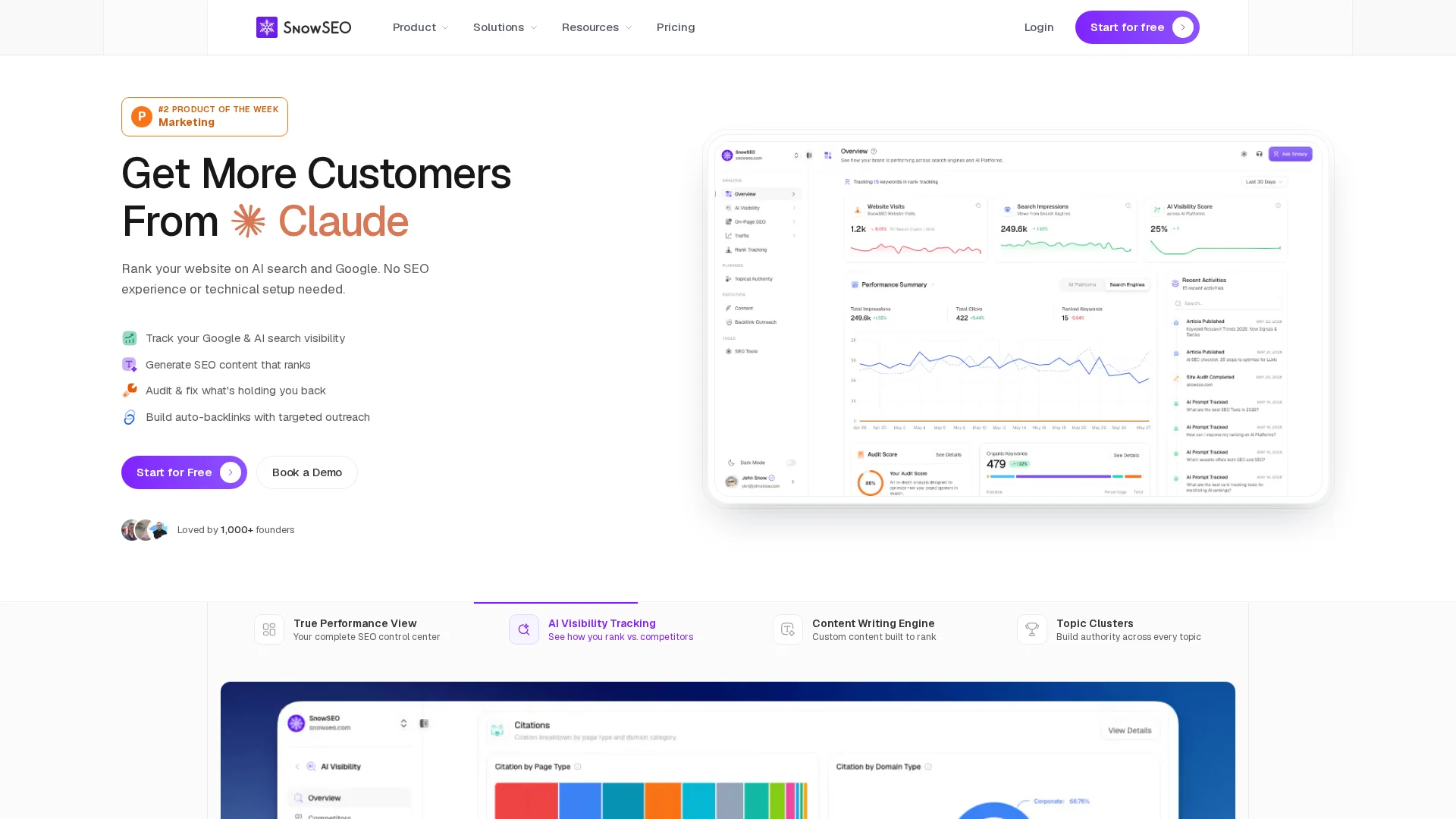
    SnowSEO is an all-in-one platform for SEO and GEO execution. It connects AI visibility tracking with content and site work in one workflow.
    SnowSEO
    Highlights

    • Tracks AI citations, sentiment, share of voice, and competitors across tracked prompts, as shown in its product overview.
    • Combines audits, keywords, topic clusters, rank tracking, content, and publishing.

    Specs

    • Best for: Small teams and agencies
    • Workflow: Research, create, audit, publish, measure

    Pros

    • Moves from AI visibility insight to action.

    Cons

    • Check plan limits and integrations before buying.

    It ranks first because it joins GEO measurement with execution.

    Last updated: September 7, 2026

    Also Read: 10 Best Tools for Competitor SEO Analysis in 2024

    2. Profound

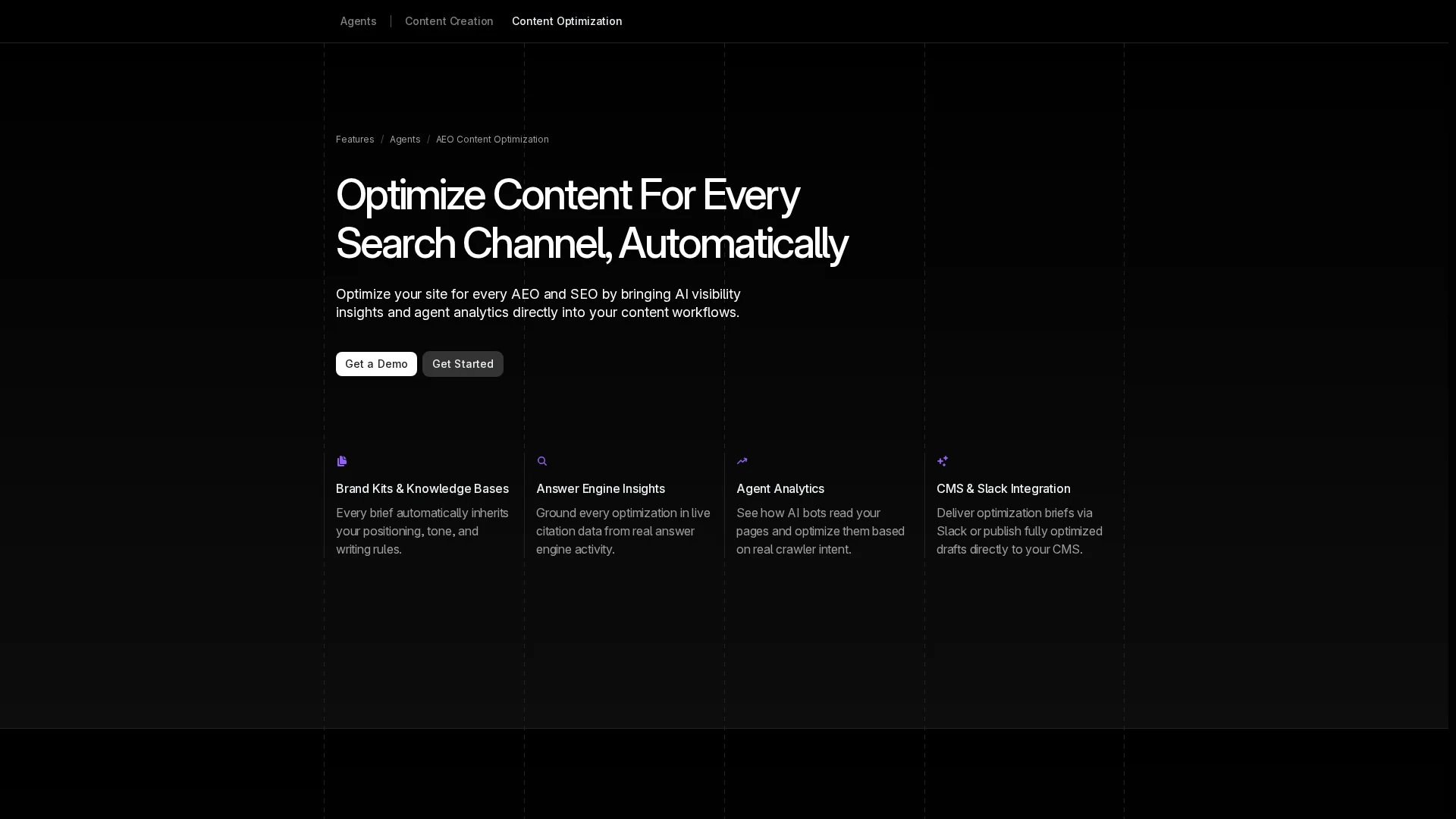
    Profound suits enterprise teams that need citation data tied to governed content work. Its content optimization workflow turns AI visibility gaps into prioritized fixes.
    Profound
    Highlights

    • Uses live citation data, competitor benchmarks, FAQs, schema, and rewrite suggestions.
    • Connects brand kits, agents, CMS tools, and Slack for review and publishing. CMS workflows support approvals.
      Specs
    • Best for: Enterprise SEO and content teams
    • Workflow: Audits, briefs, drafts, approvals, publishing
      Pros
    • Strong governance and repeatable action.
      Cons
    • May exceed small-team needs.
      It ranks here for mature teams that need execution, not just monitoring.

    Last updated: September 7, 2026

    Also Read: SEO Tool Providers Introduce More AI-Powered Optimization Features

    3. AthenaHQ

    AthenaHQ is best for end-to-end GEO operations and executive visibility. It works as a command center for teams that need shared AI search reporting and action plans.
    AthenaHQ
    Highlights

    • Tracks mentions, citations, sentiment, and competitor movement across AI platforms. Its source analysis ties cited pages to outreach and content actions.
    • Connects prompt intelligence, priorities, content, outreach, and commerce workflows.
      Specs
    • Best for: Enterprise SEO, PR, content, and commerce teams
    • Core GEO capability: Visibility, citations, prompts, sources, sentiment, and crawlability
      Pros
    • Strong shared reporting and governance.
      Cons
    • More setup than a lightweight monitor.
      It ranks third for turning AI search data into cross-team execution.

    Last updated: September 7, 2026

    Also Read: 7 SEO Tools for Technical Audits, Content, and Visibility

    4. OtterlyAI

    OtterlyAI is a focused GEO monitoring platform for lean teams. It turns AI search visibility into clear data, from mentions to citations and competitor gaps.
    OtterlyAI
    Highlights

    Specs

    • Best for: SEO pros, agencies, and lean teams with execution tools.
    • Core GEO capability: Citation, competitor, and sentiment tracking.

    Pros

    • Clear visibility and reporting.

    Cons

    • Content production needs a separate workflow.

    It ranks fourth because it offers practical monitoring and diagnosis without a full all-in-one suite.

    Last updated: September 7, 2026

    More GEO Tools Worth Considering

    These tools suit teams that need niche reporting, technical checks, or a wider SEO suite.

    1. Peec AI – Tracks brand and competitor visibility across major AI search environments.
    2. LLM Pulse – Offers crawl checks, llms.txt tools, crawler monitoring, and GEO writing support.
    3. SE Ranking – Combines AI visibility with rank tracking, audits, and content workflows.

    How to choose the right GEO optimization tool

    Pick monitoring if you only need to see AI mentions. Choose an optimization platform if you need actions too.

    • Confirm coverage for ChatGPT, Perplexity, Gemini, Google AI Overviews, AI Mode, Claude, Copilot, and your target regions.
    • Track citation URLs, share of voice, sentiment, competitor swaps, and prompt trends – not just mentions.
    • Check for technical audits, schema guidance, crawler checks, and page-level fixes.
    • Match workflow to your team: simple publishing for SMBs, or APIs and approvals for larger teams.
    • Link visibility to rankings, AI traffic, leads, and revenue over time.

    SnowSEO is the standout choice for teams that need GEO and SEO work in one workflow, from audits and keyword research to content and rank tracking.

    Homepage
    Homepage

    Track what AI answers say about your brand, then act on it. SnowSEO combines SEO audits, rank tracking, and GEO workflows in one place.

    Frequently Asked Questions

    Q1: What are the best tools for improving brand visibility in generative engine answers?

    SnowSEO suits teams that need SEO and GEO in one workflow. AthenaHQ, Peec AI, Otterly.ai, and Profound are useful for tracking AI answer mentions and prompt coverage.

    Q2: How often should I check AI visibility?

    Check weekly for key prompts and competitors. Review trends monthly, then update weak pages, entity details, and supporting content.

    Q3: Does GEO replace traditional SEO?

    No. Strong technical SEO, useful content, and clear brand facts still support AI visibility. GEO adds prompt tracking and answer-focused improvements.