Tag: AI SEO Tools

  • SnowSEO GEO Optimization Review: Monitoring AI Brand Mentions

    SnowSEO GEO Optimization Review: Monitoring AI Brand Mentions

    Quick Summary: SnowSEO is worth using for AI brand mention tracking if you need it alongside daily SEO work, but treat mentions as directional signals, not proof of revenue. The tool tracks brand presence, competitor overlap, and topic gaps across AI prompts, though specialist platforms may offer deeper source-level analysis. A practical workflow involves running 10-20 prompts by intent, recording mentions and cited URLs, then validating changes against Search Console clicks and conversions. It suits agencies and growing brands best, while enterprise teams needing wide model coverage or custom exports should look elsewhere.

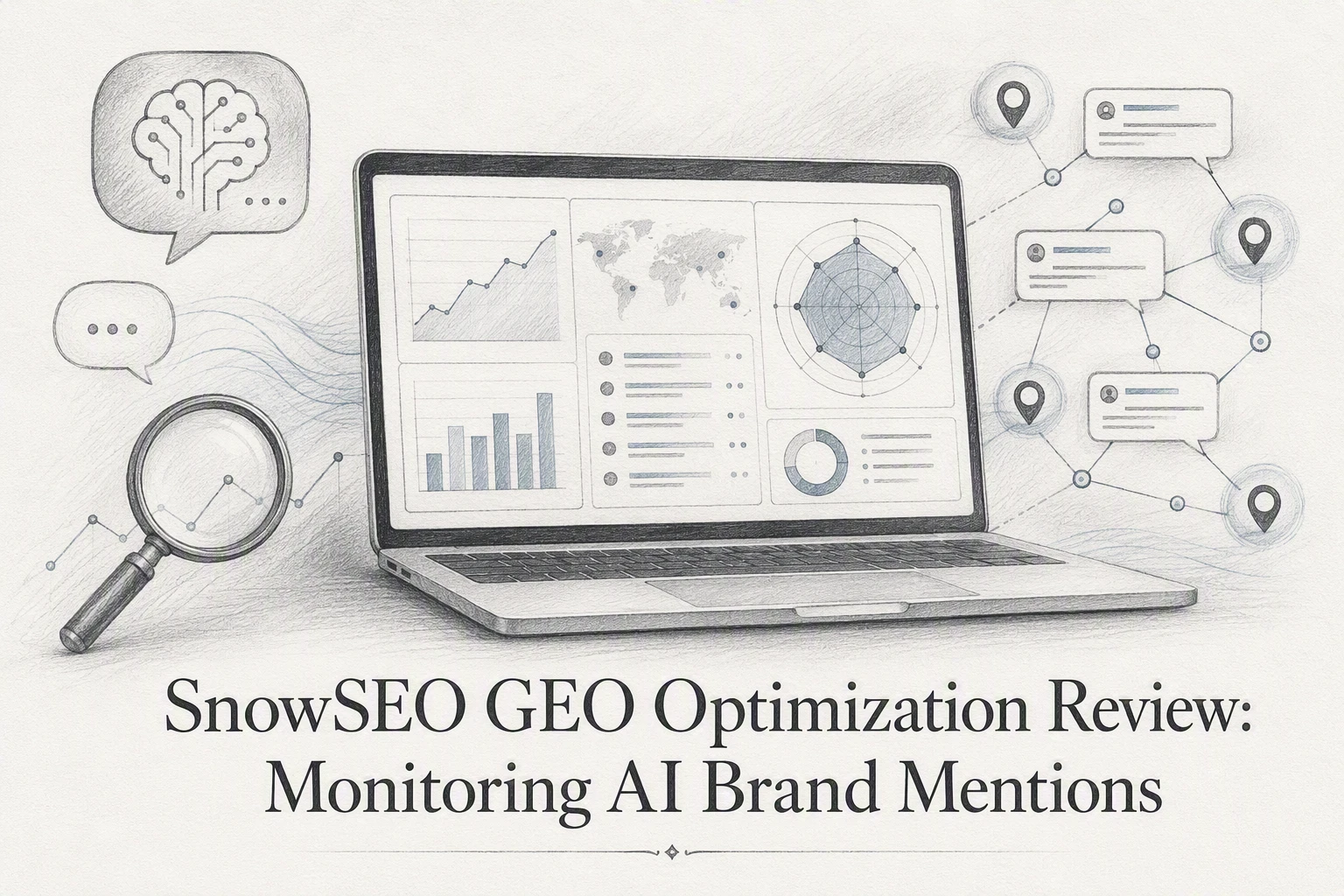
    Buyers need three answers: Does AI recommend the brand, which rivals take its place, and which cited page needs work? This SnowSEO GEO review tests that workflow, not a feature checklist. You will see how to judge mention data, prompt coverage, competitor gaps, and source links. This SnowSEO GEO review also flags where specialist tools may offer deeper detail. Our assessment focuses on useful actions, not vanity scores.

    How SnowSEO Monitors AI Brand Mentions

    What the Dashboard Can Tell You

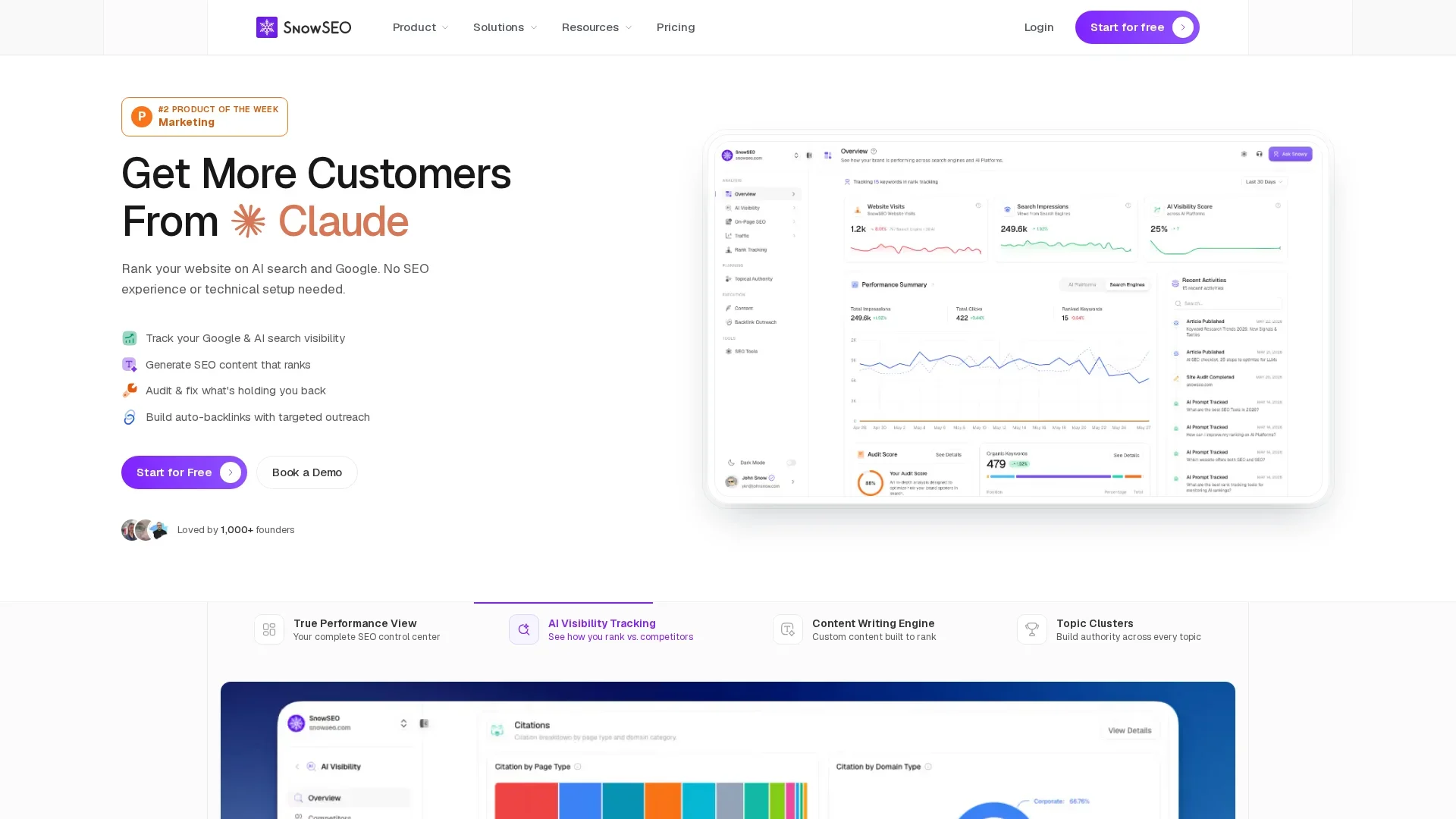
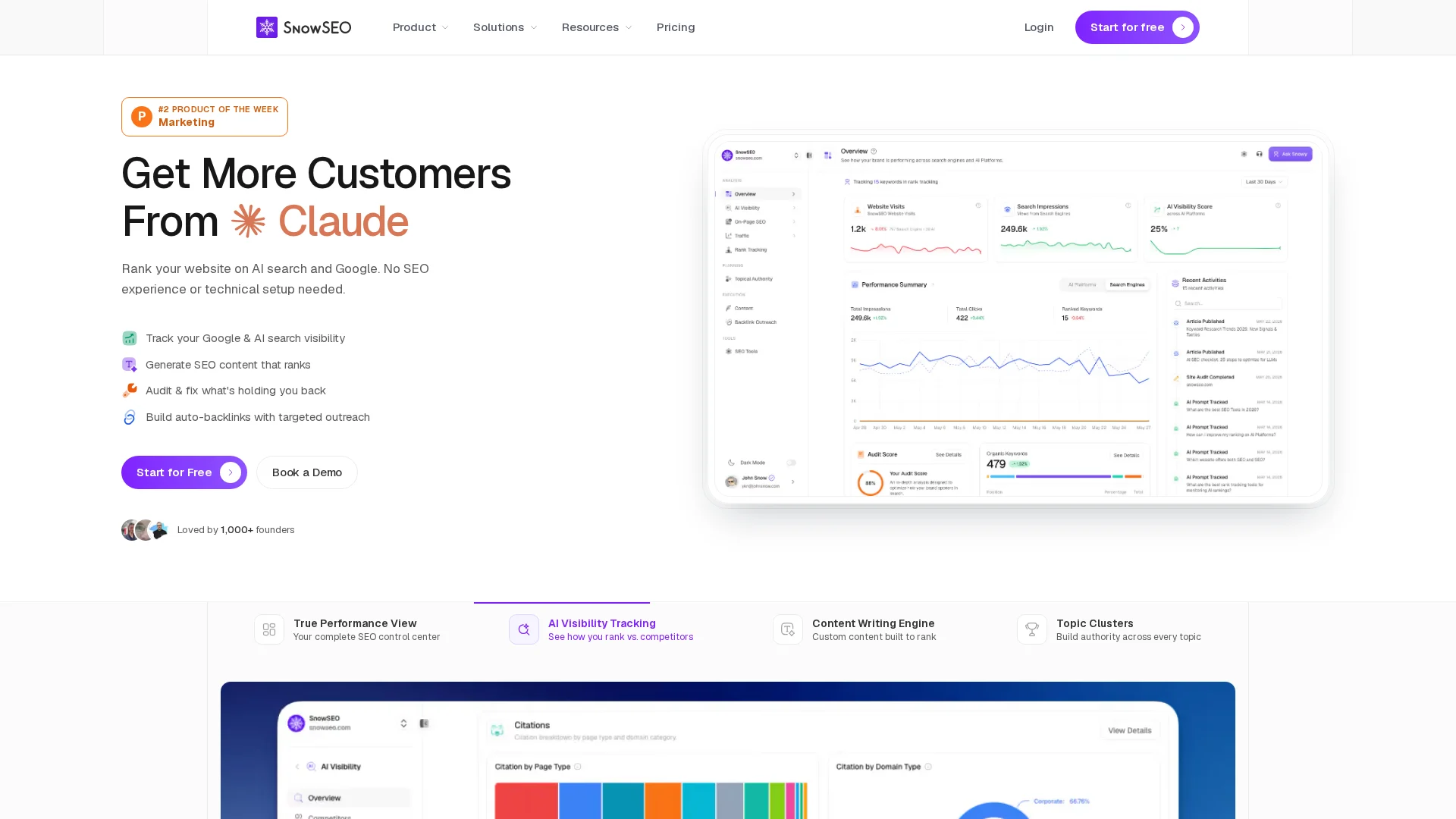
    A SnowSEO GEO review should focus on whether the dashboard turns AI mentions into clear actions. SnowSEO tracks brand presence across AI search prompts, then helps you spot gaps in visibility, competitor overlap, and content topics worth improving.
    SnowSEO
    SnowSEO
    Dashboard signal Practical use
    Brand mentions See where your name appears or is absent
    Competitor overlap Find prompts where rivals gain attention
    Topic gaps Plan pages that answer missing questions

    Google says AI search can use related searches and varied sources to form answers, so test more than one wording per topic. Google’s guidance also confirms standard SEO still matters.

    Treat mention counts as a lead, not proof of revenue. Check traffic, leads, and sales before changing priorities.

    For this SnowSEO GEO review, the useful workflow is simple:

    1. Track priority prompts each week.
    2. Flag missing or wrong brand answers.
    3. Build or refresh the pages behind those gaps.

    Also Read: Google and AI Platforms Shift Guidance for Generative Search Visibility

    Is SnowSEO’s Monitoring Deep Enough for Real SEO Decisions?

    A Practical Prompt Test

    SnowSEO is deep enough for first-pass GEO decisions if you test the prompts that drive real buying research.

    Build a small set of prompts by intent, then check whether your brand appears, how it is described, and which sources the AI cites.

    1. Run 10 to 20 prompts across brand, category, comparison, and problem terms.
    2. Record brand mention, sentiment, cited URL, and competitor named.
    3. Repeat after a content or technical change.
    4. Match changes against Search Console clicks and impressions.

    Pencil sketch of SEO workflow testing
    Pencil sketch of SEO workflow testing
    Test signal Decision it supports
    Brand omitted Create or improve the source page
    Wrong product claim Fix key pages and entity details
    Competitor cited Review cited content gaps

    A mention alone is not a win. You need the prompt, wording, cited source, and trend to know what to fix.

    SnowSEO helps turn scattered AI answers into a workable watchlist. Specialist platforms may offer deeper prompt-scale analysis, but that only matters if your team can act on it. Google also advises judging search change through trends in impressions and clicks, not position alone, in its Search Console guidance.

    Also Read: GEO Optimization vs Traditional SEO: Which Drives AI Visibility?

    SnowSEO Pros and Cons for Agencies and Growing Brands

    SnowSEO suits teams that need SEO and AI visibility work in one place.

    Strength Watch-out
    Combines audits, keywords, rank tracking, content, and AI mention checks Specialist GEO tools may offer deeper prompt-level data
    Helps agencies standardize client reporting Teams still need to validate AI answers manually
    Supports both search and AI visibility work AI mentions do not prove traffic or revenue
    Two analysts reviewing dashboards on dual monitors
    Two analysts reviewing dashboards on dual monitors

    Best fit: agencies with several smaller clients and growing brands that need a shared workflow.

    Less ideal: enterprise teams needing wide model coverage, detailed citation history, or custom data exports. Use SnowSEO to spot trends, then check conversions in analytics. Google also advises measuring conversions and engagement, not clicks alone, for AI search work in its AI features guidance.

    Treat mention tracking as a signal, not a ranking guarantee.

    Also Read: 7 GEO Optimization Tools for Brand Visibility in AI Answers

    Is SnowSEO Worth It for Monitoring AI Brand Mentions?

    Yes, if you need AI mention tracking beside daily SEO work. SnowSEO monitors brand visibility, citations, sentiment, and competitor share across AI platforms in one workspace, as its product listing confirms.

    • Choose it for fast, action-led monitoring.
    • Pick a specialist tool if you need deep source-level analysis.

    Treat mention counts as signals, then check the actual AI responses.
    Homepage
    Homepage

    Track AI brand mentions alongside your search work. Try SnowSEO to audit visibility, monitor rankings, and find the gaps worth fixing first.

    Frequently Asked Questions

    Q1: How effectively does SnowSEO monitor brand mentions across generative search platforms?

    SnowSEO helps track AI visibility and brand references in key prompts. Use repeat checks to spot changes, then review the cited context before acting.

    Q2: What should I monitor first?

    Start with branded prompts, product categories, and competitor comparisons. Track mention rate, sentiment, and source pages.

    Q3: Can monitoring replace manual AI checks?

    No. Manual checks still help verify wording, location, and accuracy. Use SnowSEO to make those checks faster and easier to repeat.

    Conclusion

    SnowSEO makes AI brand mention checks clear and usable. Track prompts, wording, and cited sources over time. Treat results as directional, since AI visibility measures still vary by platform and method.

  • Google and AI Platforms Shift Guidance for Generative Search Visibility

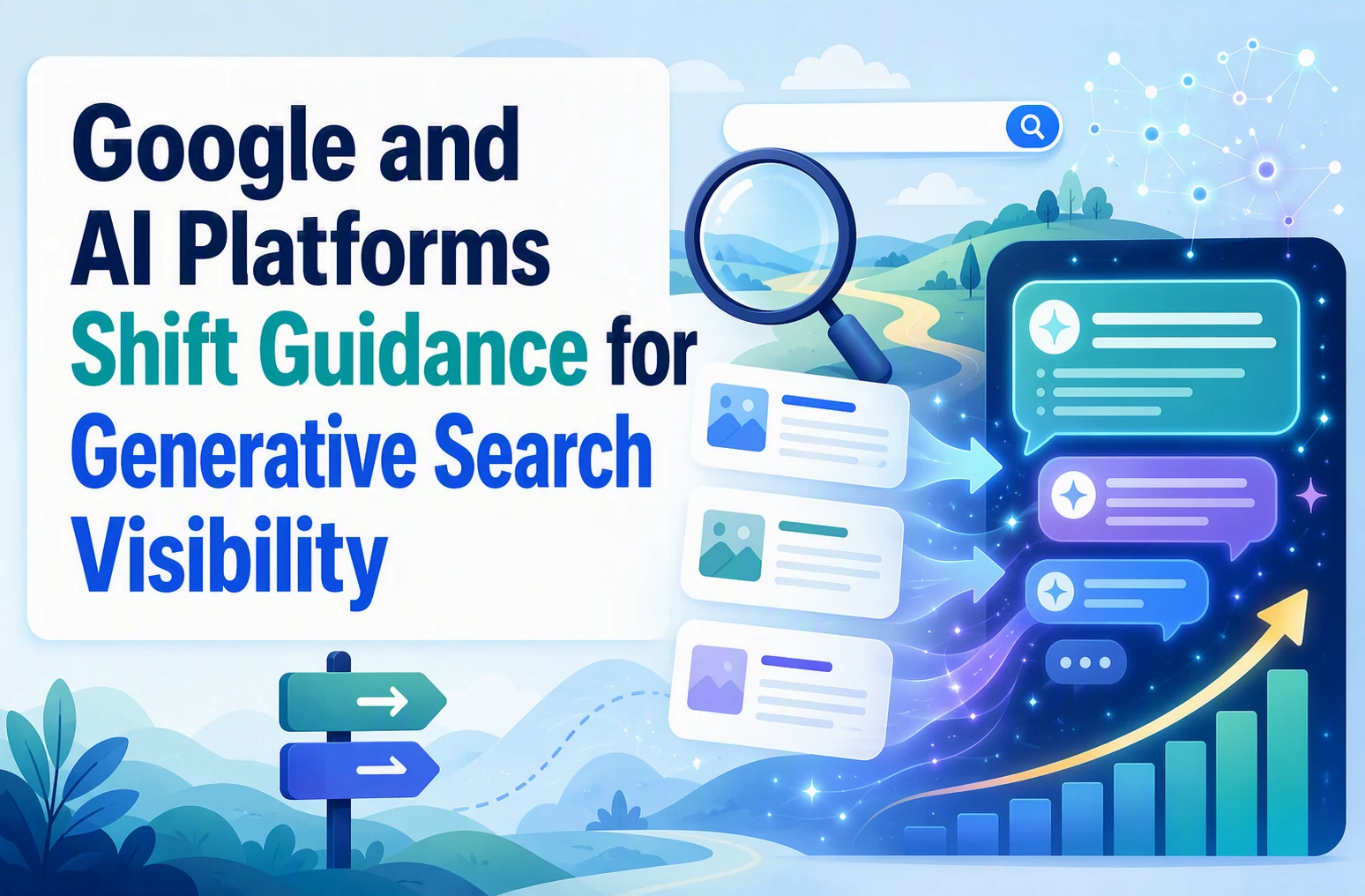
    Google and AI Platforms Shift Guidance for Generative Search Visibility

    Quick Summary: Google’s 2026 guidance confirms that generative search visibility in AI Overviews and AI Mode still depends on standard SEO, not special AI markup or separate GEO tactics. The company is adding a Search Console report for AI impressions, but it measures visibility, not a universal rank, and site owners can opt out. Other platforms like ChatGPT reward clear, crawlable, locally accurate pages, so marketers should track citations and improve verifiable content rather than chase unproven AI ranking tricks.

    Google is tying AI Mode, AI Overviews, and Search Console reporting closer together in 2026. Yet its guidance remains clear: no special AI markup is needed. These generative search optimization updates reward crawlable, useful, well-structured pages that qualify for normal Search.

    Marketers still face mixed rules across AI platforms. This source-led analysis separates verified generative search optimization updates from unsupported GEO claims, so you can improve visibility without weakening core SEO.

    Google Expands AI Search While Keeping SEO at the Core

    Why Query Fan-Out Changes Content Planning

    Google’s AI Overviews and AI Mode can split one question into several related searches. Google calls this query fan-out. Its guidance is clear: generative results still use core Search ranking and quality systems, so solid SEO remains the base. Google’s AI search guide

    Plan pages around the full question, not one exact phrase.

    A clean flowchart branching from one central query into multiple topic nodes
    A clean flowchart branching from one central query into multiple topic nodes
    Content need Practical move
    Main answer State it early and clearly
    Related concerns Cover costs, steps, risks, and alternatives
    Proof Add first-hand examples, data, or expert insight
    1. Map the main query and likely follow-up questions.
    2. Build clear sections that answer each need.
    3. Link to deeper pages where the topic needs detail.

    Do not create thin pages for every query variation. Google warns this can become scaled content abuse.

    These generative search optimization updates favor useful coverage, clean structure, and indexed pages, not a separate AI-only SEO playbook.

    Also Read: 7 GEO Optimization Tools for Brand Visibility in AI Answers

    Google Adds New Controls and Reporting for Generative Search

    What to Measure Instead of a Single GEO Rank

    Stop chasing one GEO rank. Google now offers a generative AI report that tracks impressions for AI Overviews and AI Mode, split by page, country, device, and date. It is rolling out in Search Console, according to Google’s announcement.

    Clean analytics dashboard with multiple line graphs
    Clean analytics dashboard with multiple line graphs

    Track a small scorecard instead:

    Metric What it tells you
    AI impressions How often Google shows your URLs
    Pages surfaced Which content earns AI visibility
    Country and device Where visibility changes
    Conversions Whether AI-visible visits help the business
    1. Export weekly impressions.
    2. Flag pages gaining or losing exposure.
    3. Compare those pages with leads, sales, or sign-ups.

    The report measures visibility, not a universal AI rank. Google also lets site owners opt out of generative Search features, which removes related impressions and traffic.

    • Do not treat impressions as clicks.
    • Do not assume one prompt reflects all user results.
    • Use SnowSEO tracking alongside Search Console to compare Google visibility with other AI platforms.

    Also Read: GEO Optimization vs Traditional SEO: Which Drives AI Visibility?

    What Other AI Platforms Change for Visibility Work

    ChatGPT search can rewrite prompts, use location, and show linked sources. That makes clear, crawlable, locally accurate pages more useful than keyword-stuffed copy. OpenAI also says publishers should allow OAI-SearchBot if they want content included in summaries and snippets. Check its publisher guidance.

    Visibility task What to check
    Source eligibility Robots rules allow search crawling
    Answer quality Pages state facts, dates, prices, and limits clearly
    Local intent Business details match across your site and listings
    1. Test real buyer questions in ChatGPT and Claude.
    2. Record cited domains, answer gaps, and wrong claims.
    3. Publish first-hand proof: product specs, policies, expert input, and updates.

    Do not chase a secret AI ranking trick. Track citations and referrals, then improve the pages users can verify.

    Also Read: 10 Must-Have Tools to Streamline Your SEO in 2025

    How the Guidance Reached This Point

    Google first framed AI Overviews and AI Mode as an extension of core Search, not a separate ranking system. Its early guidance stressed crawlable pages, helpful content, clear structure, and accurate structured data.

    In May 2026, Google made that stance clearer in its generative AI search guide. The message is simple: strong SEO remains the base for AI visibility.

    Earlier assumption Current guidance
    New AI markup is required No special markup is needed
    More AI-written pages win Unique, useful content matters more
    GEO replaces SEO GEO builds on SEO fundamentals

    Treat unproven GEO tactics as tests, not requirements.

    Also Read: 10 Best Tools for Competitor SEO Analysis in 2024

    Homepage
    Homepage

    Turn shifting guidance into clear action. Use SnowSEO to audit visibility, track rankings, and improve content for Google, ChatGPT, and Claude.

    Frequently Asked Questions

    Q1: What recent changes from Google and AI platforms affect generative search visibility?

    Google still rewards helpful, original pages. AI platforms increasingly cite clear, trusted sources. Focus on accurate facts, strong headings, expert proof, and pages that answer a specific question fully.

    Q2: Should I create separate pages for AI search?

    No. Build useful pages for people first. Add direct answers, clear product details, and supporting evidence.

    Q3: How can I track AI visibility?

    Track brand mentions, cited URLs, and prompt results over time. Compare changes with organic rankings and traffic.

    Conclusion

    Generative search visibility still rests on sound SEO: indexable pages, clear answers, and original proof. Google confirms no special AI markup is required, so test claims before chasing GEO trends.

  • 7 GEO Optimization Tools for Brand Visibility in AI Answers

    7 GEO Optimization Tools for Brand Visibility in AI Answers

    Quick Summary: GEO tools track how AI engines like ChatGPT and Perplexity mention your brand, not just Google rankings. SnowSEO leads for all-in-one SEO and GEO workflows, while Profound, AthenaHQ, and OtterlyAI suit larger or leaner teams. Pick monitoring-only tools if you just need visibility data, or full platforms to act on gaps. Match tool choice to team size, AI engine coverage, and whether you need content execution.

    A brand can rank on Google yet vanish when buyers ask ChatGPT, Gemini, or Perplexity for a recommendation. Traditional trackers miss AI mentions, citations, competitor picks, and wrong brand details.

    This guide compares seven GEO optimization tools, starting with SnowSEO. It covers all-in-one SEO and GEO, monitoring, audits, governance, and content work. We assessed engine coverage, prompts, citations, competitor signals, diagnostics, reports, ease of use, and team fit. AI answers change, so these GEO optimization tools rank by workflow value, not fixed AI positions.

    GEO Tool Comparison

    Tool Best for Core GEO capability Optimization workflow Team fit
    SnowSEO Small teams, founders, and agencies wanting one SEO and GEO workspace AI visibility, citations, sentiment, share of voice, and competitor tracking Topic research, content generation, audits, recommendations, and CMS publishing SMBs, content teams, and agencies
    Profound Enterprise SEO, content, and marketing operations teams Citation data, answer-engine insights, competitor benchmarking, and agent analytics Prioritized audits, content briefs, FAQ generation, CMS workflows, and governed agents Large organizations with approval and governance requirements
    AthenaHQ Cross-functional teams and enterprise brand programs Visibility, citations, prompts, sources, competitors, sentiment, and crawlability Prioritized actions, content, outreach, commerce, and governance workflows Enterprise marketing, PR, SEO, and commerce teams
    OtterlyAI SEO professionals, agencies, and lean marketing teams Daily prompt tracking, citations, sentiment, share of voice, and competitor analysis GEO audits, prompt research, crawlability checks, and recommendations Small and mid-sized teams with existing execution tools

    What to know about GEO optimization tools

    GEO optimization tools show how AI answers mention, recommend, and cite your brand. They track the prompts, competitors, and sources that shape those answers.

    The best tools do more than report a visibility score. They flag crawl issues, reveal content gaps, and suggest the next fix.

    Use GEO alongside traditional SEO. Strong pages, clear brand facts, and sound technical SEO still help AI systems find and trust your site.

    1. SnowSEO

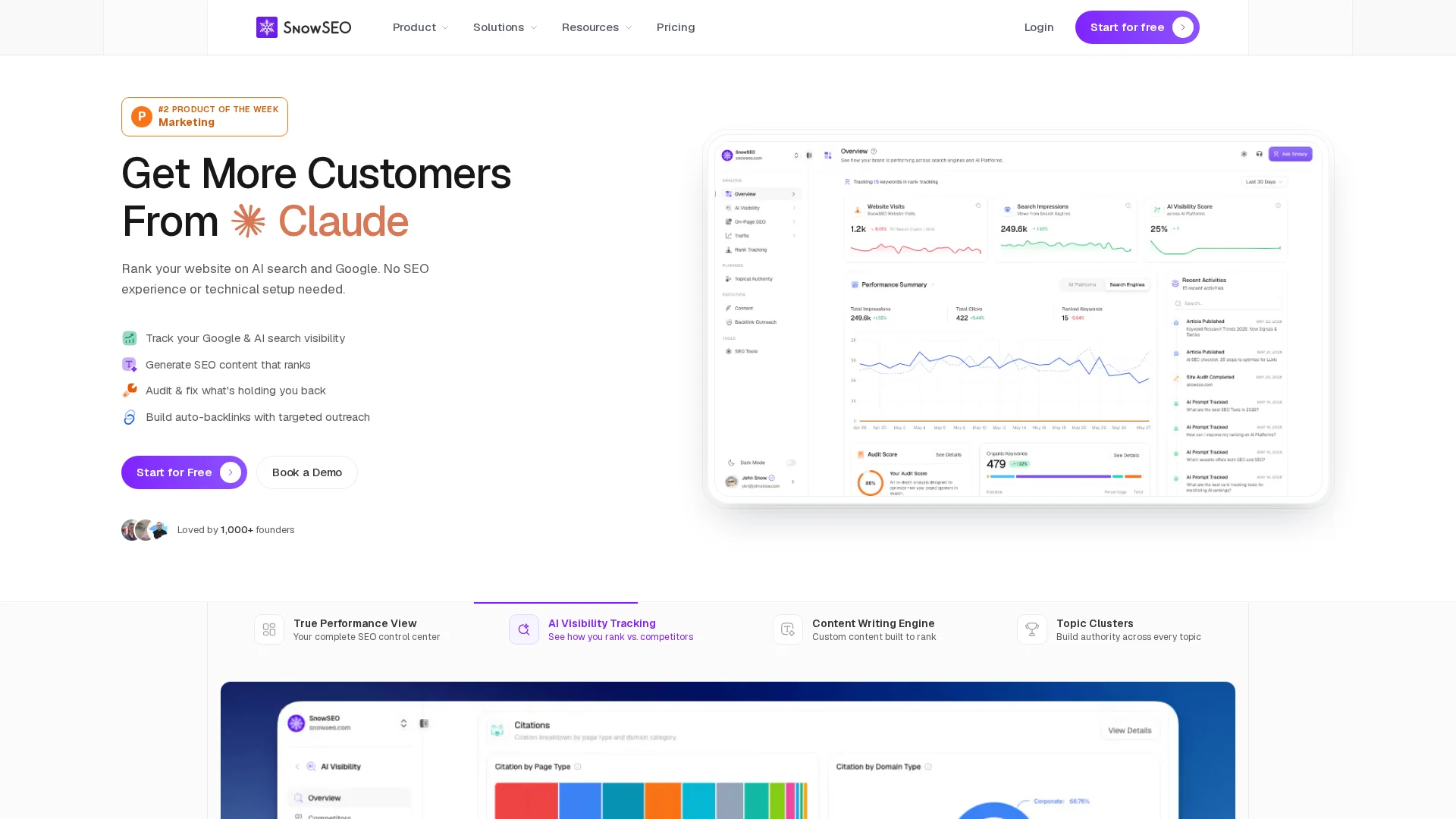
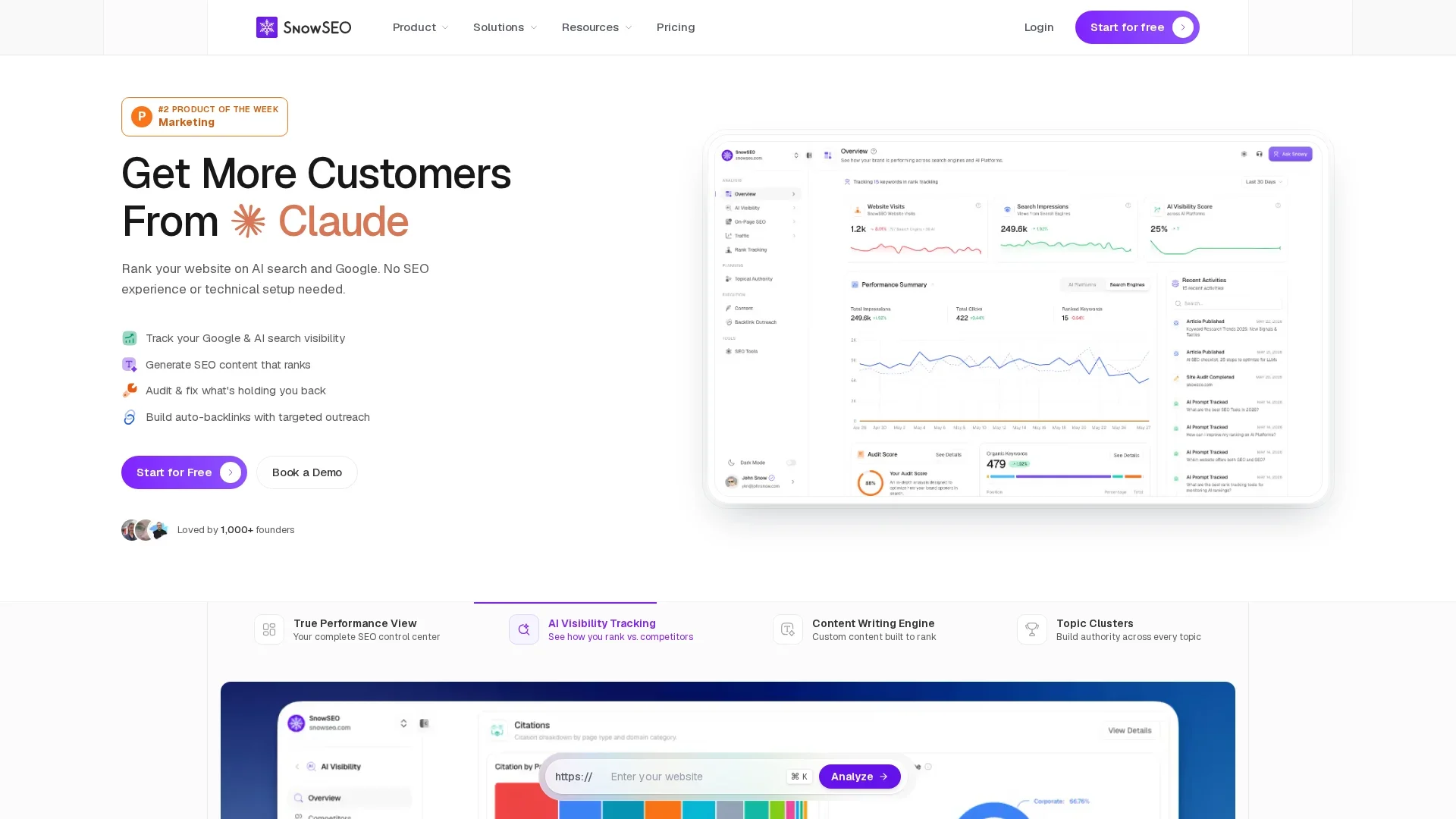
    SnowSEO is an all-in-one platform for SEO and GEO execution. It connects AI visibility tracking with content and site work in one workflow.
    SnowSEO
    Highlights

    • Tracks AI citations, sentiment, share of voice, and competitors across tracked prompts, as shown in its product overview.
    • Combines audits, keywords, topic clusters, rank tracking, content, and publishing.

    Specs

    • Best for: Small teams and agencies
    • Workflow: Research, create, audit, publish, measure

    Pros

    • Moves from AI visibility insight to action.

    Cons

    • Check plan limits and integrations before buying.

    It ranks first because it joins GEO measurement with execution.

    Last updated: September 7, 2026

    Also Read: 10 Best Tools for Competitor SEO Analysis in 2024

    2. Profound

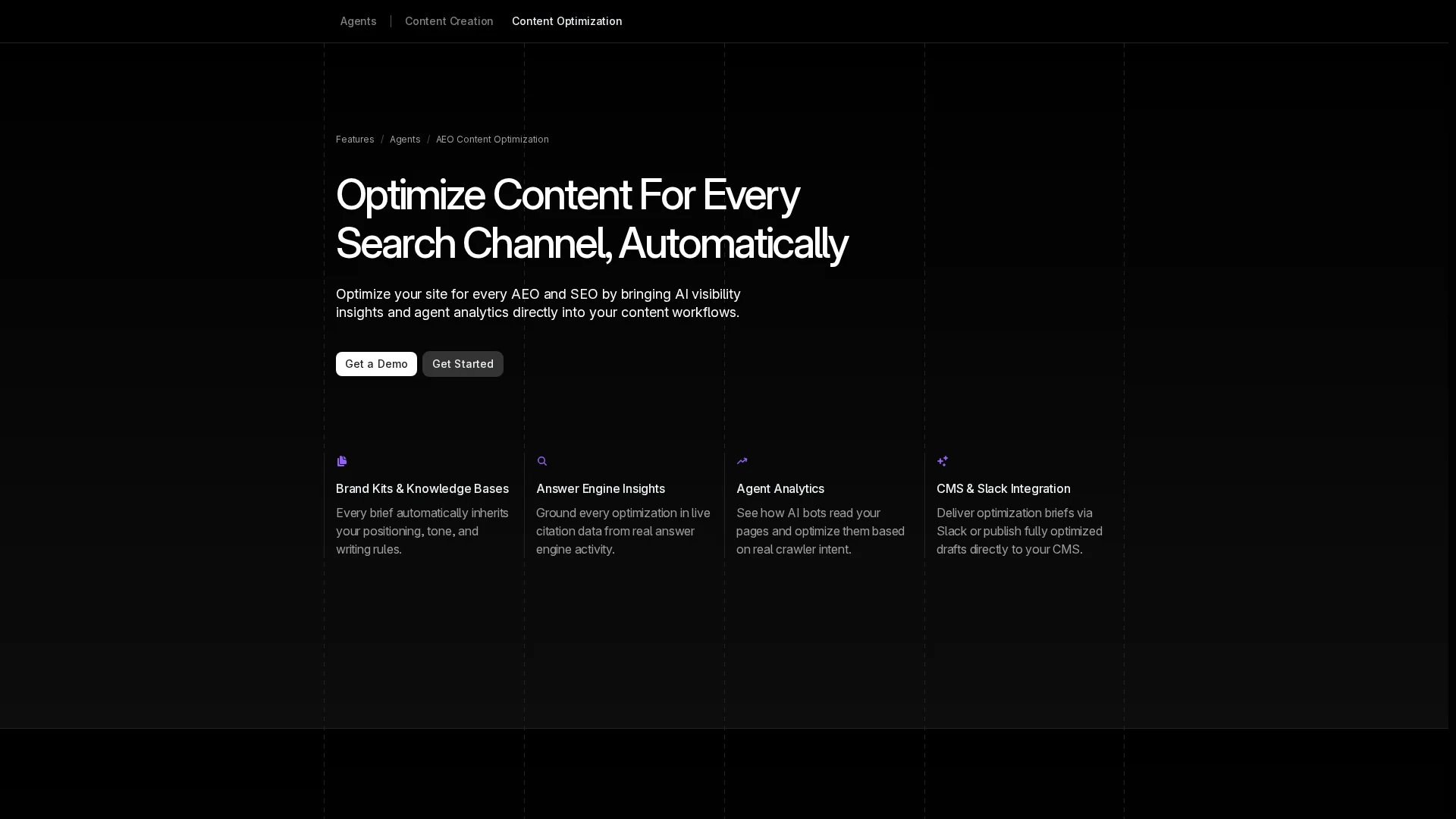
    Profound suits enterprise teams that need citation data tied to governed content work. Its content optimization workflow turns AI visibility gaps into prioritized fixes.
    Profound
    Highlights

    • Uses live citation data, competitor benchmarks, FAQs, schema, and rewrite suggestions.
    • Connects brand kits, agents, CMS tools, and Slack for review and publishing. CMS workflows support approvals.
      Specs
    • Best for: Enterprise SEO and content teams
    • Workflow: Audits, briefs, drafts, approvals, publishing
      Pros
    • Strong governance and repeatable action.
      Cons
    • May exceed small-team needs.
      It ranks here for mature teams that need execution, not just monitoring.

    Last updated: September 7, 2026

    Also Read: SEO Tool Providers Introduce More AI-Powered Optimization Features

    3. AthenaHQ

    AthenaHQ is best for end-to-end GEO operations and executive visibility. It works as a command center for teams that need shared AI search reporting and action plans.
    AthenaHQ
    Highlights

    • Tracks mentions, citations, sentiment, and competitor movement across AI platforms. Its source analysis ties cited pages to outreach and content actions.
    • Connects prompt intelligence, priorities, content, outreach, and commerce workflows.
      Specs
    • Best for: Enterprise SEO, PR, content, and commerce teams
    • Core GEO capability: Visibility, citations, prompts, sources, sentiment, and crawlability
      Pros
    • Strong shared reporting and governance.
      Cons
    • More setup than a lightweight monitor.
      It ranks third for turning AI search data into cross-team execution.

    Last updated: September 7, 2026

    Also Read: 7 SEO Tools for Technical Audits, Content, and Visibility

    4. OtterlyAI

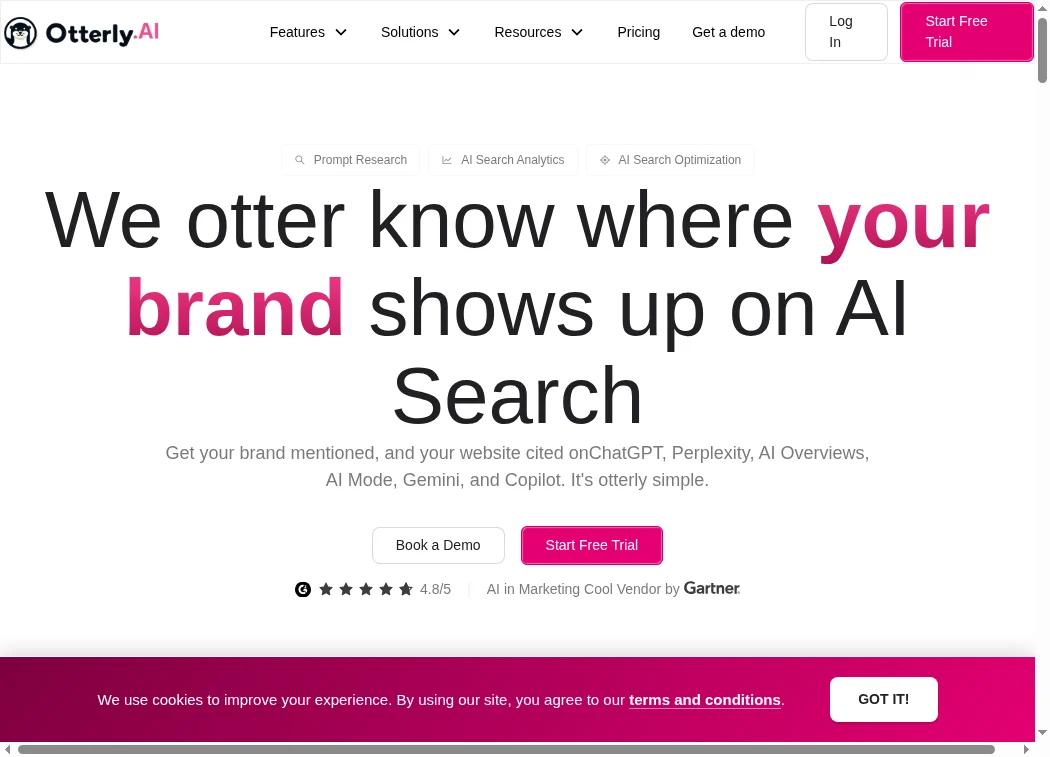
    OtterlyAI is a focused GEO monitoring platform for lean teams. It turns AI search visibility into clear data, from mentions to citations and competitor gaps.
    OtterlyAI
    Highlights

    Specs

    • Best for: SEO pros, agencies, and lean teams with execution tools.
    • Core GEO capability: Citation, competitor, and sentiment tracking.

    Pros

    • Clear visibility and reporting.

    Cons

    • Content production needs a separate workflow.

    It ranks fourth because it offers practical monitoring and diagnosis without a full all-in-one suite.

    Last updated: September 7, 2026

    More GEO Tools Worth Considering

    These tools suit teams that need niche reporting, technical checks, or a wider SEO suite.

    1. Peec AI – Tracks brand and competitor visibility across major AI search environments.
    2. LLM Pulse – Offers crawl checks, llms.txt tools, crawler monitoring, and GEO writing support.
    3. SE Ranking – Combines AI visibility with rank tracking, audits, and content workflows.

    How to choose the right GEO optimization tool

    Pick monitoring if you only need to see AI mentions. Choose an optimization platform if you need actions too.

    • Confirm coverage for ChatGPT, Perplexity, Gemini, Google AI Overviews, AI Mode, Claude, Copilot, and your target regions.
    • Track citation URLs, share of voice, sentiment, competitor swaps, and prompt trends – not just mentions.
    • Check for technical audits, schema guidance, crawler checks, and page-level fixes.
    • Match workflow to your team: simple publishing for SMBs, or APIs and approvals for larger teams.
    • Link visibility to rankings, AI traffic, leads, and revenue over time.

    SnowSEO is the standout choice for teams that need GEO and SEO work in one workflow, from audits and keyword research to content and rank tracking.

    Homepage
    Homepage

    Track what AI answers say about your brand, then act on it. SnowSEO combines SEO audits, rank tracking, and GEO workflows in one place.

    Frequently Asked Questions

    Q1: What are the best tools for improving brand visibility in generative engine answers?

    SnowSEO suits teams that need SEO and GEO in one workflow. AthenaHQ, Peec AI, Otterly.ai, and Profound are useful for tracking AI answer mentions and prompt coverage.

    Q2: How often should I check AI visibility?

    Check weekly for key prompts and competitors. Review trends monthly, then update weak pages, entity details, and supporting content.

    Q3: Does GEO replace traditional SEO?

    No. Strong technical SEO, useful content, and clear brand facts still support AI visibility. GEO adds prompt tracking and answer-focused improvements.

  • SnowSEO Review: An SEO Tool for Content and Search Visibility

    SnowSEO Review: An SEO Tool for Content and Search Visibility

    Quick Summary: SnowSEO is worth testing for lean teams that want audits, keyword research, content drafting, rank tracking, and AI visibility in one integrated workflow, reducing tool switching. Its main value comes after publishing, where you can track both Google rankings and AI mentions side by side, but the review stresses that AI mentions are awareness signals, not proof of revenue, and must be validated against traffic, leads, and sales. The tool is less suited for teams that only need rank checks or expect instant revenue proof, so the recommendation is to run one client project first and check plan limits and data coverage before committing.
    A useful SEO platform must do more than draft an article or show an AI visibility score. It should help you find a low-competition keyword, publish a stronger page, and track changes in Google and AI answers. This SnowSEO SEO tool review tests that full workflow. We assess its content, research, audit, and tracking features, plus plan limits and data gaps, so you can judge whether SnowSEO fits real marketing work.

    Can SnowSEO Connect Research, Content, and Visibility?

    A SnowSEO SEO tool review should test the handoff between research, drafting, and tracking. SnowSEO brings these tasks into one workflow, which can reduce tab switching for lean teams.

    ![SEO specialist reviewing keyword clusters and draft outlines beside a laptop]

    From Keyword Opportunity to Publishable Article

    Start with keyword research, check competing pages, then turn the brief into a draft. SnowSEO can support this flow:

    1. Find a topic with clear search intent.
    2. Build an outline around gaps and questions.
    3. Draft, add first-hand insight, then edit before publishing.

    Warning: AI speeds up drafts, not trust. Google prioritizes helpful, reliable, people-first content.

    What the Visibility Layer Adds

    This SnowSEO SEO tool review finds its value after publishing. Rank tracking and AI visibility checks can show where a page appears, but a mention is not a sale.

    Check What it tells you
    Rankings Search demand and movement
    AI mentions Brand presence in answers

    A third SnowSEO SEO tool review point: use the data to improve pages, not chase every prompt. Google says core SEO still supports generative search visibility.

    Also Read: Best SEO Tools: 25 Picks to Improve Rankings in 2026

    What Works Well in SnowSEO, and What Does Not?

    The Strongest Parts of the Workflow

    SnowSEO brings audits, keyword research, content creation, rank tracking, and AI visibility into one workspace. That reduces tool switching and makes it easier to turn a finding into a task.

    • Use audits to spot technical gaps.
    • Build briefs from keyword and competitor data.
    • Track search and AI visibility side by side.
    SEO strategist reviewing audit across dual monitors
    SEO strategist reviewing audit across dual monitors
    Strength Practical value
    Integrated workflow Fewer exports and handoffs
    AI visibility view Wider view than classic rankings

    The Trade-Offs to Understand

    Data is a guide, not proof of revenue. Check rankings, clicks, leads, and sales before calling an AI mention a win.

    Review every AI draft. Google warns that scaled pages without real value can breach spam rules.

    Plans, data coverage, and tracking limits may also shape fit for large agencies.

    Also Read: 7 SEO Tools for Technical Audits, Content, and Visibility

    Is SnowSEO Worth It for Agencies and Small Teams?

    SnowSEO is worth testing if your team wants audits, keyword work, content drafts, rank tracking, and AI visibility in one workflow. It can reduce tool switching and give agencies a clearer client view.

    Use it with a review step. Google says AI content must add real value, accuracy, and relevance, not mass-produce pages in its guidance.

    Good fit Watch closely
    Small teams needing one workspace Plan limits and data coverage
    Agencies managing repeatable tasks AI mentions versus leads and sales

    Tip: Run one client project first. Track time saved, rankings, AI mentions, and conversions.

    Also Read: 10 Best Tools for Competitor SEO Analysis in 2024

    Is SnowSEO Worth It?

    Yes, if you need one workflow for audits, keywords, content, rank tracking, and AI visibility. SnowSEO suits lean teams that lose time moving between tools.

    A marketer compares SEO reports side by side
    A marketer compares SEO reports side by side
    Worth it for Less suited to
    Agencies and growing brands Teams needing only rank checks
    Content-led SEO work Buyers expecting instant revenue proof

    Google says AI visibility still depends on core SEO basics, not special tricks, in its AI search guidance.

    • Use SnowSEO to find gaps and prioritize fixes.
    • Validate outcomes in Search Console and analytics.
    • Treat AI mentions as awareness, not conversions.

    Warning: Data quality and plan limits matter. Test the workflow on real pages before committing.

    Homepage
    Homepage

    Test the full workflow yourself. SnowSEO combines audits, content, rank tracking, and AI visibility checks in one practical workspace.

    Frequently Asked Questions

    Q1: What does SnowSEO offer marketers seeking one tool for content, rankings, and search visibility?

    SnowSEO combines audits, keyword research, content support, rank tracking, competitor analysis, and AI visibility work in one workflow.

    Q2: Can SnowSEO prove AI mentions drive revenue?

    No. Track mentions alongside traffic, leads, and sales to judge real business impact.

    Q3: Who benefits most from SnowSEO?

    Teams that want fewer disconnected tools and a clearer view of search and AI visibility.

    Conclusion

    SnowSEO suits teams that need one workflow for content, SEO, and AI visibility. Treat mentions as signals, then tie them to traffic and revenue. Google confirms core SEO quality still matters.

  • SEO Tool Providers Introduce More AI-Powered Optimization Features

    SEO Tool Providers Introduce More AI-Powered Optimization Features

    Quick Summary: AI-powered SEO tools from Semrush, Ahrefs, Surfer, and Conductor now track brand mentions in AI answers, score content for both search and AI visibility, and turn citation data into prioritized fixes. These updates shift teams from manual research to reviewing AI-suggested gaps, but Google stresses that strong SEO basics still matter. Use the tools to audit and plan, but always validate suggestions with real data and human judgment before publishing.

    AI-powered SEO tool updates now sit inside daily workflows, not test dashboards. Semrush, Surfer, Ahrefs, and Conductor added AI visibility, source, scoring, forecast, and execution features across 2025 and 2026. These AI-powered SEO tool updates matter because AI answers and search rankings can favor different pages. This report reviews verified AI-powered SEO tool updates, showing what each measures, automates, and helps teams improve.

    The New AI Optimization Features Marketers Can Use Now

    From AI Answers Back to Search Queries

    AI visibility tools now trace a brand mention in AI answers back to the prompts and search themes behind it. Use that view to find unanswered follow-up questions, then strengthen the page AI systems already reference. Google says AI Mode can expand one question into many related searches through query fan-out, so single-keyword planning is no longer enough. Google’s guidance confirms that core SEO still matters.

    • Track cited pages and missing questions.
    • Add direct answers, proof, and internal links.

    Content Scores Now Combine SEO and AI Search

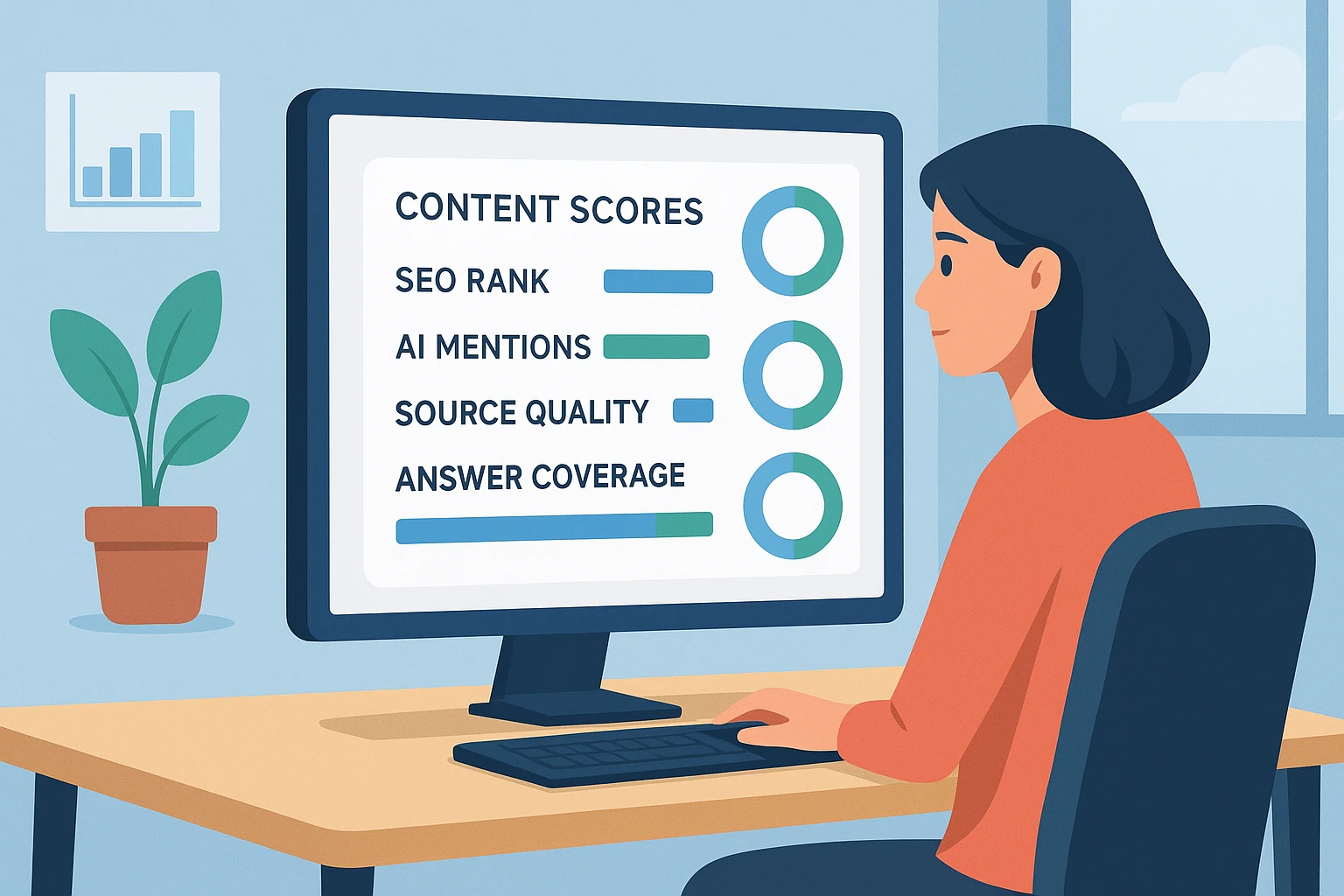
    Content scoring is shifting from keyword use alone to search rank, AI mentions, source quality, and answer coverage.

    Cartoonish scorecard balancing SEO and AI metrics
    Cartoonish scorecard balancing SEO and AI metrics
    Score signal Action
    Missing follow-up Add a short answer section
    Weak proof Add expert evidence
    AI mention loss Compare cited rivals

    Do not chase a separate AI markup trick. Google says eligible indexed pages need no extra technical requirement for AI features.

    Also Read: SnowSEO – Your Last SEO Platform

    How Major Platforms Are Turning Measurement Into Optimization

    Audits, Forecasts, and Prioritization

    AI SEO tools now flag more than rank drops. They map pages to prompts, find weak topic coverage, and rank fixes by likely impact. Semrush Enterprise, for example, matches pages with AI prompts and highlights coverage gaps through its Content Audit release.

    1. Audit high-value pages.
    2. Sort gaps by business intent.
    3. Fix the strongest page-to-prompt mismatch first.

    Do not treat a score as a result. Check whether the suggested change improves the answer for a real buyer.

    A clean flowchart linking AI prompts to prioritized content fixes
    A clean flowchart linking AI prompts to prioritized content fixes

    Citation Data and Content Execution

    Citation tracking now feeds directly into briefs and edits. Platforms show which pages and third-party sources appear in AI answers, then surface missing prompts or topics. Semrush tracks cited pages, competitors, and daily prompt visibility across AI systems in its AI Visibility Toolkit.

    Signal Practical action
    Missing citation Build or improve the matching page
    Rival source cited Pitch that publisher or add stronger proof
    Weak prompt coverage Add a direct answer and supporting detail
    • Review citations monthly.
    • Assign one owner per priority page.
    • Recheck after publishing.

    Also Read: 10 Best Tools for Competitor SEO Analysis in 2024

    What These Updates Change for Marketing Teams

    AI features now shift work from manual research to review and choice. Ahrefs lets teams use AI to group search intent, suggest keywords, and spot content gaps, as outlined in its AI feature guide.

    Use the time saved for work AI cannot own:

    1. Check whether suggested topics match buyer needs.
    2. Assign a human owner to approve briefs and edits.
    3. Track brand mentions in AI answers alongside rankings.
    Team task Old workflow New workflow
    Keyword research Sort lists by hand Validate AI clusters
    Content updates Find gaps page by page Review AI-led gaps
    Reporting Pull metrics from tools Explain changes and next actions

    Tip: Treat AI output as a first draft, not a publish button. Wrong intent can waste a full content sprint.

    Ahrefs Brand Radar also tracks mentions in ChatGPT and Perplexity, giving teams a reason to measure AI visibility separately.

    Also Read: 7 SEO Tools for Technical Audits, Content, and Visibility

    Why SEO Platforms Are Adding AI Optimization

    Search results now answer more questions before users click. Reuters reports that Google AI Overviews place generated summaries above standard links, changing how brands earn visibility in search.

    SEO platforms are adding AI features because teams need to track more than rankings. They need to see:

    • Whether AI tools cite their brand
    • Which prompts trigger competitor mentions
    • What content gaps block visibility

    Rankings still matter, but answer-engine citations now need their own reporting and content plan.

    Old SEO focus AI optimization focus
    Keyword position Brand and source citations
    Clicks Presence in generated answers
    Homepage
    Homepage

    Turn AI SEO features into measurable work. Use SnowSEO to audit, plan, create, track, and improve search and AI visibility from one platform.

    Frequently Asked Questions

    Q1: Which recent SEO tool updates add AI-powered optimization for marketers worldwide?

    Platforms now add AI content briefs, site issue fixes, prompt tracking, and search intent checks. Compare output against real rankings before you act.

    Q2: Should AI suggestions replace SEO review?

    No. Check facts, brand tone, links, and search intent. Use AI to speed up research and drafts.

    Q3: What should teams measure first?

    Track rankings, clicks, indexed pages, and leads. Set a baseline before testing any AI feature.

    Conclusion

    AI tools now speed up research, fixes, and monitoring. Still, judge every suggestion with data and expert review. Google confirms strong SEO basics remain central to AI search visibility.

  • 7 SEO Platforms for Traditional and Generative Search Optimization

    7 SEO Platforms for Traditional and Generative Search Optimization

    Quick Summary: Google rankings alone won’t protect you-AI search like ChatGPT now drives buyer decisions, so teams need a single platform that tracks both traditional SEO and AI visibility. SnowSEO leads by combining keyword research, rank tracking, and AI mentions (like citations and sentiment) into one workflow, making it ideal for SMBs and agencies that want actionable insights without juggling separate tools. Semrush and Ahrefs excel at deep SEO data but require extra steps for AI tracking, while Profound focuses narrowly on enterprise-level generative search optimization. The key is choosing a tool that turns visibility drops into clear tasks, not just reports.

    A strong Google ranking can still vanish when buyers ask ChatGPT, Gemini, or Perplexity for a recommendation. Teams need unified SEO platforms that track rankings, site health, links, content, AI mentions, citations, and competitor share. This guide ranks seven unified SEO platforms, led by SnowSEO for execution. Semrush and Ahrefs bring deep SEO data, while Profound, Peec AI, and Otterly focus on AI visibility. We weighed coverage, workflows, reports, scale, and team fit.

    Unified SEO Platform Comparison

    Platform Best for Traditional SEO coverage Generative search coverage Workflow strength
    SnowSEO SMBs, agencies, content teams, and growth teams seeking one SEO and AI visibility workflow Keyword research, GSC analytics, rank tracking, site audits, topic clusters, content, and outreach AI visibility, prompts, mentions, citations, sentiment, share of voice, and competitor tracking High, with planning, creation, publishing, monitoring, integrations, and reporting in one workspace
    Semrush Established SEO teams, agencies, and organizations needing mature competitive and reporting capabilities Very broad keyword, backlink, technical, ranking, content, local, and competitive intelligence Prompt research, AI visibility, mentions, citations, sentiment, competitor gaps, and AI crawler audits High, though capabilities may be distributed across toolkits, plans, and add-ons
    Ahrefs Advanced SEOs, link builders, publishers, and teams with strong backlink research needs Excellent keyword, backlink, competitor, content, rank tracking, and technical audit coverage AI mentions, citations, share of voice, custom prompts, AI traffic, bots, and cited sources High for research and analysis; execution may require additional content or publishing workflows
    Profound Enterprise brands, large agencies, and dedicated GEO or brand intelligence teams Limited compared with full SEO suites; typically complements an existing SEO stack Deep answer, prompt, citation, source, conversation, and agent intelligence High for enterprise AI search programs, lower as a standalone traditional SEO operating system

    What to know about unified SEO platforms

    Unified SEO platforms put keyword research, audits, rank tracking, content work, and reporting in one place. Newer tools also track how AI answers mention and cite brands.

    This matters because Google rankings and AI visibility need different checks. Choose a platform that turns both data sets into clear work for your team.

    1. SnowSEO

    SnowSEO joins Google SEO and AI search work in one execution-first workspace. It links real GSC performance data with audits, content, publishing, and AI visibility tracking.
    SnowSEO
    Highlights

    • Tracks keywords, audits, content, outreach, and AI mentions together.
    • Monitors citations, sentiment, and share of voice across AI platforms.

    Specs

    • Best for: SMBs, agencies, and content teams.
    • Workflow strength: High – plan, create, publish, monitor, and report in one place.

    Pros

    Cons

    • Its historical backlink data is less deep than legacy suites.

    It ranks first because it turns traditional SEO and GEO visibility into work, not just reports.

    Last updated: August 28, 2026

    Also Read: SnowSEO – Your Last SEO Platform

    2. Semrush

    Semrush One joins mature SEO research with AI visibility tracking. It covers Google, ChatGPT, Perplexity, Gemini, AI Mode, and AI Overviews.
    Semrush
    Highlights

    • Track selected prompts daily, citations, mentions, and competitors.
    • AI Search Health audits flag crawler access issues.
      Specs
    • Best for: Established SEO teams and agencies.
    • Coverage: Broad SEO and AI search data.
      Pros
    • Mature reporting and competitive research.
      Cons
    • Costs and limits can grow with add-ons.

    It ranks here because the suite is powerful, but setup can be complex.

    Last updated: August 28, 2026

    Also Read: How to Track Rankings Across Google and Generative Search

    3. Ahrefs

    Ahrefs is best for backlink intelligence and large-scale search data. Its Brand Radar adds AI mentions, citations, and custom prompt tracking.

    Ahrefs
    Highlights

    • Strong backlink, keyword, competitor, rank, and site audit tools.
    • Web Analytics separates AI referral traffic, while Bot Analytics tracks crawlers.

    Specs

    • Best for: Advanced SEOs, link builders, and publishers.
    • Workflow: Strong research, weaker content execution.

    Pros

    • Deep link data and useful AI citation reports.

    Cons

    • Brand Radar costs and workflows may sit apart from core SEO.

    It ranks third because AI visibility is a newer layer, not a unified execution system.

    Last updated: August 28, 2026

    Also Read: SnowSEO Rank Tracking Review: Alerts, Reports, and Coverage

    4. Profound

    Profound is an enterprise-focused answer engine optimization platform. It helps teams track AI brand mentions, prompts, citations, and source influence across answer engines.
    Profound
    Highlights

    Specs

    • Best for: Enterprise brands, large agencies, and GEO teams
    • Traditional SEO: Limited
    • Generative search: Deep

    Pros

    • Strong enterprise reporting and governance
    • Clear AI visibility measurement

    Cons

    • Not a full traditional SEO suite
    • May be too complex for small teams

    It ranks fourth because it excels at enterprise GEO, but works best alongside a broader SEO platform.

    Last updated: August 28, 2026

    Other platforms worth considering

    These options fit narrower needs, from AI monitoring to budget-friendly SEO workflows.

    1. Peec AI – Focused on AI mentions, citations, sentiment, and competitor share of voice.
    2. SE Ranking – All-in-one SEO with growing AI visibility features.
    3. Otterly – Lightweight AI monitoring for small teams testing GEO.

    How to choose the right unified SEO platform

    Pick based on where work happens, not just what gets tracked.

    • Choose SnowSEO if one team needs audits, keyword research, content creation, rank tracking, and AI visibility in one workflow.
    • Confirm core SEO data: intent, difficulty, gaps, backlinks, audits, ranks, and Google connections.
    • Ask how AI results are checked: platforms covered, prompt set, refresh rate, citations, sentiment, and source URLs.
    • Price for real scale: domains, countries, users, keywords, prompts, exports, and reports.
    • Favor tools that turn a visibility drop into a clear task.

    Agencies need client workspaces and reporting. E-commerce teams need product and country tracking.

    Homepage
    Homepage

    Turn search and AI visibility data into action. Try SnowSEO for audits, keywords, rank tracking, and content work in one place.

    Frequently Asked Questions

    Q1: How does SnowSEO differ from Semrush and Ahrefs as a next-gen SEO platform focused on AI search visibility?

    SnowSEO combines standard SEO work with tracking for AI platforms, helping teams turn visibility gaps into tasks. Semrush and Ahrefs are strong for classic search data, but SnowSEO puts generative search workflows at the center.

    Q2: Do I need a separate tool for generative search?

    Not always. Choose a platform that links AI mentions, rankings, content gaps, and fixes. Separate tools can create scattered reports and slow down action.

    Q3: What should I track first?

    Track priority keywords, brand mentions in AI answers, competitor citations, and pages losing clicks. Review these signals monthly, then assign fixes by likely business impact.

  • How to Track Rankings Across Google and Generative Search

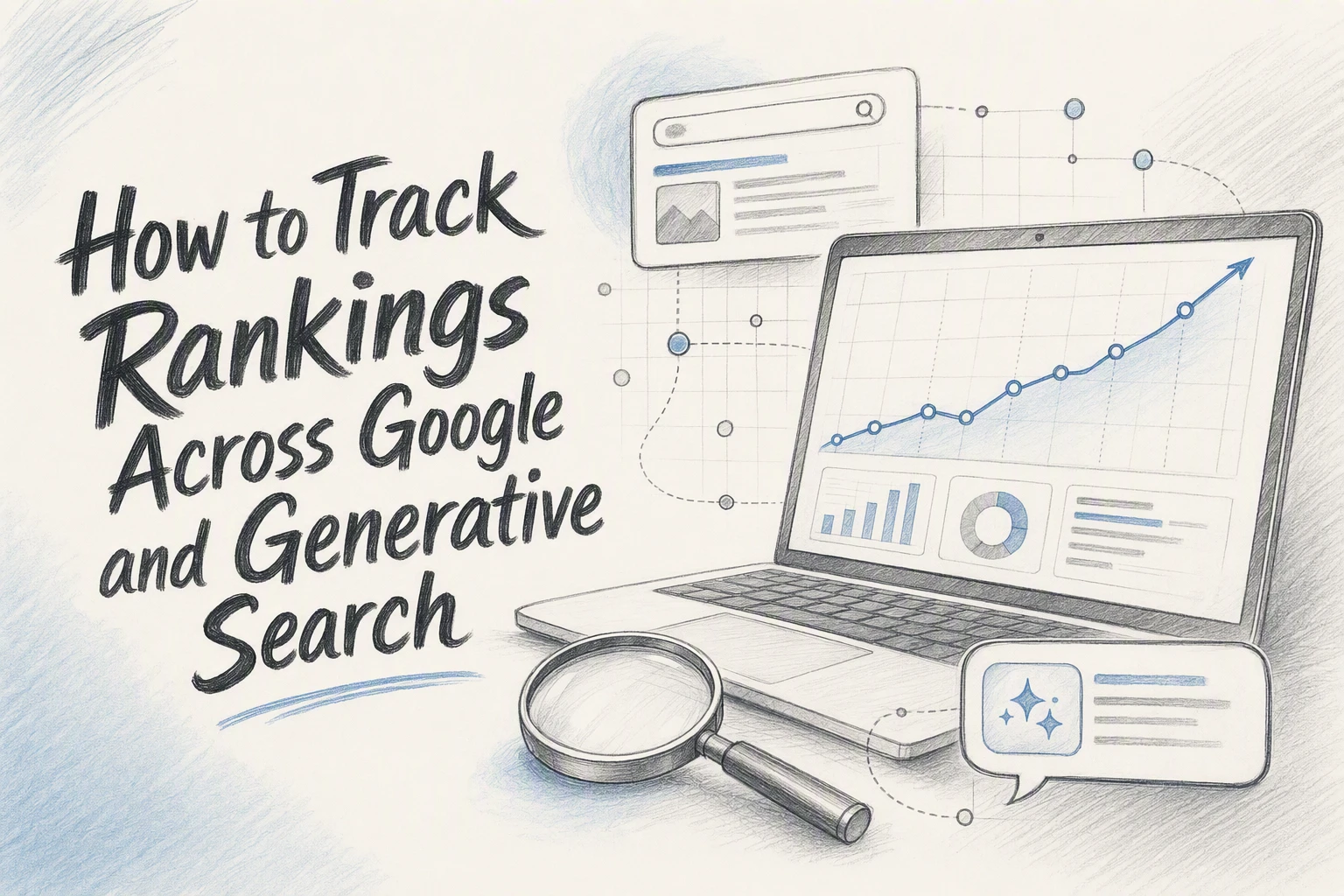
    How to Track Rankings Across Google and Generative Search

    Quick Summary: A brand can rank third in Google but disappear entirely when users ask AI tools like ChatGPT, exposing a blind spot in traditional rank tracking. The fix is to track both Google’s position data (clicks, impressions) and generative search mentions (citations, answer share) separately, then compare them by keyword and page to spot gaps-like competitors ranking higher or earning AI citations. SnowSEO helps automate this by grouping gaps (e.g., missing citations, weak pages) and turning them into actionable updates, like adding expert-backed answers or refreshing underperforming content. The key move is treating AI visibility as a distinct metric, not a substitute for Google rankings, and updating content based on where you’re actually losing visibility.

    A client may rank third in Google for a high-value term, then vanish when buyers ask ChatGPT, Perplexity, or Google AI Mode for a recommendation. That gap makes old rank reports incomplete. Cross-platform rank tracking shows where brands appear, get cited, or lose ground. This guide gives agencies and SEO teams a clear cross-platform rank tracking workflow, so they can turn missing visibility into focused content and SEO actions.

    Step 1: Define What You Will Track on Each Search Surface

    Build a Keyword and Prompt Set

    Start with priority keywords, then pair each with realistic buyer prompts. Group both by topic, funnel stage, country, device, and page.

    1. Track core commercial and informational queries in Google.
    2. Track direct questions users may ask ChatGPT or Claude.
    3. Record the expected landing page and key competitors.

    This makes cross-platform rank tracking useful, not noisy.

    Keyword prompts flow into search and AI rankings
    Keyword prompts flow into search and AI rankings

    Use Different Metrics for Different Results

    Google gives measurable positions, impressions, clicks, and CTR. Search Console defines these core metrics, so track rank movement alongside traffic.

    Search surface Track What it shows
    Google Position, impressions, clicks, CTR Search demand and visits
    Generative search Mentions, citations, answer share Brand visibility in answers

    Do not treat an AI mention as a Google ranking. Cross-platform rank tracking needs separate scorecards.

    Also Read: 10 Must-Have Tools to Streamline Your SEO in 2025

    Step 2: Connect Google Ranking Data With Generative Search Visibility

    Start With Google Search Console

    Use Search Console to set your Google baseline. Export queries, pages, clicks, impressions, CTR, and average position. Google confirms these metrics show how users find and click your site in Search in its Performance report guide.

    Google Search Console metrics dashboard comparison
    Google Search Console metrics dashboard comparison

    Fill the Measurement Gaps

    Add a prompt list for ChatGPT and Claude. Record whether your brand appears, which page gets cited, and the answer context.

    Google signal Generative search signal
    Average position Brand mention or citation
    Clicks and CTR Citation quality and context

    A top Google rank does not guarantee an AI citation. Track both weekly.

    Also Read: 10 New Keyword Research Techniques to Try Now

    Step 3: Turn Competitor and Citation Gaps Into Optimization Work

    Find the Most Actionable Gaps

    Start with queries where competitors rank or earn AI citations and you do not. Prioritize pages with buying intent, clear traffic value, and a close match to your offer.

    Gap Best first action
    Competitor ranks higher Improve the existing page
    Competitor gets cited Add clear answers and proof
    You have no relevant page Create a focused page

    Google recommends original, helpful content with clear sourcing and real expertise. See its people-first content guidance.

    Choose the Right Optimization Response

    Do not copy a competitor’s page. Fill the missing need with stronger examples, updated facts, expert input, and direct answers. SnowSEO can help group gaps by ranking loss, citation loss, and page type.

    1. Refresh weak pages first.
    2. Add cited evidence and useful headings.
    3. Track rankings and citations after release.

    Also Read: 10 Best Tools for Competitor SEO Analysis in 2024

    Step 4: Standardize Agency Reporting and Optimization Reviews

    Create a Client Reporting View

    Give every client the same one-page view. Separate Google results from generative search evidence, then show change against the prior month. Google defines clicks, impressions, CTR, and average position in its Search Console Performance report.

    Area Report
    Google Search Clicks, CTR, rankings, page gains
    Generative search Brand mentions, cited URLs, prompt coverage
    Action plan Owner, due date, expected outcome

    Do not combine AI mentions with Google rankings. They measure different outcomes.

    Run a Monthly Optimization Loop

    Use the report to choose a short list of fixes, not a long wish list.

    1. Find pages with falling clicks or weak CTR.
    2. Check missed prompts and competitor citations.
    3. Update content, internal links, proof, and page titles.
    4. Log each change and review the result next month.

    Keep priorities tied to business value. SnowSEO can centralize the tracking evidence and audit tasks.

    Homepage
    Homepage

    Track Google rankings and AI visibility in one place. Use SnowSEO to spot gaps, audit pages, and act on clear search data.

    Frequently Asked Questions

    Q1: How can agencies implement SnowSEO for advanced rank tracking and optimization of generative AI visibility?

    Set client topics, target prompts, and Google keywords. Review ranking changes beside AI mentions, then turn missing citations into content briefs and audit tasks.

    Q2: How often should I check rankings?

    Check weekly for trends. Review daily only during launches, major site changes, or volatile search periods.

    Q3: What counts as generative search visibility?

    Track brand mentions, cited pages, answer placement, and prompt coverage. These signals differ from a standard Google position.

    Conclusion

    Track Google rankings and generative mentions separately, then join them by topic and page. Google defines position as a relative result rank; AI visibility signals citation and answer presence. Use both to find gaps and improve content.

  • Rank Tracking Software Gains Real-Time AI Search Reporting

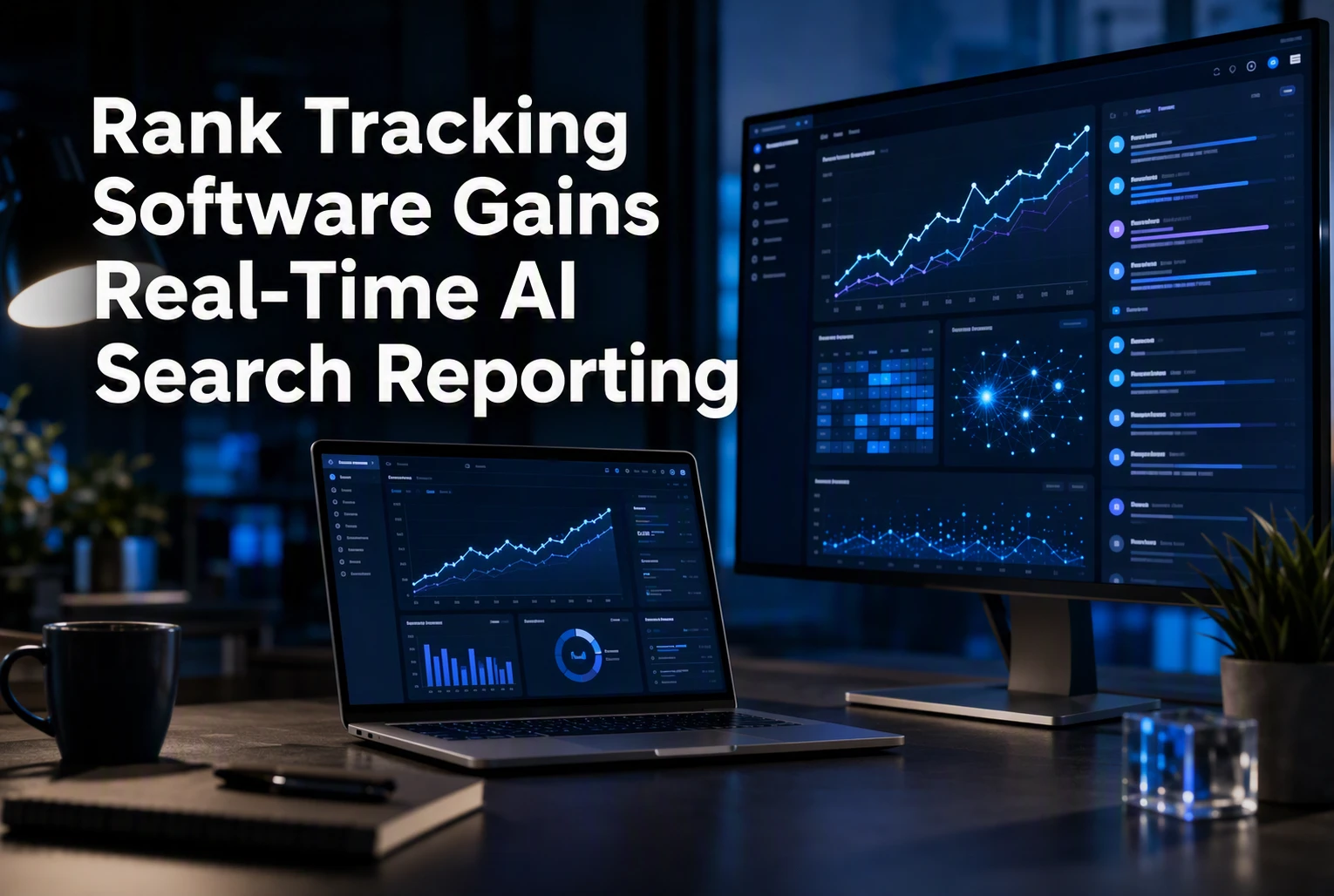
    Rank Tracking Software Gains Real-Time AI Search Reporting

    Quick Summary: Real-time AI rank tracking isn’t live updates-it’s daily scans of fixed prompts across ChatGPT, Google AI Mode, and Gemini, but tools vary wildly in how they log mentions, citations, and answer shifts. Google’s AI Overviews don’t work like traditional rankings; they pull different links and can omit your site entirely, so tracking must focus on brand mentions, linked sources, and answer context-not just position. SnowSEO explicitly ties rank tracking to AI visibility, letting teams spot gaps in mentions or citations before competitors do. The key is saving full answers, testing prompts across models, and treating daily changes as signals, not definitive proof.

    Rank tracking now reaches beyond Google. In 2026, Semrush tracks selected prompts daily across ChatGPT, Google AI Mode, and Gemini. Other tools report AI visibility across ChatGPT and, often, Claude. Yet real-time AI rank reporting means different things across vendors. Daily scans, weekly checks, and live dashboards are not equal. This guide tests real-time AI rank reporting against refresh rates, prompt position, citations, competitors, and answer changes.

    AI Rank Reporting Is Becoming a Daily Workflow

    What Vendors Mean by Real-Time

    Real-time AI rank reporting rarely means a live, second-by-second feed. It usually means a tool reruns a fixed set of prompts on a daily schedule, then logs what changed.

    Google itself says AI Overviews appear only when its systems find them helpful, and results can vary by query. Its AI features also surface supporting links, not a fixed rank list, as explained in Google Search Central’s guidance.

    Real-time AI search workflow visualization
    Real-time AI search workflow visualization
    Claim What to verify
    Real-time Exact refresh time and timezone
    AI position Prompt, market, device, and model used
    Citation tracking Linked source URL and captured answer
    Visibility score Formula and prompt sample size

    Tip: Treat daily changes as signals, not proof. AI answers can shift between checks.

    • Save answer snapshots.
    • Separate mentions from citations.
    • Flag meaningful changes for review.

    Also Read: 10 Organic Growth Strategies to Drive Traffic in 2025

    Which Trackers Cover ChatGPT and Claude?

    Coverage Is Only the First Test

    Several AI visibility platforms claim ChatGPT and Claude coverage, but the label alone proves little. Ask whether the tool runs the same saved prompts on both models and records answers separately.

    Side-by-side AI model comparison dashboard
    Side-by-side AI model comparison dashboard

    A useful report should show:

    Check Why it matters
    Brand mention Shows if the answer names you
    Citation or source URL Shows which pages support the answer
    Answer context Reveals how the model describes you
    Prompt history Separates a trend from one random result

    Ahrefs’ ChatGPT tracking guide treats mentions, citations, and share of voice as separate signals. Claude needs its own view because its answers may cite and frame brands differently.

    Do not call this a rank. AI answers have no fixed position. Track presence, source support, and change over time.

    Also Read: SnowSEO – Your Last SEO Platform

    The Metrics Behind a Useful AI Rank Report

    Position Is Not the Same as a Google Ranking

    An AI answer has no fixed blue-link rank. It can mention your brand, cite a page, quote your facts, or omit you entirely. Google says AI Overviews and AI Mode can use different models and return different links, so a useful report must log the exact prompt, platform, country, device, and check time. Google confirms that these results vary.

    Track these signals:

    Metric What it shows
    Mention rate How often your brand appears
    Citation rate How often your URL is linked
    Answer position Where the mention appears
    Share of voice Your mentions versus rivals

    Do not call a citation “rank one.” It is an answer placement, not a standard organic ranking.

    1. Save the full answer.
    2. Count mentions and links.
    3. Compare changes by prompt group.

    Also Read: 10 Must-Have Tools to Streamline Your SEO in 2025

    How Teams Should Validate a Real-Time AI Reporting Tool

    A Five-Point Verification Checklist

    “Real-time” should mean a fresh, repeatable check, not a daily data refresh labeled differently. Google notes that AI features can vary by query and may not trigger at all, so test across a fixed prompt set and location. Google’s guidance also confirms that AI results can surface different links than classic search.

    1. Timestamp every result – show the exact check time, timezone, and platform.
    2. Repeat key prompts – run them twice to spot unstable mentions or citations.
    3. Separate metrics – report answer position, brand mention, linked citation, and share of visibility separately.
    4. Keep proof – save the full answer and source links for each result.
    5. Test exclusions – confirm the tool records no-answer and no-citation cases.
    Check Pass condition
    Freshness A visible, precise timestamp
    Evidence Stored answer and citations

    Treat a mention without a citation as awareness, not traffic potential.

    Homepage
    Homepage

    Track search ranks, AI mentions, and citations in one place. Try SnowSEO to spot visibility gaps and act faster.

    Frequently Asked Questions

    Q1: Which rank trackers provide real-time insights and integrate with AI platforms like ChatGPT and Claude?

    SnowSEO combines rank tracking with AI visibility checks for ChatGPT and Claude, helping teams track mentions, citations, and answer placement.

    Q2: What should AI search reporting measure?

    Track brand mentions, linked citations, answer position, prompt coverage, and competitor presence.

    Q3: How often should teams review AI visibility?

    Review weekly for trends, then check after major content changes or campaign launches.

    Conclusion

    Real-time AI search reporting must separate rankings from mentions, citations, and visibility. Google’s report tracks generative impressions, but teams still need clear, prompt-level context to judge impact.

  • SnowSEO vs Semrush for AI Search Visibility Tracking

    SnowSEO vs Semrush for AI Search Visibility Tracking

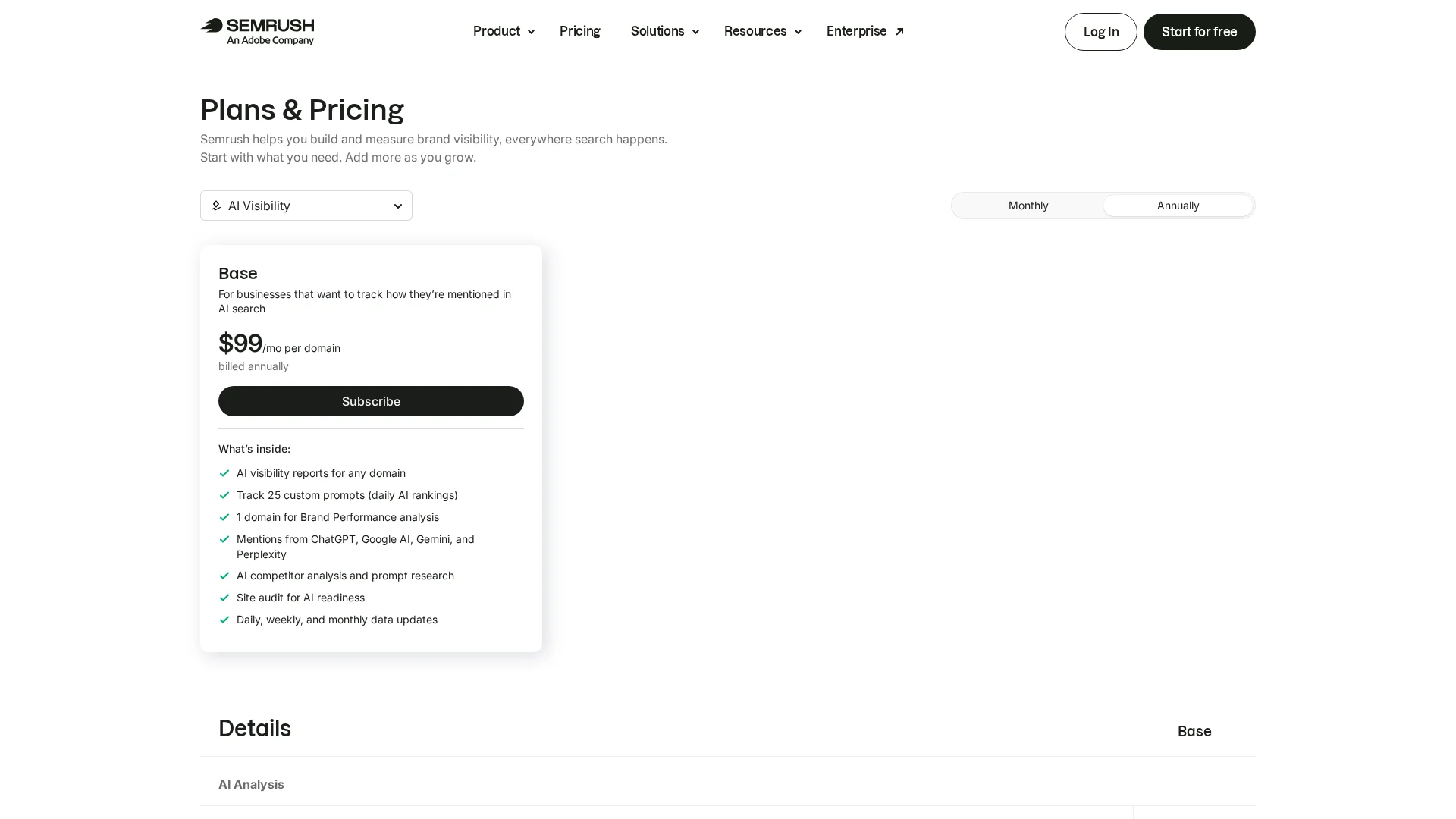
    Quick Summary: Your Google rankings don’t matter if AI tools like ChatGPT ignore your brand-so SnowSEO bundles AI visibility tracking (mentions, citations, sentiment) directly into its SEO workflow, making it ideal for lean teams that need actionable insights without switching tools. Semrush, meanwhile, excels at deep AI prompt tracking across platforms (ChatGPT, Gemini) and competitor benchmarking, but its $99/month AI plan and sprawling suite suit larger teams already using its tools. The key difference: SnowSEO ties visibility data to audits and content tasks in one place, while Semrush delivers broader market context for teams prioritizing research over execution.

    Strong Google rankings mean little if ChatGPT or Gemini never mentions your brand. This AI search visibility tracking comparison tests SnowSEO and Semrush on AI mentions, citations, competitor gaps, and action steps. SnowSEO suits lean teams needing one workflow. Semrush fits teams using its wider SEO suite and AI Visibility Toolkit. This AI search visibility tracking comparison focuses on data you can use.

    SnowSEO vs Semrush: AI Visibility Tracking at a Glance

    SnowSEO Semrush AI Visibility Toolkit
    Primary tracking model Google keywords plus AI prompts and brand visibility AI prompts, brand visibility reports, and traditional Position Tracking
    AI visibility signals Mentions, citations, sentiment, share of voice, visibility score Visibility score, mentions, citations, cited pages, sentiment, average position
    Traditional rank tracking Daily keyword tracking with GSC and live SERP data Mature daily position tracking across locations and devices
    Competitive analysis Competitor visibility, SOV, citations, and ranking comparisons Competitor visibility, prompt gaps, cited sources, and benchmarks
    Optimization workflow Keywords, clusters, content, audits, outreach, and publishing Research, audits, reporting, and connected Semrush toolkits
    Best fit Lean teams, SMBs, agencies seeking an integrated workflow Existing Semrush users, larger SEO teams, and agencies needing depth

    How SnowSEO and Semrush AI Visibility Toolkit Compare

    SnowSEO

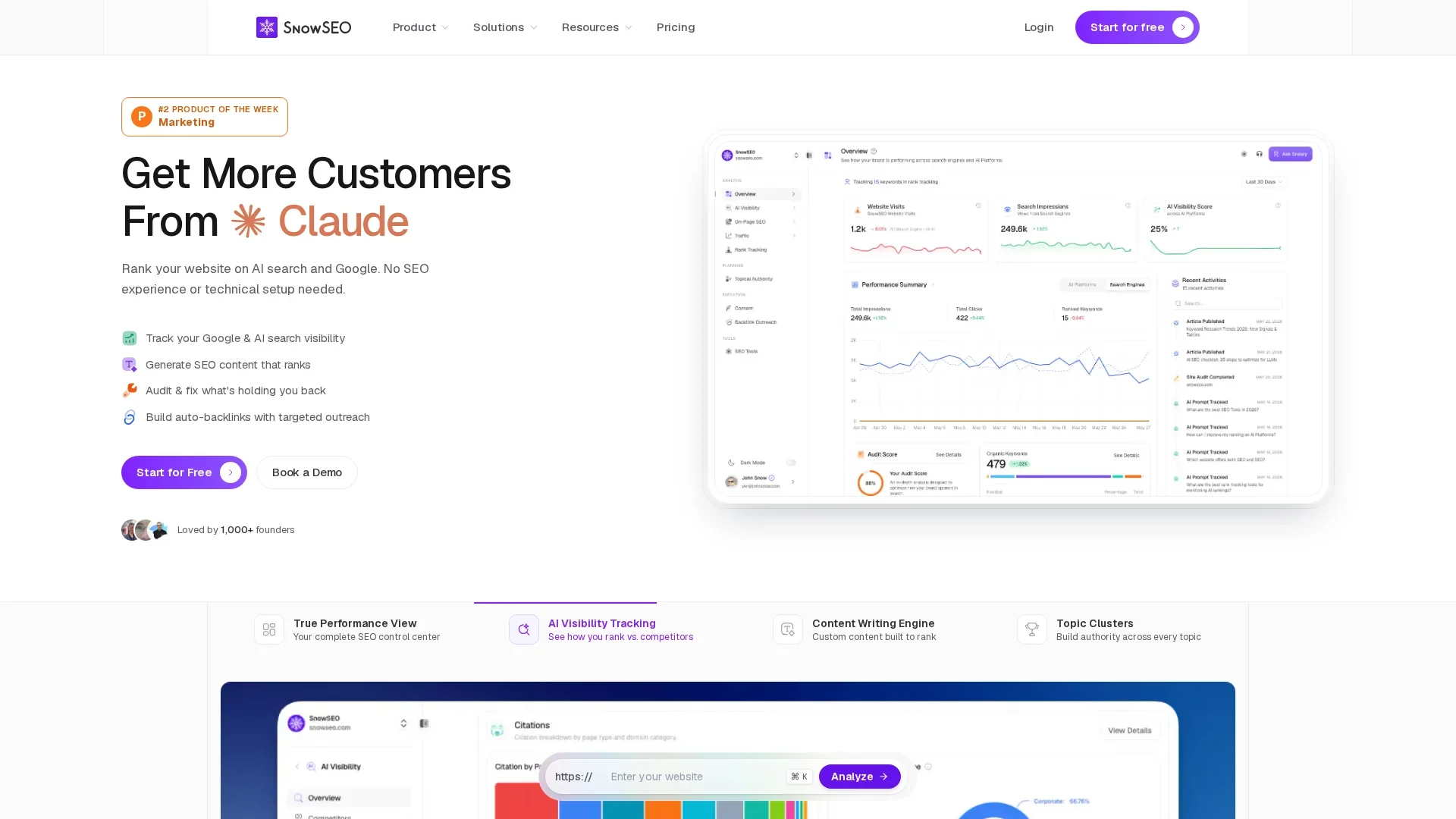
    SnowSEO unifies Google rank tracking with AI prompt, brand, and competitor visibility in one SEO and GEO workflow. It suits lean teams, SMBs, and agencies that need data tied to content, audits, outreach, and publishing in this AI search visibility tracking comparison.
    SnowSEO

    Semrush AI Visibility Toolkit

    Semrush adds AI prompt tracking, citations, sentiment, and competitor research to its established SEO suite. It fits existing Semrush users and larger teams needing depth, with daily prompt tracking across key AI platforms.
    Semrush AI Visibility Toolkit

    What Each Platform Actually Tracks

    From Keyword Positions to AI Answer Presence

    Traditional rank tracking measures where a page sits in search results. AI tracking asks whether your brand, page, or citation appears inside an answer.

    Platform What it tracks
    SnowSEO Keyword ranks, AI platform visibility, citations, audits, and competitor gaps
    Semrush AI mentions, cited pages, prompt visibility, sentiment, and average citation position

    Semrush tracks prompts across ChatGPT, Google AI Mode, and Gemini, including daily changes and cited domains, as its Prompt Tracking guide explains.

    Tip: Track citations and mentions separately. A brand mention builds awareness; a cited page shows content AI systems use.

    Also Read: 10 Organic Growth Strategies to Drive Traffic in 2025

    Coverage, Competitor Insights, and Reporting Compared

    Which Tool Gives More Actionable Competitive Context?

    Semrush offers broader AI coverage and clear competitor benchmarks. Its reports compare mentions, citations, audience, and prompt gaps across major AI platforms. You can add up to four rivals, then find prompts where they appear and you do not, as outlined in Semrush’s competitor report.

    Competitor gap analysis dashboards side by side
    Competitor gap analysis dashboards side by side

    SnowSEO is the better fit when your team needs those gaps tied to execution in one workspace.

    Need Better fit
    Cross-platform benchmark reporting Semrush
    Audit, content, tracking, and competitor work together SnowSEO

    Track prompt gaps, cited pages, and competitor mentions. A visibility score alone does not tell your team what to fix.

    • Use Semrush for wide market reporting.
    • Use SnowSEO to turn findings into SEO tasks.

    Also Read: 10 Best Tools for Competitor SEO Analysis in 2024

    Workflow and Value: Tracking Data That Leads to Action

    Cost and Workflow Fit Matter More Than Feature Count

    Pick the tool that turns a visibility drop into a clear task. Semrush tracks daily prompts, competitors, citations, and AI search issues, but its AI Visibility plan starts at $99 per domain per month. It fits teams already using its wider SEO stack.

    Workflow need Better fit
    One place for audits, content, rankings, and AI visibility SnowSEO
    Deep AI prompt research alongside a large SEO suite Semrush
    Workflow clarity over feature depth
    Workflow clarity over feature depth
    • Find prompts where competitors earn citations.
    • Update the matching page or build a new answer.
    • Recheck mentions and cited URLs weekly.

    Track fewer high-value prompts first. More data is useless without an owner and a next step.

    Also Read: 7 Rank Trackers for Google, ChatGPT, and Claude Visibility

    Which Should You Choose: SnowSEO or Semrush?

    Choose SnowSEO if you need AI visibility tracking tied to audits, content, keyword work, and action in one workflow. Choose Semrush if your team already relies on its broad SEO suite and needs deep prompt-level benchmarking. Semrush tracks visibility across ChatGPT, Gemini, and Google AI Mode, including daily prompt changes in its AI Visibility Toolkit.

    Pick the platform your team will use to fix gaps, not just report them.

    Homepage
    Homepage

    Turn AI visibility data into clear actions. Track rankings, audits, and content gaps with SnowSEO.

    Frequently Asked Questions

    Q1: How does SnowSEO’s rank tracking feature compare to Ahrefs and SEMrush in AI search visibility?

    SnowSEO focuses on AI platform visibility alongside search tracking. Semrush and Ahrefs remain strong for classic rankings, while SnowSEO ties AI mentions to audits, content work, and next actions.

    Q2: Can I track ChatGPT visibility by keyword?

    Yes. Track prompts that reflect buyer questions, product terms, and category needs. Review brand mentions, cited sources, and competitor presence over time.

    Q3: Which metrics should agencies report first?

    Report AI mention rate, prompt coverage, share versus competitors, source citations, and change over time. Pair each metric with a clear content or technical action.

    Conclusion

    Choose SnowSEO for metric-led action in one workflow. Choose Semrush for broad prompt benchmarking, which tracks daily AI visibility.

  • 7 Rank Trackers for Google, ChatGPT, and Claude Visibility

    7 Rank Trackers for Google, ChatGPT, and Claude Visibility

    Quick Summary: Your page might rank on Google’s first page but disappear entirely from ChatGPT or Claude answers-so tracking AI visibility is just as critical as Google rankings. SnowSEO stands out by combining daily keyword tracking with AI mention monitoring across ChatGPT, Claude, and other engines, then directly linking gaps to actionable content tasks like audits and publishing. While tools like OtterlyAI focus narrowly on AI citations or Profound targets enterprise prompt-level insights, SnowSEO’s strength lies in its unified workflow for teams that need both SEO and AI visibility tied to real content improvements.

    A page can rank on Google page one yet vanish from a buyer’s ChatGPT or Claude answer. Google positions differ from AI mentions and citations. These AI visibility rank trackers compare both systems without extra spreadsheet work. We reviewed seven AI visibility rank trackers for coverage, prompts, citations, competitors, reports, and workflow fit. SnowSEO leads for teams that need AI visibility rank trackers tied to action.

    Quick Comparison of AI Visibility Rank Trackers

    Tool Best for Google tracking AI coverage Actionability
    SnowSEO Founders, SMBs, content teams, and lean agencies Daily keyword tracking with GSC and live SERP data ChatGPT, Claude, Gemini, Perplexity, Grok, DeepSeek, and other supported providers Content, clusters, audits, backlinks, publishing, and competitor gaps
    OtterlyAI SEO teams, agencies, ecommerce, and AI-search specialists AI Overviews and AI Mode monitoring rather than a full traditional SEO suite Seven AI engines, with some surfaces available as add-ons Citation gaps, competitor comparisons, reports, integrations, and shopping insights
    Profound Enterprise brands, agencies, and structured GEO programs Best used alongside a traditional SEO rank tracker AI answer engines with prompt-level daily tracking Prompt research, segmentation, content, outreach, and agents
    Search Atlas LLM Visibility Marketing teams and agencies wanting SEO plus AI automation Available through the wider Search Atlas SEO platform ChatGPT, Claude, Gemini, Perplexity, and additional supported engines Competitor gaps, sentiment, content optimization, and SEO automation

    What to know about AI visibility rank tracking

    Google rank tracking shows where a page ranks for a keyword. AI visibility tracking shows whether ChatGPT or Claude mentions, recommends, or cites your brand.

    It also reveals answer placement, competitor context, and source influence. Strong trackers keep these signals separate, then make trend changes easy to compare.

    1. SnowSEO

    SnowSEO is the best all-in-one rank tracker for Google and AI search. It links measurement to content, audits, and publishing in one workspace.
    SnowSEO
    Highlights

    • Track Google keywords daily, plus AI mentions, citations, sentiment, share of voice, and competitors across ChatGPT, Claude, Gemini, Perplexity, and more. See the platform overview.

    Specs

    • Best for: Founders, SMBs, content teams, and lean agencies
    • Actionability: Content, clusters, audits, backlinks, publishing, and gaps

    Pros

    • Fewer disconnected tools

    Cons

    • Review composite AI scores with prompt-level results.

    It ranks first because it turns visibility gaps into work you can publish and track.

    Last updated: August 23, 2026

    Also Read: 10 Best Tools for Competitor SEO Analysis in 2024

    2. OtterlyAI

    OtterlyAI is a specialist AI search analytics platform for mentions and citations. It focuses on where AI answers name, cite, and frame your brand.
    OtterlyAI
    Highlights

    • Tracks seven AI engines, including ChatGPT, Claude, Gemini, and Google AI surfaces.
    • Stores answers to measure citation gaps, sentiment, share of voice, and competitor mentions.

    Specs

    • Best for: Agencies, SEO teams, ecommerce, and AI-search specialists.
    • Google tracking: AI Overviews and AI Mode, not full traditional SEO tracking.

    Pros

    Cons

    • Advanced engines may require add-ons.

    It ranks here because AI answer monitoring is its core strength, but its wider SEO toolkit is narrower than SnowSEO.

    Last updated: August 23, 2026

    Also Read: Best SEO Tools: 25 Picks to Improve Rankings in 2026

    3. Profound

    Profound suits enterprise teams that need structured AI search prompt intelligence. It tracks daily answers and turns findings into repeatable content and outreach work.
    ![Enterprise marketing team reviewing AI search insights on large office screens]
    Highlights

    Specs

    • Best for: Enterprise brands, agencies, and GEO programs
    • Google tracking: Use alongside a traditional rank tracker
    • AI coverage: Daily prompt-level answer tracking
    • Actionability: Content, outreach, reporting, and agents

    Pros

    • Strong segmentation by persona, region, and funnel stage.

    Cons

    • May overwhelm small teams seeking a simple dashboard.

    It ranks here because its enterprise depth exceeds many smaller teams’ needs.

    Last updated: August 23, 2026

    Also Read: SnowSEO – Your Last SEO Platform

    4. Search Atlas LLM Visibility

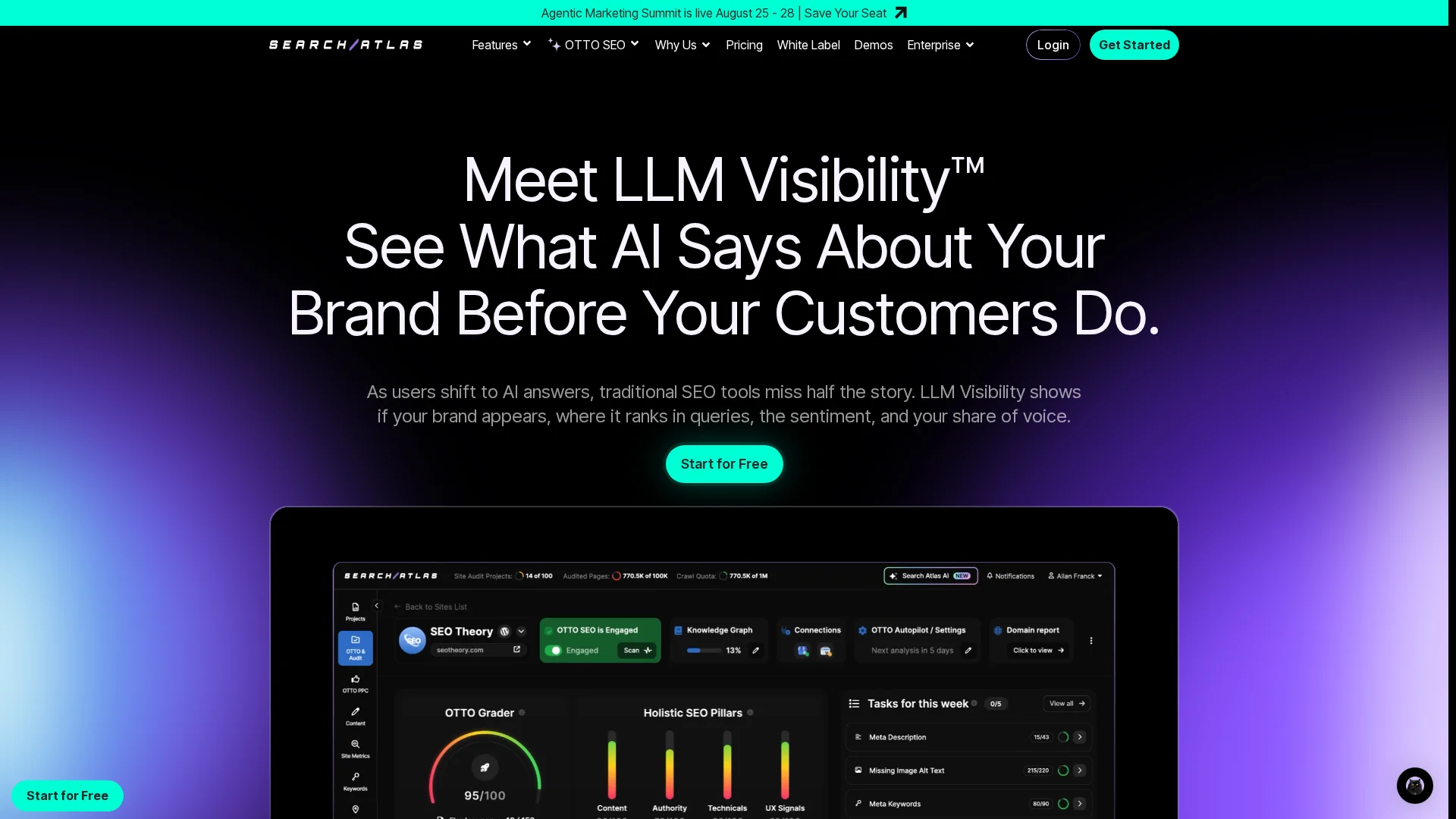
    Search Atlas suits teams that want AI visibility inside a broader SEO suite. It tracks how AI answers frame your brand, then connects findings to content and SEO work.

    Search Atlas LLM Visibility
    Highlights

    Specs

    • Google tracking: Available in the wider SEO platform
    • Best for: Agencies needing SEO plus AI automation

    Pros

    • Broad workflow beyond tracking

    Cons

    • Metrics need method-aware review.

    It ranks fourth because its wider suite may exceed simple tracking needs.

    Last updated: August 23, 2026

    More AI Visibility Trackers to Consider

    The four main picks fit most teams. These alternatives suit enterprise, agency, or reporting-heavy needs.

    1. AthenaHQ – Enterprise source intelligence, crawlability, citation outreach, governance, and team workflows.
    2. SE Visible – Agency-focused AI visibility with competitor, source, sentiment, multi-brand, and export tools.
    3. Rankability Tracker – Unified reporting for Google, AI engines, local, video, and citations.

    How to choose the right AI visibility rank tracker

    • Separate each signal. Track Google rank, AI mentions, answer placement, citations, and share of voice separately.
    • Confirm engine coverage. Check ChatGPT, Claude, Gemini, Perplexity, AI Overviews, and AI Mode by plan and region.
    • Demand prompt history. Saved answers reveal ranking shifts, cited sources, and competitor wins.
    • Match your workflow. Choose SnowSEO if you need tracking, content, and publishing in one place. Otterly.AI and Profound suit specialist monitoring.
    • Plan for reporting. Agencies need projects, exports, access controls, and location settings.

    Treat AI visibility as a KPI beside clicks, conversions, and Google rankings.

    Homepage
    Homepage

    Track Google rankings and AI visibility in one place. Try SnowSEO for audits, keywords, competitor insights, and smarter reporting.

    Frequently Asked Questions

    Q1: What are the best rank tracking tools for monitoring AI and traditional search engine rankings?

    SnowSEO is a strong all-in-one choice for Google ranks and AI visibility. AthenaHQ, Peec AI, and Otterly.AI focus more on AI mentions. Choose based on the platforms you need to track.

    Q2: Do AI rank trackers measure Google rankings?

    Not always. AI trackers often measure brand mentions, citations, and prompt answers. Use a tool with separate Google keyword positions and AI visibility data.

    Q3: How often should I check AI visibility?

    Check weekly for trends and after major content updates. Daily checks can be useful for active campaigns, but AI answers can change without a clear ranking signal.