Category: Link Building

  • The Future of Link Building in the Era of AI Search

    The Future of Link Building in the Era of AI Search

    Quick Summary: Link building for AI search now means earning citations, not chasing high-DR backlinks. AI engines cite sources based on citation probability, so unlinked mentions on third-party pages, listicles and Reddit threads often outperform traditional link equity. Backlinks still matter as trust proof points, but measurement should track weekly citations across ChatGPT, Perplexity and Google AI Overviews rather than referral traffic alone.

    Last quarter I watched a page with three referring domains outrank a DR-90 competitor inside ChatGPT’s answer box. It never earned a single backlink to do it. That’s the hard truth about link building for AI search: the future isn’t really about links anymore. AI engines cite sources, they don’t count them. In this guide, you’ll learn how link building for AI search actually works in 2026, why citation probability beats link equity, and how to track your link building for AI search results as AI answers shift weekly.

    From Link Equity to Citation Probability

    For twenty years, links were the currency. Now the question has changed. Instead of “how much authority does this page pass?”, AI engines ask “how likely are we to cite this brand or page in an answer?” Search teams call this citation probability, and it rewards breadth of trust, not raw link counts.

    Why Backlinks Still Matter (Just Differently)

    Backlinks haven’t died. They still help pages rank in classic search, which AI engines often pull from. What changed is their role. A link now works best as one proof point among many that your brand is a real, credible entity. AI systems cross-check sources before citing them, so a link from a trusted site supports the whole entity, not just one URL. The practical shift: fewer links from random sites, more from sources the engines already trust. We break down how to pick those targets in our guide to earning links from sources AI engines trust.

    The Rise of Unlinked Mentions and Entity Signals

    Here’s the twist: many AI citations come without any link at all. Research on AI visibility shows unlinked brand mentions across authoritative publications act as entity signals, and some analyses find they beat backlinks as a citation trigger. AI engines don’t follow links the way crawlers do; they match names, facts and context. So a mention in an industry report can earn a citation even when no link exists. Track both, and treat every credible mention as link equity in a new form.

    What AI-Era Link Building Actually Looks Like in 2026

    AI engines rarely quote your homepage. AirOps’ 2026 report found 85% of brand mentions in AI answers come from third-party pages, not vendor sites. So the work shifts from chasing links to earning mentions where models look. We break down the sources that matter most in our guide on earning links AI engines trust, but here’s the short version.

    PR specialist pitching journalist beside listicle screen
    PR specialist pitching journalist beside listicle screen

    Digital PR and Listicles: Why They Punch Above Their DR

    Listicles and roundups dominate AI citations because models treat “best of” pages as ready-made answers. One analysis found listicles take roughly 22% of citations, and a single placement can sit inside ChatGPT’s answer for months. A DR-40 niche roundup often beats a DR-90 news link here. Pitch curators, get your product named, and keep the description on your own page consistent with theirs.

    Reddit, Communities, and Brand Mentions: The Citation Triad

    Reddit ranks among the most-cited domains in AI Overviews, and niche forums feed model training directly. Be genuinely useful, name your product once, and answer the actual question. Track whether those mentions turn into citations, since unlinked mentions still shape what models say about you.

    How to Measure Whether Your Links Are Working in AI Search

    Marketer tracking AI-cited sources in spreadsheet
    Marketer tracking AI-cited sources in spreadsheet

    Citations, Not Just Clicks: The New Scoreboard

    An AI engine may cite your page without sending a click, so referral traffic alone no longer tells you much. Track three numbers instead: how often your brand appears in AI answers, whether the link itself gets cited, and which prompt triggered it. AI search teams now measure exactly that, as AirOps’ AI search metrics guide explains.

    Set up a list of buyer questions, run them across ChatGPT, Perplexity and Google AI Overviews each week, and log the sources quoted. That baseline shows whether new links actually change your AI visibility tracking trend line, or just pad a backlink report.
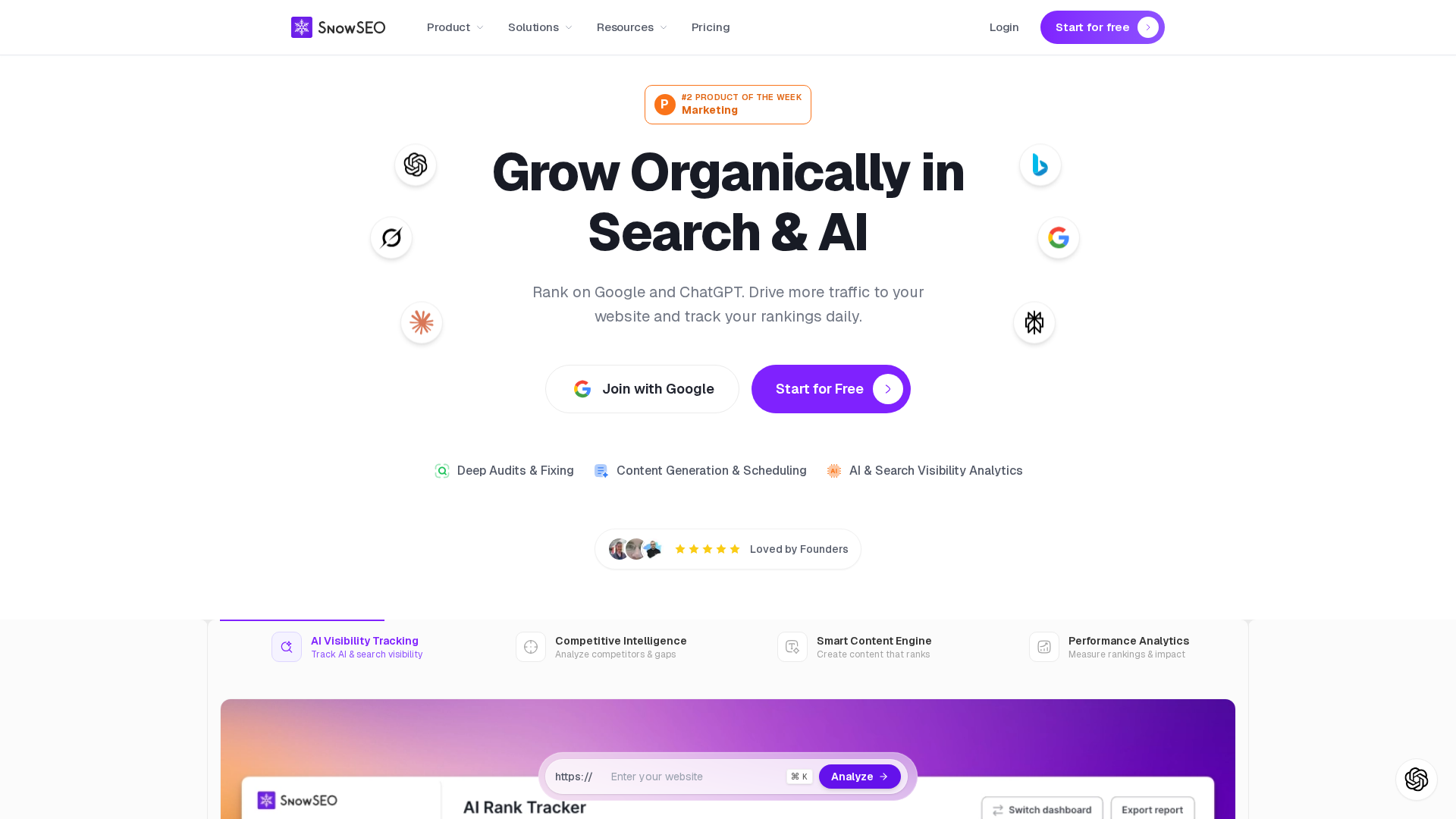
    SnowSEO homepage
    SnowSEO homepage

    Stop guessing which links AI engines cite. Track your citations and visibility across ChatGPT and Google with SnowSEO, then double down on the placements that actually get quoted.

    Frequently Asked Questions

    Q1: How is link building evolving to remain relevant in an AI-driven search environment?

    Links now act as trust proof points; engines cite based on citation probability, so brands pursue credible mentions, not link counts.

    Q2: Do unlinked brand mentions actually help?

    Yes. They act as entity signals, and many AI citations come without any link at all.

    Q3: Which placements earn the most AI citations?

    Listicles, roundups and communities like Reddit. Models treat “best of” pages as ready-made answers.

    Q4: How do I measure link success in AI search?

    Track weekly citations across ChatGPT, Perplexity and AI Overviews, not referral traffic alone.

    The Short Version

    AI engines cite sources, they don’t count links. Backlinks still help, but as trust proof points, not raw equity. Earn mentions on pages models already quote, track unlinked mentions, and measure weekly citations across ChatGPT, Perplexity and AI Overviews. Citation probability is the new scoreboard.

  • How to Earn Links From Sources AI Engines Trust

    How to Earn Links From Sources AI Engines Trust

    Quick Summary: To earn links from sources AI engines trust, publish original, verifiable data and pitch it to publishers who already cover your topic, keeping pitches under 200 words and focused on a useful angle. Track links and AI citations separately, since 28% of ChatGPT’s most-cited pages have zero organic visibility, and structured pages get cited more often. The workflow involves finding relevant publishers via tools like Ahrefs, creating checkable studies with visible methodology, and measuring results on separate scoreboards.

    A trade editor comparing three industry reports needs one stat she can defend. The publisher with clear, verifiable data earns the link; the generic SEO article gets skipped. That’s the real challenge: how to earn links from trusted AI sources that editors, journalists, and AI engines actually cite. This guide gives you a practical workflow – what you control, how links differ from AI citations, and which signals are proven versus speculative. We build on SnowSEO’s work with brands ranking across search and AI platforms like ChatGPT.

    Step 1: Find the Sources Already Covering Your Topic

    To earn links from trusted AI sources, start where the publishers already are. Sites that cover your topic repeatedly are your best prospects.

    Look for Repeated, Relevant Coverage

    Run your topic through Ahrefs Content Explorer, which searches billions of pages. Then narrow the list:

    1. Filter for pages with high referring domains and real search traffic.
    2. Sort by the Websites tab to see which publishers cover the topic most.
    3. Use search operators like title: or -site: to cut out your own domain.

    Publishers with multiple authors and recurring coverage are far more likely to accept a pitch. That’s the pool you’ll work from to earn links from trusted AI sources.

    Tip: SnowSEO’s competitive analysis shows which domains AI engines cite most, so you can prioritize outreach where it counts.

    Also Read: AI Search Visibility Is Reshaping Digital PR Campaigns

    Step 2: Create Something Worth Referencing

    Publish something journalists and AI engines can cite: original data, a survey, or a study. Backlinko’s analysis of 912 million blog posts found content with original data earns more links than opinion pieces, how-to guides, or listicles. Data studies also pull in fresh citations for months after launch, as writers find them through search.

    Make the Evidence Easy to Check

    A study nobody can verify gets ignored. Make your methodology visible.

    • Show your sample size, dates, and how you collected the data.
    • Put your key stat in the intro, not buried on page five.
    • Add a chart or table writers can screenshot and credit.
    • Keep a stable URL, so citations never break.
    Researcher reviewing survey charts on bright office desk
    Researcher reviewing survey charts on bright office desk

    One clean, checkable number beats ten vague claims. Reporters quote specifics, and so do AI engines. Tools like SnowSEO help you find the questions your data should answer first.

    Also Read: WhitePress Review for Scalable Link Building Campaigns

    Step 3: Pitch the Right People With a Specific Reason to Care

    Offer a Useful Angle, Not a Link Request

    Journalists reject most pitches for one reason: irrelevance. A “please link to my page” email goes straight to trash. A pitch under 150 words gets a 5.89% response rate, four times better than a long one.

    So flip the ask. Lead with something the writer can use:

    • A data point from your own survey or product usage
    • A fresh angle tied to a story they’ve already published
    • An expert quote that fills a gap in their piece
    Cartoon marketer emailing beside printed pitch outline
    Cartoon marketer emailing beside printed pitch outline

    Reference their actual beat, keep it under 200 words, and make the value obvious in the first sentence. Most journalists say relevant outreach is rare, so being specific is the whole advantage.

    Also Read: 10 Best Tools for Competitor SEO Analysis in 2024

    Step 4: Verify the Link and Measure What Happened

    A placed link proves little until you check it. Confirm the link is live, follows the format you agreed on, and points to the right page. Then track results.

    Keep Link and Citation Scoreboards Separate

    Links and AI citations are two different games, so measure them apart.

    • Link scoreboard: referring domains, traffic to the linked page, and rank changes for its target keyword.
    • Citation scoreboard: how often AI engines mention your brand and cite your pages. Tools like SnowSEO track this across ChatGPT and Perplexity.

    Why separate them? Ahrefs research found 28% of ChatGPT’s most-cited pages have zero organic visibility. A study of 8,000 AI citations also shows each engine favors different sources. Winning one scoreboard doesn’t guarantee the other.

    Also Read: 7 Link Building Services for AI Search Authority

    Homepage
    Homepage

    Ready to earn citations AI engines actually trust? SnowSEO audits your visibility, tracks AI mentions, and shows exactly what to fix next. Start free today.

    Frequently Asked Questions

    Q1: How can publishers earn links from sources that influence AI-generated answers?

    Publish original data, get cited by trusted industry sites, and keep pages crawlable and clearly attributed.

    Q2: Are AI citations the same as backlinks?

    No. Links pass authority between pages; AI citations quote or reference your content inside generated answers.

    Q3: How long until AI engines notice new sources?

    Typically weeks to months, depending on how often the source is crawled and updated.

    Conclusion

    Earning links from sources AI engines trust comes down to what you control: clear, well-structured content, credible earned mentions, and fresh technical signals. Research on AI answer engine citation behavior shows structured pages get cited far more often, while CJR testing proves no signal is a guarantee. Measure, adjust, repeat.