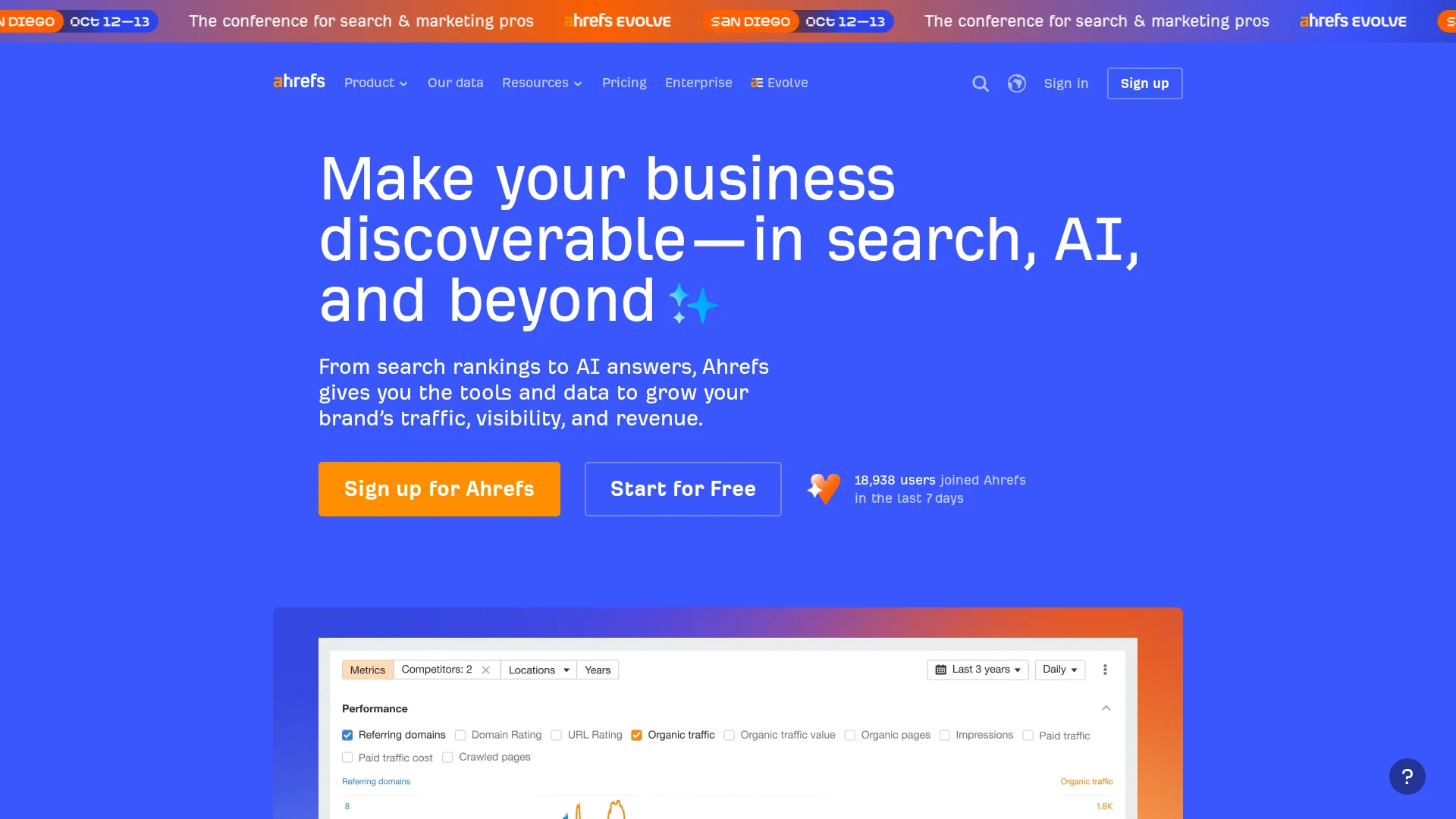
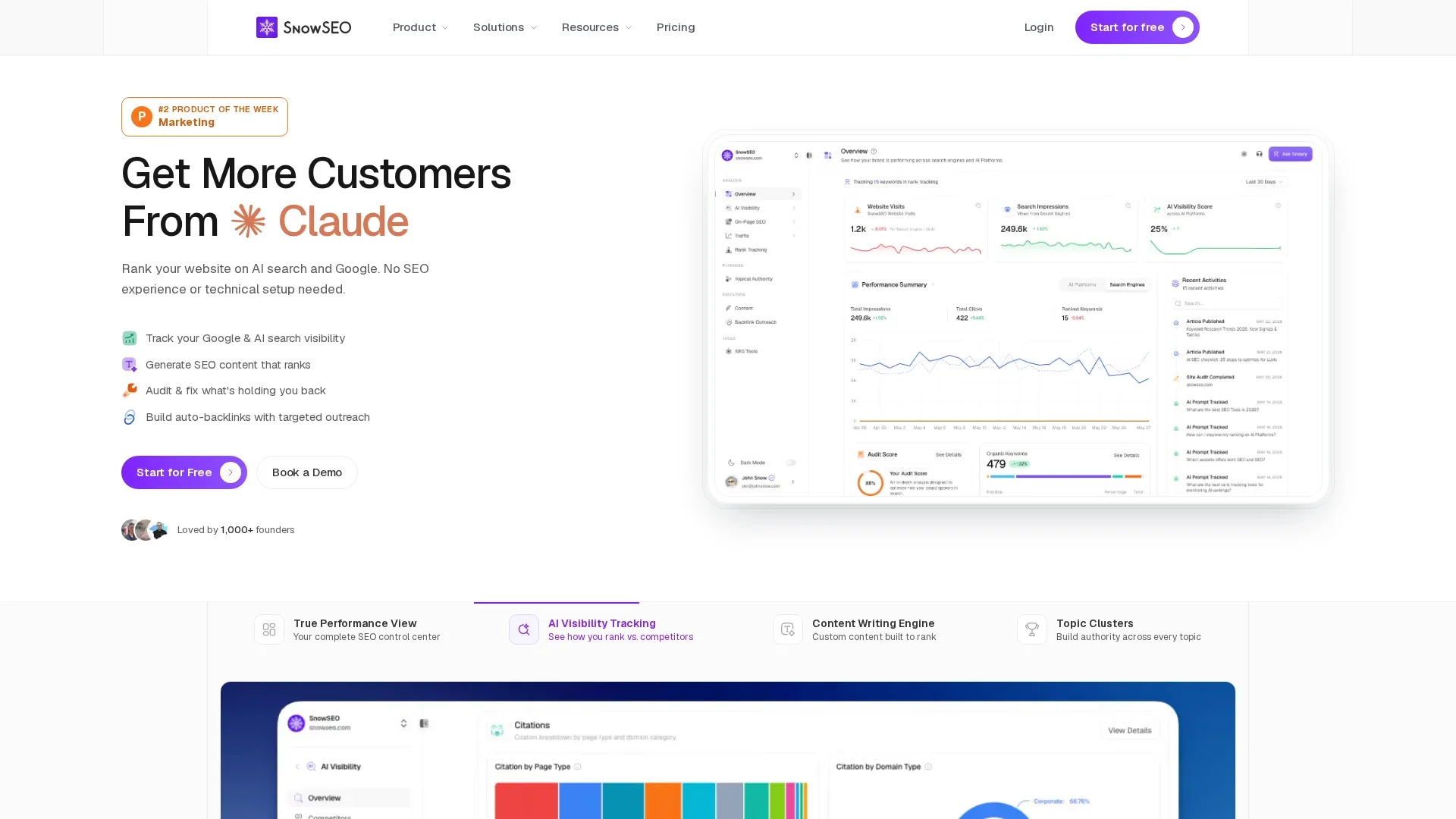
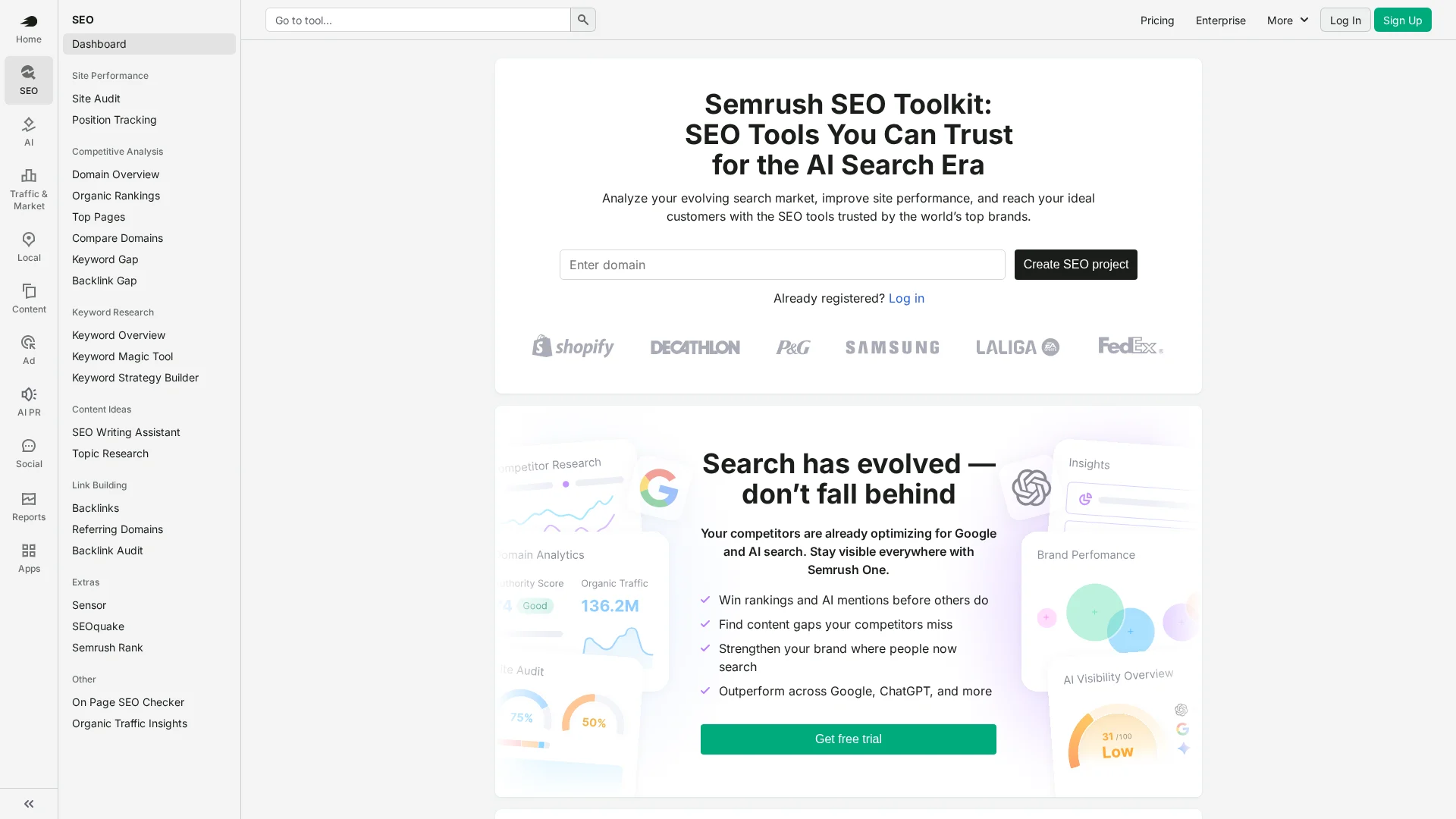
Quick Summary: AI-powered SEO tools from Semrush, Ahrefs, Surfer, and Conductor now track brand mentions in AI answers, score content for both search and AI visibility, and turn citation data into prioritized fixes. These updates shift teams from manual research to reviewing AI-suggested gaps, but Google stresses that strong SEO basics still matter. Use the tools to audit and plan, but always validate suggestions with real data and human judgment before publishing.
AI-powered SEO tool updates now sit inside daily workflows, not test dashboards. Semrush, Surfer, Ahrefs, and Conductor added AI visibility, source, scoring, forecast, and execution features across 2025 and 2026. These AI-powered SEO tool updates matter because AI answers and search rankings can favor different pages. This report reviews verified AI-powered SEO tool updates, showing what each measures, automates, and helps teams improve.
The New AI Optimization Features Marketers Can Use Now
From AI Answers Back to Search Queries
AI visibility tools now trace a brand mention in AI answers back to the prompts and search themes behind it. Use that view to find unanswered follow-up questions, then strengthen the page AI systems already reference. Google says AI Mode can expand one question into many related searches through query fan-out, so single-keyword planning is no longer enough. Google’s guidance confirms that core SEO still matters.
Track cited pages and missing questions.
Add direct answers, proof, and internal links.
Content Scores Now Combine SEO and AI Search
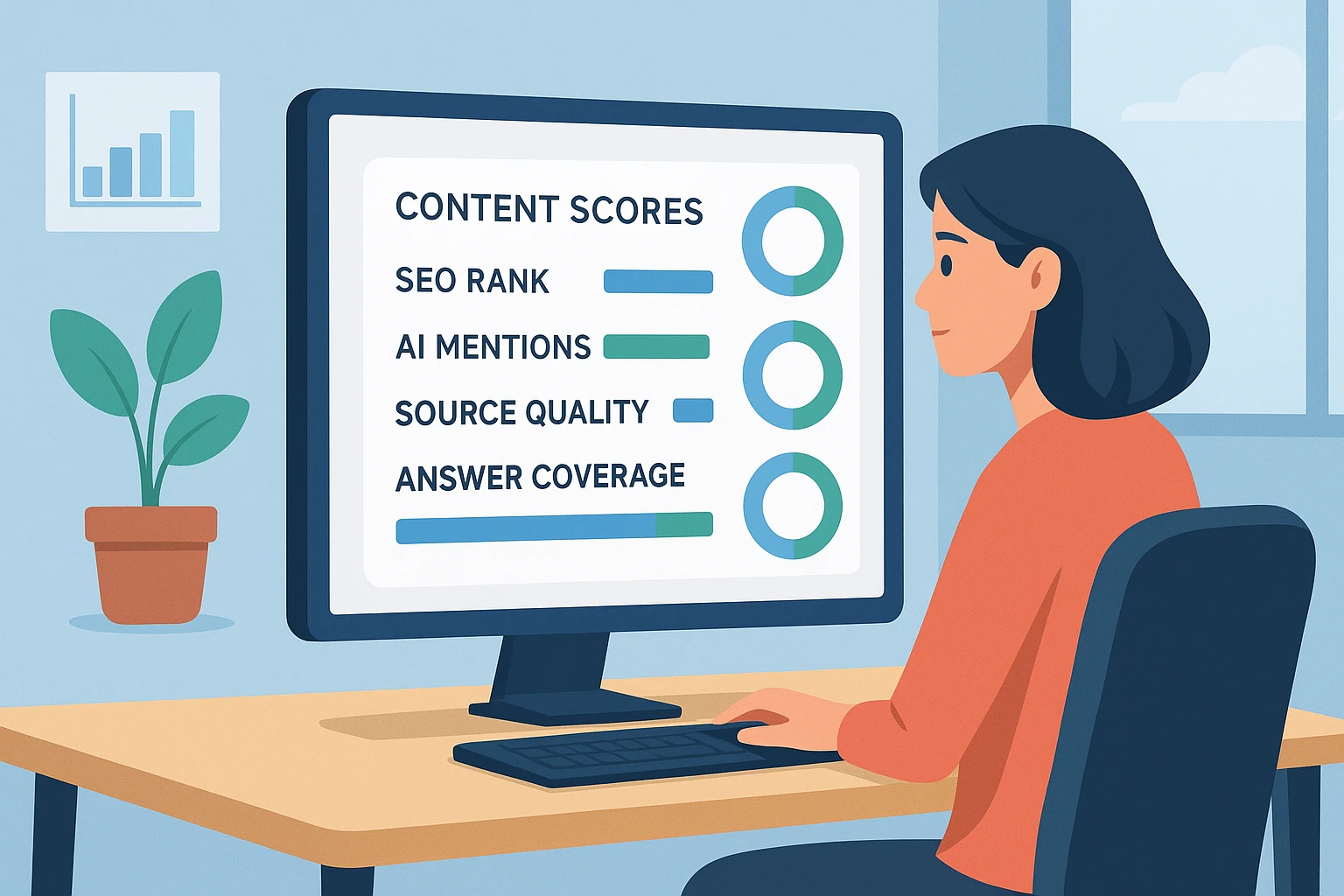
Content scoring is shifting from keyword use alone to search rank, AI mentions, source quality, and answer coverage.
Cartoonish scorecard balancing SEO and AI metrics
Score signal
Action
Missing follow-up
Add a short answer section
Weak proof
Add expert evidence
AI mention loss
Compare cited rivals
Do not chase a separate AI markup trick. Google says eligible indexed pages need no extra technical requirement for AI features.
How Major Platforms Are Turning Measurement Into Optimization
Audits, Forecasts, and Prioritization
AI SEO tools now flag more than rank drops. They map pages to prompts, find weak topic coverage, and rank fixes by likely impact. Semrush Enterprise, for example, matches pages with AI prompts and highlights coverage gaps through its Content Audit release.
Audit high-value pages.
Sort gaps by business intent.
Fix the strongest page-to-prompt mismatch first.
Do not treat a score as a result. Check whether the suggested change improves the answer for a real buyer.
A clean flowchart linking AI prompts to prioritized content fixes
Citation Data and Content Execution
Citation tracking now feeds directly into briefs and edits. Platforms show which pages and third-party sources appear in AI answers, then surface missing prompts or topics. Semrush tracks cited pages, competitors, and daily prompt visibility across AI systems in its AI Visibility Toolkit.
AI features now shift work from manual research to review and choice. Ahrefs lets teams use AI to group search intent, suggest keywords, and spot content gaps, as outlined in its AI feature guide.
Use the time saved for work AI cannot own:
Check whether suggested topics match buyer needs.
Assign a human owner to approve briefs and edits.
Track brand mentions in AI answers alongside rankings.
Team task
Old workflow
New workflow
Keyword research
Sort lists by hand
Validate AI clusters
Content updates
Find gaps page by page
Review AI-led gaps
Reporting
Pull metrics from tools
Explain changes and next actions
Tip: Treat AI output as a first draft, not a publish button. Wrong intent can waste a full content sprint.
Ahrefs Brand Radar also tracks mentions in ChatGPT and Perplexity, giving teams a reason to measure AI visibility separately.
Search results now answer more questions before users click. Reuters reports that Google AI Overviews place generated summaries above standard links, changing how brands earn visibility in search.
SEO platforms are adding AI features because teams need to track more than rankings. They need to see:
Whether AI tools cite their brand
Which prompts trigger competitor mentions
What content gaps block visibility
Rankings still matter, but answer-engine citations now need their own reporting and content plan.
Old SEO focus
AI optimization focus
Keyword position
Brand and source citations
Clicks
Presence in generated answers
Homepage
Turn AI SEO features into measurable work. Use SnowSEO to audit, plan, create, track, and improve search and AI visibility from one platform.
Frequently Asked Questions
Q1: Which recent SEO tool updates add AI-powered optimization for marketers worldwide?
Platforms now add AI content briefs, site issue fixes, prompt tracking, and search intent checks. Compare output against real rankings before you act.
Q2: Should AI suggestions replace SEO review?
No. Check facts, brand tone, links, and search intent. Use AI to speed up research and drafts.
Q3: What should teams measure first?
Track rankings, clicks, indexed pages, and leads. Set a baseline before testing any AI feature.
Conclusion
AI tools now speed up research, fixes, and monitoring. Still, judge every suggestion with data and expert review. Google confirms strong SEO basics remain central to AI search visibility.
Quick Summary: Migrating 40 client projects to SnowSEO requires preserving keyword groups, rank baselines, and competitor data-not just logins-while ensuring generative search visibility stays tracked in one workflow. Start by exporting 12 months of trend data, mapping unused reports for retirement, and assigning owners to each workflow before switching. Run parallel tracking for two reporting cycles to validate data matches, then launch with a focus on priority pages and AI visibility continuity, fixing high-value gaps first. Google’s guidance emphasizes testing changes before launch and monitoring post-move, so keep the old platform active until SnowSEO’s data aligns exactly with your baseline.
Moving 40 client projects is not about new logins. A legacy SEO platform migration must keep keyword groups, rank baselines, competitor data, reports, and the context behind each call.
This guide shows how to plan a safer legacy SEO platform migration to SnowSEO, validate your data, and keep reporting steady. It also covers generative search continuity, so your team can track search and AI visibility in one workflow.
Step 1: Inventory Your Legacy SEO Platform
Capture Data, Workflows, and Ownership
Start your legacy SEO platform migration with a full export. List every report, keyword set, audit, alert, integration, and user role before access changes.
SEO team reviewing legacy platform workflows and report ownership
Area
Capture
Owner
Search data
Rankings, clicks, pages, keywords
SEO lead
Workflows
Audits, briefs, approvals, alerts
Content lead
Access
Admins, API keys, billing, exports
Operations lead
Google advises teams to prepare and test changes before a move, then monitor results after launch in its site migration guidance.
Export at least 12 months of trend data.
Record report schedules and decision rules.
Name one accountable owner per workflow.
Do not cancel the old platform until SnowSEO data matches your baseline.
List every legacy report, data source, keyword set, and alert before you switch. Keep raw exports safe. Google notes that Search Console report downloads can truncate data, while bulk exports retain fuller performance data for your property in BigQuery.
Use a simple map:
Asset
Action
Owner
Keyword groups
Transfer and tag
SEO lead
Rank baselines
Export and verify
Analyst
Custom reports
Rebuild in SnowSEO
Marketing ops
AI visibility prompts
Create new tracking
Content lead
Save date ranges, filters, and market settings.
Mark reports nobody uses for retirement.
Warning: Do not compare new SnowSEO data with old data until settings match.
Import your saved keyword sets, target pages, tags, competitors, and past reports. Then configure SnowSEO to match the old platform’s search engines, locations, devices, and update schedule.
Side-by-side SEO data migration workflow comparison
Run both platforms side by side for two reporting cycles. Compare the same dates and filters. Google notes that property-level and page-level data use different counting rules, so match the view before judging a gap in results. See Google’s reporting guidance.
Check
What to compare
Rankings
Keywords, location, device, SERP type
Traffic
Clicks, impressions, landing pages
AI visibility
Prompts, cited pages, competitor mentions
Do not switch off the legacy platform until the gaps have an owner and a clear reason.
Step 4: Launch the Unified SEO and Generative Search Workflow
Measure Continuity and Business Value
Launch with one shared baseline, then watch search and AI visibility together. Track priority pages, query groups, conversions, and brand mentions across the new workflow.
Review weekly for the first month. Fix lost high-value pages first, not every small ranking shift.
Homepage
Move with control, not guesswork. Use SnowSEO to unite audits, rank tracking, content, and AI search visibility in one workflow.
Frequently Asked Questions
Q1: How to transition from legacy SEO platforms to SnowSEO for a unified approach to traditional and generative SEO?
Export key data, map active reports, then run parallel tracking before switching. Keep baseline rankings and prompts.
Q2: What data should I keep?
Save keyword lists, site audits, backlinks, and historic rankings.
Q3: How long should parallel tracking last?
Use two to four weeks to spot gaps and confirm reporting matches.
Conclusion
A safe move to SnowSEO starts with clean data, clear ownership, and steady checks after launch. Protect search signals with tested redirects and monitoring, as Google recommends, while bringing SEO and generative search work into one workflow.
Quick Summary: SnowSEO covers more of the day-to-day SEO workflow by connecting audits, content creation, rank tracking, and AI visibility in one platform, while Ahrefs excels at deep research like backlink and competitor analysis. The article recommends SnowSEO for lean teams and agencies that need fewer handoffs from insight to action, and Ahrefs for research-heavy tasks. It stresses that tracking AI mentions alone isn’t enough, teams must assign fixes and updates to improve visibility.
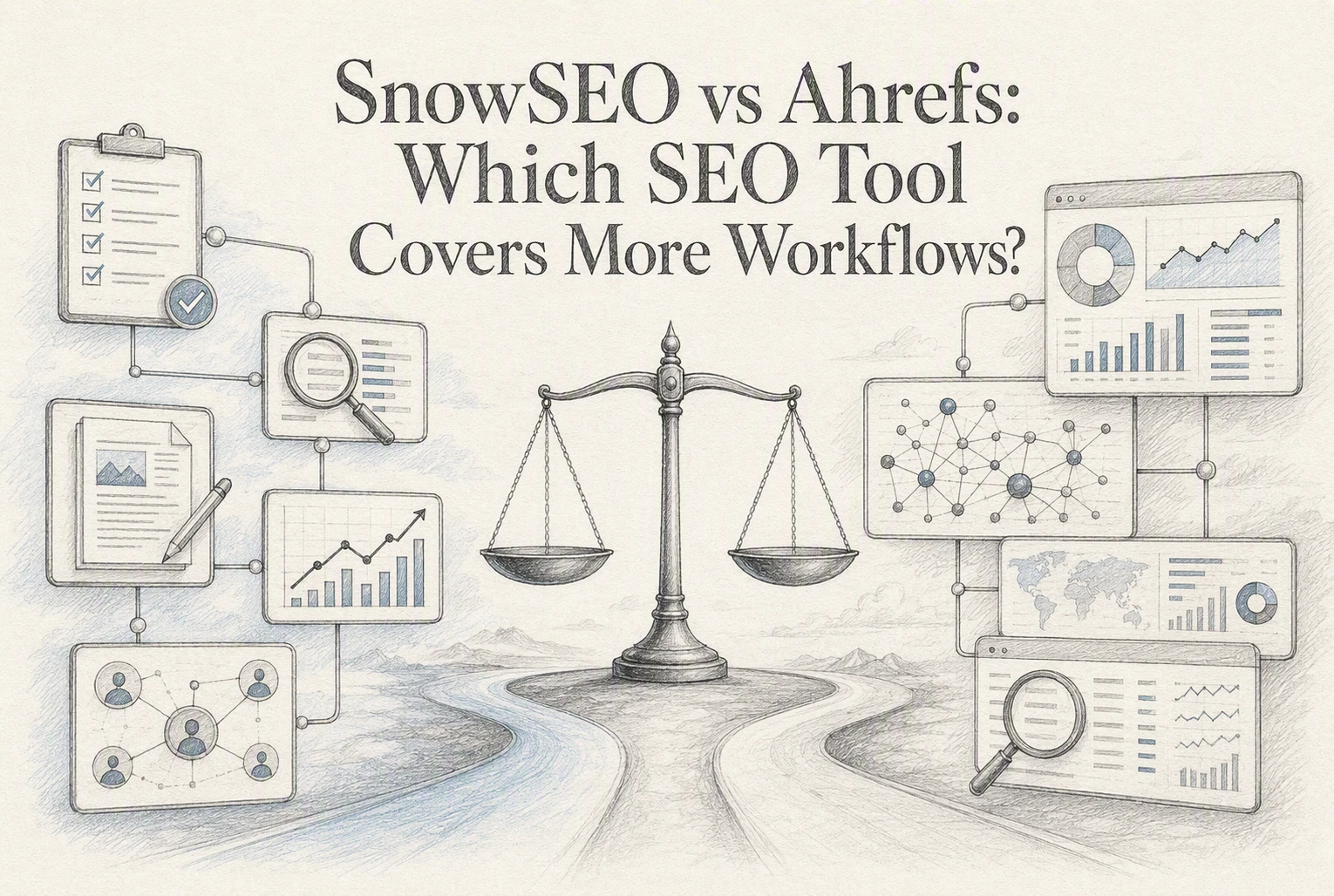
Teams need more than data when audits must become briefs, published pages, and AI visibility checks. This SnowSEO Ahrefs comparison weighs connected execution against deep research. A second SnowSEO Ahrefs comparison maps real workflows, while a third SnowSEO Ahrefs comparison helps agencies and stores choose the right operating model.
SnowSEO connects research, audits, content, publishing, and tracking in one execution-focused workspace. It fits lean teams, agencies, founders, and content-led brands that need to move from insight to action.
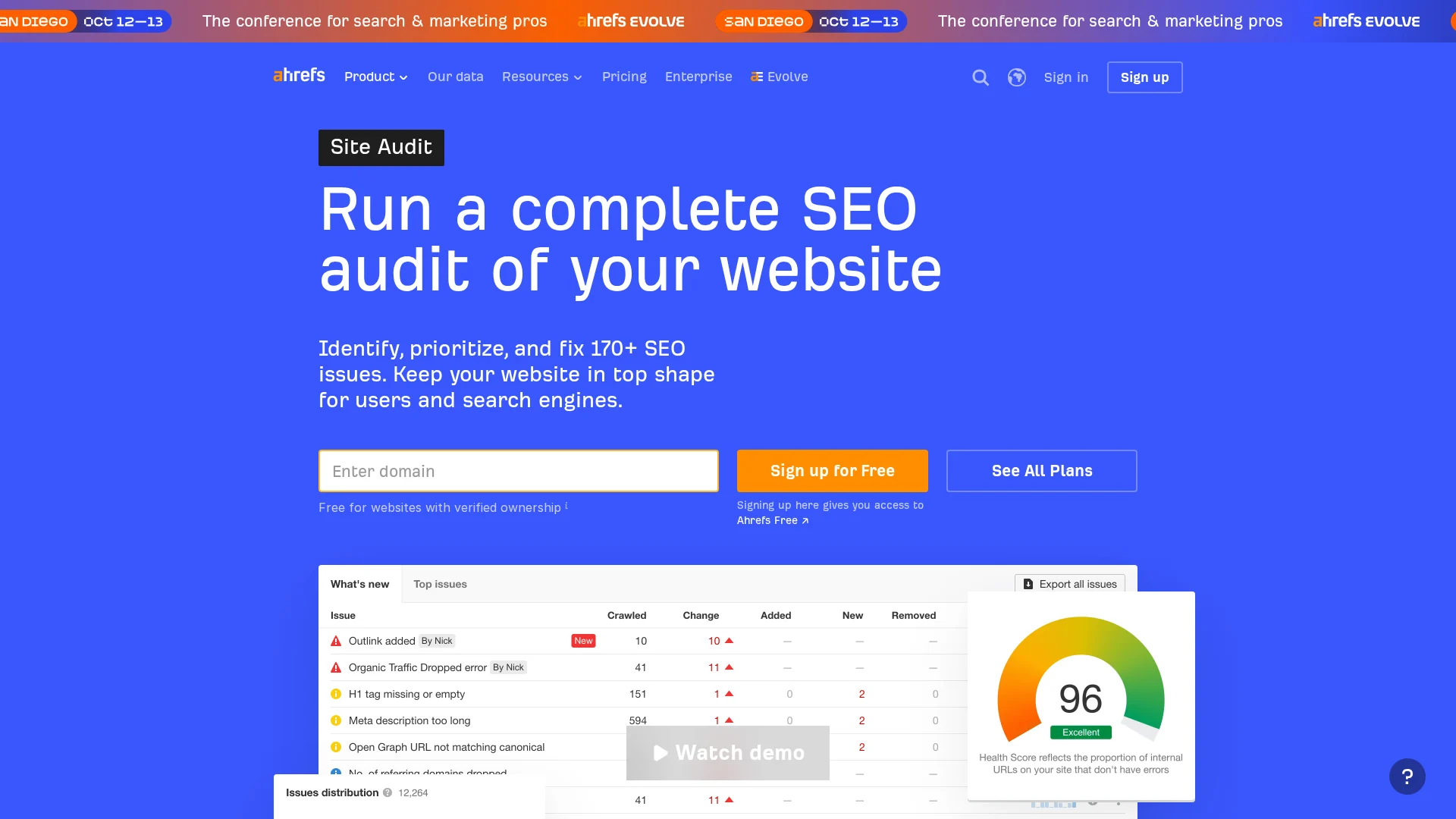
Ahrefs is a research-led SEO platform for advanced SEOs, agencies, and in-house teams. Its Site Audit checks 170-plus technical and on-page issues, while Brand Radar tracks AI mentions and citations.
Which Tool Covers More of the Technical SEO Workflow?
Research depth versus implementation speed
Ahrefs is strong for research, but technical fixes still need a separate crawl, ticket, and check in Google tools. SnowSEO covers more of the day-to-day workflow by joining audits, keyword work, content tasks, rank tracking, and AI visibility in one place.
Two SEO workflows diverge from research to fixes
Need
Better fit
Deep link and competitor research
Ahrefs
Find issues, assign fixes, and track outcomes
SnowSEO
Google treats crawling, indexing, and serving as separate stages, so teams must verify fixes after launch. Google’s guide explains why this matters.
Choose SnowSEO if implementation speed matters more than a standalone research index.
Where SnowSEO and Ahrefs Differ on Content and Keyword Workflows
The handoff problem for agencies and content teams
Ahrefs is strong for research. Its Keywords Explorer helps teams find ideas, judge difficulty, and build lists. But writers still need a clear brief, draft, review, and tracking plan.
SnowSEO reduces that handoff. Research, AI content creation, audits, rank tracking, and AI visibility work in one flow.
Workflow step
Ahrefs
SnowSEO
Find keywords
Deep research data
Research tied to execution
Create content
Export or brief elsewhere
Generate and improve in-platform
Track next actions
Manual team handoff
Connected audit and visibility tasks
Tip: Pick Ahrefs for research-heavy work. Pick SnowSEO when speed from keyword to published, tracked content matters.
AI Search Optimization: Tracking Visibility Is Not the Same as Improving It
Which platform is better for GEO teams?
Tracking mentions shows where you appear. It does not tell your team what to fix next. Google says AI search still relies on core ranking and quality systems, so strong technical SEO and useful, original content remain essential in its GEO guidance.
SnowSEO suits GEO teams that need action in one workflow:
Choose SnowSEO if you need audits, content work, rank tracking, and AI search visibility in one workflow. Choose Ahrefs for deep backlink and competitor research. Ahrefs also supports audits, rankings, and AI visibility, as shown in its tool suite.
Pick the tool your team will use from research through action.
Homepage
Put more SEO work in one place. Try SnowSEO for audits, content, rank tracking, and AI search visibility.
Frequently Asked Questions
Q1: How do SnowSEO and Ahrefs compare for teams managing technical, content, and AI search optimization?
Ahrefs is strong for research. SnowSEO combines audits, content work, rank tracking, and AI search visibility in one workflow.
Q2: Which tool suits an agency?
Choose SnowSEO when teams need fewer handoffs.
Q3: Can Ahrefs replace technical audits?
It helps find issues, but execution needs separate processes.
Conclusion
Ahrefs offers deep research and technical coverage. SnowSEO better fits teams that need one workflow for audits, content, and AI search visibility.
A morning audit may expose broken canonicals, while your content team targets terms buyers never use. Integrated SEO tools close that gap. This guide ranks seven integrated SEO tools for audits, content, rankings, competitors, and AI answer visibility. We assessed integrated SEO tools by audit depth, keyword and content features, tracking, reporting, ease of use, and fit across teams.
115+ checks, scheduled crawls, issue priority, JavaScript rendering, and reporting
Keyword research, content planning, optimization, and agency delivery
Rank tracking, competitor comparisons, SEO performance, and AI visibility add-ons
What to know about integrated SEO tools
Integrated SEO tools put audits, keyword work, content, reporting, and AI visibility checks in one workspace. That can cut handoffs and make priorities clearer.
Still, no platform leads in every task. Choose based on your main bottleneck: finding technical faults, producing content, tracking rivals, serving clients, or seeing how AI platforms describe your brand.
SnowSEO is the best integrated SEO and AI visibility platform for teams that want one operating layer. It joins audits, content, rankings, and AI mentions in one workflow. Highlights
Connects technical checks, topic clusters, publishing, and competitor tracking. Google Search Console data supports clearer performance decisions. Specs
Best for: Integrated SEO and GEO workflows
Technical audit: Health, crawl, links, metadata, and index checks Pros
Reduces disconnected subscriptions. Cons
Advanced crawl needs may require a specialist companion.
It ranks first because teams can find, fix, publish, and measure in one workspace.
Semrush is a mature SEO suite for broad professional coverage. It suits teams that need audits, research, content tools, and reporting in one place. Highlights
Ahrefs suits SEO teams that need deep technical audits and backlink-led research. Its Site Audit flags 170+ issues and can render JavaScript. Highlights
Checks indexability, duplicates, redirects, links, robots, sitemaps, and schema.
Supports flexible crawls and page-level investigation.
Specs
Best for: Technical SEO and backlink-focused professionals
Visibility: Rankings, keywords, competitors, backlinks, and selected AI features
Pros
Strong exports and issue priority.
Cons
Content publishing needs other tools.
It ranks third because Page Explorer supports detailed URL analysis, but broader content operations may require another platform.
SE Ranking is an accessible all-in-one suite for agencies and growing teams. It brings audits, rank tracking, research, content work, and client reporting into one workflow. Highlights
Its Website Audit runs 115+ checks, prioritizes issues, and supports JavaScript rendering. Specs
Best for: Agencies, SMBs, and value-focused SEO teams Pros
Broad coverage and agency-ready reports Cons
Specialist tools can offer deeper data
It ranks fourth for strong integrated workflows without enterprise-level complexity.
Last updated: September 2, 2026
More SEO Tools Worth Considering
The first four tools cover the most ground. These specialists suit teams that need AI visibility now.
Quick Summary: Rank tracking alone misses the bigger fight: who’s winning in AI answers and local searches. Start by mapping rivals based on shared high-value keywords, AI mentions, and city-specific visibility, then audit their content depth, links, and technical health to spot exploitable gaps. Use tools like SnowSEO to turn these findings into a ranked action plan-prioritizing fixes where competitors have clear edges, like original research or faster page speeds. The goal isn’t to copy rivals but to outbuild them with better answers, especially in AI-driven searches where first-hand proof and local context matter most.
A rival can outrank your SaaS page for “best GST invoicing software for small businesses,” while a marketplace or community site gets named in the AI answer. One buyer search now has two battles.
Basic rank tracking misses that split. Strong SEO competitive analysis shows who wins Google, who earns AI mentions, and why. It also reveals gaps by city, language, device, and search intent across India.
This guide turns competitor SEO analysis into a working system. You will map real rivals, spot demand gaps, assess AI search visibility, and score opportunities before your team spends time creating pages.
Use SEO intelligence tools to track changes, not just collect reports. The aim is clear: build an SEO competitive analysis process that helps you act faster, test smarter, and protect high-value demand.
Step 1: Define the Competitor Set You Actually Need to Monitor
Build a Search-Led Competitor Map
Your business rivals are not always your search rivals. Start SEO competitive analysis with 15 to 30 priority queries, split by intent, Indian city, and device. Use Search Console to see the queries already bringing impressions and clicks. Google says its reports show queries, impressions, clicks, and average position in Search. Use Search Console data as your baseline.
List domains that appear often, then record the exact ranking URL. Include publishers, marketplaces, local listings, and AI-cited sources, not just firms selling the same service.
Track the results your buyer sees, not the brands your sales team remembers.
Prioritize Competitors by Threat and Relevance
Score each domain before adding it to your watchlist.
Signal
What to check
Priority
Keyword overlap
Shared high-value queries
High
SERP presence
Top 10 appearances
High
India fit
Same city, language, or audience
Medium
AI visibility
Mentions in answer engines
Medium
Monitor 3 to 5 direct search threats weekly.
Review 5 to 10 emerging domains monthly.
Remove one-off results after two review cycles.
A lean list keeps SEO competitive analysis useful and stops reports becoming noise.
Step 2: Establish a Baseline Across Keywords, Content, Links, and Technical SEO
Measure Visibility and Keyword Coverage
Build one baseline sheet for your site and each close rival. Split keywords by India, state, city, device, and search intent. Track rank, URL, SERP feature, estimated traffic, and whether an AI answer mentions a brand.
Area
Record
Why it matters
Keywords
Ranking, intent, location
Finds gaps and weak wins
Content
URL, topic, freshness
Shows page-level overlap
AI visibility
Mentions and cited pages
Reveals GEO opportunities
Use a fixed keyword set each month. Separate branded terms from non-branded terms, or brand demand will hide real growth.
Check mobile results first. Search results can vary by location, language, and device, as Google explains.
Audit the Pages and Authority Behind Rankings
For every competing top-ranking page, log its content type, depth, internal links, referring domains, and update date. Then compare it with your matching page.
Flag pages with strong links but thin content.
Flag useful pages with weak links or poor internal paths.
Check index status, canonicals, redirects, sitemap coverage, and mobile speed.
Prioritize gaps that you can fix faster than competitors.
Google advises that crawlable links help it find pages, while sitemaps support discovery and crawl priority in its technical SEO guidance.
Signal
Baseline question
Action
Links
Which pages earn relevant links?
Build linkable supporting assets
Technical
Can Google crawl and index key URLs?
Fix blocks and duplicate signals
Experience
Are priority pages slow or unstable?
Address LCP, INP, and CLS
Step 3: Identify Competitors Gaining AI Search Visibility
Track Prompts, Mentions, and Citations
Build a prompt set around buyer questions, comparison searches, and local needs in India. Run each prompt in ChatGPT, Claude, Grok, and Google AI Overviews. Log which brands appear, how often, and whether the answer links to them.
Signal
What to record
Why it matters
Brand mention
Competitor named in the answer
Shows share of AI voice
Citation
Linked page and domain
Reveals trusted sources
Prompt coverage
Prompts where they appear
Finds topic-level wins
Google says AI features surface supporting links and may use related searches to form answers, so one prompt can expose several content gaps. See Google’s AI features guidance.
Track results by city, language, device, and prompt type. A national competitor may not own high-intent searches in Dehradun or Hindi.
Find the Content and Sources Creating the Gap
Open every cited competitor page. Tag its format, proof, update date, and source links. Then compare it with your closest page.
Look for patterns:
First-hand examples, data, or expert views.
Clear sections that answer follow-up questions.
Strong internal links to related pages.
Citations from respected third-party sites.
Google advises brands to publish helpful, original content rather than recycled summaries in AI search. Read its generative AI search guide.
Use SnowSEO to group missing prompts by business value, then fix pages with the clearest citation gap first.
Step 4: Diagnose the Signals That Predict Ranking Improvements
Use Six Signals as Evidence, Not Guarantees
Track six clues: ranking movement, search intent match, content depth, quality links, crawl health, and AI mentions. Compare them by keyword group and Indian location.
Google weighs many signals, so no single metric predicts a win. Its systems assess relevance, usability, source expertise, location, and more, as explained in Google’s ranking overview.
Step 5: Turn Competitive Gaps into a Ranked Action Plan
Score Opportunities with a Transparent Formula
Score every gap before assigning work. Use a 1-5 score for traffic potential, business value, ranking feasibility, and AI visibility potential. Then subtract effort.
Factor
What to assess
Traffic potential
Demand and current competitor visibility
Business value
Lead, sale, or pipeline impact
Feasibility
Your authority, assets, and time to compete
Effort
Content, technical, and outreach work needed
Use: (traffic + value + feasibility + AI potential) – effort.
Prioritize gaps where you can add real experience, proof, or local insight. Google asks creators to provide original value, not recycled summaries, in its people-first content guidance.
Create Briefs That Teams Can Execute
Turn each high-score gap into a one-page brief. Include:
Target query and search intent.
Competitor weaknesses to beat.
Required proof, examples, and expert input.
Internal links, CTA, owner, and due date.
Add a clear success metric, such as page-one rankings, qualified leads, or AI mentions. SnowSEO can keep these tasks tied to daily visibility changes.
Do not chase every missing keyword. Build pages that answer the full need better than the current result.
Step 6: Operationalize SEO Intelligence with Tools, Dashboards, and Reviews
Choose the Right Tool Stack
Use one dashboard that joins site health, keyword movement, competitor gaps, and AI answer mentions. SnowSEO can bring these views together, while Search Console remains the source for Google clicks and impressions.
Need
Track
Search demand
Clicks, impressions, CTR
Competitor moves
New pages, rank gains, content gaps
AI visibility
Brand mentions and cited pages
Google lets you segment performance by query, page, country, and device in its Performance report.
Keep the stack lean. Data spread across five tools rarely leads to faster action.
Set the Monitoring Cadence and Scorecard
Review alerts daily, priority changes weekly, and strategy monthly.
Flag sudden rank losses, new competitor pages, and technical errors.
Assign one owner and a due date to each high-value opportunity.
Compare results against the prior period, not a single day.
Review
Core question
Weekly
What can we fix or publish now?
Monthly
Which topic clusters create qualified traffic?
Track clicks and impressions alongside rankings. Google advises teams to focus on these trends, not position alone, in its performance guidance.
Homepage
Turn competitor data into clear SEO and AI search actions. SnowSEO tracks rivals, finds gaps, and helps your team publish and measure growth from one dashboard.
Frequently Asked Questions
Q1: How do I identify competitors who are gaining AI search visibility?
Track which brands appear in ChatGPT, Claude, and Google AI answers for your key prompts. Note citation frequency, brand mentions, linked pages, and changes each week. Rising mentions across several prompts signal momentum.
Q2: What are the top 6 signals that predict SEO ranking improvements?
Watch for:
More pages indexed
Better click-through rates
Fresh content updates
New quality backlinks
Faster page speed
Growing topical coverage
Q3: How can I prioritize competitors for SEO monitoring?
Rank competitors by keyword overlap, traffic potential, AI-answer mentions, backlink gap, and conversion relevance. Monitor direct rivals weekly. Review larger publishers and fast-rising niche sites monthly.
Q4: How often should I update competitive SEO research?
Run a light review every week and a deeper review each month. Check rankings, new pages, links, AI visibility, and content gaps. Rebuild priorities every quarter.
Conclusion
A strong competitive SEO intelligence strategy turns competitor data into clear decisions. Track search demand, ranking gaps, content quality, technical issues, backlinks, and AI answer visibility. Then segment findings by Indian market, city, language, and buyer intent.
Use a simple priority score so the team works on opportunities with real business value first. Review competitors often, but do not copy them blindly. Build pages that add proof, local context, and useful answers.
Google recommends helpful, people-first content over pages made mainly to chase rankings, as explained in its content guidance.
Quick Summary: Google rankings alone won’t protect you-AI search like ChatGPT now drives buyer decisions, so teams need a single platform that tracks both traditional SEO and AI visibility. SnowSEO leads by combining keyword research, rank tracking, and AI mentions (like citations and sentiment) into one workflow, making it ideal for SMBs and agencies that want actionable insights without juggling separate tools. Semrush and Ahrefs excel at deep SEO data but require extra steps for AI tracking, while Profound focuses narrowly on enterprise-level generative search optimization. The key is choosing a tool that turns visibility drops into clear tasks, not just reports.
A strong Google ranking can still vanish when buyers ask ChatGPT, Gemini, or Perplexity for a recommendation. Teams need unified SEO platforms that track rankings, site health, links, content, AI mentions, citations, and competitor share. This guide ranks seven unified SEO platforms, led by SnowSEO for execution. Semrush and Ahrefs bring deep SEO data, while Profound, Peec AI, and Otterly focus on AI visibility. We weighed coverage, workflows, reports, scale, and team fit.
Enterprise brands, large agencies, and dedicated GEO or brand intelligence teams
Limited compared with full SEO suites; typically complements an existing SEO stack
Deep answer, prompt, citation, source, conversation, and agent intelligence
High for enterprise AI search programs, lower as a standalone traditional SEO operating system
What to know about unified SEO platforms
Unified SEO platforms put keyword research, audits, rank tracking, content work, and reporting in one place. Newer tools also track how AI answers mention and cite brands.
This matters because Google rankings and AI visibility need different checks. Choose a platform that turns both data sets into clear work for your team.
SnowSEO joins Google SEO and AI search work in one execution-first workspace. It links real GSC performance data with audits, content, publishing, and AI visibility tracking. Highlights
Tracks keywords, audits, content, outreach, and AI mentions together.
Monitors citations, sentiment, and share of voice across AI platforms.
Specs
Best for: SMBs, agencies, and content teams.
Workflow strength: High – plan, create, publish, monitor, and report in one place.
Semrush One joins mature SEO research with AI visibility tracking. It covers Google, ChatGPT, Perplexity, Gemini, AI Mode, and AI Overviews. Highlights
Profound is an enterprise-focused answer engine optimization platform. It helps teams track AI brand mentions, prompts, citations, and source influence across answer engines. Highlights
Citation intelligence shows which sources shape AI answers and where content gaps exist.
Prompt tracking supports daily analysis by topic, region, and audience.
Specs
Best for: Enterprise brands, large agencies, and GEO teams
Traditional SEO: Limited
Generative search: Deep
Pros
Strong enterprise reporting and governance
Clear AI visibility measurement
Cons
Not a full traditional SEO suite
May be too complex for small teams
It ranks fourth because it excels at enterprise GEO, but works best alongside a broader SEO platform.
Last updated: August 28, 2026
Other platforms worth considering
These options fit narrower needs, from AI monitoring to budget-friendly SEO workflows.
Peec AI – Focused on AI mentions, citations, sentiment, and competitor share of voice.
SE Ranking – All-in-one SEO with growing AI visibility features.
Otterly – Lightweight AI monitoring for small teams testing GEO.
How to choose the right unified SEO platform
Pick based on where work happens, not just what gets tracked.
Choose SnowSEO if one team needs audits, keyword research, content creation, rank tracking, and AI visibility in one workflow.
Confirm core SEO data: intent, difficulty, gaps, backlinks, audits, ranks, and Google connections.
Ask how AI results are checked: platforms covered, prompt set, refresh rate, citations, sentiment, and source URLs.
Price for real scale: domains, countries, users, keywords, prompts, exports, and reports.
Favor tools that turn a visibility drop into a clear task.
Agencies need client workspaces and reporting. E-commerce teams need product and country tracking.
Homepage
Turn search and AI visibility data into action. Try SnowSEO for audits, keywords, rank tracking, and content work in one place.
Frequently Asked Questions
Q1: How does SnowSEO differ from Semrush and Ahrefs as a next-gen SEO platform focused on AI search visibility?
SnowSEO combines standard SEO work with tracking for AI platforms, helping teams turn visibility gaps into tasks. Semrush and Ahrefs are strong for classic search data, but SnowSEO puts generative search workflows at the center.
Q2: Do I need a separate tool for generative search?
Not always. Choose a platform that links AI mentions, rankings, content gaps, and fixes. Separate tools can create scattered reports and slow down action.
Q3: What should I track first?
Track priority keywords, brand mentions in AI answers, competitor citations, and pages losing clicks. Review these signals monthly, then assign fixes by likely business impact.
Quick Summary: A brand can rank third in Google but disappear entirely when users ask AI tools like ChatGPT, exposing a blind spot in traditional rank tracking. The fix is to track both Google’s position data (clicks, impressions) and generative search mentions (citations, answer share) separately, then compare them by keyword and page to spot gaps-like competitors ranking higher or earning AI citations. SnowSEO helps automate this by grouping gaps (e.g., missing citations, weak pages) and turning them into actionable updates, like adding expert-backed answers or refreshing underperforming content. The key move is treating AI visibility as a distinct metric, not a substitute for Google rankings, and updating content based on where you’re actually losing visibility.
A client may rank third in Google for a high-value term, then vanish when buyers ask ChatGPT, Perplexity, or Google AI Mode for a recommendation. That gap makes old rank reports incomplete. Cross-platform rank tracking shows where brands appear, get cited, or lose ground. This guide gives agencies and SEO teams a clear cross-platform rank tracking workflow, so they can turn missing visibility into focused content and SEO actions.
Step 1: Define What You Will Track on Each Search Surface
Build a Keyword and Prompt Set
Start with priority keywords, then pair each with realistic buyer prompts. Group both by topic, funnel stage, country, device, and page.
Track core commercial and informational queries in Google.
Track direct questions users may ask ChatGPT or Claude.
Record the expected landing page and key competitors.
This makes cross-platform rank tracking useful, not noisy.
Step 2: Connect Google Ranking Data With Generative Search Visibility
Start With Google Search Console
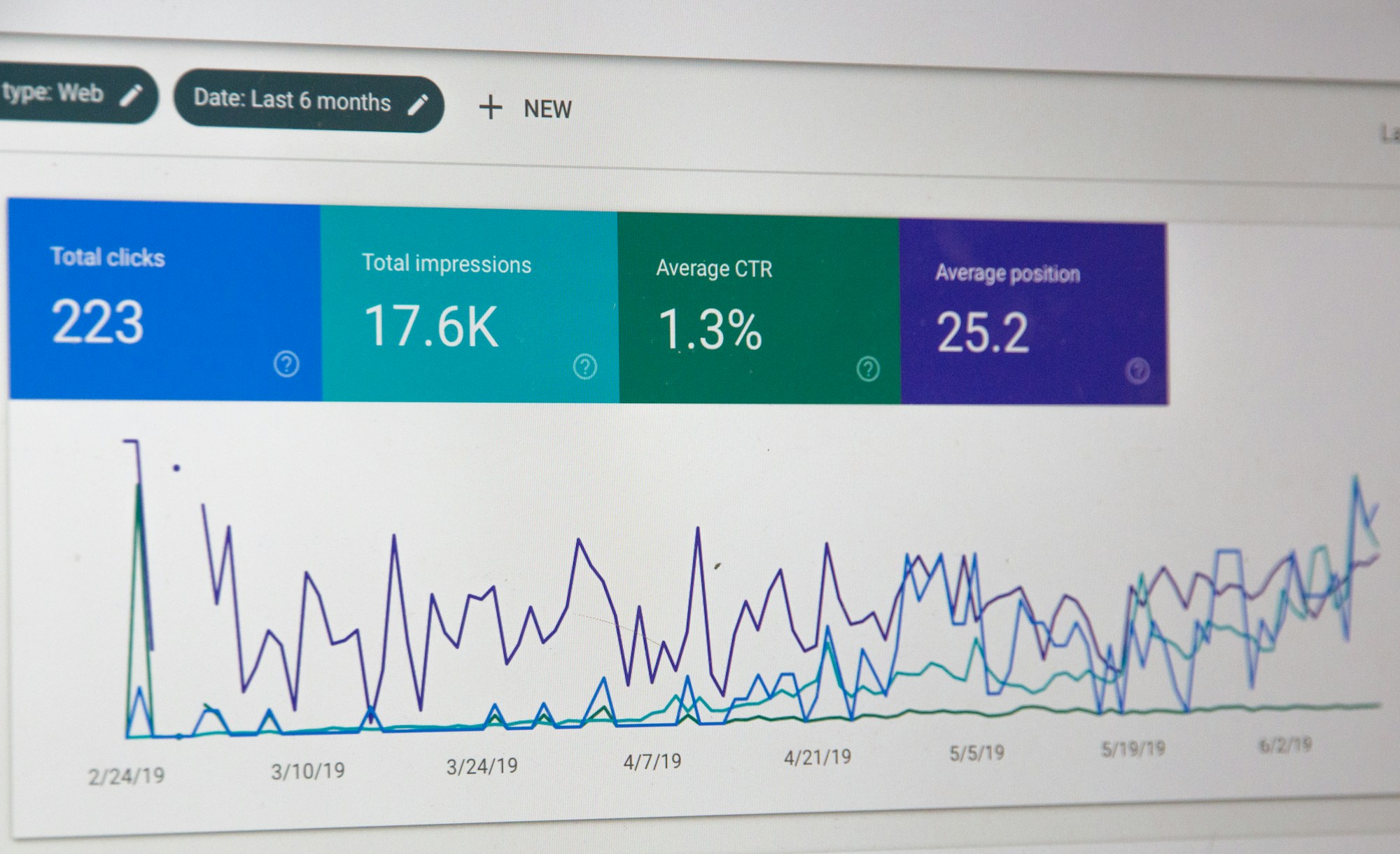
Use Search Console to set your Google baseline. Export queries, pages, clicks, impressions, CTR, and average position. Google confirms these metrics show how users find and click your site in Search in its Performance report guide.
Google Search Console metrics dashboard comparison
Fill the Measurement Gaps
Add a prompt list for ChatGPT and Claude. Record whether your brand appears, which page gets cited, and the answer context.
Google signal
Generative search signal
Average position
Brand mention or citation
Clicks and CTR
Citation quality and context
A top Google rank does not guarantee an AI citation. Track both weekly.
Step 3: Turn Competitor and Citation Gaps Into Optimization Work
Find the Most Actionable Gaps
Start with queries where competitors rank or earn AI citations and you do not. Prioritize pages with buying intent, clear traffic value, and a close match to your offer.
Gap
Best first action
Competitor ranks higher
Improve the existing page
Competitor gets cited
Add clear answers and proof
You have no relevant page
Create a focused page
Google recommends original, helpful content with clear sourcing and real expertise. See its people-first content guidance.
Choose the Right Optimization Response
Do not copy a competitor’s page. Fill the missing need with stronger examples, updated facts, expert input, and direct answers. SnowSEO can help group gaps by ranking loss, citation loss, and page type.
Step 4: Standardize Agency Reporting and Optimization Reviews
Create a Client Reporting View
Give every client the same one-page view. Separate Google results from generative search evidence, then show change against the prior month. Google defines clicks, impressions, CTR, and average position in its Search Console Performance report.
Area
Report
Google Search
Clicks, CTR, rankings, page gains
Generative search
Brand mentions, cited URLs, prompt coverage
Action plan
Owner, due date, expected outcome
Do not combine AI mentions with Google rankings. They measure different outcomes.
Run a Monthly Optimization Loop
Use the report to choose a short list of fixes, not a long wish list.
Find pages with falling clicks or weak CTR.
Check missed prompts and competitor citations.
Update content, internal links, proof, and page titles.
Log each change and review the result next month.
Keep priorities tied to business value. SnowSEO can centralize the tracking evidence and audit tasks.
Homepage
Track Google rankings and AI visibility in one place. Use SnowSEO to spot gaps, audit pages, and act on clear search data.
Frequently Asked Questions
Q1: How can agencies implement SnowSEO for advanced rank tracking and optimization of generative AI visibility?
Set client topics, target prompts, and Google keywords. Review ranking changes beside AI mentions, then turn missing citations into content briefs and audit tasks.
Q2: How often should I check rankings?
Check weekly for trends. Review daily only during launches, major site changes, or volatile search periods.
Q3: What counts as generative search visibility?
Track brand mentions, cited pages, answer placement, and prompt coverage. These signals differ from a standard Google position.
Conclusion
Track Google rankings and generative mentions separately, then join them by topic and page. Google defines position as a relative result rank; AI visibility signals citation and answer presence. Use both to find gaps and improve content.
Quick Summary: SnowSEO combines daily Google rank tracking with Google Search Console data to show keyword shifts and traffic demand-but alerts alone aren’t enough to act on, since rankings fluctuate naturally and require cross-checking with clicks, impressions, and device filters. The tool’s real strength lies in its granular reports, exports, and API access for teams, letting them filter by country, device, or keyword group before sharing client updates. A trial should confirm whether automated alerts actually trigger in time, as the tool’s value depends on validating ranking drops with GSC’s more stable traffic signals. It’s best suited for teams needing a unified workspace to spot trends, not just chase every position swing.
A ranking drop matters most before a client spots the traffic loss. This SnowSEO rank tracking review looks at daily Google checks, Google Search Console links, and keyword gains or losses in one workspace. The real question is whether alerts and reports give teams enough warning and proof to act fast. This SnowSEO rank tracking review separates documented coverage, exports, insights, and API access from alert claims that need closer review.
How SnowSEO Tracks Rankings and Detects Changes
SnowSEO combines tracked keyword positions with Google Search Console data to show both rank movement and search demand. Treat these as different signals, not matching numbers.
SnowSEO
GSC Data Versus Live SERP Tracking
GSC reports clicks, impressions, CTR, and average position from real Google searches. Google notes that position is an average and can vary by device, place, and user history in its Performance report guide.
Signal
Best use
GSC data
Find traffic and demand shifts
SERP tracking
Watch a chosen keyword’s rank
What Counts as a Ranking Alert
A useful alert flags a material change, then gives the keyword, landing page, date, and direction. Check the result before acting:
Confirm the drop across several days.
Compare clicks and impressions in GSC.
Check whether the ranking URL changed.
Do not treat every position swing as a problem. Search results naturally vary.
Set coverage by country, device, search type, keyword group, and landing page. That makes client reports useful, not noisy. Pair rank changes with Search Console clicks, impressions, CTR, and average position. Google lets teams filter these views by queries, pages, countries, devices, and search appearance in its Performance report.
Control
Team use
Keyword tags
Split brands, products, and markets
Device filters
Catch mobile-only losses
Page groups
Assign fixes to owners
Data-driven workflow connecting keyword insights device filters and team reports
Exported Search Console tables can be limited to 1,000 shown rows, so check scope before sharing.
Can You Send Automated Reports?
Do not assume SnowSEO sends scheduled email reports or alerts unless your plan confirms it. Its documented daily tracking and data views support review, but notification promises need proof.
Export the filtered view.
Add a short action note.
Send it on a fixed weekly cadence.
Google supports CSV, Excel, and Sheets exports from reports, as its export guide confirms.
SnowSEO is worth testing if your team needs rank checks beside audits, keywords, and AI visibility work.
Use it to spot movement, then validate impact in Google Search Console. Google reports clicks, impressions, CTR, and average position, but position is an average, not a fixed rank. Google explains the limits.
Good fit
Check first
One team needs one SEO workspace
Alert rules, exports, and API access
You review ranking trends weekly
Location, device, and SERP feature coverage
Do not buy for alert promises alone. Confirm notification timing during a trial.
Get daily rank tracking, clear reports, and wider SERP coverage in one place. Try SnowSEO to spot changes before they cost traffic.
Frequently Asked Questions
Q1: Does SnowSEO provide automated alerts and reports in its rank tracking system?
SnowSEO documents daily rank tracking, exports, and reporting data. Confirm alert triggers, delivery timing, and report scheduling during a product demo before relying on them for client workflows.
Q2: Can I track Google Search Console data?
Yes, connect Search Console to compare tracked keywords with clicks, impressions, and page data.
Q3: Does rank tracking cover AI search results?
Check which AI platforms, prompts, locations, and result types SnowSEO tracks for your plan.
Quick Summary: Real-time AI rank tracking isn’t live updates-it’s daily scans of fixed prompts across ChatGPT, Google AI Mode, and Gemini, but tools vary wildly in how they log mentions, citations, and answer shifts. Google’s AI Overviews don’t work like traditional rankings; they pull different links and can omit your site entirely, so tracking must focus on brand mentions, linked sources, and answer context-not just position. SnowSEO explicitly ties rank tracking to AI visibility, letting teams spot gaps in mentions or citations before competitors do. The key is saving full answers, testing prompts across models, and treating daily changes as signals, not definitive proof.
Rank tracking now reaches beyond Google. In 2026, Semrush tracks selected prompts daily across ChatGPT, Google AI Mode, and Gemini. Other tools report AI visibility across ChatGPT and, often, Claude. Yet real-time AI rank reporting means different things across vendors. Daily scans, weekly checks, and live dashboards are not equal. This guide tests real-time AI rank reporting against refresh rates, prompt position, citations, competitors, and answer changes.
AI Rank Reporting Is Becoming a Daily Workflow
What Vendors Mean by Real-Time
Real-time AI rank reporting rarely means a live, second-by-second feed. It usually means a tool reruns a fixed set of prompts on a daily schedule, then logs what changed.
Google itself says AI Overviews appear only when its systems find them helpful, and results can vary by query. Its AI features also surface supporting links, not a fixed rank list, as explained in Google Search Central’s guidance.
Real-time AI search workflow visualization
Claim
What to verify
Real-time
Exact refresh time and timezone
AI position
Prompt, market, device, and model used
Citation tracking
Linked source URL and captured answer
Visibility score
Formula and prompt sample size
Tip: Treat daily changes as signals, not proof. AI answers can shift between checks.
Several AI visibility platforms claim ChatGPT and Claude coverage, but the label alone proves little. Ask whether the tool runs the same saved prompts on both models and records answers separately.
Side-by-side AI model comparison dashboard
A useful report should show:
Check
Why it matters
Brand mention
Shows if the answer names you
Citation or source URL
Shows which pages support the answer
Answer context
Reveals how the model describes you
Prompt history
Separates a trend from one random result
Ahrefs’ ChatGPT tracking guide treats mentions, citations, and share of voice as separate signals. Claude needs its own view because its answers may cite and frame brands differently.
Do not call this a rank. AI answers have no fixed position. Track presence, source support, and change over time.
An AI answer has no fixed blue-link rank. It can mention your brand, cite a page, quote your facts, or omit you entirely. Google says AI Overviews and AI Mode can use different models and return different links, so a useful report must log the exact prompt, platform, country, device, and check time. Google confirms that these results vary.
Track these signals:
Metric
What it shows
Mention rate
How often your brand appears
Citation rate
How often your URL is linked
Answer position
Where the mention appears
Share of voice
Your mentions versus rivals
Do not call a citation “rank one.” It is an answer placement, not a standard organic ranking.
How Teams Should Validate a Real-Time AI Reporting Tool
A Five-Point Verification Checklist
“Real-time” should mean a fresh, repeatable check, not a daily data refresh labeled differently. Google notes that AI features can vary by query and may not trigger at all, so test across a fixed prompt set and location. Google’s guidance also confirms that AI results can surface different links than classic search.
Timestamp every result – show the exact check time, timezone, and platform.
Repeat key prompts – run them twice to spot unstable mentions or citations.
Separate metrics – report answer position, brand mention, linked citation, and share of visibility separately.
Keep proof – save the full answer and source links for each result.
Test exclusions – confirm the tool records no-answer and no-citation cases.
Check
Pass condition
Freshness
A visible, precise timestamp
Evidence
Stored answer and citations
Treat a mention without a citation as awareness, not traffic potential.
Homepage
Track search ranks, AI mentions, and citations in one place. Try SnowSEO to spot visibility gaps and act faster.
Frequently Asked Questions
Q1: Which rank trackers provide real-time insights and integrate with AI platforms like ChatGPT and Claude?
SnowSEO combines rank tracking with AI visibility checks for ChatGPT and Claude, helping teams track mentions, citations, and answer placement.
Review weekly for trends, then check after major content changes or campaign launches.
Conclusion
Real-time AI search reporting must separate rankings from mentions, citations, and visibility. Google’s report tracks generative impressions, but teams still need clear, prompt-level context to judge impact.
Quick Summary: Your Google rankings don’t matter if AI tools like ChatGPT ignore your brand-so SnowSEO bundles AI visibility tracking (mentions, citations, sentiment) directly into its SEO workflow, making it ideal for lean teams that need actionable insights without switching tools. Semrush, meanwhile, excels at deep AI prompt tracking across platforms (ChatGPT, Gemini) and competitor benchmarking, but its $99/month AI plan and sprawling suite suit larger teams already using its tools. The key difference: SnowSEO ties visibility data to audits and content tasks in one place, while Semrush delivers broader market context for teams prioritizing research over execution.
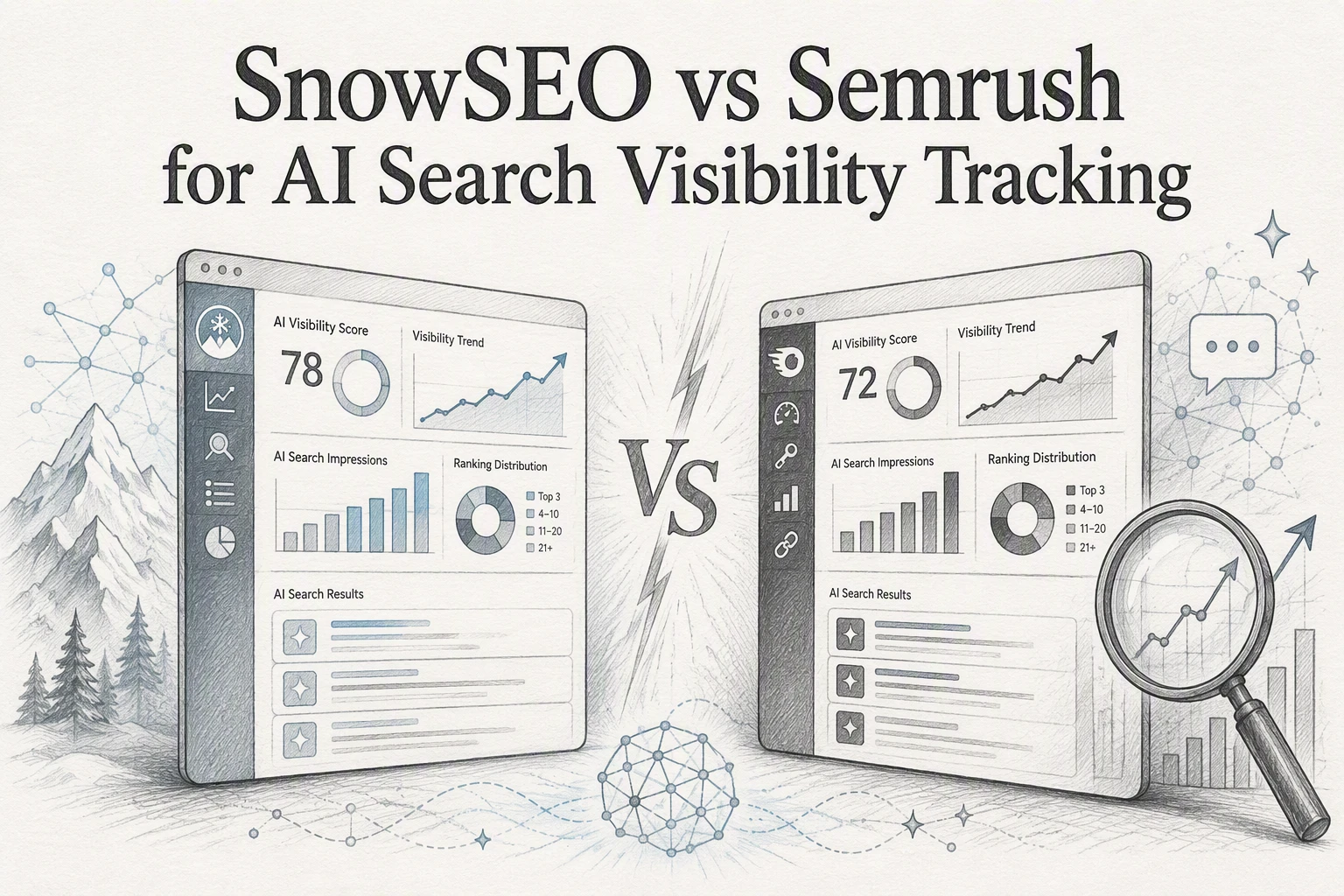
Strong Google rankings mean little if ChatGPT or Gemini never mentions your brand. This AI search visibility tracking comparison tests SnowSEO and Semrush on AI mentions, citations, competitor gaps, and action steps. SnowSEO suits lean teams needing one workflow. Semrush fits teams using its wider SEO suite and AI Visibility Toolkit. This AI search visibility tracking comparison focuses on data you can use.
SnowSEO vs Semrush: AI Visibility Tracking at a Glance
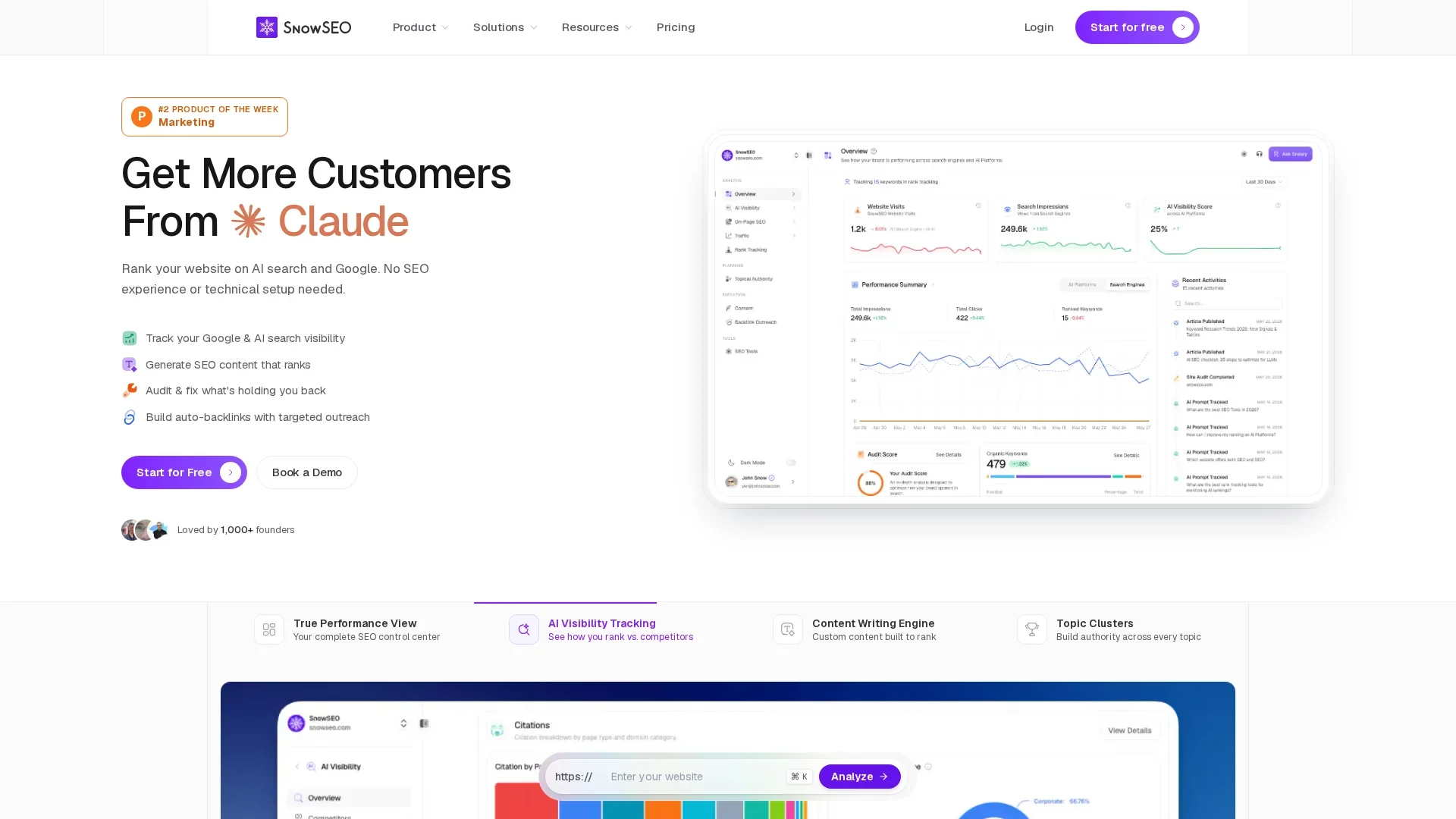
SnowSEO unifies Google rank tracking with AI prompt, brand, and competitor visibility in one SEO and GEO workflow. It suits lean teams, SMBs, and agencies that need data tied to content, audits, outreach, and publishing in this AI search visibility tracking comparison.
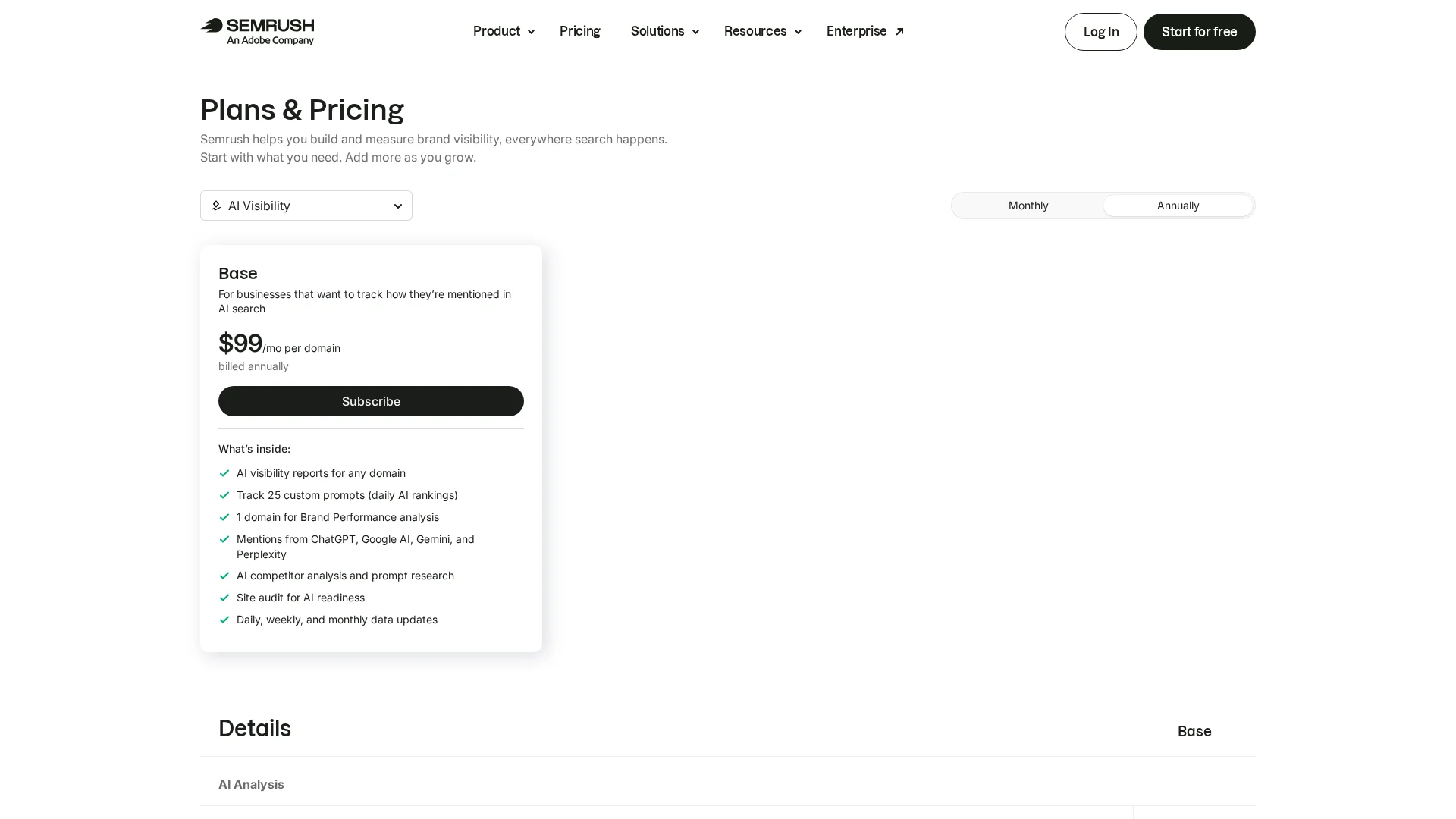
Semrush adds AI prompt tracking, citations, sentiment, and competitor research to its established SEO suite. It fits existing Semrush users and larger teams needing depth, with daily prompt tracking across key AI platforms.
What Each Platform Actually Tracks
From Keyword Positions to AI Answer Presence
Traditional rank tracking measures where a page sits in search results. AI tracking asks whether your brand, page, or citation appears inside an answer.
Platform
What it tracks
SnowSEO
Keyword ranks, AI platform visibility, citations, audits, and competitor gaps
Semrush
AI mentions, cited pages, prompt visibility, sentiment, and average citation position
Semrush tracks prompts across ChatGPT, Google AI Mode, and Gemini, including daily changes and cited domains, as its Prompt Tracking guide explains.
Tip: Track citations and mentions separately. A brand mention builds awareness; a cited page shows content AI systems use.
Coverage, Competitor Insights, and Reporting Compared
Which Tool Gives More Actionable Competitive Context?
Semrush offers broader AI coverage and clear competitor benchmarks. Its reports compare mentions, citations, audience, and prompt gaps across major AI platforms. You can add up to four rivals, then find prompts where they appear and you do not, as outlined in Semrush’s competitor report.
Competitor gap analysis dashboards side by side
SnowSEO is the better fit when your team needs those gaps tied to execution in one workspace.
Need
Better fit
Cross-platform benchmark reporting
Semrush
Audit, content, tracking, and competitor work together
SnowSEO
Track prompt gaps, cited pages, and competitor mentions. A visibility score alone does not tell your team what to fix.
Workflow and Value: Tracking Data That Leads to Action
Cost and Workflow Fit Matter More Than Feature Count
Pick the tool that turns a visibility drop into a clear task. Semrush tracks daily prompts, competitors, citations, and AI search issues, but its AI Visibility plan starts at $99 per domain per month. It fits teams already using its wider SEO stack.
Workflow need
Better fit
One place for audits, content, rankings, and AI visibility
SnowSEO
Deep AI prompt research alongside a large SEO suite
Semrush
Workflow clarity over feature depth
Find prompts where competitors earn citations.
Update the matching page or build a new answer.
Recheck mentions and cited URLs weekly.
Track fewer high-value prompts first. More data is useless without an owner and a next step.
Choose SnowSEO if you need AI visibility tracking tied to audits, content, keyword work, and action in one workflow. Choose Semrush if your team already relies on its broad SEO suite and needs deep prompt-level benchmarking. Semrush tracks visibility across ChatGPT, Gemini, and Google AI Mode, including daily prompt changes in its AI Visibility Toolkit.
Pick the platform your team will use to fix gaps, not just report them.
Homepage
Turn AI visibility data into clear actions. Track rankings, audits, and content gaps with SnowSEO.
Frequently Asked Questions
Q1: How does SnowSEO’s rank tracking feature compare to Ahrefs and SEMrush in AI search visibility?
SnowSEO focuses on AI platform visibility alongside search tracking. Semrush and Ahrefs remain strong for classic rankings, while SnowSEO ties AI mentions to audits, content work, and next actions.
Q2: Can I track ChatGPT visibility by keyword?
Yes. Track prompts that reflect buyer questions, product terms, and category needs. Review brand mentions, cited sources, and competitor presence over time.
Q3: Which metrics should agencies report first?
Report AI mention rate, prompt coverage, share versus competitors, source citations, and change over time. Pair each metric with a clear content or technical action.
Conclusion
Choose SnowSEO for metric-led action in one workflow. Choose Semrush for broad prompt benchmarking, which tracks daily AI visibility.